How to Check Betta Fish Gender

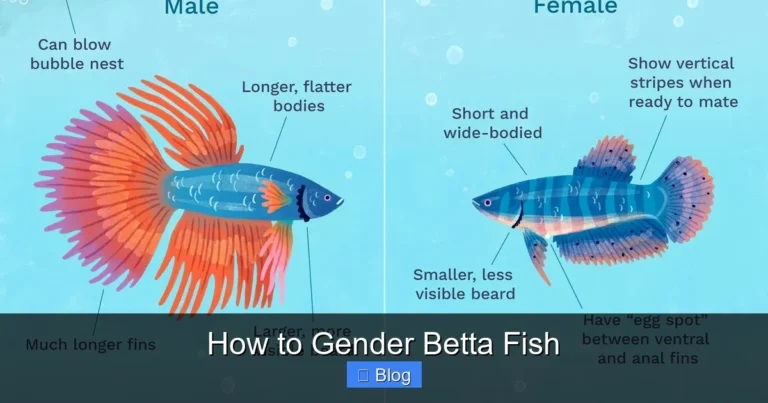
Determining your betta fish’s gender involves observing specific physical characteristics and behaviors. While males are the famous, flamboyant fighters, females are often plainer but can display aggression too. Key identifiers include body shape, fin length, egg spots, and flaring behavior. Patience and multiple observations are crucial, as young bettas are notoriously difficult to sex. This guide breaks down every visible clue to help you confidently identify your Siamese fighting fish.
Key Takeaways
- Body Shape: Males are typically longer and more streamlined, while females are shorter and rounder, especially near the head.
- Fin Length & Flare: Males have long, flowing fins that flare dramatically; females have shorter, less elaborate fins.
- The Egg Spot (Ovipositor): A small, white dot between the ventral fins is a definitive female marker, though not all females show it clearly.
- Flaring Behavior: Both genders flare, but males do so more frequently, aggressively, and with full fin display.
- Bubble Nesting: Building bubble nests is a strong, instinctual male behavior, though rare exceptions exist.
- Vertical Stripes (“Breeding Barring”): Stress or breeding readiness can cause dark vertical stripes on both sexes, but are more common in females.
- Age Matters: Sexing juvenile bettas (under 4-5 months) is often guesswork; definitive traits emerge with maturity.
📑 Table of Contents
- Introduction: The Mysterious Case of Your Betta’s Gender
- 1. The Physical Blueprint: Reading the Body
- 2. Finery & Flourish: The Fin Factor
- 3. Behavioral Tell-Tale Signs: Actions Speak Louder
- 4. The Definitive Clue: The Egg Spot (Ovipositor)
- 5. Age, Stress, and Common Mistakes
- 6. A Step-by-Step Guide to Sexing Your Betta
- Conclusion: Patience is a Virtue (and a Betta-Hunting Skill)
Introduction: The Mysterious Case of Your Betta’s Gender
So, you have a beautiful betta fish. Maybe it’s a vibrant royal blue with fins that flow like silk, or a subtle crowntail with sharp, geometric edges. You’ve named it, set up its tank, and marvel at its personality. But one burning question remains: is it a boy or a girl? Unlike many pets, a betta’s gender isn’t always immediately obvious. The common myth that only males are colorful and have long fins has been thoroughly debunked by the modern fancy female bettas available today. Figuring out how to check betta fish gender is a mix of detective work, patience, and understanding subtle biological cues. It’s not just for curiosity’s sake—knowing the gender is essential for proper tank companionship, breeding intentions, and even healthcare. This guide will walk you through every visible sign, behavior, and common pitfall. We’ll turn you into a betta gender expert.
1. The Physical Blueprint: Reading the Body
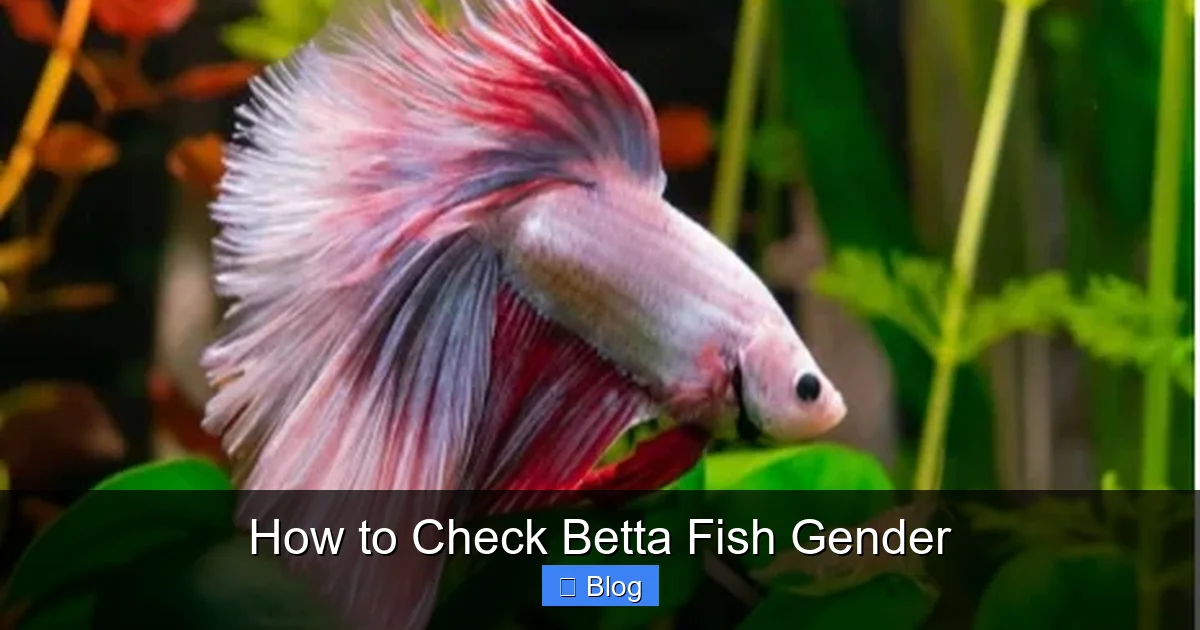
When learning how to check betta fish gender, your first and most reliable clues come from the fish’s physical structure. These are the enduring, anatomical differences that persist regardless of mood or environment. You’ll need a calm, well-lit fish and perhaps a clear container for a closer look if the fish is skittish.
Visual guide about How to Check Betta Fish Gender
Image source: edumanias.com
1.1. Body Shape &轮廓 (Silhouette)
This is often the first thing experienced aquarists notice. Hold a mental picture of a classic male betta—sleek, torpedo-shaped, and built for showing off. Now picture a female: she’s built for carrying eggs, so her body is fundamentally different.
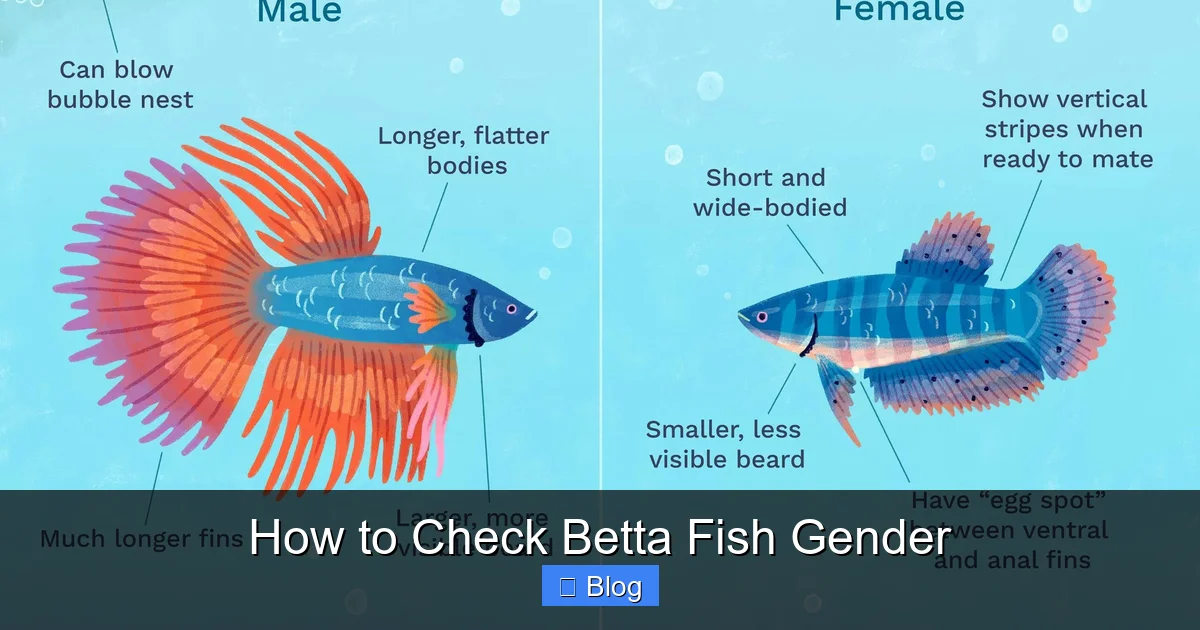
- Male: The male betta’s body is generally longer and more streamlined from snout to tail base. It’s a continuous, elegant line. When viewed from above, the body is slender.
- Female: The female’s body is noticeably shorter and deeper. Her most telling feature is the area just behind the gills and before the fins. She has a more pronounced, rounded “cheek” or “forehead,” giving her a slightly bulbous, stout appearance. From above, her body looks chunkier and less hydrodynamic. This body shape becomes especially apparent once a female is gravid (full of eggs), when her abdomen will swell significantly and become egg-shaped.
1.2. The Ventral Fins and the “Beard”
Look at the two fins on the fish’s belly, right under the gills. These are the ventral fins. Their length and shape are a major giveaway.
- Male: Male ventral fins are almost always long, flowing, and often taper to a point. They are a dramatic part of his overall finnage. Additionally, the area under the gill plate (the “cheek”) often develops a layer of specialized skin called the “beard.” This is usually only visible when the male flares. It appears as a fuzzy, textured patch, typically matching the fish’s primary color (red beard on a red fish, etc.). Females do not develop a true beard.
- Female: Female ventral fins are characteristically short. They are functional, not decorative—think more like paddles than streamers. They rarely extend past the mouth and are often blunt-ended. The area under the gill plate remains smooth and untextured.
1.3. The Caudal Peduncle (Tail Base)
The body just before the tail fin, the caudal peduncle, offers another clue. In males, this area is typically slender and tight, leading into the long, flowing tail base. In females, the caudal peduncle is often thicker and more muscular, connecting to a shorter tail base. This is related to her egg-carrying capacity.
2. Finery & Flourish: The Fin Factor
Fins are the most glamorous part of a betta and a primary area for gender identification. While fashion trends in bettas have blurred some lines (females with long halfmoon tails exist!), general rules hold strong.
Visual guide about How to Check Betta Fish Gender
Image source: bettafishworld.com
2.1. Dorsal and Anal Fins
These are the fin on the back and the fin on the belly, respectively.
- Male: Both the dorsal and anal fins are long, flowing, and often have a pronounced, rounded or spiky edge that extends well past the body. In a halfmoon male, the anal fin can be nearly as long as the body itself, creating a full, circular flare.
- Female: These fins are shorter and more rigid. The dorsal fin may be rounded but will not extend far past the body. The anal fin is particularly telling—it is short, often triangular or paddle-shaped, and stops well before the tail base. Even a “halfmoon” female will have a noticeably shorter anal fin than a male.
2.2. Tail Fins (Caudal, Pelvic)
The tail is the showstopper. Male bettas have been selectively bred for extreme, flowing caudal fins (halfmoon, veil tail, crown tail, etc.). Female tail fins are almost always shorter, with less ray extension. The pelvic fins (the two underneath, often called “feelers”) follow the same pattern: male pelvic fins are long and flowing; female pelvic fins are shorter and straighter.
Important Caveat: With the rise of “female halfmoons” in the fancy betta world, you cannot rely solely on tail length. A female can have a 180-degree spread. Therefore, you must combine tail length analysis with the other physical markers (body shape, ventral fins, beard) for a correct ID.
3. Behavioral Tell-Tale Signs: Actions Speak Louder
Betta fish are incredibly expressive. Watching how your fish moves, reacts, and interacts with its environment provides powerful gender clues. This requires observation over time, not just a single glance.
3.1. The Art of the Flare
Flaring—where a betta extends all its fins, puffs out its gills, and becomes momentarily larger—is a display of aggression, territoriality, or courtship. Both sexes flare, but the style differs.
- Male Flare: A male’s flare is the iconic, dramatic spectacle. He will turn sideways to his target (a mirror, another betta, your finger), extend every single fin to its maximum potential, puff his gills (making his head look wider), and often adopt a rigid, “S”-shaped posture. It’s a full-body, theatrical performance meant to intimidate or impress.
- Female Flare: A female flares too, especially towards another female or when she sees her own reflection. However, her flare is often “softer.” She will extend her fins, but they will not reach the same dramatic length or fullness as a male’s because her fin structure is shorter. Her gill puffing is less pronounced, and her body posture may be less rigid. It’s more of a “hunch” than a full display.
3.2. Bubble Nesting Instinct
This is one of the strongest behavioral indicators of a male betta. Bubble nesting is an innate breeding behavior where the male gathers air bubbles at the water’s surface and binds them with saliva to create a floating nest for eggs.
- Male: Most male bettas will build bubble nests at some point, triggered by factors like water temperature, tank conditions, or the presence of a female (even if she’s not in the same tank). The nest can be a small patch of bubbles or a large, elaborate structure covering a corner of the tank. It’s a clear sign of male hormones at work.
- Female: Females do not build bubble nests. They may, however, pick at or investigate a male’s nest when placed together for breeding, but they will never construct one themselves. If you see a consistent collection of bubbles, you almost certainly have a male.
Note: Some lazy or older males may not build nests, and a very dominant female might occasionally blow a few stray bubbles, but true, sustained nest-building is a male trait.
3.3. General Activity & Aggression
While not a definitive rule, general tendencies can offer clues.
- Males are typically more consistently territorial and will flare at anything they perceive as an intruder (your hand, a toy, a snail). They are also more likely to pace the glass (a sign of stress or boredom) and engage in “fin nipping” if bored.
- Females can be just as aggressive, especially towards other females. They establish a clear pecking order and can be fierce. However, they are often (but not always) slightly less obsessive about patrolling every inch of their territory compared to a male. A very relaxed, “chill” betta could be a female, but many males are also calm. Never use temperament alone to sex a fish.
4. The Definitive Clue: The Egg Spot (Ovipositor)
Now we move to the gold standard, the most reliable physical marker for a female betta: the egg spot, also known as the ovipositor. This is a small, white, raised bump or dot located on the underside of the fish, precisely between the ventral fins.

Visual guide about How to Check Betta Fish Gender
Image source: buildyouraquarium.com
- What it is: It’s the opening through which a female releases her eggs during spawning. It’s a permanent anatomical feature, though its visibility can change.
- How it looks: It appears as a tiny, grain-of-rice-sized white spot. Sometimes it’s very prominent and easy to see. Other times, it’s small or partially hidden by the ventral fins. You often need to view the fish from directly below or from the front, with the fish calm and not flaring.
- Male Check: Males will have a smooth, unblemished ventral area in that exact spot. There is no bump, no dot.
Critical Nuance: Not all females show a clearly visible egg spot, especially very young ones or some color varieties. Conversely, a very young male (under 4 months) might have a tiny, pale spot that causes misidentification. Therefore, the egg spot is a definitive female marker when present and clear, but its absence does not automatically mean “male.” You must use it in conjunction with all other clues.
5. Age, Stress, and Common Mistakes
Even with all these clues, mistakes happen. Understanding the variables that cloud the picture is half the battle.
5.1. The Juvenile Conundrum
This is the #1 reason for incorrect sexing. Betta fry (babies) and juveniles (under 4-5 months old) have not developed their full secondary sexual characteristics. A young male may have short fins and a rounded body. A young female might have slightly longer fins. Their egg spots are undeveloped. If your betta is under 4-5 months old, any sexing is an educated guess. Wait for maturity. Signs of maturity include full fin development, vibrant color (in many strains), and the development of a beard in males.
5.2. Stress Stripes (“Breeding Barring”)
Have you ever seen dark, vertical bars appear on your betta’s sides? This is often called “breeding barring” or stress stripes. They are not a gender indicator, but they cause confusion.
- What they are: These are stress-induced color changes. The fish’s underlying pigment cells react to hormones (often cortisol) released during stress, causing temporary dark bars to appear.
- Who gets them? Both males and females can develop them. However, they are extremely common in females, especially when they are stressed, moved, or feeling submissive. A female may show prominent bars while a male in the same tank does not. This has led many to incorrectly think “stripes = female.” Remember: stripes = stress, not gender.
5.3. The “Aggressive Female” Trap
Don’t assume a fish that flares and acts tough is a male. Female bettas, particularly in a sorority (group of females), can be fiercely dominant and flare constantly. A large, bold female with good finnage can easily mimic male behavior. Always cross-reference behavior with physical traits like body shape and ventral fin length.
5.4. Color and Fins Are Not Indicators
This cannot be stressed enough. Color has no biological link to betta gender. Brilliant red, blue, and multicolor females are standard in the hobby. Females can have halfmoon, double tail, and even delta tails. While long, flowing fins are more common in males, you cannot use color or fin type as your primary tool. A plain-colored fish with short fins could be a male (like a wild-type plakat), and a rainbow fish with a giant halfmoon tail could be a female.
6. A Step-by-Step Guide to Sexing Your Betta
Let’s put it all together into a practical checklist. For the most accurate result, use all these steps in order.
- Observe in a Calm State: First, look at your fish when it’s relaxed, not flaring. Feed it or gently tap the glass to encourage it to come close. Observe from the side and from above.
- Check the Body Shape: Is it long and sleek (male) or short and deep with a rounded head (female)?
- Examine the Ventral Fins: Are they long, flowing, and pointed (male) or short, blunt, and paddle-like (female)?
- Look for the Egg Spot: Gently encourage the fish to face you or view from below. Is there a small, white, raised dot between the ventral fins? If yes, it’s a female. If no, proceed.
- Assess the Dorsal and Anal Fins: Are they long and flowing (male) or shorter and stiffer (female)?
- Consider Behavior Over Time: Does it build bubble nests (male)? How does its flare compare to the descriptions above? Are there stress stripes present (inconclusive)?
- Factor in Age: Is the fish clearly mature with full fin development? If it looks like a juvenile, wait and re-evaluate later.
Final Verdict Logic: A clear egg spot + short fins + round body = Female. Long flowing fins + streamlined body + potential beard + bubble nesting = Male. Mixed signals (e.g., long fins but round body) = likely a very fancy female or a young male. When in doubt, especially with young or exceptionally fancy fish, consult a reputable betta breeder or hobbyist community with a clear photo/video showing the key areas.
Conclusion: Patience is a Virtue (and a Betta-Hunting Skill)
Learning how to check betta fish gender is a rewarding part of the betta-keeping journey. It deepens your understanding of these complex, personality-filled fish. Remember, the most accurate identification comes from synthesizing multiple clues: the body’s architecture, the fin’s flair, the presence of an egg spot, and the fish’s behavioral repertoire. Never rely on a single trait, especially not color or fin length alone. The biggest hurdle is often patience—resisting the urge to sex a young, still-developing fish. Give your betta time to grow, observe it in quiet moments, and you will unlock the secret of its gender. Whether you end up with a flamboyant king or a spirited queen, knowing for sure allows you to provide the best possible care, make informed decisions about tank mates, and truly appreciate the unique biology of your magnificent Betta splendens.
Frequently Asked Questions
At what age can you reliably sex a betta fish?
You can usually make a confident determination between 4 to 6 months of age. Before this, juveniles lack developed secondary sexual characteristics like long fins, a visible beard, or a pronounced egg spot, making accurate sexing very difficult.
Can a female betta build a bubble nest?
It is extremely rare, but not impossible. True, sustained bubble nest-building is an instinctive male behavior driven by hormones. A female might blow a few stray bubbles out of curiosity or stress, but she will not construct a proper, cohesive nest. Consistent nest-building is a strong indicator of a male.
I see a white spot on my betta’s belly. Is that always the egg spot?
A small, white, raised bump between the ventral fins is almost certainly the female egg spot (ovipositor). However, a white spot elsewhere on the body is likely a mark or a color pattern, not a gender clue. Also, very young males can sometimes have a tiny pale dot that mimics an egg spot, so always confirm with other physical traits.
Do female bettas have a “beard” like males?
No. The “beard” is a specialized, textured patch of skin under the gill plate that becomes visible when a male flares. Females have smooth skin in that area and do not develop a beard.
My betta has dark vertical stripes. Is it a female?
Not necessarily. These “stress stripes” or “breeding bars” are a color change triggered by stress or hormones and can appear on both male and female bettas. They are very common in females, but a stressed male can also show them. Stripes are a sign of stress, not a definitive gender marker.
Can I keep two male bettas together if they’re both females?
This question highlights the importance of accurate sexing. You should never house two male bettas together—they will fight to the death. A common mistake is misidentifying an aggressive female as a male. Only male bettas are guaranteed to be incompatible with other males. Female bettas can sometimes be kept in carefully managed groups (sororities), but compatibility is never 100% guaranteed and requires significant space and monitoring.