How to Fix Dropsy in Betta Fish
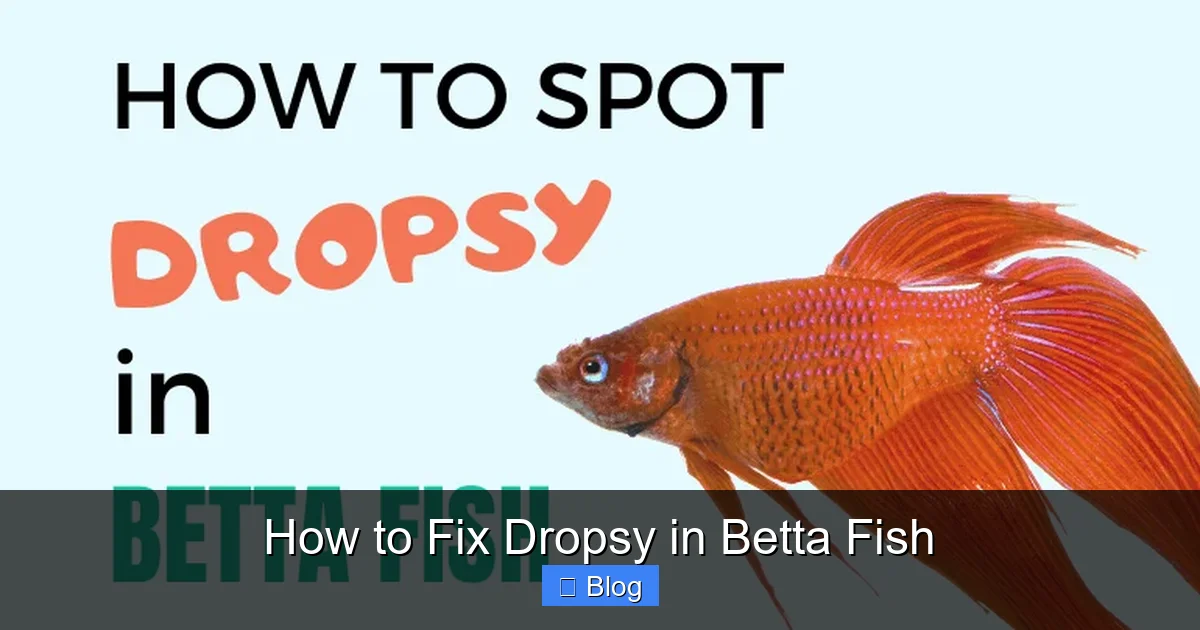
Dropsy in betta fish is a serious, often fatal symptom of internal organ failure, not a disease itself. Fixing it requires immediate, aggressive action focusing on water quality, Epsom salt baths for swelling, and targeted antibiotics for the underlying bacterial infection. Success depends on early detection and consistent treatment, but prevention through pristine tank maintenance is always the best strategy.
Key Takeaways
- Dropsy is a symptom, not a disease: It indicates a severe internal problem, usually a bacterial infection causing kidney or organ failure and fluid buildup.
- Water quality is the #1 priority: Immediately perform large, temperature-matched water changes to reduce stress and toxin load.
- Epsom salt (magnesium sulfate) is for symptom relief: It helps draw out excess fluid to reduce swelling but does not cure the underlying infection.
- Antibiotics are essential for treatment: A broad-spectrum antibiotic, often administered via food or water, is necessary to combat the internal bacterial infection.
- Quarantine is non-negotiable: Move the sick betta to a bare, hospital tank to prevent spreading pathogens and allow for precise medication dosing.
- Early detection offers the only hope: The moment you see pineconing scales, begin treatment. Advanced dropsy has a very low survival rate.
- Prevention is infinitely better than cure: Maintain impeccable water quality, avoid overfeeding, and quarantine all new tank inhabitants to prevent dropsy from ever occurring.
📑 Table of Contents
Understanding the Enemy: What Exactly is Dropsy?
Seeing your beautiful betta fish balloon into a pinecone-like shape is a heart-stopping moment for any fishkeeper. You’ve likely heard the term “dropsy,” but what you’re actually witnessing is a severe and complex set of symptoms pointing to a critical internal failure. It’s crucial to understand from the outset: dropsy itself is not a specific disease. Instead, it is the outward manifestation of a deeper, systemic problem, almost always a bacterial infection that has overwhelmed the fish’s organs, particularly the kidneys.
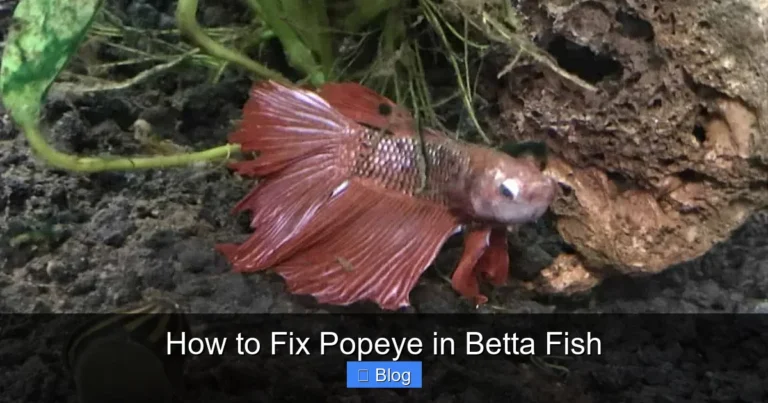
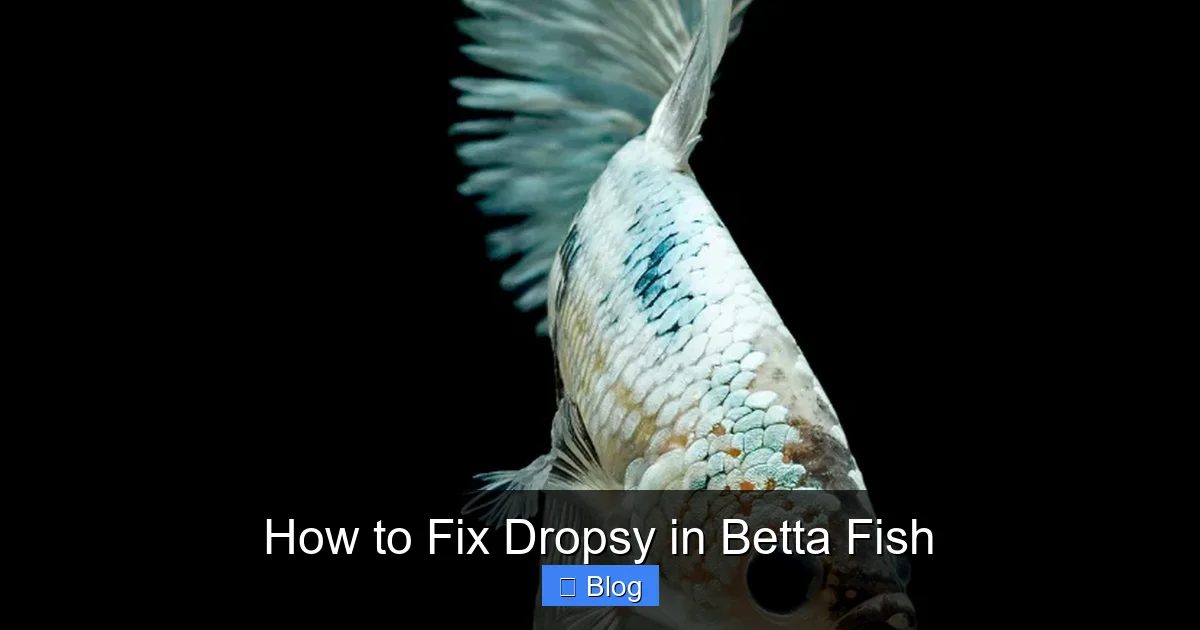
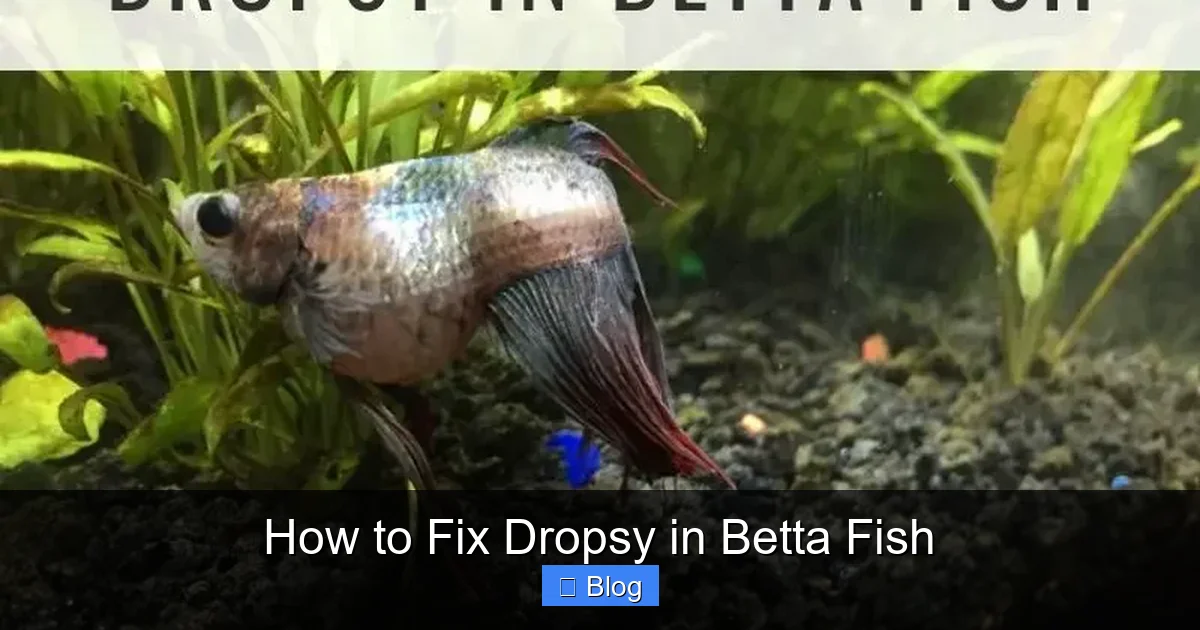
This infection causes the fish’s body to retain massive amounts of fluid, leading to extreme bloating. The most definitive visual sign is “pineconing” or “raised scales,” where the scales stand out from the body like the ridges on a pinecone, starting near the head and moving back. This occurs because the fluid buildup is so severe it physically pushes the scales outward. Other common symptoms include a loss of color, clamped fins, lethargy, a curved spine, and a complete loss of appetite. The fish may also have difficulty maintaining its balance, swimming erratically, or resting listlessly at the bottom of the tank.
Because dropsy signifies organ failure, it is considered a very grave diagnosis. The internal damage is often extensive by the time external symptoms are obvious. However, “how to fix dropsy in betta fish” is not a hopeless question. With immediate, aggressive, and correct intervention, there is a chance—though never a guarantee—of saving your aquatic companion. The goal is to support the fish’s body, eliminate the bacterial invader, and give the organs a fighting chance to recover.
The Culprit: What Causes Dropsy in Bettas?
The root cause of dropsy is nearly always a bacterial infection, typically from bacteria like Aeromonas or Pseudomonas, which are common in aquarium water. These opportunistic pathogens are normally present in low numbers but take hold when a fish’s immune system is compromised. So, the real question is: what weakens your betta’s defenses?
- Poor Water Quality: This is the number one trigger. Betta fish are sensitive to ammonia, nitrite, and even high nitrate levels. Dirty water is a constant source of stress and pathogens, wearing down the immune system.
- Sudden Water Changes/Temperature Stress: Using water that is too cold or too warm during a change, or not acclimating the fish properly, can cause severe shock.
- Overfeeding: This leads to constipation and bloating, which can mimic early dropsy, but more importantly, it fouls the water quickly, degrading quality.
- Injury or Trauma: A torn fin or a scrape from tank decor can become an entry point for bacteria.
- Other Diseases: An existing illness like ich or velvet severely taxes the immune system, opening the door for a secondary bacterial infection.
- Incompatible Tank Mates: Constant harassment or bullying from other fish is a major chronic stressor.
Step One: Immediate Action When You Spot the Signs
Time is of the essence. The moment you suspect dropsy—especially if you see the first hints of raised scales—you must spring into action. Hesitation drastically reduces the already slim chances of recovery. Your first steps are about stabilization and creating the right environment for treatment.
Visual guide about How to Fix Dropsy in Betta Fish
Image source: japanesefightingfish.org
1. The Critical Hospital Tank Setup
Do not treat the main display tank. You need a separate, bare quarantine or hospital tank. This serves three vital purposes: it prevents any medications from harming beneficial bacteria in your main filter, it stops the infection from potentially spreading to other fish (though dropsy itself isn’t highly contagious, the underlying bacteria are), and it allows you to control the environment perfectly for the sick betta.
A 2.5 to 5-gallon tank is ideal. It must be completely bare—no substrate, no plants, no hiding places that can harbor waste. Include only a simple, low-flow sponge filter (air-driven, not power filter, to avoid stressing the fish) and a secure lid (bettas are notorious jumpers). A small, stable heater is essential to maintain a consistent, warm temperature (see below). This minimalist setup makes cleaning and monitoring effortless.
2. The First Water Change and Acclimation
Gently net your betta from the main tank and place them in a clean cup with their original tank water. Immediately perform a 50% water change in the hospital tank using properly dechlorinated and temperature-matched water (within 1-2 degrees of the main tank). Once the new water is in, acclimate your betta to the hospital tank water using the drip method over 30-45 minutes. This slow adjustment is critical to prevent further shock.
Step Two: The Treatment Protocol – A Multi-Pronged Attack
Fixing dropsy requires attacking the problem on two fronts: reducing the deadly fluid buildup (the symptom) and killing the bacterial infection (the cause). You must do both simultaneously.
Visual guide about How to Fix Dropsy in Betta Fish
Image source: japanesefightingfish.org
Phase 1: Draining the Swelling with Epsom Salt
Epsom salt (magnesium sulfate) is your first line of defense against the bloating. It works as an osmotic agent, helping to draw excess fluid out of the fish’s body through its skin and gills. It is not a cure for the infection but is vital for making the fish more comfortable and reducing pressure on its internal organs.
Dosage and Administration: Dissolve 1 teaspoon of Epsom salt per 5 gallons of water in the hospital tank. For a 2.5-gallon hospital tank, that’s 1/2 teaspoon. Important: Use pure Epsom salt with no added fragrances or oils. Mix it in a cup of tank water first until fully dissolved, then add it slowly to the tank. Perform a 100% water change every 24 hours, redosing the Epsom salt with each change. Continue this for 5-7 days, or until the severe bloating subsides significantly. Watch for signs of stress; if the fish becomes lethargic immediately after dosing, the concentration might be too high for a very weak fish—reduce slightly.
Phase 2: Eradicating the Infection with Antibiotics
This is the most critical and non-negotiable part of how to fix dropsy in betta fish. You must use an antibiotic to target the internal bacterial infection. Over-the-counter “dropsy cure” medications are often ineffective. You need a potent, broad-spectrum antibiotic.
Your Best Options:
- Kanamycin or Neomycin: These are highly effective against the gram-negative bacteria (like Aeromonas) most commonly responsible for dropsy. They are often found in combination in medications like “Kanaplex” or “Neoplex.”
- Maracyn 2 (Minocycline): Another excellent broad-spectrum antibiotic effective against internal infections.
How to Medicate: Follow the package directions precisely for the medication you choose. Typically, you will dose the medication directly into the hospital tank water every 24 hours for 5-10 days, performing a 100% water change 1-2 hours before each new dose to remove waste and ensure medication potency. For very weak fish that aren’t eating, water medication is the only option. If your betta is still willing to eat, medicated food is superior as it delivers a concentrated dose directly to the gut. You can soak high-quality betta pellets in a mixture of the antibiotic (in a gel like Maracyn 2) and a little unflavored gelatin, then feed small amounts.
Crucial: Always complete the full course of antibiotics, even if your betta seems to recover after a few days. Stopping early allows the strongest bacteria to survive and develop resistance.
Supportive Care: The Key to Survival
Medication alone is not enough. A fish fighting for its life needs optimal conditions to conserve energy for healing.
Visual guide about How to Fix Dropsy in Betta Fish
Image source: fishkeepingworld.com
Optimal Water Parameters & Temperature
Maintain pristine water in the hospital tank. With daily 100% changes for treatment, this is achievable. The temperature is a powerful tool: raise it gradually to 82-84°F (28-29°C). This higher temperature boosts the betta’s immune response and speeds up its metabolism, helping it fight the infection more efficiently. Do not exceed 86°F (30°C), as this can be dangerously stressful. Use a reliable aquarium thermometer and a precise heater.
Dietary Support: Feeding the Fighter
A betta with dropsy will almost always refuse food. Forcing it can cause more stress. For the first 2-3 days, focus on hydration. Offer a few drops of unflavored Pedialyte (children’s electrolyte solution, unsweetened and unflavored) diluted 1:4 with dechlorinated water directly into the tank. This helps combat dehydration from the fluid imbalance.
After the initial shock, try tempting it with the most appealing, easily digestible foods: a small piece of peeled, blanched pea (to relieve constipation), a dab of high-quality frozen or live daphnia, or a tiny amount of mashed-up betta pellet. If it won’t eat, do not force it. Continue with the Pedialyte and focus on the antibiotics and Epsom salt. A betta can go over a week without food if the water is clean.
Reducing Stress to a Minimum
The hospital tank should be in a quiet, low-traffic area. Dim the lights or cover the tank with a towel to create a calm, dark environment. Avoid any sudden movements or loud noises near the tank. Do not disturb the fish unnecessarily for observation—just a quick glance during water changes is sufficient.
Recognizing Progress and Knowing When It’s Too Late
Monitoring your betta’s response to treatment is emotionally taxing but necessary. Look for these positive signs: the bloating begins to recede (this is often the first sign of hope), the fish starts to show interest in food, its color returns slightly, and its fins unclench. It may begin to swim more purposefully.
Conversely, signs that the condition is terminal include: the pineconing scales spreading further down the body, a complete and prolonged loss of equilibrium (floating upside down), a foul odor emanating from the fish, grayish or bloody patches on the skin, and a complete refusal to eat for over a week with no improvement in bloating. Unfortunately, once the scales are fully and dramatically raised (“full pineconing”), the prognosis is extremely poor. At this stage, the internal organ damage is likely catastrophic and irreversible. Making the difficult decision to humanely euthanize a suffering fish is an act of kindness. A quick, painless method is clove oil overdose.
The Ultimate Fix: Prevention is the Only True Cure
If you ever have to go through the trauma of treating dropsy, you’ll understand that the real “fix” is never having to fix it at all. Prevention is the single most effective strategy for keeping your betta healthy.
Foundations of Prevention: Water, Water, Water
You cannot overstate the importance of water quality. Invest in a reliable liquid test kit (like the API Freshwater Master Test Kit) and test your tank water weekly. Your targets for a cycled tank should be: Ammonia = 0 ppm, Nitrite = 0 ppm, Nitrate < 20 ppm. Perform regular water changes—25-50% weekly for a filtered tank, and 100% daily for a small, unfiltered betta bowl (though a filtered, heated tank is the only acceptable long-term home). Use a water conditioner that detoxifies ammonia, nitrite, and heavy metals.
Building a Strong Immune System
A well-fed betta is a resilient betta. Provide a varied, high-quality diet: high-quality betta pellets as a staple, supplemented with occasional treats of frozen or live foods like brine shrimp, daphnia, or bloodworms. Avoid overfeeding—a betta’s stomach is roughly the size of its eye. Feed only what it can consume in 2-3 minutes, once or twice a day.
Ensure your tank is appropriately sized (minimum 5 gallons for a single betta), heated (78-80°F is ideal), and filtered with a gentle flow. Provide secure, smooth hiding places and live or silk plants to reduce stress. Always quarantine new fish for at least 4-6 weeks in a separate tank before introducing them to your main display to prevent introducing hidden diseases.
Frequently Asked Questions
Is dropsy contagious to other fish?
The underlying bacterial infection that causes dropsy can be contagious, especially in stressed or immunocompromised tank mates. While “dropsy” itself isn’t a pathogen you can catch, the opportunistic bacteria like Aeromonas are present in most aquariums and can spread through the water. Quarantining the affected fish is essential to protect others and allow for targeted treatment.
Can a betta fish recover from dropsy on its own?
No. Dropsy indicates severe, advanced organ failure. Without human intervention—specifically antibiotics to fight the infection and Epsom salt to relieve fluid pressure—a betta will almost certainly die. The chances of spontaneous recovery are virtually zero.
How long does it take to treat dropsy?
A full treatment course, including antibiotics and Epsom salt baths, typically lasts 10-14 days. You may see improvement (reduced bloating) within 3-5 days if the fish is going to respond. However, you must complete the entire antibiotic course to prevent relapse. Recovery is a slow process.
What’s the difference between dropsy and constipation in bettas?
This is a critical distinction. Constipation causes bloating but does not cause pineconing (raised scales) or the other severe symptoms like clamped fins, color loss, and lethargy. Constipation is often from overfeeding or a lack of fiber. Treatment is a fasted day followed by a cooked, peeled pea. If your betta is pineconing, it is dropsy, not constipation, and requires immediate medical treatment.
Can I use table salt instead of Epsom salt for dropsy?
No. Table salt (sodium chloride) and aquarium salt (sodium chloride) are not appropriate for treating dropsy swelling. They can actually worsen the condition by causing further fluid retention. Epsom salt (magnesium sulfate) is the specific compound needed for its osmotic properties to draw fluid out. Always use pure, unscented Epsom salt from a pharmacy or grocery store.
When should I consider euthanasia for my betta with dropsy?
Euthanasia is a humane and responsible choice if the fish is clearly suffering with no hope of recovery. Signs it’s time include: complete and irreversible pineconing, the fish is unable to swim or stay upright, it shows no response to treatment after 5-7 days, it has developed ulcers or sores, or it is gasping for air at the surface constantly. Clove oil is a peaceful, at-home method. Consult a veterinarian for guidance if needed.