How to Cure Swim Bladder in Betta Fish
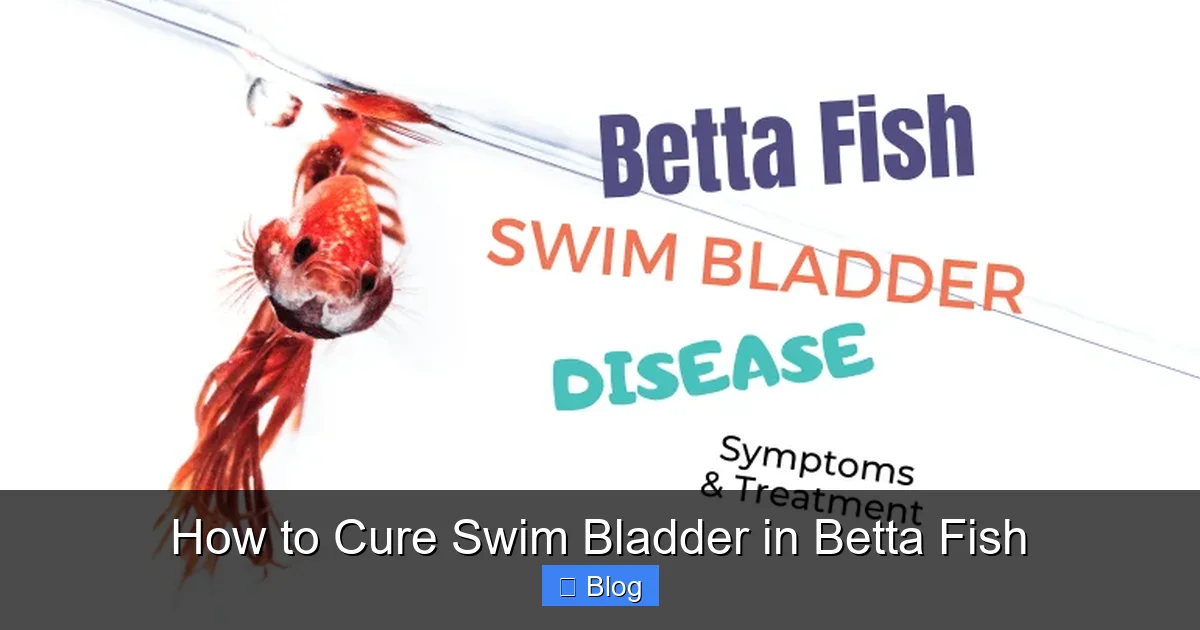
Swim bladder disorder (SBD) in bettas is often treatable, especially when caught early. The primary causes are typically diet-related (constipation, overfeeding) or due to poor water quality. Immediate action involves a brief fast and water parameter correction. Long-term recovery hinges on a high-quality, fiber-rich diet and pristine tank maintenance to prevent recurrence.
Key Takeaways
- Constipation is the #1 Culprit: Overfeeding or feeding low-quality, dry foods is the most common cause of SBD in bettas. A brief fast followed by a high-fiber diet (like daphnia) is the first and most effective treatment.
- Water Quality is Non-Negotiable: Poor water conditions (high ammonia/nitrite, improper temperature) stress bettas and can directly cause or exacerbate SBD. Regular testing and water changes are critical for both treatment and prevention.
- Identify the Type of SBD: Observe if your betta is sinking (negative buoyancy), floating uncontrollably (positive buoyancy), or listing to one side. This can hint at the cause, with constipation usually causing sinking.
- Epsom Salt Baths Can Help: For cases involving swelling or inflammation (not constipation), a diluted Epsom salt bath can reduce swelling and ease pressure on the swim bladder.
- Prevention is Easier Than Cure: A consistent feeding schedule with pre-soaked, high-quality pellets and occasional fiber treats, coupled with a filtered, heated, and cycled tank, prevents most SBD cases.
- Rule Out Incurable Causes: While rare, genetic defects, permanent organ damage, or advanced bacterial infections can cause irreversible SBD. If standard treatments fail after 7-10 days, consult an aquatic vet.
[FEATURED_IMAGE_PLACEHOLDER]
📑 Table of Contents
- Understanding Swim Bladder Disorder in Betta Fish
- Step 1: Immediate Assessment and Critical First Actions
- Step 2: The Primary Treatment Protocol – Fasting and Fiber
- Step 3: Long-Term Dietary Management and Prevention
- Step 4: Advanced Treatments and When to Consider Other Causes
- Step 5: Optimizing the Tank Environment for Recovery
- Conclusion: Patience, Consistency, and Proactive Care
Understanding Swim Bladder Disorder in Betta Fish
Seeing your beautiful betta fish floating upside down, sinking to the bottom like a stone, or listing hopelessly to one side is a heart-stopping moment for any owner. This isn’t just quirky behavior; it’s a sign of swim bladder disorder (SBD), a common but often manageable condition. The swim bladder is a gas-filled organ that acts like a buoyancy control device, allowing your fish to maintain its position in the water column with minimal effort. When this organ is inflamed, compressed, displaced, or damaged, the betta loses this control, leading to the distressing symptoms we recognize.
It’s crucial to understand that “swim bladder disorder” is a symptom, not a specific disease. It’s your betta’s way of telling you something is wrong internally. The good news? For the vast majority of bettas, especially those in home aquariums, the cause is environmental or dietary, and therefore, treatable. This guide will walk you through every step, from initial panic to long-term management, to help you cure swim bladder in your betta fish and restore its graceful swimming.
Step 1: Immediate Assessment and Critical First Actions
Before you even think about cures, you must assess the situation. Your first 24 hours are critical. Rushing to add medications without understanding the cause can do more harm than good.
Visual guide about How to Cure Swim Bladder in Betta Fish
Image source: hepper.com
Observe and Document the Symptoms
Watch your betta closely for 10-15 minutes. Is it:
- Sinking/Unable to Rise: It rests on the substrate and struggles or fails to swim up. This is often linked to constipation, where a full gut presses against the bladder.
- Floating/Unable to Sink: It floats at the surface, sometimes upside down, and cannot dive down. This can indicate gas buildup or a different type of pressure.
- Listing/Side-Swimming: It swims at a constant 45-degree (or more) angle, usually to one side. This can point to a physical injury, infection, or internal parasite affecting balance.
- Erratic “Log Rolling”: It flips and spins uncontrollably. This is more severe and suggests significant neurological or severe physical disruption.
Take a short video. This helps you track progress and is invaluable if you need to seek advice from a vet or experienced forum member.
Test Your Water Immediately
This is the single most important step you can take. Use a reliable liquid test kit (like API Freshwater Master Test Kit). You are looking for:
- Ammonia (NH3/NH4+): Must be 0 ppm. Even 0.25 ppm is toxic and stressful.
- Nitrite (NO2-): Must be 0 ppm.
- Nitrate (NO3-): Should be below 20 ppm, ideally under 10 ppm for a sick betta.
- pH: Should be stable between 6.5-7.5. Extreme swings are dangerous.
If any parameter is off, a 25-50% water change with properly dechlorinated, temperature-matched water is your first and most powerful treatment. Do not add any medications yet.
Check Your Tank Setup and Temperature
Bettas are tropical fish. Their water must be a constant 78-80°F (25.5-26.5°C). Cold water slows digestion, leading to constipation, and suppresses the immune system. Use a reliable aquarium heater and a separate thermometer to verify the temperature. Also, ensure your tank is filtered and cycled. A small, unfiltered “bowl” is a recipe for chronic SBD due to poor water quality.
Step 2: The Primary Treatment Protocol – Fasting and Fiber
Assuming your water parameters are now pristine (0/0/<20), the next step addresses the most common cause: constipation. A full, undigested meal of dry pellets can physically press against the swim bladder, causing compression. The goal is to clear the digestive tract.
Visual guide about How to Cure Swim Bladder in Betta Fish
Image source: uploads-ssl.webflow.com
The Mandatory Fast
Stop feeding your betta immediately. I know it feels cruel, but it’s not. A healthy betta can easily go 5-7 days without food. This fast allows the digestive system to fully process and eliminate any existing waste. For a constipated betta showing sinking symptoms, a 3-5 day fast is the cornerstone of treatment. Do not skip this step.
Introducing the Magic Bullet: Daphnia
After the fast (Day 4 is a good start), offer a tiny amount of live or frozen daphnia. Daphnia is a small, water flea that is:
- High in dietary fiber, which acts as a natural laxative.
- Easy to digest.
- Nutritious and protein-rich.
- Frozen Foods: Brine shrimp, bloodworms, and mysis shrimp. These are protein-rich and should be fed 1-2 times a week. Thaw and rinse before feeding.
- Live Foods: A rare treat of live brine shrimp or microworms can provide excellent nutrition and stimulation.
- Weekly Fiber Boost: Once a week, feed a small serving of daphnia or a bit of peeled pea instead of pellets. This keeps the digestive system moving smoothly.
- Dosage: 1-3 teaspoons of pure Epsom salt per gallon of water.
- Method: Dissolve in a separate hospital tank or clean container with water from the main tank. Place the betta in this bath for 10-15 minutes daily for 3-5 days.
- Important: Do not add Epsom salt directly to the main display tank unless treating the entire tank for a confirmed issue, as it can affect beneficial bacteria and plants.
- Add Floating Resting Places: A betta leaf hammock, a piece of Indian almond leaf, or even a suction cup leaf allows your fish to rest near the surface without exhausting itself fighting the current.
- Remove Sharp Decor: Any ornaments with rough edges should be removed to prevent injury if the fish bumps into them.
- Lower the Water Level: For a betta that struggles to reach the surface, lowering the water level by a few inches reduces the distance it must travel to gulp air.
- Gentle Flow: Ensure your filter output is not creating a strong current. Use a sponge filter or baffle the intake/outtake of a hang-on-back filter with a sponge.
If using frozen, thaw a small piece (a few individuals) in a cup of tank water and offer it with a pipette or tweezers. If using live, rinse a few from their culture and add directly. The goal is just a few bites to stimulate the gut. If your betta eats it, great. If not, don’t worry; continue the fast another day. Repeat a small serving of daphnia every other day for a week.
Alternative Fiber Sources
If you don’t have daphnia, a tiny piece of peeled, cooked green pea (mashed) can work. Blanch a frozen pea, remove the skin, and mash a quarter of it. Offer a rice-grain-sized amount. The fiber is effective, but peas are starchy and can foul water quickly, so remove any uneaten portion after 15 minutes.
Step 3: Long-Term Dietary Management and Prevention
Once your betta shows improvement—swimming more normally, perhaps resting on plants instead of the bottom—you must change its diet permanently to prevent a relapse. This is how you cure swim bladder issues for good.
Visual guide about How to Cure Swim Bladder in Betta Fish
Image source: aqualifetank.com
Choosing the Right pellets
Not all betta pellets are created equal. Cheap pellets often contain high levels of fillers like wheat and soy, which are hard to digest and swell in the gut. Look for a high-quality pellet where fish or shrimp meal is the first ingredient. Brands like New Life Spectrum, Hikari Betta Bio-Gold, or Omega One are good starting points.
The Soaking Ritual
Always, always pre-soak your dry pellets. Place the portion you plan to feed (no more than 2-3 pellets for an adult betta, once or twice daily) in a cup of tank water for 5-10 minutes until they are completely saturated and sink. This prevents them from expanding in your betta’s stomach, which is a primary cause of constipation. Never feed floating dry pellets.
A Varied, Fiber-Rich Menu
Dietary variety is key. In addition to soaked pellets, offer occasional treats:
Feeding Rule: Your betta’s stomach is roughly the size of its eyeball. Feed no more than that volume per day, split into two meals. When in doubt, underfeed.
Step 4: Advanced Treatments and When to Consider Other Causes
If fasting and dietary changes yield no improvement after 7-10 days, or if your betta’s symptoms don’t match constipation (e.g., persistent floating, clear signs of infection), you must consider other causes.
Epsom Salt (Magnesium Sulfate) Baths
Epsom salt is not a medication; it’s a therapeutic agent that can reduce swelling and inflammation. It can help if the SBD is caused by internal inflammation, injury, or a bacterial infection causing fluid buildup. Do not use table salt or aquarium salt.
Medications: Proceed with Extreme Caution
Only consider antibiotics or antiparasitics if you have confirmed evidence of infection. Look for external signs like clamped fins, redness, sores, or frayed fins combined with SBD. Common internal culprits are Mycobacterium (Fish TB, incurable) or severe parasites. Never medicate a betta with SBD in a community tank without a hospital setup, as most medications are toxic to invertebrates and beneficial bacteria. If you suspect infection, a vet consultation is the best path.
Genetic and Permanent Damage
Some bettas, particularly those from low-quality breeders, are born with congenital swim bladder deformities. These are not curable. Similarly, a severe physical injury (a fall, attack from a tankmate) can cause permanent damage. If your betta shows no improvement after thorough, correct treatment for 2 weeks, this may be the unfortunate reality. In these cases, focus on quality of life: easy-to-access food, a tank with gentle flow and no sharp decor, and possibly a water level lowered so it can rest near the surface.
Step 5: Optimizing the Tank Environment for Recovery
Your betta’s tank is its hospital, sanctuary, and home. Optimizing it is part of the cure.
Water Changes are Your Best Tool
During treatment, perform 25-50% water changes daily with properly dechlorinated, temperature-matched water. This dilutes any potential toxins, keeps parameters pristine, and provides a mild stress-relief stimulus. Use a gravel vacuum to remove any uneaten food or waste from the substrate.
Tank Layout for a Disabled Fish
Modify the tank to make life easier:
The Importance of a Heater and Filter
If your betta is in an unfiltered, unheated tank, moving it to a proper, cycled, heated setup is often the single biggest cure. A stable 78-80°F temperature boosts metabolism and immune function. A gentle filter maintains water quality. A cycled tank has beneficial bacteria that process toxic waste. This is the foundation of all betta health.
Conclusion: Patience, Consistency, and Proactive Care
Curing swim bladder in your betta fish is a process of elimination and supportive care. It begins with the fundamentals: pristine water and a corrected diet. For the typical case of constipation-induced SBD, the formula is simple: Test water -> Perform water changes -> Fast for 3-5 days -> Introduce daphnia -> Transition to soaked, high-quality pellets with weekly fiber. This protocol resolves the issue for most betta owners.
Remember, your betta cannot tell you it’s in pain. Its strange swimming is a cry for help. By becoming a detective—observing symptoms, testing water, reviewing feeding habits—you become its advocate. The goal isn’t just a temporary fix, but a permanent shift to proactive husbandry. A well-fed betta on a proper diet, living in clean, warm water, is a healthy betta, swimming proudly and beautifully for years to come. Your patience and consistent care are the most powerful medicines of all.
Frequently Asked Questions
How long should I fast my betta with swim bladder issues?
Start with a 3-day fast. If there’s no improvement, you can extend it to 5 days. Always resume feeding with a high-fiber food like daphnia or a peeled pea after the fast. Do not fast for more than 7 days without consulting a vet.
Can I use aquarium salt to cure swim bladder?
No. Aquarium salt (sodium chloride) is not effective for SBD and can worsen the problem if the cause is constipation or internal inflammation. Epsom salt (magnesium sulfate) is the correct therapeutic salt for reducing swelling, but it’s only appropriate for specific non-constipation cases. Focus on water quality and diet first.
Is swim bladder contagious to other fish?
The disorder itself is not contagious. However, if the underlying cause is a contagious bacterial or parasitic infection (which is less common), then that infection could spread to other fish in the same system. This is why it’s crucial to isolate a sick betta in a hospital tank for treatment and observation.
My betta is floating at the top and can’t dive. Is it still constipation?
Not necessarily. While constipation typically causes sinking (negative buoyancy), persistent floating (positive buoyancy) can indicate gas buildup, a different type of internal pressure, or even a chronic issue. Follow the full protocol: perfect water, a fast, then daphnia. If there’s no change in 7-10 days, consider an Epsom salt bath or seek a vet’s opinion for other causes like infection.
Can overfeeding *once* cause permanent swim bladder damage?
A single episode of severe overfeeding can cause acute constipation and temporary SBD, but it will not cause permanent damage if treated correctly with a fast and proper diet. Permanent damage usually results from chronic poor diet, severe untreated infection, or physical injury.
When is it time to consider euthanasia for a betta with SBD?
This is a difficult but important question. Consider humane euthanasia if: your betta shows no improvement after 2-3 weeks of diligent, correct treatment (proper water, fasting, daphnia); it is suffering visibly (constant distress, inability to eat even soft foods, extreme lethargy); or a vet has diagnosed an incurable condition like advanced Fish Tuberculosis (Mycobacteriosis). The goal is always to prevent suffering.