How to Clean a 2 Gallon Betta Fish Tank

Cleaning a 2-gallon betta tank requires a gentle approach to maintain water quality and reduce stress. Never replace all the water at once—partial changes are crucial. Always use a dechlorinator and avoid soap or chemicals. Test water parameters regularly to keep your betta healthy.
Key Takeaways
- Small Tanks Are Unstable: A 2-gallon volume experiences rapid chemical changes, making frequent, gentle cleaning essential for your betta’s health.
- Partial Water Changes Are Non-Negotiable: Replace only 25-50% of the water weekly to remove toxins while preserving beneficial bacteria and stable water conditions.
- Dechlorinator Is Mandatory: Always treat tap water with a water conditioner to neutralize chlorine and chloramines, which are lethal to fish.
- Avoid Overcleaning: Never scrub all surfaces, replace filter media unnecessarily, or use soaps, as this destroys the tank’s biological filter and causes dangerous cycling.
- Match Water Parameters: Ensure new water temperature and pH closely match the old tank water to prevent thermal shock or pH stress on your betta.
- Clean Decor Separately: Remove ornaments and rinse them in old tank water (never tap water) to preserve beneficial bacteria colonies.
- Observe Your Betta: Watch for signs of stress like clamped fins or lethargy after cleaning, which indicate a mistake in the process.
📑 Table of Contents
- Why Cleaning a 2-Gallon Betta Tank Is a Delicate Dance
- Understanding Your 2-Gallon Ecosystem: The Nitrogen Cycle in Miniature
- The Essential Toolkit: What You Need Before You Start
- Step-by-Step: The Gentle Cleaning Process for a 2-Gallon Betta Tank
- Critical Mistakes to Avoid When Cleaning a Small Betta Tank
- Monitoring Water Parameters: The Non-Negotiable Health Check
- Equipment Specifics for a Nano Betta Tank
- Establishing a Sustainable Maintenance Routine
- Conclusion: Patience and Observation Are Your Best Tools
Why Cleaning a 2-Gallon Betta Tank Is a Delicate Dance
You’ve got a beautiful betta fish in a charming 2-gallon tank. It’s the perfect size for a desk or shelf, offering your vibrant companion a cozy home. But here’s the critical truth many new betta owners discover the hard way: a small tank is a fragile ecosystem. In a 2-gallon environment, water quality can shift from perfect to dangerous in a matter of hours. This makes how to clean a 2 gallon betta fish tank one of the most important skills you can learn as a pet owner. It’s not about a massive, disruptive scrub-down. It’s about a precise, gentle maintenance routine that supports the tiny, life-sustaining world you’ve created.
Think of your betta’s tank as a small, closed pond. Fish waste, uneaten food, and decaying plant matter constantly break down into toxic ammonia. In a large aquarium, this toxin is diluted and processed by beneficial bacteria over time. In a 2-gallon tank, there’s nowhere for those toxins to hide. They accumulate quickly. The goal of cleaning isn’t to make everything sparkly and new; it’s to remove a portion of these toxins and waste while carefully preserving the beneficial bacteria that form your tank’s biological filter. Disrupt this balance, and you risk “new tank syndrome,” ammonia spikes, and a very sick betta. Let’s walk through the right way to do it.
Understanding Your 2-Gallon Ecosystem: The Nitrogen Cycle in Miniature
Before you touch a gravel vacuum, you must understand what you’re managing. The nitrogen cycle is the foundation of any aquatic ecosystem. In your betta’s tank, it works like this:
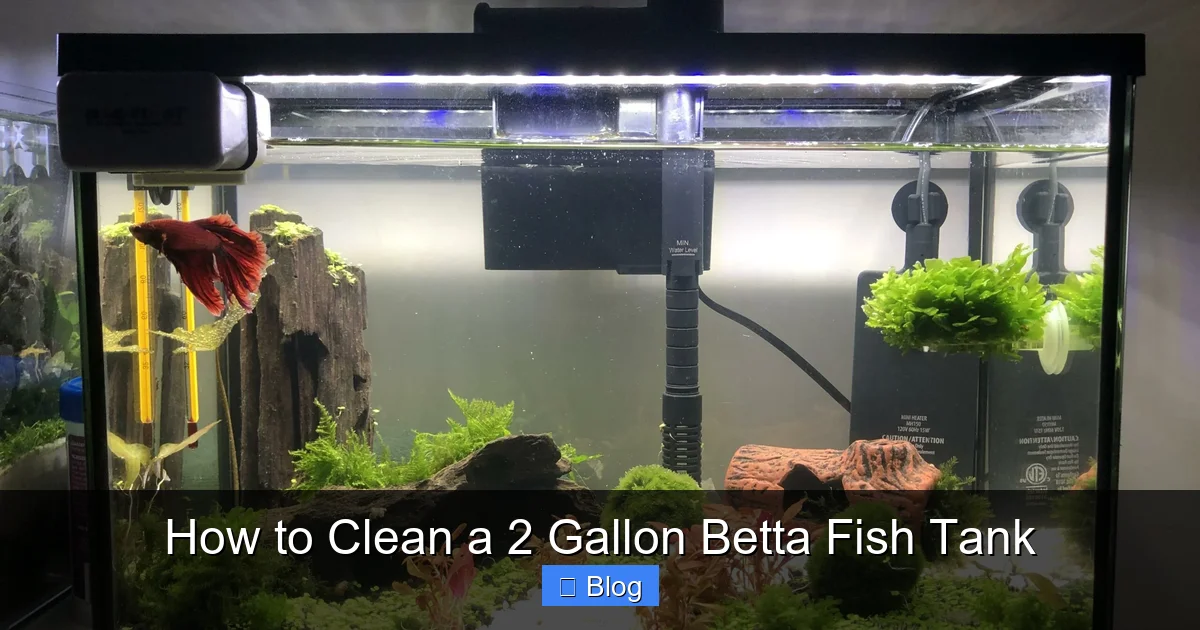
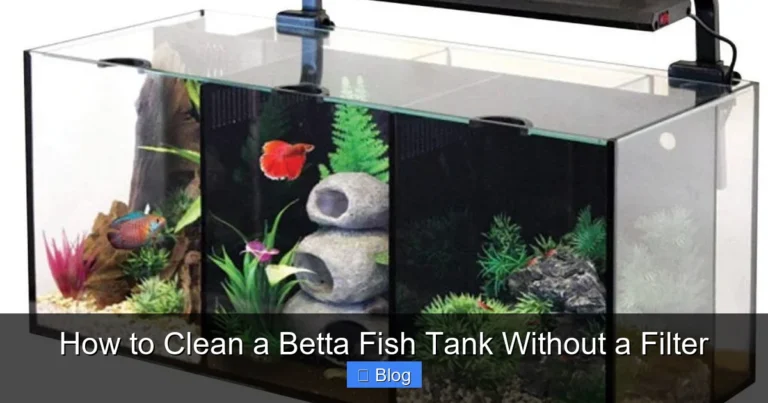
Visual guide about How to Clean a 2 Gallon Betta Fish Tank
Image source: fishtankbasics.com
- Fish waste and uneaten food produce ammonia (NH3/NH4+), which is highly toxic.
- Special bacteria (Nitrosomonas) convert ammonia into nitrite (NO2-), which is also toxic.
- Another bacteria group (Nitrospira) then converts nitrite into nitrate (NO3-), which is much less toxic and can be removed through water changes.
In a stable, cycled 2-gallon tank, these bacteria live primarily in the filter media and on surfaces like gravel and decorations. They are your best friends. When you clean a 2 gallon betta fish tank, your primary job is to remove physical waste (poop, old food) and dilute nitrates without washing away these crucial bacterial colonies. This is why the method differs so much from cleaning a glass drinking glass.
The Instability of Small Volumes
Let’s do a quick, scary math problem. Your betta produces a tiny amount of waste. In a 50-gallon tank, that waste is spread thin. In your 2-gallon tank, that same waste is concentrated 25 times more. A single overfeeding can cause a noticeable spike. A missed water change allows nitrates to climb. This constant pressure means your maintenance schedule must be consistent and correct. There is no “set it and forget it” with a nano tank.
The Essential Toolkit: What You Need Before You Start
Gathering your supplies beforehand makes the process smooth and fast, minimizing the time your betta is out of its home. Rushing to find a bucket mid-clean is a recipe for mistakes.
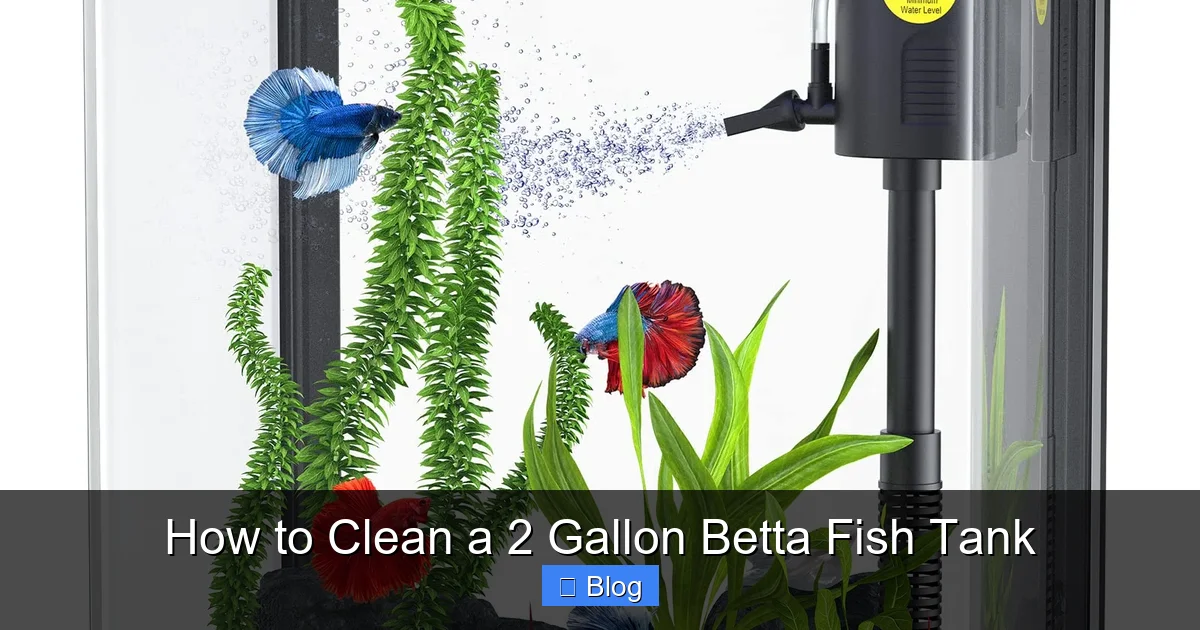
Visual guide about How to Clean a 2 Gallon Betta Fish Tank
Image source: images-na.ssl-images-amazon.com
- A Dedicated Bucket (2-3 Gallon Size): This bucket is for aquarium use ONLY. Never use a bucket that has held soap, chemicals, or even regular cleaning products. Residues are fatal. A clean, plastic utility bucket is perfect.
- Water Conditioner/Dechlorinator: This is your #1 chemical defense. Brands like Seachem Prime are popular because they also detoxify ammonia and nitrite for 24-48 hours, offering a safety net. Follow dosage instructions precisely based on the volume of water you are replacing.
- A Gravel Vacuum/Siphon: This is a flexible tube with a wide end that you can stir into the gravel. It siphons out debris-laden water without disturbing the substrate too much. Look for a small, 6-12 inch model suitable for nano tanks.
- Algae Scraper or Clean Cloth: For the glass. Use a clean, soft cloth (like a microfiber cloth) dedicated to the tank, or a plastic algae scraper. Never use a kitchen sponge or anything with soap residue.
- A Small Net: For safely transferring your betta.
- Paper Towels or a Clean, Lint-Free Cloth: For wiping down the outside of the tank and any spills.
- Optional but Helpful: A Turkey baster for sucking out debris from tight spots, a toothbrush dedicated to the tank for scrubbing decorations.
Step-by-Step: The Gentle Cleaning Process for a 2-Gallon Betta Tank
Now, let’s put the toolkit to work. This process should take 20-30 minutes from start to finish. The key is efficiency to reduce stress for your fish.
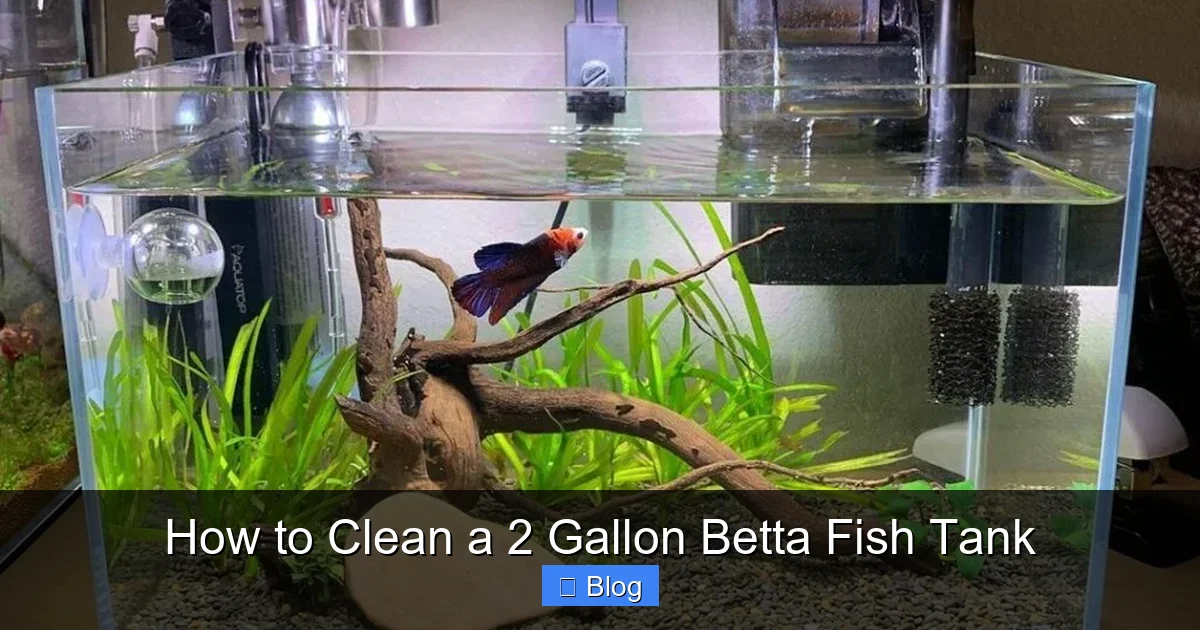
Visual guide about How to Clean a 2 Gallon Betta Fish Tank
Image source: fishlab.com
Step 1: Preparation (5 Minutes)
First, prepare your bucket of replacement water. Fill it with tap water from your sink. This is critical: The new water must be within 1-2 degrees Fahrenheit (or 0.5-1 degree Celsius) of your tank’s current temperature. Betta fish are tropical and extremely sensitive to temperature shock. If your tank is at 78°F, your new water must be 77-79°F. You can achieve this by letting the tap water sit for 30 minutes to reach room temperature, or by mixing a little hot and cold tap water. Once the temperature is right, add the correct dose of water conditioner/dechlorinator to the bucket. Stir gently.
Step 2: Acclimate & Remove Your Betta
Turn off any filters or heaters to prevent damage during the water change. Gently net your betta. Be patient—chasing stresses them. Once netted, place your betta in a clean, secure holding container (a small, clean food storage tub or another small, clean aquarium works well). Add enough of the old tank water from your 2-gallon tank to cover the betta. Do not use fresh, conditioned tap water for the holding container yet. The goal is to keep it in its own water, at its own temperature, in a dark, quiet place while you work. Cover the container with a towel to keep it dark and calm.
Step 3: Clean the Tank Interior & Decorations
With the betta safe, start on the tank. Use your algae scraper or damp cloth to gently wipe the inside glass. Start at the water line and work down. You’ll remove a film of algae and biofilm. Do not use any cleaning agents. For decorations (plastic plants, castles, etc.), remove them one by one. Rinse them thoroughly in the old tank water you just siphoned out or in a separate bowl of dechlorinated tap water. The goal is to remove visible gunk and algae, not to sterilize them. A light scrub with a dedicated toothbrush in old tank water is fine. This preserves the beneficial bacteria living on their surfaces.
Step 4: The Gravel Vacuum & Partial Water Change
This is the heart of the cleaning process. Place the wide end of your gravel vacuum into the substrate. Push it down about 1-2 inches. Start the siphon by sucking on the tube (or using a primer bulb). Once water flows, gently hover the vacuum just above the gravel and move it in a slow, grid-like pattern across the entire bottom. You’ll see fish poop, old food, and debris get sucked up into the tube. This is the physical waste you must remove. Do not dig the vacuum deeply into the gravel. You are removing debris from the top layer, not stirring up the deep substrate where deeper bacteria live.
As you vacuum, the dirty water flows into your bucket. Continue until you have removed 25-50% of the tank’s total water volume. For a 2-gallon tank, that means siphoning out half a gallon to one full gallon. Watch the clarity of the water in the vacuum tube—when it runs relatively clear, move to a new spot.
Step 5: Clean the Filter (If Applicable)
If your tank has a small internal filter or a sponge filter, this is the time to gently clean it. Never use tap water to rinse filter media. Take the filter cartridge or sponge and squeeze/rinse it gently in the dirty water you just siphoned out (the water in your bucket). This water contains the beneficial bacteria you need to keep. Squeeze until the water runs clear-ish. You are removing the clogging gunk, not sterilizing it. If your filter has a carbon cartridge, you can replace that monthly, but the biological media (ceramic rings, sponge) should only be rinsed, never replaced all at once.
Step 6: Add New Water & Return Your Betta
Now, slowly pour the new, conditioned, temperature-matched water from your bucket back into the tank. Do this gently to avoid startling your betta if it’s already back in. A common trick is to pour the new water over a plate or your hand to diffuse the flow. Fill the tank to its original level. Re-insert any decorations. Turn your heater and filter back on. Wait about 15-20 minutes for the water to settle and for the temperature to fully stabilize. Then, net your betta from its holding container and gently return it to the clean tank. Pour out the holding container water (do not add it to the tank).
Step 7: Final Touches & Observation
Wipe down the outside of the tank with your dry cloth. Recycle or discard the old tank water from your bucket—do not pour it down the sink if you have a septic system, but municipal sewage is fine for the small volume. Finally, observe your betta for the next hour. It may hide for a bit, which is normal. Look for normal swimming and curiosity. If it’s frantically darting, gasping at the surface, or has clamped fins, double-check your water temperature and parameters.
Critical Mistakes to Avoid When Cleaning a Small Betta Tank
Even with the best intentions, it’s easy to make errors that can harm your fish. Here are the most common pitfalls and why they are so dangerous in a 2-gallon system.
Mistake 1: The Full Water Change & Complete Scrub-Down
This is the #1 killer of small-tank bettas. The instinct is to dump all the old water, scrub every surface with soap (or even just hot water), and start fresh. This obliterates the entire biological filter. You are left with a sterile tank full of new, dechlorinated water and a fish producing toxic ammonia. With no bacteria to process it, ammonia will spike within 24-48 hours, causing ammonia poisoning, which is often fatal. Never do 100% water changes on a cycled tank. The only exception is a true emergency like a chemical spill, and even then, you must quickly re-seed the bacteria.
Mistake 2: Using Soap or Household Cleaners
Even a tiny residue of dish soap, glass cleaner, or hand soap is catastrophic for fish. These products disrupt gill function and are extremely toxic. All cleaning of tank items must be done with water only—preferably old tank water. If you absolutely must use something for stubborn algae on decorations, use a dedicated aquarium-safe algae pad or a vinegar solution (1 part vinegar to 1 part water), rinsed extremely thoroughly with dechlorinated water afterward.
Mistake 3: Ignoring Water Temperature Matching
Pouring in cold tap water into a warm 78°F tank can drop the temperature by 10 degrees or more in minutes. This thermal shock severely stresses a betta, suppressing its immune system and making it susceptible to disease like dropsy or velvet. Always pre-mix and temperature-acclimate your new water as described in Step 1.
Mystake 4: Cleaning the Filter Media with Tap Water
Chlorine and chloramines in tap water will kill the beneficial bacteria living in your filter sponge or cartridge. This is partially why you rinse filter media in the dirty siphoned water—the bacteria are already adapted to that environment, and the water is dechlorinated (since it came from the tank). Using tap water resets your biological filter, causing an ammonia spike.
Mistake 5: Changing Water Too Infrequently
The flip side of over-cleaning is under-cleaning. In a 2-gallon tank, waiting two or three weeks for a water change allows nitrates to build to toxic levels (above 20 ppm for bettas). High nitrates cause stress, poor appetite, and increased susceptibility to disease. Stick to a weekly schedule for partial changes.
Monitoring Water Parameters: The Non-Negotiable Health Check
You cannot clean a 2 gallon betta fish tank effectively or safely without monitoring the water. Visual clarity is not an indicator of safety. You need to test for the invisible killers.
The Core Parameters to Test
Use a liquid test kit (like the API Freshwater Master Test Kit) for accuracy, or high-quality test strips as a secondary option. Test your tank water before you start your weekly cleaning. This tells you what your baseline is.
- Ammonia (NH3/NH4+): Should always be 0 ppm. Any detectable ammonia means your tank is not cycled or is overloaded.
- Nitrite (NO2-): Should always be 0 ppm. Like ammonia, it’s acutely toxic.
- Nitrate (NO3-): Should be kept below 20 ppm for bettas. This is the primary reason for your weekly water change.
- pH: Betta prefer a stable pH between 6.5 and 7.5. The danger lies in rapid swings, not a specific number. Your new water should match the tank’s pH as closely as possible.
- Temperature: Maintain between 76°F and 82°F (24°C-28°C) with a reliable heater. A small, adjustable heater is essential for a 2-gallon tank.
Interpreting Your Tests & Adjusting
If your pre-cleaning test shows ammonia or nitrite, your tank’s cycle has crashed. This is an emergency. You must perform a 25% water change immediately and test daily until parameters are 0/0/<20. Do not add any new fish. You may need to use an ammonia detoxifier like Seachem Prime. If nitrates are consistently high (above 40 ppm) despite weekly changes, you are either overfeeding or need to increase the change volume slightly (up to 50%).
Equipment Specifics for a Nano Betta Tank
Small tanks demand appropriately-sized equipment. Using a filter or heater meant for a 10-gallon tank in a 2-gallon tank can create lethal currents or overheat the water.
Filters: Gentle is the Word
Bettas have long, flowing fins and are weak swimmers. A strong filter current will exhaust them, stress them, and can even damage their fins. For a 2-gallon tank, look for:
- A small, adjustable internal power filter (like the Tetra Whisper IQ or Fluval Nano).
- A sponge filter powered by a tiny air pump. This provides excellent biological filtration with a gentle flow and is a top recommendation for bettas.
- Always use a filter guard or adjust the outflow to diffuse the current. The water should be nearly still.
Heaters: Precision in a Small Space
Standard aquarium heaters can be too powerful for a 2-gallon tank, causing rapid, dangerous temperature swings. You need a submersible, adjustable nano heater rated for 1-5 gallons. A 25-watt heater is typical. Place it near the filter outflow (if any) to help distribute heat evenly, but ensure it’s fully submerged at all times. Use a separate, small thermometer (a stick-on external type or a digital probe) to verify the heater’s setting, as built-in thermostats can be inaccurate.
Lighting: Less is Often More
Intense lighting promotes rapid algae growth in small volumes. A simple, low-intensity LED clip-on light or the lid light (if kept on a low setting) is sufficient. Avoid direct sunlight, which will cause algae explosions and dangerous temperature spikes.
Establishing a Sustainable Maintenance Routine
Consistency is everything. A set routine prevents problems before they start. Here is a sample schedule for a healthy 2-gallon betta tank.
- Daily (1 Minute): Look at your betta. Is it active? Eating well? Any clamped fins, spots, or frayed edges? Check that the filter is flowing and the heater light is on (if applicable). Feed only what it eats in 2-3 minutes, once a day (bettas are prone to overfeeding).
- Weekly (20-30 Minutes): Perform the full partial water change and cleaning process described above. Test water parameters (nitrate, nitrite, ammonia, pH) before you start. This is your most important task.
- Monthly (30-45 Minutes): Do a slightly more thorough inspection. Clean the glass more carefully. Check the filter media—if it’s very clogged, rinse it more thoroughly (still in old tank water). Inspect the heater for mineral buildup. Trim any live plants. Test your tap water to know its baseline parameters.
- Every 6 Months: Replace filter media if it’s the carbon type (not the biological sponge/ceramic). Inspect all equipment (heater, filter, cords) for wear. Deep-clean any hardscape (rocks, driftwood) if bio-film becomes excessive.
Conclusion: Patience and Observation Are Your Best Tools
Cleaning a 2 gallon betta fish tank is less about brute force and more about becoming a keen observer of a tiny, delicate world. You are not a janitor; you are an ecosystem manager. By following the gentle, partial-change method, you protect the beneficial bacteria that are your tank’s true filtration system. You respect the biological load your betta creates in such a small volume. You prioritize stability over perfection. Remember, a slightly algae-coated glass is far better for your betta than a sterile, crystal-clear tank with toxic ammonia levels. The goal is a healthy, stable, low-stress environment where your betta can thrive, displaying its beautiful fins and curious personality. Stick to the schedule, test your water, and watch your fish. It will tell you everything you need to know.
Frequently Asked Questions
How often should I clean a 2-gallon betta tank?
You should perform a partial water change of 25-50% once a week, without fail. This removes waste and dilutes nitrates. A more involved clean with decor rinsing and filter rinsing can be done during this weekly change. Never go longer than one week without a water change in a tank this small.
Can I use regular tap water for my betta tank?
You can use tap water, but you must treat it with a complete water conditioner/dechlorinator before it touches your tank or fish. Tap water contains chlorine and chloramines to make it safe for human consumption, but these chemicals are lethal to fish. Always condition the new water before adding it.
What if my betta seems stressed after a water change?
Stress after cleaning usually points to a temperature shock or a drastic change in water parameters (pH, hardness). Always pre-mix and temperature-match your new water. Ensure you are not replacing too much water at once (stick to 50% max). Also, avoid sudden noises or bright lights during the process. A stressed betta may clamp its fins, hide, or gasp. Monitor closely and ensure water parameters are safe.
Do I need to remove my betta every time I clean?
Yes, for your own safety and the fish’s. It’s very easy to accidentally net or injure your betta with a gravel vacuum or your hands while you’re working. A small, clean holding container with some old tank water is the safest place for them during the 15-20 minute cleaning process.
How do I clean the filter without killing the good bacteria?
Never rinse filter media under the tap. Instead, take the sponge or cartridge and gently squeeze/rinse it in the dirty water you just siphoned out of the tank. This water contains your beneficial bacteria and is free of chlorine. Rinse until the water runs relatively clear, then place the media back into the filter immediately.
Can I use vinegar to clean algae in my betta tank?
A very diluted vinegar solution (1 part vinegar to 1 part water) can be used on stubborn algae on decorations or glass, but it must be rinsed extremely thoroughly with dechlorinated water afterward. Any vinegar residue will alter your tank’s pH dangerously. For routine cleaning, a dedicated algae scraper and old tank water are sufficient and safer.