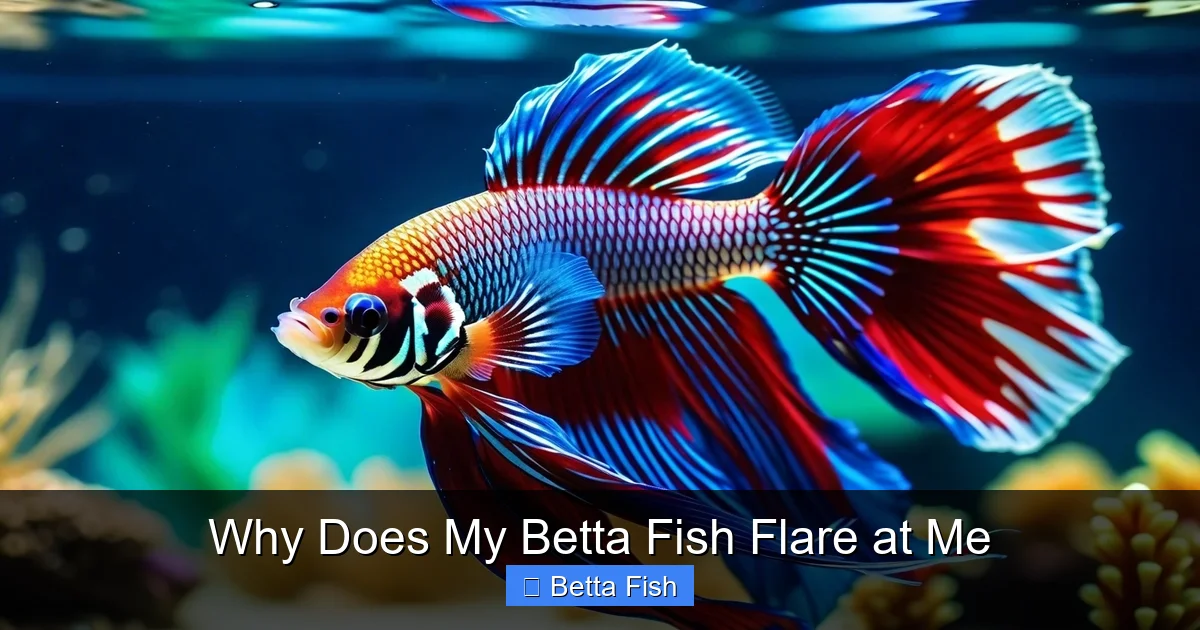
Why Does My Betta Fish Flare at Me

Betta fish flare as a natural response to stress, territory, or excitement. Understanding the triggers—like tank setup, lighting, and your own movements—helps you create a calm environment and strengthen the bond with your finned friend.
Key Takeaways
- Flare is communication: It signals stress, dominance, or curiosity.
- Tank conditions matter: Poor water quality or cramped space often triggers flaring.
- Your presence can be a trigger: Sudden movements or shadows may be seen as threats.
- Observe body language: Fins, color change, and posture tell you why the flare occurs.
- Simple fixes work: Adjust lighting, add plants, and give your betta a routine.
- Bonding is possible: With patience, your betta can learn to recognize you.
- Health checks are essential: Persistent flaring can signal disease or injury.
📑 Table of Contents
- Introduction: The Mystery Behind the Flare
- 1. Territory and Dominance: The Betta’s Natural Instinct
- 2. Stress Triggers in the Environment
- 3. Interaction: How Your Movements Influence the Flare
- 4. Health Issues That Mimic or Trigger Flaring
- 5. Enrichment: Turning Flare Into Fun
- 6. When to Seek Professional Help
- Practical Tips to Reduce Unwanted Flaring
- Conclusion: Turning Flares Into Friendship
Introduction: The Mystery Behind the Flare
If you’ve ever watched a betta fish puff out its glorious fins and stare straight at you, you might wonder, “why does my betta fish flare at me?” The answer is both simple and fascinating. Betta fish are natural show‑off artists. Their flaring is a built‑in communication tool that lets them say “I’m here,” “Back off,” or “I’m excited.”
In this article we’ll break down the most common reasons for flaring, how to read the subtle clues in your fish’s body language, and what you can do to keep the drama to a minimum. By the end you’ll feel confident that you’re not just a spectator—you’re part of the conversation.
1. Territory and Dominance: The Betta’s Natural Instinct
Why a betta sees your hand as a rival
Betta fish (Betta splendens) are solitary by nature. In the wild they defend a small stretch of water called a paternal territory. When you approach the tank, especially from the side, the fish may interpret your hand as an intruder.

Visual guide about Why Does My Betta Fish Flare at Me
Image source: southslopenews.com
How to tell if it’s about dominance
- Full‑body flare: Fins spread wide, colors become brighter.
- Head‑up posture: The fish points its nose toward you.
- Rapid gill movement: A sign of agitation.
If you notice these signs, give your betta a little space. Let it settle before you move again.
2. Stress Triggers in the Environment
Water quality and temperature
Even a tiny spike in ammonia or a sudden drop in temperature can make a betta feel unsafe. Poor water quality causes stress, and a stressed betta flares more often.
Visual guide about Why Does My Betta Fish Flare at Me
Image source: flyfishfinesse.com
Keep a weekly water test and maintain a stable temperature between 76‑80°F (24‑27°C). A well‑conditioned tank reduces unnecessary flaring.
Lighting and reflections
Bright overhead lights or reflections on the glass can look like other fish. Betta fish may flare to claim the “new competitor.” Dim the lights slightly or use a background poster on the back of the tank to break up reflections.
3. Interaction: How Your Movements Influence the Flare
Sudden motions vs. calm presence
Betta fish have excellent vision and can detect motion quickly. A swift hand wave or tapping on the glass is interpreted as aggression. Instead, move slowly and keep your hand steady.
Can a betta recognize its keeper?
Yes! Over time bettas can learn to recognize their owners. Check out our guide on Can My Betta Fish Recognize Me for tips on building that bond. When a betta knows you’re a friend, flaring often turns into a friendly “hello” wave.
4. Health Issues That Mimic or Trigger Flaring
Fin rot, parasites, and injuries
Sometimes a flare is a warning sign that something is wrong physically. If the fins look torn, ragged, or discolored, see our article on Why Does My Betta Fish Fins Look Shredded for diagnosis steps.
Internal stress: bloating and gas
When a betta feels bloated, it may flare to signal discomfort. Learn more in Why Does My Betta Fish Look Bloated. Adjust feeding routines and check for over‑feeding.
5. Enrichment: Turning Flare Into Fun
Adding plants and hiding spots
Live or silk plants give a betta places to claim as “its own.” When a fish feels secure, flaring becomes less about defense and more about display.
Interactive toys
Small floating mirrors or ping‑pong balls can encourage natural curiosity. Watch how your betta reacts—if it flares at the mirror, it’s seeing a “rival.” Over time, you can use this to train it to respond to your presence instead.
Feeding tricks
Use a feeding stick to hover food just above the water. The betta will follow, and you can practice calm hand movements. This reduces the “hand = threat” association.
6. When to Seek Professional Help
Persistent flaring without obvious cause
If your betta flares constantly, even after you’ve checked water, temperature, and tank size, it may be dealing with an underlying illness. Look for signs like loss of color, white patches, or lethargy.
Useful resources
Our article on Why Is My Betta Fish Hiding can help you spot subtle health clues. When in doubt, consult a vet who specializes in fish.
Practical Tips to Reduce Unwanted Flaring
- Slow introductions: When you first set up a tank, give the fish 24‑48 hours to adjust before interacting.
- Consistent lighting schedule: Use a timer to mimic day/night cycles.
- Quiet observation area: Place the tank away from high‑traffic zones.
- Regular water changes: 20‑30 % weekly keeps ammonia low.
- Positive reinforcement: Offer a favorite treat when the fish stays calm during your presence.
Conclusion: Turning Flares Into Friendship
Understanding why does my betta fish flare at me is the first step toward a happier, healthier pet. Most flares are simply the fish’s way of saying “I see you” or “I need space.” By optimizing the tank environment, moving gently, and building a routine, you can turn those dramatic displays into a friendly greeting.
Remember, a betta that feels safe will still flare—but now it’s a proud, colorful show rather than a sign of distress. Keep observing, keep learning, and enjoy the vibrant personality of your finned companion.
Frequently Asked Questions
Why does my betta fish flare when I approach the tank?
Betta fish view sudden movement as a potential threat. Approaching quickly can trigger a territorial flare as the fish tries to assert dominance.
Can flaring be a sign of illness?
Yes. If flaring is constant and accompanied by faded colors, torn fins, or unusual behavior, it may indicate stress from disease or poor water conditions.
How can I stop my betta from flaring at me?
Move slowly, dim bright lights, and give the fish space. Adding plants and hiding spots also helps the betta feel secure.
Do bettas recognize their owners?
They can. With consistent, calm interaction, bettas learn to associate your presence with food and safety, reducing aggressive flares.
Is it normal for a betta to flare during feeding?
Yes. Excitement over food can cause a short flare. It’s usually harmless if the fish’s overall health is good.
When should I worry about my betta’s flaring?
If the flare lasts more than a few minutes, repeats frequently, or is paired with lethargy, loss of color, or fin damage, seek a vet or check water quality immediately.