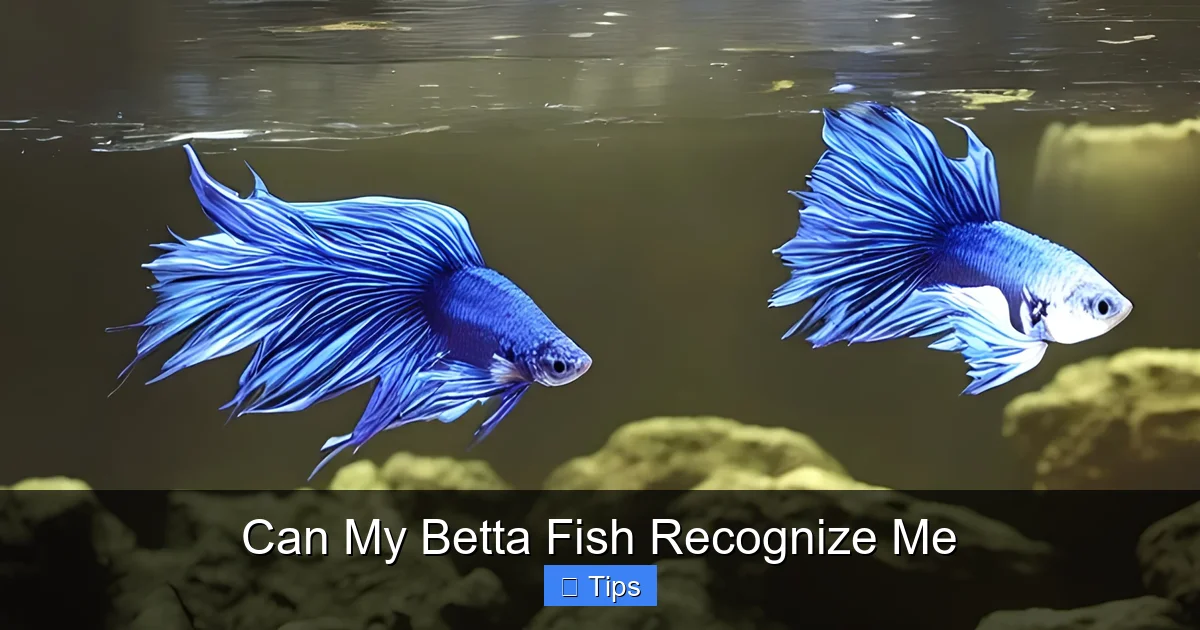
Can My Betta Fish Recognize Me
Yes, your betta fish can likely recognize you through consistent, positive associations. While they don’t understand “ownership” like a dog or cat, their impressive memory (over 5 months) allows them to learn. They primarily use visual cues and routines, connecting your presence with food and safety. You might see them swim to the glass when you approach or perform excited “dances.” This recognition is based on conditioning, not emotional attachment, but building a predictable routine strengthens this associative bond significantly.
Key Takeaways
- Betta fish have a memory span of at least 5 months, not just 3 seconds. This long-term memory is the foundation for associative learning and recognition.
- Recognition is associative, not emotional. Your betta links your face, movements, and feeding times with positive outcomes (food), not with a human-like concept of “owner.”
- Vision is their primary sense for recognition. They can distinguish between different humans based on shape, color, and movement patterns.
- Consistency is absolutely critical. Irregular feeding times or multiple people in different clothing will confuse the learning process.
- Signs of recognition include excited swimming, flaring at strangers, and coming to the front when you approach. These behaviors indicate they’ve learned to anticipate your arrival.
- Individual personality plays a huge role. Some bettas are naturally more interactive and observant, while others are shy, affecting how clearly they show recognition.
- You can actively train and strengthen this bond. Using target feeding, hand signals, and a calm, predictable routine enhances their ability to identify and respond to you.
📑 Table of Contents
- The Curious Mind of the Betta: More Than Just a Pretty Face
- How Your Betta “Sees” You: The Science of Betta Senses
- The Power of Association: How Bettas Learn and Remember
- Reading the Signs: Is My Betta Recognizing Me?
- Strengthening the Bond: Practical Tips for Owner Recognition
- Debunking Myths and Setting Realistic Expectations
- Conclusion: A Partnership Built on Predictability
The Curious Mind of the Betta: More Than Just a Pretty Face
You lean in close to your betta’s tank, and suddenly, he darts to the front, flaring his gorgeous fins in what looks like a greeting. Or maybe he follows your finger along the glass. It’s a heartwarming thought: “Can my betta fish recognize me?” The popular myth of a 3-second goldfish memory has long been debunked, but what about the intelligent, interactive betta? The answer is a fascinating and resounding yes, they can, but with some important scientific and practical distinctions. Your betta absolutely has the capacity to learn who you are and to associate your presence with good things. This isn’t magic; it’s biology and behavioral conditioning. Understanding how they recognize you—and what that recognition truly means—is the key to unlocking a deeper, more enriching relationship with your aquatic companion. It transforms your tank from a simple container into a dynamic environment where your fish actively engages with its world, and you are a central part of that world.
How Your Betta “Sees” You: The Science of Betta Senses
Before we can understand recognition, we must understand perception. Bettas are highly visual creatures, but their sight differs from ours. They possess excellent color vision and can see a broader spectrum, including ultraviolet light. Their eyes are positioned on the sides of their head, giving them a wide field of view—almost 340 degrees—but very limited binocular (overlapping) vision. This means they see you best when you are directly in front of the tank, not from the side. Their vision is tuned for spotting movement and shapes at the water’s surface, a trait from their wild, insect-hunting lifestyle. They don’t see fine details like human faces with the same clarity we do. Instead, they process a composite of your silhouette, height, the colors you wear, and your distinctive movement patterns. Your consistent routine—how you walk to the tank, how you position your hand, even the sound of your footsteps on a specific floor—becomes a unique “signature” they learn to identify.
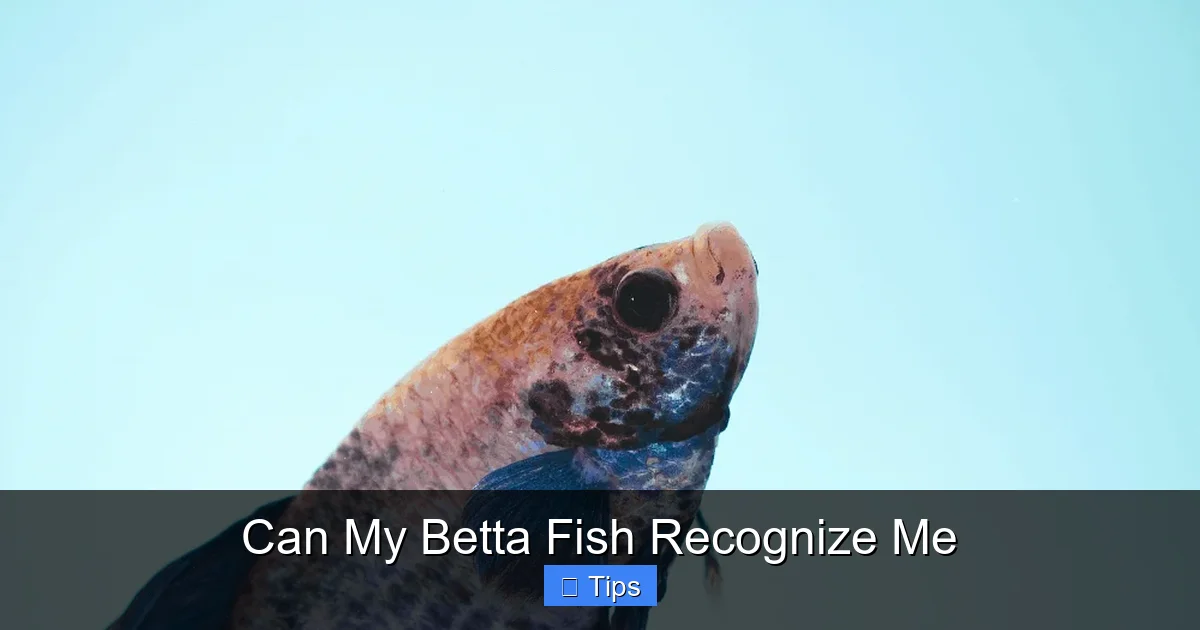
Visual guide about Can My Betta Fish Recognize Me
Image source: tankarium.com
What Else Do They Sense?
While vision is primary for recognition, bettas also use other senses. Their lateral line system detects vibrations and water movement. The sound of your footsteps or the specific way you disturb the water surface when approaching creates a vibrational cue. They also have a good sense of smell (chemoreception) through their nares (nostrils). Over time, the scent of your hand (from lotions, soaps, or just your skin) on the glass or during feeding can become part of the associative package. However, vision is the dominant sense for identifying specific individuals.
The Power of Association: How Bettas Learn and Remember
This is the core mechanism behind recognition: classical conditioning, famously studied by Pavlov with dogs. Your betta’s brain is wired to connect events that happen together. Your face at the tank (neutral stimulus) consistently precedes food (positive unconditioned stimulus). After repeated pairings, your face alone (now a conditioned stimulus) triggers excitement and anticipation (a conditioned response). Research on fish cognition shows that bettas can remember trained tasks for at least 5 months, and likely longer. They remember feeding schedules, the layout of their tank, and the people who interact with them. This long-term memory is why a betta moved to a new home may initially be skittish but can learn to recognize its new owner with consistent, positive interaction. Their learning is not passive; they are constantly observing and cataloging patterns in their environment. You are the most significant variable in that environment.
Visual guide about Can My Betta Fish Recognize Me
Image source: tankarium.com
Practical Example: The Morning Routine
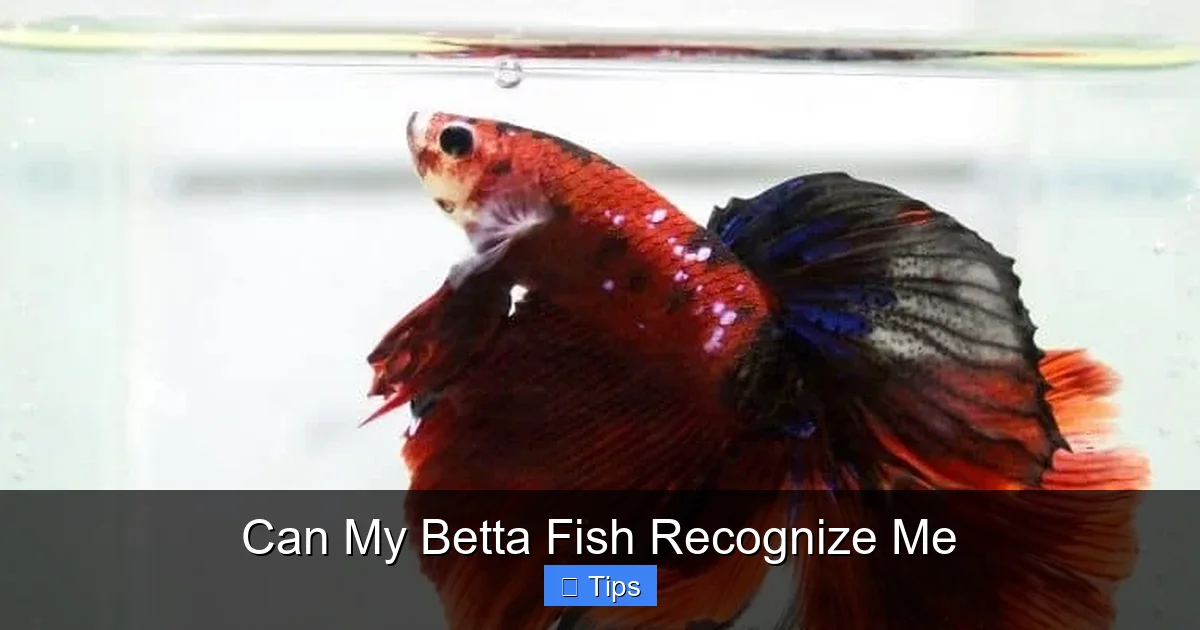
Imagine this: every morning at 8 AM, you walk into the room, stop in front of the tank, and drop in a few pellets. After two weeks, what happens at 7:58 AM? Your betta is likely already waiting at that same spot, watching the doorway. He hasn’t seen the food yet, but he has learned the precise sequence of events that *predict* food. Your specific walk, your pause, your hand moving toward the lid—these are the cues he’s locked onto. If your partner feeds him at 8 AM wearing a bright red shirt, and you feed him at 6 PM in a blue shirt, he will learn to differentiate between the two of you based on those visual and temporal cues.
Reading the Signs: Is My Betta Recognizing Me?
So how do you know if it’s real? Look for these consistent, specific behaviors that indicate your betta has positively associated you with food and safety. The most common sign is coming to the front of the tank when you enter the room or approach, especially at predictable times. This isn’t random swimming; it’s directed movement to the glass where interaction happens. Another sign is eager surface waiting. He may hover right at the waterline as your hand reaches for the lid, sometimes even “jumping” slightly in anticipation. Some bettas develop a unique “begging dance”—a frantic, wiggly swim up and down at the front. Conversely, a betta that flares (puffs up his gills and fins) at other people or at you suddenly when you first approach but then settles may be showing recognition of a “stranger” versus a “caretaker.” The key is consistency and context. If he only does it when you’re about to feed him, it’s a clear sign of associative recognition.

Visual guide about Can My Betta Fish Recognize Me
Image source: animalslog.com
What Recognition Is NOT
It is crucial to manage expectations. Your betta is not thinking, “Oh, it’s my beloved human.” He is not forming an emotional bond like a mammal. His recognition is a survival skill: “This specific moving shape and pattern reliably brings food and does not harm me. This other shape does not.” Do not mistake curiosity or territorial flaring at your reflection for affection. True recognition is shown by anticipatory behavior linked to your routine, not just reaction to movement. If your betta flares at you every time you walk by, it might mean he’s excited for food, or it might mean your movements are too sudden and he feels threatened. Context is everything.
Strengthening the Bond: Practical Tips for Owner Recognition
You can actively nurture and clarify your betta’s ability to recognize you. The golden rule is predictability. Feed at the same times each day. Approach the tank calmly and from the front. Use the same hand for feeding to maintain a consistent scent cue. Start incorporating simple, consistent signals. Before you feed, gently tap a specific spot on the glass or hold up a colored, waterproof object (like a plastic straw). Do this every single time before food drops. Within a week or two, you may see him react to the signal alone. This is advanced conditioning that proves he’s connecting you and your actions with the reward. Spend quiet time sitting by the tank. Let him get used to your stationary presence without the immediate expectation of food. This helps him associate your general presence with a calm environment, not just feeding time. Finally, be patient and observant. Every betta has a unique personality. A naturally shy betta may only ever quietly approach, while an extroverted one will put on a show.
Common Mistakes to Avoid
Inconsistency is the number one reason bettas don’t seem to recognize owners. If you feed at 9 AM one day, 1 PM the next, and your partner feeds at 6 PM, your betta will learn to be vigilant for *any* human at *any* time, not specifically you. Sudden, fast movements will trigger stress and territorial flaring, not positive greeting. Never tap the glass aggressively; it startles them and can cause stress. Also, avoid wearing dramatically different clothing (like a large hat or very bright, changing patterns) if you want to test recognition, as drastic visual changes can temporarily confuse them.
Debunking Myths and Setting Realistic Expectations
The biggest myth is that bettas are solitary, stupid, and aloof. They are intelligent, observant, and capable of complex learning. However, the flip-side myth is that they are like dogs or cats. They will not seek out physical contact. They will not show “love” or attachment in a mammalian sense. Their recognition is a functional, survival-based learning process. Another misconception is that all bettas will be interactive. Genetics and individual temperament play a massive role. A plakat (short-finned) betta bred for aggression might be less inclined to “perform” than a half-moon bred for show, but both are equally capable of learning who feeds them. Setting realistic expectations means celebrating the subtle signs of cognition—the anticipatory swim, the focused gaze—as the remarkable achievements they are for a fish with a brain the size of a grain of rice. It’s about appreciating the intelligent, adaptive creature before you, not projecting human emotions onto it.
Conclusion: A Partnership Built on Predictability
So, can your betta fish recognize you? Absolutely. Through a combination of sharp vision, a memory far longer than popularly believed, and the powerful mechanism of associative learning, your betta learns to identify you as the bringer of food and the consistent element in his world. This recognition is a testament to his cognitive abilities and offers a wonderful opportunity for enrichment. By establishing a calm, predictable routine and using gentle conditioning, you can make this recognition clearer and more reliable. You move from being just a shadow outside the glass to a known, anticipated part of his daily life. This doesn’t mean your betta loves you, but it does mean he knows you. And in the quiet world of his tank, that knowledge is the foundation of a truly engaging and rewarding pet relationship. Your consistent care is not going unnoticed; it is being learned, remembered, and eagerly anticipated, one day at a time.
Frequently Asked Questions
Do betta fish know their names?
No, betta fish do not understand the concept of names as humans do. They respond to sound patterns and, more importantly, to your consistent visual presence and the routine that follows. They learn to associate the sound of your voice or the pattern of your movements with feeding, not the specific word you call them.
How long does it take for a betta to recognize its owner?
With consistent daily interaction, especially around feeding times, a betta can start showing signs of recognition within 1 to 2 weeks. For the behavior to become solid and automatic, it may take 3 to 4 weeks of a strict routine. New bettas or those with inconsistent care may take longer or show less obvious signs.
Why doesn’t my betta come to the front when I walk by?
There are a few common reasons. The most likely is inconsistency—if different people feed at different times, or you don’t have a set schedule, he won’t learn to specifically anticipate you. He may also be shy by nature, or your movements might be too fast/startling. Ensure you approach calmly, from the front, and that you are the one feeding him at a predictable time for several days in a row.
Can bettas get attached to their owners?
Bettas do not form emotional attachments or bonds of affection like mammals. Their “recognition” is a practical, learned association: you = food and safety. They can show a clear preference for their primary caregiver over strangers based on this association, but it is not driven by emotion or social bonding needs. It’s a sign of successful conditioning, not attachment.
Do bettas recognize other fish or their own reflection?
Bettas are famously territorial and will typically flare at any other betta they see, including their own reflection, as they perceive it as an intruder. They may become desensitized to the reflection over time if it never results in a real fight, but it’s generally stressful. They can recognize tank mates they live with peacefully through visual and chemical cues over time, distinguishing them from new fish introduced to the tank.
Can I train my betta to do tricks?
Yes! Because of their intelligence and memory, bettas can be trained using positive reinforcement (food rewards). You can teach them to follow your finger, jump for food, or even swim through a hoop. This training strengthens the associative bond between you and the reward, further cementing their recognition of you as the source of positive experiences. Start with simple target feeding and be patient.


