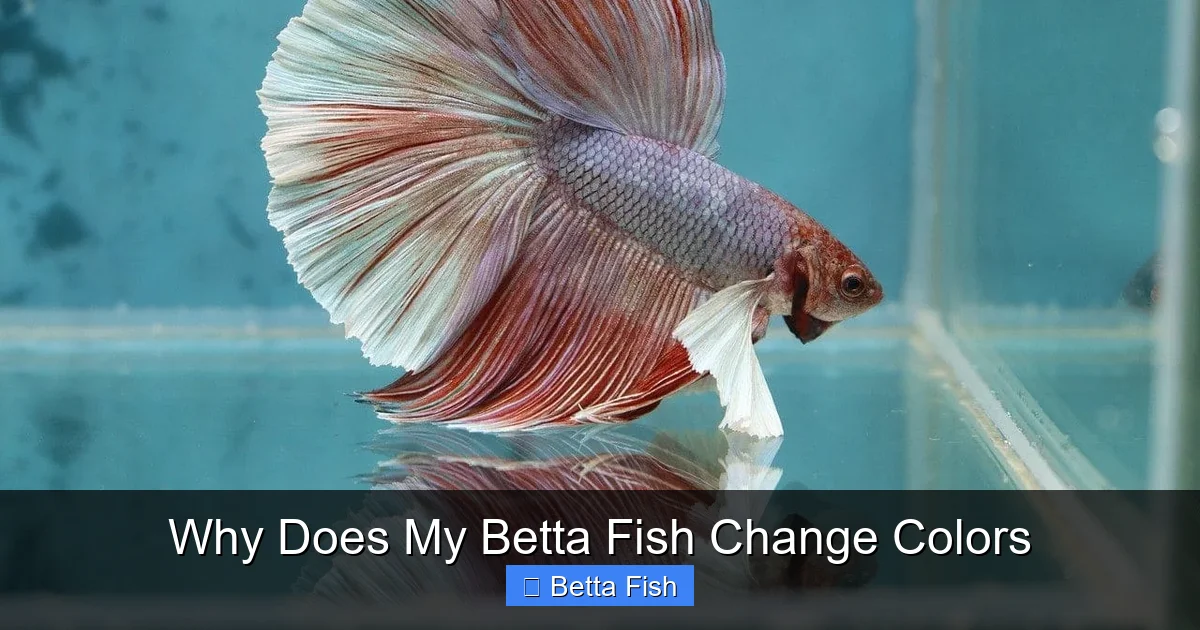
Why Does My Betta Fish Change Colors
Betta fish are natural color‑changers, reacting to mood, health, environment, and genetics. Understanding why does my betta fish change colors helps you spot stress, improve tank conditions, and enjoy their dazzling displays.
Key Takeaways
- Mood and stress: Bright colors mean confidence; dull tones often signal anxiety.
- Health indicators: Sudden fades or darkening can point to illness or poor water quality.
- Lighting and temperature: Proper spectrum and stable temps enhance natural hues.
- Age and genetics: Juveniles are muted; adults reveal full palettes as genes express.
- Breeding and hormones: Males intensify colors when ready to court or guard a nest.
- Diet matters: Pigment‑rich foods boost and sustain vivid coloration.
- Regular observation: Watching color shifts lets you act fast before problems worsen.
📑 Table of Contents
- Introduction: The Magic of a Color‑Changing Betta
- 1. Mood and Stress: The Betta’s Emotional Palette
- 2. Health Signals: Colors as a Diagnostic Tool
- 3. Lighting, Temperature, and Tank Environment
- 4. Age, Genetics, and Sexual Dimorphism
- 5. Breeding Hormones and Courtship Displays
- 6. Nutrition: Feeding the Color Engine
- Conclusion: Reading the Rainbow
Introduction: The Magic of a Color‑Changing Betta
If you’ve ever watched a betta glide through the water and suddenly flash a brilliant shade of blue or a deep, velvety red, you’ve seen nature’s own mood ring in action. Betta fish (Betta splendens) are famed for their dazzling fins and ever‑shifting colors, a trait that both fascinates hobbyists and confuses new owners. The question “why does my betta fish change colors?” is more than a curiosity—it’s a window into the fish’s emotional state, health, and environment.
In this guide we’ll break down every reason a betta might alter its hue, from the harmless and spectacular to the warning signs that demand immediate action. By the end you’ll be able to read your betta’s color language like a pro, keeping your finned friend happy, healthy, and always photogenic.
1. Mood and Stress: The Betta’s Emotional Palette
How confidence looks on a betta
When a betta feels safe and confident, its chromatophores (special pigment cells) expand, revealing bright, saturated colors. A male defending his territory will often flash vibrant reds, blues, or greens, especially when a mirror or another fish is nearby. This is the same reason you see bettas “flaring”—they’re showing off their best colors to intimidate rivals.

Visual guide about Why Does My Betta Fish Change Colors
Image source: wordscr.com
When fear or stress dulls the shine
Stress triggers the opposite reaction. If water parameters swing, a new tank mate is introduced, or the fish is being handled excessively, the betta’s body releases hormones that cause chromatophores to contract. The result is a washed‑out appearance: pale fins, muted body tones, or even a temporary white‑ish sheen. If you notice a sudden fade, check for stressors first.
Practical tip
- Provide plenty of hiding spots (plants, caves) so the betta can retreat when needed.
- Limit sudden changes in lighting; use a timer for consistent day/night cycles.
2. Health Signals: Colors as a Diagnostic Tool
Illness can masquerade as color loss
Many diseases affect pigment cells. A common sign of bacterial or fungal infection is a patchy loss of color, often starting on the fins. Parasites like Ich may cause white spots that look like tiny snowflakes, while a more serious condition such as velvet can give the fish a dusty, silver‑gray overlay.

Visual guide about Why Does My Betta Fish Change Colors
Image source: wordscr.com
When black or white patches mean trouble
Darkening of the body, especially around the head or gills, can indicate poor water quality or ammonia spikes. Conversely, a sudden turn to white (known as “leukoplakia”) might signal a severe stress response or a genetic mutation. For deeper insight, see our article Why Is My Betta Fish Turning White for specific red‑flags and remedies.
Quick health check
- Test water weekly for ammonia, nitrite, nitrate, and pH.
- Observe feeding behavior—loss of appetite often precedes color fading.
- Look for abnormal fin movement or fraying, which can accompany color changes.
3. Lighting, Temperature, and Tank Environment
Light quality matters
Betta fish evolved under dappled sunlight in shallow rice paddies. Full‑spectrum LED lights that mimic natural daylight bring out the richest reds and blues. Low‑intensity or overly blue lighting can make colors appear dull or even shift them toward a cooler hue.
Visual guide about Why Does My Betta Fish Change Colors
Image source: hepper.com
Temperature’s role
Betta thrive at 76‑82°F (24‑28°C). When water gets too cold, metabolism slows, and chromatophores contract, giving a pale look. Overheating can cause stress, leading again to muted colors. Use a reliable heater and a thermometer to keep the temperature steady.
Environmental enrichment
Plants, both live and silk, not only provide cover but also reflect light, enhancing the fish’s natural iridescence. A barren tank often results in a “flat” appearance because there’s nothing to bounce light back onto the fish’s scales.
Practical tip
Set a timer for 10‑12 hours of light per day and use a dimmable LED fixture. If you notice your betta’s colors fading after a power outage, reset the light schedule gradually to avoid stress.
4. Age, Genetics, and Sexual Dimorphism
Juvenile vs. adult coloration
Young bettas start life with muted shades—often a soft gray or pale yellow. As they mature, hormones trigger the development of iridescent layers, revealing the full spectrum of colors unique to each fish’s genetic makeup. This is why a newly‑caught fry may look bland, but a few weeks later it can display a spectacular tail.
Male vs. female differences
Male bettas are the show‑off artists, possessing longer, flowing fins and more intense coloration. Females, while still beautiful, tend to have shorter fins and less dramatic color shifts. If you own a pair, you’ll notice the male’s colors brighten when a female is nearby, a behavior explored in depth at Why Do Betta Fish Change Colors.
Genetic quirks
Selective breeding has produced many strains—such as the “metallic” or “dragon” bettas—each with distinct pigment cells. Some lines naturally shift colors with age, while others remain relatively stable. Knowing your betta’s lineage can help set realistic expectations for color changes.
5. Breeding Hormones and Courtship Displays
The breeding rush
When a male betta is ready to breed, his body releases hormones that cause the chromatophores to expand dramatically. Expect a surge of reds, blues, or purples, especially on the fins and gill covers. This is also the time they build bubble nests—tiny air bubbles held together at the water’s surface.
Bubble nest connection
While building the nest, the male may become more territorial, flashing his brightest colors to warn off intruders. If you notice your betta suddenly becoming a living rainbow, it could be a sign he’s gearing up for spawning. For more on bubble‑nest behavior, see Why Did My Betta Fish Make A Bubble Nest.
Practical tip
- Provide a calm surface (no strong currents) for bubble nest construction.
- Maintain water temperature at the higher end of the range (around 80°F) to encourage breeding colors.
6. Nutrition: Feeding the Color Engine
Pigments from food
Betta fish cannot synthesize all the pigments they display. Carotenoids (red, orange, yellow) come from foods like brine shrimp, bloodworms, and specially formulated color‑enhancing pellets. Without these, even a healthy betta may appear dull.
Balanced diet for lasting brilliance
A varied diet that includes high‑protein live or frozen foods, plus a small amount of plant‑based flakes, ensures the fish receives the necessary vitamins and minerals. Over‑feeding, however, can lead to cloudy water and stress, both of which diminish color.
Practical tip
Feed a mix of high‑quality betta pellets and a few frozen brine shrimp two to three times a week. Rotate protein sources to keep the pigment supply steady.
Conclusion: Reading the Rainbow
Betta fish are living works of art, and their ever‑changing colors are a language you can learn to interpret. Whether the shift is a sign of confidence, a call for better water, a health alert, or a breeding cue, each hue tells a story. By monitoring temperature, lighting, diet, and stressors, you give your betta the best stage to showcase its natural brilliance.
Remember, the next time you wonder “why does my betta fish change colors?” you now have a toolbox of explanations and actions. Keep a close eye, adjust the environment when needed, and enjoy the spectacular light show that only a betta can provide.
Frequently Asked Questions
Why does my betta turn dark when I put a mirror in the tank?
The mirror triggers a territorial response. The male betta expands his chromatophores to appear larger and more intimidating, resulting in brighter, darker colors.
Can water quality cause my betta’s colors to fade?
Yes. High ammonia or nitrite levels stress the fish, causing pigment cells to contract. Regular water changes and testing prevent this.
Is it normal for a betta to become white during a molt?
During a molt, the old scales are shed and new ones grow in. The new skin can appear pale or whitish for a short time before the usual colors return.
Do male bettas always have brighter colors than females?
Generally, yes. Males develop longer fins and more intense hues to attract mates and deter rivals, while females usually display subtler tones.
Will adding live plants make my betta’s colors more vivid?
Live plants reflect natural light and provide a richer environment, which can enhance the fish’s natural iridescence and make colors pop.
How quickly can a betta recover its color after stress?
Recovery time varies. With proper water conditions, a calm environment, and a nutritious diet, most bettas regain their bright colors within a few days to a week.