Why Is My Betta Fish Hiding
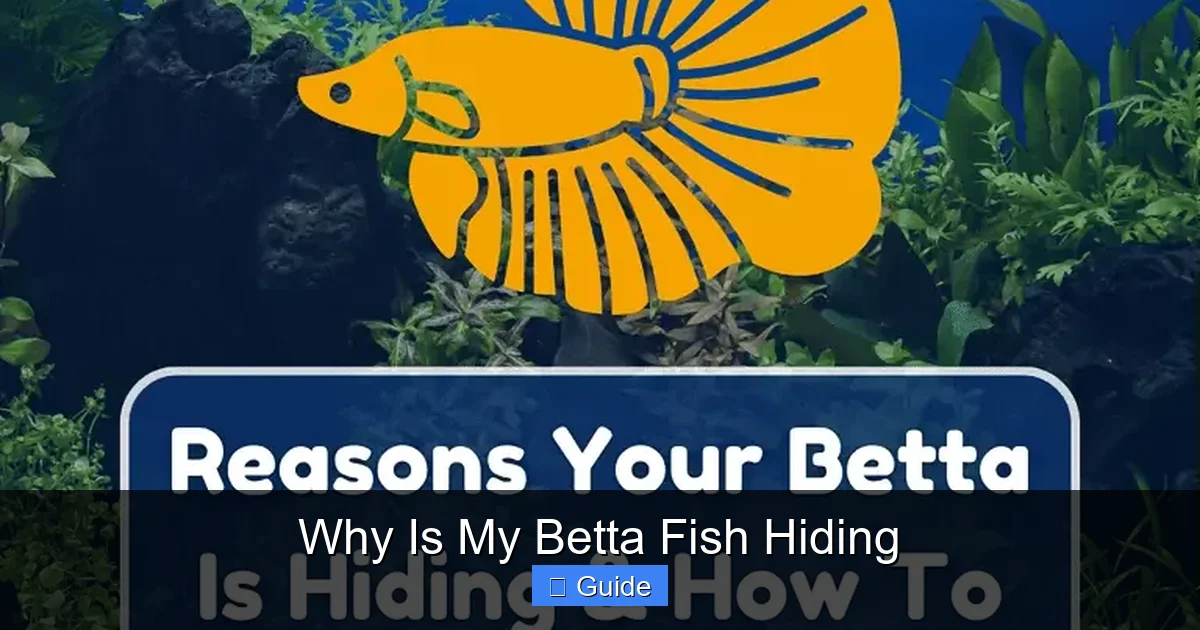
Your betta fish hiding is a clear sign of distress, not just a quirky habit. The primary culprits are almost always environmental—specifically poor water quality, incorrect temperature, or a lack of proper hiding spots. Health issues like parasites or bacterial infections are another major cause. Social stress from aggressive tank mates or reflections can also trigger hiding behavior. Addressing these factors systematically by testing water, optimizing the tank setup, and observing for illness is the key to bringing your betta back out into the open.
Key Takeaways
- Hiding is a stress signal: A betta that consistently hides is uncomfortable, not shy. It’s a primary indicator that something in its environment is wrong.
- Water quality is the #1 suspect: High ammonia/nitrite, unstable pH, or incorrect temperature are the most common reasons for a betta to seek refuge.
- Tank setup matters immensely: Bettas need secure hiding spots (plants, caves), appropriate tank size (minimum 5 gallons), and gentle filtration to feel safe.
- Health issues often manifest as hiding: Loss of appetite combined with seclusion frequently points to internal parasites, velvet disease, or fin rot.
- Social stress is a real threat: Aggressive tank mates, their own reflection, or constant activity outside the tank can make a betta feel threatened and hide.
- Lighting and noise play a role: Harsh, bright lights or a tank placed in a high-traffic, noisy area can overwhelm a betta, causing it to retreat.
- Solutions require observation and action: Methodically check water parameters, assess the physical tank, monitor for disease, and adjust social and environmental factors to encourage exploration.
📑 Table of Contents
- Understanding Your Betta’s Behavior: Hiding is a Language
- The Environmental Stressors: Why Water is Everything
- Tank Setup & Habitat: Creating a Secure Kingdom
- Health Concerns: When Hiding Signals Sickness
- Social Dynamics & Reflections: The Psychological Stress
- Lighting, Noise, and External Disturbances
- The Action Plan: How to Help Your Hiding Betta
- Conclusion: From Hidden to Hero
Understanding Your Betta’s Behavior: Hiding is a Language
You brought home a vibrant, flowing-finned betta fish, expecting it to be the charismatic centerpiece of your desk or living room. But instead of gracefully gliding to the surface for a morning greeting, you find it tucked behind the filter, buried in the corner of a plant, or not moving from its little cave all day. Your first thought is likely, “Why is my betta fish hiding?” This is one of the most common concerns for betta owners, and it’s a critical question to ask. Hiding is not a betta’s default state; it is a clear, non-verbal signal of significant discomfort, stress, or illness. Unlike some fish that are naturally reclusive, a healthy betta is an curious, interactive creature that patrols its territory, flares at its reflection, and beg for food. When this active behavior ceases and is replaced by constant seclusion, it’s your fish asking for help. Understanding this behavior as a communication tool—a language of distress—is the first and most important step in solving the problem. This guide will walk you through every possible reason, from the simple fix to the urgent health concern, so you can translate your betta’s silence into a clear path to recovery.
The Environmental Stressors: Why Water is Everything
Before we dive into complex theories, we must start with the foundation of all fish health: water. For a betta, which originates from the shallow, warm, slow-moving waters of Thailand, water parameters are not just numbers on a test kit; they are the very definition of its world. Poor water quality is, by far, the number one cause of chronic stress and hiding in bettas. Their delicate labyrinth organ, which allows them to breathe air, does not make them immune to toxic water conditions. In fact, they are often more sensitive to poor water quality than many other tropical fish because they are frequently kept in small, under-filtered tanks.
Visual guide about Why Is My Betta Fish Hiding
Image source: articles.hepper.com
Ammonia, Nitrite, and Nitrate: The Silent Killers
The nitrogen cycle is a non-negotiable process in any aquarium. Fish waste, uneaten food, and decaying plant matter produce ammonia (NH3/NH4+), which is highly toxic even at very low concentrations. Beneficial bacteria convert ammonia to nitrite (NO2-), which is also toxic. Finally, another bacteria converts nitrite to nitrate (NO3-), which is less toxic but still problematic in high amounts. A new tank that hasn’t completed this cycle (a “cycling” tank) will have dangerous spikes of ammonia and nitrite. An established tank with an overload of fish, overfeeding, or decaying material can also experience toxic spikes. A betta experiencing ammonia poisoning will gasp at the surface, have red or inflamed gills, and, most notably, hide at the bottom, often propped up on plants or decor, lethargic and in pain. The solution is a robust, cycled filter in a properly sized tank (5+ gallons), regular water changes (25-50% weekly), and never overfeeding. Using a reliable liquid water test kit (like API Freshwater Master Test Kit) is essential to monitor these parameters.
Temperature: The Myth of the “Room Temperature” Betta
This is a pervasive and dangerous myth. Bettas are tropical fish. Their ideal water temperature is a stable 78-80°F (25.5-26.5°C). Water that is too cold (below 76°F) slows their metabolism, suppresses their immune system, and leads to lethargy and hiding. They may also become prone to developing Dropsy. Water that is too hot (above 82°F) increases their metabolic rate to a stressful level, depletes oxygen in the water faster, and can lead to overheating and organ stress. The key is stability. A small, unheated bowl in a room that fluctuates from 68°F in winter to 80°F in summer is a recipe for chronic stress. Use a reliable aquarium heater with a thermostat in a tank of adequate volume to maintain a consistent temperature. A small, digital thermometer (stick-on or floating) is a must-have to verify the heater’s accuracy.
pH and Water Hardness: The Subtle Stressors
While bettas are somewhat adaptable, they prefer slightly acidic to neutral water, with a pH between 6.5 and 7.5. Drastic swings in pH, even within that range, are stressful. Water that is extremely hard (high mineral content) or extremely soft (low mineral content) can also cause long-term issues. The goal is stability. If your tap water is very hard or very soft and the pH swings wildly after a water change, consider using a pH stabilizer or, more effectively, using reverse osmosis (RO) water mixed with a mineral supplement to create a consistent, optimal water chemistry. Sudden changes during water changes are a common cause of post-water-change hiding. Always dechlorinate tap water and match the temperature of the new water to the tank water as closely as possible during changes.
Tank Setup & Habitat: Creating a Secure Kingdom
Imagine being placed in a large, empty, brightly lit room with no furniture and constant noise from outside. You’d probably want to hide in a corner too. For a betta, a “good” tank isn’t just about size; it’s about creating a habitat that mimics its natural, densely vegetated, shallow paddy fields. A barren tank is a stressful tank.
The Critical Importance of Hiding Spots and Vegetation
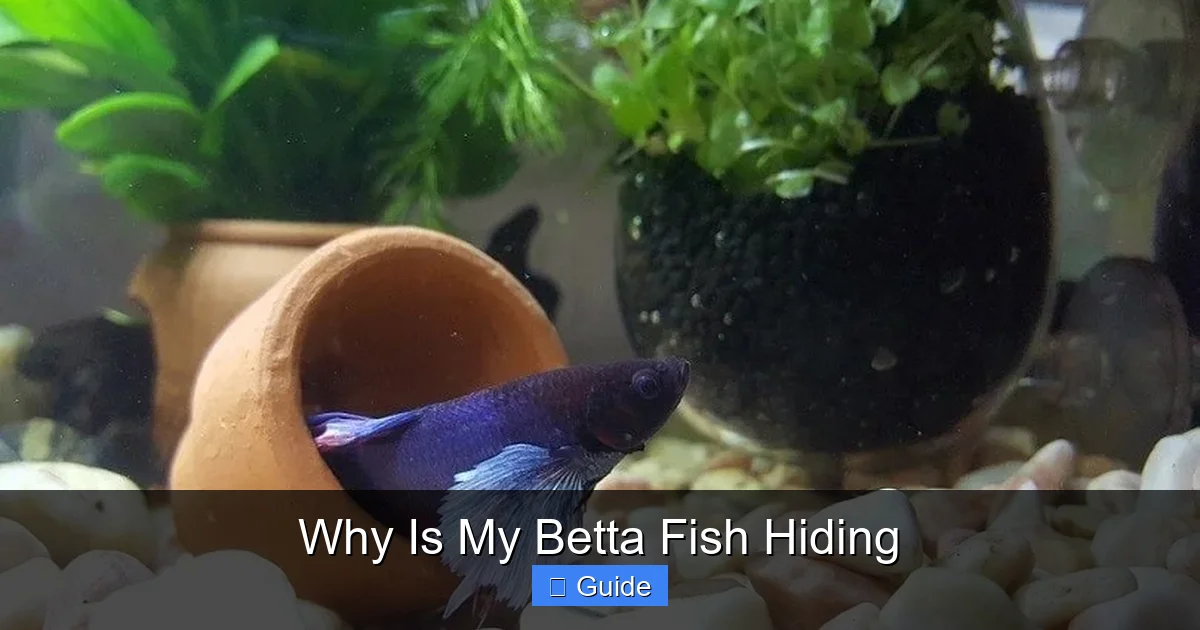
Bettas are labyrinth fish that, in the wild, use dense plant cover and root systems to hide from predators, rest, and build bubble nests. In captivity, they need the equivalent. Live plants are the gold standard. Plants like Java fern, Anubias, Amazon swords, and floating plants (like dwarf water lettuce or frogbit) provide excellent cover, diffuse harsh light, and improve water quality. If live plants are too daunting, high-quality silk plants are a great alternative. Avoid plastic plants with sharp edges, as they can tear a betta’s delicate fins. Additionally, provide solid hiding structures: ceramic caves, coconut shells, or even a clean, small terra cotta pot on its side. These give the betta a defined “safe zone.” A tank with a mix of open swimming space and several scattered hiding spots allows the betta to choose its level of exposure, which is crucial for its sense of security.
Tank Size and Filtration: Debunking the Bowl Myth
The “betta in a bowl” trend is arguably the biggest disservice to this species. A bowl is not an aquarium. It has no filtration, no stable nitrogen cycle, and severely limits oxygen exchange. It is a tiny, toxic soup that guarantees a short, stressful life. The absolute minimum tank size for a betta is 5 gallons. A 10-gallon is even better and provides more stable water conditions. Why does size matter? Larger volumes dilute toxins, making water parameter fluctuations less dramatic and lethal. It also provides more space for proper heating and filtration. Filtration is non-negotiable. A gentle filter (like a sponge filter or a hang-on-back filter with a flow baffle) is needed to cycle the tank and keep it clean. The flow must be adjustable so it doesn’t create a current that exhausts the betta, which is a built-row swimmer not adapted for fighting currents.
Substrate and Décor: Safety First
Gravel or sand is fine, but be mindful of sharp edges. Smooth, rounded gravel is best. Avoid marbles or glass stones, as they can trap waste and offer no benefit. Décor should be smooth. Any ornament with holes or crevices must be inspected for sharp interior edges. A common injury is a betta getting its fin snagged on a rough castle turret or sharp rock. All décor should be aquarium-safe (no painted items that can leach toxins). The goal is a beautiful, secure environment where the betta can explore without risk of injury.
Health Concerns: When Hiding Signals Sickness
Once you’ve confirmed the water is pristine and the tank is secure, the next major category is internal health. A betta that is hiding, lethargic, and has lost its appetite is very likely sick. Bettas are prone to several common ailments, and hiding is often the first and most consistent symptom.
Visual guide about Why Is My Betta Fish Hiding
Image source: bettafishbay.com
Common Betta Diseases That Cause Lethargy and Seclusion
Fin Rot & Body Rot: Caused by bacterial infection, often from poor water. Fins appear shredded, frayed, blackened, or red at the base. The fish becomes lethargic and hides to minimize movement and pain.
Velvet Disease: A parasitic infection (Oodinium). Look for a fine gold or rust-colored dust on the body, especially apparent under a flashlight. The fish will scratch against objects (flashing), become extremely lethargic, clamp its fins, and hide. It’s highly contagious and fatal if untreated.
Ich (White Spot Disease): Another parasite. Classic symptoms are tiny white salt-like spots all over the body and fins, flashing, and lethargy. Like velvet, it causes significant discomfort leading to hiding.
Internal Parasites (e.g., Hexamita): These are trickier. Symptoms include chronic wasting away (even with good appetite), stringy white feces, and extreme lethargy. The fish will hide because it feels unwell. Diagnosis often requires a vet or fecal float.
Swim Bladder Disorder: Not a disease itself, but a symptom of constipation, infection, or genetic defect. The fish struggles to swim upright, floats upside down, or sinks and has difficulty reaching the surface. This helplessness causes it to hide in corners or on the bottom.
What to Look For: The Health Check Checklist
When your betta is hiding, perform a close (but gentle) visual inspection. Use a net or cup to corral it briefly if necessary. Check for:
- Fins: Are they ragged, torn, or clamped tightly against the body?
- Body: Any spots (white, gold, red), sores, raised scales, or bloating?
- Scales: Are they smooth and flat, or is there “pineconing” (raised scales, a sign of Dropsy)?
- Eyes: Are they clear, or are they cloudy, swollen (pop-eye), or sunk in?
- Gills: Are they moving rapidly? Are they bright red or inflamed?
- Behavior: Does it flash (rub against objects)? Is it breathing heavily at the surface? Is it completely unresponsive?
Documenting symptoms with a photo can be helpful for online forums or a vet. Early detection and treatment in a quarantine tank are critical for contagious diseases.
Social Dynamics & Reflections: The Psychological Stress
Even in a perfect physical environment, a betta’s mind can be its own worst enemy. Bettas are famously territorial and have complex behaviors driven by perception.
The Terror of the Reflection
This is a colossal and often overlooked cause of chronic stress. Betta fish are intelligent enough to recognize their own reflection as a rival. If your tank has a reflective glass front, or if the betta can see itself in a shiny heater, filter, or ornament, it will flare ( puff up its gills and extend its fins) aggressively at its “intruder.” This is not just a cute display; it is a constant state of high alert and territorial defense. A betta that is flaring at its reflection for hours a day will become exhausted, stressed, and will inevitably retreat to hide to recover. The solution is to break up the reflection. Use a background on the outside of the tank (solid black or blue works well), ensure the lighting is not too bright on the outside (which enhances reflection), and position the tank so it’s not in direct competition with a strong light source that would create a mirror effect. Sometimes, simply adding floating plants to break up the surface line of sight can help.
Tank Mates: From Bullies to Betrayers
The idea of a “community tank” with a betta is controversial and requires extreme caution. Bettas, especially males, are notoriously aggressive. Many common community fish are fin-nippers (like tiger barbs, some tetras, fancy guppies) or are themselves aggressive and will harass the betta. Even seemingly peaceful fish can stress a betta by constantly swimming in its face or competing for food. A betta being bullied by tank mates will hide constantly to avoid confrontation. Conversely, a betta may be the bully, harassing other fish until they hide. The only truly safe tank mates for a male betta are generally peaceful, non-flashy, and fast-moving fish that occupy different tank levels, like certain types of rasboras, corydoras catfish, or Kuhli loaches, and even then, close supervision is needed. For a guaranteed stress-free life, many betta experts recommend a species-only tank. If you do add mates, have a backup plan and a quarantine tank ready.
Lighting, Noise, and External Disturbances
The world outside the tank glass is a source of constant input for your betta. Its small brain processes every shadow, movement, and vibration.
Light Intensity and Photoperiod
Bettas, coming from shaded, vegetated waters, prefer subdued lighting. A bright, overhead LED light pointed directly into the tank can be intimidating and stressful. It also encourages algae growth. Use a light with adjustable intensity. Provide plenty of floating or tall plants to create shaded areas and break up the light beams. Establish a consistent day/night cycle using a timer—typically 8-10 hours of light on, 14-16 hours off. Constant light can stress the fish and disrupt its rest.
The Impact of Vibrations and Sudden Movements
Bettas are sensitive to vibrations through the water. A tank placed on a wobbly stand, a high-traffic area where people are constantly walking by, a loud TV or stereo system, or even a slamming door can send shockwaves through the water. This chronic low-level stress can make a betta perpetually skittish and hiding. Place the tank on a solid, stable surface away from doorways, hallways, and loud electronics. A background on the outside rear and sides of the tank can also help block visual disturbances from movement behind the tank.
The Action Plan: How to Help Your Hiding Betta
Diagnosing the cause requires a methodical approach. Do not randomly add medications. Follow this systematic troubleshooting guide:
Step 1: Immediate Water Test and Change
This is the first and most important step. Test your water for ammonia, nitrite, nitrate, and pH. If you don’t have a test kit, perform a 50% water change with properly dechlorinated, temperature-matched water immediately. This dilutes any potential toxins. Repeat 25-50% daily water changes for a week while you monitor. Ensure your filter is running properly but not creating a strong current.
Step 2: Audit the Tank Environment
Look around your tank with fresh eyes. Does it have at least 3-4 distinct hiding spots (caves, dense plant clusters)? Is there a mix of open space and cover? Is the lighting too bright? Can you see your reflection clearly in the glass? Add more silk or live plants, a new cave, and dim the lights. Cover the back and sides with a solid background if reflections are an issue.
Step 3: Observe for Health Issues
During water changes, gently observe your betta under good light. Look for the physical signs listed in the health section. Is it eating? Try offering a small piece of thawed frozen daphnia or a high-quality betta pellet. A complete refusal to eat for more than 2-3 days is a major red flag. If you see any signs of disease (spots, rot, velvet dust), isolate the betta in a hospital tank with clean, warm water and begin appropriate treatment (e.g., copper-based medication for velvet/ich, antibiotics for bacterial infections). Research the specific disease before treating.
Step 4: Evaluate Social and External Stress
Are there other fish in the tank? Watch for chasing, flaring, or one fish consistently cornering another. If bullying is observed, the betta must be moved to a separate tank. Is the tank in a busy, noisy spot? Consider moving it to a quieter room. Is the light too harsh? Install a dimmer or add more floating plants.
Step 5: Patience and Acclimation
Once you’ve made changes, give your betta time. Stress recovery is not instant. It may take several days to a week for a betta to feel secure enough to venture out regularly. Continue with excellent water maintenance. Slowly introduce yourself—sit near the tank quietly, move slowly, and eventually offer food from your fingers or tweezers. This builds positive associations.
Conclusion: From Hidden to Hero
Discovering your betta fish hiding can be a moment of worry, but it is also a powerful opportunity. That hidden behavior is your fish’s only way of telling you that its world is not right. By methodically investigating the three primary pillars of its well-being—water quality, tank habitat, and health—and then considering the psychological factors of social stress and external disturbances, you move from a concerned observer to an active problem-solver. Remember, a betta that swims proudly, flares playfully, and eats eagerly is a betta that is thriving in an environment you have carefully crafted for it. The journey from a hiding betta to a confident, interactive companion is a direct reflection of your attentiveness and care. Start with the water test today, and take the first step toward bringing your little friend back out into the light.
Frequently Asked Questions
Is it normal for a new betta fish to hide all the time?
Yes, it’s very common for a newly acquired betta to hide for the first 24-72 hours as it acclimates to a new environment, new water parameters, and the stress of transport. However, if it continues to hide exclusively after 3-5 days without eating, you should begin checking water quality and tank setup.
Can a betta fish die from stress caused by hiding?
Indirectly, yes. Chronic stress from poor water, bullying, or illness severely suppresses a betta’s immune system, making it highly susceptible to opportunistic diseases like fin rot or velvet, which can be fatal. The act of hiding itself is a symptom of the underlying stressor that poses the threat.
How can I tell if my betta is just resting or dangerously hiding?
>A resting betta might pause on a plant leaf or the bottom for a short nap but will resume active swimming, eat eagerly, and respond to you. A dangerously hiding betta is in a corner or cave for extended periods (most of the day), shows little to no interest in food, may be clamped or lethargic, and will only move when startled.
My betta’s tank is clean and properly set up, why is it still hiding?
>This points strongly to psychological or health factors. Check for its reflection in the glass. Are there aggressive tank mates? Is the lighting too bright? Is the tank in a noisy area? Most importantly, perform a close health inspection for signs of internal parasites or early-stage disease like velvet, which can be hard to spot at first.
Should I remove decorations to make my betta feel less trapped?
>No, this is the opposite of what you should do. Hiding spots provide security. A betta without cover has no place to feel safe and will become more stressed. Ensure the decorations are smooth and safe, but provide ample vegetation and caves. The betta should have choices: it can be in the open or retreat to a cave.
How long does it take for a stressed betta to start swimming normally again after fixes are made?
>It varies. Once the primary stressor is removed (e.g., a water change fixes toxic water, a bully is removed), a betta may start exploring within a few hours to a day. For more chronic stress or after an illness, it can take several days to a week of consistent, pristine conditions to see a full return to normal, active behavior. Be patient and maintain excellent care.