How to Make Water Safe for a Betta Fish
Making water safe for a betta fish is the single most important thing you can do for your pet’s health. This guide covers everything from dechlorinating tap water to maintaining the right temperature and pH levels. You will learn easy, proven methods to keep your betta’s environment clean and safe every day.
Every betta fish owner wants their pet to live a long, healthy life. But one of the most overlooked parts of betta care is something very simple. The water your betta swims in every day has a huge impact on its health. If the water is not safe, your fish can get sick, lose color, or worse. Making water safe for a betta fish is not hard. It just takes a little knowledge and a few simple steps. In this guide, you will learn exactly how to do it.
Whether you are a complete beginner or have had bettas for years, this guide will help you. We will cover everything from basic water treatment to maintaining the right temperature and pH. You will also learn common mistakes to avoid. By the end, you will feel confident about creating the safest possible environment for your betta. Let us get started.
Key Takeaways
- Always treat tap water before adding it to your betta tank. Chlorine and chloramine are harmful and must be removed.
- Use a water conditioner to make water safe instantly. It neutralizes toxins in seconds and is a must-have for every betta owner.
- Maintain stable water temperature between 76-82°F. Bettas are tropical fish and need warm, consistent water to thrive.
- Perform regular water changes every 1-2 weeks. This removes buildup and keeps your betta’s environment fresh.
- Test water parameters like pH and ammonia regularly. Catching imbalances early prevents serious health problems.
- Never use untreated well water or distilled water alone. Both can contain harmful minerals or lack essential elements.
📑 Table of Contents
- Why Safe Water Matters for Your Betta Fish
- How to Make Tap Water Safe for Betta Fish
- Best Water Sources for Betta Fish
- Water Temperature: Keeping It Warm and Stable
- How to Do Regular Water Changes for a Healthy Betta Tank
- Testing and Monitoring Your Betta’s Water
- Setting Up a Safe and Comfortable Betta Tank
- Common Mistakes That Make Betta Water Unsafe
- Expert Insights on Betta Water Safety
- Conclusion
Why Safe Water Matters for Your Betta Fish
Betta fish are small but they are sensitive creatures. Their bodies are designed to live in specific water conditions. When those conditions are not met, stress and disease follow quickly. Tap water contains chemicals like chlorine and chloramine that are safe for humans but toxic to fish. Even small amounts can damage your betta’s gills and skin. Over time, poor water quality leads to infections, fin rot, and other serious problems.
Safe water means water that is free from harmful chemicals and has the right parameters. This includes temperature, pH, and hardness. Bettas thrive in warm water that is slightly acidic to neutral. When you get the water right, your betta will be more active, eat better, and show off its beautiful colors. Think of clean water as the foundation of good betta care. Everything else builds on top of it.
The Role of Water Quality in Betta Health
Water quality affects every part of your betta’s life. Poor water can cause immediate stress, which weakens the immune system. A stressed betta is much more likely to get sick. On the other hand, clean, well-balanced water helps your betta stay strong and resilient. Here are some key ways water quality impacts your fish:
- Breathing: Bettas breathe through their gills. Chlorine and ammonia burn delicate gill tissue, making it hard to breathe.
- Color: Healthy water brings out vibrant colors. Poor water causes fading and dullness.
- Energy: Clean water keeps bettas active and curious. Toxic water makes them lethargic and withdrawn.
- Lifespan: Bettas can live 3 to 5 years with proper water care. Bad water can cut that time in half.
How to Make Tap Water Safe for Betta Fish
Tap water is the most common water source for betta fish tanks. It is convenient and easy to access. But it is not safe straight from the faucet. Municipal water treatment plants add chlorine and chloramine to kill bacteria for humans. These chemicals are harmful to fish. You need to remove them before adding tap water to your betta tank. The good news is that this process is simple and affordable.
There are several methods to make tap water safe. Each has its pros and cons. Let us look at the most popular options so you can choose what works best for you.
Method 1: Use a Water Conditioner
This is the easiest and most popular method. A water conditioner instantly removes chlorine, chloramine, and heavy metals from tap water. You simply add the recommended dose to your water before putting it in the tank. Most conditioners work in seconds. They are inexpensive and very effective. For step-by-step guidance on using these products, check out our article on how to use tap water conditioner for betta fish. It covers dosing, timing, and product recommendations.
Water conditioners are available at almost every pet store. Look for a brand that removes chlorine, chloramine, and heavy metals. Some conditioners also add beneficial slime coat protectors that help heal minor wounds on your betta’s skin. This is a great extra feature to look for.
Method 2: Let Water Sit and Dechlorinate Naturally
Another option is to let tap water sit out for 24 to 48 hours. This allows chlorine to evaporate naturally. However, this method does not remove chloramine. Many water treatment plants now use chloramine instead of chlorine because it lasts longer. If your local water uses chloramine, this method will not work well. You can also use this approach to dechlorinate water for betta fish, but a conditioner is still faster and more reliable.
If you choose this method, use a clean container with a wide opening. The more surface area, the faster the chlorine evaporates. Stirring the water occasionally speeds up the process. Just remember that this takes time and does not remove all contaminants.
Method 3: Use a Reverse Osmosis Filter
For advanced hobbyists, a reverse osmosis (RO) system filters out almost everything from tap water. This gives you very pure water that you can then remineralize to the right levels. RO systems are more expensive and require more setup. They are a great option if you live in an area with very poor water quality. But for most betta owners, a simple water conditioner is all you need.
Best Water Sources for Betta Fish
Not all water sources are created equal. The water you choose for your betta tank matters a lot. Let us look at the most common options and what you need to know about each one.
Tap Water
Tap water is the go-to choice for most betta owners. It is readily available and cheap. But it must be treated before use. Always use a water conditioner to remove harmful chemicals. Test your tap water’s pH and hardness as well. Some areas have very hard or very soft water, which may need adjustment.
Well Water
If you use well water, you need to be extra careful. Well water often contains minerals, bacteria, and metals that can be harmful to fish. Test well water thoroughly before using it. You may need to filter or treat it in multiple ways. To learn more about well water safety for bettas, see our guide on can you use well water for a betta fish.
Distilled Water
Distilled water is very pure, but it lacks essential minerals that bettas need. You should not use distilled water alone. If you do use it, you will need to add minerals back in. For most people, tap water treated with a conditioner is a much simpler choice.
Spring Water
Bottled spring water can be a good option. It usually has a balanced mineral content. Just make sure it is not mineral water with added sodium. Check the label before purchasing. Spring water is also a good choice if your tap water quality is very poor.
Water Temperature: Keeping It Warm and Stable
Temperature is one of the most critical factors for betta fish health. Bettas are tropical fish that come from warm climates in Southeast Asia. They need water that stays consistently warm. Cold water slows down their metabolism and makes them vulnerable to illness. Too-hot water reduces oxygen levels and causes stress.
The ideal temperature range for betta fish is 76 to 82 degrees Fahrenheit. Use an aquarium heater to maintain this range. A thermometer is essential too. You should check the temperature daily, especially in the first few weeks of setup. Sudden temperature changes are just as dangerous as being too cold or too hot. Always acclimate new water to match the tank temperature before adding it.
Can I Add Warm Water Directly to a Betta Tank?
You might wonder if you can just add warm water from the tap. The answer is no, not directly. Even warm tap water contains chlorine and other chemicals. You still need to treat it first. Also, adding water that is too warm can shock your betta. Always treat the water and let it reach the right temperature before adding it to the tank. If you are unsure about temperature adjustments, our article on can I add warm water to a betta fish tank has helpful tips.
Quick Tips for Maintaining Water Temperature
- Use a reliable aquarium heater with a thermostat.
- Place the tank away from drafts, windows, and vents.
- Check the temperature with a thermometer every day.
- Do water changes with water at the same temperature as the tank.
- In winter, room temperature drops can affect tank temperature quickly.
How to Do Regular Water Changes for a Healthy Betta Tank
Even with the best water treatment, waste builds up in your betta’s tank over time. Ammonia and nitrites accumulate from fish waste and uneaten food. Regular water changes are the best way to keep these toxins at bay. Performing a water change removes dirty water and replaces it with fresh, treated water. This keeps the environment clean and your betta healthy.
For most betta tanks, a 25 to 50 percent water change every one to two weeks is ideal. If you have a smaller bowl or vase, you may need to do partial changes more often. For detailed instructions on performing water changes, check out how to do a water change for betta fish. It walks you through the entire process step by step.
Steps for a Successful Water Change
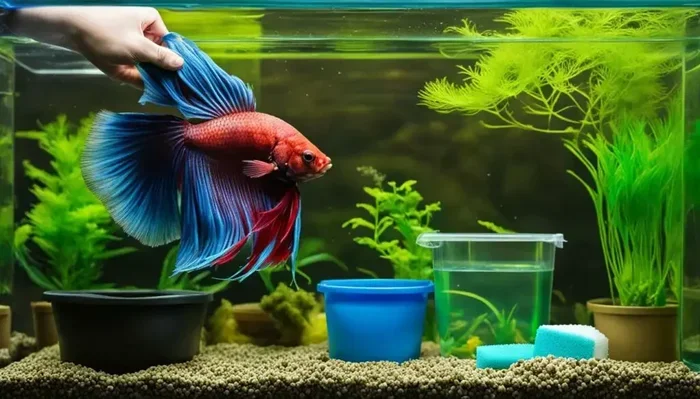
- Gather your supplies: You need a siphon or gravel vacuum, a clean bucket, and treated water.
- Turn off all equipment: Unplug the heater and filter before starting.
- Remove debris: Use the siphon to vacuum the substrate and remove waste.
- Remove old water: Siphon out 25 to 50 percent of the tank water.
- Add new water: Slowly pour in the treated, temperature-matched water.
- Turn equipment back on: Reconnect the heater and filter once the tank is refilled.
Common Water Change Mistakes to Avoid
Many beginners make mistakes during water changes that can harm their betta. Here are the most common ones to watch out for:
- Using untreated water: Always treat new water with a conditioner before adding it to the tank.
- Changing too much water at once: Removing more than 50 percent at once can crash your tank’s beneficial bacteria.
- Adding water that is too hot or cold: Temperature shock is very dangerous for bettas.
- Forgetting to clean the substrate: Waste builds up in the gravel and needs to be removed regularly.
- Using soap or chemicals on tank equipment: Only use aquarium-safe products. Never use household cleaners.
Testing and Monitoring Your Betta’s Water
Once you have your water treatment routine set up, the next step is monitoring. Testing your water regularly helps you catch problems before they become serious. You do not need expensive equipment to do this. Basic test kits are affordable and easy to use.
You should test for ammonia, nitrites, nitrates, and pH. Ammonia and nitrites should always be at zero. Nitrates should stay below 20 parts per million. pH for bettas should be between 6.5 and 7.5. Most test kits come with simple color-coded strips or liquid drops. You just dip a strip or add a few drops and compare the color to a chart.
Testing once a week is a great habit. It takes just a few minutes and gives you peace of mind. If you notice any parameter is off, you can take action right away. Catching a problem early is always easier than fixing a crisis later.
Quick Tips for Water Testing
- Keep a log of your test results to track trends over time.
- Test new water sources before using them for the first time.
- Do not rely on “hard water” or “soft water” labels alone. Always test.
- If your tap water has high chloramine levels, test more frequently.
Setting Up a Safe and Comfortable Betta Tank
Making water safe is just one part of the equation. The overall tank setup also plays a big role in your betta’s well-being. A properly set up tank gives your betta room to swim, explore, and feel secure. Bettas need more than just a small bowl. A tank of at least 5 gallons is recommended. This gives you more stable water parameters and more room for your fish to thrive.
When setting up a tank, consider adding a gentle filter, a heater, and some plants for hiding spots. Bettas like calm water, so choose a filter with a low flow rate. Live plants are excellent because they help absorb nitrates and produce oxygen. For a complete guide on tank setup, check out our article on how to set up a fish tank for betta fish.
Essential Tank Setup Checklist
- 5-gallon tank or larger
- Heater set to 76-82°F
- Gentle filter with adjustable flow
- Water conditioner
- Thermometer
- Test kit for ammonia, nitrites, nitrates, and pH
- Substrate (gravel or sand)
- Live or silk plants for hiding spots
- Floating log or betta hammock for resting
Following this checklist gives your betta a safe and comfortable home. It also makes water maintenance much easier. When the tank is properly set up, keeping the water clean becomes a simple daily routine rather than a big chore.
Common Mistakes That Make Betta Water Unsafe
Even experienced fish keepers sometimes make mistakes with betta water care. Knowing what to avoid is just as important as knowing what to do. Here are the most common errors that can make water unsafe for your betta.
- Skipping water conditioner: Never add tap water directly to the tank without treating it first.
- Using soap to clean tank items: Soap residue is extremely toxic to fish. Always use hot water and a dedicated aquarium scrubber.
- Overfeeding your betta: Excess food decays in the water and raises ammonia levels. Feed small amounts once or twice a day.
- Not doing water changes: Even with a filter, waste builds up. Regular water changes are essential.
- Ignoring temperature fluctuations: Sudden changes in temperature stress your betta and weaken its immune system.
- Using a bowl instead of a proper tank: Bowls have poor filtration and unstable water parameters. A 5-gallon tank is the minimum for a healthy betta.
Avoiding these mistakes will save you a lot of trouble. Your betta will be healthier, more active, and more colorful. Prevention is always easier than treatment when it comes to water quality issues.
Expert Insights on Betta Water Safety
We reached out to experienced betta keepers and aquatic specialists for their top tips on making water safe. Here is what they had to say:
Dr. Linda Chen, Aquatic Veterinarian: “The number one thing I tell betta owners is to never skip water conditioner. It is a small step that makes a huge difference. A few drops can save your fish’s life.”
Mark Rivera, Experienced Betta Breeder: “I test my water every single week without fail. You cannot see ammonia or nitrites with the naked eye. A test kit is your best friend. Catching problems early is everything.”
Sarah Thompson, Betta Rescue Volunteer: “Most people underestimate how much water changes matter. A simple 25 percent change every week keeps the water fresh and your betta stress-free.”
These expert tips reinforce the simple truth that safe water comes from consistent, daily habits. You do not need fancy equipment or advanced skills. You just need to be attentive and committed to your betta’s environment.
Conclusion
Making water safe for a betta fish is the foundation of good betta care. From treating tap water with a conditioner to maintaining the right temperature and pH, every step matters. Regular water changes, consistent testing, and avoiding common mistakes will keep your betta healthy and happy for years to come. The process is simple and affordable, and the results are well worth the effort.
When you get the water right, everything else falls into place. Your betta will show off its brilliant colors, stay active, and enjoy a long, vibrant life. Start implementing these tips today and watch your betta thrive. For more tips on overall betta care, visit our how to care for a betta fish guide.
Remember, your betta depends on you for everything. Clean, safe water is the greatest gift you can give your fish. It is not just a task. It is an act of care and love. Keep learning, keep testing, and keep your betta’s water as safe as possible.
Frequently Asked Questions
What is the safest water for betta fish?
The safest water for betta fish is treated tap water. Use a water conditioner to remove chlorine, chloramine, and heavy metals. This is the easiest and most affordable method. Always test the water parameters before adding it to your tank.
How often should I change my betta fish water?
You should do a partial water change of 25 to 50 percent every one to two weeks. Smaller tanks or bowls may need more frequent changes. Regular water changes prevent toxin buildup and keep your betta healthy.
Can I use bottled water for my betta fish?
Spring water can work well if it has a balanced mineral content. Avoid distilled water because it lacks essential minerals. Always check the label and test the water before using it. Treat it with a conditioner if needed.
How do I know if my betta fish water is safe?
Use a test kit to check ammonia, nitrites, nitrates, and pH. Ammonia and nitrites should always be zero. Nitrates should stay below 20 ppm. pH should be between 6.5 and 7.5. Test your water weekly to stay on top of changes.
Does boiling water make it safe for betta fish?
Boiling water can remove chlorine but does not remove chloramine or heavy metals. It also does not address pH or mineral content. Using a water conditioner is a much more effective and reliable method for making water safe.
What temperature should betta fish water be?
Betta fish water should be kept between 76 and 82 degrees Fahrenheit. Use an aquarium heater and a thermometer to maintain this range. Avoid sudden temperature changes as they can stress and harm your betta.