How to Dechlorinate Water for Betta Fish
Dechlorinating water for your betta fish is a non-negotiable step for their health and survival. Tap water contains chlorine and chloramine, which are toxic to bettas and can damage their delicate gills and slime coat. The only reliable method is using a quality water conditioner or dechlorinator. Never assume bottled or filtered water is safe without checking, and always treat new water before it touches your fish.
Key Takeaways
- Chlorine and chloramine in tap water are lethal to bettas: These disinfectants destroy gill tissue and strip away the protective slime coat, leading to stress, disease, and death.
- Water conditioner is the only safe, effective, and instant solution: Products like Seachem Prime or API Stress Coat+ neutralize both chlorine and chloramine on contact.
- Natural settling (24-48 hours) is unreliable: It only removes chlorine, not the more stable chloramine, and does nothing for heavy metals.
- Dosage matters: Always follow the product label for the volume of water you’re treating. Under-dosing leaves toxins; over-dosing is generally safe but wasteful.
- Dechlorinate ALL water entering the tank: This includes water for water changes, top-offs, and when setting up a new tank. Never add untreated tap water.
- Test your water regularly: Use a liquid test kit (like API Freshwater Master) to confirm ammonia, nitrite, nitrate, and pH levels are safe after any water change.
- Betta-specific needs: Due to their labyrinth organ, bettas are especially vulnerable to poor water quality. Clean, dechlorinated water is the foundation of preventing dropsy, fin rot, and other illnesses.
📑 Table of Contents
- Why Dechlorinating Water is Your Betta’s #1 Priority
- Method 1: The Gold Standard – Water Conditioner/Dechlorinator
- Method 2: The “Natural” Approach – Why It’s a Gamble
- Method 3: Bottled & Filtered Water – A Tricky Alternative
- Step-by-Step: The Complete Water Change Routine
- Beyond Dechlorination: The Full Water Parameter Picture
- Common Mistakes & How to Avoid Them
- Conclusion: Your Betta’s health is in Your Hands
Why Dechlorinating Water is Your Betta’s #1 Priority
Let’s be real for a second. You bought that beautiful betta fish, with his flowing fins and curious personality, because you wanted a low-maintenance pet. Maybe you saw him in a tiny cup at the store and thought, “He looks fine in there.” But here’s the truth your local pet store might not emphasize: a betta’s health is 90% about water quality, and it all starts with what’s coming out of your tap.
That clear, sparkling tap water? It’s a chemical cocktail designed to keep humans safe from bacteria. It contains chlorine and, in most municipalities, the more stubborn chloramine. These are biocides—they kill living things. To your betta, whose gills are thin, delicate membranes and whose entire body is coated in a sensitive slime layer, this water is poison. It’s not an exaggeration. Exposure causes immediate burning, respiratory distress, and long-term organ damage. The “one-gallon bowl” myth persists because people see bettas survive in bad conditions, but they don’t thrive. They become stressed, lethargic, and prone to horrific diseases like dropsy. Your first and most important duty as a betta keeper is to remove these toxins. Knowing how to dechlorinate water for betta fish correctly isn’t a fancy extra—it’s the absolute baseline of care.
The Toxins in Your Tap: Chlorine vs. Chloramine
You’ll hear both terms. Understanding the difference is key to choosing the right method.
- Chlorine (Cl₂): This is the older disinfectant. It’s a gas that evaporates relatively quickly when water is exposed to air. This is why the old advice to “let water sit out for 24 hours” sometimes worked in the past. However, it’s harsh and can still harm your fish during that evaporation period.
- Chloramine (NH₂Cl): This is a combination of chlorine and ammonia. It’s more stable, lasts longer in pipes, and is now the primary disinfectant for most city water systems. Here’s the critical part: chloramine does NOT evaporate. Letting water sit for days does nothing to neutralize it. The ammonia component is also directly toxic to fish. Any method that only addresses chlorine (like simple aeration) fails against chloramine.
You can call your local water utility or check their website to find out which one your area uses. But the safest approach is to assume you have both and use a conditioner that handles them.
Method 1: The Gold Standard – Water Conditioner/Dechlorinator
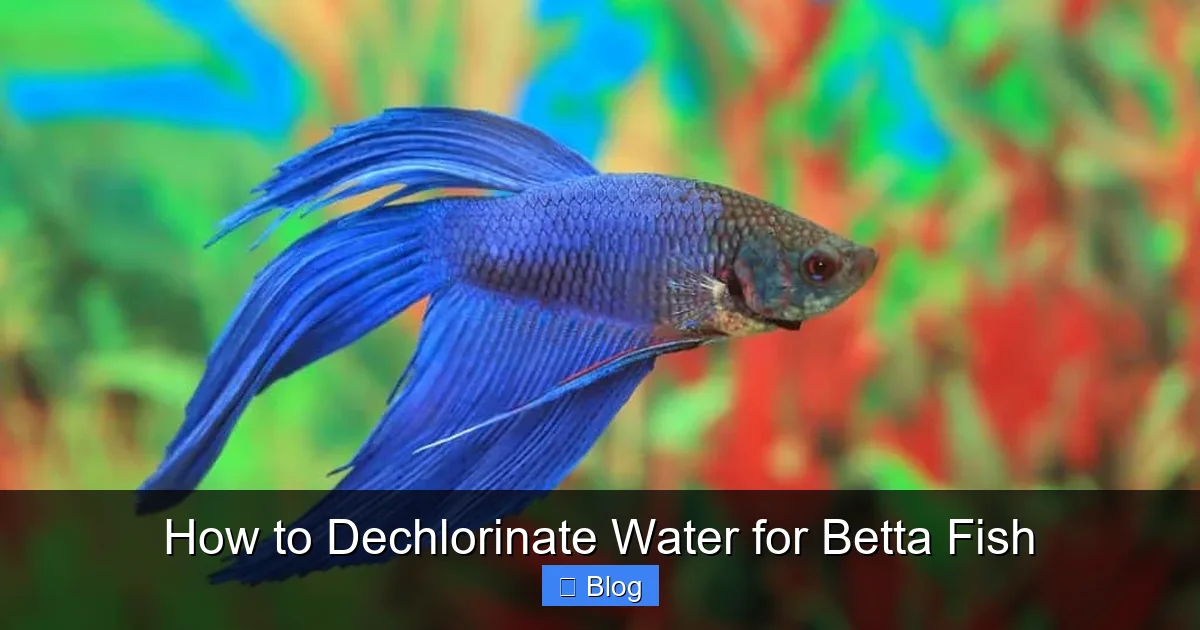
This is the method we unequivocally recommend for every single betta owner. It’s fast, foolproof, and comprehensive. A good water conditioner does three vital things simultaneously:

Visual guide about How to Dechlorinate Water for Betta Fish
Image source: shutterstock.com
- Neutralizes Chlorine & Chloramine: It chemically binds to and renders these compounds harmless instantly.
- Detoxifies Ammonia, Nitrite, and Heavy Metals: Many premium conditioners, like Seachem Prime, also bind to these other common toxins for a period of 24-48 hours, giving your bio-filter time to process them. This is a huge safety net.
- Protects the Slime Coat: Some formulas (e.g., API Stress Coat+) contain aloe vera or other polymers that help heal and reinforce your betta’s natural protective layer, reducing stress during water changes.
How to Use Water Conditioner: A Step-by-Step Guide
Using conditioner is simple, but doing it wrong is a common mistake. Follow these steps precisely.
Step 1: Prepare Your New Water. Fill a clean bucket or container with the amount of tap water you’ll be adding to your tank (for a water change or top-off). Use a dedicated bucket—never one you use for cleaning chemicals.
Step 2: Add the Conditioner. Read the label on your specific product. Most are dosed per gallon or liter. For example, Seachem Prime is 1 cap (5 mL) for 50 gallons (190 L). Never guess. Use the cap or a syringe for accuracy. Squirt the required amount directly into the bucket of new water.
Step 3: Mix Gently. Stir the water lightly with your hand or a clean utensil to distribute the conditioner. You’ll often notice a slight smell (like sulfur with Prime), which is normal and indicates it’s working.
Step 4: Wait (Optional but Recommended).strong> While the conditioner works instantly, letting the water sit for 5-10 minutes after adding it ensures full neutralization. This is especially important if your water is very cold or has high chlorine levels.
Step 5: Temperature & pH Matching (Crucial!). This is where many people fail. The new water must be within 1-2 degrees Fahrenheit of your tank’s temperature. A drastic change causes thermal shock. Use an in-tank thermometer and a bucket thermometer to check. Also, if your tap water has a very different pH than your tank water, you may need to adjust it slowly over time, but matching temperature is the immediate priority.
Step 6: Add to Tank. Slowly pour the treated, temperature-matched water into your betta tank. For a 25-30% water change, this process should take 15-30 minutes. Don’t dump it in; use a slow pour or a siphon hose to avoid stressing your fish.
Product Recommendations: What to Buy
- Seachem Prime: The industry benchmark. It’s highly concentrated, detoxifies ammonia/nitrite for 48 hours, and is incredibly cost-effective. A little goes a very long way.
- API Stress Coat+: Excellent choice specifically for bettas. It detoxifies chlorine and chloramine and has the added slime coat protectant. Great for use during every water change to reduce stress.
- Tetra AquaSafe: A reliable, widely available basic conditioner that neutralizes chlorine and chloramine. A good entry-level option.
Avoid: “Bottled water additives” meant for human consumption or “spring water” from the grocery store. These are not designed for aquariums and may lack essential minerals or have harmful pH levels. Stick to products formulated for fish.
Method 2: The “Natural” Approach – Why It’s a Gamble
You’ll find forums and old books advising to simply let tap water sit out for 24-48 hours. This works for chlorine only because it evaporates. You’re essentially giving the chlorine gas time to off-gas into the air. However, this method has massive, dangerous flaws for the modern betta keeper.

Visual guide about How to Dechlorinate Water for Betta Fish
Image source: ekk4j69ebaa.exactdn.com
The Critical Failures of Aeration & Settling
- Chloramine is Untouched: As stated, it does not evaporate. If your water utility uses chloramine—and most do—this method does absolutely nothing. Your water will still be toxic.
- No Ammonia Detoxification: The ammonia in chloramine remains. Even if chlorine evaporated, the ammonia part is still there, poisoning your fish.
- Heavy Metals Remain: Tap water can contain copper, lead, or other metals from pipes. Conditioners often chelate (bind) these; sitting does not.
- Inconsistent & Unreliable: Factors like water temperature, surface agitation, and air pressure affect evaporation rates. You have no guarantee the chlorine is fully gone. It’s a guess.
- Time-Consuming & Impractical: Planning a water change requires 24-hour forethought. What if you need to do an emergency change? You’re stuck with toxic water.
Our Verdict: Do not rely on aeration or settling as your primary dechlorination method for a betta tank. The risk is far too high. If you are in a pinch and know your water is chlorine-only (verify with your utility!), vigorous aeration with an air stone for 24 hours might be sufficient, but using conditioner is still faster, safer, and more complete.
Method 3: Bottled & Filtered Water – A Tricky Alternative
Some betta owners avoid tap water altogether, opting for distilled, reverse osmosis (RO), or spring water. This can work, but it introduces a new set of complications.
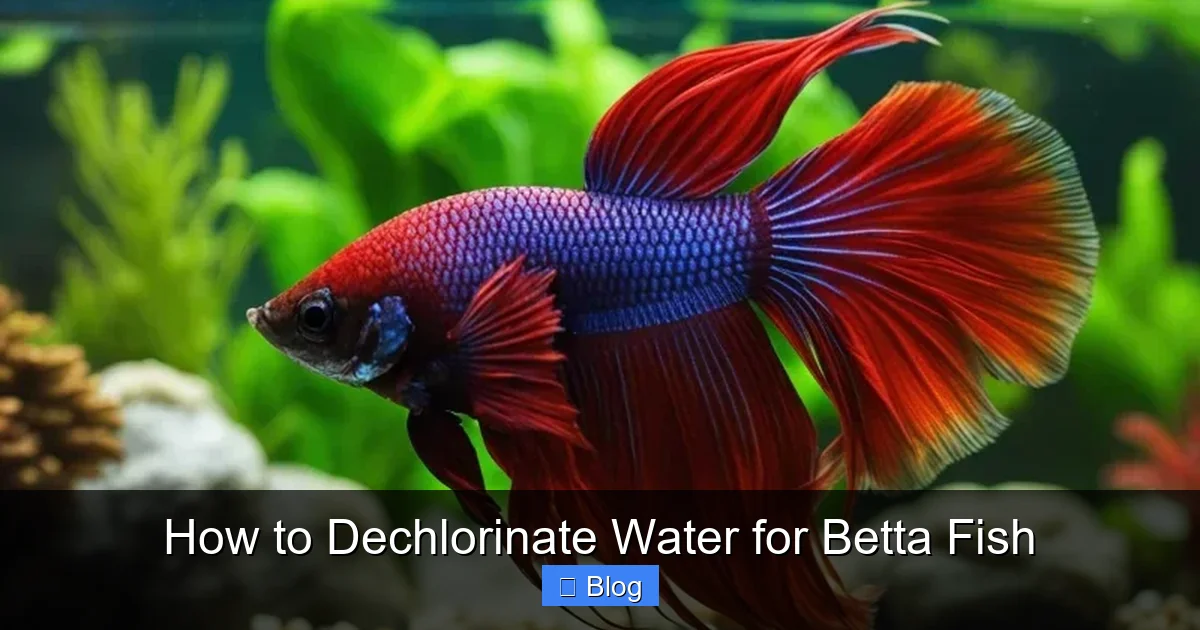
Visual guide about How to Dechlorinate Water for Betta Fish
Image source: qwikbetta.com
The Problem with “Pure” Water
Distilled and RO water are essentially blank slates. They have had all minerals removed. Fish, including bettas, need certain minerals (like calcium and magnesium) for osmoregulation—the process of maintaining their internal salt/water balance. Placing a betta in pure, mineral-free water is like a human drinking only distilled water; it leaches essential electrolytes from their body, causing osmotic shock and severe stress.
Spring water is variable. Some brands are high in minerals (good), some are low (bad), and some have unpredictable pH. You cannot assume it’s safe.
How to Use Bottled/RO Water Safely (If You Must)
If your tap water is truly terrible (extremely hard, high in phosphates, etc.), you can use RO or distilled water, but you must remineralize it.
- Purchase a RO/DI System or Use a Premium Conditioner: A system like the Seachem Equilibrium is designed specifically to add back essential minerals for freshwater tanks in the correct proportions.
- Follow Dosing Instructions Precisely: Add the remineralizer to your pure water before it touches your fish. Mix well.
- Test Your Parameters: After remineralizing, you must test for GH (General Hardness) and KH (Carbonate Hardness). Betta thrive in a GH of 3-4 dGH (50-70 ppm) and a stable KH. You need to know your numbers.
- Still Use a Conditioner: Even remineralized RO water should get a dose of conditioner to handle any residual chlorine from the bottling process or your storage containers.
Bottom Line: For 99% of betta keepers, using a quality tap water conditioner on your municipal water is simpler, cheaper, and more reliable than managing a remineralization system. Only go the pure water route if you have a specific, unavoidable water quality issue and are willing to test and adjust constantly.
Step-by-Step: The Complete Water Change Routine
Now let’s put it all together. Dechlorination is one part of a safe water change. Here is the foolproof protocol for a 25-30% weekly water change, which is ideal for a betta in a filtered tank (minimum 5 gallons).
Your Weekly Water Change Checklist
- Gather Supplies: Clean bucket (never used for chemicals), gravel vacuum/siphon, water conditioner, thermometer, towel.
- Turn Off Filters/Heaters (Optional but Helpful): To prevent them from running dry if you accidentally siphon too low. You can also just be careful.
- Syphon Old Water & Debris: Use the gravel vacuum to gently suck out 25-30% of the tank water. Push the vacuum into the substrate to remove uneaten food and waste. Don’t disturb the sand too much if you have it. Place the vacuum end in your bucket.
- Prepare New Water: In your clean bucket, fill with the same amount of tap water you just removed. Add the correct dose of water conditioner now.
- Match Temperature: Use your thermometer to ensure the new water matches the tank water within 1-2°F. You may need to add a little warm tap water to the bucket or let it sit to cool.
- Slowly Add New Water: Pour the treated water slowly back into the tank. You can pour it against the glass or use a cup to diffuse the flow. This prevents startling your betta and disturbing the tank layout too much.
- Restart Equipment & Wipe Down: Turn your filter and heater back on. Wipe any algae or water spots from the glass with an algae pad or clean cloth (never soap!).
- Observe Your Betta: Watch him for a few minutes. He should be active and curious. If he’s darting or hiding, double-check your water temperature and conditioner dosage.
Special Case: The Unfiltered “Betta Bowl”
If you are (and we strongly advise against it) keeping your betta in an unfiltered small container, you must perform 100% water changes every other day. The process is the same, but you will be removing all the old water and replacing it. Be extra gentle with your betta during the transfer. Use a cup to catch him, place him in a holding cup with a little old water, complete the full change, then acclimate him back to the new, treated, temperature-matched water by floating the cup in the tank for 15-20 minutes before releasing him.
Beyond Dechlorination: The Full Water Parameter Picture
Dechlorinating is step one. But a healthy betta tank is a balanced ecosystem. Here’s what you need to monitor alongside your dechlorination routine.
The Non-Negotiable Parameters (Test Weekly)
- Ammonia (NH₃/NH₄⁺): Should be 0 ppm. Ammonia is deadly. Even with conditioner, your bio-filter must process it.
- Nitrite (NO₂⁻): Should be 0 ppm. The second stage of the nitrogen cycle, also highly toxic.
- Nitrate (NO₃⁻): Should be kept below 20 ppm for bettas. This is the end product of the cycle and is less toxic but still a stressor. Water changes control it.
- pH: Betts prefer a stable pH between 6.5 and 7.5. Sudden swings are more harmful than a slightly “off” but stable pH. Do not chase a perfect number; aim for consistency.
Tool of the Trade: The API Freshwater Master Test Kit is the gold standard for home aquarists. It’s cheap, reliable, and lasts for hundreds of tests. Test strips are notoriously inaccurate.
The Nitrogen Cycle: Your Tank’s Best Friend
A cycled tank has beneficial bacteria living in the filter and substrate that convert toxic ammonia → nitrite → nitrate. This cycle takes 4-6 weeks to establish. During this time, you are doing daily partial water changes with conditioner to keep toxins low while the bacteria populates. Once cycled, your weekly water changes with conditioner remove the nitrate and replenish minerals. You cannot cycle a tank without first dechlorinating the water. Chlorine kills the beneficial bacteria on sight.
Common Mistakes & How to Avoid Them
Even with the best intentions, betta owners mess up dechlorination. Here are the top errors and their fixes.
Mistake 1: “I Forgot to Add Conditioner!”
Panic Level: High. If you added untreated tap water to your tank, act immediately.
Solution: Do an emergency 50% water change with properly conditioned water. Add a double dose of conditioner to the new water as a precaution. Monitor your betta closely for rapid gill movement, gasping, or lethargy for the next 24 hours. Have Seachem Prime on hand—its ammonia-detoxifying property can help if any ammonia was present in the tap water.
Mistake 2: Adding Conditioner to the Tank, Not the New Water
The Error: Dumping the conditioner directly into the tank, then adding the new tap water on top.
Why It’s Bad: The conditioner is instantly diluted and swept away by the incoming water flow. It may not neutralize the chlorine in the new water fast enough, especially if you pour quickly. The toxins can hit your fish before the conditioner can circulate.
Solution: Always, always, always add conditioner to the new water in the bucket first, mix, then add to the tank.
Mistake 3: Using Cold Water
The Error: Using straight cold tap water for a change, thinking the conditioner will handle it.
Why It’s Bad: Temperature shock is a silent killer. A drop of even 5-10 degrees can shut down a betta’s metabolism, suppress his immune system, and lead to ich or other infections.
Solution: Use a thermometer. Get your new water to match the tank. You can mix a little warm tap water into your bucket, or let it sit to reach room temperature. A small aquarium heater in the bucket is a pro move for large changes.
Mistake 4: Overcomplicating with “Natural” Methods
The Error: Trying to use plants, charcoal, or sunlight to “clean” the water instead of conditioner.
Why It’s Bad: These methods are ineffective against chlorine/chloramine. Your betta will suffer. Live plants are fantastic for absorbing nitrates, but they do nothing for tap water disinfectants.
Solution: Stick to the proven science. A $5 bottle of conditioner will protect your $20 betta. It’s not worth the gamble.
Conclusion: Your Betta’s health is in Your Hands
Learning how to dechlorinate water for betta fish is the single most important skill you will acquire as a betta keeper. It’s the foundation upon which every other aspect of care—tank size, heating, feeding, disease prevention—is built. There is no shortcut. There is no “natural” hack that is as safe and effective as a few drops of a quality water conditioner.
Think of it this way: you wouldn’t drink from a puddle of bleach. Your betta can’t either. That clear tap water is a chemical solution designed for pipes, not for living creatures. By taking the 30 seconds to treat it properly, you are removing an invisible, immediate threat. You are giving your betta the clean, safe water he needs to display his brilliant colors, explore his environment, and live a long, healthy life. It’s the easiest, most impactful thing you can do for him. So grab that bottle of Seachem Prime or API Stress Coat+, make it part of your weekly ritual, and rest easy knowing you’ve eliminated the #1 danger in your betta’s world.
Frequently Asked Questions
Can I use bottled spring water for my betta tank instead of tap water?
You can, but it’s not recommended as a primary source. Spring water varies wildly in mineral content and pH, which can lead to unstable water parameters. It’s also expensive and environmentally taxing. If you must use it, test its pH and hardness first, and still use a water conditioner to neutralize any chlorine that may be present from the bottling process.
Is letting tap water sit out for 24 hours enough to make it safe for my betta?
Almost certainly not. This only removes chlorine, not chloramine, which is used by most water treatment plants and does not evaporate. It also does nothing for heavy metals. Using a water conditioner is the only guaranteed, instant, and complete method to make tap water safe for your betta.
How long does it take for water conditioner to work?
High-quality conditioners like Seachem Prime work instantly upon contact. However, for maximum safety, it’s best practice to add the conditioner to your new water in a separate bucket, stir it, and let it sit for 5-10 minutes before adding it to your tank. This ensures full neutralization throughout the entire volume.
Can I add too much water conditioner?
With most standard conditioners, overdosing is generally not harmful to fish, just wasteful and expensive. However, with products that detoxify ammonia for 48 hours (like Prime), a massive overdose could potentially interfere with your tank’s nitrogen cycle by also binding to the ammonia your beneficial bacteria need to eat. Always follow the dosing instructions on the label for your specific water volume.
My betta is in a small, unfiltered bowl. How often should I do water changes and dechlorinate?
>For a small, unfiltered container (which we strongly advise upgrading to a minimum 5-gallon filtered tank), you must perform 100% water changes every other day. You must treat all of the new water with conditioner and ensure its temperature matches the old water exactly before adding your betta back. This is labor-intensive and stressful for the fish, highlighting why a proper setup is crucial.
Do I need to dechlorinate the water if I’m using a filter that has carbon?
Yes, absolutely. Activated carbon in a filter can adsorb (stick to) some chlorine and chloramine, but its capacity is limited and it works slowly. It is not a reliable or primary method of dechlorination. The toxins will still be present in the water column long enough to harm your betta before the filter media can process them. Always dechlorinate the water before it enters the tank, regardless of your filter.