How to Cure Betta Fish Popeye
Betta fish popeye (exophthalmia) is a serious but often treatable condition where the eye protrudes abnormally. It’s typically a symptom of poor water quality, bacterial infection, or physical injury, not a disease itself. Curing it requires immediate action: pristine water, Epsom salt baths, and often antibiotic medication. Success depends on early detection and consistent, correct treatment to prevent permanent blindness or death.
You’re admiring your beautiful betta fish, maybe its flowing fins catching the light, when you do a double-take. One eye looks… different. Puffy. Bulging. Maybe there’s a white cloudiness. Your heart sinks. “Popeye.” It’s a frightening sight for any betta owner, and for good reason. This condition, medically termed exophthalmia, is a serious red flag. But before panic sets in, take a deep breath. Betta fish popeye is a treatable condition, especially when caught early. Your swift, informed action is the single most important factor in saving your fish’s sight and life. This guide will walk you through everything you need to know, from understanding what’s really happening to executing a precise, step-by-step treatment plan. We’ll talk plainly, without unnecessary jargon, because your betta needs you to be its calm, capable hero right now.
Key Takeaways
- Popeye is a Symptom, Not a Disease: It signals an underlying issue like infection or toxins. Treat the root cause, not just the swollen eye.
- Water Quality is Priority #1: 90% of cases start with poor water. Immediate, large water changes with dechlorinated, temperature-matched water are the first and most critical step.
- Epsom Salt (Magnesium Sulfate) is a Key First-Aid: It reduces swelling and draws out toxins through osmosis. Use a correct, isolated bath dosage, never in the main tank with salt-sensitive fish/inverts.
- Antibiotics are Often Necessary: For bacterial causes, a full course of a broad-spectrum antibiotic (like Kanamycin or Erythromycin) is required. Never use leftover meds or human antibiotics.
- Isolation in a Hospital Tank is Crucial: Treat the betta in a separate, bare tank to control medication dosage, monitor progress, and prevent spreading potential pathogens.
- Prevention is the Best Cure: Maintain impeccable water parameters (ammonia/nitrite = 0, nitrate < 20 ppm), avoid sharp décor, and provide a balanced diet to boost the immune system.
- Early Detection Saves Eyes: Look for the first signs—a slightly bulging eye, cloudiness, or rubbing. Intervene within 24-48 hours for the highest chance of full recovery.
📑 Table of Contents
- Understanding Popeye in Betta Fish: More Than Just a Swollen Eye
- Step 1: Immediate Crisis Management – The First 24 Hours
- Step 2: Diagnosing the Likely Cause & Choosing Treatment
- Step 3: The Treatment Protocol – A Day-by-Day Plan
- Step 4: Prevention – Keeping Popeye Away for Good
- Step 5: When to Call in the Professionals – The Vet’s Role
- Conclusion: Your Betta’s Champion
Understanding Popeye in Betta Fish: More Than Just a Swollen Eye
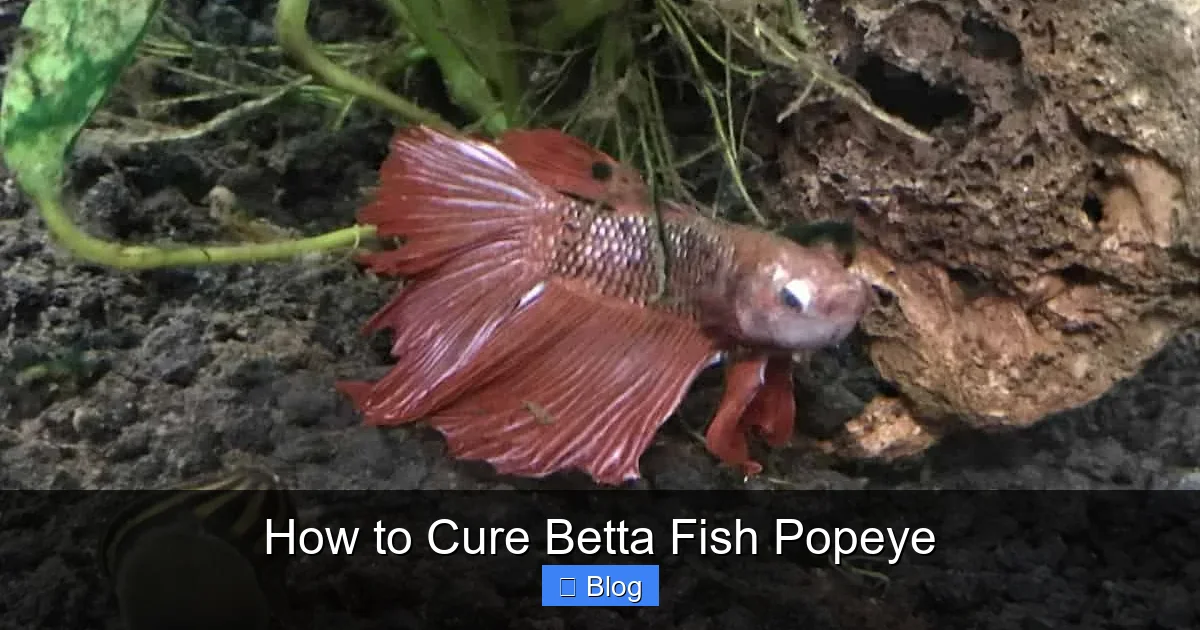
First, let’s demystify this. “Popeye” isn’t a specific disease; it’s a visible symptom, like a fever in a human. It means the tissue behind the eyeball is inflamed and filled with fluid or pus, physically pushing the eye forward out of its socket. This is incredibly painful for the fish and compromises its vision. The underlying causes generally fall into two categories: infectious (bacterial, parasitic, or fungal) and non-infectious (toxic water, physical injury, or internal organ failure). In betta fish, the overwhelming majority of cases are bacterial, sparked by poor water quality that weakens the immune system and allows opportunistic bacteria to invade.
The Infectious Culprits: Bacteria at the Door
When your betta’s water is dirty—high in ammonia, nitrite, or even elevated nitrate—it causes chronic stress. Stress suppresses the immune system. Bacteria like Aeromonas or Pseudomonas, which are always present in the tank at low levels, can then launch an attack. They infiltrate the soft tissues around the eye, causing a localized infection that results in abscesses and fluid buildup. Sometimes, a systemic bacterial infection (one affecting the whole body) will manifest in the eyes first. You might also notice other signs like clamped fins, lethargy, loss of appetite, or red streaks on the body (fin rot or body rot).
The Non-Infectious Triggers: Toxins and Trauma
Imagine having a chemical burn in your eye. That’s what happens to a fish in water with high ammonia or nitrite. These toxins are corrosive and cause direct tissue damage and inflammation. This can lead to popeye even without a bacterial infection. Physical injury is another common cause. Did your betta accidentally spike itself on a sharp plastic plant? Get into a fight with a tankmate? A bruise or wound near the eye can swell and become secondarily infected. In rare, severe cases, popeye can be a sign of a failing internal organ, like the kidney or swim bladder, where fluid retention affects the whole body, eyes included. This is often a grave prognosis.
Step 1: Immediate Crisis Management – The First 24 Hours
Diagnosis is for later. Right now, you are in emergency response mode. Every minute counts. Your goals are to remove the immediate irritants/toxic load, reduce swelling, and prevent the condition from worsening. Do not wait to “see if it gets better.” It won’t.
Visual guide about How to Cure Betta Fish Popeye
Image source: fishlab.com
1.1. The Massive Water Change: Your Most Powerful Tool
This is non-negotiable and the single most effective thing you can do. You are going to perform a 50-75% water change immediately. Why so much? Because you need to dilute any ammonia, nitrite, heavy metals, or medication residues to near zero. Use a reliable water conditioner (like Seachem Prime) to detoxify ammonia and nitrite for 24-48 hours. Ensure the new water is exactly the same temperature as the tank water (use a thermometer!) to avoid shocking your fish. Match the pH and hardness as closely as possible. Siphon the old water from the bottom of the tank to remove any settled waste. This one act removes the primary stressor for most bettas.
1.2. Set Up a Hospital Tank (Quarantine Tank)
You need a separate, simple system for treatment. A 1-2 gallon clean glass or acrylic tank is perfect. It must be:
- Bare-bottom: No substrate to siphon waste easily. No décor to hide waste or harbor bacteria.
- Cycled? No. For a short-term hospital tank (1-2 weeks), you do not need a cycled filter. You will be doing daily 100% water changes. The goal is a clean slate, not a bio-load.
- Heated & Filtered (gently): Maintain a steady 78-80°F (25.5-26.5°C). Use a tiny sponge filter on a very low air flow to provide minimal movement and gentle filtration/oxygenation without stressing the fish.
- Covered: Bettas jump, especially when stressed.
Gently net your betta from its main tank and acclimate it to the hospital tank water using the drip method over 30-60 minutes. This minimizes additional stress.
1.3. Start Epsom Salt (Magnesium Sulfate) Baths
Epsom salt is not a medication; it’s a therapeutic agent. It works through osmosis, drawing excess fluid out of the inflamed tissues, thereby reducing swelling and pressure on the eye. This is for the hospital tank ONLY.
- Dosage: Add 1 teaspoon of Epsom salt (pure, unscented, no additives) per 1 gallon (4 liters) of water in the hospital tank. Dissolve it in a cup of tank water first.
- Duration: Keep the betta in this Epsom salt bath for 10-15 minutes initially. After 24 hours in the Epsom salt bath, perform a 100% water change with fresh, dechlorinated, temperature-matched water (with a new dose of Epsom salt). Continue this daily.
- Warning: Never use Epsom salt in your main display tank if you have live plants, snails, shrimp, or other invertebrates—it can harm them. Also, do not use table salt or aquarium salt; they are sodium chloride and are harmful to freshwater fish in therapeutic doses.
Observe your betta during the bath. If it becomes extremely lethargic or loses equilibrium, remove it immediately—the dosage might be too high for its weakened state, though the standard dose is generally safe.
Step 2: Diagnosing the Likely Cause & Choosing Treatment
With the immediate crisis managed (water changed, in hospital tank, on Epsom salt), you now have time to assess. Your treatment for the next 7-14 days hinges on what you suspect is the primary driver.
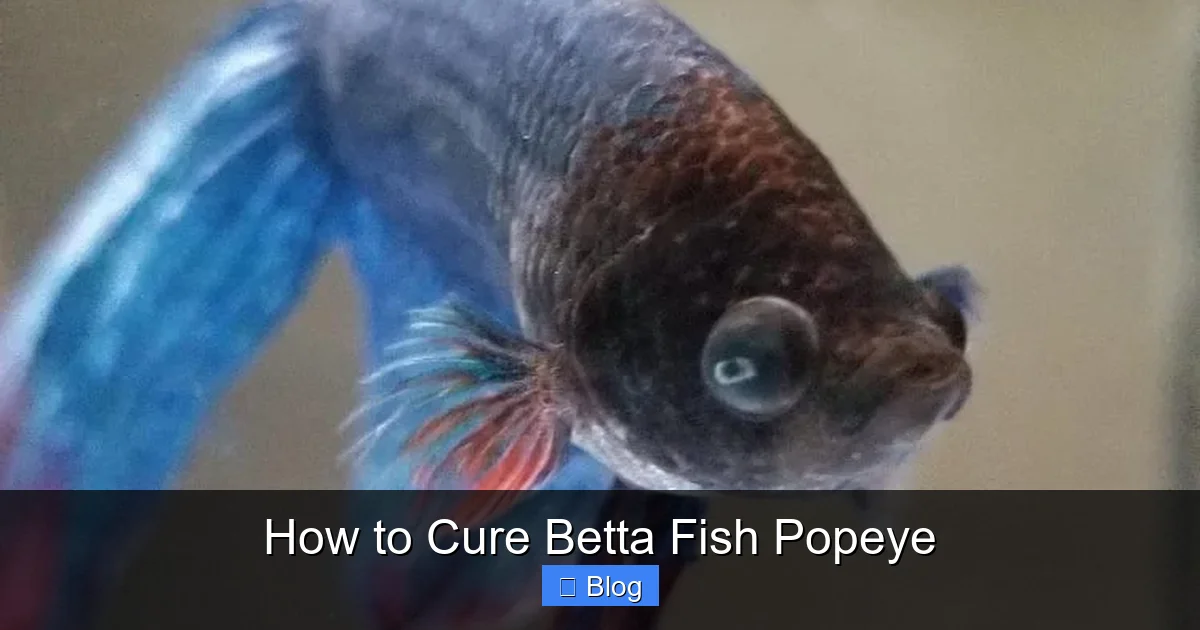
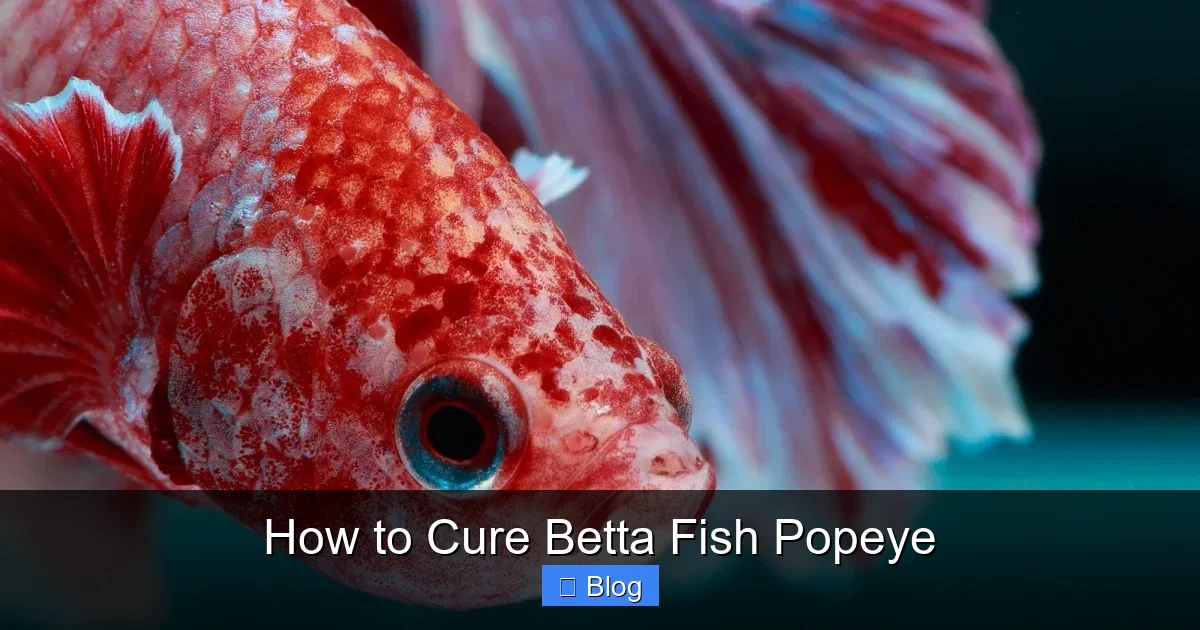
Visual guide about How to Cure Betta Fish Popeye
Image source: fishlab.com
2.1. The Bacterial Infection Pathway (Most Common)
If you see any of these alongside the popeye: red streaks (hemorrhaging), ragged fins, white/gray fuzzy patches (fungus, which often follows bacteria), lethargy, or refusal to eat, bacteria is almost certainly involved. You need an antibiotic. Over-the-counter (OTC) fish antibiotics from a reputable online aquarium store or pet shop are your best bet. Avoid “cure-all” medications with multiple drugs; they can be harsh. Look for:
- Kanamycin: Excellent for gram-negative bacteria like Aeromonas. Often sold as “Kanaplex” or in combination meds.
- Erythromycin: Good for gram-positive bacteria.
- Furan-2 (Nitrofurazone): A broad-spectrum antibiotic effective against many external infections.
- Methylene Blue: A mild antiseptic and antifungal that can be used in conjunction with an antibiotic, especially if fungus is present.
Follow the dosing instructions on the package EXACTLY. Typically, you will dose the medication into the hospital tank water for 5-7 days, with a 100% water change and re-dose every 24-48 hours (depending on the med). Complete the full course, even if the eye looks better after 3 days. Stopping early allows resilient bacteria to survive and create a resistant infection.
2.2. The Water Toxicity / Non-Infectious Pathway
If the popeye appeared after a water change with chlorinated water, a filter crash, or the death of a tankmate (causing an ammonia spike), and there are no other signs of infection (fins are intact, no redness, active behavior), the primary cause may be toxin-induced. In this scenario:
- Continue the Epsom salt baths to reduce swelling.
- Focus on perfect water maintenance. In the hospital tank, do 100% daily water changes with pristine, conditioned water.
- Do not use antibiotics. They will not help a chemical burn and can stress the fish further. Antibiotics do not treat toxins.
- Monitor closely. If after 3-4 days of crystal-clear water and Epsom salt, the swelling is not decreasing or if any signs of infection (fuzz, red veins) appear, switch to the antibiotic protocol immediately.
Step 3: The Treatment Protocol – A Day-by-Day Plan
Here is a consolidated, actionable plan for the most likely scenario: a bacterial popeye infection stemming from poor water.
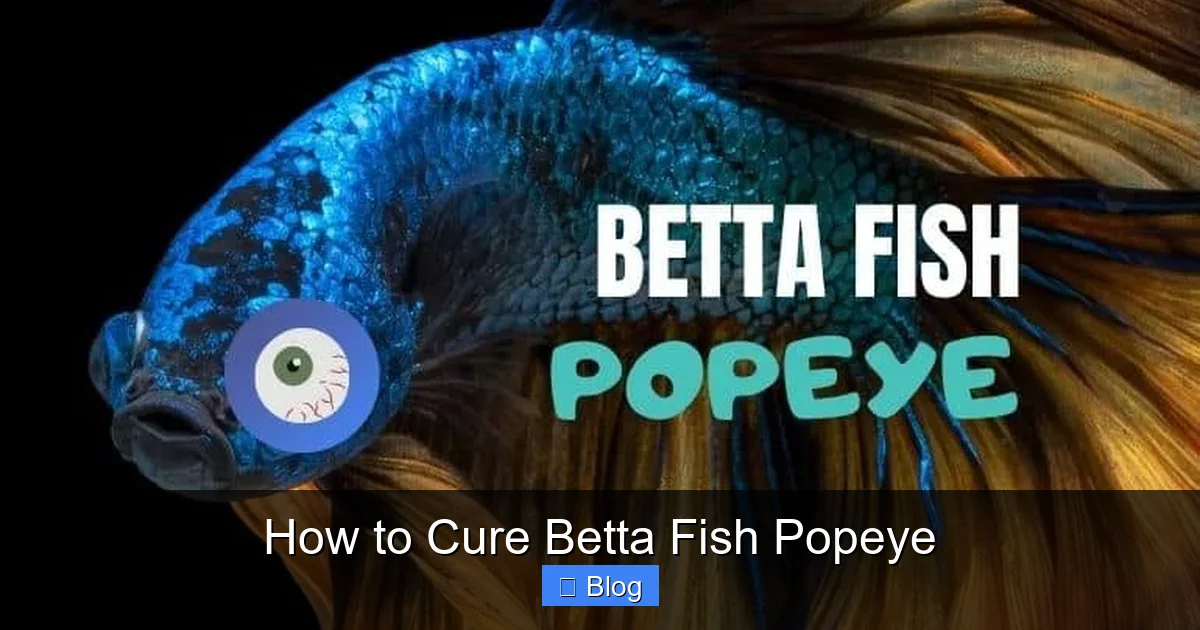
Visual guide about How to Cure Betta Fish Popeye
Image source: japanesefightingfish.org
Day 1 (Crisis Day):
- Perform 75% water change in main tank (or move to hospital tank immediately).
- Set up hospital tank with heater, sponge filter, cover.
- Acclimate betta to hospital tank water.
- Add Epsom salt at 1 tsp/gallon to hospital tank.
- Begin first dose of chosen antibiotic (e.g., Kanamycin) according to label.
Days 2-7:
- Each Morning: Perform a 100% water change in the hospital tank. Siphon out all waste from the bottom. Discard old water.
- Prepare fresh hospital tank water (same temp, conditioned).
- Add new dose of Epsom salt (1 tsp/gallon).
- Add new full dose of antibiotic.
- Observe your betta for 15 minutes after treatment. Is the eye less bulging? Is it eating? (Try offering a small piece of thawed frozen daphnia or a high-quality betta pellet).
Days 8-14 (Recovery & Monitoring):
- If the eye shows significant improvement (swelling down, clearer), you may stop the antibiotic after 7 full days of treatment.
- Continue Epsom salt baths for another 3-5 days to fully reduce inflammation. You can reduce to every other day.
- After swelling subsides, the eye may remain slightly cloudy or scarred. This is common. Vision may be permanently impaired in that eye, but bettas can adapt remarkably well with one good eye.
- Only consider returning to the main tank after at least 7 days of perfect water in the hospital tank and complete resolution of active swelling. The main tank must be fully tested and confirmed safe (ammonia/nitrite 0, nitrate < 20).
Step 4: Prevention – Keeping Popeye Away for Good
You never want to go through this again. The best cure is a prevention strategy so robust that popeye has no chance to develop.
The Unbreakable Water Change Routine
This is the cornerstone. For a single betta in a 5+ gallon tank:
- Weekly 25-30% water changes are the absolute minimum.
- Test your water weekly with a liquid test kit (API Freshwater Master Test Kit is the gold standard). Know your numbers. Ammonia and nitrite must read 0. Nitrate should be under 20 ppm.
- Use a gravel vacuum to clean the substrate and remove trapped waste.
- Never overfeed. Excess food decays into ammonia. Feed only what your betta can eat in 2-3 minutes, once or twice daily.
Tank Setup & Décor Safety
Bettas are curious and will explore. They also have long, delicate fins.
- Avoid plastic plants with sharp edges. Use live plants (like Java fern, Anubias) or silk plants. Smooth, natural-looking decorations only.
- No rough rocks or gravel. Smooth river rocks or sand are best.
- Provide hiding spots (caves, dense plants) to reduce stress.
- Use a filter with adjustable flow. Bettas hate strong currents. A sponge filter or a hang-on-back filter with a baffle is ideal.
Nutrition for a Bulletproof Immune System
A malnourished betta is a sick betta.
- High-quality pellet staple: Choose a reputable brand (e.g., Hikari, New Life Spectrum) with whole fish or shrimp as the first ingredient.
- Variety is key: Supplement 2-3 times a week with frozen or live foods: daphnia (great for digestion), bloodworms, brine shrimp.
- Consider a vitamin boost: Occasionally soak pellets in a liquid vitamin supplement for fish (like Seachem NutriDiet Plus) to fill nutritional gaps.
Step 5: When to Call in the Professionals – The Vet’s Role
Home treatment is effective for most early-to-mid stage cases. However, there are clear signs that you need expert help. A qualified aquatic veterinarian (yes, they exist!) or a very experienced exotic vet is your next step if:
- The eye has ruptured. This is an emergency. The eye will look deflated, with a hole or tear, and fluid leaking. It is extremely painful and requires injectable antibiotics and pain management, which only a vet can provide.
- There is no improvement after 5 days of correct, aggressive treatment (proper antibiotics, water changes, Epsom salt).
- Both eyes are severely affected. This often points to a more systemic, severe internal issue.
- The betta is listless, not eating at all, and has other severe symptoms like pineconing (raised scales, indicating dropsy) or extreme bloating.
- You are uncertain of the cause and want a definitive diagnosis. A vet can perform cytology (taking a small sample from the eye area with a sterile needle) to identify the exact bacteria and choose the most effective antibiotic.
Be prepared to provide the vet with a detailed history: tank size, water parameters, timeline of symptoms, all treatments you’ve tried, and photos. This speeds up diagnosis.
Conclusion: Your Betta’s Champion
Seeing your betta with popeye is a call to arms. It’s a stark reminder that the invisible world of water quality has profound, visible consequences. But it is not a death sentence. By understanding that popeye is a symptom, you empower yourself to treat the root cause. Your action plan is clear: act fast with massive water changes, isolate for treatment, use Epsom salt to reduce swelling, and employ the correct antibiotics for infection. Your dedication to meticulous daily care in the hospital tank—the 100% water changes, the precise dosing, the careful observation—is what will turn the tide. As your betta recovers, its bulging eye slowly returning to normal, you’ll have earned the title of true fishkeeper. You didn’t just own a pet; you learned to read its subtle signals and became its guardian. Now, take that knowledge and forge ahead, creating the pristine, safe haven your betta deserves. A healthy, curious betta with bright, clear eyes is watching you from its tank—and that’s the greatest reward.
Frequently Asked Questions
Can popeye in betta fish be cured?
Yes, betta fish popeye can often be cured, especially if treatment begins early. Success depends on identifying and addressing the underlying cause (usually bacterial infection from poor water) and providing consistent, correct treatment with water changes, Epsom salt baths, and antibiotics.
How long does it take to treat popeye in a betta?
With aggressive treatment, initial improvement (reduced swelling) should be visible within 3-5 days. A full recovery, including resolution of inflammation and any secondary cloudiness, typically takes 2-3 weeks of consistent care. Severe or advanced cases may take longer or result in permanent eye damage.
Is betta fish popeye contagious to other fish?
Popeye itself is not a contagious disease; it’s a symptom. However, the underlying bacterial infection that often causes it can be contagious to other fish, especially those with compromised immune systems. This is why isolating the affected betta in a hospital tank for treatment is critically important.
Can I use human eye drops for my betta’s popeye?
No. Human eye drops are formulated for mammalian eyes with completely different chemistry and pH. They can be toxic or extremely irritating to a fish. Only use treatments specifically designed for fish, like Epsom salt baths and aquarium-safe antibiotics.
What is the best antibiotic for betta popeye?
There is no single “best” antibiotic, as effectiveness depends on the specific bacteria. Broad-spectrum options like Kanamycin (for gram-negative bacteria) or Erythromycin (for gram-positive) are commonly effective for external infections. Methylene Blue can be used alongside as a mild antiseptic. For severe cases, a vet may prescribe injectable antibiotics.
How can I prevent popeye from happening again?
Prevention is centered on impeccable tank maintenance: perform weekly 25-30% water changes, test water parameters regularly (ammonia/nitrite must be 0), use a gentle filter, avoid sharp décor, and feed a high-quality, varied diet. Maintaining a stress-free, clean environment with pristine water is the ultimate defense.