How to Cook Betta Fish
Betta fish, or Siamese fighting fish, are almost exclusively kept as ornamental pets and are not a recognized food fish. Attempting to cook a betta fish is generally considered unethical, impractical due to their tiny size, and potentially illegal in many places. This article details the realities of betta fish as pets, the significant ethical and legal concerns, and provides guidance on choosing appropriate, sustainable seafood for home cooking.
So, you’ve typed “how to cook betta fish” into your search bar. Maybe you’re a new betta owner staring at your vibrant, flaring companion and wondering, “Could this be food?” Or perhaps you’ve heard a vague reference and your curiosity is piqued. Before we dive into any hypothetical recipe steps, let’s have a very important, foundational conversation. The most accurate and responsible answer to “how to cook betta fish” is: you don’t. This isn’t a quirky secret of global cuisine; it’s a firm boundary rooted in practicality, ethics, and law. This article will comprehensively explain why cooking a betta fish is not a viable or advisable culinary pursuit and will pivot to the much more rewarding topic of how to select and cook fish that are actually meant for the dinner table.
Bettas, scientifically known as Betta splendens and commonly called Siamese fighting fish, are one of the most popular aquarium pets in the world. Their flowing fins, brilliant colors, and fascinating behaviors have captivated hobbyists for hundreds of years. They are sentient beings, often with distinct personalities, and are protected under basic animal welfare statutes in many countries. The idea of cooking them sits in stark, jarring contrast to their entire purpose in human society. Let’s break down the myriad reasons why this question has a very clear answer.
Key Takeaways
- Betta fish are companion animals: With a history spanning centuries as ornamental pets, bettas are culturally and legally viewed as pets, not a food source in the vast majority of the world.
- Size makes them impractical: A full-grown betta fish is typically only 2-3 inches long, yielding less than a bite of meat, making any culinary effort pointless and wasteful.
- Ethical considerations are paramount: Raising a sentient creature with the sole purpose of discarding it for a single, minuscule meal is widely regarded as unethical and contrary to responsible pet ownership.
- Legal restrictions may apply: In many jurisdictions, animal cruelty laws could be invoked if a pet betta is intentionally killed for consumption, and wildlife protections may apply to certain native populations.
- Focus on sustainable seafood: For those interested in cooking fish, the responsible path is to select species from well-managed fisheries or aquaculture, prioritizing environmental health and animal welfare.
- Cultural context is key: While extremely rare historical or localized consumption of wild betta relatives exists, this is not a modern, viable, or recommended practice for hobbyists.
- Appreciate them as they are: The joy of betta fish lies in observing their beauty and personality in a properly set up aquarium, not in considering them as ingredients.
📑 Table of Contents
- What Exactly Is a Betta Fish? Understanding Your Companion
- The Ethical Minefield: Why Cooking a Betta Is Problematic
- Legal Considerations: Could You Get in Trouble?
- The Hypothetical “How-To” (And Why You Should Skip It)
- What Fish SHOULD You Cook? A Guide to Responsible Choices
- Basic Techniques for Cooking Fish Perfectly
- Conclusion: Appreciate the Betta for What It Is
What Exactly Is a Betta Fish? Understanding Your Companion
To understand why cooking a betta is off the table, we must first understand what a betta fish is. The betta you know from the pet store is a domesticated descendant of wild bettas native to the shallow rice paddies, floodplains, and slow-moving streams of Thailand, Cambodia, Vietnam, and Malaysia. Through centuries of selective breeding—originally for aggressive fighting and later for spectacular color and finnage—we have created the jewel-like fish that swims in your tank.
The Reality of Their Size and Anatomy
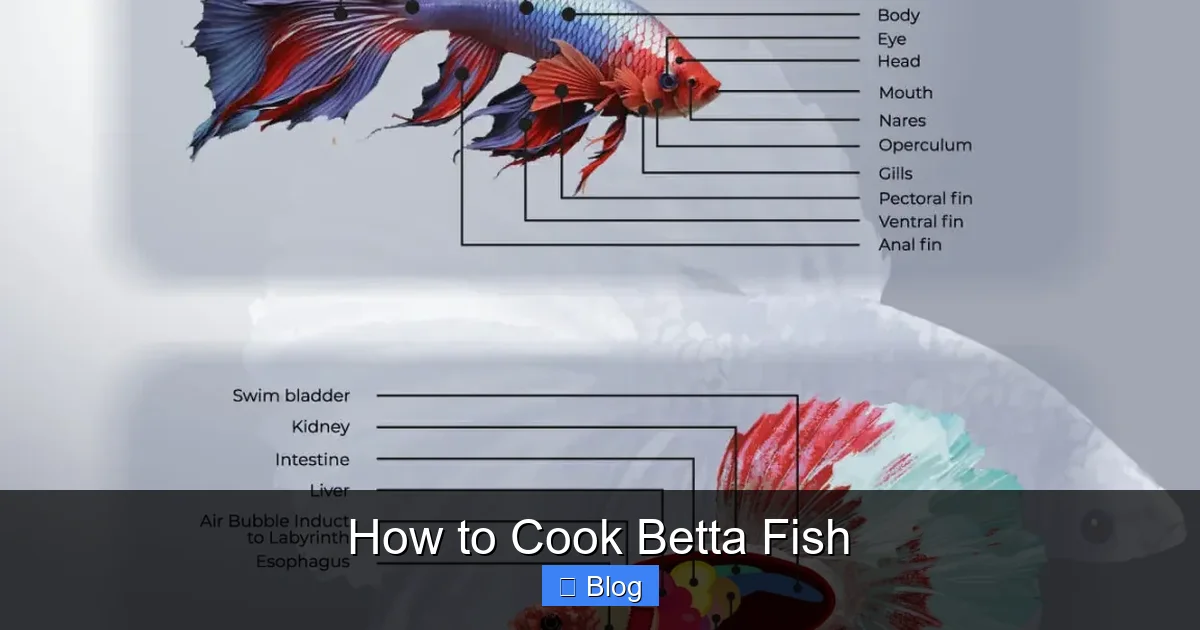
Let’s address the most practical hurdle first: size. A healthy, adult betta fish, fully grown and at the peak of its beauty, is tiny. We’re talking 2 to 3 inches (5-7.5 cm) from snout to the tip of its flowing tail. Its body is slender and built for bursts of energy, not for substantial muscle mass. After cleaning, deboning, and cooking, you would be left with a quantity of meat smaller than a chicken nugget. The effort, heat, and resources required to prepare such a minuscule amount of food would be astronomically disproportionate to the caloric or nutritional return. It is, quite simply, an absurdly inefficient use of energy. This alone makes it a non-starter as a “recipe.”
Bettas as Pets, Not Provisions
Culturally and historically, bettas have never been a food fish in any significant capacity. While some extremely small, wild fish species in Southeast Asia are consumed whole (like certain types of minnows or sprats), the betta was specifically domesticated for spectacle and combat. Its value has always been in its visual display and behavioral traits, not its flesh. In the modern global context, bettas are 100% understood to be pets. They are sold in pet stores, not fish markets. Their care guides discuss filters, heaters, and tank mates, not filleting techniques. This societal contract is clear.
The Ethical Minefield: Why Cooking a Betta Is Problematic
Beyond sheer impracticality lies a deep ethical chasm. The act of intentionally acquiring or raising a betta fish with the intent to cook it crosses several serious moral lines that any responsible person should consider.
Visual guide about How to Cook Betta Fish
Image source: cdn.printerval.com
The Bond of Pet Ownership
When you bring a betta fish home, you are taking on the role of a caregiver. You are responsible for its life, its environment, and its wellbeing. The entire framework of pet ownership is built on a relationship of trust and stewardship. To deliberately end that life for a trivial culinary experiment is a profound betrayal of that trust. It treats a living, feeling creature as a disposable commodity rather than a companion. For anyone who has watched their betta learn to beg for food, flare at its reflection, or gently rest near the glass when they approach, the idea of harming it is anathema.
Animal Welfare and Suffering
Modern ethical frameworks, and indeed many laws, recognize that animals can suffer and deserve protection from unnecessary harm. The methods for killing a small, delicate fish like a betta humanely are not simple for a layperson. Unlike a larger food fish that can be instantly dispatched with a sharp blow to the head followed by bleeding, a betta’s small size makes precise, humane euthanasia difficult to achieve without specialized knowledge and tools. A botched attempt could cause prolonged suffering. Deliberately creating that risk for a non-essential purpose is ethically indefensible.
Legal Considerations: Could You Get in Trouble?
This is not just a philosophical discussion; it has real-world legal implications that vary by location but are universally cautionary.
Visual guide about How to Cook Betta Fish
Image source: ekk4j69ebaa.exactdn.com
Animal Cruelty Laws
In the United States, the United Kingdom, Canada, Australia, and much of Europe, animal cruelty statutes are broad and can be applied to any vertebrate animal, including fish. These laws typically prohibit intentionally causing “unnecessary suffering” or “unjustified harm.” A prosecutor or animal control officer could very reasonably argue that killing a healthy pet betta for a single, pointless meal constitutes unjustified harm. The legal defense would be weak, as there is no “necessity” or “food source” argument that holds water for this specific, tiny, non-food animal. Penalties can range from fines to imprisonment and a permanent ban on owning animals.
Wildlife Protection
If you are considering catching a wild betta (which is also illegal in many places without permits), you run afoul of wildlife conservation laws. Native betta populations in Thailand, for instance, face habitat loss and other pressures. They are not an open resource for harvesting. Collecting them from the wild would likely violate national laws in their native range and international treaties like CITES (the Convention on International Trade in Endangered Species), though bettas are not currently listed, the principle of protecting wild populations stands.
The Hypothetical “How-To” (And Why You Should Skip It)
For the sake of complete informational transparency, let’s technically outline the steps one would theoretically take to prepare a betta fish for consumption. This is a thought exercise only and is not an endorsement or instruction.
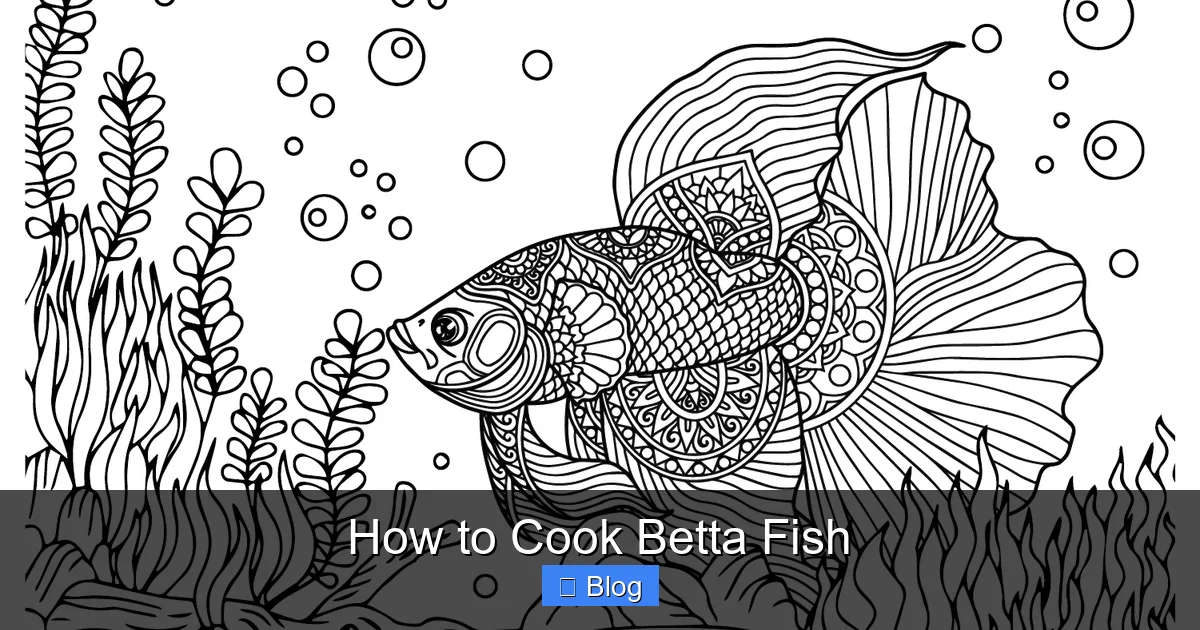
Visual guide about How to Cook Betta Fish
Image source: coloringpagesonly.com
Step 1: Acquisition (The Major Hurdle)
You would need a betta fish. The only ethical way to acquire one for this purpose would be if it was already dead from natural causes or had to be humanely euthanized for severe, untreatable illness—a scenario where consumption would still be a grim last resort, not a choice. Actively buying or catching one for food is where the ethical breach begins.
Step 2: Humane Dispatch (Extremely Difficult)
For a fish this small, the standard culinary method of a sharp blow to the head is nearly impossible to execute correctly without magnification and a very steady hand. The most widely accepted humane method for small fish is a swift immersion in an ice-water slurry (which induces rapid, unconsciousness before death), but even this requires precise timing and knowledge to be considered truly humane. An amateur attempt risks prolonged distress.
Step 3: Cleaning and Preparation
After death, the fish would be scaled (a tedious process for such a small fish), gutted, and rinsed. The entire skeleton, including dozens of tiny, sharp bones, would need to be meticulously picked out. You would be left with a speck of flesh.
Step 4: Cooking
Due to its size, the only possible cooking methods would be deep-frying (where it would become a crispy, bone-filled bite) or poaching in a broth where it would disintegrate entirely. There is no “fillet,” no “steak,” no meaningful portion. The texture would be extremely fine and delicate, and any flavor would be completely overwhelmed by any seasoning or batter used.
The Bottom Line of the Hypothetical
This entire process is a waste of time, resources, and, most importantly, a life. It provides no culinary satisfaction, no nutritional benefit, and carries significant ethical and legal risk. The conclusion is inescapable: there is no legitimate “how-to” for cooking a betta fish as a food item.
What Fish SHOULD You Cook? A Guide to Responsible Choices
Your interest in cooking fish is fantastic! Fish can be a delicious, healthy part of a diet. The key is to channel that interest toward species that are sustainable, plentiful, and intended for consumption. Here is how to be a conscientious fish cook.
Choosing Sustainable Seafood
Look for certifications from organizations like the Marine Stewardship Council (MSC) for wild-caught fish or the Aquaculture Stewardship Council (ASC) for farmed fish. These labels indicate the fishery or farm meets rigorous environmental and social standards. Alternatively, consult regional seafood watch guides (like those from the Monterey Bay Aquarium) which list “best choices,” “good alternatives,” and species to “avoid” based on stock health, fishing methods, and habitat impact.
Excellent, Accessible Options for Home Cooks
Focus on species that are well-managed, versatile, and have a good flesh-to-bone ratio.
- Pacific Cod or Alaskan Pollock: Mild, flaky white fish, incredibly versatile for frying, baking, or in fish tacos. Both come from some of the best-managed fisheries in the world.
- U.S. Farm-Raised Tilapia: When sourced from the U.S. or reputable farms in Latin America, tilapia is a sustainable, affordable, and mild-flavored option. Look for certifications.
- Atlantic Mackerel (or Pacific varieties): Rich in omega-3s, these smaller, faster-reproducing fish are a much more sustainable choice than larger, threatened predators like tuna or swordfish.
- Rainbow Trout (U.S. Farm-Raised): A fantastic beginner fish. U.S. trout farms are highly regulated and produce a clean, tasty fish perfect for pan-frying or baking.
- Wild-Caught Alaskan Salmon: The gold standard. Alaskan salmon fisheries are a model of sustainability. Sockeye, coho, and king salmon are all excellent choices, though more expensive.
Basic Techniques for Cooking Fish Perfectly
Once you’ve chosen an appropriate fish, mastering a few simple techniques will yield fantastic results every time. The key is to avoid overcooking, which makes flesh dry and tough.
The Golden Rule: Don’t Overcook
Fish cooks very quickly. A good rule of thumb is to cook it for 10 minutes per inch of thickness at 400°F (200°C), measured at the thickest part. The fish is done when it flakes easily with a fork and the interior is opaque. It will continue to cook from residual heat after you remove it from the pan or oven, so take it off the heat just before it looks perfect.
Three Foolproof Methods
Pan-Searing: Pat the fish fillet very dry. Season with salt and pepper. Heat oil in a non-stick or cast-iron skillet over medium-high heat until shimmering. Place the fillet skin-side down (if it has skin) and press gently for 10 seconds to prevent curling. Cook without moving it for 2-4 minutes until the skin is crispy and golden. Flip and cook for another 1-3 minutes on the flesh side.
Oven-Baking: Place seasoned fillets on a lightly oiled baking sheet or in a baking dish. For added moisture, you can top with slices of lemon, a drizzle of olive oil, or a pat of butter. Bake at 400°F (200°C) for 10-15 minutes, depending on thickness.
Poaching: Gently simmer a liquid (water, court bouillon, white wine, or a mix with aromatics like lemon, herbs, and onion) in a skillet. Slide the fillets in, cover, and cook for 5-8 minutes. The fish will be moist and tender, perfect for a delicate sauce.
Conclusion: Appreciate the Betta for What It Is
The journey to answer “how to cook betta fish” has led us not to a recipe, but to a resounding conclusion of “don’t.” The betta fish’s role in our world is as a captivating pet, a living piece of art for your home or office. Its value is in the serene flick of its fins, the bold display of its colors, and the personality it develops over time. The ethical, legal, and practical barriers to consuming one are insurmountable for any reasonable person.
If you love fish and love to cook, take that passion and apply it to the vast, wonderful world of sustainable seafood. Explore the textures of a crisp-skinned trout, the richness of a wild salmon fillet, or the versatility of a firm white fish like cod. Learn to source your ingredients responsibly, support healthy oceans and farms, and enjoy the process of creating a delicious meal from a species that is, by design and by common consent, meant for the plate. Your betta fish is best appreciated swimming happily in its heated, filtered home—a far more rewarding outcome for both of you. Let’s keep it that way.
Frequently Asked Questions
Are betta fish edible?
Technically, like almost any fish, a betta’s body is not poisonous. However, they are not considered a food fish due to their minuscule size, lack of substantial meat, and primary status as beloved pets. Consumption is highly impractical and ethically unacceptable.
Is it illegal to eat a pet betta fish?
While there may not be a specific law banning the consumption of a betta, general animal cruelty laws in most countries could be applied. Intentionally killing a healthy pet for food could be prosecuted as unnecessary harm or animal abuse, leading to fines, potential jail time, and a ban on pet ownership.
Do people anywhere in the world cook and eat betta fish?
>There are extremely rare, anecdotal reports of wild betta relatives being consumed in localized, traditional contexts in Southeast Asia, often as a survival food or eaten whole like tiny minnows. This is not a modern, common, or recommended practice and does not apply to domesticated pet bettas.
What happens if my betta fish dies? Can I eat it then?
Even if a betta dies of natural causes, consuming it is not advisable. Decomposition begins rapidly, and a small fish like a betta provides no meaningful nutrition. The more respectful approach is to dispose of the remains respectfully, such as by flushing (if regulations allow) or wrapping in paper and disposing of household waste, reflecting the care you gave it in life.
What is the best replacement fish for someone who wants a small, beautiful aquarium fish but also likes to cook fish?
This is a category error. The joy of an aquarium fish like a betta comes from its living beauty and behavior, not its potential as food. If you enjoy cooking, choose a sustainable, edible species from a fishmonger or grocery store. If you want a beautiful pet, choose a betta or another suitable aquarium species and appreciate it as a companion.
How can I make sure the fish I buy for cooking is ethical and sustainable?
Use resources like the Monterey Bay Aquarium’s Seafood Watch guide or look for certifications like the MSC (wild-caught) or ASC (farmed) labels. Ask your fishmonger about the source. Prioritize smaller, shorter-lived species like mackerel, sardines, or U.S. farmed tilapia, and choose domestic or well-managed international sources over threatened species.