How to Change Betta Fish Water Without Filter
Changing your betta’s water without a filter is a simple but critical task for their health. Since bettas often live in filterless setups due to their long fins, regular partial water changes are non-negotiable to remove toxic waste. You must treat tap water with a dechlorinator and match the temperature perfectly to avoid shocking your fish. By following a consistent schedule and using the right tools, you can maintain crystal-clear, safe water and ensure your betta thrives for years.
Key Takeaways
- Consistency is Crucial: Without a filter to process waste, you must perform partial water changes on a strict schedule (25-50% weekly) to prevent ammonia and nitrite buildup.
- Always Dechlorinate: Tap water contains chlorine and chloramines that are lethal to fish. Always use a reliable water conditioner before adding new water to the tank.
- Temperature Matching is Mandatory: A temperature difference of even 1-2 degrees can cause dangerous shock. Use a thermometer to ensure new water is identical to tank water temperature.
- Gentle Technique Prevents Stress: Use a siphon or cup to remove old water slowly, avoiding disturbing the substrate excessively and startling your betta.
- Never Use Soap or Cleaners: Even a trace of soap residue on decorations or the tank glass is toxic. Rinse everything thoroughly with only treated water.
- Observe Your Betta’s Response: Your fish’s behavior is your best indicator. Lethargy, clamped fins, or gasping after a water change signals a problem with your process.
📑 Table of Contents
- Why Clean Water is a Matter of Life and Death for Your Betta
- Understanding the No-Filter Betta Setup: Why and How
- The Step-by-Step Process for Changing Betta Fish Water Without a Filter
- Water Conditioning & Temperature Matching: Your Non-Negotiable Tools
- Tank Cleaning Without Harmful Residues: A Safe Approach
- Common Mistakes to Avoid When Changing Betta Water Without a Filter
- Conclusion: Your Betta’s Health is in Your Hands
Why Clean Water is a Matter of Life and Death for Your Betta
Imagine living in a room where the air never freshens. Waste just accumulates. That’s what it’s like for a betta fish in an unfiltered bowl or small tank. Their tiny bodies produce ammonia constantly through gills and waste. In a filtered tank, beneficial bacteria and the filter media work to break this down. But in a filterless setup, that toxic ammonia has nowhere to go. It just builds up, burning your betta’s gills, poisoning their blood, and leading to disease, dropsy, and a slow, painful death. Changing your betta fish water without a filter isn’t just a chore; it’s the single most important thing you can do to keep them alive and thriving. It’s the artificial replacement of the natural water flow and dilution that would happen in a river or stream. This guide will walk you through every single step, turning a daunting task into a simple, 15-minute routine.
The Silent Killer: Understanding Ammonia and the Nitrogen Cycle
To understand why water changes are vital, you need to grasp the basics of the nitrogen cycle—but in a simplified way for a no-filter tank. Fish waste and uneaten food decompose into ammonia (NH3/NH4+). Ammonia is incredibly toxic, even at low levels (0.25 ppm can harm fish). In a cycled filter, bacteria convert ammonia to nitrite (still toxic), and then another bacteria converts nitrite to nitrate (much less toxic). In a filterless betta tank, this cycle happens very slowly, if at all, on surfaces like gravel and decor. Your only control is physical removal via water changes. You are manually exporting the ammonia and nitrates before they can harm your fish. There is no backup system. This is why the frequency and thoroughness of your water changes directly correlate to your betta’s lifespan and vibrancy.
Understanding the No-Filter Betta Setup: Why and How
Before we dive into the “how,” let’s address the “why.” Many betta keepers opt for filterless setups. The primary reason is the betta’s anatomy. Their long, flowing fins are beautiful but fragile. The strong, chaotic water flow from many standard filters can cause immense stress, exhaustion, and even physical damage to their fins, leading to fraying and infections. A calm, still water surface is ideal for a betta. They are also labyrinth fish, meaning they breathe air from the surface. Stagnant or very gently moving water allows them easy access to that crucial oxygen-rich layer. Therefore, a sponge filter (which provides gentle flow and biological filtration) is often a great middle ground, but many start with a simple, unfiltered bowl or small tank. This guide assumes that setup. The philosophy shifts from “set and forget” with a filter to “active maintenance” without one. You become the filter.

Visual guide about How to Change Betta Fish Water Without Filter
Image source: animalslog.com
Debunking the “Natural Habitat” Myth
Some argue that bettas come from shallow, stagnant rice paddies, so still water is “natural.” This is a half-truth that leads to poor care. Yes, they live in shallow water, but those environments are part of a vast, dynamic ecosystem with constant, gentle water movement from rain, inflow, and outflow. More importantly, the sheer volume of water in a natural habitat dilutes waste to harmless levels. Your betta’s home is a tiny, closed system. A 2.5-gallon tank has about 20 liters of water. A betta’s waste is concentrated in that small volume 24/7. The “natural” condition is not stagnant, toxic water; it’s clean, well-oxygenated water. Our job is to replicate the *quality* of that water, not the misleading *stagnation*.
The Step-by-Step Process for Changing Betta Fish Water Without a Filter
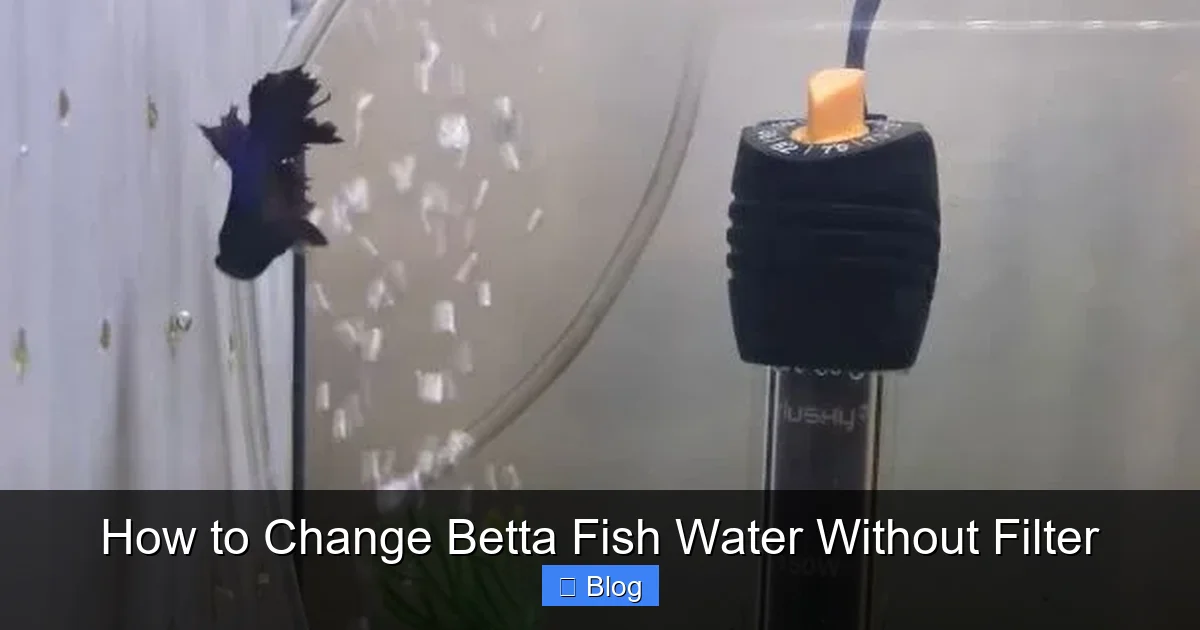
Now, the core of your new routine. Changing betta fish water without a filter requires precision to avoid temperature shock and stress. Gather your tools first: a dedicated bucket (2-5 gallons, never used for chemicals), a gravel vacuum/siphon (or a clean cup), a reliable thermometer, and your water conditioner. Never use buckets or cups that have held soap, detergent, or cleaning products. Even a microscopic residue is fatal.
Visual guide about How to Change Betta Fish Water Without Filter
Image source: animalslog.com
Step 1: Preparation – The Golden Rule of Temperature
This is the most critical step. Fill your clean bucket with the amount of new water you plan to add (e.g., for a 50% change in a 5-gallon tank, you need 2.5 gallons of new water). Add the correct dosage of water conditioner (like Seachem Prime or API Stress Coat) to this *new* water *before* you touch the tank. Stir it well. Now, measure the temperature of this treated new water with your thermometer. Then, measure your tank’s water temperature. They must be identical. If they are not, adjust accordingly. If your new water is too cold, add a little warm (not hot!) tap water and re-measure. If it’s too warm, let it sit for 10 minutes. This single step prevents the majority of post-water-change stress and shock.
Step 2: Removal – Getting the Dirty Water Out
Gently insert the gravel vacuum (siphon) into the substrate. If you don’t have a vacuum, use a clean cup or small bowl. The goal is to remove 25-50% of the tank’s water. If using a vacuum, hover it just above the gravel to suck out debris and waste without disturbing the gravel too much, or gently stir the top layer of gravel in one spot to lift debris and siphon it away. Work slowly to avoid creating a sandstorm that stresses your betta. If using a cup, carefully scoop water from the top, being mindful not to bump the tank. Your betta will likely hide during this process—this is normal. Do not chase them. Focus on the task. Continue until you’ve removed the target volume. Place the old water down the drain or use it for plants (it’s excellent fertilizer).
Step 3: Cleaning – What to Touch and What to Leave Alone
With the water level lowered, you have better access. If you have artificial plants or decorations, rinse them gently in the bucket of *old tank water* you just removed (or a separate bucket of dechlorinated water). Never use tap water, as it kills beneficial bacteria that may be present. Gently wipe the inside glass with an algae pad or a clean, dedicated sponge (no soap!). For gravel, if you disturbed it heavily during siphoning, you can use your fingers to gently rearrange it, but a full substrate clean is not needed weekly. The goal is to remove the bulk of visible debris. Do not clean everything at once, as you want to preserve any beneficial bacterial colonies on surfaces.
Step 4: Refilling – The Delicate Art of Addition
This is the moment of truth. Place a small plastic bag, a clean plate, or your hand on the water’s surface. Slowly, very slowly, pour the new, temperature-matched, conditioned water over this barrier. This deflects the flow and prevents it from blasting your betta or disturbing the substrate. Pouring against the glass wall is also a good technique. Fill the tank to the original water line. Avoid overfilling, as bettas need that atmospheric air space at the top to breathe their labyrinth organ. Take your time. This slow addition minimizes stress and keeps the water clear.
Water Conditioning & Temperature Matching: Your Non-Negotiable Tools
You cannot skip these two pillars of safe water changes. Let’s break down why each is essential and how to do it right.

Visual guide about How to Change Betta Fish Water Without Filter
Image source: quickanswer.org
Water Conditioner: More Than Just Dechlorination
Standard tap water contains chlorine and chloramines, added by municipalities to kill pathogens. These are instant killers for fish. A water conditioner neutralizes them instantly. But modern conditioners do more. High-quality products like Seachem Prime also detoxify ammonia and nitrite for up to 48 hours. This is a huge safety net in a filterless tank, giving you a buffer if a change is slightly delayed. It also protects your betta’s delicate slime coat. Always follow the dosage on the bottle based on the volume of *new water* you are adding. For a 2-gallon change, dose for 2 gallons, not your entire tank volume. Keep your conditioner bottle tightly capped and out of reach of children and pets.
The Thermometer: Your Most Important Piece of Equipment
Your hand is not a reliable thermometer. “Lukewarm” is not a scientific measurement. Bettas are tropical fish, thriving between 78-80°F (25.5-26.5°C). A fluctuation of more than 1-2 degrees can cause thermal shock, suppressing their immune system and leading to illness. Invest in a simple, floating aquarium thermometer ($2-3). Check your tank temperature daily. During water changes, measure the new water in the bucket *after* you’ve added conditioner and *before* you pour it in. If your new water is 74°F and your tank is 79°F, you must adjust it. A small aquarium heater (25-50 watts for a 2-5 gallon tank) is highly recommended to maintain a stable temperature, making your water changes much easier because the source water will be closer to the target temp.
Tank Cleaning Without Harmful Residues: A Safe Approach
Cleaning the tank itself during a water change is different from just changing water. The goal is to remove algae and gunk without introducing toxins.
Glass & Acrylic: The Right Tools for the Job
For algae on the glass, use a dedicated algae pad or scraper. For stubborn calcium deposits (white crust), use a razor blade (for glass only—not acrylic!) or a pad designed for it. Never, under any circumstances, use household cleaners like Windex, vinegar, or soap. These leave residues that are deadly. If you feel the tank needs a deep clean with something stronger, you must completely disassemble everything, rinse with only dechlorinated water, and reassemble. But this is rarely necessary with proper weekly maintenance.
Decorations & Substrate: The Rinsing Protocol
As mentioned, rinse decorations in a bucket of old tank water or dechlorinated water. Use your fingers or a soft brush to dislodge algae. For silk or live plants, be extra gentle. For gravel or sand, if you do a deeper clean (maybe once a month), you can swish it around in a bucket of dechlorinated water, pour off the dirty water, and repeat until it runs clear. But remember: you are also rinsing away beneficial bacteria. That’s why we only do a full substrate clean monthly or less, and why we only clean a portion of the decor at a time (e.g., half the plants one week, the other half the next).
Common Mistakes to Avoid When Changing Betta Water Without a Filter
Even with the best intentions, mistakes happen. Here are the most common pitfalls and how to avoid them.
Mistake 1: Changing 100% of the Water
This is a major error. A full water change completely removes the stable environment your betta is used to. It also strips away any beneficial bacteria that may have colonized surfaces, crashing the little biological filtration you have. It causes extreme stress from temperature, pH, and mineral hardness swings. Always stick to 25-50% changes. This dilutes pollutants while maintaining a stable ecosystem.
Mistake 2: Using Untreated Tap Water
This cannot be stressed enough. Chlorine/chloramines will kill your betta within hours, causing them to gasp at the surface and die. Always, always use a dechlorinator. There is no exception. If you run out, wait to do the water change until you have more. It’s not worth the risk.
Mistake 3: Forgetting to Acclimate to Temperature
Pouring in cold water because “it’s just a little bit” is a surefire way to cause shock. Your betta’s body functions slow down in cold water, making them susceptible to disease like ich. Use the thermometer. It’s the only way to be sure.
Mistake 4: Over-cleaning the Tank
Scrubbing every surface with a new sponge, washing all the gravel, and boiling decorations every week destroys the microbial balance. Some brown “biofilm” or a few bits of mulm are actually good—they host beneficial bacteria. Focus on removing visible waste and debris, not achieving a sterile laboratory environment.
Mistake 5: Ignoring Your Betta’s Behavior After a Change
Your fish will tell you if something is wrong. If your normally active betta is hiding at the bottom, clamped, or breathing heavily for more than an hour after a change, you have a problem. Re-check your water temperature. Consider if you disturbed the substrate too much, releasing trapped gases. Did you use enough conditioner? Did you accidentally touch the conditioner bottle to the water (which can contaminate it)? Use a water test kit (API Freshwater Master Test Kit) to check ammonia, nitrite, and nitrate levels. This is your diagnostic tool.
Conclusion: Your Betta’s Health is in Your Hands
Changing betta fish water without a filter is a commitment, but it’s a manageable and rewarding one. By establishing a weekly ritual—gathering your bucket, vacuum, thermometer, and conditioner—you take complete control of your aquatic pet’s environment. You are actively removing the poison (ammonia) they live in and replacing it with fresh, clean, safe water. This simple act of maintenance prevents almost all common betta ailments. It’s not about perfection; it’s about consistency. A stable, clean tank with the right temperature and no chlorine is a paradise for a betta. You’ll see the results in their brighter colors, more active exploration, and the beautiful, flowing finnage that made you fall in love with them in the first place. You’ve got this. Your betta is counting on you.
Frequently Asked Questions
How often should I change my betta’s water without a filter?
For a small bowl (under 2 gallons), you must change 50% of the water every other day. For a properly sized tank (minimum 2.5 gallons, ideally 5+), change 25-50% once a week. The larger the volume of water, the more dilution occurs, allowing for slightly less frequent changes.
Can I use bottled spring water instead of tap water?
You can, but it’s usually unnecessary and expensive. Bottled water often lacks essential minerals bettas need. If your tap water is extremely hard or has other issues, you can use it, but you must still add a conditioner to remove any chlorine/chloramines that may be present from the bottling process. Always test any water source.
What if I don’t have a gravel vacuum?
You can use a clean cup or small bowl to gently scoop out old water. To remove debris from the substrate, you can stir it very gently with your clean hand during the removal process to lift waste, then carefully pour the cloudy water out. It’s less efficient but works in a pinch. A simple $5 siphon bulb vacuum is a worthwhile investment.
Do I need to take my betta out of the tank during the water change?
No, you should never remove your betta unless absolutely necessary (like for a full tank clean or medical treatment). Keeping them in the tank is far less stressful. Work around them slowly. They will usually hide during the process and come out once the water is calm again.
How can I tell if my betta is suffering from poor water quality?
Look for signs like lethargy (staying at the bottom), clamped fins (held tightly to the body), loss of appetite, faded colors, frequent gasping for air at the surface, and visible fuzz or white spots (signs of fungal or bacterial infections that thrive in poor conditions). These are all red flags that your water change routine needs improvement.
My betta flares at me when I do water changes. Is this normal?
Yes, this is very normal! Betta fish are territorial and curious. The movement of your arm and the siphon in their space can trigger their natural flaring behavior. It’s not necessarily a sign of extreme stress, though it can be. Just proceed calmly and quickly. If flaring is constant and accompanied by hiding or loss of appetite, then you may be causing undue stress and should work even more slowly and gently.