How Often Does a Betta Fish Need to Be Fed Daily

How often does a betta fish need to be fed is one of the most common questions new owners ask, and the answer is simpler than you might think. Most healthy adult bettas thrive on a consistent routine of one to two small meals per day, with occasional fasting days to support digestion. Overfeeding is far more dangerous than underfeeding, so learning proper portion control and water care will keep your fish active and colorful. In this guide, you will learn exactly what to feed, how much to give, and how to adjust schedules for fry, adults, and aging fish.
Key Takeaways
- Daily Feeding Routine: Most adult bettas do best with one or two small feedings per day, totaling about two to three pellets or a pinch of flakes.
- Portion Control Matters: Overfeeding causes bloating, swim bladder issues, and poor water quality, so always match portions to your fish size and activity level.
- Fasting Helps Digestion: Skipping one day per week gives your betta time to process food and reduces waste buildup in the tank.
- Age Changes Needs: Fry and juveniles require more frequent meals, while older bettas may need smaller portions and easier-to-digest foods.
- Variety Supports Health: Rotating between high-quality pellets, frozen treats, and occasional live foods provides balanced nutrition and keeps feeding interesting.
- Watch Behavior Closely: Active hunting, steady swimming, and normal fin movement show your betta is eating well, while lethargy or bloating signals a problem.
- Clean Water Is Part of Feeding: Regular maintenance, proper filtration, and careful water changes keep the environment safe for every meal.
📑 Table of Contents
- Understanding How Often Does a Betta Fish Need to Be Fed
- How Often Does a Betta Fish Need to Be Fed by Age
- How Much Should You Feed a Betta Fish
- Best Feeding Schedule for a Healthy Betta
- Choosing the Right Betta Food
- Signs You Are Feeding Too Much or Too Little
- Water Quality, Tank Setup, and Feeding Success
- Common Feeding Mistakes to Avoid
- Expert Insights for Long-Term Feeding Success
- Final Thoughts on How Often Does a Betta Fish Need to Be Fed
Understanding How Often Does a Betta Fish Need to Be Fed
Betta fish are small, colorful, and full of personality, but their stomachs are surprisingly tiny. Many new keepers worry about underfeeding, yet the real risk usually comes from giving too much food too often. Learning how often does a betta fish need to be fed starts with understanding their natural habits and digestive system. In the wild, bettas snack on insects, larvae, and small bits of organic matter. They do not gorge themselves on large meals. That same pattern works beautifully in a home aquarium.
A steady routine helps your fish feel secure and makes it easier for you to notice changes in appetite. When you feed at similar times each day, you can quickly spot problems like stress, illness, or poor water conditions. A predictable schedule also prevents leftover food from sinking and decaying, which keeps your tank cleaner. If you are setting up a new aquarium, you may also want to review whether a filtered tank is necessary, because water flow and filtration play a big role in how food breaks down.
The short answer is simple. Most healthy adult bettas do well with one or two small meals daily. The longer answer depends on age, activity level, tank setup, and the type of food you use. Once you learn to read your fish and match portions to its needs, feeding becomes easy and reliable.
How Often Does a Betta Fish Need to Be Fed by Age
Age changes everything when it comes to feeding. A baby betta, a growing juvenile, and a mature adult all have different energy needs. If you are raising young fish, you will notice they seem hungry almost all the time. That is normal. Their bodies are building muscle, fin tissue, and healthy color. Older fish slow down a bit and often need less food, even if they still look eager for a meal.
Feeding Fry and Juveniles
Young bettas grow quickly, so they need more frequent meals than adults. Many keepers offer tiny portions three to four times per day for the smallest fry. As they grow, you can reduce that to two or three feedings. The food itself must be very small, such as specialized fry food, finely crushed pellets, or baby brine shrimp. At this stage, consistency matters more than quantity. You want steady growth without fouling the water.
Feeding Adult Bettas
Once your betta reaches full size, the routine usually settles into one or two feedings per day. A common approach is a morning meal and a lighter evening meal, or just one solid feeding if your fish seems satisfied with that. Adults often do well on a schedule that includes a fasting day each week. This gives their digestive system a break and helps prevent bloating. If you are unsure whether your tank setup supports a healthy feeding routine, you can read more about keeping a betta in a 10 gallon tank, since space and water stability affect appetite.
Feeding Older Bettas
Senior bettas may become less active and less interested in food. They still need regular meals, but the portions can be smaller and easier to digest. Some older fish prefer softer foods or soaked pellets that are gentler on their system. Watch for changes in color, posture, and swimming speed. A healthy older betta should still respond to food, even if it eats more slowly than it used to.
How Much Should You Feed a Betta Fish
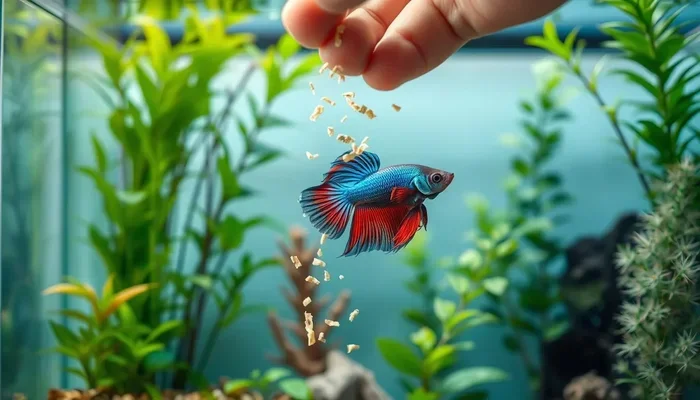
Portion size is where many keepers get confused. Betta fish have small stomachs, and a common rule of thumb is that a meal should be roughly the size of the fish eye. That does not mean you need to measure every pellet with a ruler. It simply means you should avoid heaping spoonfuls or large handfuls of flakes. A few pellets or a small pinch is usually enough for one feeding.
The exact amount depends on the food type. Pellets are dense and sink slowly, so they are easy to control. Flakes can be lighter and may scatter across the surface, which makes it harder to judge how much your fish actually eats. Frozen or live foods are nutritious treats, but they should be used in moderation because they can be richer than standard staple foods. If you are comparing food options, you may also find it helpful to explore whether betta flakes work for other fish, since that discussion often clarifies how concentrated certain foods can be.
Practical Portion Guidelines
- Start with two to three pellets per feeding for a typical adult betta.
- If you use flakes, offer a small pinch that your fish can finish in a minute or two.
- For frozen or live treats, keep portions tiny and feed them only a few times per week.
- Adjust based on your fish body shape, activity level, and how quickly it finishes the meal.
- If food remains after a few minutes, reduce the next portion.
It is better to offer a little less and add more only if your fish clearly needs it. Bettas often look eager, but eagerness is not the same as hunger. They may swim toward food out of habit or curiosity. That is why a consistent routine and careful observation work better than guessing by eye.
Best Feeding Schedule for a Healthy Betta
A good schedule balances nutrition, digestion, and water quality. Most keepers find that a simple daily routine is easiest to maintain. You do not need a complicated plan. You just need a rhythm that fits your life and your fish needs. The goal is steady nourishment without excess waste.
A Simple Daily Routine
One popular schedule is a morning feeding followed by a small evening feeding. Another option is a single feeding each day with a slightly larger portion, especially if your betta seems content with that. If you choose two meals, make sure both are small. Two tiny meals are usually better than one heavy meal. This approach mirrors the way many small fish naturally eat in short bursts throughout the day.
Weekly Fasting Day
Many experienced keepers include one fasting day each week. That means no food on that day. This practice helps reduce waste and gives the digestive tract time to rest. It can be especially useful if your betta has shown signs of bloating or if your tank needs a little extra help staying clean. Fasting is not a punishment. It is a reset. If you are curious about how water maintenance connects to feeding, you can also look at why regular water changes matter, because leftover food and waste affect overall tank health.
Adjusting the Schedule
Not every betta follows the same pattern. Some fish are more active and burn energy faster. Others are calmer and need less food. If your betta is growing, breeding, or recovering from stress, you may need to tweak the schedule temporarily. If the fish looks round, sluggish, or uninterested in food, cut back and monitor closely. The best schedule is the one that keeps your fish alert, healthy, and active.
Choosing the Right Betta Food
Feeding frequency matters, but food quality matters just as much. A betta can eat on a perfect schedule and still struggle if the diet is poor. The best staple food is formulated specifically for bettas and provides balanced protein, fats, and nutrients. Variety is also helpful, because no single food gives everything your fish needs over time.
Pellets, Flakes, and Treats
High-quality pellets are a popular choice because they are easy to portion and usually sink slowly. Flakes can work too, but they may break apart quickly and create more mess. Many keepers use pellets as the main diet and add treats for enrichment. Frozen bloodworms, brine shrimp, and daphnia are common options. Live food can be exciting for bettas, but it should stay a supplement rather than the whole menu.
What to Avoid
Some foods are too fatty, too large, or too difficult for bettas to digest. It is also smart to avoid feeding random human foods or overly rich treats that are not made for fish. If you are wondering about unusual snack ideas, you should read whether peanut butter is safe before offering anything outside standard fish foods. Another common question is whether vegetables like peas help with digestion, so you may want to check if feeding a pea can cause problems. These details matter because the wrong treat can do more harm than good.
Building a Balanced Menu
- Use a quality betta pellet or flake as the daily base.
- Add frozen or live treats one or two times per week.
- Keep portions small, even with rich foods.
- Rotate foods slowly so your fish can adjust.
- Watch for signs of food sensitivity, such as bloating or dull color.
A varied diet often leads to better color, stronger activity, and a healthier appetite. It also makes feeding more interesting for you, since you can observe how your betta responds to different textures and flavors.
Signs You Are Feeding Too Much or Too Little
Your betta will usually tell you if the feeding plan is off. The trick is learning what to look for. Fish cannot speak, but they do show clear behavior changes when something is wrong. Appetite, posture, color, and waste all give useful clues.
Signs of Overfeeding
Overfeeding often shows up as leftover food on the substrate, cloudy water, or a swollen belly. Your betta may also seem less active or spend more time resting near the bottom. Excess food breaks down in the tank and can raise ammonia levels, which stresses fish even if the water looks clear at first. If this happens, reduce portions and consider reviewing your filtration setup. You may find it useful to read whether your filter strength is appropriate, since water movement affects how food drifts and how waste is removed.
Signs of Underfeeding
Underfeeding is less common, but it does happen. A hungry betta may look thin, show a more pronounced spine, or become less colorful. It may also act restless during feeding time or try to nibble at the substrate. If your fish seems constantly searching for food and loses body condition, increase portions slightly and monitor for a week or two.
Quick Troubleshooting Tips
- If the belly looks distended, reduce food and add a fasting day.
- If the fish looks hollow or weak, offer slightly more food at each meal.
- If food is left over, feed less next time and remove leftovers.
- If appetite drops suddenly, check water temperature, water quality, and stress levels.
- If your betta shares the tank with others, make sure it is getting its share by watching feeding behavior closely.
Feeding problems are often easier to fix than people expect. Small adjustments usually make a big difference within a few days. The key is patience and observation rather than dramatic changes.
Water Quality, Tank Setup, and Feeding Success
Feeding does not happen in a vacuum. The tank environment shapes how food behaves, how waste builds up, and how comfortable your betta feels while eating. A stable setup makes feeding easier and safer. A poor setup can turn even a good feeding routine into a problem.
Temperature is one of the biggest factors. Bettas are tropical fish, so they do best in warm, stable water. If the temperature is too low, digestion slows down and appetite drops. If the water is too warm or fluctuates a lot, stress increases and feeding becomes unreliable. If you are unsure whether your setup needs temperature support, you can check whether a heater is necessary for your bowl or tank. Stable warmth helps your fish digest food properly and stay active.
Tank size also matters. A cramped space can make a betta feel stressed, while a well-sized tank gives it room to swim and explore. Some keepers worry that a larger tank might be overwhelming, but that is rarely the case for a healthy betta. In fact, a bigger, well-maintained environment often supports better appetite and behavior. If you want to compare options, you can review whether a tank can be too large and how big tanks affect betta comfort. Both articles explain why space and stability usually work in your favor.
Cleaning and Maintenance Habits
Good feeding goes hand in hand with good maintenance. Remove uneaten food when you see it. Vacuum the substrate gently during water changes. Keep an eye on filter performance and test water regularly if you can. If you ever wonder whether cleaning products are safe around the tank, you should avoid harsh chemicals and read why soap should not be used in a betta tank. Even small residues can harm fish and disrupt the balance of the aquarium.
Lighting is another subtle factor. A consistent light schedule helps your fish settle into a routine. Too much brightness can be unsettling, while too little can make it harder to observe feeding behavior. If you are adjusting your tank lighting, it may help to read whether light intensity can bother a betta. A calm, predictable environment usually supports a healthier appetite.
Common Feeding Mistakes to Avoid
Even experienced keepers make small mistakes now and then. The important thing is to catch them early and correct them before they affect your fish. Here are some of the most common issues and how to prevent them.
Mistake One: Feeding by Habit Instead of Observation
It is easy to drop in food because it is time, even if your betta is not actually hungry. That is why observation matters. Watch how your fish responds. If it eats quickly and looks satisfied, your portion is probably fine. If it ignores food or leaves most of it behind, adjust the routine. Feeding should be responsive, not automatic.
Mistake Two: Offering Too Many Treats
Treats are fun, but they should not replace staple food. Too many rich meals can upset digestion and make it harder to judge normal appetite. Use treats as a supplement, not the main event. A little variety is good. Excess variety can create unnecessary problems.
Mistake Three: Ignoring Water Conditions
If your betta stops eating, do not assume the problem is only about food. Check the water first. Poor quality, wrong temperature, or sudden changes can all reduce appetite. Feeding is much easier when the tank is stable and clean.
Mistake Four: Overcomplicating the Schedule
You do not need a complicated feeding calendar. A simple routine is usually best. Consistency helps your fish feel secure, and it helps you notice changes sooner. Keep it simple, keep it steady, and adjust only when needed.
Expert Insights for Long-Term Feeding Success
The best feeding plan is one you can maintain comfortably. A healthy betta routine is built on small portions, regular timing, and careful observation. When you combine that with clean water, stable temperature, and a suitable tank setup, your fish has the best chance to stay active and colorful for the long run.
It also helps to remember that bettas are individuals. Two fish may look similar but have different preferences and needs. One may love pellets and ignore flakes. Another may do better with softer food or a slightly different schedule. That is normal. The more you watch your fish, the easier it becomes to fine-tune the plan.
If you ever add tank mates, feeding can become more competitive. In that case, you may want to learn more about keeping a betta with other fish and whether community tanks work well. Those setups can be fine in some cases, but they require extra attention during feeding so every fish gets what it needs.
A strong feeding routine is really about balance. Feed enough to support health. Do not feed so much that waste builds up. Keep the environment stable. Stay observant. Over time, those habits create a calm, healthy aquarium and a betta that thrives on a schedule you can trust.
Final Thoughts on How Often Does a Betta Fish Need to Be Fed
If you are still asking how often does a betta fish need to be fed, the safest answer is one or two small meals per day for most adults, with a weekly fasting day and portions matched to your fish size and behavior. Younger fish need more frequent meals, older fish may need smaller ones, and every betta benefits from a stable tank, clean water, and a quality staple diet. When you feed with consistency and watch your fish closely, you will quickly learn what works best. That simple approach is the foundation of good betta care.
Frequently Asked Questions
How often should I feed a betta fish each day?
Most adult bettas do well with one or two small feedings per day. Keep portions small and adjust based on your fish appetite, body shape, and activity level.
Can I skip a feeding day to help digestion?
Yes, many keepers use one fasting day per week to reduce waste and give the digestive system a break. This is especially helpful if your betta has shown signs of bloating.
What is the right portion size for a betta?
A good starting point is a meal roughly the size of the fish eye, often two to three pellets or a small pinch of flakes. If food remains uneaten, reduce the next portion.
Do baby bettas need to eat more often?
Yes, fry and juveniles usually need more frequent meals because they are growing quickly. As they mature, you can gradually reduce feeding frequency to a normal adult schedule.
What should I do if my betta stops eating?
Check water temperature, water quality, and stress levels first, since appetite often drops when conditions are off. If the problem continues, reduce food, observe closely, and make sure the tank setup is stable.
Is it okay to give treats along with regular food?
Yes, frozen or live treats can be offered occasionally, but they should stay supplements rather than the main diet. Keep treat portions small so your betta still gets balanced nutrition from staple food.