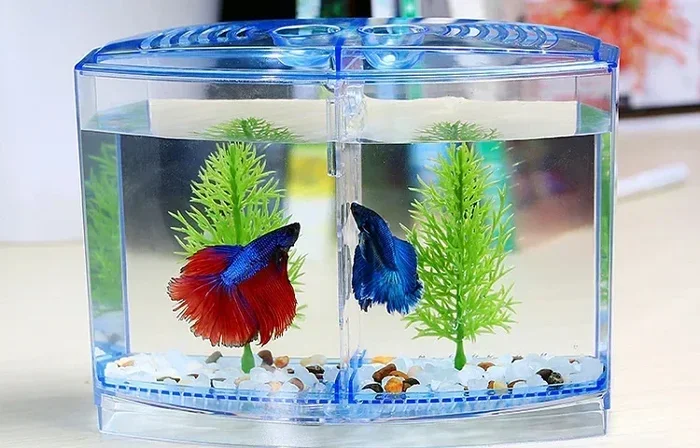
Do Betta Fish Need Oxygen Pump
Betta fish possess a unique labyrinth organ that allows them to breathe atmospheric air, meaning they technically do not *require* an oxygen pump to survive in the same way other fish do. However, an oxygen pump (air pump with air stone) is highly beneficial and often necessary in many aquarium setups to ensure optimal water quality, gas exchange, and overall tank health. Factors like tank size, stocking, water temperature, and filtration determine if supplemental aeration is needed. While a small, filtered, planted tank with a single betta might thrive without one, most standard betta tanks benefit greatly from the gentle water movement and increased oxygen dissolution an air pump provides.
So, you’ve brought home that beautiful, flowing-finned Siamese fighting fish. You’ve set up a tank, added some gravel, maybe a silk plant or two, and you’re ready to enjoy your new pet. But then a question bubbles up (pun intended): Do betta fish need an oxygen pump? It’s one of the most common and understandably confusing questions for new betta owners. You’ve probably heard they can “breathe air,” which seems to imply they don’t need the same bubbly setup as your old goldfish. Is that true? Can you skip the air pump? The answer, like most things in fishkeeping, is nuanced. It’s not a simple yes or no. It’s a “yes, but…” and a “no, but…” wrapped in a fascinating story of evolution and aquarium science. Let’s dive deep into the watery world of betta respiration and figure out exactly what your finned friend needs to thrive.
First, let’s clear the air—literally. The core of this question revolves around a remarkable biological feature unique to bettas and a few other fish species called the labyrinth organ. This isn’t just a fancy term; it’s a game-changer. Developed in the murky, oxygen-poor waters of Southeast Asian rice paddies and shallow pools, this complex structure allows bettas to gulp air from the surface and extract oxygen directly from it. It’s essentially a primitive lung. This adaptation is why a betta can survive, for a time, in a tiny, stagnant jar where other fish would suffocate. It’s a survival mechanism, not necessarily a preference for optimal health. So, on a basic biological level, a betta can obtain the oxygen it needs without a pump, by swimming to the top and taking a breath. But does that mean you should forgo an air pump? Not so fast. The health of an aquarium is about the entire ecosystem, not just the fish’s ability to gasp air. An oxygen pump, or air pump with an air stone, serves a much broader and more critical purpose that goes far beyond simply putting bubbles in the water for the betta to breathe.
Key Takeaways
- The Labyrinth Organ is Key: Betta fish have a specialized breathing structure that lets them gulp air from the surface, making them less dependent on dissolved oxygen in the water column than other fish.
- Oxygen Pumps Improve Water Quality: The primary benefit of an air pump is not just adding oxygen, but creating water movement that facilitates gas exchange at the surface and prevents stagnant, toxic water layers.
- Tank Conditions Dictate Need: A small, unfiltered bowl or a warm, heavily stocked tank will suffer from low oxygen and poor gas exchange quickly, making an oxygen pump essential.
- It’s About the Ecosystem: An oxygen pump supports the entire aquarium ecosystem—beneficial bacteria, live plants, and other livestock—by maintaining healthy dissolved oxygen levels and water circulation.
- Proper Setup is Crucial: Using an air pump with a check valve and positioning the air stone to create gentle, non-turbulent flow is vital to avoid stressing a betta with excessive current.
- There are Alternatives: Live aquatic plants, a properly adjusted filter output, and regular water changes can all contribute to oxygenation, but often work best in conjunction with an air pump for consistent results.
- Myth: Bettas Hate Bubbles: While bettas dislike strong currents, the gentle micro-bubbles from a standard air stone are usually not a source of stress and are often ignored by the fish.
📑 Table of Contents
- Understanding Betta Fish Anatomy: The Labyrinth Organ Explained
- The Role of Oxygen in the Aquarium Ecosystem
- When an Oxygen Pump Becomes Necessary for Your Betta
- Alternatives and Complements to the Oxygen Pump
- Setting Up an Oxygen Pump Correctly for a Betta Tank
- Debunking Common Myths About Bettas and Oxygen
Understanding Betta Fish Anatomy: The Labyrinth Organ Explained
To truly grasp whether an oxygen pump is necessary, we must first appreciate the incredible anatomy of the betta fish. The labyrinth organ is the star of the show. Located in a chamber above the gills, it’s a folded, bony structure rich in blood vessels. When a betta surfaces and gulps a bubble of air, that air travels into this chamber. The thin membranes of the labyrinth organ allow oxygen to pass directly into the bloodstream. It’s an inefficient process compared to our lungs or the gills of fish in well-oxygenated water, but it’s brilliantly effective for low-oxygen environments.
How This Affects Their Natural Behavior
In the wild, you’d see a betta spending a surprising amount of time at the water’s surface. This isn’t just for show; it’s a regular breathing routine. They are obligate air-breathers, meaning they must gulp air to survive. This behavior carries over to the aquarium. You’ll often see your betta dart to the top, take a quick “sip” of air, and then glide back down. It’s a normal, healthy sign. However, if you see your betta gasping constantly, struggling to reach the surface, or spending all its time there, that is a major red flag. It indicates the dissolved oxygen levels in the water column are critically low, and the fish is being forced to rely too heavily on its labyrinth organ because the water itself is suffocating. This is a sign of poor water quality, high temperature, or overcrowding—conditions an air pump can help alleviate.
Gills are Still Primary (Mostly)
It’s a common misconception that bettas *only* use their labyrinth organ. They absolutely still use their gills for primary respiration when oxygen levels are adequate. The labyrinth organ is a supplemental, emergency system. In clean, well-oxygenated water at a stable temperature, a healthy betta will use its gills for the bulk of its oxygen intake, only surfacing periodically. This means that even though they *can* breathe air, they still benefit immensely from high dissolved oxygen levels in the water. Healthy gill function is less stressful and more efficient. So, the goal is to create an environment where the betta can primarily use its gills, with the labyrinth organ as a reliable backup.
The Role of Oxygen in the Aquarium Ecosystem
Here’s where we shift focus from the betta to the tank itself. An oxygen pump is not a “betta toy.” It’s a piece of equipment for the water. Its primary function is to agitate the water’s surface, breaking the tension of the water film. This process, called gas exchange, is where oxygen from the air dissolves (off-gasses) into the water, and harmful gases like carbon dioxide off-gas from the water into the air. Without this surface agitation, a stagnant water surface acts like a lid, trapping gases and preventing this vital exchange.
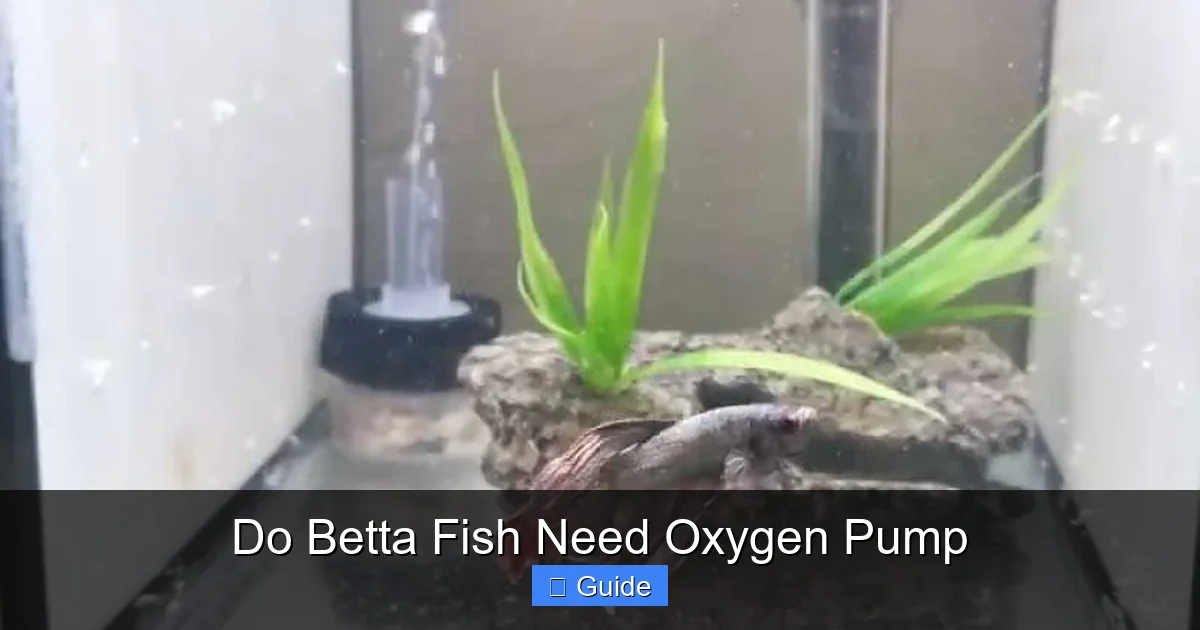
Visual guide about Do Betta Fish Need Oxygen Pump
Image source: bettafishnest.com
Why Surface Agitation is Non-Negotiable
Think of your aquarium’s surface as a lung. If it’s perfectly still, that lung isn’t breathing. Oxygen can only enter the water at the air-water interface. A gentle ripple or a few bubbles bursting at the surface dramatically increases the surface area for this exchange. In a still tank, the only oxygen entering is through the tiny, natural diffusion that happens at the microscopic level—far too slow to support a thriving ecosystem. This is why a filter’s outflow, if it disrupts the surface, often provides sufficient aeration for a lightly stocked tank. But if your filter is a gentle sponge filter with minimal surface disturbance, or if you have a heavily stocked or planted tank that consumes oxygen at night, you need supplemental aeration from an air pump.
Oxygen Consumption Around the Clock
Everything in your tank consumes oxygen. Your betta, of course. But also the beneficial bacteria in your filter and substrate that are busy breaking down toxic ammonia and nitrite. And your live plants? They are a double-edged sword. During the day, through photosynthesis, plants *produce* oxygen. But at night, they, like all living things, respire and *consume* oxygen. In a densely planted tank, the night-time oxygen demand can be significant. An air pump running 24/7 ensures a stable, oxygen-rich environment that supports all these life forms, preventing dangerous overnight oxygen dips that can stress or even kill inhabitants.
When an Oxygen Pump Becomes Necessary for Your Betta
Now for the practical part. Given what we know, let’s look at specific scenarios where an oxygen pump is not just helpful, but a critical piece of equipment for your betta’s well-being.

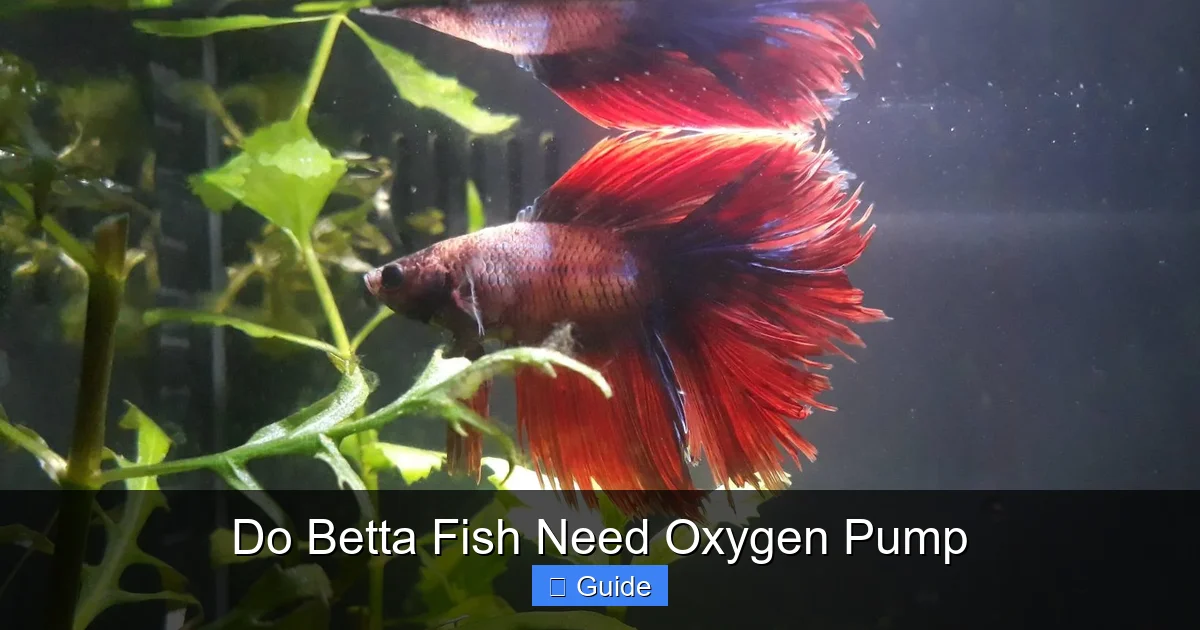
Visual guide about Do Betta Fish Need Oxygen Pump
Image source: bettafishnest.com
Scenario 1: The Unfiltered “Bowl” or Small Vase
This is the classic, and unfortunately still common, betta setup. A small, unfiltered container has virtually no surface agitation, a tiny water volume (meaning oxygen is depleted quickly), and no biological filtration to consume waste without also consuming oxygen. In this environment, the betta is solely reliant on its labyrinth organ, which is a state of chronic stress. Water quality plummets, toxins build up, and the fish is constantly gasping. An air pump is 100% mandatory here. It is the single most important piece of equipment you can add to such a setup to keep the fish alive, though upgrading to a proper filtered tank is the ultimate solution.
Scenario 2: Warm Water Tanks
Bettas are tropical fish, and their ideal temperature range is 76-82°F (24-28°C). Here’s the problem: warm water holds less dissolved oxygen than cool water. As the temperature rises, oxygen molecules move faster and escape the water more easily. A tank at 82°F simply cannot hold as much oxygen as a tank at 76°F. If your heater is pushing the temperature to the upper end of the range, an air pump becomes increasingly important to compensate for this reduced oxygen capacity and prevent your betta from struggling.
Scenario 3: Overstocked or Community Tanks
If your betta is not alone—if you have a “sorority” of females (which is complex and often not recommended for beginners) or you’ve successfully housed it with peaceful tank mates like neon tetras or corydoras—the bioload increases. More bodies mean more oxygen consumption. More fish also often means more waste, which feeds the oxygen-hungry beneficial bacteria. In a community tank, an air pump is almost always a good idea to ensure oxygen levels are sufficient for all residents, especially during the night.
Scenario 4: Heavy Filtration with Minimal Surface Disturbance
Some filters, like sponge filters or canister filters with a closed-loop return that points at the tank wall, provide excellent mechanical and biological filtration but create little to no surface ripple. If your filter’s output is submerged and doesn’t break the surface, you are likely not getting adequate gas exchange. An air pump is the perfect partner for such a filter, providing the missing surface agitation while the filter handles waste removal.
Alternatives and Complements to the Oxygen Pump
An air pump is a fantastic tool, but it’s not the only tool in the shed. A truly healthy betta aquarium uses a combination of methods to maintain pristine water and high oxygen levels.
Visual guide about Do Betta Fish Need Oxygen Pump
Image source: i0.wp.com
The Power of Live Aquatic Plants
Live plants are the ultimate multitaskers. As mentioned, they produce oxygen during the day through photosynthesis. A healthy, fast-growing plant like Elodea, Hornwort, or Java Moss can be a significant oxygen source. They also absorb ammonia, nitrates, and phosphates, competing with algae. However, their oxygen production is light-dependent. In a dark room or at night, they become consumers. Therefore, plants are a superb complement to an air pump, not always a full replacement, especially in the scenarios listed above. A heavily planted tank with good surface movement from a filter might not need an air pump, but adding one only increases the safety margin.
Optimizing Your Filter
Before buying an air pump, examine your filter. Can you adjust its output to create a gentle surface ripple? Sometimes simply raising the water outlet slightly so it breaks the surface is enough. For hang-on-back (HOB) filters, you can often adjust the flow rate. The goal is a gentle, consistent ripple across a portion of the surface, not a choppy, stressful wave that makes it hard for your betta to rest at the top when it needs to gulp air.
The Foundation: Water Changes and Temperature
No equipment can fix neglect. Regular partial water changes (25-50% weekly) are the single most important maintenance task. Fresh tap water is saturated with oxygen. Performing a water change instantly infuses your tank with new, oxygen-rich water. Keeping the temperature at the lower end of your betta’s tolerance range (e.g., 77-78°F instead of 82°F) also significantly increases the water’s oxygen-holding capacity. An air pump helps maintain levels between changes, but the changes themselves are a vital reset.
Setting Up an Oxygen Pump Correctly for a Betta Tank
If you’ve decided an air pump is right for your setup, proper installation is key. A poorly set up air pump can create more problems than it solves.
Choosing the Right Equipment
You need three things: the air pump itself, airline tubing, and an aeration device (like an air stone or a bubble wand). For a standard 5-10 gallon betta tank, a small, quiet air pump (often sold for 5-10 gallon tanks) is perfect. Avoid large, powerful pumps meant for big reefs; they’re overkill and too loud. For the air stone, a flat, disc-shaped stone or a long, slender wand is ideal. These create a column of fine, gentle micro-bubbles that rise slowly, maximizing contact time with the water for efficient gas exchange without creating a violent jacuzzi.
The Critical Check Valve
This is a non-negotiable safety piece. A check valve is a small plastic valve that goes in your airline tubing between the pump and the tank. Its job? To allow air to flow out of the pump and into the tank, but to prevent water from siphoning back into the pump if the power goes out or if the pump is placed below the water level. Without it, a power outage can cause your tank water to drain into the pump, potentially ruining it and creating a mess when power returns. Install the check valve as close to the tank as possible.
Placement and Flow Adjustment
Place the air stone near the bottom of the tank, but not buried in the substrate. The goal is for a gentle stream of tiny bubbles to rise slowly along the back glass or in a corner. You want to see bubbles, but you should not see your betta being pushed around by the current. If the flow is too strong, you can often use a flow control valve on the air pump itself to reduce output. You can also place the air stone in a low-flow area, like behind a piece of decor or in a corner, so the bubbles diffuse before reaching the main swimming area. The surface agitation should be just enough to see a slight ripple.
Debunking Common Myths About Bettas and Oxygen
Let’s clear the muddy water on some persistent misconceptions.
Myth: “Bettas can live in a cup/jam jar, so they don’t need oxygen.”
This is a dangerous myth born from their labyrinth organ. Yes, a betta can *survive* for a period in a tiny, stagnant volume of water by gulping air. But “survive” is not “thrive.” In such an environment, water quality crashes within hours, ammonia burns the gills, and the fish is in a constant state of stress and oxygen deprivation. It is a slow, cruel death sentence. The labyrinth organ is for survival in *natural*, temporary low-oxygen habitats like drying puddles, not for permanent housing in a decorative vase.
Myth: “Bubbles scare bettas.”
Bettas are sensitive to strong, turbulent currents. The powerful, rolling bubbles from a large, coarse air stone or a powerful powerhead can indeed stress them, making it hard to swim and causing exhaustion. However, the fine, gentle micro-bubbles from a properly sized air stone with a small pump are usually not a problem. Most bettas will simply swim around them or ignore them. Always observe your fish. If it’s hiding, clamped, or being blown around, reduce the flow.
Myth: “My filter splashes, so I don’t need an air pump.”
Assess your filter’s output honestly. Is there a consistent, gentle ripple across a good portion of the water’s surface? Or is the output a narrow stream that hits the bottom or a wall, with the surface remaining mostly still? If the surface is more than 50% still, you likely need supplemental aeration. A good rule of thumb: if you can see a distinct, calm “mirror” effect on the surface in parts of the tank, gas exchange is insufficient there.
Frequently Asked Questions
Do betta fish actually breathe air from the surface?
Yes, absolutely. Betta fish are obligate air-breathers due to their labyrinth organ. They must regularly gulp atmospheric air from the water’s surface to survive. This is a normal and essential behavior you will observe in a healthy betta.
Will my filter provide enough oxygen without an air pump?
It depends on your filter. If your filter’s output creates significant surface agitation (a gentle ripple across the tank), it may provide sufficient gas exchange for a lightly stocked, appropriately sized tank. However, filters with submerged or quiet outputs, or tanks with high bioloads or temperatures, will benefit greatly from an additional air pump.
What are the clear signs my betta is suffering from low oxygen?
Signs include rapid, labored breathing (gills flaring quickly), constant gasping at the surface, lethargy, loss of appetite, and staying at the top of the tank. If you see these, immediately check your water parameters, temperature, and consider adding an air pump while performing a partial water change with cooler, oxygen-rich water.
What type of air pump is best for a betta tank?
A small, quiet diaphragm air pump rated for your tank size (e.g., a 5-10 gallon pump for a 5-gallon tank) is ideal. Look for pumps with adjustable flow control. Brands like Tetra Whisper, Top Fin, or Fluval offer reliable, quiet options suitable for a betta’s sensitive hearing.
Is an air stone necessary, or can I just use the air pump tubing?
While pumping air directly into the water via tubing will oxygenate it, an air stone or bubble wand is highly recommended. The stone’s many tiny pores break the air into a fine mist of micro-bubbles, which have a much larger surface area for gas exchange. This makes the process far more efficient and creates a gentler, more diffuse water movement than a single stream of large bubbles.
Will the bubbles from an air pump stress my betta with too much current?
Not if set up correctly. The current from a properly sized air pump and stone is minimal. The concern is not the bubbles themselves, but the water displacement they cause. Use a small pump, a fine-bubble air stone, and place it in a corner or behind decor. You should see a gentle cascade of bubbles, not a swirling vortex. If your betta is being buffeted around, reduce the flow with a control valve or reposition the stone.