Can Tetra Fish and Betta Fish Live Together

Tetra fish and betta fish can live together, but only under the right conditions — and getting those conditions right makes all the difference between a peaceful tank and a stressful one. Success depends on choosing the right tetra species, providing enough space, and carefully monitoring their behavior from day one. In this guide, you will learn exactly what it takes to create a harmonious community tank where both species thrive together.
Key Takeaways
- Tank size matters: A 20-gallon tank gives both species enough space to thrive peacefully.
- Choose peaceful tetra species: Neon tetras and ember tetras coexist better with bettas than fin-nippers.
- Monitor aggression closely: Watch for chasing or fin-nipping and separate fish immediately if needed.
- Feed bettas separately first: This ensures they eat enough before tetras consume shared food.
- Add plenty of plants: Dense decorations create hiding spots and reduce territorial stress for both species.
- Not all combinations work: Some bettas are too aggressive, so always have a backup plan ready.
📑 Table of Contents
- Can Tetra Fish and Betta Fish Live Together
- Understanding Tetra Fish and Betta Fish
- Can Tetra Fish and Betta Fish Live Together
- The Best Tetra Species for a Betta Tank
- Setting Up the Right Tank Environment
- Common Challenges and How to Solve Them
- Expert Tips for a Successful Community Tank
- Final Thoughts on Keeping Tetras with Bettas
Can Tetra Fish and Betta Fish Live Together
If you are a fish keeper, you have probably wondered whether tetra fish and betta fish can live together. It is a popular question among aquarium hobbyists. The idea of mixing two colorful species in one tank sounds exciting. But the truth is, it is not always simple. Bettas can be territorial. Tetras can be nippy. Getting the balance right takes some work. In this guide, we will walk you through everything you need to know. You will learn what works, what does not, and how to set up a peaceful community tank. By the end, you will feel confident about your decision.
Many beginners assume that any two peaceful fish can share a tank. That is not always true. Betta fish have specific needs and temperaments. Tetras come in many species, and each one behaves differently. Some tetras are too active for bettas. Others are too small and become easy targets. But with the right setup, keeping tetras with bettas can work beautifully. We have seen it succeed many times. The key is understanding both species and planning ahead.
In this article, we will cover the compatibility between these two fish, the best tank setups, and practical tips to reduce aggression. We will also share real-world examples from experienced aquarists. So whether you are a beginner or a seasoned hobbyist, you will find useful advice here. Let us dive in and explore whether these two popular fish can truly coexist.
Understanding Tetra Fish and Betta Fish
What Makes Bettas Tick
Betta fish, also known as Siamese fighting fish, are native to Southeast Asia. They are known for their flowing fins and vibrant colors. In the wild, bettas live in shallow rice paddies and slow-moving streams. They are labyrinth fish, which means they breathe air from the surface. This gives them an advantage in low-oxygen water. But it also means they can be feisty.
Male bettas are especially territorial. They will flare at their own reflection and attack other fish with long fins. Female bettas can also be aggressive, though usually less so. The key thing to remember is that every betta has its own personality. Some are calm and curious. Others are bold and defensive. Before adding any tank mates, you need to know your betta’s temperament.
Getting to Know Tetra Fish
Tetras are a large family of freshwater fish. There are hundreds of species, from tiny neon tetras to larger emperor tetras. Most tetras are peaceful and social. They prefer to swim in groups, which is called a school. In the wild, tetras live in rivers and streams across South America and Africa.
Tetras are generally small, colorful, and active. They make great community fish. But not all tetras are the same. Some species are too boisterous for bettas. Others are too delicate. Choosing the right tetra species is critical when planning a shared tank. We will cover the best options in a later section.
Can Tetra Fish and Betta Fish Live Together
The short answer is yes, but with conditions. Can tetra fish and betta fish live together peacefully? It depends on several factors. Tank size, species choice, and tank setup all play a role. A poorly planned tank will lead to stress and even injury. A well-planned tank can create a stunning community display.
The biggest risk is fin nipping. Many tetras have a habit of nibbling on long fins. Betta fins are especially tempting. This can cause stress and open wounds. On the other hand, some tetras are gentle enough to avoid this problem. The trick is choosing the right species and providing enough space.
Another factor is the betta’s personality. A calm betta may tolerate tetras just fine. An aggressive betta will chase and attack them. This is why we always recommend observing your betta before adding any new fish. You can also start with a larger tank to reduce territorial behavior.
When It Works Well
Tetra and betta compatibility improves when you follow a few simple rules. Use a tank of at least 20 gallons. Add plenty of plants and hiding spots. Choose peaceful tetra species. Keep tetras in a group of at least six. This distributes their energy across the tank and reduces the chance of any single fish bothering the betta. Many aquarists have reported success with these setups.
When It Does Not Work
There are situations where mixing bettas and tetras is a bad idea. Small tanks under 10 gallons are too cramped. Aggressive bettas will stress out the tetras. Fast-moving tetras like tiger barbs can annoy bettas. And bright, flashy tetras may trigger a betta’s territorial instincts. If your betta is known to be extremely aggressive, it is best to keep it solo or with very docile tank mates.
The Best Tetra Species for a Betta Tank
Not all tetras are created equal when it comes to living with bettas. Some species are far better suited than others. Here are the top choices that aquarists have had success with.
Neon Tetras are the most popular choice. They are small, peaceful, and stay in the middle of the tank. Their bright blue and red stripes look stunning next to a betta. Many hobbyists ask, can neon tetras and betta fish live together? The answer is yes, in most cases. Neon tetras are gentle enough not to bother bettas, and they keep to themselves. You can read more about this pairing here.
Cardinal Tetras are another excellent option. They are slightly larger than neons and less prone to nipping. Their calm nature makes them ideal tank mates for bettas. Rummy Nose Tetras are also a great pick. They are peaceful, stay in tight schools, and rarely bother other fish. Their bright red nose adds a nice pop of color to the tank.
Ember Tetras are small and orange-colored. They are very peaceful and tend to stay away from bettas. Harlequin Rasboras are not technically tetras, but they behave similarly. They are calm, hardy, and make wonderful community fish.
On the other hand, avoid species like serpae tetras and tiger barbs. These fish are known fin nippers. They can stress out your betta and cause injuries. Always research any new species before adding it to your tank.
Setting Up the Right Tank Environment
A good tank setup is the foundation of a peaceful community. Without the right environment, even the most compatible fish will clash. Here is what you need to focus on.
Tank Size Matters
Size is the most important factor. A small tank concentrates aggression and waste. We recommend a tank of at least 20 gallons for a betta and a small group of tetras. This gives everyone enough space to claim their own territory. It also dilutes aggressive behavior. If you want to add more fish later, go even bigger.
Plants and Decorations
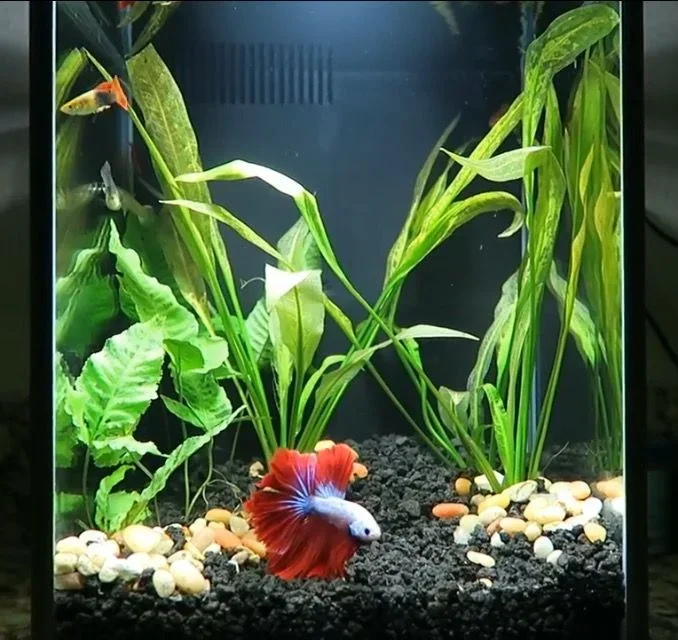
Live plants are your best friend in a community tank. They provide hiding spots and break up lines of sight. Bettas love plants with broad leaves where they can rest. Floating plants like duckweed or water lettuce are especially helpful. They soften the light and make bettas feel more secure.
Add rocks, driftwood, and caves too. These create natural boundaries between fish. When each fish has its own space, conflicts decrease. You can also use decorations to separate territories. This is especially helpful if your betta is on the aggressive side.
Water Parameters
Both bettas and tetras prefer similar water conditions. The ideal temperature is between 76 and 80 degrees Fahrenheit. The pH should be between 6.5 and 7.0. Keep the water clean with regular water changes. A good filter is essential, but make sure the current is not too strong. Bettas prefer slow-moving water, and tetras enjoy a gentle flow.
Lighting
Moderate lighting works best for both species. Too bright, and your betta will feel stressed. Too dim, and your tetras will lose their vibrant colors. Aim for a natural day-night cycle of about 8 to 10 hours of light per day. You can use a timer to keep things consistent.
Common Challenges and How to Solve Them
Even with the best setup, challenges can arise. Here are the most common issues and how to handle them.
Fin Nipping
If you notice your betta’s fins looking ragged, a tetra may be the culprit. Fin nipping is stressful for both fish. To fix this, try adding more plants to break up sight lines. You can also increase the school size of your tetras. A larger group spreads their energy and reduces the urge to pick on one fish.
Betta Aggression
If your betta chases the tetras constantly, you have a problem. First, check if the tank is large enough. A cramped space triggers territorial behavior. Next, try rearranging the decorations. This resets the territory and can calm an aggressive betta. If the behavior continues, consider moving the betta to a separate tank or finding different tank mates.
Stress and Illness
Stressed fish are more likely to get sick. Watch for signs like clamped fins, loss of appetite, or hiding constantly. Regular water testing helps catch problems early. Keep ammonia and nitrite levels at zero. Nitrate should stay below 20 ppm. A healthy tank means happy fish.
Feeding Conflicts
Bettas are slow eaters compared to tetras. Tetras will often gobble up all the food before the betta gets a chance. To solve this, feed the betta first with sinking pellets or bloodworms. Then scatter flakes for the tetras. This ensures everyone gets enough to eat. You can also use a feeding ring to keep food in one spot.
Expert Tips for a Successful Community Tank
We have gathered advice from experienced aquarists to help you succeed. Here are the tips that make the biggest difference.
- Introduce tetras to the tank before the betta. This gives the tetras time to establish their school and feel settled.
- Always keep tetras in groups of six or more. A lone tetra will become stressed and may pick on the betta.
- Observe your fish daily. Early signs of trouble are easier to fix than full-blown aggression.
- Do not overcrowd the tank. Follow the general rule of one gallon of water per inch of fish.
- Quarantine new fish before adding them to the main tank. This prevents the spread of disease.
- If your betta is extremely aggressive, consider keeping it solo. Not every betta is suited for community life.
Many hobbyists also recommend having a backup plan. Keep a spare tank ready in case the pairing does not work out. This saves your fish from a stressful situation and gives you time to reevaluate your setup.
Some aquarists have found success by adding other peaceful species alongside tetras and bettas. For example, betta fish and algae eaters can coexist well in the same tank. Algae eaters focus on cleaning the glass and rocks, leaving the tetras and bettas alone. You can learn more about this combination here.
Final Thoughts on Keeping Tetras with Bettas
So, can tetra fish and betta fish live together? The answer is a cautious yes. It requires planning, patience, and a good setup. Choose the right tetra species, provide enough space, and monitor your fish closely. Not every betta will tolerate tank mates, and not every tetra will be gentle enough. But when the pairing works, it is incredibly rewarding.
Remember that every fish is an individual. Your betta might love its tetra roommates, or it might prefer to live alone. Both outcomes are okay. The most important thing is that your fish are healthy and stress-free. Take the time to get to know your fish and adjust your setup as needed.
If you are still unsure about whether your betta will do well with tetras, consider starting small. Try a single species of tetra in a well-planted 20-gallon tank. Observe how they interact for a few weeks. If things go well, you can slowly add more fish. If not, you have not lost anything. Every attempt teaches you something new about your fish and your aquarium.
The world of community tanks is full of possibilities. Mixing tetra fish and betta fish is just one of many combinations you can explore. With the right knowledge and a little patience, you can create a beautiful underwater world in your home. Happy fish keeping!
Frequently Asked Questions
Can tetra fish and betta fish live together peacefully?
Yes, tetra fish and betta fish can live together under the right conditions. Choosing peaceful tetra species and providing enough space helps reduce conflict significantly.
What tetras are best to keep with betta fish?
Neon tetras, ember tetras, and rummy-nose tetras are the best choices for a shared tank. These species are small, calm, and less likely to trigger aggression in bettas.
Why do betta fish chase tetra fish in the same tank?
Betta fish may chase tetra fish when they feel threatened or when the tank is too small. Adding plenty of plants and hiding spots can help minimize this behavior and keep both species calm.
What tank size is needed for tetra fish and betta fish together?
A tank of at least 20 gallons is recommended when housing tetra fish and betta fish together. More space reduces territorial disputes and keeps water parameters stable for both species.
How many tetras can you keep with one betta fish?
A group of 5 to 6 small tetras works well with a single betta fish in a 20-gallon tank. Keeping them in a school helps tetras feel secure and reduces stress for your betta.
Can neon tetras live with betta fish successfully?
Yes, neon tetras and betta fish can coexist if the tank setup meets their shared needs. Soft water, moderate lighting, and lots of greenery create a comfortable environment for both species.