Can a Betta Fish Live with an Algae Eater
Yes, a betta fish can sometimes live with an algae eater, but it is highly dependent on the specific species of algae eater, the betta’s individual temperament, and the tank setup. Many common “algae eaters” are unsuitable due to size, aggression, or different water needs. Success requires careful species selection (like otocinclus or amano shrimp), a spacious tank (20+ gallons), and a meticulous introduction process. Always have a backup plan to separate the fish if aggression occurs.
So, you’ve got a beautiful, solitary betta fish—a Siamese fighting fish—gracefully swimming in its tank. It’s stunning, but those glass walls are starting to look a little… boring. Maybe you’re seeing some algae bloom on the decor or the glass. The natural solution seems obvious: add an “algae eater” to clean up the mess and create a more dynamic, natural-looking community tank. But before you head to the pet store, you need to ask the most important question: can a betta fish live with an algae eater? The answer is a firm, qualified maybe. It’s a path filled with potential pitfalls, but with the right knowledge and preparation, it can be done successfully. This guide will walk you through every single factor you must consider, from the betta’s notorious temperament to the specific (and often surprising) biology of common algae-eating species.
Key Takeaways
- Not All Algae Eaters Are Safe: Species like the Chinese Algae Eater grow large and aggressive, posing a serious threat to a betta. Research is non-negotiable.
- Tank Size is Critical: A minimum of 20 gallons is strongly recommended to provide enough space for both fish to establish territories and avoid conflict.
- The Betta’s Personality is Key: Some bettas are inherently aggressive and will not tolerate any tank mates, regardless of species.
- Proper Introduction Protocol is Essential: Using a divider or quarantine tank for initial observation can prevent immediate, fatal attacks.
- Algae Eaters Have Specific Needs: Many require different water parameters (like cooler temperatures) or diets, which may conflict with a betta’s tropical needs.
- Alternative Clean-up Crew Options: Snails (like nerite or mystery) and shrimp (like amano or cherry) are often safer and more effective algae controllers than fish.
- Always Have a Plan B: You must be prepared to permanently separate the animals if compatibility fails, requiring a second cycled tank.
📑 Table of Contents
- Understanding the Betta Fish: More Than Just a Pretty Face
- The “Algae Eater” Myth: Not All Scrapers Are Created Equal
- Tank Setup: The Foundation for Peace
- The Introduction Process: A Delicate Dance
- Beyond Fish: Excellent Non-Fish Alternatives
- Signs of Stress and Conflict: When to Intervene
- Conclusion: Patience, Research, and Realistic Expectations
Understanding the Betta Fish: More Than Just a Pretty Face
To even begin contemplating tank mates for a betta, you must first understand the animal you’re working with. The betta splendens, or Siamese fighting fish, has a reputation for a reason. This reputation is built on centuries of selective breeding for aggression in their native Thailand, where they were pitted against each other in fights. While modern bettas are generally less aggressive than their fighting ancestors, that territorial, possessive instinct is still deeply ingrained in their genetics.
The Betta’s Territorial Instincts
A betta’s tank is its kingdom. It establishes a territory, often centered around a favorite plant, a cave, or a patch of open water. Intruders—any other fish—are seen as threats to be challenged, chased, and potentially harmed. This behavior is not malice; it’s survival instinct. A long-finned, slow-moving fish like a fancy goldfish would be relentlessly nipped at. A fast, active fish that darts into the betta’s personal space might trigger a furious chase. The key to success is finding a tank mate that is either completely uninteresting to the betta (invisible, essentially) or one that is confident, fast, and has a built-in defense mechanism that makes the betta think twice.
Reading Your Betta’s Personality
Just like people, bettas have individual personalities. Some are laid-back “dudes” who largely ignore other fish. Others are fiery little knights who will flare (spread their gills and fins dramatically) at their own reflection, let alone a real competitor. Before even considering a tank mate, you need to be a keen observer of your specific betta. How does it react when you put a new object in the tank? Does it flare at you through the glass? Does it chase a net or a siphon tube? If your betta is highly reactive and aggressive toward any movement, adding a tank mate is a very bad idea and is almost certainly doomed to fail, resulting in injury or death for the other animal. A calm betta that mostly minding its own business is a candidate for a carefully chosen companion.
The “Algae Eater” Myth: Not All Scrapers Are Created Equal
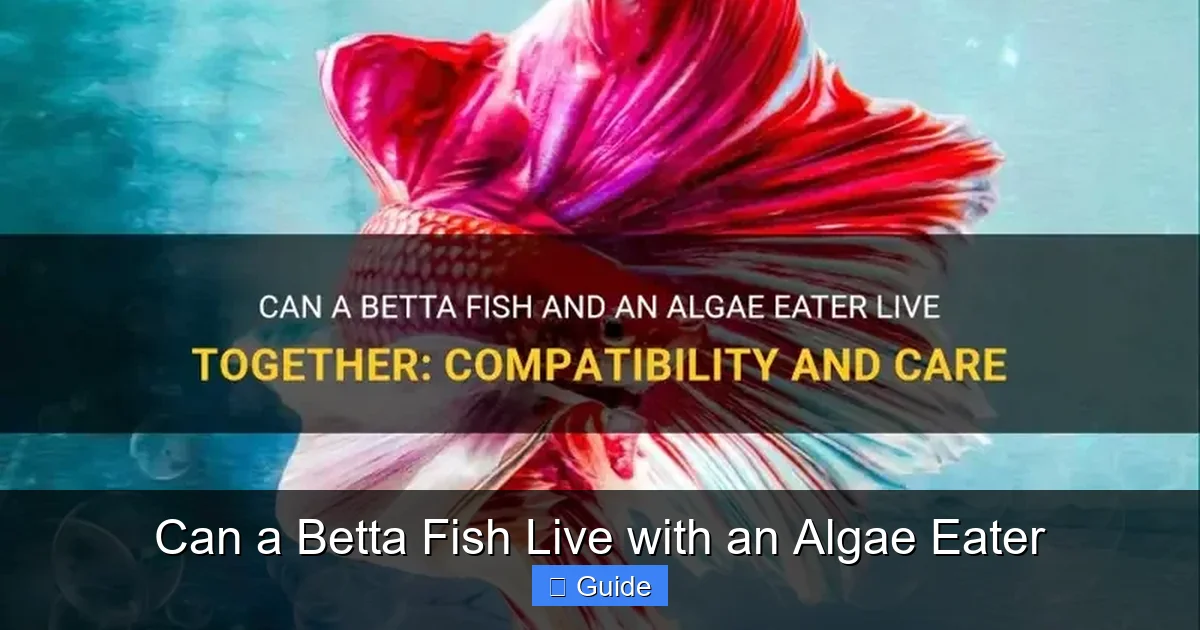
Here is the absolute core of the problem. The pet trade label “algae eater” is a dangerous catch-all. It is applied to dozens of species with wildly different sizes, temperaments, diets, and environmental requirements. Assuming any fish sold as an “algae eater” is a safe, small, and peaceful janitor is the number one mistake new aquarists make. You must know the exact species you are considering.
Visual guide about Can a Betta Fish Live with an Algae Eater
Image source: petshun.com
The Danger Zone: Common but Unsuitable “Algae Eaters”
Several fish are infamous for being terrible, often dangerous, betta tank mates, despite their algae-eating moniker.
- Chinese Algae Eater (Gyrinocheilus aymonieri): This is public enemy number one. It starts small and cute, but it grows rapidly to 10+ inches. More critically, it becomes highly territorial and aggressive as it matures, often sucking the slime coat off other fish (including bettas), which can lead to infection and death. It also prefers much cooler water than a betta.
- Plecostomus (Plecos): While some smaller pleco species (like the bristlenose pleco) are sometimes considered, most common plecos (like the common pleco) grow enormous (over 12 inches), produce massive amounts of waste, and can have a rough, armored body that can inadvertently injure a betta if they tussle. They also have specific wood-eating dietary needs.
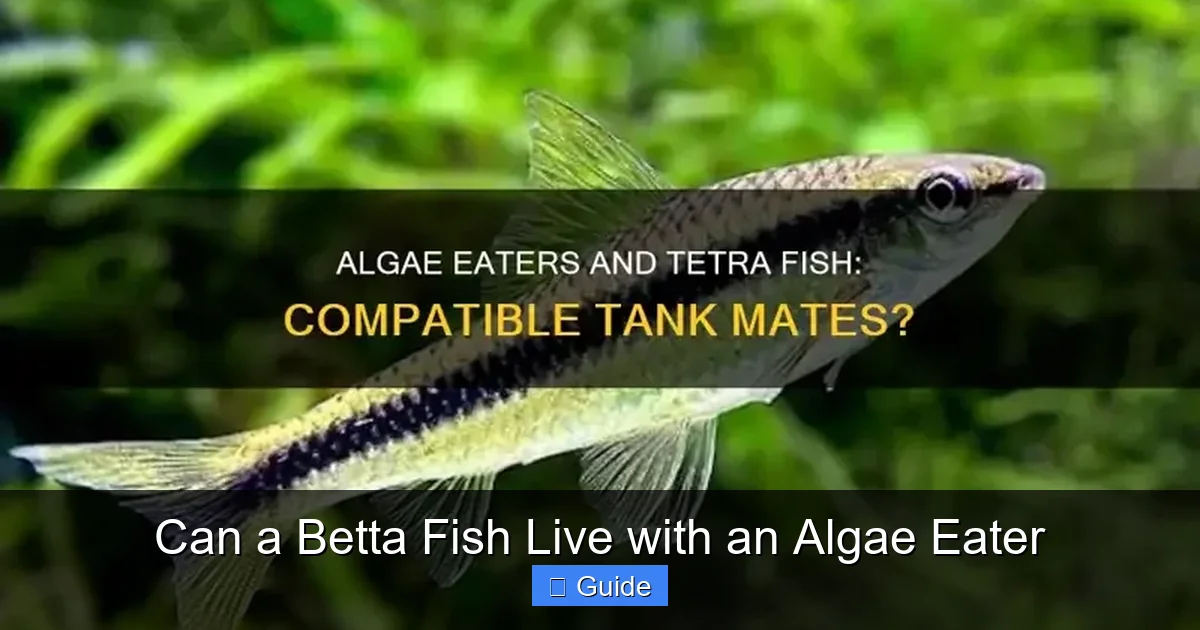
- Siamese Algae Eater (Crossocheilus oblongus): Despite the name, this is NOT a true Siamese fighting fish relative. It is a fast, active, schooling fish that grows to 6 inches. While not as aggressively predatory as the Chinese Algae Eater, it is a powerful swimmer that can be too boisterous for a delicate betta, stressing it out. It also requires a group (5+) to be happy, which is incompatible with a betta’s solitary tank.
Potential Candidates: The Safer Options
If you are determined to have a fish as your algae-eating companion, your list of viable candidates is very short. These species share common traits: they are small, peaceful, non-territorial, and occupy a different swimming level than the betta (usually the bottom or mid-water).
- Otocinclus Catfish (“Otto” Cats): These are the most recommended fish for a betta tank. They are tiny (1-2 inches), gentle, and school in groups of 6+. They are strictly algae grazers, clinging to glass and leaves. Their small size and shy nature mean they are usually ignored by bettas. However, they are sensitive to water quality and can be tricky to acclimate.
- Amano Shrimp (Caridina multidentata): Though not a fish, these large (2-3 inch) freshwater shrimp are exceptional algae grazers, particularly for filamentous algae and diatoms. They are fast enough to evade a curious betta and are generally not seen as food. They are arguably a better “clean-up crew” choice than most fish.
Tank Setup: The Foundation for Peace
You can have the most peaceful betta and the gentlest algae eater in the world, but if the tank is too small or poorly decorated, conflict is inevitable. The environment is your primary tool for managing behavior.
Visual guide about Can a Betta Fish Live with an Algae Eater
Image source: diyseattle.com
Tank Size: Bigger is Non-Negotiable
This cannot be stressed enough. A betta should never be kept in a bowl or a 5-gallon tank with a tank mate. For any betta community, a minimum of 20 gallons (75 liters) is the absolute starting point. For a betta and a group of otocinclus or a few amano shrimp, 20 gallons is workable. For anything larger, you need 30+ gallons. Why? Space allows for territories. The betta can claim the top half of the tank, while the algae eater stays near the bottom or on the glass. Ample space dilutes the betta’s ability to constantly patrol and harass a potential intruder. In a cramped tank, the betta has no escape from its own irritation, and the other animal has no refuge.
Aquascaping for Harmony: Creating Visual Barriers
An empty tank is a boxing ring. Your job is to break up the line of sight. Use a heavy planting strategy, both live and silk plants. Create dense thickets of plants like java fern, anubias, and cryptocorynes. Use driftwood and rock caves to create hiding spots and break up the open water. The goal is to ensure the betta cannot see the entire tank from one spot. This reduces its perception of a single, large intruder in “its” space. The algae eater also needs places to hide if the betta does show curiosity. Floating plants are excellent for bettas, as they prefer the top half of the water column and will often rest under them, feeling secure.
Water Parameters: Finding the Overlap
Betttas are tropical fish, thriving in warm water between 78-80°F (25.5-26.5°C). They prefer slightly acidic to neutral water (pH 6.5-7.5). You must find an algae eater that thrives in this same warm, stable environment. Many popular “cold water” algae eaters (like some plecos or Chinese Algae Eaters) prefer temperatures in the low 70s°F (low 20s°C), which is dangerously cold for a betta and will suppress its immune system. Always research the exact temperature and pH range for your chosen species and ensure there is a significant overlap with your betta’s requirements.
The Introduction Process: A Delicate Dance
Assuming you have the right species in a properly sized and decorated tank, the moment of introduction is critical. Never simply dump a new fish into a betta’s established territory. This is an act of war in the betta’s eyes.
Visual guide about Can a Betta Fish Live with an Algae Eater
Image source: petshun.com
Step 1: The Quarantine & Observation Tank
First, any new animal should be quarantined in a separate tank for at least 2-4 weeks. This is to ensure it is not carrying disease or parasites that could wipe out your entire aquarium. This separate tank is also your “observation tank.” Place the betta’s tank next to it, or use a divider within the main tank. A breeder net or a clear acrylic divider that allows water flow but prevents physical contact is ideal. Let them see each other for several days. Watch the betta’s reaction. Does it flare aggressively at the divider immediately and consistently? This is a red flag. Does it seem mostly indifferent after a few hours? That’s a positive sign.
Step 2: The Rearrangement Trick
Before the actual introduction, do a major rearrangement of the main tank. Move all the plants, rocks, and decor. This disrupts the betta’s established territory and sense of ownership. The tank will smell new to it. Then, net the algae eater (or shrimp) and gently place it in the main tank, ideally near a hiding spot or at the opposite end from where the betta is resting. Immediately monitor for at least an hour. Some initial curiosity (flaring, following) is normal. Vigorous, relentless chasing that prevents the new animal from resting or eating is not normal and means you must intervene.
Step 3: Monitoring and Intervention
For the first few days, watch the tank closely, especially during feeding times. Ensure the algae eater is getting its share of food (you may need to target feed it with a pipette or algae wafer in a hiding spot). Look for signs of stress in the new animal: hiding constantly, not eating, torn fins, pale color. Also watch the betta for signs of excessive stress: loss of appetite, lethargy, constant patrolling. If the betta is stalking and nipping, you may need to re-divide the tank with a permanent separator for a few more weeks and try the introduction again later. Sometimes, a betta just never accepts a particular individual, regardless of species.
Beyond Fish: Excellent Non-Fish Alternatives
Given the significant challenges of finding a compatible fish algae eater, you should strongly consider invertebrates. They are often more effective at cleaning, have a much smaller bioload, and are generally ignored by bettas because they are not seen as fish-shaped competitors.
Freshwater Snails: The Unsung Heroes
- Nerite Snails: The gold standard for algae control. They come in many beautiful varieties (zebra, tiger, olive) and are famous for their voracious appetite for stubborn algae types like green spot algae on glass. They cannot reproduce in freshwater (they need brackish water to lay eggs), so you won’t have a snail explosion. They have a hard shell, so even if a betta nips, they are protected.
- Mystery/Apple Snails: Larger (often 2+ inches), these snails are excellent scavengers and will eat decaying plant matter and leftover food, helping with overall tank cleanliness. They are peaceful and their size makes them uninteresting to most bettas. They can and do reproduce in freshwater, so be prepared for potential egg masses.
- Ramshorn Snails: Small, colorful, and prolific breeders. They are great at cleaning plants and decor. Their small size might make them a target for a very curious betta, but many bettas ignore them. Be aware they multiply quickly.
Freshwater Shrimp: Active and Effective
- Amano Shrimp (Caridina multidentata): As mentioned, these are the best shrimp for algae control. They are large, fast, and primarily eat algae and biofilm. They are rarely targeted by bettas.
- Cherry Shrimp (Neocaridina davidi): Smaller and more colorful. They are prolific breeders and excellent scavengers. However, their small size makes them a potential snack for a betta with a high prey drive. Success is hit-or-miss and depends entirely on the individual betta’s personality.
- Ghost Shrimp: Very inexpensive, transparent, and excellent scavengers. They are often used as “testers” to see if a betta will eat shrimp before adding more expensive varieties. They can be eaten, but their transparency gives them an edge.
Signs of Stress and Conflict: When to Intervene
Even with the best preparation, things can go wrong. You must be a vigilant observer. The moment you see these signs, you must be prepared to separate the animals immediately.
What to Watch For in the Algae Eater/Shrimp
- Constant hiding, never coming out to graze.
- Loss of appetite, wasting away.
- Physical damage: nipped fins, torn scales, missing limbs (in shrimp), shell damage (in snails).
- Erratic swimming, rubbing against objects (sign of stress or parasites).
What to Watch For in the Betta
- Excessive flaring, even when no other animal is near.
- Constant, frantic patrolling of the entire tank.
- Loss of its own vibrant color and appetite.
- Fin nipping or damage on itself (from stress-induced boredom or frustration).
If you observe chronic stress in either animal, the ethical choice is to separate them. Have a backup cycled tank ready. This is not a failure of your plan; it is a responsible acknowledgment of the betta’s nature. Forcing them to live together in a state of fear and stress is cruel and will lead to illness and death.
Conclusion: Patience, Research, and Realistic Expectations
So, can a betta fish live with an algae eater? The most honest answer is: it’s a calculated risk, not a guarantee. Success is built on a foundation of three pillars: species selection (prioritizing otocinclus or invertebrates over fish), environment (a spacious, heavily planted 20+ gallon tank), and process (a slow, observant introduction with a ready backup plan).
For the vast majority of betta keepers, the safest and most effective path to a cleaner tank is to forgo a fish algae eater altogether and instead build a “clean-up crew” of nerite snails, mystery snails, and amano shrimp. These invertebrates are fascinating to watch, excel at their job, and pose virtually no threat to or from your betta. They create a beautiful, balanced ecosystem without the constant risk of violence.
If you do decide to try a fish like otocinclus, go in with your eyes wide open. Provide the giant tank, the perfect water conditions, and the lush hiding spots. Introduce them with extreme care. And be prepared to be the responsible caretaker who, if necessary, provides a separate, excellent home for one of your pets. The reward of seeing a peaceful, thriving community—your betta flaring regally at the top and a school of tiny ottos grazing peacefully on the glass below—is a beautiful sight for an aquarist. But it is a sight earned through knowledge, patience, and a deep respect for the natural instincts of every creature in your care.
Frequently Asked Questions
Can a betta fish live with a Chinese Algae Eater?
Absolutely not. Chinese Algae Eaters grow large, become highly aggressive, and often suck the slime coat off other fish, including bettas. They are a dangerous and incompatible tank mate.
What is the best algae eater for a betta tank?
The safest and most effective options are invertebrates: nerite snails (excellent for glass algae) and amano shrimp (great for general algae). If you prefer a fish, a school of 6+ otocinclus catfish in a large, planted tank is the only viable fish choice.
How big of a tank do I need for a betta and an algae eater?
A minimum of 20 gallons is strongly recommended. This provides enough space for the betta to establish a top-level territory and the algae eater to have its own bottom-level space, reducing territorial conflict.
What if my betta is attacking the new algae eater?
You must intervene immediately. Have a backup cycled tank ready. Use a divider to permanently separate them. Some bettas simply will not tolerate tank mates, and forcing cohabitation is cruel and will lead to injury or death.
Do algae eaters replace the need for tank maintenance?
No. Algae eaters are a supplement, not a replacement. You must still perform regular water changes, clean the filter, and manually remove excess debris and algae. Relying solely on an algae eater will lead to poor water quality.
Can I keep a betta with a snail?
Yes, most snails (like nerite, mystery, or ramshorn snails) are excellent and safe tank mates for bettas. Their hard shells protect them, and they occupy a different ecological niche, so bettas typically ignore them.