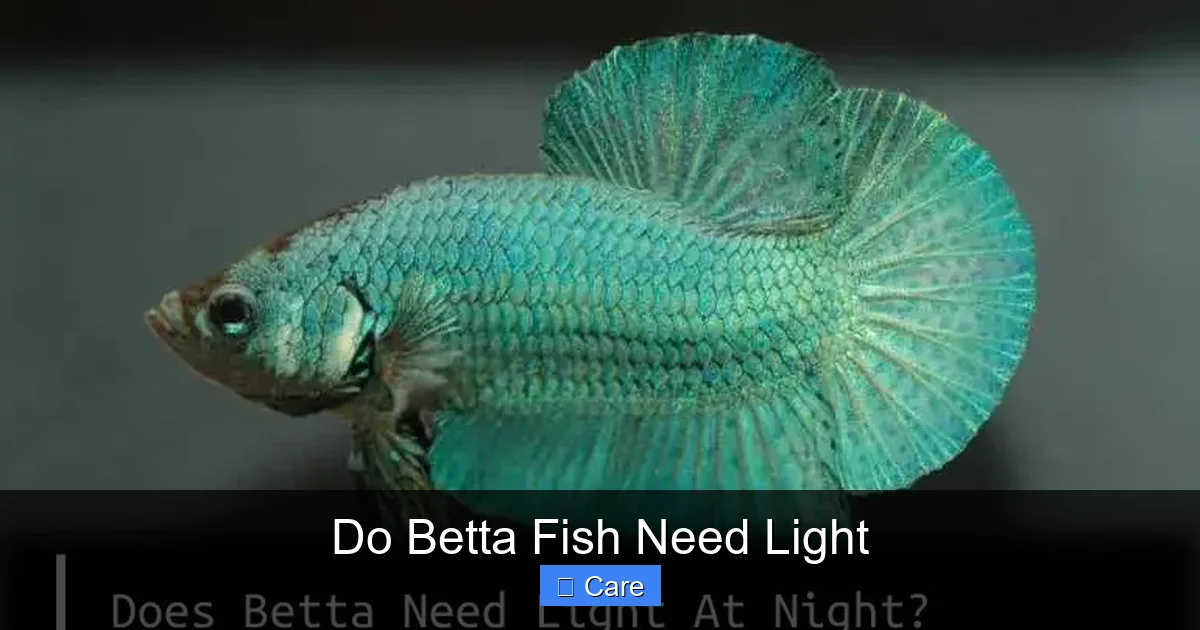
Do Betta Fish Need Light

Yes, betta fish absolutely need a consistent light-dark cycle to thrive, but it must be carefully managed. Their natural habitat in shallow, shaded Asian rice paddies means they are adapted to filtered, indirect light, not harsh, direct aquarium lighting. Providing 10-12 hours of low to moderate intensity light daily, mimicking a natural day/night rhythm with a timer, is crucial for regulating their sleep, reducing stress, and supporting any live plants. Most importantly, you must avoid overexposure, direct sunlight, and constant light, which cause stress, algae blooms, and health issues. Proper lighting is about balance, not just illumination.
You bring home that stunning, flowing betta fish, with colors that look like liquid sapphire and flame. You set up a beautiful tank, choose the perfect food, and then you wonder: “Do betta fish need light?” It seems like a simple question, but the answer is a fascinating dive into the wild ancestry of this popular pet, the science of aquatic life, and the practical realities of modern fishkeeping. The short answer is yes, they absolutely do. But the critical, life-changing details of *how* and *why* are what separate a thriving betta from a stressed, pale, and sickly one. Let’s unravel the truth about betta fish and light, once and for all.
Many new owners make two common, opposing mistakes. They either leave the tank light on 24/7, thinking their fish “likes it,” or they keep the tank in a dark room, assuming a betta’s labyrinth organ means they don’t need a day/night cycle. Both are paths to poor health. Understanding the betta’s natural world is the first step to getting lighting right.
Key Takeaways
- Light is non-negotiable for health: A consistent 10-12 hour light/dark cycle is essential for a betta’s circadian rhythm, immune function, and overall well-being, just as it is for humans.
- Intensity is everything: Bettas need low to moderate intensity light. Bright, direct aquarium lighting can cause stress, fade their colors, and damage their sensitive eyes. Think “dappled sunlight,” not a spotlight.
- Artificial light must be timed: Never leave aquarium lights on 24/7. Use a reliable plug-in timer to automate the cycle. This prevents sleep deprivation and chronic stress.
- Natural sunlight is a trap: Never place a betta tank in direct sunlight. It causes dangerous temperature spikes, promotes massive algae growth, and delivers UV radiation they are not adapted for.
- Light serves the ecosystem: Light primarily benefits the aquatic plants and the photosynthetic bacteria in the tank, which in turn create a healthier, more stable environment for the betta.
- Observe your individual fish: Some bettas are more sensitive. If your fish constantly hides, flares at the light, or seems lethargic when the light is on, the intensity is likely too high.
- Darkness is part of the cycle: True, complete darkness for the “night” period is as important as the light period. It allows for deep, restful sleep and reduces cortisol (stress hormone) levels.
📑 Table of Contents
- The Betta’s Natural Habitat: A Lesson in Dappled Light
- The Critical Role of a Light-Dark Cycle (Circadian Rhythm)
- Natural Light vs. Artificial Aquarium Lighting
- Practical Lighting Setup: A Step-by-Step Guide
- Lighting and Plant Life: The Symbiotic Relationship
- Common Mistakes and How to Fix Them
- Conclusion: Light as a Tool for Wellness
The Betta’s Natural Habitat: A Lesson in Dappled Light
To understand a betta’s light needs, we must travel to the shallow, slow-moving waters of Thailand, Cambodia, and Vietnam—the rice paddies, ditches, and muddy pools where the wild Betta splendens evolved. These are not the clear, sun-drenched streams you might imagine. They are often heavily shaded by dense overhead vegetation: rice stalks, palm leaves, floating hyacinths, and jungle canopy. The light that penetrates is not a harsh beam but a soft, fragmented, and constantly moving pattern—what ecologists call “dappled sunlight.”
Adaptations for a Shaded World
This environment shaped the betta’s physiology and behavior. Their large, upward-facing eyes are perfectly suited for spotting insects and prey at the water’s surface against the dim, filtered light above. Their famously vibrant colors, which can fade in captivity, actually serve as communication signals in the low-contrast gloom—flaring to intimidate rivals or attract mates in brief, dramatic bursts. They are creatures of twilight and shadow, not of the blazing tropical sun. This is the fundamental principle: in the wild, bettas live in low-light conditions. Our job in captivity is to replicate that essential quality, not to blast them with the full output of an LED aquarium light.
The Critical Role of a Light-Dark Cycle (Circadian Rhythm)
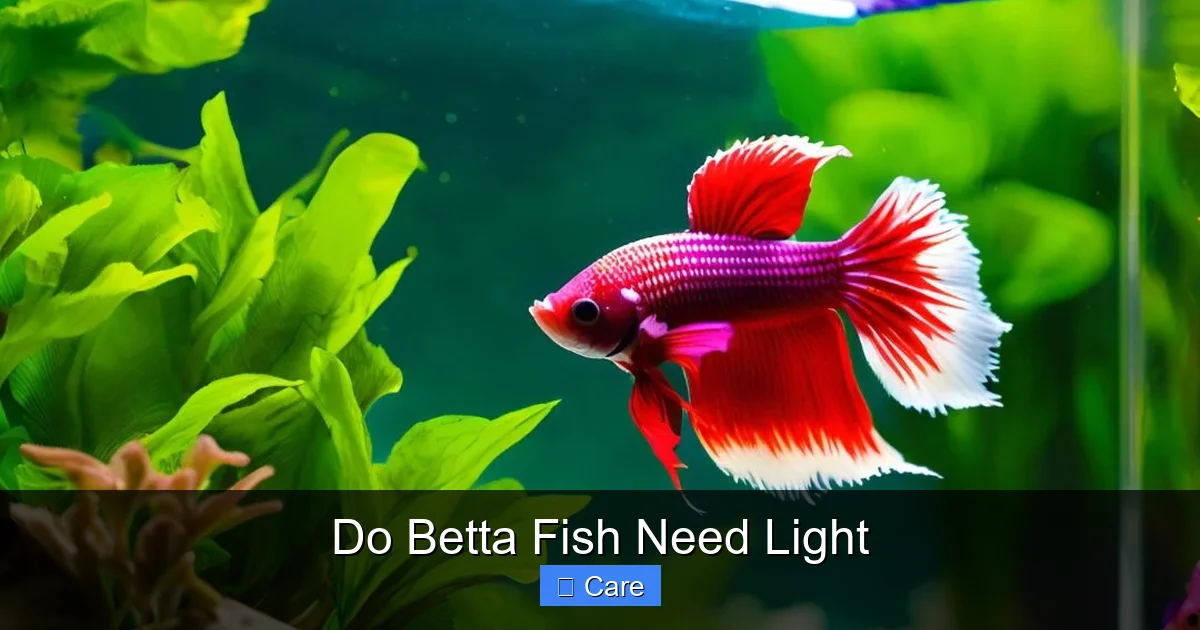
If intensity is about quality, the light-dark cycle is about timing—and it is arguably more important. All living beings, from humans to bacteria, operate on an internal 24-hour clock called the circadian rhythm. This rhythm is synchronized by environmental cues, the most powerful of which is the cycle of light and dark.
Visual guide about Do Betta Fish Need Light
Image source: fishkeepertank.com
Why a “Night” is Non-Negotiable
For a betta, a proper cycle is not a luxury; it’s a physiological necessity. During the light period:
- Hormone Regulation: Light suppresses melatonin (the sleep hormone) and stimulates cortisol and other activity-related hormones. This governs feeding, digestion, and energy levels.
- Immune Function: A stable rhythm supports a robust immune system. Disruption, like constant light, leads to chronic stress, which directly suppresses immune response, making the fish susceptible to diseases like fin rot or velvet.
- Plant Photosynthesis: If you have live plants, they need a predictable photoperiod to undergo photosynthesis, producing oxygen and absorbing harmful nitrates.
During the dark period:
- Deep Rest & Sleep: Bettas do sleep, often resting on plants, the substrate, or floating at the surface. True darkness allows for this essential, restorative rest. Without it, they experience sleep deprivation, leading to lethargy, loss of appetite, and a weakened immune system.
- Melatonin Production: Darkness triggers melatonin release, which has antioxidant properties and further supports immune health and cellular repair.
- Stress Reduction: The quiet, dark “night” is a natural period of safety and low activity, reducing background stress.
A constant, unvarying light is a recipe for a chronically stressed, unhealthy betta. It’s like being forced to work around the clock with no sleep.
Natural Light vs. Artificial Aquarium Lighting
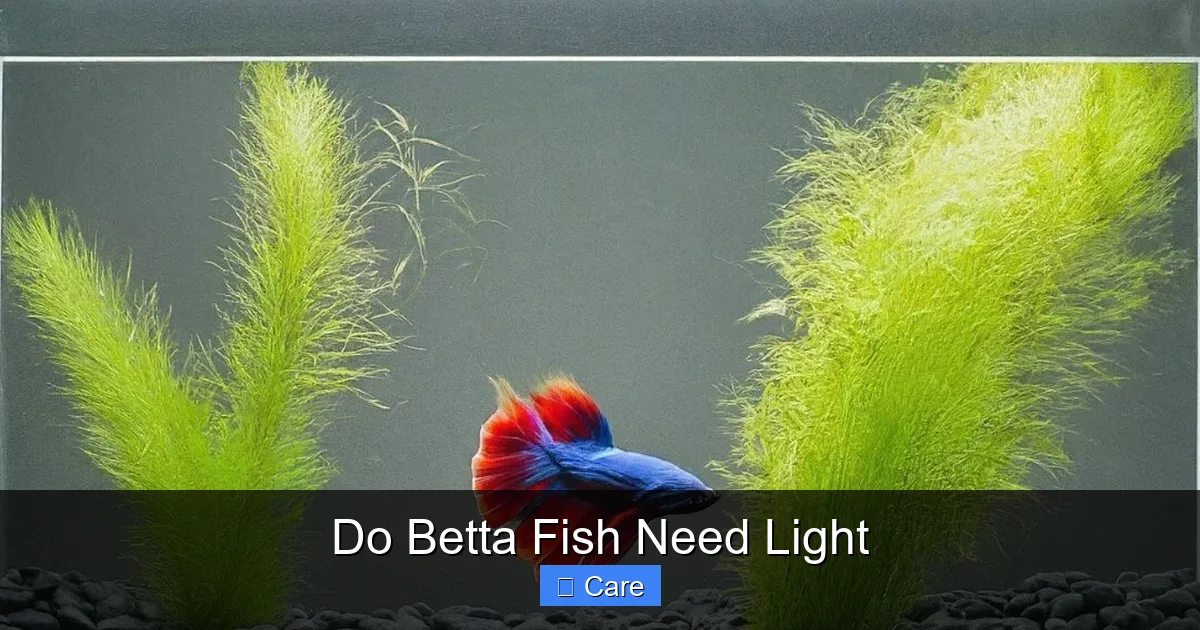
This is where most well-intentioned owners go wrong. They see a sunny window and think it’s the perfect, “natural” light source. It is, in fact, one of the most dangerous things you can do for your betta tank.
Visual guide about Do Betta Fish Need Light
Image source: fishkeepertank.com
The Three Disasters of Direct Sunlight
Placing your betta tank in direct sunlight is a trifecta of problems:
- Thermal Shock & Overheating: Sunlight through a window acts like a furnace. It can raise the water temperature by several degrees in an hour. Bettas are tropical fish, but they are accustomed to stable, warm water (78-80°F / 25.5-26.5°C). Rapid temperature swings are lethal, and sustained overheating cooks their gills and accelerates their metabolism, shortening their lifespan.
- UV Radiation Damage: The sun’s UV rays are not filtered by glass. They can damage a betta’s delicate skin and eyes over time. More immediately, they fuel the third problem…
- Algae Apocalypse: Sunlight is the ultimate algae catalyst. You will wake up to a tank choked with green water, hair algae coating every surface, and a battle you cannot win without removing the light source entirely.
The rule is absolute: No direct sunlight on the aquarium, ever.
The Right Way: Controlled Artificial Light
This is where you take control. A dedicated aquarium LED light or a fluorescent bulb is the correct tool because it gives you control over three key variables: duration, intensity, and spectrum.
- Duration (Photoperiod): Use a simple plug-in timer. Set your lights to be on for 10-12 hours per day. A common, easy schedule is 8 AM to 8 PM or 9 AM to 9 PM. This mimics the equatorial day length where bettas originate. The timer is your most important piece of lighting equipment—it removes human error and ensures perfect consistency.
- Intensity: This is the trickiest part. Most standard aquarium LEDs are far too bright for a betta-only tank. Your goal is to illuminate the tank enough to see your fish and any plants clearly, but not so much that it feels like a stadium. Look for lights with adjustable brightness settings. Start at the lowest setting. If you have a planted tank, you may need slightly more intensity for plant growth, but you can still often run a “low-light” setting. A good test: you should be able to see your betta’s colors and details without it feeling glaring. If the light casts sharp, defined shadows on the tank wall, it’s probably too bright.
- Spectrum (Color Temperature): Measured in Kelvin (K), this describes the “color” of the light. A range of 6500K to 7000K (daylight) is ideal. It provides a full, balanced spectrum that is pleasant to look at and supports plant photosynthesis. Avoid “bluish” or “actinic” bulbs meant for reef tanks; they are unnecessary and can be harsh. A simple “full-spectrum” or “daylight” LED fixture is perfect.
For a betta-only tank with silk or artificial plants, you can even use an inexpensive, low-wattage desk lamp with a daylight LED bulb positioned to the side, aimed at the tank, but still on a timer. The principle of control applies regardless of the fixture.
Practical Lighting Setup: A Step-by-Step Guide
Let’s get hands-on. Here is a foolproof method to set up your betta’s lighting.
Visual guide about Do Betta Fish Need Light
Image source: fishkeepingguide.net
Step 1: Assess Your Tank’s Contents
Your lighting needs change based on what’s in the tank.
- Bare Bottom / Silk Plants: Lowest light requirement. A very low-intensity LED or even ambient room light (from a lamp, not a window) for 8-10 hours is sufficient. The primary purpose is to see your fish.
- Live Plants (Low-Light Species): If you want a planted betta tank, choose hardy, low-light plants like Anubias, Java Fern, Cryptocoryne, or Marimo moss balls. These thrive on the lower end of the spectrum and intensity. A standard low-to-medium setting on a quality LED light for 8-10 hours is perfect.
- Live Plants (High-Light Species): Avoid these. Plants requiring high light (like many stem plants) also demand high CO2 injection and fertilizer, creating a complex, unstable system for a single betta. Keep it simple and low-tech.
Step 2: Choose and Position Your Light
Purchase a timer. A basic, mechanical 24-hour plug timer costs $5 and is worth its weight in gold. For the light itself:
- If buying an aquarium LED, choose one with a dimmer switch.
- Position the light so it does not create a single, intense beam. Full-tank hood lights are usually diffused enough. If using a clip-on or desk lamp, bounce the light off the tank wall or ceiling first to soften it.
- Observe. Turn the light on at its lowest setting. Where does your betta go? If it immediately darts to the darkest corner and stays there, the light is too bright for its comfort. Dim it further or provide more solid hiding places (plants, caves, driftwood).
Step 3: Establish and Maintain the Schedule
Plug your light and timer into the wall. Program it for your chosen 10-12 hour window. Do not change the schedule on weekends. Consistency is key. The betta’s internal clock will sync to this predictable pattern. You will find your fish becomes more active and ready to eat right around the time the light comes on, and begins to settle down as it turns off.
Lighting and Plant Life: The Symbiotic Relationship
Many betta keepers want a beautiful, natural-looking planted tank. This is excellent for the fish, as plants provide security, reduce stress, and improve water quality. But it creates a lighting dependency: the plants need light to live. This is where the “balance” becomes a tightrope walk.
The Low-Light Plant Paradigm
The solution is to select plants that have minimal light demands. The plants listed earlier (Anubias, Java Fern) are called “low-light” plants for a reason. They grow slowly and are very forgiving. They will photosynthesize and thrive under the same low-intensity, 10-hour photoperiod that is comfortable for your betta. You are not growing a dense, vibrant Dutch-style aquascape; you are growing a few stems and foliage to create a jungle-like, shaded environment. This is the perfect synergy: the light level is high enough for the plants to be healthy but low enough that your betta feels like it’s in its natural, shaded rice paddy.
The Dangers of “Too Much Light for Plants”
If you ramp up the light intensity to grow demanding plants faster, you create two problems:
- Algae Takeover: High light, especially without a corresponding balance of nutrient-hungry plants and a robust biofilter, is the #1 cause of algae. Bright light + leftover nutrients = algae bloom. You will spend your time scraping glass instead of enjoying your tank.
- Betta Stress: Your fish will be living under a spotlight. Its colors may fade as a stress response, and it will hide constantly, defeating the purpose of having a display fish.
Remember: Your primary goal is the betta’s welfare. Plants are scenery and helpers, not the main event. Choose plants that fit the betta’s low-light needs, not the other way around.
Common Mistakes and How to Fix Them
Let’s troubleshoot the most frequent lighting errors.
Mistake 1: “I keep the light on so I can see my fish.”
The Fix: You only need the light on for viewing during reasonable hours. 10-12 hours is plenty. If you want to view your fish in the evening, use a separate, low-power “moonlight” LED (blue or very dim white) on a separate timer for an hour or two after the main light shuts off. This provides a gentle transition and allows for nighttime viewing without disrupting the cycle.
Mistake 2: “My tank is in a bright room, I don’t need a light.”
The Fix: Ambient room light from lamps is fine and can supplement a low tank light. But if the room is completely dark at night and bright during the day with no timed control, your betta has no consistent cycle. You must provide a controlled light source on a timer. The ambient room light is just that—ambient. It’s not reliable or consistent enough to establish a circadian rhythm.
Mistake 3: “My betta’s colors are fading. I need a brighter light to make them pop.”
The Fix: This is backwards. Fading colors are a classic sign of stress, and over-bright lighting is a major stressor. First, lower your light intensity. Second, ensure water parameters are perfect (ammonia/nitrite=0, nitrate<20ppm). Third, feed a high-quality, varied diet with natural color enhancers (like brine shrimp or krill). A healthy, unstressed betta in appropriate lighting will display its best colors naturally.
Mistake 4: “I have a ‘daylight’ bulb, so it’s fine.”
The Fix: “Daylight” describes color temperature (6500K), not intensity. A 100-watt “daylight” bulb is still too bright. You must control the intensity with a dimmer or by choosing a lower-wattage fixture. A 5-watt LED daylight bulb on a desk lamp, set low and timed, is often better than a 20-watt full-spectrum aquarium LED on full blast.
Conclusion: Light as a Tool for Wellness
So, do betta fish need light? The resounding answer is yes, but with crucial qualifications. They need a predictable, gentle, and controlled light cycle that replicates the dappled shadows of their wild home. Think of your aquarium lighting not as a simple on/off switch for visibility, but as a fundamental component of your betta’s environmental enrichment and healthcare system.
Your action plan is beautifully simple: Get a timer. Set it for 10-12 hours. Use the lowest intensity light that still allows you to see your fish and any plants comfortably. Never use direct sunlight. Observe your betta’s behavior—its comfort is the ultimate guide. When you get this right, you’ll see the difference. Your betta will be more vibrant, more active during the “day,” will build bubble nests with gusto, and will enjoy a long, healthy life. You’ve moved beyond basic care into the realm of true, thoughtful stewardship. You’re not just keeping a fish; you’re recreating a piece of its world, and that makes all the difference.
Frequently Asked Questions
Can betta fish see in complete darkness?
Yes, bettas have relatively good vision in low-light conditions thanks to their wild heritage in murky, shaded waters. However, they cannot see in absolute, pitch-black darkness. Their vision is best at dawn and dusk (crepuscular). Complete, prolonged darkness is not natural; they rely on a cycle of light and dark.
Is natural room light from a window enough for my betta?
No, for two reasons. First, it’s inconsistent and uncontrolled—it changes with weather, time of year, and time of day, disrupting the betta’s circadian rhythm. Second, if the window gets direct sun at any point, it creates the dangerous overheating and algae problems mentioned. You must provide a dedicated, timed artificial light source.
Can I use a night light for my betta tank?
A very dim, blue “moonlight” LED for an hour or so after the main light turns off is fine and can be soothing. However, any light that illuminates the tank brightly during the “night” period will disrupt sleep. The “night” should be as dark as possible.
Do bettas need UVB light like reptiles?
No. UVB is essential for reptiles to synthesize Vitamin D3 and calcium. Fish, including bettas, obtain all necessary nutrients from their food and do not require UVB exposure. In fact, the UV component of strong sunlight can be harmful to them, contributing to stress and algae.
My light is on a timer, but I still get algae. Why?
Algae is caused by an imbalance of light, nutrients, and carbon dioxide. Even with correct timing, if your light intensity is too high for the tank’s bioload and plant mass, algae will thrive. First, lower the light intensity. Second, ensure you are not overfeeding. Third, perform regular water changes to remove excess nutrients (nitrates, phosphates). Adding fast-growing, low-light plants like hornwort or water lettuce (floating) can help outcompete algae for nutrients.
Should I adjust the lighting for my betta’s color?
No. Adjust lighting solely for the betta’s comfort and health. A stressed betta in bright light will have duller colors. A healthy, unstressed betta in appropriate, low-to-moderate lighting will display its full, natural vibrancy. Do not increase brightness to “enhance” color—it will have the opposite effect. Focus on water quality, diet, and proper lighting intensity to see the best colors.