Keeping two betta fish together is generally not recommended and can be extremely dangerous. Male bettas are fiercely territorial and will almost always fight to the death if housed together without a solid, permanent divider. Female bettas can sometimes live in a “sorority” but require a very large, heavily planted tank (minimum 40 gallons) with at least 5-6 females to disperse aggression. For most beginners, housing bettas individually in separate tanks is the only truly safe and humane approach.
Key Takeaways
- Male + Male = No: Two male bettas in the same water column will almost certainly fight, often fatally. A solid divider is the only safe way to house males together.
- Female Sororities Are Complex: A group of 5+ female bettas *can* work in a massive (40+ gallon), densely planted tank, but it’s advanced and requires constant monitoring.
- Tank Size Is Non-Negotiable: For any multi-betta setup, the tank must be significantly larger than the standard 5-gallon. Space is the primary tool to reduce aggression.
- Introductions Are Critical: Even in a sorority, the introduction process must be done carefully in a neutral, rearranged tank to prevent immediate territorial attacks.
- There Are No Guarantees: Betta temperament is individual. A setup that works for one pair or group can fail catastrophically with another. Be prepared to separate fish immediately.
- Alternative Tank Mates Are Safer: A single male or female betta can often coexist with certain peaceful, fast-swimming fish like neon tetras or harlequin rasboras in a properly sized, planted tank.
- Individual Tanks Are Best: For the health, safety, and longest lifespan of your bettas, keeping them in separate, appropriately sized tanks (5+ gallons each) is the gold standard.
📑 Table of Contents
- Can U Have 2 Betta Fish in One Tank? The Straight Answer
- Betta 101: Understanding the Fighting Fish Instinct
- The Only Possible Scenario: The Female Betta Sorority
- The Risks and Realities: Why This Is So Hard
- The Safe and Superior Alternative: Single Betta + Compatible Tank Mates
- The Divided Tank: A Compromise for Two Bettas
- Conclusion: Prioritizing the Betta’s Welfare
Can U Have 2 Betta Fish in One Tank? The Straight Answer
So you’ve got that stunning, flowing-finned betta fish, and you can’t help but think how lonely he or she might look. Maybe you saw a picture online of two bettas swimming peacefully together and wondered, can u have 2 betta fish in one tank? It’s a common and completely understandable question. The allure of a beautiful, active community tank is strong. However, when it comes to betta fish—also known as Siamese fighting fish—the answer is a firm “it depends, but usually no.” The short, critical truth is that housing two bettas together in the same, undivided water space is one of the most common and dangerous mistakes new betta owners make.
Betta fish have been selectively bred for centuries for their aggression and vibrant colors. The males, in particular, are infamous for their territorial nature. In the wild, they defend small patches of reeds and plants. In a tank, that entire space becomes their kingdom, and they will defend it fiercely against any perceived rival, especially another male betta. This isn’t just posturing; it’s a fight to the death. The phrase “Siamese fighting fish” isn’t just a cute nickname; it’s a literal description of their behavior. For the vast majority of hobbyists, especially beginners, the answer to can u have 2 betta fish in one tank is a resounding no if you mean in the same, open water. But, as with most things in the aquarium hobby, there are nuanced, high-maintenance exceptions that require extensive research, significant resources, and a willingness to intervene at a moment’s notice.
Betta 101: Understanding the Fighting Fish Instinct
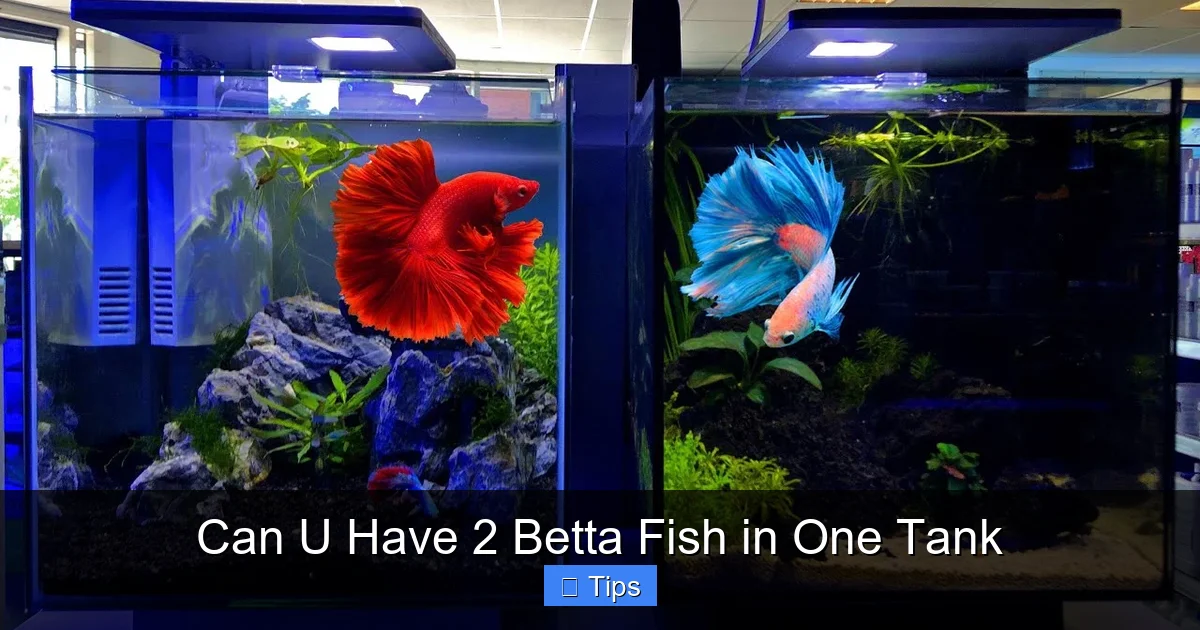
Before we dive into tank setups, we must understand the animal. The betta’s aggression is not a personality flaw; it’s an instinct. Their scientific name, Betta splendens, translates to “fighting fish.” This instinct is hardwired and, in males, is driven by high levels of testosterone. They flare ( puff out their gills and spread their fins) at their own reflections, at other fish, and even at you if you move too quickly near the glass. This flaring is a threat display, a warning that says, “This is my space.”

Visual guide about Can U Have 2 Betta Fish in One Tank
Image source: i.ytimg.com
The Gender Divide: Male vs. Female Bettas
Understanding the difference between male and female bettas is the first step in answering can u have 2 betta fish in one tank.
- Male Bettas: The classic, long-finned, flowing beauties. They are the poster children for betta aggression. Their fins are a target for nipping, and their very presence is a provocation to another male. Two males in the same tank will, with near 100% certainty, fight. They will bite fins, chase relentlessly, and eventually one will be severely injured or killed. There is no “getting used to each other.” This is a guaranteed bloodbath.
- Female Bettas: Females are shorter-finned and often have a more torpedo-shaped body. While they are less aggressively territorial than males, they still have a pecking order. They will establish a hierarchy, and this process can involve nipping and chasing. In a small tank, a dominant female can bully others to death. However, their social structure means that under very specific conditions, a group (a “sorority”) can sometimes coexist. This is the only scenario where keeping more than one betta in a single, undivided tank is even considered.
It’s a common myth that a male and female can live together peacefully. This is almost always false. The male will see the female as a threat to his territory or as a potential mate, leading to relentless harassment. The female may be injured or stressed to death. Breeding is a separate, controlled process that does not involve long-term cohabitation.
The Only Possible Scenario: The Female Betta Sorority
If someone tells you they have two bettas together, they are almost certainly referring to a sorority of female bettas. This is the only scenario where can u have 2 betta fish in one tank might be answered with a cautious “yes.” But it comes with a massive list of non-negotiable requirements. A sorority is not a casual setup; it’s a high-risk, high-maintenance project for experienced aquarists.
Visual guide about Can U Have 2 Betta Fish in One Tank
Image source: i.ytimg.com
Tank Size: Bigger is Not Just Better, It’s Mandatory
The single most important factor for a successful sorority is space. The common “minimum” of a 10-gallon tank is a death sentence for multiple females. The absolute, bare minimum is a 40-gallon long tank (at least 48 inches long). Why so big? Space allows fish to establish their own territories and, crucially, to escape from each other. In a small tank, there is no escape. The dominant fish can corner and relentlessly bully the others. A long tank provides horizontal swimming space and multiple visual barriers. A 40-gallon tank is not a guarantee of success, but a 10-gallon is a guarantee of failure.
The Importance of Structure and Planting: Creating a Maze
In a sorority tank, you must break the line of sight. A vast, open space is a boxing ring. Your tank must look like a dense underwater jungle. You need:
- Heavy Planting: Live plants are ideal (java fern, anubias, cryptocorynes, floating plants like frogbit or duckweed). They provide hiding spots and soften the water. High-quality silk plants are a decent substitute if you cannot use live plants.
- Abundant Hardscape: Use driftwood, rock piles, and ceramic caves to create a complex architecture. The goal is that a fish swimming through the tank should not be able to see from one end to the other without obstruction.
- Vertical Layers: Create different levels—some plants that reach the top, some mid-level, some on the bottom. This utilizes the entire water column and gives fish options.
Think of it as building a neighborhood with lots of alleys and backyards, not one giant, empty park.
The Magic Number: Why 5-6 Females?
You might think, “If two can fight, wouldn’t three be worse?” Actually, for sororities, the opposite is true. A group of 2 or 3 females is a recipe for disaster. With only two, one will dominate the other relentlessly. With three, two may gang up on the third. The recommended number is at least 5, ideally 6 or more. Why? With a larger group, aggression is dispersed. The dominant female’s attention is split among several subordinates. No single fish is picked on relentlessly because there are always other targets. The hierarchy stabilizes. Introducing fewer than five dramatically increases the risk of one fish being bullied to death.
The Introduction Protocol: A Neutral Ground
You cannot simply dump a new female into an established sorority. The introduction must be done in a completely rearranged tank. The day before adding new fish:
- Move all existing decorations, plants, and hardscape to completely new positions. This disrupts all established territories.
- Perform a water change to refresh the environment.
- Add all new fish at the same time, preferably in the evening or when the tank is dim.
- This “reset” means no fish has a “home” advantage. They are all equally disoriented and must establish new territories from scratch, which reduces initial, severe aggression.
For the first 24-48 hours, you must watch constantly. Have a backup tank or divider ready to instantly remove any fish that is being severely attacked (fins torn, hiding and unable to eat). Some nipping and chasing is normal as the pecking order is established, but you cannot tolerate injury.
The Risks and Realities: Why This Is So Hard
Even with a 50-gallon, jungle-like tank and 6 females, a sorority can fail. Bettas are individuals with strong personalities. You might have one overly aggressive female who will not tolerate any others. Stress from the constant social maneuvering can weaken immune systems, leading to diseases like ich or velvet. The “success” of a sorority is often a tense, fragile peace, not a harmonious friendship. You will see occasional chases. Your role as the owner is to be a vigilant peacekeeper.
Visual guide about Can U Have 2 Betta Fish in One Tank
Image source: petpad.net
Signs of a Failing Sorority
You must know when to intervene. These are red flags:
- Constant, Relentless Chasing: One fish is being chased to the point it cannot eat or rest for hours on end.
- Fin Damage: Torn, ragged, or missing fins are a clear sign of biting.
- Hiding 24/7: A fish that never comes out, is pale, and is thin from not eating is being bullied.
- Lethargy and Clamped Fins: General signs of severe stress and illness.
- Missing Fish: If a fish disappears, it may have been killed and eaten or buried in the substrate. Check filter intakes.
If you see these signs, you must have a hospital/quarantine tank ready to remove the victim immediately. Sometimes, the aggressor must also be removed and housed alone. A sorority is a dynamic experiment, not a set-it-and-forget-it display.
The Safe and Superior Alternative: Single Betta + Compatible Tank Mates
For 99% of people asking can u have 2 betta fish in one tank, the best answer is to keep one betta and provide it with peaceful, fast-moving tank mates. A single, well-cared-for betta in a community tank can be a spectacular and rewarding centerpiece. This fulfills your desire for a lively tank without the extreme risk of fighting.
The Perfect Tank Mate Checklist
Not all fish are safe. The ideal tank mate for a betta must be:
- Fast and Nimble: To dart away if the betta gets curious or aggressive.
- Non-Fin-Nippers: Bettas have long, flowing fins that look like targets. Avoid fish like tiger barbs or some tetras that are known to nip.
- Not Brightly Colored or Long-Finned: The betta may see a guppy with a big tail as a rival male. Stick to plain-colored, short-finned species.
- Not Bottom-Dwellers That Invade Space: Fish that constantly swim at the betta’s level are more likely to provoke a reaction.
- Require Similar Water Conditions: Bettas are tropical fish that prefer warmer water (78-80°F / 25.5-26.5°C).
Top Recommended Tank Mates for a Single Betta
In a properly cycled, heated, and filtered 10+ gallon tank, these species are your best bets (always research them individually first):
- Neon Tetras / Cardinal Tetras: A school of 6-10 will swim in the mid-levels, their small size and speed keeping them safe. They are a classic, colorful choice.
- Harlequin Rasboras: Similar to tetras, they are peaceful, active schooling fish that stay out of the betta’s way.
- Celestial Pearl Danios (CPD): Tiny, shy, and fast. They occupy the top levels and are excellent in a well-planted tank.
- Kuhli Loaches: Excellent for a 20+ gallon tank. These eel-like loaches are completely nocturnal, burrow in the substrate, and are utterly ignored by bettas.
- Amano Shrimp: Large, transparent shrimp that are great algae eaters. They are often too big to be considered food, but there’s no guarantee a betta won’t try.
- Snails: Ramshorn, nerite, or mystery snails are fantastic, slow-moving cleanup crew that bettas generally ignore.
Always acclimate your betta to the tank first and observe for several days before adding any other livestock. Be prepared to rehome tank mates if the betta shows persistent aggression.
The Divided Tank: A Compromise for Two Bettas
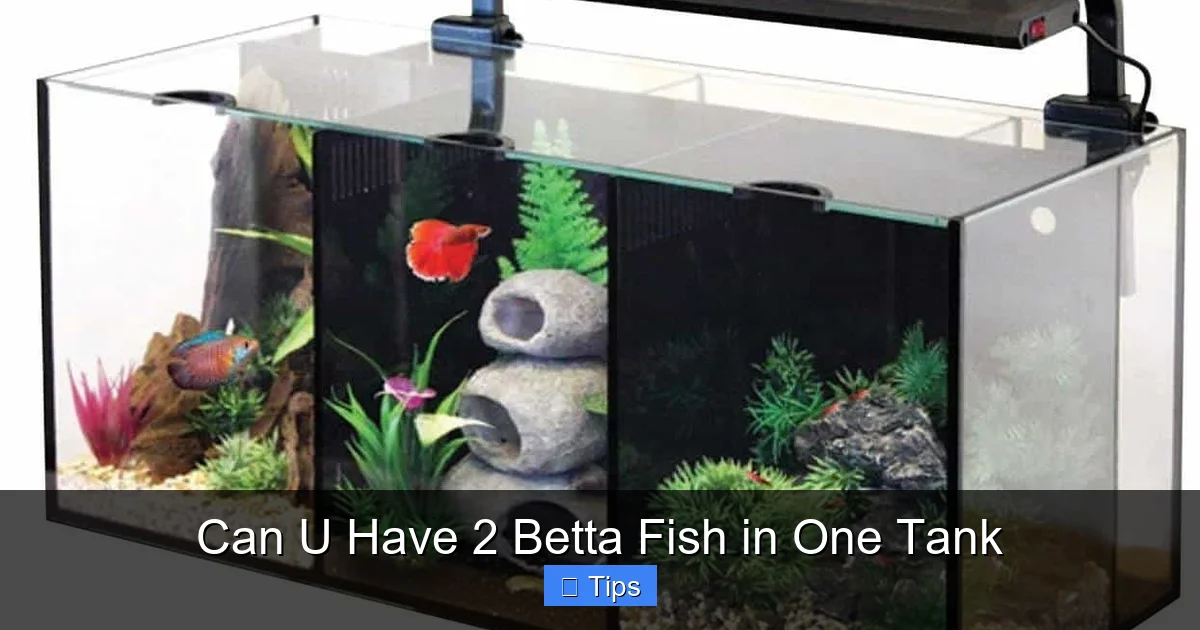
If you are determined to have two bettas in one tank, there is only one safe method: a permanent, solid divider. This is not a mesh or a gap; it must be a completely watertight barrier that prevents any fin-nipping through the holes. The divider must go from the substrate to the lid, creating two separate, fully functional compartments.
How to Set Up a Divided Tank
- Tank Size: You need a long tank, minimum 20 gallons long, but 30+ gallons is better. Each side must have its own filter/heater setup or a system that efficiently services both sides (like a canister filter with two intakes/outlets).
- The Divider: Use acrylic or thick glass sealed with 100% silicone aquarium sealant. You can buy commercial dividers or have one custom-cut. Test it for leaks before adding water.
- Equal Setup: Each side must have its own heater, filter output, and identical amounts of plants and hiding spots. One side cannot be “better” than the other.
- No Visual Contact: The divider must be opaque. You can paint the outside or use a background. If they can see each other constantly, they will flare and stress themselves out, even if they can’t physically fight.
A divided tank is more expensive (double the equipment) and more work to maintain, but it’s the only way to physically house two bettas in one tank structure without risking their lives. It answers the question can u have 2 betta fish in one tank with a qualified “yes, but only if they are permanently separated.”
Conclusion: Prioritizing the Betta’s Welfare
So, can u have 2 betta fish in one tank? The honest, responsible answer for the vast majority of hobbyists is no. The desire for a beautiful, bustling aquarium is wonderful, but it must never come at the cost of the animals’ safety and well-being. The image of two bettas swimming together is almost always a fantasy or a temporary, fragile situation bound to end in tragedy. The betta’s aggression is not something you can love or train out of them; it is a fundamental part of their biology.
Your best and safest path is to provide one betta with a stunning, planted, properly sized single-species home (5+ gallons) or to carefully select a few fast, peaceful tank mates for a single betta in a larger community. If your heart is set on having multiple bettas, invest the time, money, and space into a proper, large female sorority or a professionally divided tank. But go in with your eyes wide open, understanding the risks, the workload, and the high potential for failure. The kindest thing you can do for your betta is to respect its nature. In the end, a single, healthy, vibrant betta displaying its beautiful fins in a peaceful, stress-free environment is a far greater reward than a tank full of injured, stressed, and fighting fish. Choose the safe path. Your betta will thank you for it with a long, colorful life.
Frequently Asked Questions
Can a male and female betta live together?
No. A male betta will see a female as either a threat to his territory or a potential mate, leading to relentless harassment and injury. Breeding is a temporary, supervised process, not a permanent living arrangement.
What is the absolute smallest tank for a betta sorority?
While some claim 20 gallons, this is extremely risky and often leads to failure. The absolute minimum for a stable sorority is a 40-gallon long tank (48+ inches). Anything smaller makes it nearly impossible to establish territories and disperse aggression, leading to bullying and death.
Can I put two bettas in a tank with a solid divider?
Yes, this is the only safe way to house two bettas in the same tank structure. The divider must be completely watertight, extend from the substrate to the lid, and be opaque to prevent visual stress. Each side must have its own heater and filter output, and the tank must be large enough (20+ gallons long) to provide ample space on both sides.
How do I know if my sorority is failing?
Look for signsof relentless, constant chasing of one fish; torn or missing fins; a fish that is permanently hiding, pale, and not eating; lethargy; or a fish that goes missing. If you see any of these, you must immediately separate the aggressor or the victim into a hospital tank.
What are the best tank mates for a single male betta?
The best mates are fast, peaceful schooling fish that stay out of the betta’s way, such as a school of neon tetras or harlequin rasboras. Also consider Kuhli loaches (for 20+ gallon tanks), Amano shrimp, or nerite snails. Always introduce tank mates after the betta has established its territory and monitor closely for aggression.
Can I keep two female bettas in a 10-gallon tank?
No. A 10-gallon tank is far too small for even a sorority, let alone just two females. Two females in a small tank will almost certainly result in one relentlessly bullying and potentially killing the other. The minimum tank size for a sorority is 40 gallons, and you should start with at least 5-6 females to help disperse aggression.