Can U Put 2 Betta Fish in the Same Tank
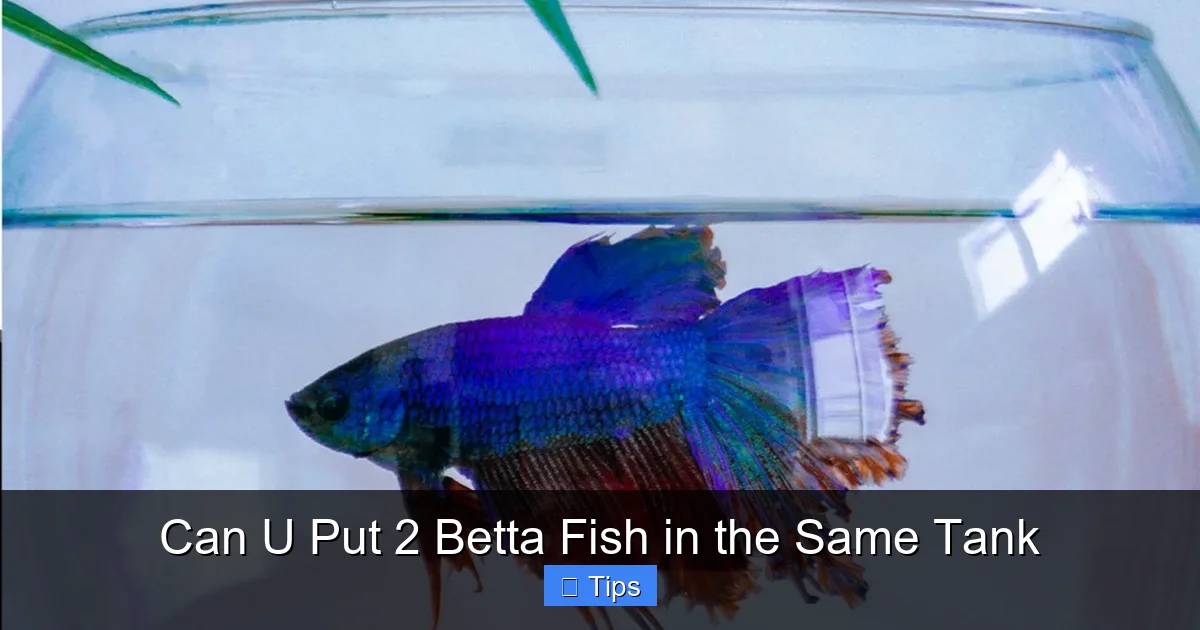
Putting two betta fish together is generally not recommended and is high-risk. While it’s possible under very specific, controlled conditions—typically only with females in a massive, heavily planted tank—male bettas are almost always too aggressive. Success requires a tank of 20+ gallons, meticulous setup, constant monitoring, and a solid backup separation plan. For 99% of hobbyists, keeping a single betta per tank is the safest and kindest choice.
So you’ve got that stunning, flowing-finned betta fish, and he (or she!) is the star of the show. You love watching him flare at his reflection and lazily drift among the plants. But then a thought creeps in: Can u put 2 betta fish in the same tank? It seems like it would be nice for them to have a friend, right? Maybe they’d keep each other company? This is one of the most common and dangerous questions in the aquarium hobby, and the answer is filled with critical nuance. The short, blunt truth is that for the overwhelming majority of aquarists, the answer is a firm no. However, there is a tiny, narrow path where cohabitation *might* work, and it’s a path littered with prerequisites, risks, and constant work. Let’s dive deep into the fiery, territorial world of the betta fish.
Key Takeaways
- Bettas are solitary and territorial by nature. Their aggressive instincts, especially in males, make shared tanks unpredictable and often dangerous.
- Tank size is non-negotiable. The absolute minimum for a *potential* sorority is a 20-gallon *long* tank; anything smaller guarantees conflict.
- Gender is the primary factor. Male-male pairs are a definitive no. Female-only groups (“sororities”) are the only marginally feasible option, but even they can fail.
- The tank must be a fortress of hiding spots. Dense plants, wood, and decor are essential to break line-of-sight and provide escape routes, not just decoration.
- You must be a constant, vigilant observer. Cohabitation requires daily, dedicated monitoring for the first weeks and indefinitely, with a backup plan ready at all times.
- A “peaceful” start doesn’t mean permanent peace. Betta aggression can flare up weeks or months later due to a new stimulus, so never let your guard down.
- For most people, one betta per tank is the only ethical choice. The risk of severe injury or death to your fish outweighs any perceived benefit of a shared tank.
📑 Table of Contents
- Understanding Betta Fish Temperament: The “Fighting” Spirit
- The Critical Role of Tank Size and Space: Why Bigger is Everything
- Gender Matters: Male vs. Female Betta Dynamics
- Creating a Peaceful Shared Environment: The Strict Protocol
- The Reality Check: When Cohabitation Fails
- Alternatives to Keeping Multiple Bettas Together
Understanding Betta Fish Temperament: The “Fighting” Spirit
To understand why keeping two bettas together is so tricky, we must first understand where they come from. The betta splendens, or Siamese fighting fish, earned its name for a reason. In the shallow, crowded rice paddies and stagnant puddles of Thailand, resources were scarce. These fish evolved to be fiercely territorial, defending their small patch of water against rivals to secure food and breeding rights. This instinct didn’t disappear with domestication; if anything, centuries of selective breeding for aggression in fighting rings amplified it. Your pet betta carries that same DNA.
It’s Not Personal; It’s Instinctual
When a betta sees another betta, it doesn’t see a potential friend. It sees an intruder in its territory. The response is immediate and biological: flaring gills, spreading fins to look larger, and an intense desire to chase and attack. This isn’t a behavioral problem you can train out; it’s a core part of their being. While individual personalities vary, the baseline aggression is a constant. Some bettas are “docile” by betta standards, meaning they might not initiate a fight, but they will almost certainly defend themselves if provoked, and any perceived provocation—a flash of color, a sudden movement—can be enough.
Debunking the “Loneliness” Myth
A major reason people ask Can u put 2 betta fish in the same tank is the belief that the fish is lonely. This is a classic case of anthropomorphism—attributing human emotions to animals. Bettas are not social creatures that form schools or pair bonds in the wild. They are solitary hunters who tolerate others only during brief breeding periods, and even then, the male often drives the female away afterward. Your betta is not sitting there hoping for a buddy. It is perfectly content to be the sole occupant of its domain, patrolling its plants and bubble nest (if male) without competition. Adding another betta doesn’t provide companionship; it provides a life-threatening stressor.
The Critical Role of Tank Size and Space: Why Bigger is Everything
If you’re still considering this, the number one rule is: tank size is everything. The common myth that a betta can live in a tiny vase or a 1-gallon bowl is harmful enough. When you introduce a second betta, space isn’t just a luxury; it’s the only possible buffer against constant conflict. In a small tank, there is no escape. The moment one fish decides to assert dominance, the other has nowhere to go. The result is relentless chasing, fin nipping, and severe stress that can lead to death from exhaustion, infection, or outright injury.

Visual guide about Can U Put 2 Betta Fish in the Same Tank
Image source: m.media-amazon.com
The Absolute Minimum: 20 Gallons Long
Forget the 5-gallon “community” tank you might see online. That is a death sentence for two bettas. The absolute, bare-minimum tank size that *might* allow for a female sorority is a 20-gallon long tank (30″ x 12″ x 13″). The “long” designation is crucial because it provides more horizontal swimming space at the water’s surface—a critical zone for bettas, who are labyrinth fish and need access to atmospheric air. A 20-gallon tall tank has less usable surface area and is less suitable. For context, this is a tank the size of a small dresser. A 29-gallon or larger is significantly better and provides a much higher chance of success.
How Space Reduces (But Doesn’t Eliminate) Conflict
In a 20+ gallon tank, you can create distinct territories. One betta might claim the left side with a particular log, the other the right side with a thicket of plants. The vast area means they can often avoid each other. However, this is not a guarantee. Bettas are curious and will patrol their entire domain. A 20-gallon tank simply makes it possible for them to have separate spaces; it doesn’t make it likely they will choose to. In a 10-gallon tank, there is no “your side” and “my side.” There is only “the tank,” and one will inevitably feel threatened by the other’s presence.
Gender Matters: Male vs. Female Betta Dynamics
This is the most critical distinction. The rules for males and females are completely different, and one is vastly more dangerous than the other.

Visual guide about Can U Put 2 Betta Fish in the Same Tank
Image source: m.media-amazon.com
Male Bettas: The Absolute “No”
Can you put two male betta fish in the same tank? The answer is an unequivocal never. Male bettas are the classic fighters. Their aggression is intense, persistent, and lethal. Even if you find two seemingly calm males, the moment one flares, the other will respond. They will fight until one is severely injured, often with torn fins, missing scales, and open wounds prone to deadly fungal or bacterial infections. There is no tank size large enough to safely house two mature male bettas together long-term. The “tank divider” is the only safe way to keep multiple males in the same aquarium system, as they cannot see or directly interact.
Female Bettas: The “Sorority” (With Extreme Caution)
Can you put two female betta fish together? The answer is maybe, under a very strict set of conditions, and it’s still high-risk. Female bettas can and do establish dominance hierarchies, a phenomenon often called a “sorority.” In the wild, females have larger, overlapping territories and tend to be less lethally aggressive than males. However, “less aggressive” does not mean “non-aggressive.” Females will still fight, bully, and injure each other to establish a pecking order. This “pecking order” establishment phase can be brutal and last for weeks, with constant chasing and nipping. Some fish may die from stress or injury during this period. Even after a hierarchy is set, a lower-ranking fish can be relentlessly harassed, leading to chronic stress and a shortened lifespan.
What About a Male and Female?
Can you put a male and female betta together? The answer is almost always no. The male will view the female as an intruder or, if he’s in breeding condition, as a potential mate. If he’s not ready to breed, he will attack her. If he is ready, he will build a bubble nest and try to herd her to it. During this courtship, the male can become extremely aggressive, biting and chasing the female to keep her near the nest. This is incredibly stressful for the female and can lead to her injury or death. Breeding should only be done in a controlled, temporary setup with a divider that can be removed for the act itself and then immediately replaced. It is not cohabitation.
Creating a Peaceful Shared Environment: The Strict Protocol
If, after understanding all the risks, you are determined to attempt a female sorority in a 20+ gallon long tank, you must follow a military-grade setup protocol. Think of it less as creating a home and more as building a neutral conflict-zone with maximum escape potential.
Visual guide about Can U Put 2 Betta Fish in the Same Tank
Image source: i.ytimg.com
Visual Barriers Are Your Best Friend
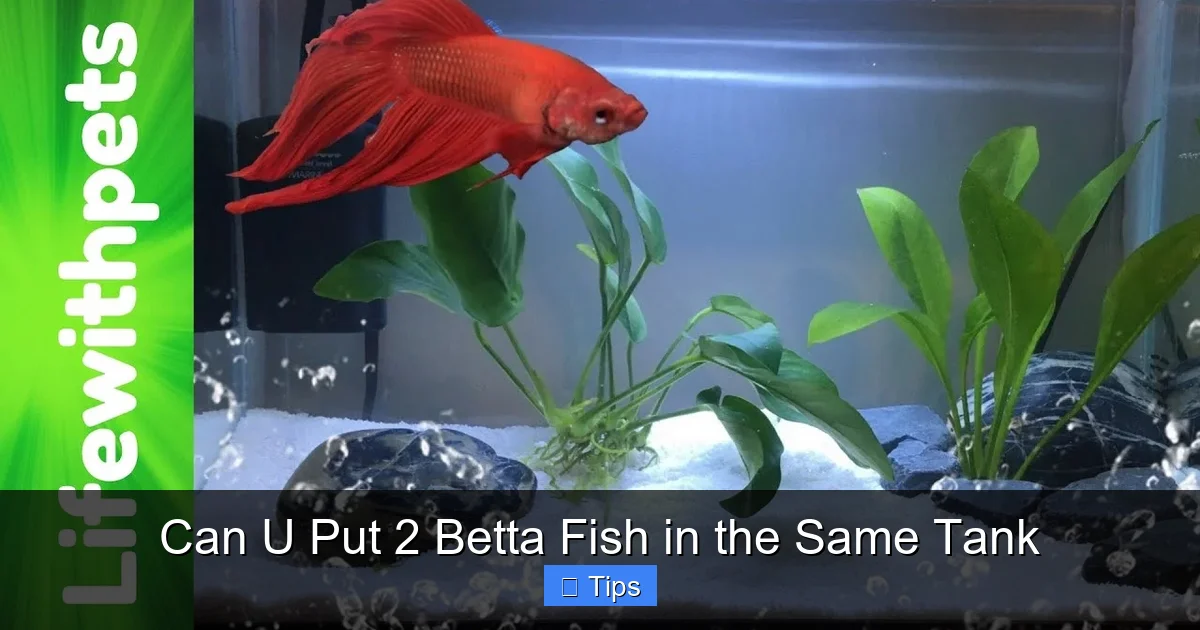
The single most important element is breaking the line of sight. Bettas attack what they see. You must use dense planting, large pieces of driftwood, and rock structures to create a maze. The goal is that a betta should not be able to see more than a few inches in any direction without a plant, leaf, or piece of wood blocking the view. Use tall, vertical plants like Anubias, Java fern, and Bacopa to create walls at the water’s surface, where bettas feel most vulnerable. Floating plants like Salvinia or Duckweed (in a controlled amount) are fantastic for this, creating a dappled, shaded ceiling that reduces aggression.
Simultaneous Introduction is Key
Never add a new betta to an established betta’s tank. You must introduce all the females at the exact same time. This prevents any one fish from establishing “ownership” of the entire tank before the others arrive. On introduction day, turn off the tank lights (they are less visible and aggressive in the dark), and gently add all the fish simultaneously. Use a divider initially for 24-48 hours so they can see but not touch, then remove it and watch closely for the first few hours.
Feeding Strategy to Reduce Competition
Food is a major trigger for aggression. You must scatter feed in multiple locations simultaneously—at opposite ends of the tank, in mid-water, and near the bottom. Use high-quality, varied foods (pellets, frozen or live daphnia, brine shrimp) to ensure all fish are well-fed and less likely to fight over resources. Observe during feeding to ensure no single fish is being bullied away from food.
The Reality Check: When Cohabitation Fails
No matter how perfect your setup, you must accept that Can u put 2 betta fish in the same tank might have a tragic answer. The signs of failure are clear, and you must act immediately.
Signs of Acute Aggression (Act NOW)
These are non-negotiable red flags requiring immediate separation:
- Flaring at each other constantly (not just a quick flare, but a sustained, aggressive display).
- Chasing where one fish relentlessly pursues another, not allowing it to rest.
- Fin nipping: you’ll see ripped, shredded, or ragged fins on one or both fish. This is a direct attack.
- Locked jaw fighting: they grasp each other’s mouths and wrestle. This is severe.
- One fish hiding constantly and not coming out to eat.
If you see any of these, you must have a backup tank (even a simple 5-gallon hospital tank with a heater and filter) ready to immediately remove the aggressor or the victim. Do not hope they will “work it out.” They won’t.
The Silent Killer: Chronic Stress
Even without overt fighting, a submissive fish can live in a state of perpetual fear. It will hide most of the time, lose color, refuse to eat, and become susceptible to disease like ich or velvet. Its lifespan will be drastically shortened. This is not a successful cohabitation; it’s a slow death sentence. Your role as the observer is to watch for a fish that is never at ease.
Alternatives to Keeping Multiple Bettas Together
Given the immense risk and effort, you are almost always better off exploring alternatives that provide visual stimulation without the threat of another betta.
The Perfect Betta Tank Mate: None
The safest, happiest tank for a betta is a single-species aquarium. A well-planted 5-gallon (minimum) or larger tank with a heater, gentle filter, and hiding spots is a paradise for a single betta. It will be curious, active, and display its full personality without stress. This is the gold standard of betta care.
If You Insist on “Friends”: Careful Community Tank Options
If you want a community tank with your betta, you must choose tank mates with extreme care. The rule is: no fish with long, flowing fins (they’ll be mistaken for another betta) and no fast, boisterous, fin-nipping fish. Excellent candidates for a 10+ gallon planted tank include:
- schooling fish like neon tetras or harlequin rasboras (6+ of a species, in a 20-gallon+)
- Bottom dwellers like corydoras catfish or kuhli loaches (5+ of a species)
- Peaceful, fast fish like ember tetras
- Snails (ramshorn, nerite) or shrimp (ghost, amano) (note: a large betta may eat smaller shrimp)
The same rules of heavy planting and ample space apply. Introduce the tank mates first, let them establish their school, and then add the betta last using a floating box or divider for a few days. Even then, you must monitor constantly. Some bettas will never tolerate tank mates.
Frequently Asked Questions
Can I put a male and female betta together to breed?
No, not as permanent cohabitants. Breeding should be done in a separate, dedicated tank with a divider that can be removed only for spawning under close supervision. The male is often aggressive toward the female before and after spawning, and keeping them together long-term will result in severe stress or injury to the female.
What fish can I safely put with my betta?
Focus on peaceful, fast-swimming, short-finned fish that occupy different tank levels. Good options for a 10+ gallon include small schools of neon tetras, harlequin rasboras, or ember tetras, and peaceful bottom-feeders like corydoras catfish. Always have a backup plan to separate them if aggression occurs.
How do I know if my bettas are fighting or just playing?
There is no “playing” with bettas. Flaring, chasing, and nipping are signs of aggression. If one fish is consistently hiding, has torn fins, or is being barred from food, this is bullying and must be addressed immediately by separating the fish.
My two female bettas seemed fine at first but now one is hiding. What happened?
This is a classic sign of a failed sorority. The dominant female has established her hierarchy and is now harassing the submissive one. The stressed, hiding fish will likely become sick and die if not separated. You must remove the aggressor or the victim to different tanks.
Is a 10-gallon tank big enough for two bettas?
Absolutely not. A 10-gallon tank is too small for even one betta to truly thrive, let alone two. The minimum for a potential, high-risk female sorority is a 20-gallon long tank. For a single betta, a 5-gallon is the absolute minimum, but 10 gallons is much better.
Do betta fish get lonely and need a friend?
No. This is a human projection. Bettas are solitary and territorial by nature. A single betta in a properly sized, enriched tank is not lonely; it is secure in its domain. Adding another betta introduces a lethal threat, not a friend.