Can Moss Balls Kill Betta Fish
Moss balls, specifically Marimo moss balls, are not inherently lethal to betta fish. However, they can become a serious threat if they decompose, foul the water, or if a betta becomes entangled. The danger lies not in the moss ball itself, but in poor maintenance and owner oversight. With proper quarantine, regular care, and close observation, moss balls can be a safe and enriching tank addition for your betta.
You’ve seen the adorable, fuzzy green spheres in pet stores and online. “Marimo moss balls” they’re called, touted as the perfect, low-maintenance companion for a betta fish tank. They look natural, gentle, and like a tiny piece of the wild for your solitary prince. But a nagging question whispers in the back of your mind: Can moss balls kill betta fish? It’s a valid concern. The internet is full of horror stories and conflicting advice. Let’s cut through the noise and get to the bottom of this once and for all. The answer is not a simple yes or no—it’s a nuanced story of biology, chemistry, and responsible pet ownership.
As a betta enthusiast, your number one job is to be a detective and a guardian. Bettas are stunning, personality-filled fish, but they are also living in a fragile, man-made ecosystem. Every item you introduce—from a plastic plant to a moss ball—changes that ecosystem. Understanding the true relationship between a moss ball and your betta is the key to providing a safe, stimulating, and long-lasting home. This guide will walk you through everything you need to know, from what a moss ball actually is to the exact steps you must take to ensure it becomes a beautiful feature, not a hidden hazard.
Key Takeaways
- Understanding can moss balls kill betta fish: Provides essential knowledge
📑 Table of Contents
- What Exactly Is a “Moss Ball”? Demystifying the Marimo
- Why Bettas and Moss balls Seem Like a Perfect Match
- The Real Dangers: How a Moss Ball Could Harm Your Betta
- The Safe Introduction: A Step-by-Step Guide to Adding a Moss Ball
- Essential Ongoing Care: Preventing a Moss Ball from Becoming a Weapon
- Alternatives and When to Say No: Is a Moss Ball Right for Your Betta?
- The Final Verdict: Knowledge is the Best Prevention
What Exactly Is a “Moss Ball”? Demystifying the Marimo
First, we need to clear up a major point of confusion. The “moss balls” sold for aquariums are almost universally Marimo moss balls (Aegagropila linnaei). They are not made of moss. They are not a ball of algae wrapped around a rock. They are a rare, slow-growing form of filamentous green algae that naturally forms into perfect spheres due to water movement. They are a living organism, a colony of algae, and they behave like one.
The Living, Breathing Sphere
Inside that fuzzy exterior, the algae filaments are photosynthesizing and respiring just like a plant. They absorb nitrates and phosphates from the water—a minor form of natural filtration—and they produce oxygen during the day. They are native to Lake Akan in Japan and a few other cold, deep lakes, where they can live for over a hundred years, growing slowly and being rolled by the currents. In your warm betta tank, their life cycle is accelerated, and their needs are different. This fundamental understanding is crucial: you are keeping a living colony of algae, not a decorative inert object.
Not All Green Balls Are Marimo
A critical warning: cheap imitations exist. Some “moss balls” are actually balls of Java moss or other aquatic plants tied or wrapped around a stone. These will eventually unravel, releasing loose plant matter that can clog filters and decompose rapidly. Always buy from a reputable source that explicitly sells “Marimo moss balls” (Aegagropila linnaei). The real thing feels fuzzy and velvety, not like a clump of separate strands. If it unravels easily in your hand, it’s not a true Marimo and is a potential hazard.
Why Bettas and Moss balls Seem Like a Perfect Match
The pairing is popular for good reasons. Bettas are curious, intelligent fish with a strong territorial instinct. A bare tank is a boring, stressful tank for a betta. Moss balls provide a soft, natural-looking object that moves gently with the filter current. Bettas will often investigate them, rest on them, and even “play” by nudging them around. For a betta owner, they offer aesthetic appeal and a perceived natural element.
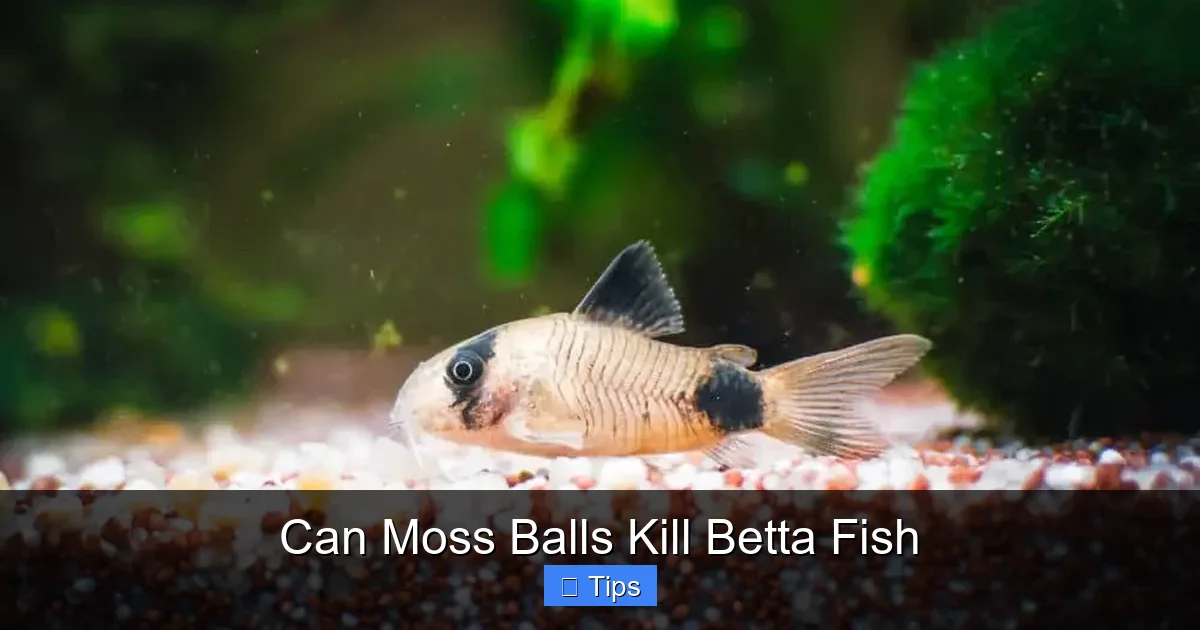
Visual guide about Can Moss Balls Kill Betta Fish
Image source: efishkeeping.com
Gentle Texture and Safe Exploration
Unlike plastic plants which can have sharp edges, a healthy Marimo is soft. A betta can rest against it without risk of fin damage. This is a major plus. The ball’s movement is also intriguing. Bettas are attracted to things that move, and a moss ball rolling slowly across the substrate is a safe, non-threatening “toy.” It can help alleviate boredom and reduce stress, which is a leading cause of fin biting and lethargy in bettas.
A Natural Filtration Myth
Many sellers claim moss balls are powerful filters. This is a significant exaggeration. While they do absorb some nitrates, their capacity is minuscule compared to a proper bio-filter or even a single healthy live plant. Relying on a moss ball for water quality is a recipe for disaster. Your betta’s tank still needs a cycled filter, regular water changes, and testing. Thinking of a moss ball as a filter is like thinking a houseplant can replace your HVAC system—it’s a small help, but not a solution.
The Real Dangers: How a Moss Ball Could Harm Your Betta
Now, to your core question. Can moss balls kill betta fish? Yes, they absolutely can, but not through any active aggression. The danger is passive and stems from neglect or unforeseen circumstances. The primary threat is water quality degradation.
Visual guide about Can Moss Balls Kill Betta Fish
Image source: tankofish.com
1. The Silent Killer: Decomposition and Toxic Gas Buildup
This is the number one, most documented way moss balls cause fish deaths. A Marimo moss ball is a living organism that will die. In a warm betta tank (78-80°F is ideal), its metabolism is higher, and its lifespan is shorter than in its native cold lake. As it dies, it decomposes.
- Process: Decomposition is carried out by bacteria, which consume the dying algae and produce massive amounts of ammonia as a waste product.
- Result: Ammonia is extremely toxic to fish, even at low levels. It burns gills, causes organ damage, and leads to rapid death. A decomposing moss ball can turn a perfectly stable tank toxic within 24-48 hours.
- Signs: The moss ball will turn from a vibrant green to brown or black. It will become mushy, disintegrate, and may emit a foul, earthy odor. The water may become cloudy.
If you see these signs, immediately remove the moss ball and perform a 50% water change. Test your water parameters immediately for ammonia, nitrite, and nitrate.
2. Physical Entanglement and Fin Damage
This is less common but physically possible. A healthy Marimo is a dense, cohesive ball. A dying one becomes soft, stringy, and fibrous. If a betta, especially a long-finned variety like a Halfmoon, becomes overly interested and tries to swim through or rest in the disintegrating mass, its delicate fins can snag. This can cause:
- Torn or shredded fins.
- Stress from being trapped.
- Increased susceptibility to fin rot from the injury and poor water quality from the decomposing matter.
While a betta is unlikely to “drown” in a moss ball, the stress and injury from entanglement in a decaying mass can be fatal, especially in a already compromised fish.
3. Introducing Pests and Unwanted Organisms
Moss balls are natural ecosystems. They can harbor tiny organisms like hydra, planaria, detritus worms, or even tiny snail eggs. While most are harmless in small numbers, a population explosion of hydra can sting and stress a betta. Planaria are flatworms that can be a symptom of poor water quality and may feed on fish mucus or eggs. The risk comes from not quarantining the moss ball before adding it to your display tank.
4. Oxygen Depletion at Night
Like all plants, moss balls respire 24/7. During the day, photosynthesis produces more oxygen than they consume. At night, with no light, they only respire, consuming oxygen and producing carbon dioxide. In a very small, closed tank with no surface agitation or aeration, a large mass of any live plant (or algae) could potentially contribute to oxygen depletion overnight. This is extremely rare in a typical betta tank with a filter or air stone, but it’s a theoretical risk in a sealed “nano” bowl, which is already an unsuitable environment for a betta regardless of a moss ball’s presence.
The Safe Introduction: A Step-by-Step Guide to Adding a Moss Ball
Armed with the knowledge of risks, you can now take proactive steps to ensure your moss ball is a benefit, not a threat. The process of introduction is non-negotiable for safety.
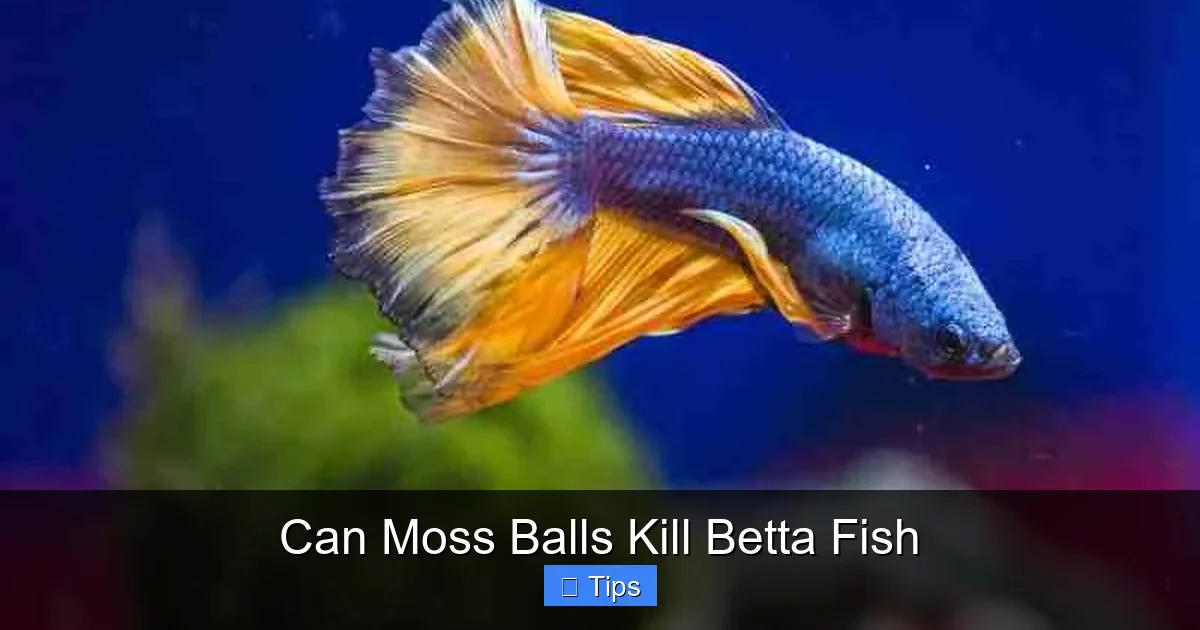
Visual guide about Can Moss Balls Kill Betta Fish
Image source: fishkeepingwisdom.com
Step 1: The Quarantine Tank (Non-Negotiable)
Never, ever take a moss ball from the store bag and drop it directly into your betta’s tank. You must quarantine it in a separate container (a clean glass jar or small tank is fine) for at least 2-4 weeks.
- Purpose: To observe it for signs of decay, to allow any hitchhiking pests to emerge and be dealt with, and to ensure it is a healthy, living Marimo.
- Setup: Use dechlorinated water at the same temperature as your betta tank. Place it in a location with indirect light—direct sunlight will cause explosive, unhealthy algae growth on its surface.
- Observation: Each day, gently roll it between your palms. It should feel firm and spring back. The color should be a deep, forest green throughout. Any brown, mushy spots are a red flag.
Step 2: The Pre-Insertion Rinse and Roll
After quarantine, give it a final rinse in a bowl of tank water (not tap water, which contains chlorine). Gently squeeze out excess water. Then, give it a few firm rolls in your hands. This helps dislodge any trapped detritus or dead algae on the surface and stimulates its natural movement pattern.
Step 3: The Introduction and Initial Observation
Place the moss ball on the substrate away from your betta’s favorite resting spot initially. Turn off the tank lights for an hour to let the water settle. Then, watch closely for the next few hours.
- Does your betta flare at it? This is normal curiosity.
- Does it try to bite or tear at it? Some bettas are destructive. If so, you may need to remove it.
- Does it rest on it peacefully? Excellent.
Leave the lights on for a normal photoperiod that day to observe its reaction under light.
Essential Ongoing Care: Preventing a Moss Ball from Becoming a Weapon
The moment you place that moss ball in the tank, your maintenance routine must expand. Neglect is what turns a safe item deadly.
The Weekly Ritual: Rolling, Rinsing, and Rotating
Once a week, perform this trio of tasks:
- Remove and Roll: Take the moss ball out. Gently roll it firmly between your palms for 30 seconds. This maintains its spherical shape, exposes all sides to light evenly, and squeezes out trapped waste and dead algae.
- Rinse: Rinse it in a bowl of your tank’s water (water you’ve just removed during a water change is perfect). Gently squeeze it a few times to release the dirty water. Do not use tap water.
- Inspect: Look for any soft, brown, or black spots. If you find one, you can try to gently squeeze that area to expel the decay. If a large portion is mushy, discard the entire ball immediately.
- Rotate: Place it back in a slightly different position in the tank to ensure even light exposure and prevent flat spots.
Water Changes Are Your Primary Defense
Because moss balls absorb nitrates, they are an indicator of water quality. If your tank has high nitrates, the moss ball will absorb them and may grow faster or develop brown tips. However, this does not mean it’s cleaning the water effectively. Your weekly 25-50% water change is still the most critical task. This dilutes any ammonia that might be leaching from a slowly dying moss ball and keeps overall water parameters pristine for your betta.
Lighting: The Goldilocks Principle
Too little light, and the moss ball will slowly starve and turn brown, beginning to die. Too much light (especially direct sunlight or high-intensity LEDs for long periods), and it will encourage nuisance algae (like hair algae) to grow *on* its surface, suffocating it. The sweet spot is the same as your betta’s: ambient room light or a tank light on for 8-10 hours a day. If you see brown tips, it may need slightly more light. If you see green hair-like strands erupting from it, it’s getting too much light and needs to be moved to a shadier spot.
Alternatives and When to Say No: Is a Moss Ball Right for Your Betta?
Despite our best efforts, a moss ball might not be the right choice for every betta or every setup.
The Obsessive Bettas
Some bettas become utterly fixated on a moss ball. They will spend all day pushing it, biting it, and guarding it. This can lead to:
- Fin damage from constant interaction with a potentially rough surface.
- Stress from the constant activity and territorial defense.
- The moss ball being destroyed quickly, accelerating its decay.
If your betta shows signs of obsession—constant chasing, refusal to eat, frantic guarding—remove the moss ball. A bored betta needs other enrichment: a floating log, a gentle bubble wand, or safe, silk plants to explore.
The Nano Tank Trap
In a truly small tank (under 2 gallons), the bioload of a betta is already a strain. Adding any living organism that will eventually die and decompose adds a significant risk factor. The smaller the water volume, the faster toxins build up. In a nano setup, the risk/reward ratio often leans toward risk. A healthy, well-maintained 5+ gallon tank provides a much safer buffer.
Safer Alternatives for Natural Décor
If you want the natural look without the decomposition risk, consider:
- Live Plants: Anubias or Java fern attached to driftwood. They are truly alive, provide better filtration, and are less likely to suddenly die and rot. (Require more knowledge but are rewarding).
- High-Quality Silk Plants: Modern silk plants are incredibly realistic and soft. Look for ones with no rigid plastic stems inside the leaves.
- Indian Almond Leaves: A single, pre-boiled leaf provides natural tannins, a hiding spot, and a gentle surface. It will decompose slowly over weeks, which is a controlled and expected process that benefits the water, unlike sudden moss ball death.
The Final Verdict: Knowledge is the Best Prevention
So, can moss balls kill betta fish? The definitive answer is: Yes, but only through owner negligence or unforeseen decay. A healthy, well-maintained Marimo moss ball in a properly cycled and filtered tank is a safe, fascinating companion for a betta. The moss ball is not a ticking time bomb; it is a living barometer of your tank’s health and your diligence.
The horror stories you read are almost always traceable to one of three failures: introducing an already dying or fake moss ball, failing to perform weekly maintenance on the moss ball itself, or neglecting overall tank water changes and testing. Your betta’s safety is in your hands. By quarantining, inspecting weekly, maintaining excellent water quality, and observing your fish’s behavior, you mitigate the risks almost entirely. A moss ball can be a beautiful, dynamic piece of living décor that provides your betta with gentle stimulation. Treat it with the respect it deserves as a living organism, and it will be a wonderful, low-risk addition to your aquatic world. Ignore its needs, and it can indeed become a silent killer. Choose to be the informed, proactive guardian your betta needs.
Frequently Asked Questions
Are moss balls toxic to betta fish?
No, a living, healthy Marimo moss ball (Aegagropila linnaei) is non-toxic to betta fish. The danger arises when the moss ball dies and decomposes, releasing harmful ammonia into the water, which is toxic to all fish.
How often should I check my moss ball for decay?
You should inspect your moss ball thoroughly at least once a week during your regular tank maintenance routine. Look for any soft, brown, or black mushy spots, and check for a foul odor. Any sign of decay means it must be removed immediately.
Can my betta fish get stuck in a moss ball?
It is possible but rare. A healthy, firm moss ball is too dense for a betta to get stuck in. However, a decaying moss ball becomes soft and stringy, and a long-finned betta could potentially snag a fin, causing injury or stress.
Do I need to do anything special when first adding a moss ball to my betta tank?
Yes, absolutely. You must first quarantine the moss ball in a separate container for 2-4 weeks. This allows you to confirm it is healthy and not harboring pests like hydra or planaria that could harm your betta. Never add it directly from the store bag.
How do I know if my moss ball is dying?
Signs of a dying moss ball include turning from vibrant green to brown or black, becoming mushy or soft to the touch, disintegrating, and emitting a foul, earthy odor. If you observe any of these, remove it from the tank immediately and perform a water change.
Can a moss ball replace my filter or water changes?
No. Moss balls absorb a very small amount of nitrates, but they are not a substitute for a cycled biological filter or regular weekly water changes. Relying on a moss ball for water quality will lead to toxic conditions for your betta.