Do Betta Fish Do Well With Other Fish Safe Tank Tips
Do betta fish do well with other fish is a common question for aquarists. The answer depends on tank size, species selection, and careful planning. This guide will show you how to create a safe, peaceful community tank.
Many fish keepers wonder, do betta fish do well with other fish? The answer is not a simple yes or no; it depends on careful planning and understanding of betta behavior. In this comprehensive guide we will explore the key factors that influence compatibility, suggest suitable tank mates, and provide step‑by‑step advice for creating a harmonious community aquarium. By the end of this article you will know how to assess your betta’s temperament, choose appropriate companions, design a tank that reduces aggression, and maintain water quality for a healthy environment.
Key Takeaways
- Understanding betta temperament: Recognizing territorial behavior helps you choose appropriate tank mates.
- Choose compatible species: Peaceful fish like neon tetras, cory catfish, and harlequin rasboras work well.
- Provide adequate space: A minimum of 10 gallons reduces stress and aggression.
- Maintain water quality: Regular testing and weekly water changes keep ammonia and nitrite low.
- Monitor aggression: Watch for signs of stress and be ready to separate fish if needed.
📑 Table of Contents
- Do Betta Fish Do Well With Other Fish?
- Understanding Betta Fish Behavior
- Choosing Compatible Tank Mates
- Tank Setup for a Peaceful Community
- Water Quality and Testing
- Aquarium Cycling
- Quarantine and Disease Prevention
- Enrichment and Social Interaction
- Diet and Nutrition
- Managing Aggression
- Common Mistakes to Avoid
- Expert Tips for Success
- Comparison of Compatible Species
- Conclusion
Do Betta Fish Do Well With Other Fish?
Understanding Betta Fish Behavior
Betta fish, particularly males, are known for their territorial nature. They defend a specific area of the tank and may display aggressive behavior toward any fish that enters their space. Recognizing these instincts is the first step toward successful cohabitation. Male bettas are often more aggressive than females, but even females can establish a hierarchy within a group. Betta fish aggression can be triggered by visual cues, such as seeing another fish through the glass, or by physical proximity. In confined spaces, social interaction can become tense if the tank does not provide enough hiding spots and visual barriers. Betta fish also communicate through body language, flaring their gills and fins to signal dominance or submission. Understanding these signals helps you predict when a confrontation might occur and intervene appropriately.
Instincts and Social Structure
- Territorial claims: A betta will often choose a spot near a plant or decoration and guard it aggressively.
- Flaring and chasing: When threatened, bettas flare their fins and may chase intruders.
- Stress signals: Rapid gill movement, hiding, and loss of appetite indicate that the fish feels unsafe.
Understanding these cues helps you intervene before injuries occur.
Choosing Compatible Tank Mates
Selecting the right fish is crucial. The ideal tank mate shares similar water parameters, has a peaceful disposition, and does not pose a threat to the betta’s long fins. When evaluating potential companions, consider their adult size; a fish that grows large can intimidate a small betta. Also, avoid species with long, flowing fins, as bettas may mistake them for rivals and attack. Fish that are known to nip fins, such as some barbs or certain tetras, should be avoided. Additionally, very active swimmers may stress the betta by constantly occupying its space. Research each species’ temperature range, pH preference, and hardness to ensure they match the betta’s needs. If you are unsure, consult experienced keepers or reputable sources. For a detailed look at how bettas interact with each other, see our article on Do Betta Fish Get Along With Each Other. If you are considering shrimp, you might find Do Betta Fish Do Well With Shrimp useful. For insights on tetras, check Do Betta Fish Get Along With Tetras.
Peaceful Species Recommendations
- Neon Tetra – Small, schooling fish that stay near the middle of the tank. They are active but not aggressive.
- Cory Catfish – Bottom‑dwellers that are gentle and enjoy sandy substrates. They help clean leftover food.
- Harlequin Rasbora – Active swimmers that form tight schools, reducing individual attention from the betta.
- Otocinclus Catfish – Algae eaters that remain small and non‑aggressive, ideal for cleaning glass.
- Amano Shrimp – Shrimp can be a good addition, but they may be eaten if the betta is large. Introduce them when the betta is still small.
Tank Setup for a Peaceful Community
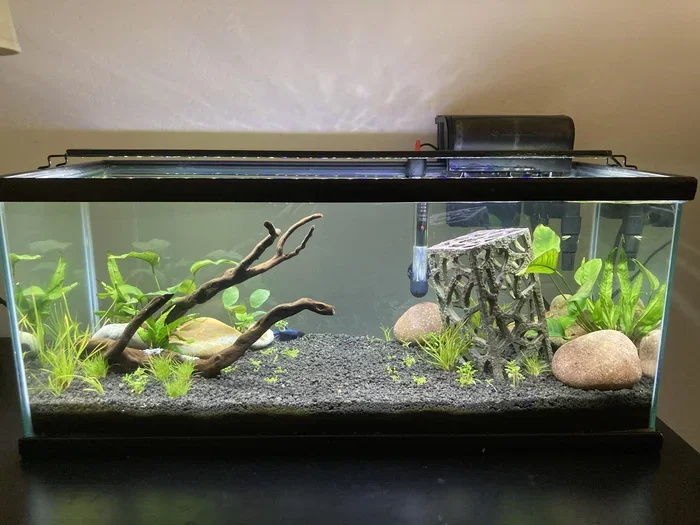
The physical layout of the aquarium plays a major role in reducing tension. A well‑planned tank offers escape routes and visual barriers. The arrangement should provide multiple hiding spots and break line of sight between fish. Consider using a background image or attaching plants to the glass to create a sense of depth. Create a central open area for swimming, surrounded by plants and decorations. Use a substrate that is smooth to prevent fin damage; sand or fine gravel is ideal. If you keep live plants, consider using a CO2 system, though it is optional. Ensure the tank is securely covered to prevent bettas from jumping; a lid with small gaps for filtration equipment is recommended. Maintain a consistent light cycle of 8-10 hours to simulate natural day‑night rhythm, and use a timer to avoid fluctuations.
Size and Space
A minimum of 10 gallons is recommended for a single betta with a few small tank mates. Larger tanks, such as 20 gallons, provide more stability and allow for a richer community. Overcrowding increases waste and aggression, so always research the adult size of each species before adding them. A general rule is one inch of fish per gallon, but bettas require extra space due to their territorial nature. Provide plenty of swimming room while also offering retreats.
Filtration and Heater
Efficient filtration keeps ammonia and nitrite levels low, which is essential for fish health. Choose a filter with a gentle flow; bettas prefer calm water. A sponge filter or a hang‑on‑back filter with an adjustable flow can work well. A reliable heater maintains a temperature between 76°F and 82°F, as sudden temperature swings can cause stress. Place the heater near the filter outlet to distribute heat evenly and avoid creating hot spots. Clean the filter media regularly, but only when flow decreases; use tank water to rinse the media to preserve beneficial bacteria.
Plants and Hiding Spots
Live plants like Java fern, Anubias, and Vallisneria provide cover and improve water quality. They also absorb nitrates, helping to maintain water parameters. Artificial plants can also serve as hiding spots. Adding rocks, driftwood, or ceramic caves creates natural boundaries that break line of sight, helping to reduce territorial disputes. Arrange the decor so that each fish has a retreat, but also leave open swimming areas. Consider using floating plants like duckweed or frogbit to provide shade and additional cover near the surface.
Nitrogen Cycle and Water Quality
Understanding the nitrogen cycle is fundamental. Fish waste produces ammonia, which is converted to nitrite and then to nitrate by beneficial bacteria. Regular testing and weekly water changes of 25‑30% keep these compounds at safe levels. Aim for 0 ppm ammonia, 0 ppm nitrite, and nitrate below 40 ppm. Use a liquid test kit for accurate readings, and avoid overcleaning the filter, which can remove beneficial bacteria. When performing water changes, match the temperature of the new water to the tank to prevent shock.
Water Quality and Testing
Maintaining stable water parameters is essential for the health of all fish. Use a liquid test kit to monitor ammonia, nitrite, nitrate, pH, and hardness. Ideal ranges for a community tank with bettas are: ammonia 0 ppm, nitrite 0 ppm, nitrate below 40 ppm, pH 6.5‑7.5, and hardness 5‑15 dGH. Perform weekly water changes of 25‑30% to keep these values in check. Test ammonia and nitrite daily during the first few weeks after adding fish. Once the tank is established, test weekly. If you notice a spike in ammonia, perform an immediate water change. Use a dechlorinator when adding tap water to remove chlorine and chloramines. Consider using a water conditioner that also detoxifies heavy metals. If the pH is too high, you can add driftwood or use a pH‑lowering product; if it is too low, crushed coral or limestone can raise it.
Aquarium Cycling
The nitrogen cycle is a biological process that converts toxic ammonia into less harmful substances. Before adding fish, you must cycle the tank by introducing a source of ammonia and allowing beneficial bacteria to establish. This process, known as aquarium cycling, typically takes 4‑6 weeks. During this period, test water regularly and avoid adding too many fish at once. A fishless cycling method using pure ammonia is often recommended to prevent fish from being exposed to high levels of toxins. During fishless cycling, add a pure ammonia source such as ammonium chloride. Monitor ammonia levels; they should rise and then fall as bacteria develop. Nitrite will appear and eventually convert to nitrate. The cycle is complete when you can add ammonia and it disappears within 24 hours. Avoid adding fish until the cycle is complete.
Quarantine and Disease Prevention
New fish should be quarantined in a separate tank for 2‑3 weeks. This prevents the introduction of pathogens such as ich or velvet. During quarantine, observe the fish for any signs of illness and treat if necessary. Use separate equipment for the quarantine tank to avoid cross‑contamination. Common ailments include fin rot, ich, and velvet. If you suspect disease, consult a veterinarian or use over‑the‑counter treatments. Maintain a clean quarantine tank with regular water changes. After treatment, perform a final water change before introducing the fish to the main tank. After the quarantine period, acclimate the fish slowly to the main tank by floating the bag for 15 minutes and gradually mixing tank water to reduce stress.
Enrichment and Social Interaction
Providing enrichment helps reduce boredom and aggression. Include floating plants, gentle water movement, and varied feeding methods. Some bettas enjoy interacting with their owners, but always supervise any direct interaction to prevent injury. You can also introduce small toys or mirrors for short periods to stimulate the fish, but avoid prolonged exposure as it may increase stress. Social interaction among tank mates should be encouraged by providing enough space and visual barriers. Rotate toys or decorations to keep the environment novel. Use a mirror for short periods to encourage natural flaring behavior, but limit exposure. Provide a variety of foods to stimulate hunting instincts. Some keepers report that bettas enjoy watching their reflection, but this can be stressful if overdone.
Diet and Nutrition
A balanced diet supports immune function and reduces stress. Offer high‑quality pellets, frozen bloodworms, and occasional vegetable matter. Overfeeding can lead to poor water quality, so feed only what the fish can consume in two minutes, once or twice daily. Vary the diet to include gut‑loaded insects, which provide extra nutrition. Avoid feeding too many bloodworms, as they are high in fat. Include occasional fasting days to prevent constipation. For vegetable matter, blanch and cool before feeding. Consider adding a multivitamin to the food for extra nutrients. Avoid feeding too many proteins, as excess can increase ammonia production.
- Protein sources: Bloodworms, tubifex, and brine shrimp.
- Vegetable matter: Blanched peas, zucchini, or spirulina flakes.
- Feeding schedule: Small meals twice a day, removing any uneaten food.
Managing Aggression
Even with careful planning, some aggression may occur. Recognizing early signs allows you to take action before injuries happen. Aggression can escalate quickly, so it is important to monitor the tank daily, especially during feeding times when competition for food is highest. A breeding box can isolate a betta while allowing it to see other fish. Use the box for short periods to reduce stress. If using a divider, ensure it is secure and cannot be pushed by the fish. Monitor the divider for any signs of wear. In some cases, rearranging the tank layout can disrupt established territories and reduce tension.
Signs of Stress
- Excessive fin flaring
- Chasing or nipping
- Hiding for long periods
- Rapid breathing
Separation Techniques
- Use a fish tank divider to physically separate the betta.
- Add more plants or decorations to create visual barriers.
- Re‑arrange the tank layout to disrupt established territories.
- If aggression persists, remove the offending fish to a separate tank.
Common Mistakes to Avoid
Many beginners make errors that can jeopardize the health of their fish. Being aware of these pitfalls helps you maintain a stable environment. One common mistake is adding too many fish at once, which can overwhelm the biological filter and cause ammonia spikes. Another is neglecting to acclimate new fish properly, leading to shock and disease. Overcleaning the tank can also remove beneficial bacteria, leading to ammonia spikes. Only clean the filter when flow decreases; use tank water to rinse the media. Avoid using soap or chemicals on any tank equipment. When changing water, match the temperature of the new water to the tank. Using tap water without a dechlorinator can harm fish.
- Overstocking: Too many fish increase waste and aggression.
- Mismatched water parameters: Different species may require different pH or hardness levels.
- Ignoring aggression signs: Early flaring or chasing should prompt separation.
- Skipping the quarantine period: New fish should be quarantined for 2‑3 weeks to prevent disease transmission.
Common Mistakes Checklist
- Adding fish without researching their adult size and temperament.
- Using a filter that creates strong currents, which bettas dislike.
- Forgetting to acclimate new fish slowly to the tank’s water conditions.
- Overcleaning the tank, which removes beneficial bacteria.
- Using tap water without a dechlorinator, which can harm fish.
Expert Tips for Success
Experienced aquarists recommend the following strategies to increase the odds of a peaceful community. They often keep a log of water parameters and fish behavior to identify patterns early. Additionally, they may use a dimmable light to simulate natural day‑night cycles, which can reduce stress. Joining an online forum can provide valuable insights from experienced keepers. Sharing your logs with the community can help you troubleshoot issues. By staying observant and proactive, you can maintain a healthy and harmonious tank.
- Start slow: Introduce one or two tank mates at a time, allowing the betta to adjust.
- Use visual barriers: Background images or plants can make the tank feel larger and reduce perceived threats.
- Monitor feeding: Ensure all fish receive food; bettas may dominate feeding areas.
- Consider a divided tank: For multiple bettas, a divider can prevent direct contact while allowing them to see each other.
Comparison of Compatible Species
| Species | Size | Temperament | Water Parameters | Compatibility Notes |
|---|---|---|---|---|
| Neon Tetra | 1.5 inches | Peaceful | pH 6.0‑7.0, temp 70‑80°F | Good with bettas if plenty of hiding spots |
| Cory Catfish | 2‑3 inches | Peaceful, bottom‑dweller | pH 6.5‑7.5, temp 72‑78°F | Needs sandy substrate to protect barbels |
| Harlequin Rasbora | 2 inches | Peaceful, schooling | pH 6.0‑7.5, temp 72‑80°F | Best in groups of 6 or more |
| Amano Shrimp | 2‑3 inches | Peaceful, algae eater | pH 6.5‑7.5, temp 72‑82°F | May be eaten by large bettas; introduce when betta is small |
Conclusion
In summary, do betta fish do well with other fish depends on your willingness to research, plan, and monitor the tank. By understanding betta behavior, selecting compatible species, designing an appropriate environment, and avoiding common mistakes, you can create a thriving community aquarium. Remember, patience is key—introduce new fish gradually and observe interactions closely. With these steps, your betta and its tank mates can coexist peacefully, providing a beautiful and balanced underwater world.
Frequently Asked Questions
Can betta fish live with other fish?
Yes, betta fish can live with other fish if you choose compatible species and provide a suitable environment. The key is to select peaceful tank mates that share similar water requirements and to ensure the tank is large enough to reduce territorial disputes.
What are the best tank mates for betta fish?
Good tank mates include neon tetras, cory catfish, harlequin rasboras, and amano shrimp. These fish are generally peaceful and can coexist with bettas when introduced properly and given enough space and hiding spots.
How do I introduce a new fish to a betta tank?
Start by quarantining the new fish for 2‑3 weeks. Then, acclimate it slowly by floating the bag in the tank for 15 minutes and gradually mixing tank water. Monitor both fish for any signs of aggression and be ready to separate if needed.
Are there any fish that should never be housed with bettas?
Avoid housing bettas with aggressive or fin‑nipping species such as goldfish, large cichlids, or other male bettas. Also, steer clear of fish with long, flowing fins that may trigger the betta’s territorial response.
How can I tell if my betta is stressed by tank mates?
Signs of stress include rapid gill movement, hiding for long periods, loss of appetite, and faded color. If you notice these behaviors, check water quality and consider rearranging the tank to create more visual barriers.
What size tank is needed for a betta with other fish?
A minimum of 10 gallons is recommended for a single betta with a few small tank mates. Larger tanks, such as 20 gallons, provide more stability and allow for a richer community setup.