Can Male Betta Fish Live with Guppies
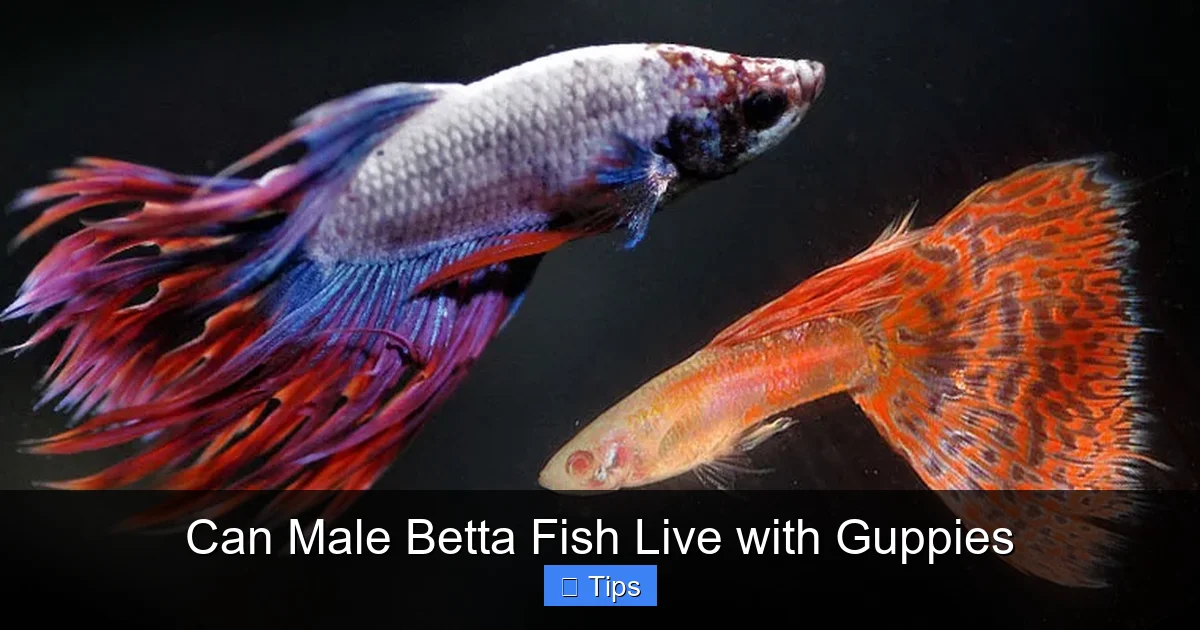
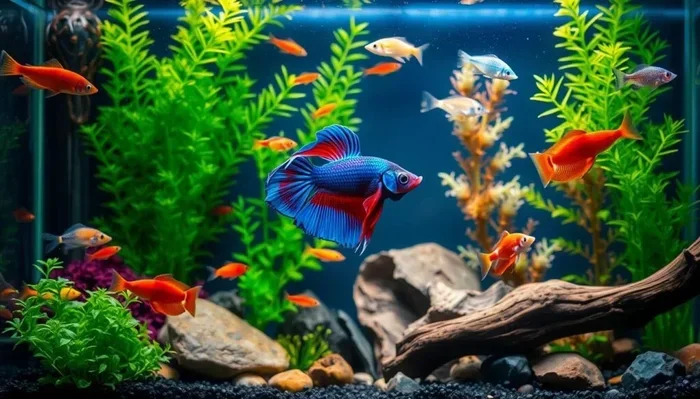
Can male betta fish live with guppies? The short answer is: it’s possible, but risky and highly dependent on the individual betta’s temperament, the guppy variety, and meticulous tank management. Male bettas are famously territorial and may see the flowing fins of male guppies as a rival, leading to aggression. Success requires a large, well-decorated tank, careful selection of short-finned guppies, a structured introduction process, and daily vigilance. It is not a guaranteed or beginner-friendly pairing, and a separate backup tank is always essential.
So, you’ve got that stunning, flowing male betta fish—a true Siamese fighting fish with colors that defy belief—sitting proudly in his 5-gallon cube. And you’ve got your eye on a school of lively, cheerful guppies, those classic beginner fish that seem to dance through the water. The idea of combining these two popular aquarium species is tempting. The vibrant betta paired with the active, tiny guppies? It sounds like a beautiful, dynamic community tank. But the infamous reputation of the betta as a solitary, aggressive fish gives you pause. The big question echoes: can male betta fish live with guppies? The answer isn’t a simple yes or no. It’s a nuanced, cautious “maybe, if…” that depends entirely on your preparation, your fish’s personalities, and your willingness to be a hyper-vigilant aquarium manager.
This isn’t about theory; this is about practical, real-world fishkeeping. We’re going to dive deep into the behavioral biology, the specific tank requirements, the critical selection process for guppies, and the step-by-step protocol for a safe introduction. We’ll talk about what success looks like, what warning signs mean, and what your contingency plans must be. By the end, you’ll know exactly what it takes to attempt this pairing and, more importantly, whether you should try it at all.
Key Takeaways
- The Betta’s Temperament is Paramount: A male betta’s personality is the single biggest factor. Some are docile community fish, while others are relentless aggressors. There is no universal rule.
- Guppy Fin Type Matters Immensely: Male guppies with large, flowing caudal, dorsal, and anal fins (like the popular “swords” or fancy varieties) are high-risk targets for a betta’s fin-nipping aggression. Short-finned females or “endler” type males are safer choices.
- Tank Size and Layout are Non-Negotiable: A minimum of 20 gallons is the absolute starting point. The tank must be heavily planted (live or silk) with ample vertical and horizontal hiding spots to break lines of sight and provide escape routes for guppies.
- Introduction is a Multi-Step Process: Never simply drop a guppy into a betta’s established tank. Use a divider or a separate quarantine tank for visual acclimation for several days before any direct contact.
- Constant, Active Monitoring is Required: For the first few weeks, you should watch the tank for extended periods daily. Look for signs of chasing, fin nipping, hiding, or stress. Be prepared to separate them immediately if issues arise.
- Feeding Strategy Can Reduce Tension: Feed the betta first, in a separate area if possible, to satiate its territorial instincts before introducing food for the guppies. This can reduce food-based aggression.
- Always Have a Backup Plan: Before you even purchase the guppies, have a fully cycled spare tank or a large breeding box ready. Assume the pairing will fail and plan for the guppies’ immediate evacuation.
📑 Table of Contents
Understanding the Core Personalities: Betta vs. Guppy
Before we talk about tanks or plants, we must understand the animals. This pairing is a classic matchup of instinct versus behavior, and knowing both sides is crucial.
The Male Betta: A Solitary King
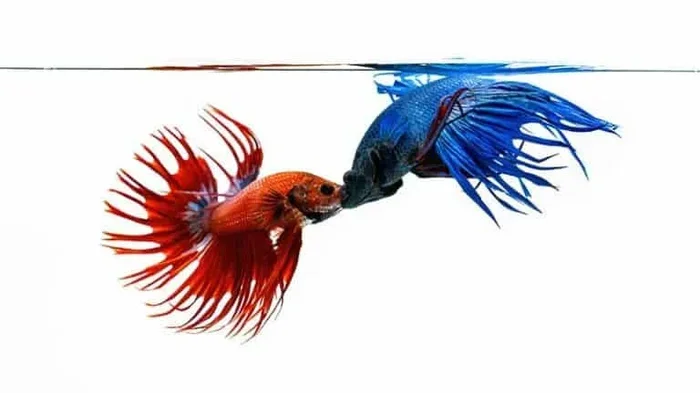
The Betta splendens we keep today is a product of centuries of selective breeding for aggression and beauty. In the wild, they are largely solitary, territorial fish. Males will fiercely defend a small patch of water—a puddle, a leaf cluster—from any other male betta. This instinct doesn’t just apply to their own kind. Anything that is brightly colored, has long, flowing fins, or moves in a slow, undulating fashion can trigger their territorial and predatory instincts. They see a rival or a threat. A male guppy, with his extravagant dorsal and caudal fins, is practically wearing a “kick me” sign from a betta’s perspective. Some bettas will ignore this; many will not. Their personality spectrum is vast, from the placid “beta” (pun intended) that lets shrimp clean its face to the flare-happy tank demon that attacks its own reflection.
The Guppy: Active, Peaceful, but Vulnerable
Guppies (Poecilia reticulata) are the antithesis of the betta in many ways. They are highly social, active, and peaceful livebearers. In a community, they form loose schools, constantly exploring the mid-water column. They are not aggressive and pose no threat to a betta. Their vulnerability is their primary characteristic in this equation. Their long, flowing fins are irresistible targets for a curious or aggressive betta. A single nip can lead to fin rot, a painful and potentially fatal bacterial infection. Furthermore, their high energy and constant movement can be perceived as provocative by a more sedentary, grumpy betta. The key is to choose guppy varieties that minimize this trigger.
Tank Setup: The Foundation for Peace (or War)
If you are going to attempt this, your tank is not just a container; it’s a behavioral modification tool. The goal is to create a space where guppies can easily evade a betta’s attention and where the betta feels secure enough in its own territory not to patrol it aggressively every second.
Visual guide about Can Male Betta Fish Live with Guppies
Image source: i.ytimg.com
The Absolute Minimum: 20 Gallons
Let’s be clear: a 5-gallon or 10-gallon tank is a recipe for disaster. In a small space, there is no escape. The betta will see the guppies constantly, and the guppies will have nowhere to hide. A 20-gallon long tank is the absolute, bare minimum starting point. The “long” dimension is critical—it provides more horizontal swimming space and a larger footprint, which helps establish distinct territories. Bigger is always better. A 29-gallon or 40-gallon breeder tank is a much safer and more realistic arena for this experiment.
Aquascaping for Evasion and Security
The layout of your tank is your most powerful tool. You must break the line of sight. A betta cannot chase what it cannot see.
- Dense, Tall Plants: Use plants like Vallisneria, Cryptocoryne, or Amazon Swords to create tall forests along the back and sides. These provide vertical hiding spots and diffuse the betta’s view from above.
- Floating Plants are Essential: A nice layer of Water Sprite, Duckweed, or Floating Frogbit is a game-changer. It creates a shaded, secure canopy at the water’s surface where bettas often rest and where guppies can safely school below, out of the betta’s direct downward line of sight.
- Driftwood and Rock Caves: Create a complex landscape of nooks, crannies, and caves. Use Malaysian driftwood, lava rock, or flat slate to build structures that guppies can dart into. The goal is to have multiple “safe zones” distributed throughout the tank.
- Avoid Open Spaces: A wide, open sandy expanse is a death trap. It gives the betta an unobstructed view and the guppies no cover. Your tank should feel more like a jungle than a parade ground.
Filtration and Water Parameters
Use a filter with a gentle flow. Betta fish have delicate fins and prefer calm water. A strong current will stress them and make it harder for guppies to swim. A sponge filter or a hang-on-back filter with a spray bar to diffuse the flow is ideal. Both species are tropical and require stable, warm water. Aim for a temperature of 78-80°F (25.5-26.5°C). Ammonia and nitrite must be at zero, with nitrates kept low (<20 ppm) through regular water changes. A well-cycled, pristine tank is vital for the immune health of both fish, especially if minor fin nipping occurs.
Choosing the Right Guppies: It’s All About the Fins
This is the most critical selection step. You are not choosing guppies for their color alone; you are choosing them for their lack of “betta bait” fins.
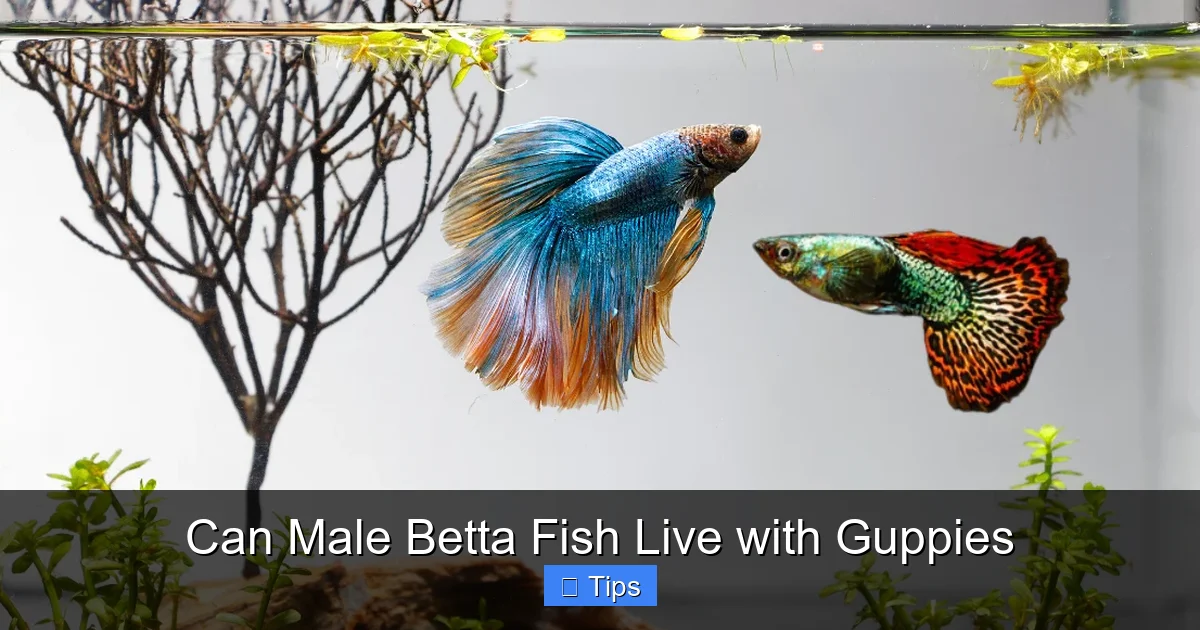
Visual guide about Can Male Betta Fish Live with Guppies
Image source: japanesefightingfish.org
Avoid These Guppy Types at All Costs
- Fancy Guppies: Any guppy bred for large, flowing caudal fins (like the “Round Tail,” “Flag Tail,” or “Veil Tail” varieties) is a major risk. Their fins are slow-moving and dramatic.
- Swallow-tail/Swordtail Guppies: The extended lower caudal fin (the “sword”) is a flashing target. Similarly, any guppy with exaggerated dorsal fins is problematic.
- Any Male Guppy with Obvious Fins: In general, the more ornate the male guppy, the higher the risk. The genetic focus on fin size and shape in these varieties directly conflicts with betta safety.
Your Best Bets: “Endler” Type and Short-Finned Females
- Endler’s Livebearers: Technically a separate but closely related species (Poecilia wingei), Endlers are often sold as “guppies.” They are smaller, hardier, and the males have much smaller, less flashy caudal fins. Their body shape is more streamlined. They are the single safest “guppy-type” choice for a betta tank.
- Short-Finned “Wild Type” Guppies: Look for guppies that resemble their wild ancestors. Males with small, rounded caudal fins and less pronounced dorsal fins are ideal. They are often sold as “feeder guppies” or just plain “guppies” at large chain stores, but seek out the plainer-looking males.
- Female Guppies: Female guppies have much smaller, less conspicuous fins. A school of 6-8 female guppies (of any variety) is a significantly lower-risk option than males. Their bodies are larger and less “fin-heavy,” making them less likely to trigger a betta’s aggression.
Pro Tip: When at the store, observe the male guppies. If their fins trail behind them like a scarf, walk away. You want a fish that looks athletic and built for speed, not for show.
The Introduction Protocol: Patience is Not Optional
Rushing this step is the number one reason for failure. You must allow the betta to accept the guppies as part of the scenery, not invaders.
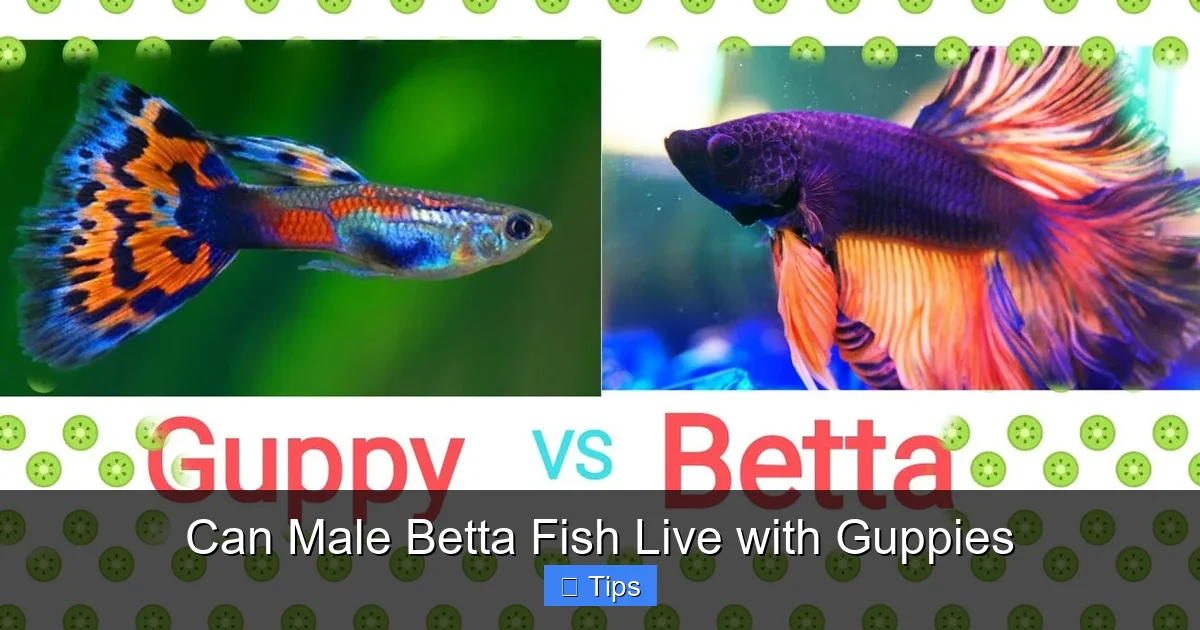
Visual guide about Can Male Betta Fish Live with Guppies
Image source: i.ytimg.com
Step 1: The Quarantine and Acclimation (1-2 Weeks)
The guppies must go through a full quarantine period in a separate tank first. This is non-negotiable for disease prevention. During this time, your main tank with the betta should be fully set up, cycled, and planted.
Step 2: The Visual Introduction (3-7 Days)
This is the key phase. You need a tank divider that is solid or has a very fine mesh that the betta cannot see through easily. Place the divider in the 20+ gallon tank. Put the betta on one side and the school of guppies on the other. Keep them like this for at least 3-5 days, preferably a week.
- What you’re watching for: The betta will likely flare ( puff up its gills and fins) at the divider initially. This is normal. The goal is to see this flaring behavior decrease and eventually stop. The betta should begin to ignore the other side.
- What you want to see: The betta goes about its business—resting, exploring its own side—without constant agitation. The guppies should be calm and schooling on their side.
Step 3: The Supervised Release
After the visual period with no flaring, it’s time for the first supervised meeting. This is best done in the evening or when the tank lights are dim.
- Remove the divider.
- Lower the lights significantly or turn them off.
- Sit by the tank for at least 30-60 minutes, observing intently.
- Watch for immediate, relentless chasing. A few curious nips or chases in the first 10 minutes can be normal as boundaries are established. Sustained, high-speed pursuit that doesn’t stop is a red flag.
- If the betta chases a guppy into a corner and continues to nip, you must intervene. Have a small net ready to catch the guppy and place it back in the quarantine tank.
- If things seem calm after an hour, you can leave them, but do not leave the room for the rest of the day.
Daily Life and Troubleshooting: The Vigilance Phase
Assuming the first 24 hours go well, your work is just beginning. The first 2-3 weeks are the most critical.
What to Look For (The Good Signs)
- The betta and guppies occupy different parts of the tank (betta top/mid, guppies mid/bottom).
- The betta rests peacefully on a leaf or in a cave, uninterested in the swimming guppies.
- The guppies school together confidently and explore all areas of the tank.
- Feeding time is orderly, with the betta taking its food from the surface and the guppies eating their pellets in the mid-water.
What to Worry About (The Bad Signs)
- Constant Chasing: If the betta is perpetually herding the guppies, stress levels are high. The guppies will be exhausted and may stop eating.
- Fin Nipping: You see the betta take a quick bite out of a guppy’s tail or fin. Even one nip is a major warning. Check guppies daily for shredded, ragged, or bloody fins.
- Hiding: If all guppies are permanently tucked in the back of plants and refuse to come out, they are terrified and stressed.
- Loss of Color or Appetite: In either species, faded colors and not eating are signs of chronic stress.
Immediate Action Steps
If you see any of the “bad signs,” especially fin nipping or relentless chasing, you must act within hours, not days.
- Have your backup tank (the quarantine tank is perfect) ready with heated, cycled water.
- Use a net to gently catch all the guppies. Do not try to catch the betta.
- Move the guppies to the backup tank. The betta remains in the main tank.
- Consider the attempt a failure. Do not try to reintroduce the guppies later. Some bettas have a “switch flip” and will never tolerate them.
Success Stories and Realistic Alternatives
So, does this ever work? Yes, but it’s the exception, not the rule. The successful stories almost always share these characteristics: a truly mellow, older betta (often a “plakat” or short-finned variety that was raised in a community from a young age), a 30+ gallon heavily planted tank, and a school of female or Endler-type guppies. The betta sees the guppies as background decor, not threats.
When It’s Time to Pivot: Better Tank Mates
If you’re reading this and feel a knot of anxiety about the complexity, that’s a good sign you might want a more forgiving community. For a male betta, consider these generally safer, more robust companions for a properly sized (20+ gallon) tank:
- schooling fish: A large school (10+) of Neon or Cardinal Tetras, Harlequin Rasboras, or Black Neon Tetras. Their speed, numbers, and preference for the mid-level make them good choices.
- Corydoras Catfish: A group of 6+ Corydoras (like Panda or Bronze) are peaceful bottom-dwellers that clean the substrate and ignore the betta.
- Kuhli Loaches: These eel-like, nocturnal loaches are fascinating and completely harmless.
- Snails and Shrimp: Large snails like Nerite or Mystery Snails are perfect. For shrimp, start with hardy, fast-breeding Cherry Shrimp—but understand the betta may eat some, especially the babies.
The rule of thumb: choose tank mates that are not brightly colored, not long-finned, and not slow-moving. Speed and numbers are your allies.
Frequently Asked Questions
Can a male betta fish kill guppies?
Yes, absolutely. A persistent, aggressive male betta can relentlessly chase and nip the fins of guppies. This leads to extreme stress, exhaustion, and secondary infections like fin rot, which can be fatal for the guppies. The betta itself is not at risk, but the guppies are in genuine danger.
What is the absolute smallest tank size for a betta and guppies?
There is no “safe” small tank for this mix. While a 20-gallon long is the absolute minimum we discuss, many experienced hobbyists would still advise against it. A 29-gallon or larger provides the necessary space and territory separation to give the pairing a realistic chance of success. Anything smaller than 20 gallons is highly likely to fail and cause fish loss.
Are female guppies safer with a male betta than male guppies?
Yes, significantly. Female guppies have much smaller, less conspicuous fins and a more robust, less “showy” body shape. They do not present the same visual trigger to a betta as the ornate fins of a male guppy. A school of 6-8 female guppies is a far lower-risk option than any male guppy.
What should I do the moment I see my betta nipping a guppy’s fins?
You must act immediately. Have a pre-prepared, heated quarantine tank ready. Use a net to remove the *guppy* (or all guppies if multiple are being targeted) and place them in the quarantine tank. Do not try to separate the betta first. The nipping behavior is a definitive sign the pairing is a failure. Do not attempt to reintroduce the guppies later.
If the betta and guppies seem peaceful, can I leave them alone together?
You can, but you must maintain high vigilance for the first 4-6 weeks. Betta aggression can be “situational” or triggered by a new object in the tank, a water change, or a sudden movement outside the tank. Continue daily observation for signs of stress or chasing for at least a month before considering the pairing stable.
Are there any betta varieties that are more likely to coexist with guppies?
Generally, plakat (short-finned) bettas are considered less aggressive and less likely to be triggered by long fins because their own fins are not as elaborate. However, personality matters more than variety. A plakat can be just as aggressive as a halfmoon. Some hobbyists also report better success with female bettas, as they are typically less territorial and flamboyant than males. But a female betta can also be aggressive, so the same caution applies.