How to Decorate Betta Fish Tank
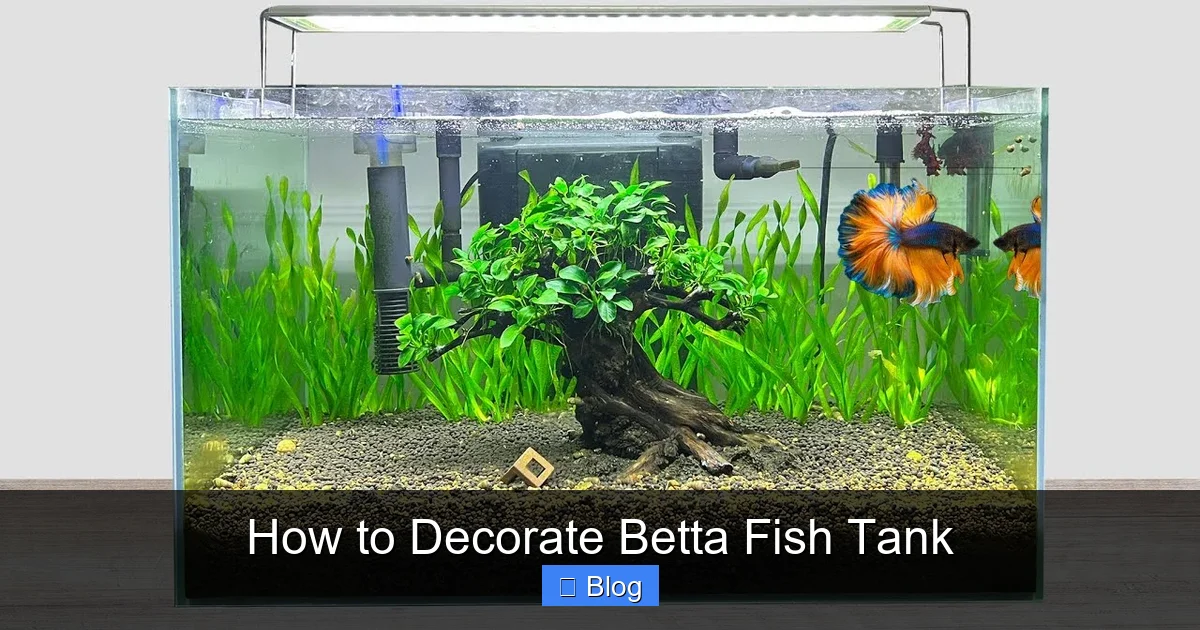
Decorating a betta tank is about more than just looks—it’s about creating a safe, stimulating environment that mimics their natural habitat. Choose smooth, soft substrates, soft-leafed plants (live or silk), and decorations with no sharp edges to protect their delicate fins. Prioritize water quality with proper filtration and cycling, and always consider your betta’s personality when selecting ornaments. A well-decorated tank reduces stress, encourages natural behaviors, and results in a happier, healthier fish.
Key Takeaways
- Safety First: All decorations must have smooth, rounded edges to prevent fin damage. Avoid sharp rocks, plastic plants with stiff edges, and painted objects that can chip.
- Substrate Matters: Use soft, fine-grained sand or smooth, rounded gravel (at least 2mm). Never use sharp or jagged gravel that can injure your betta as they rest on the bottom.
- Plants are Essential: Bettas need foliage to feel secure. Opt for live plants like Anubias or Java Fern, or high-quality silk plants. Avoid hard plastic plants.
- Provide Hiding Spots: Include caves, logs, or dense plant thickets. These offer security and reduce stress, especially in a community tank.
- Mind the Water: Decor choices affect water chemistry (e.g., driftwood lowers pH). Always cycle the tank and monitor parameters like ammonia, nitrite, and nitrate.
- Space to Explore: Leave open swimming areas, especially near the surface, as bettas are labyrinth fish that need access to air.
- Personality-Driven Design: Observe your betta. A shy betta needs more cover; an active one may appreciate more open space and gentle currents.
📑 Table of Contents
- Why Decorating Your Betta Tank is More Than Just Aesthetics
- Section 1: The Foundation – Tank Size, Shape, and Essential Equipment
- Section 2: The Ground Beneath – Choosing the Right Substrate
- Section 3: The Forest Canopy – Plants and Vegetation
- Section 4: Creating a World – Safe Decorative Elements
- Section 5: Lighting, Water Parameters, and the Final Touches
- Conclusion: A Home, Not Just a Tank
Why Decorating Your Betta Tank is More Than Just Aesthetics
So you’ve brought home a beautiful betta fish, with its flowing fins and curious personality. You’ve set up the tank, the filter is humming, and the heater is maintaining a cozy 78-80°F. But something feels… empty. That bare glass box is just a waiting room for your fish. Decorating a betta tank is one of the most enjoyable parts of the hobby, but it’s crucial to understand that for your betta, this isn’t about interior design—it’s about survival and well-being. In the shallow, sluggish waters of Thai rice paddies and floodplains, their natural home is dense with vegetation, leaf litter, and hiding places. A barren tank is not just boring; it’s a source of chronic stress. A stressed betta is a susceptible betta, prone to illness like fin rot or dropsy. The right decorations provide security, mimic their wild habitat, encourage natural behaviors like exploring and building bubble nests, and ultimately create a thriving environment. This guide will walk you through how to decorate a betta fish tank that is both stunning to look at and perfectly tailored to your fish’s needs.
Section 1: The Foundation – Tank Size, Shape, and Essential Equipment
Before you even think about ornaments, you must get the foundation right. Many people keep bettas in tiny, decorative bowls, but that’s one of the worst things you can do. A proper tank setup is non-negotiable for long-term health.
The Absolute Minimum: Why 5 Gallons is the Gold Standard
The old myth of keeping a betta in a 1-gallon vase or bowl is dangerously outdated. A single betta fish requires a minimum of a 5-gallon (19-liter) tank to thrive. Here’s why this size is so critical:
- Stable Water Parameters: Small volumes of water can see drastic, dangerous swings in temperature and toxin levels (ammonia, nitrite) within hours. A 5-gallon tank provides a much more stable buffer.
- Swimming Space: Bettas are active and curious. They need room to swim horizontally, not just bob vertically. More space allows for exercise and reduces boredom.
- Easier to Maintain: It’s paradoxically easier to keep a larger volume of water clean. Weekly partial water changes are more effective at diluting toxins.
- Room for Decor: You need space to add plants, hiding spots, and open swimming areas without crowding. A 5-gallon tank offers this essential balance.
If you have the space and budget, a 10-gallon tank is even better. It provides vastly superior stability and more creative decorating options. Always choose a tank with a lid, as bettas are notorious jumpers.
Shape and Accessibility: Long is Better Than Tall
When selecting your tank, prioritize a standard rectangular “long” shape over a tall, narrow column. Bettas are surface-dwellers and labyrinth breathers. They frequently swim near the top to gulp air. A long tank provides a larger surface area for gas exchange (more oxygen) and a more natural horizontal swimming path. A tall, skinny tank forces your betta to do constant loops in a small space, which is stressful.
Non-Negotiable Equipment Before Decor
You cannot decorate a healthy tank without these basics in place first:
- Heater: Bettas are tropical fish. A reliable, adjustable heater with a thermostat is mandatory to maintain a stable 78-80°F (25.5-26.5°C). Cold water slows their metabolism and leads to illness.
- Filter: A gentle filter is essential for biological filtration (housing beneficial bacteria that process toxins). Look for a filter with an adjustable flow setting or one designed for bettas/small tanks. The current should be minimal—imagine a gentle ripple, not a river rapid. A sponge filter is an excellent, betta-safe option.
- Thermometer: Never trust a heater’s built-in gauge alone. Use a separate, accurate aquarium thermometer to verify temperature.
- Water Conditioner: This dechlorinates tap water and detoxifies heavy metals. It’s the first thing you add to new water.
- Lid & Light: A secure lid prevents escapes. A basic LED light hood is sufficient for viewing and supports live plant growth if you choose to go that route.
Remember: You must fully cycle the tank (establish a colony of beneficial bacteria) before adding your betta. This process takes 4-6 weeks and is the single most important step in fishkeeping. Decorating happens after the cycle is complete and the tank is safe.
Section 2: The Ground Beneath – Choosing the Right Substrate
The substrate, or tank floor, is the literal foundation of your aquascape. For bettas, the choice is simple: it must be soft and smooth.
Why Sharp Gravel is a Betta’s Enemy
Betta fins are like delicate silk. They rest on the bottom, and their long, flowing fins can easily snag and tear on jagged edges. This isn’t just a cosmetic issue; torn fins are a gateway for bacterial and fungal infections like fin rot. Additionally, sharp substrate can damage their sensitive barbels (whisker-like organs) as they sift through the sand for food.
Top Substrate Choices for Bettas
1. Fine Sand (The Best Choice): Pool filter sand or specifically labeled aquarium sand is ideal. It’s soft, easy to clean (debris sits on top), and mimics the silt bottoms of their native habitat. Rinse it thoroughly before adding to the tank. A 1-2 inch layer is sufficient. Pro Tip: Add a thin layer of root tabs under the sand if you plan to use live plants that need nutrients.
2. Smooth, Rounded Gravel: If you prefer gravel, choose varieties that are specifically labeled as “smooth” or “round.” The stones should be at least 2mm in diameter with no sharp edges. Avoid pea gravel, quartz, or any gravel with a crystalline or jagged appearance. Always run your fingers through it—it should feel like smooth river stones.
3. Soil/Substrate for Carpeting Plants: If your goal is a lush, planted “carpet” (like dwarf hairgrass), you’ll need a nutrient-rich, fine-grained aquatic soil. These are typically clay-based and soft. Important: Some soils can lower pH and soften water, which bettas generally like, but you must research the specific brand’s effects.
What to AVOID: Sharp decorative gravel, colored gravel that may leach chemicals, sharp sand (like some play sands), and any substrate with rough, angular textures.
Section 3: The Forest Canopy – Plants and Vegetation
Plants are not optional décor for a betta tank; they are a psychological and physical necessity. They provide cover, reduce stress, and offer sites for bubble-nesting (a sign of a happy, healthy male betta).
Live Plants vs. Silk Plants: The Great Debate
Live Plants: The gold standard. They improve water quality by absorbing nitrates, produce oxygen, and create a truly natural ecosystem. They require more attention—proper lighting (low to medium for most beginner-friendly plants), and sometimes CO2 supplementation for advanced species. However, many hardy species are nearly indestructible.
- Top Hardy Picks for Bettas:
- Anubias: Tolerates low light, grows attached to wood/rock. Perfect for bettas.
- Java Fern: Similar to Anubias, thrives attached to décor. Very tough.
- Bucephalandra: A slow-growing, beautiful plant that loves being tied to driftwood.
- Cryptocorynes: Many varieties, prefer to be planted in substrate. Can melt initially but often recover.
- Floating Plants: Duckweed, Salvinia minima, or Frogbit. These are fantastic! They provide shade, dim the light (betas prefer dimmer tanks), and create a surface canopy that makes bettas feel secure. They also absorb excess nutrients.
Silk Plants: A fantastic, low-maintenance alternative. Modern silk plants are incredibly realistic and have soft, flowing leaves that are perfectly safe for betta fins. They require no light, no fertilizers, and provide immediate cover. They are the best choice for beginners or those who don’t want the upkeep of live plants. Ensure they are 100% silk or fabric; cheap plastic plants are a hard no.
What to AVOID: Any plastic plants with stiff, sharp, or pointy leaves. Run your finger along the leaf—if it feels stiff or can poke you, it will shred your betta’s fins. Also avoid plants with small, detachable parts that could be swallowed.
Planting and Arrangement Techniques
Don’t just plop plants in randomly. Use the “rule of thirds.” Place taller plants (like a background of Anubias on driftwood) in the back or corners. Use medium-height plants to create mid-ground interest. Leave at least one-third of the tank’s front and center as open swimming space. Create “forests” of plants on one side and a clearing on the other. Use plant weights or fishing line to anchor plants to driftwood or rocks. For floating plants, use a plant ring or suction cup divider to keep them from covering the entire surface if needed.
Section 4: Creating a World – Safe Decorative Elements
This is where your creativity shines. Decorations provide visual interest for you and, more importantly, enrichment and security for your betta.
The Cardinal Rule: No Sharp Edges, EVER
This cannot be stressed enough. Before putting anything in the tank, inspect it meticulously. Run your finger over every surface, inside and out. Look for any rough spots, seams, or protrusions. Even a tiny manufacturing flaw can be a fin-slicing hazard. If in doubt, don’t use it. Test decorations in a separate bucket of tank water first to ensure they are clean and don’t leach anything.
Types of Safe Decorations
1. Caves and Hiding Spots: Essential for shy bettas. Look for:
- Ceramic or resin caves with smooth interiors. Ensure they are truly hollow and not glued together with toxic adhesives.
- Driftwood (Mopani, Malaysian, Manzanita): A fantastic natural option. Soak it for weeks (or boil it) to remove tannins and help it sink. It provides complex surfaces for biofilm and shrimp, and bettas love to explore it. Tannins will stain the water tea-brown, which is natural and beneficial (mimics blackwater conditions).
- Large, smooth river stones. Ensure they are inert (won’t alter pH) and have no sharp edges. A quick vinegar test (bubbles mean it’s carbonate and will affect hardness) can be useful.
- PVC pipes or terracotta pots. A cheap, safe, and effective option. A 2-3 inch diameter piece of PVC pipe with smooth-cut ends or an upside-down, hole-drilled terracotta pot makes a perfect cave.
2. Ornaments and Structures: Castles, ruins, logs, etc. Choose ones made from non-toxic resin. Avoid anything with small, breakable parts. A popular and safe choice is a “betta log” or a smooth, curved piece of resin that sits at the waterline, giving your betta a resting spot near the surface—they love this!
3. Backgrounds: A static cling or adhesive background on the outside back of the tank adds depth and hides filter cords and equipment. It makes the tank look larger and more professional.
4. Indian Almond Leaves: While not a “decoration” per se, a single dried Indian Almond Leaf (IAL) or Catappa leaf on the substrate is one of the best things you can add. As it decomposes, it releases tannins with mild antibacterial and antifungal properties, lowers pH slightly, and provides a natural surface for biofilm and microfauna. Bettas often rest on them. It’s a natural health booster.
Section 5: Lighting, Water Parameters, and the Final Touches
Lighting isn’t just for show; it affects your plant choices, algae growth, and your betta’s behavior. Bettas prefer dimmer lighting, reminiscent of their shaded, vegetated wild homes.
Lighting: Brightness and Duration
If you have live plants, you’ll need a light that suits their needs. Most beginner-friendly plants (Anubias, Java Fern) need low to medium light. A standard LED hood is often sufficient. If you only have silk plants, you can use a very low-intensity light or even rely on room lighting.
Regardless of plants, provide a consistent day/night cycle using a timer (8-10 hours on, 14-16 hours off). Never leave the light on 24/7. This cycle is crucial for your fish’s circadian rhythm and to prevent algae overgrowth. If your tank gets direct sunlight, move it—this causes dangerous temperature spikes and massive algae blooms.
Water Parameters: The Unseen Decor
Your décor choices directly impact water chemistry. Driftwood and Indian Almond Leaves will slowly lower pH and soften water. Certain gravels (like inert river rock) do nothing. Some substrates (like ADA Aqua Soil) lower pH significantly. It’s vital to test your water regularly with a liquid test kit (not strips). Bettas thrive in:
- Temperature: 78-80°F (25.5-26.5°C)
- pH: 6.5-7.5 (stable is more important than a perfect number)
- Ammonia & Nitrite: 0 ppm
- Nitrate: < 20 ppm (ideally <10 ppm)
Know the effect of your décor and adjust your water change routine or use buffers if necessary.
The Final, Most Important Touch: You
Once your tank is decorated and cycled, the final and most crucial element is observation. Spend time each day watching your betta. Where does it swim? Where does it rest? Does it flare at its reflection in the glass? (If so, move the tank or use a background to block reflections). Use this information to tweak your setup. Is it hiding constantly? Add more plants or rearrange to create more barriers. Is it glass-surfing (swimming along the front)? It might be bored—try adding a floating log or a gentle toy like a ping-pong ball. Your betta’s behavior is the ultimate guide to a successful decoration scheme.
Conclusion: A Home, Not Just a Tank
Decorating a betta fish tank is a joyful blend of art and science. It’s about crafting a miniature, thriving ecosystem that caters to the unique needs of your fish. By prioritizing safety with smooth substrates and decorations, providing abundant soft foliage and hiding spots, and maintaining pristine water quality, you do more than create a beautiful centerpiece—you give your betta a life of enrichment and security. Remember, the most stunning tank is the one where your betta is actively exploring, flaring with confidence, and building a bubble nest under a leaf. Start with the solid foundation of a properly sized, cycled tank, choose décor with your betta’s delicate fins and wild instincts in mind, and enjoy the process. You’re not just decorating a tank; you’re building a home. Your betta will thank you with vibrant colors, curious antics, and years of companionship.
Frequently Asked Questions
Can I use regular aquarium gravel for my betta?
Only if it is specifically labeled as smooth and rounded. Run your fingers through it—it must feel like river stones, not sharp pebbles. Sharp gravel is a leading cause of fin tears and infections in bettas.
Are live plants really necessary for a betta tank?
While not strictly necessary, they are highly beneficial. Live plants improve water quality and provide the most natural cover. However, high-quality silk plants are a completely acceptable, low-maintenance alternative that still provides essential security.
My betta keeps hiding behind decorations and not coming out. Is that normal?
Initially, yes. A new environment is stressful. However, if your betta is *constantly* hidden after a week or two, it may indicate the tank is too bare (not enough cover) or water parameters are poor. Ensure you have plenty of plants and hiding spots and test your water.
Can I put a mirror in the tank for my betta to flare at?
Short, supervised sessions (a few minutes a day) with a removable mirror can be good exercise and enrichment. However, leaving a mirror in the tank permanently causes chronic stress as your betta will see its reflection as an intruder 24/7. Never do this.
How often should I clean the decorations in my betta tank?
During your weekly water change, gently rinse decorations (plants, rocks, etc.) in the bucket of old tank water you just removed. This removes algae and debris without killing the beneficial bacteria that live on those surfaces. Never use soap or tap water on décor, as it will destroy the essential bio-film.
My betta’s fins are getting torn. Is it my decorations?
Almost certainly. Immediately remove all decorations and inspect them under a light for any sharp spots, seams, or protruding plastic bits. Replace them with only proven smooth items like silk plants, driftwood, and smooth ceramic caves. Fin damage is a medical emergency that can quickly lead to fatal fin rot if the cause (sharp décor) isn’t removed.