Can Betta Fish Recognize Their Owner
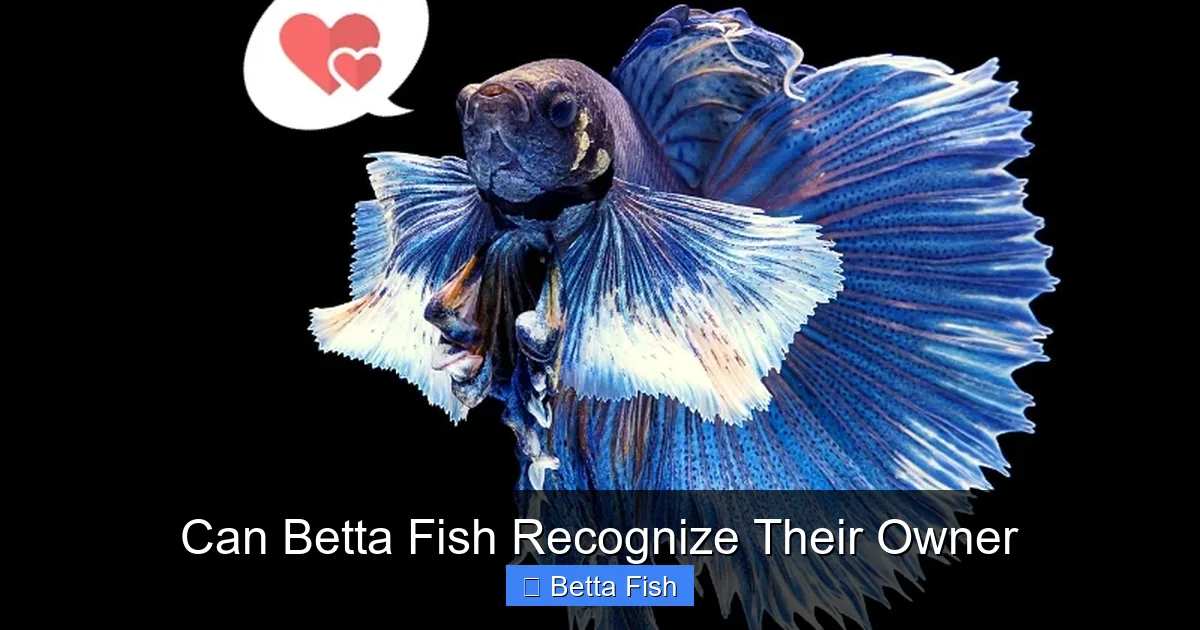
Betta fish are far more intelligent than most people realize. Research and owner experiences suggest that betta fish can recognize their owners through visual cues, sound, and routine. While they may not show affection like a dog or cat, bettas can learn to associate you with food, safety, and interaction — and many will swim to the front of the tank when you approach.
Key Takeaways
- Betta fish can recognize their owners through visual patterns, movement, and routine interactions over time.
- Bettas have surprisingly good memory — studies show they can remember things for weeks or even months, not just seconds.
- Signs your betta recognizes you include swimming to the front of the tank, following your finger, and showing excitement during feeding time.
- Building a bond with your betta takes consistency, patience, and daily interaction through feeding, training, and gentle engagement.
- Bettas respond to visual cues like your face, clothing color, and the way you move near the tank.
- Sound and vibration also play a role — your betta may learn to associate your voice or footsteps with feeding time.
- Every betta has a unique personality, so the strength of recognition varies from fish to fish.
📑 Table of Contents
- Can Betta Fish Recognize Their Owner? The Surprising Truth
- The Science Behind Betta Fish Intelligence
- Signs Your Betta Fish Recognizes You
- How Betta Fish Recognize Their Owners
- How to Build a Bond With Your Betta Fish
- Common Myths About Betta Fish Recognition
- Understanding Your Betta’s Unique Personality
- Creating the Ideal Environment for a Happy, Recognizing Betta
- Conclusion: Your Betta Knows You Better Than You Think
Can Betta Fish Recognize Their Owner? The Surprising Truth
If you have ever stood in front of your betta fish tank and felt like your little buddy was actually looking at you — you might be onto something. For years, people have dismissed fish as simple creatures with three-second memories. But science and countless betta owners tell a very different story. The question of whether can betta fish recognize you is one that has fascinated aquarium enthusiasts and researchers alike.
Betta fish, also known as Siamese fighting fish, are among the most popular pet fish in the world. Their vibrant colors, flowing fins, and bold personalities make them a favorite for beginners and experienced fish keepers. But beyond their beauty, bettas are surprisingly intelligent. They can learn routines, respond to their environment, and yes — many betta owners swear their fish knows exactly who they are.
In this article, we will dive deep into the science behind betta fish recognition, explore the signs that your betta knows you, and share practical tips for building a stronger bond with your aquatic companion. Whether you are a new betta owner or have had your fish for years, you will walk away with a new appreciation for just how smart these little creatures really are.
The Science Behind Betta Fish Intelligence
Fish Memory Is Not What You Think
One of the biggest myths in the pet world is that fish have a memory span of just a few seconds. This idea has been repeated so often that most people accept it as fact. But research tells a very different story. Studies have shown that fish — including bettas — can remember things for weeks, months, and in some cases, even longer.

Visual guide about Can Betta Fish Recognize Their Owner
Image source: i.ytimg.com
A landmark study conducted at the University of Plymouth found that fish could remember associations and learned behaviors for up to five months. Other research has demonstrated that fish can navigate mazes, recognize different shapes and colors, and even distinguish between different people. This means your betta is not just reacting to stimuli — it is actually processing information and forming memories.
How Betta Fish Brains Work
Betta fish may have small brains compared to mammals, but their brains are well-suited for their environment. Bettas have highly developed visual processing centers, which makes sense given that they rely heavily on sight to find food, identify rivals, and navigate their surroundings. They also have a strong sense of lateral line detection, which allows them to sense vibrations and movement in the water.
This combination of visual acuity and environmental awareness means that bettas are constantly taking in information about their surroundings. When you approach the tank every day at the same time, feed your fish, and interact with it, your betta is building a mental map of who you are and what you mean in its world.
What Research Says About Fish Recognition
Several studies have explored the ability of fish to recognize human faces. A 2016 study published in the journal Scientific Reports found that archerfish could be trained to recognize and distinguish between different human faces with remarkable accuracy. While betta fish were not the specific subject of that study, the findings suggest that fish in general have far more advanced cognitive abilities than previously believed.
Another study from Oxford University demonstrated that fish could learn to associate specific people with positive outcomes, such as being fed. This type of associative learning is exactly what happens when your betta fish begins to recognize you as the source of food and care.
Signs Your Betta Fish Recognizes You
Swimming to the Front of the Tank
One of the most common signs that a betta fish recognizes its owner is swimming to the front of the tank when that person approaches. If your betta consistently rushes to greet you when you walk into the room — but ignores other people — that is a strong indicator of recognition. Your betta has learned that you mean food, interaction, or something interesting.

Visual guide about Can Betta Fish Recognize Their Owner
Image source: dsflyfishing.com
This behavior is especially noticeable during feeding time. Many betta owners report that their fish becomes visibly excited when they see them, flaring their gills, wiggling their bodies, or swimming rapidly back and forth at the front of the tank. This is not random behavior — it is a learned response based on the association between you and food.
Following Your Finger or Hand
Have you ever moved your finger along the outside of the tank and noticed your betta following it? This is another sign of recognition and engagement. Bettas are curious and intelligent fish, and many will track movement outside the tank. If your betta consistently follows your finger but does not react the same way to strangers, it likely recognizes you as a familiar and non-threatening presence.
Some betta owners have even trained their fish to follow a finger, swim through hoops, or push a small ball. These tricks are possible because bettas can learn through positive reinforcement — the same principle used to train dogs and other pets.
Showing Excitement During Feeding Time
Feeding time is when most betta owners notice the strongest signs of recognition. If your betta gets excited — swimming rapidly, wiggling, or flaring — specifically when you are the one feeding it, that is a clear sign of associative learning. Your betta has connected your presence with the positive experience of eating.
Over time, some bettas will even learn to eat from their owner’s hand or jump out of the water to grab food. These behaviors demonstrate not only recognition but also trust and comfort with their owner.
Calm Behavior Around You
Recognition is not always about excitement. Some bettas show they recognize their owner by being calmer and more relaxed in their presence. If your betta does not flare, hide, or show stress when you approach the tank — but does react defensively to strangers — that is a sign that it recognizes you as safe and familiar.
Bettas are naturally territorial and can be aggressive toward perceived threats. The fact that your betta does not see you as a threat is actually a big deal. It means your fish has learned that you are not a rival or a predator — you are part of its environment in a positive way.
How Betta Fish Recognize Their Owners
Visual Recognition
Bettas have excellent eyesight and can distinguish between different shapes, colors, and patterns. Research suggests that fish can recognize human faces, and bettas are no exception. Your betta likely recognizes you based on your facial features, body shape, and the way you move. Some betta owners have even noticed that their fish reacts differently to people wearing different colors, suggesting that visual cues play a significant role in recognition.

Visual guide about Can Betta Fish Recognize Their Owner
Image source: koala.sh
This is why your betta may react differently to different members of your household. If one person is the primary feeder, the betta may show the strongest recognition toward that person. Others who are less involved in care may be ignored or even perceived as potential threats.
Sound and Vibration
While bettas do not hear in the same way humans do, they are sensitive to vibrations and low-frequency sounds. Your footsteps, the sound of your voice, or even the vibration of you tapping on the tank can all serve as cues that your betta learns to associate with your presence.
Many betta owners talk to their fish regularly, and over time, the fish may learn to associate the sound of that specific voice with feeding or interaction. This is why some bettas seem to respond more strongly to their primary caregiver than to other people in the home.
Routine and Timing
Bettas are creatures of habit, and they are very good at learning routines. If you feed your betta at the same time every day, your fish will begin to anticipate feeding time and may become more active and excited as that time approaches. This is not just a biological response to hunger — it is a learned behavior based on pattern recognition.
Your betta may also learn other routines, such as when you turn the tank light on or off, when you clean the tank, or when you add treats to the water. Over time, these routines become part of your betta’s mental map of its world, and your presence becomes a key part of that map.
How to Build a Bond With Your Betta Fish
Consistent Daily Interaction
The single most important thing you can do to build a bond with your betta is to interact with it consistently every day. This does not mean you need to spend hours staring at your tank. Even a few minutes of interaction — talking to your fish, offering food, or gently moving your finger along the glass — can help your betta learn to recognize and trust you.

Visual guide about Can Betta Fish Recognize Their Owner
Image source: fishkeepingworld.com
Consistency is key. The more predictable your interactions are, the faster your betta will learn to associate you with positive experiences. Try to feed your betta at the same time each day, and spend a few minutes near the tank during feeding time. Over time, your betta will begin to anticipate your arrival and show signs of recognition.
Hand Feeding and Training
Hand feeding is one of the best ways to build trust with your betta. Start by holding a pellet or treat near the surface of the water and waiting for your betta to come and take it. Over time, you can work up to having your betta eat directly from your fingers. This creates a direct positive association between you and food, which strengthens the bond between you and your fish.
You can also train your betta to perform simple tricks, such as following your finger, swimming through a hoop, or pushing a small floating ball. Use a target stick or your finger as a guide, and reward your betta with a treat each time it completes the desired behavior. This type of training not only strengthens your bond but also provides mental stimulation for your betta, which is important for its overall health and well-being.
Create a Stimulating Environment
A bored betta is an unhappy betta. Providing a stimulating environment with plants, caves, and other decorations gives your betta things to explore and interact with. This not only keeps your fish mentally engaged but also gives it more opportunities to observe you and learn from its environment.
Live plants are especially beneficial because they provide hiding spots, improve water quality, and create a more natural environment. If you are wondering can betta fish fins grow back after damage, a well-maintained tank with plenty of hiding spots can actually help reduce stress and promote fin regeneration. A healthy, stress-free betta is more likely to be interactive and responsive to its owner.
Talk to Your Betta
It might sound silly, but talking to your betta can actually help build a bond. Your fish may not understand your words, but it can learn to recognize the sound and rhythm of your voice. Over time, your betta may begin to associate your voice with positive experiences like feeding and interaction.
Try talking to your betta during feeding time or when you are doing tank maintenance. Use a calm, consistent tone, and over time, you may notice your betta responding more actively when it hears your voice.
Common Myths About Betta Fish Recognition
Myth: Fish Have a Three-Second Memory
This is perhaps the most persistent myth about fish, and it is completely false. As we discussed earlier, research has shown that fish can remember things for weeks or months. Bettas in particular have demonstrated the ability to learn routines, recognize people, and even perform trained behaviors. The three-second memory myth has been thoroughly debunked by modern science.
Myth: Bettas Are Just Decoration
Some people view bettas as nothing more than living decorations — pretty to look at but lacking personality or intelligence. This could not be further from the truth. Bettas have distinct personalities, and many owners can tell their fish apart from others based on behavior alone. Some bettas are bold and curious, while others are shy and cautious. Some are playful and interactive, while others are more laid-back. Each betta is an individual, and recognizing this is the first step toward building a meaningful relationship with your fish.
Myth: Bettas Do Not Need Interaction
While it is true that bettas can survive without daily interaction, they absolutely thrive with it. Bettas are intelligent, social creatures that benefit from mental stimulation and engagement. A betta that is regularly interacted with is more likely to be active, healthy, and responsive. Neglecting interaction can lead to boredom, stress, and even health problems.
Understanding Your Betta’s Unique Personality
Every Betta Is Different
One of the most fascinating aspects of keeping betta fish is discovering their unique personalities. No two bettas are exactly alike. Some are bold and will flare at anyone who approaches the tank. Others are gentle and curious, eagerly swimming to greet their owner. Some bettas love to explore every corner of their tank, while others prefer to lounge on a leaf and watch the world go by.
Understanding your betta’s personality can help you tailor your interactions to suit its preferences. A shy betta may need more time and patience to build trust, while a bold betta may be ready to interact right away. Pay attention to your betta’s body language and behavior, and adjust your approach accordingly.
How Personality Affects Recognition
Your betta’s personality plays a big role in how strongly it recognizes and responds to you. A confident, outgoing betta is more likely to show obvious signs of recognition, such as swimming to the front of the tank or following your finger. A shy or cautious betta may recognize you but show more subtle signs, such as reduced stress behavior or a slight increase in activity when you are near.
It is important not to compare your betta to others. Just because your neighbor’s betta does tricks does not mean yours is less intelligent or less bonded to you. Every fish is different, and the bond between you and your betta is unique.
Creating the Ideal Environment for a Happy, Recognizing Betta
Tank Size and Setup
The environment you provide for your betta has a direct impact on its health, happiness, and ability to recognize you. A betta kept in a small, bare bowl is more likely to be stressed and less likely to engage with its owner. On the other hand, a betta kept in a properly sized, well-decorated tank is more likely to be active, curious, and responsive.
Experts recommend a minimum of 5 gallons for a single betta, though larger is always better. The tank should include a heater (bettas are tropical fish and need water temperatures between 76-82°F), a gentle filter, and plenty of places to hide and explore. If you are curious about tank setups and whether you can keep betta fish in a bowl, the short answer is that bowls are not ideal and can negatively impact your betta’s health and behavior.
Water Quality Matters
Poor water quality is one of the leading causes of stress and illness in betta fish. A stressed or sick betta is less likely to interact with its owner and may not show signs of recognition. Regular water changes, proper filtration, and monitoring of water parameters (ammonia, nitrite, nitrate, pH) are essential for keeping your betta healthy and happy.
A healthy betta is a responsive betta. When your fish feels good, it is more likely to be active, curious, and engaged with its environment — including you.
Lighting and Routine
Bettas benefit from a consistent light cycle that mimics natural day and night patterns. A timer for your tank light can help establish a regular routine, which in turn helps your betta learn to anticipate daily events like feeding time. This consistency reinforces the bond between you and your fish and makes recognition more likely.
Conclusion: Your Betta Knows You Better Than You Think
The evidence is clear — betta fish can recognize their owners. Through visual cues, sound, vibration, and routine, your betta builds a mental picture of you and learns to associate you with positive experiences like food, safety, and interaction. While your betta may not wag its tail or purr like a cat, the signs of recognition are there if you know what to look for.
Building a bond with your betta takes time, patience, and consistency. Talk to your fish, feed it by hand, create a stimulating environment, and respect its unique personality. Over time, you will develop a relationship with your betta that is rewarding in ways you might not have expected. These little fish are far more intelligent and perceptive than most people give them credit for.
So the next time you walk up to your betta tank and your little friend swims to the front to greet you — know that it is not a coincidence. Your betta recognizes you, and that is a pretty amazing thing.
Frequently Asked Questions
How long does it take for a betta fish to recognize its owner?
Most betta fish begin to show signs of recognition within one to two weeks of consistent daily interaction. The key is routine — feeding at the same time each day and spending time near the tank helps your betta learn to associate you with positive experiences.
Can betta fish recognize different people?
Yes, bettas can distinguish between different people based on visual cues, voice, and routine. Many betta owners report that their fish responds most strongly to the person who feeds them regularly, while showing less interest or even defensive behavior toward strangers.
Do betta fish get attached to their owners?
While bettas do not form attachments in the same way mammals do, they can develop a strong positive association with their owner. This means your betta learns to feel safe and comfortable around you, and may show excitement or calm behavior in your presence.
Can betta fish learn tricks?
Absolutely! Bettas are intelligent enough to learn simple tricks like following a finger, swimming through hoops, and pushing small objects. Training requires patience and positive reinforcement, but many bettas pick up tricks within a few weeks of consistent practice.
Why does my betta flare at me?
Flaring is a natural behavior for bettas and can mean several things. It might be a sign of excitement, territorial display, or stress. If your betta flares briefly and then calms down, it is likely just showing off. Persistent flaring, however, can indicate stress and should be addressed by checking water quality and tank conditions.
Can betta fish hear their owner’s voice?
Bettas do not hear sound the way humans do, but they can detect vibrations and low-frequency sounds through their lateral line. Over time, your betta may learn to associate the vibrations of your voice or footsteps with your presence and respond accordingly.