Can Betta Fish Recognize You

Yes, betta fish can absolutely recognize their owners! While not in the same way a dog does, bettas learn to associate *you* with food, safety, and positive interactions through consistent routines. Their recognition is based on sight, movement patterns, and even vibrations. By understanding their unique intelligence and engaging in deliberate bonding activities, you can foster a fascinating and responsive relationship with your aquatic pet.
Key Takeaways
- Bettas have good memories: With a memory span of at least several months, bettas learn patterns and associate specific people with positive experiences like feeding.
- Recognition is associative, not emotional: A betta’s “recognition” is based on learned association (you = food/safety) rather than an emotional bond like a mammal’s.
- Sight is their primary recognition tool: Bettas have excellent color vision and can distinguish individual human faces and shapes, especially from above the tank.
- Routine is everything: Consistent feeding times, gentle tank interactions, and your unique movements are key signals your betta will learn to anticipate.
- Personality matters: Individual betta temperament plays a huge role. A curious, active betta will show more obvious signs of recognition than a shy or lazy one.
- You can train them: Bettas can be trained to follow your finger, eat from your hand, or perform simple tricks through positive reinforcement with food.
- Stress blocks recognition: A stressed or ill betta (from poor water, illness, or a hostile tank environment) will not engage or show any signs of recognition.
📑 Table of Contents
- Can Your Betta Fish Really Recognize You? Unpacking the Science and the Silliness
- The Betta Brain: Smarter Than You Might Think
- The Evidence: What Does “Recognition” Look Like?
- Building the Bond: How to Get Your Betta to Know You
- The Human Factor: Why Your Betta Might Seem to Ignore You
- Debunking Myths: What Bettas DON’T Do
- The Conclusion: A Unique and Rewarding Connection
Can Your Betta Fish Really Recognize You? Unpacking the Science and the Silliness
You’re leaning over your betta’s tank, and you swear he swims right up to the glass,posing proudly as soon as he sees you. Is it your imagination, or does your little Siamese fighting fish truly know you’re his owner? It’s a question that has sparked countless debates in aquarium forums and living rooms worldwide. The answer is a resounding, fascinating yes—but with some important scientific and behavioral caveats. Betta fish can recognize individual humans, but not in the way a dog or cat does. Their recognition is a brilliant display of associative learning and survival instinct, tuned by millions of years of evolution. This guide will dive deep into the mind of the betta, separating myth from reality, and give you practical, actionable steps to build a genuine connection with your aquatic companion. Get ready to see your betta in a whole new light.
The Betta Brain: Smarter Than You Might Think
For decades, fish were widely considered simple, instinct-driven creatures with a three-second memory. Modern science has thoroughly debunked this. Bettas, in particular, possess surprisingly complex cognitive abilities. Their brains, while small, are highly specialized for the environments they evolved in—the shallow, plant-choked rice paddies and streams of Southeast Asia. To survive there, they needed to be observant, to remember complex territories, to recognize rivals and mates, and to remember where food sources were reliably found. This required memory and learning capacity far beyond a few seconds.

Visual guide about Can Betta Fish Recognize You
Image source: petshun.com
Memory That Lasts: It’s Not Three Seconds
Studies on fish cognition, including research on other species like goldfish and cichlids, show memory spans measured in months. There’s every biological reason to believe bettas share this capability. A betta that learns that your specific approach to the tank at 8 AM means breakfast will remember that association for a very long time. They remember feeding schedules, the layout of their tank (including hiding spots and obstacles), and the faces of the creatures that enter their world. This long-term memory is the absolute foundation of recognition. Without it, no consistent behavior pattern could ever form.
Sensory Superpowers: How a Betta “Sees” You
Recognition requires senses to gather information. Bettas are equipped with some powerful tools:
- Vision: Their eyes are positioned to give them a wide field of view above them—crucial for spotting predators and prey from below. They have excellent color vision, potentially even seeing colors more vividly than humans, and can distinguish between different shapes and patterns. Your face and silhouette against the room’s background are distinct visual cues.
- The Lateral Line System: This is a super important and often overlooked sense. It’s a series of fluid-filled canals along their sides that detect vibrations and pressure changes in the water. The unique *way* you walk to the tank, the specific vibrations from your footsteps, and the disturbance when you hover near the glass are all signature “sound” profiles your betta learns. This explains why they often react before you even come into direct view.
- Hearing (to an extent): While they don’t have external ears, they have inner ear structures and can detect low-frequency sounds and vibrations through their swim bladder and lateral line. Your voice, if you talk to them regularly, may become a familiar sound cue.
The Evidence: What Does “Recognition” Look Like?
So, if they can recognize us, how do they show it? It’s rarely a wagging tail. Instead, look for these specific, repeatable behaviors that differ from their reactions to strangers or general tank activity.
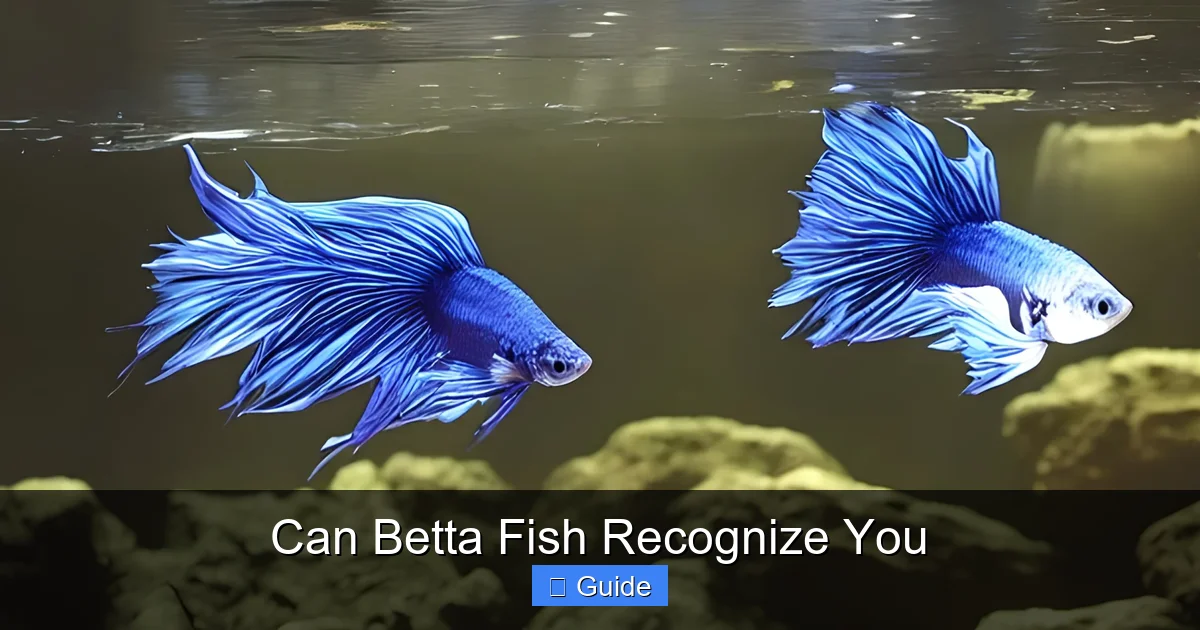
Visual guide about Can Betta Fish Recognize You
Image source: tankofish.com
The Classic “Glass Surfing” Greeting
This is the most common sign. When you approach the tank, your betta actively swims to the front glass, often pacing or “flaring” (gently extending his gills and fins). This isn’t random. It’s a learned anticipation behavior. He’s not just excited; he’s excited because you represent the promise of food or interaction. Try having a friend or family member he doesn’t see often approach the tank. The lack of this immediate, focused greeting from the front is often starkly obvious.
Following Your Finger: A Trained Response
This is the gold standard of interactive recognition. With consistent training (using food as a reward), you can teach most bettas to follow your finger along the outside of the glass. This demonstrates not just recognition of your presence, but active attention and decision-making based on your directed cue. It’s a clear sign they are processing your specific, moving visual signal.
Anticipatory Behavior at Feeding Time
Does your betta get excited only when you feed him, but remains calm if someone else does? Does he surface at the exact moment you typically feed, even if you’re just doing other tasks nearby? This is powerful associative recognition. He has mapped your routine, your movements, and your timing to the event of being fed. He knows you are the bringer of the food.
Less Fearful, More Curious
A betta that recognizes you will generally be less startled by your presence. A quick hand movement near the tank might cause a cautious betta to dart away, but a betta that knows you might merely pause or watch curiously. Over time, with gentle, non-threatening interaction, they can become quite bold, even “begging” at the glass when they see you.
Building the Bond: How to Get Your Betta to Know You
Recognition isn’t automatic; it’s earned through consistent, positive association. You are essentially training your betta to see you as a beneficial part of his environment. Here’s your playbook.
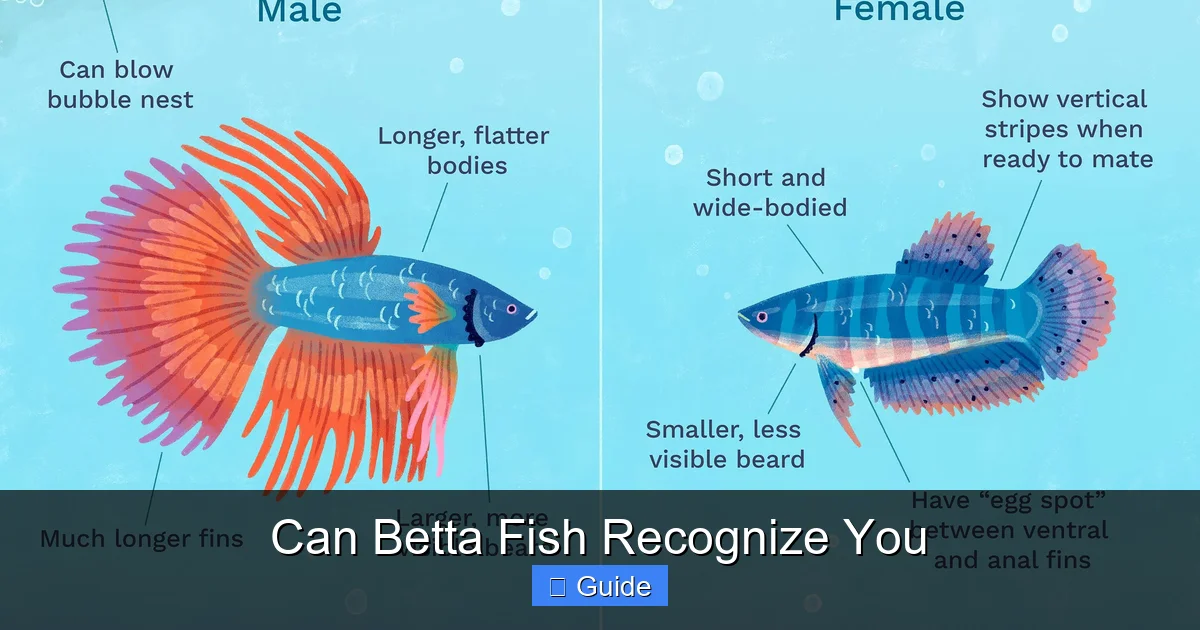
Visual guide about Can Betta Fish Recognize You
Image source: thesprucepets.com
1. Master the Art of the Consistent Routine
Bettas thrive on predictability. Feed at the same times every day. When you approach the tank, do so in a calm, deliberate manner. If you have a specific “hello” gesture (like a gentle tap on the lid or a slow wave of your hand), use it consistently. This routine builds a powerful mental link: This person’s specific actions at this specific time mean good things are coming.
2. Make Feeding a Interactive Event
Don’t just drop food in and walk away. Hold a single pellet or a frozen bloodworm on the tip of your finger (after washing your hands thoroughly!) and hold it just above the water. Let him come up and take it. This is a profound bonding experience. It forces him to connect your very hand—your scent, your shape—with the ultimate reward. Start this with a pair of tweezers if you’re nervous, and be patient. Initially, he may be hesitant. Repeat this daily, and watch the trust build.
3. The Gentle Tank “Conversation”
Spend a few minutes each day just sitting by the tank. Move slowly. Talk to him in a calm, low voice. Let him get used to your face and your presence without any pressure. This isn’t about him understanding words; it’s about him becoming desensitized to you as a non-threatening, constant fixture in his world. Pair this with feeding, and the association becomes even stronger.
4. Train, Don’t Stress: Simple Trick Training
Once he reliably takes food from your finger, you can start simple training. The “follow the finger” trick is perfect. Place a food pellet on your fingertip, press it gently against the glass where you want him to go, and when he follows and eats, reward him with another tiny piece. Keep sessions short (1-2 minutes) and always end on success. This mental stimulation is fantastic for his welfare and dramatically strengthens the recognition link between you and positive outcomes.
The Human Factor: Why Your Betta Might Seem to Ignore You
Not every betta will be a glass-surfing socialite. Several factors influence their behavior and apparent “recognition.”
Breed and Individual Personality
Halfmoon and other long-finned varieties are often bred for looks over vigor and can be more laid-back. Plakat (short-finned) bettas are typically more active and curious. But within every type, there are individuals. Some bettas are naturally shy, some are skittish, and some are bold explorers. A naturally reserved betta may simply show his recognition in subtler ways—a slight turn of his head toward you, a cessation of hiding—rather than frantic greetings. Don’t force interaction; work with his natural temperament.
Tank Environment and Stress
This is the biggest showstopper. A betta in a small, dirty, or poorly decorated tank is a stressed betta. Stress hormones shut down higher brain functions and make survival (hiding, conserving energy) the only priority. No amount of your friendly face will register. Ensure your betta has a proper 5+ gallon tank with a heater, filter, and plenty of plants/ hiding spots. A healthy, comfortable betta has the mental bandwidth to notice and interact with you.
Your Own Behavior: Are You Predictable?
If you feed at random times, if you suddenly tap the glass hard, if you have multiple people feeding him different foods, you’re creating confusing signals. Be the most consistent, gentle, and positive part of his world. Your predictability is what builds trust and recognition.
Debunking Myths: What Bettas DON’T Do
With all this talk of recognition, it’s crucial to clarify what it is not. This prevents anthropomorphism—attributing human emotions to animals—and helps you appreciate your betta for the remarkable creature he is.
Myth: My Betta Loves Me
Reality: He does not experience “love” as we understand it. He experiences positive association and learned trust. You are the predictor of food and non-harm. That is a powerful and valuable relationship for him, but it is not an emotional bond. Appreciating this distinction is key to proper care. You are his provider and a positive environmental fixture, not his “parent.”
Myth: He’s Happy to See Me
Reality: He is likely excited, but that excitement is primarily driven by anticipation of food. It’s a conditioned response. If you suddenly stopped feeding him, the greeting would eventually fade. His “happiness” is tied to the outcome you provide.
Myth: He Gets Lonely or Bored Without Me
Reality: Bettas are solitary by nature. They are not social fish that crave companionship. In the wild, they are territorial and prefer to be alone. Your presence is a stimulus, not a social necessity. A well-enriched tank with plants, caves, and a proper filter is what prevents true boredom. Your interaction is a fantastic bonus, not a requirement for his emotional well-being.
The Conclusion: A Unique and Rewarding Connection
So, can a betta fish recognize you? Absolutely. With their decent memories, sharp senses, and impressive capacity for associative learning, your betta absolutely knows your face, your movements, and your role in his world. He knows that when you approach, good things are likely to happen. You can cultivate this recognition into a reliable, interactive relationship through consistent routines, gentle handling, and positive reinforcement training.
The bond you build with a betta is different from that with a furry pet. It’s quieter, more observational, and rooted in the fundamental language of cause and effect. But it is no less real or rewarding. Watching your betta swim eagerly to the front of the tank as you enter the room, or confidently take a worm from your fingertips, is a testament to your successful communication across the barrier of air and glass. You’ve become a trusted, predictable, and beneficial part of his universe. By providing a pristine tank and a consistent, positive presence, you earn a form of recognition that is both scientifically sound and deeply personally satisfying. You’re not just his owner; you’re his signal for safety and sustenance. And in the world of a betta, that’s a significant and meaningful role to play.
Frequently Asked Questions
Do betta fish have a 3-second memory?
No, this is a complete myth. Scientific studies on fish cognition show that betta fish have a memory span of at least several months. They can learn complex routines, remember feeding schedules, and recognize individual people long-term.
How long does it take for a betta to recognize its owner?
It typically takes 1-3 weeks of consistent, positive interaction for a betta to begin showing clear signs of recognition. This involves regular feeding at set times, gentle tank-side presence, and potentially hand-feeding to build a strong association.
Can betta fish recognize their face in a mirror?
No. Bettas will often flare at their reflection, mistaking it for a rival betta. This is a territorial aggression response, not self-recognition. They do not understand the concept of a reflection and cannot identify their own image.
Will my betta recognize other people?
Yes, but selectively. A betta will primarily recognize and respond to the person who provides the most consistent positive interactions (usually the primary feeder). They may react with caution or indifference to strangers or people with whom they have no established routine.
Can betta fish get attached to their owners?
They form a strong associative bond, not an emotional attachment like a mammal. They learn that their owner predicts food, safety, and positive stimuli. This creates reliable, interactive behavior that feels like attachment to us, but it is based on learned cause-and-effect, not emotional companionship.
Why isn’t my betta greeting me even though I feed him?
Consider his environment and health first. A stressed betta from poor water quality, incorrect temperature, illness, or an overcrowded/unenriched tank will not engage. Also, assess your routine—are you feeding at the same time? Are you calm and predictable? Some bettas are also naturally shy and may show recognition in subtle ways, like merely watching you instead of hiding.