What Other Fish Can Go with Bettas
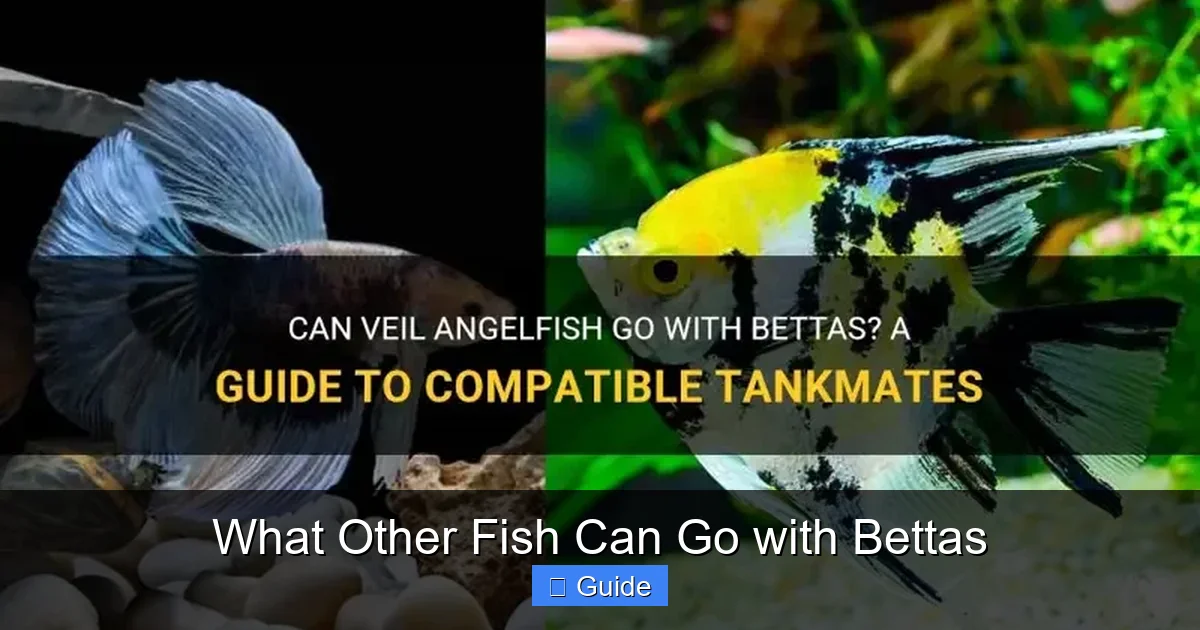
Contrary to popular belief, bettas can often thrive in community tanks with the right companions. Success hinges on understanding your betta’s individual temperament and providing a properly sized, heavily planted tank. Ideal tank mates are peaceful, non-flashy fish that occupy different water levels, like small schooling tetras or quiet bottom-dwellers. Always avoid fish with bright colors, flowing fins, or aggressive tendencies. A careful, patient introduction process is non-negotiable for a harmonious aquarium.
Key Takeaways
- Know Your Betta: A betta’s personality is paramount. A historically aggressive “Siamese fighting fish” may never tolerate tank mates, while a calm individual might.
- Tank Size is Critical: The absolute minimum for a betta community is 20 gallons. More space dilutes aggression and provides territories for all fish.
- Choose Peaceful, Subtle Species: Opt for fish that are not brightly colored, do not have long, flowing fins, and are not known fin-nippers.
- Swim Level Matters: Choose companions that occupy the mid and lower levels of the tank, leaving the top layer (your betta’s domain) relatively clear.
- Plants and Hiding Spots are Essential: Live or silk plants, driftwood, and caves break sightlines and provide escape routes, reducing stress for all inhabitants.
- Quarantine All New Fish: Always quarantine new arrivals for at least 2-4 weeks to prevent introducing disease into your established betta tank.
- Have a Backup Plan: Be prepared with a separate tank or a divider to remove a betta or a tank mate if aggression becomes a problem.
📑 Table of Contents
- Understanding Betta Behavior and Territorial Needs
- The Golden Rules of a Successful Betta Community Tank
- Top Schooling Fish That Thrive with Bettas
- Peaceful Bottom-Dwellers and Mid-Tank Companions
- Fish to Absolutely Avoid as Betta Tank Mates
- Step-by-Step Guide to Introducing New Fish
- What About Invertebrates? Snails and Shrimp!
Understanding Betta Behavior and Territorial Needs
Let’s clear the air right away. The myth that bettas must live alone in solitary confinement is just that—a myth. The reality is more nuanced. Bettas, especially males, are indeed territorial, a trait bred into them from centuries of fighting in Southeast Asia. Their aggression is primarily directed at other bettas or fish that resemble them—think long, flowing fins and bright, flashy colors. In the wild, a betta’s territory is a vast, dense area of rice paddies and slow-moving streams. They are not naturally inclined to chase every fish in sight; they defend a specific patch.
This means your goal is to recreate a slice of that wild habitat in your aquarium. You want to provide a betta with a space it can claim as its own, but not so small that it feels every other fish is an intruder. A betta’s aggression is often a stress response to feeling cornered or visually harassed. Therefore, understanding this behavior is the first and most important step in selecting successful betta tank mates. It’s not about finding a “tough” fish that can fight back; it’s about finding peaceful neighbors that simply don’t register as a threat or a rival.
The “Fight or Flight” Response in a Glass Box
When a betta perceives a threat—a flash of color, a fish with a big tail, or an intruder in its claimed corner—it will flare its gills, extend its fins, and may charge. In a small, barren tank, the “flight” option doesn’t exist. The betta is forced into “fight” mode, leading to constant stress, nipped fins, and potentially deadly outcomes for the perceived intruder. Your tank’s layout is your primary tool to manage this instinct. By using abundant vertical and horizontal plants, you create visual barriers. A betta can’t flare at what it can’t see constantly. This gives both the betta and its tank mates a sense of security and multiple pathways to avoid each other.
Male vs. Female Bettas: Does Gender Matter?
Yes, but not in the way you might think. While female bettas are generally less aggressive and have shorter fins, they can still be territorial, especially during breeding or if housed in a small space. A female betta can often be kept in a sorority (a group of 4-5 females) in a heavily planted 20+ gallon tank, but this is an advanced setup requiring expert monitoring. For our purpose of finding tank mates, the gender of your betta matters less than its individual personality. A laid-back male is a better candidate for a community than a feisty female. Always observe your betta’s behavior first, before adding any other fish.
The Golden Rules of a Successful Betta Community Tank
Before we even look at specific fish species, you must internalize these non-negotiable rules. Skipping these is the number one reason betta community tanks fail. Think of these as the foundation of your house; without a solid foundation, the walls will crumble.

Visual guide about What Other Fish Can Go with Bettas
Image source: petshun.com
- Tank Size is Everything: The single most critical factor. A 5-gallon tank is the absolute minimum for a solo betta. For a community, you need to start at 20 gallons. This provides enough horizontal space for territories and enough water volume to dilute the impact of any chases. A 29-gallon or larger is even better and opens up more options.
- Aquascaping is Non-Negotiable: Your tank must be a jungle, not a desert. Use silk or live plants (Java fern, Anubias, Amazon swords are great starters), driftwood, and rock caves. The goal is to break the line of sight from one end of the tank to the other. Your betta should be able to dart behind a plant to escape the view of a curious tank mate, and vice versa.
- Cycling is Mandatory: The tank must be fully cycled (established nitrogen cycle) before introducing any fish. A betta is sensitive to poor water quality caused by ammonia and nitrite spikes, which can be fatal. Cycle the tank for 4-6 weeks before the first fish goes in.
- Water Parameters: Bettas are tropical fish. Keep the temperature between 76°F and 82°F (24°C – 28°C). They prefer slightly acidic to neutral water (pH 6.5-7.5). All tank mates must share this parameter range.
- Lighting: Avoid super bright, harsh lighting. Bettas, especially those with large fins, can be shy. Use subdued lighting that encourages plant growth without making your betta feel exposed.
The Importance of a Tight-Fitting Lid
This cannot be stressed enough. Bettas are labyrinth fish, meaning they breathe atmospheric air from the surface. They are also notorious jumpers, capable of leaping several inches out of the water. A secure lid is essential for the safety of your betta and any other fish that might jump (some tetras are jumpers too!). Ensure there are no gaps around filter cords or airline tubing.
Top Schooling Fish That Thrive with Bettas
This is the most popular and often most successful category of betta tank mates. Schooling fish are a great choice because their natural behavior is to focus on each other, not on the betta. They occupy the mid-levels of the tank, creating gentle activity that distracts from the betta’s top-layer patrols. They should be kept in groups of at least 6, preferably 8-10, to feel secure and exhibit natural behavior.
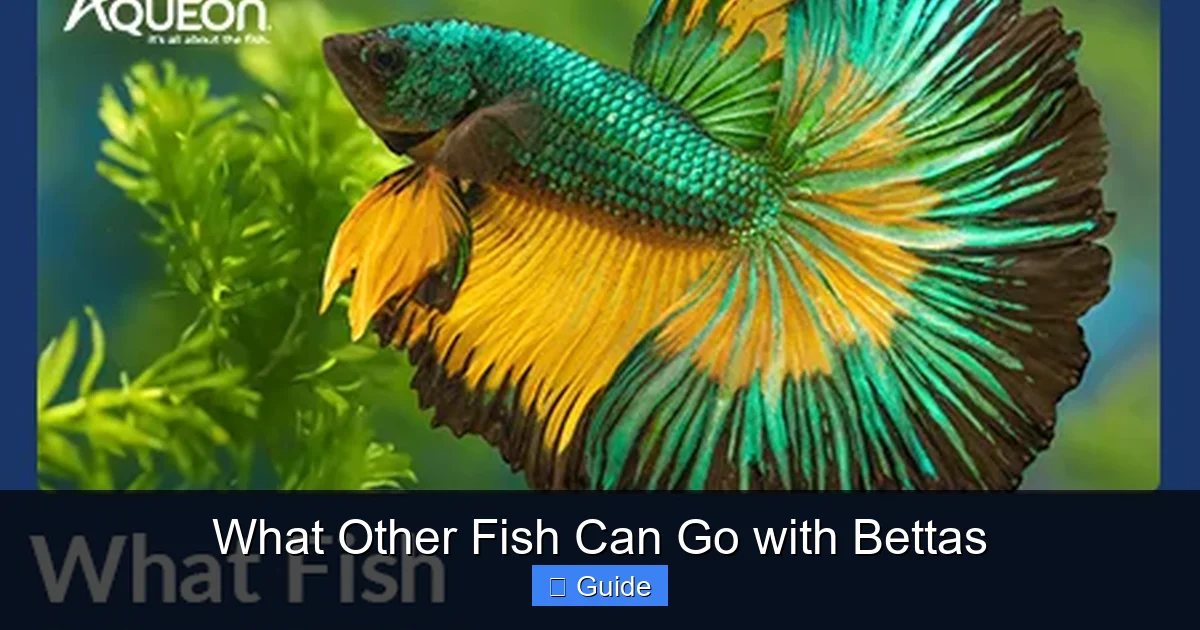
Visual guide about What Other Fish Can Go with Bettas
Image source: aqueon.com
Neon Tetras & Their Cousins
Neon tetras (Paracheirodon innesi) are the classic choice. Their small size (1.5 inches), peaceful nature, and shimmering blue/red stripe are often not seen as a threat by bettas. They are fast enough to dart away if a betta gives chase. However, their success depends on being in a large enough school (10+) in a well-planted 20+ gallon tank. Their cardinal tetra cousins are slightly larger and have a more vibrant red stripe, which can sometimes trigger a betta—proceed with caution and have a backup plan. Green neon tetras (Paracheirodon simulans) are a fantastic, less flashy alternative with a more muted green-blue stripe, making them even less likely to be targeted.
Harlequin Rasboras
These are arguably one of the best tank mates for a betta. Harlequin rasboras (Trigonostigma heteromorpha) are hardy, active, and have a distinctive black triangle on their orange/red body. Their coloration is different enough from a betta’s that it doesn’t trigger rivalry. They are a bit larger than neons (up to 2 inches) and very peaceful. They should be kept in groups of 8 or more. Their active, loose-schooling behavior adds beautiful movement to the middle of the tank without bothering the betta.
Ember Tetras
For a stunning, subtle look, ember tetras (Hyphessobrycon amandae) are perfect. They are tiny (under 1 inch) and have a beautiful, glowing orange-red color that looks like embers in a fire. Their small size and calm demeanor make them unlikely targets. They are also a great choice for a “nano” community if your betta tank is on the smaller side (though still aim for 15+ gallons). Keep them in a school of 10 or more to see their best behavior.
Celestial Pearl Danios (Galaxy Rasboras)
These are a more recent favorite but come with a caveat. Celestial pearl danios (Danio margaritatus) are stunning, with tiny pearl-like spots on a dark blue body. They are active and prefer cooler water (72-78°F). If your betta is comfortable at the lower end of its range (76°F), they can work. They are very small (1 inch) and peaceful. However, their bold, active nature and contrasting pattern can occasionally pique a betta’s curiosity. A heavily planted 20-gallon tank with a group of 8+ is essential.
Peaceful Bottom-Dwellers and Mid-Tank Companions
Fish that occupy the bottom third of the tank are excellent betta tank mates because they inhabit a completely different space. Your betta spends most of its time in the upper half, cruising the surface for food. Bottom-dwellers are out of sight, out of mind. They also perform the vital service of cleaning up uneaten food.
Corydoras Catfish: The Ultimate Clean-Up Crew
Cory cats are the gold standard for betta companions. These small, gentle armored catfish are social and must be kept in groups of at least 4-6. They are completely harmless, spending their days sifting through sand or gravel for food. Their armored plates protect them from any accidental nips. Popular, hardy species include the Pygmy Cory (Corydoras pygmaeus – stays small, ~1 inch), Haberli Cory (Corydoras habulosus), and the slightly larger Bronze Cory (Corydoras aeneus). They are active, entertaining, and add great personality to the bottom of the tank.
Kuhli Loaches
For a truly unique and fascinating bottom-dweller, look no further than the Kuhli loach (Pangio kuhlii). These eel-like, orange-striped fish are nocturnal and spend the day burrowed in the substrate or hiding under decorations. They are incredibly peaceful, social (keep in groups of 3+), and pose zero threat. Their odd shape and behavior are completely alien to a betta, making them invisible as a rival. They are masters of avoiding conflict simply by being secretive.
Otocinclus Catfish
Often called “ottos,” these are the smallest catfish available (1-2 inches). They are dedicated algae eaters, clinging to glass and leaves to munch on diatoms and soft algae. They are very shy and must be kept in groups of 5 or more to feel safe. Their primary risk is not from a betta, but from starvation if there isn’t enough algae or supplemental food (algae wafers, blanched veggies). In a well-planted tank with some algae, a school of ottos is a fantastic, low-impact addition.
Bristlenose Plecostomus (Ancistrus sp.)
This is for larger tanks only (30+ gallons). The Bristlenose pleco is a small, peaceful pleco species (4-5 inches) with intriguing facial tentacles. It is primarily nocturnal and will spend its time on driftwood or the tank walls. While generally peaceful, some individuals can become territorial as they age. Its large, armored body makes it an impossible target for a betta, and its different shape and nocturnal habits mean they almost never interact. Important: Avoid common plecos; they grow massive and are aggressive.
Fish to Absolutely Avoid as Betta Tank Mates
Just as important as knowing who to add is knowing who to never add. This list is not exhaustive, but covers the most common and dangerous mistakes.
Visual guide about What Other Fish Can Go with Bettas
Image source: aqueon.com
Any Other Betta
This is the cardinal rule. Two male bettas will fight to the death. A male and female betta should only be together for supervised breeding, as the male may kill the female. Female bettas can sometimes be kept in sororities, but this is high-risk and not for beginners. Do not house bettas together.
Fish with Long, Flowing Fins
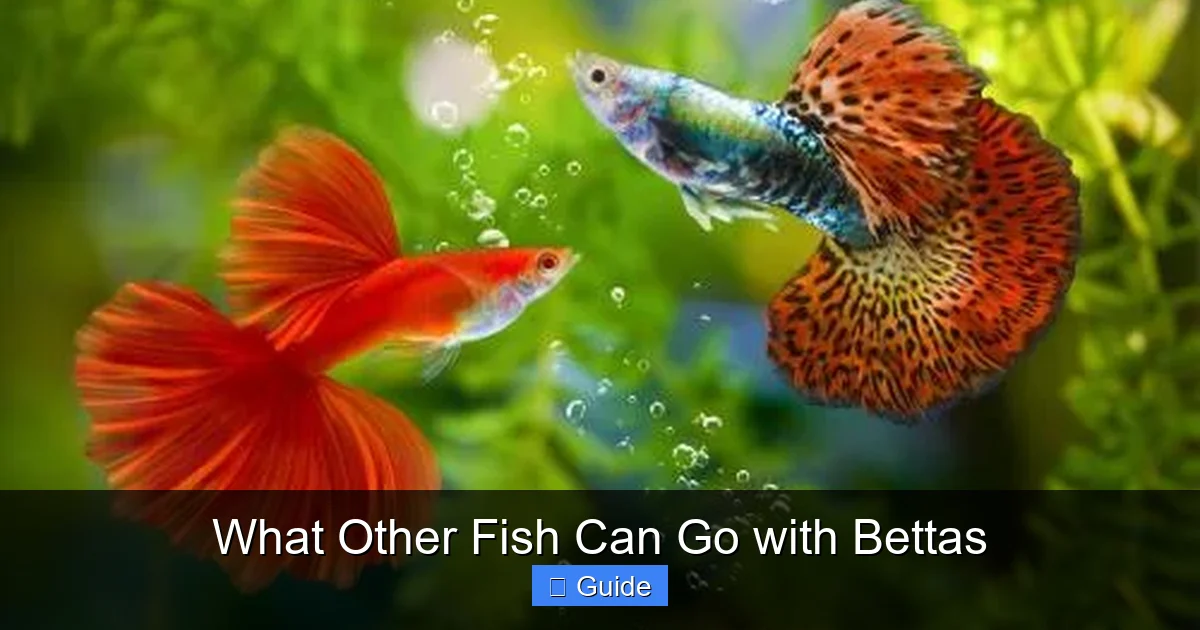
This includes fancy guppies, male swordtails, some platies, and any fish with large, decorative fins. To a betta, these look exactly like a rival male betta. The betta will relentlessly chase and nip at these fins, causing severe stress, injury, and fin rot. Fancy guppies are the most common mistake here. Avoid them entirely.
Brightly Colored or “Showy” Fish
Fish that are bright red, blue, or orange can trigger a betta’s territorial aggression. This includes some male swordtails, some platies, and many African cichlids (which are also wrong in every other way for a betta tank). The betta sees the color and interprets it as a challenge.
Fin-Nippers
Some active, boisterous fish have a habit of nipping at the long, flowing fins of other fish. They are not necessarily aggressive, but they are curious and may see a betta’s fins as a target. Fish to avoid include serpae tetras, black skirt tetras, tiger barbs, and some danios (like zebra danios can be nippy in small groups).
Large, Aggressive, or Semi-Aggressive Fish
Any fish that is known to be territorial, aggressive, or large enough to eat a betta is a no-go. This includes most cichlids (oscars, convicts, etc.), large gouramis (like the giant or paradise fish—they are betta cousins and will fight), large barbs, and even some larger catfish that might view a betta as a snack.
Goldfish
This is a classic “bad idea” for many reasons beyond aggression. Goldfish are cold-water fish (preferring 68-74°F), while bettas are tropical (76-82°F). The temperature mismatch stresses both. Goldfish are also massive waste producers that will quickly foul the water, harming your sensitive betta. They are not compatible in any way.
Step-by-Step Guide to Introducing New Fish
You’ve chosen your tank mates and set up a perfect, planted 20-gallon aquarium. Now, the introduction process must be done with military precision to ensure success.
Step 1: Quarantine Tank
Before any new fish enters your display tank, it must spend 2-4 weeks in a separate, cycled quarantine tank. This allows you to observe for signs of disease (ich, velvet, fin rot, parasites) and treat it without putting your entire ecosystem at risk. Never skip this step. It is the single most effective way to prevent an outbreak.
Step 2: Rearrange the Tank
On the day of introduction, rearrange all the plants, rocks, and decorations in your main tank. Move them around to break up any territories your betta has already established. This resets the “map” and forces the betta to re-establish its space, which it will do while distracted by the new arrivals. It also disrupts any established territories of fish already in the tank.
Step 3: The Acclimation Process
Float the bag with the new fish in your tank for 15-20 minutes to equalize temperature. Then, perform a drip acclimation or add small amounts of tank water to the bag over 30-45 minutes to slowly adjust the new fish to your water parameters (pH, hardness). This is crucial to prevent shock.
Step 4: Release and Observe
Use a net to transfer the new fish from the bag to the tank, not pouring the bag water in. Once released, watch intently for at least an hour. Look for flaring, chasing, or nipping. Some initial curiosity from the betta is normal—a quick dart or a flare at the glass. What you’re looking for is sustained, aggressive pursuit that prevents the new fish from eating or resting.
Step 5: The First 72 Hours
For the next three days, be a hawk. Keep the lights dimmed. Feed your betta first in a separate area (using a pipette or feeding ring) to distract it, then feed the other fish. Have a net and a backup tank ready. If the betta is relentlessly pursuing one fish to the point of exhaustion, you may need to remove either the betta (for a time-out in a separate tank) or the targeted fish. Sometimes, it just takes a few days for everyone to settle into a pecking order.
What About Invertebrates? Snails and Shrimp!
Yes! Invertebrates can be fantastic, low-maintenance tank mates for bettas. They occupy a completely different biological niche and are generally ignored.
Freshwater Snails
Snails are perfect. They are slow, peaceful, and have a hard shell that a betta cannot penetrate. They are excellent scavengers. Great choices include:
- Nerite Snails: Beautiful patterned shells, excellent algae eaters. They do not reproduce in freshwater.
- Mystery/Apple Snails: Larger, active, come in many colors. They can leave large, noticeable eggs above the waterline.
- Ramshorn Snails: Small, reproduce quickly (good for a food source for other fish).
- Rabbit Snails: Long, bunny-like antennae, slow and gentle.
A betta may investigate a snail, but it will quickly lose interest. Snails are a zero-risk addition.
Freshwater Shrimp
Shrimp add color and activity, but they come with a bigger caution label. A betta may see a shrimp, especially a larger, more colorful one, as a tasty snack. Success is not guaranteed.
- Ghost Shrimp / Amano Shrimp: These are the best bets. Ghost shrimp are transparent and large (2+ inches), making them harder to spot. Amano shrimp are hardy, algae-eating powerhouses. They are fast and can often evade a curious betta.
- Cherry Shrimp / Bee Shrimp: These are small, colorful, and breed readily. They are at high risk of being eaten, especially by a more aggressive betta. In a large, heavily planted tank with plenty of hiding places ( moss, dense foliage), a colony can sometimes thrive, but expect losses. They are more of a “for the plants” addition than a guaranteed pet.
Always provide dense planting (Java moss is shrimp heaven) for shrimp to hide in.
Frequently Asked Questions
Can a betta live with a guppy?
Almost never. Male guppies have long, colorful fins that trigger a betta’s aggression. The betta will relentlessly chase and nip the guppy, causing severe stress and injury. Fancy guppies are an especially poor choice. Even plain, short-finned wild-type guppies are a significant risk and not recommended.
Can bettas live with goldfish?
No. Goldfish are cold-water fish that prefer temperatures around 68-74°F, while bettas are tropical fish needing 76-82°F. The temperature mismatch is unhealthy for both. Goldfish also produce massive amounts of waste, which will quickly foul the water and harm a betta’s sensitive labyrinth organ. They are completely incompatible.
What about snails or shrimp with my betta?
Snails are almost always perfect betta tank mates. They are slow, peaceful, and have a hard shell. Nerite, mystery, and ramshorn snails are excellent choices. Shrimp are riskier. Large, hardy shrimp like Amanos or Ghost shrimp have a good chance of surviving in a well-planted tank. Small, colorful shrimp like Cherry shrimp are often seen as food and may be eaten, especially by an aggressive betta.
How many fish can I put with my betta?
There’s no magic number, but the “one inch of fish per gallon” rule is a dangerous oversimplification. Focus on the tank’s bioload (waste production) and space. In a properly cycled 20-gallon tank, a common starting point is: your betta + a school of 8-10 small tetras (like neons or embers) + a group of 6 corydoras. Always add fish slowly, monitoring water parameters, and never overstock.
My betta is aggressive towards everything. Can it still have tank mates?
Probably not. Some bettas have such a strong, innate aggression that they will attack any fish that moves. If your betta flares at your finger, constantly charges at other fish through the glass, or has a history of killing tank mates, it should be kept solitary. Its stress (and the stress of its potential victims) is not worth the risk. A calm, curious betta is the ideal candidate for a community.
Do I need a quarantine tank for new fish?
Yes, absolutely. A separate, cycled quarantine tank (even a simple 10-gallon setup) is essential. All new fish should be observed for 2-4 weeks in quarantine before entering your main display tank. This prevents you from accidentally introducing diseases like ich, velvet, or internal parasites that can devastate your entire aquarium, including your betta. It is a cornerstone of responsible fishkeeping.