Can You Use Bottled Water for Betta Fish
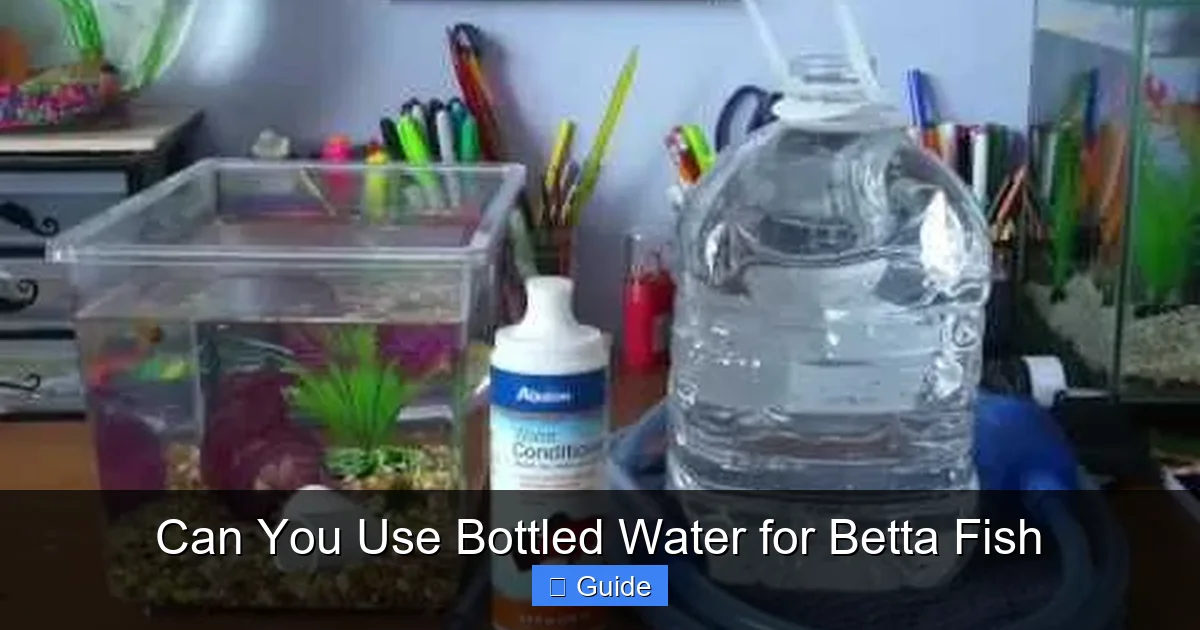
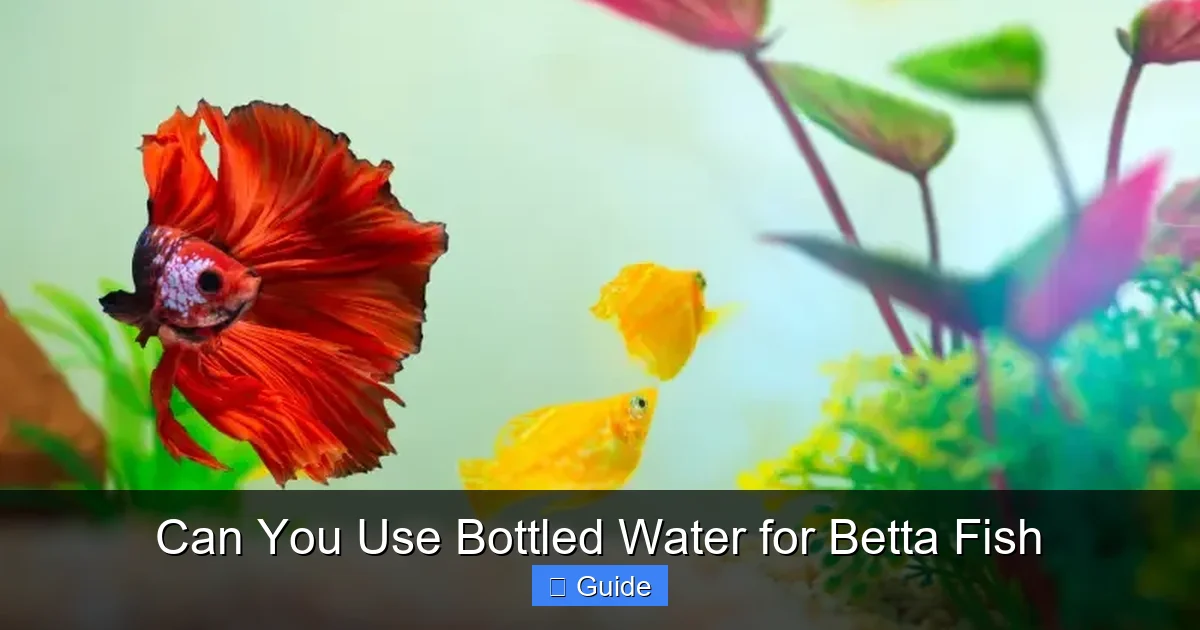
No, you should not use standard bottled water for betta fish without treatment. Most bottled waters lack essential minerals and have inconsistent, often harmful, pH and hardness levels. The safe approach is to use a reliable water source like treated tap water or, if using bottled, choose a natural spring water and always condition it with a quality dechlorinator before adding it to your betta’s tank. Proper water preparation is non-negotiable for your fish’s health.
So you’ve brought home that beautiful, flowing-finned betta fish. You’ve got the perfect tank, the lush plants, the cozy hideaway. But there’s one thing that can undo all your careful planning in a heartbeat: the water. It’s the most critical element in your betta’s world, yet it’s often the most misunderstood. One of the most common questions new betta owners ask is, “Can I just use bottled water for my betta fish?” It seems logical—bottled water is clean, pure, and safe for us, so why not for them?
Let’s be real: we buy bottled water because we trust it. It’s filtered, regulated, and comes in a nice clean bottle. But the needs of a Siamese fighting fish are fundamentally different from our own. What’s “pure” for a human can be a deadly, mineral-starved void for a betta. Using the wrong bottled water is a fast track to a sick, stressed fish. This guide will dive deep into the murky world of bottled water, debunk the myths, and give you the clear, actionable steps to provide the perfect aquatic home for your betta. We’re going beyond a simple yes or no to give you the knowledge to make the safest choice.
Key Takeaways
- Most Bottled Water is Inadequate: Distilled, purified, and many spring waters are mineral-deficient, leading to pH crashes and poor osmoregulation for bettas.
- Conditioner is Mandatory: Any water—bottled, tap, or filtered—must be treated with a water conditioner to neutralize chlorine, chloramines, and heavy metals.
- Tap Water is Often the Best Choice: When properly conditioned, dechlorinated tap water provides stable mineral content (GH/KH) that buffers pH and supports fish health.
- If You Must Use Bottled, Choose Wisely: Opt for a natural, non-carbonated spring water with a stable mineral profile. Always test it first with a liquid test kit.
- Consistency is Critical: Bettas thrive on stable water parameters. Drastic changes in pH or hardness from switching water sources cause extreme stress and disease.
- Test Your Water: Use a liquid test kit (not strips) to know the exact pH, GH, and KH of your source water and your tank water. This is the only way to make informed decisions.
- Myth: Bottled is “Purer” and Safer: This is a dangerous misconception. “Pure” water for humans is often “dead” water for fish, lacking the minerals they need to survive.
[FEATURED_IMAGE_PLACEHOLDER]
📑 Table of Contents
- Bottled Water 101: What’s Actually in That Bottle?
- The Core Problem: Why “Pure” Water is Deadly for Bettas
- The Safer, Smarter Alternatives to Standard Bottled Water
- How to Prepare ANY Water Source for Your Betta: The Non-Negotiable Steps
- Debunking Common Myths About Bettas and Water
- The Final Verdict: A Clear Recommendation
Bottled Water 101: What’s Actually in That Bottle?
Before we talk bettas, we need to talk about what’s in the bottle. “Bottled water” is not a single, uniform product. It’s a category with several types, each with a vastly different chemical composition. Understanding these labels is your first step to making a safe choice.
The Main Types of Bottled Water
- Spring Water: This comes from an underground source where water naturally flows to the surface. It must contain a consistent amount of minerals (like calcium, magnesium, potassium) that are dissolved from the surrounding rock. This is the only bottled water type that might be suitable for bettas, but with major caveats we’ll discuss later. Brands like Evian, Fiji Water, and many store brands fall here.
- Purified Water: This is water from any source (tap, spring, well) that has been treated to remove chemicals and contaminants. Treatment methods include reverse osmosis (RO), distillation, or deionization. The result is water that is virtually free of all dissolved minerals and ions. This includes most “purified” or “drinking water” labels. This is the worst choice for bettas.
- Distilled Water: A type of purified water where the water is boiled into steam and then condensed back into liquid, leaving virtually all minerals and contaminants behind. It is 99.9% pure H₂O. This is absolutely unsuitable for betta fish.
- Artesian Water: A subtype of spring water that comes from a well tapping a confined aquifer where the water level stands above the top of the aquifer. It’s typically mineral-rich, but you must check the label for specific mineral content.
The key takeaway here is the mineral content, measured as General Hardness (GH) and Carbonate Hardness (KH). Bettas, native to the slow-moving, plant-rich waters of Thailand’s rice paddies and streams, are adapted to soft, slightly acidic water with a stable mineral load. Water with zero minerals (like purified or distilled) is chemically unstable and actively pulls essential minerals from the fish’s body through osmosis, leading to severe stress, ion loss, and death.
The Core Problem: Why “Pure” Water is Deadly for Bettas
This is the most important concept to grasp. Fish do not live in a vacuum. Their internal bodily fluids have a specific concentration of salts and minerals. The water around them has its own concentration. The process of osmoregulation is how a fish constantly fights to maintain the balance of water and salts inside its body versus the surrounding environment.

Visual guide about Can You Use Bottled Water for Betta Fish
Image source: i.pinimg.com
Osmotic Shock and Mineral Leaching
Imagine placing a betta in a tank with distilled water. The water outside its body has a much lower concentration of dissolved particles (salts, minerals) than the fluids inside the fish. Osmosis—the movement of water across a semi-permeable membrane from an area of low solute concentration to an area of high solute concentration—kicks in. Water rushes into the fish’s cells. To compensate, the fish’s kidneys work overtime to expel this excess water, but in doing so, they also lose vital salts and minerals. The fish is slowly, painfully, leached of its essential electrolytes. This causes extreme stress, lethargy, loss of appetite, and makes the fish highly susceptible to diseases like dropsy or fin rot.
Conversely, if you put a betta in extremely hard, mineral-rich water, the opposite happens. Water is pulled out of the fish’s cells, leading to dehydration and kidney damage. Bettas need a balanced, stable environment.
pH Instability: The Silent Killer
Minerals in the water, specifically carbonates and bicarbonates (measured as KH), act as a buffer. They resist changes in pH. Bottled waters like distilled or purified have virtually zero KH. This means the pH of the water in your tank can swing wildly with even minor influences—a piece of decaying food, a plant’s respiration, a slight temperature change. A sudden pH shift of 0.2 is a massive shock to a betta’s system and can be fatal. Spring water, with its natural mineral content, provides a much more stable pH foundation.
The Safer, Smarter Alternatives to Standard Bottled Water
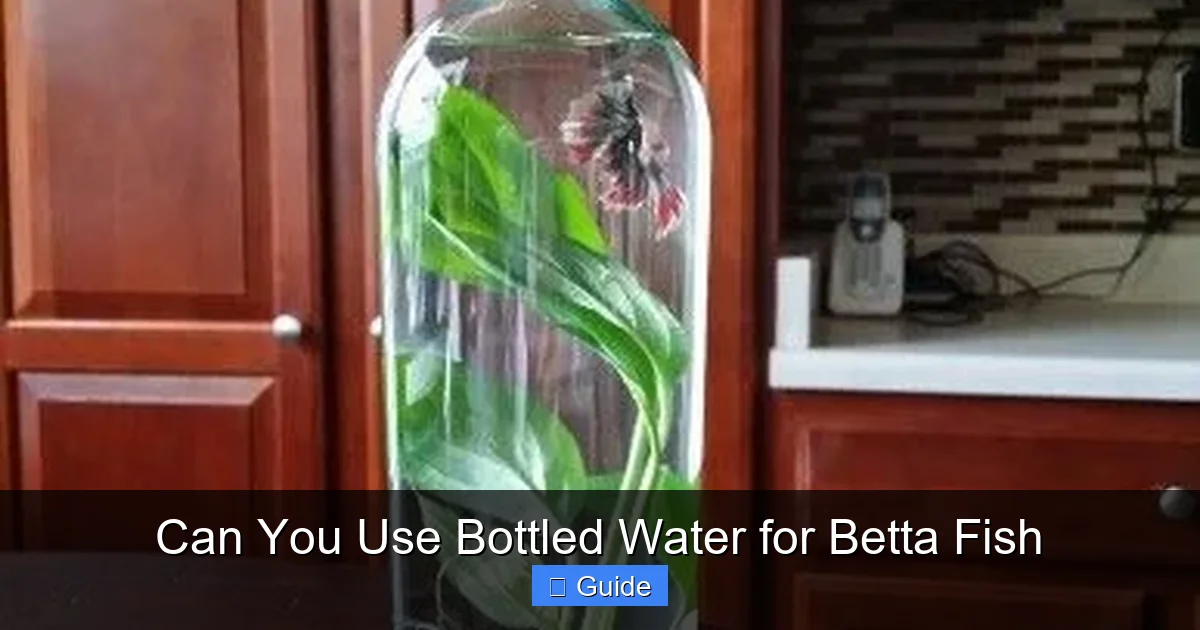
Now that we’ve established why most bottled water is a bad idea, let’s talk about what you should be using. In 99% of cases, the answer is your local tap water, properly conditioned. But let’s break down the options.
Visual guide about Can You Use Bottled Water for Betta Fish
Image source: i.pinimg.com
Option 1: Conditioned Tap Water (The Gold Standard)
For most aquarists, this is the simplest, most stable, and most cost-effective option. Modern municipal tap water is regulated and typically has a consistent mineral profile. The only things you must remove are chlorine, chloramines, and potentially heavy metals. This is done instantly with a liquid water conditioner (like Seachem Prime, API Stress Coat+, or any reputable brand). You dose it according to the instructions, and it makes the water safe within minutes.
Pro Tip: Always test your tap water. Use a liquid test kit to know your baseline tap pH, GH, and KH. This tells you what you’re starting with. If your tap water is extremely hard (GH > 15 dGH) or has a very high pH (>8.0), you may need to dilute it with reverse osmosis (RO) water, which we’ll cover next.
Option 2: Reverse Osmosis (RO) / Deionized (DI) Water + Remineralization
This is the professional, precision method. RO/DI water is like distilled water—it has no minerals. But here’s the twist: you use it as a blank slate. You mix it with your conditioned tap water (or add a commercial remineralizer) to create a perfectly customized, stable mineral profile. This is ideal if:
- Your tap water is very hard or has an unsuitable pH.
- You want to replicate the soft, acidic water of a betta’s natural habitat.
- You are breeding sensitive fish and need absolute parameter control.
You will need an RO/DI unit and a commercial remineralizer like Seachem Equilibrium (for GH) and Alkaline Buffer (for KH/pH). It’s more expensive and involved, but it gives you total control.
Option 3: Natural Spring Water (The Conditional Bottled Choice)
If you are in a situation where you cannot use tap water (e.g., in a dorm, with severely contaminated municipal water), a natural spring water is your only bottled option. But you must do your homework:
- Read the Label: It must say “Natural Spring Water.” Avoid “Purified Water,” “Drinking Water,” or “Sparkling Water.”
- Check the Analysis: The bottle should list a mineral analysis. Look for a GH between 3-8 dGH (50-140 ppm) and a KH that provides some buffering (at least 1-2 dKH). Avoid waters with zero mineral content listed.
- Test It: Buy one bottle, test its pH, GH, and KH with your liquid kit. See if it’s in a safe range (pH 6.5-7.5, GH 3-8 dGH).
- Brand Consistency: Find a brand that has a stable, consistent mineral profile from bottle to bottle. Some cheaper store brands may vary.
- Always Condition It: Even spring water can contain trace chloramines or metals from the bottling process. Always dose with a water conditioner.
Even with a good spring water, you are at the mercy of the bottler’s source. A drought or change in aquifer can alter the water’s chemistry without warning. This lack of consistency is the major drawback compared to a treated tap water source you know and control.
How to Prepare ANY Water Source for Your Betta: The Non-Negotiable Steps
No matter which water source you choose—tap, spring, or RO/DI—there are two absolute rules. Skipping these is the #1 cause of new fish death.
Visual guide about Can You Use Bottled Water for Betta Fish
Image source: infishtank.com
Step 1: Dechlorinate & Detoxify (The Conditioner)
This is step zero. Chlorine and chloramines are added to municipal water to kill bacteria. They are equally lethal to your betta’s beneficial bacteria and its gill tissue. A water conditioner does two things:
- Neutralizes Chlorine & Chloramines: Renders them harmless instantly.
- Detoxifies Heavy Metals & Ammonia: Many conditioners, like Seachem Prime, also bind to toxic ammonia (from fish waste) for up to 48 hours, giving your bio-filter time to process it. This is crucial during a fish-in cycle.
Dosage is key. Follow the label. If you are using a large volume of water (for a full water change), dose for the full volume. If you are adding a small amount of new water to top off evaporation, dose only for the amount you are adding.
Step 2: Match Temperature & Parameters (The Slow Introduction)
Never, ever dump new water into your betta’s tank. The shock from temperature and parameter differences can kill it.
- Temperature: The new water must be within 1-2°F (0.5-1°C) of your tank’s temperature. Use an accurate aquarium thermometer. Let the new water sit in the room to acclimate, or use a heater in a separate container.
- Parameter Matching: Ideally, the pH, GH, and KH of your new water should be as close as possible to the tank’s established parameters. A 0.2 pH shift or a large hardness jump is dangerous. This is why a consistent source (like your treated tap) is best—the parameters will naturally match.
- The Method: For a partial water change (25-50%), slowly add the new conditioned water to a clean container, then use a siphon or cup to very slowly drip the new water into the tank over 30-60 minutes. This allows the betta to gradually acclimate.
Debunking Common Myths About Bettas and Water
The betta hobby is filled with old wives’ tales. Let’s clear the air.
Myth 1: “Bettas Live in Mud Puddles, So Any Water is Fine.”
This is a gross oversimplification. While bettas are adapted to low-oxygen, shallow waters, those waters are not devoid of minerals. They are filled with decaying plant matter, which releases tannins and humic acids that soften water and lower pH slightly. The water is also in constant, slow exchange with the surrounding mineral-rich earth. A sterile, mineral-free bottle is nothing like their natural habitat.
Myth 2: “Distilled Water is the Purest, So It Must Be Best.”
As explained, “pure” for drinking means free of contaminants. For fish, it means free of the dissolved solids they need to survive. Using distilled water is like feeding your betta a diet of only white bread. It will slowly starve of essential nutrients.
Myth 3: “I Can Use Bottled Water for the First Fill and Then Switch to Tap.”
This is a terrible idea. The first “cycle” of a tank establishes a stable biological balance with the specific water parameters. Switching the water source mid-cycle or after the cycle is complete causes massive parameter instability, crashing the cycle and shocking the fish. Pick a water source and stick with it.
Myth 4: “Bottled Water Has No Chlorine, So I Don’t Need Conditioner.”
False. While most bottled waters are chlorine-free, they can contain chloramines (used in some bottling processes) or trace heavy metals from the plastic or source. Furthermore, conditioner does more than remove chlorine—it detoxifies ammonia and protects the fish’s slime coat. It’s a safety net you always want.
The Final Verdict: A Clear Recommendation
After all this, what’s the bottom line? Can you use bottled water for betta fish?
Yes, but only a specific type (natural spring water) and only if you are prepared to test it, condition it, and use it consistently. For the vast majority of betta keepers, this is an unnecessary complication and expense.
The unequivocal recommendation is to use your local tap water, treated with a quality water conditioner. It provides the stable mineral content (GH/KH) that buffers pH, supports osmoregulation, and promotes a healthy immune system. It is consistent, cost-effective, and gives you full control. Invest in a good liquid test kit, learn your tap water’s parameters, and use a conditioner with every single water change.
If your tap water is truly unusable (extremely hard, contaminated), the next best step is to invest in an RO/DI system and a remineralizer to create perfect water from scratch. Using arbitrary bottled waters is a gamble with your fish’s health, based on a flawed human-centric idea of “purity.” Your betta doesn’t need pure water. It needs balanced water. Give it that, and you’ll enjoy a vibrant, healthy companion for years to come.
Frequently Asked Questions
Can I use distilled water for my betta fish if I add minerals?
Technically yes, but it’s not recommended for beginners. You would need to add a precise, balanced remineralizer (like Seachem Equilibrium) to both GH and KH. Without exact measurement, you risk creating unstable or incorrect mineral levels, which is dangerous. Using a consistent source like conditioned tap water is far simpler and safer.
Is spring water or purified water better for bettas?
Spring water is the only bottled type that might work, as it contains natural minerals. Purified water (including most “purified drinking water”) has had all minerals removed and is essentially the same as distilled water in its effect on fish—it will leach minerals from your betta. Always choose spring water if you must use a bottle.
Can I do a full water change with bottled water?
You can, but it’s risky. A full 100% water change removes all established beneficial bacteria and drastically alters the water chemistry your betta is used to. If you must use bottled water for a full change, you must condition it, match the temperature perfectly, and ideally, drip-acclimate your betta to the new water over several hours in a separate container. Partial changes (25-50%) are always safer.
How long can bottled water sit in the tank before it goes bad?
Water itself doesn’t “go bad,” but its parameters can change. If you add untreated bottled water to the tank, it will mix with your existing water. The real issue is stability. If you use a bottled water with low KH, the pH of your entire tank may drop over days/weeks as biological processes produce acids. The key is to use a water source with sufficient buffering capacity (KH) to maintain a stable pH long-term.
Do I still need a water conditioner if I use expensive spring water?
Absolutely yes. You cannot assume spring water is free of chloramines or trace metals from the bottling process or source aquifer. A water conditioner is your insurance policy against any unknown contaminants and also protects your betta’s slime coat. It is a non-negotiable step for any water going into the tank.
What is the best bottled water brand for betta fish?
There is no single “best” brand because mineral content varies by source and can even vary within a brand’s own aquifer over time. The best practice is to test the specific bottle you buy. Look for a natural spring water with a listed mineral analysis showing a moderate GH (3-8 dGH) and some KH. Brands like Fiji Water or Evian are often cited, but you must verify with your own test kit. Consistency is more important than a specific brand name.