Can You Have 2 Female Betta Fish Together

While male bettas are famously solitary, female bettas can be housed together under strict conditions. This requires a minimum 20-gallon tank with 5+ females to disperse aggression, abundant hiding spots, and diligent monitoring. It’s a challenging but rewarding setup for dedicated aquarists who prioritize their fish’s wellbeing.
Key Takeaways
- Tank size is critical: A minimum of 20 gallons is non-negotiable for a stable sorority, with larger being significantly better.
- Group dynamics matter: Keeping at least 5-6 females simultaneously helps disperse aggression and establish a stable hierarchy.
- Aggression is inherent: Even in a sorority, females will flare, chase, and occasionally nip; the goal is to manage, not eliminate, this behavior.
- Aquascaping is essential: Dense planting, multiple hiding spots (caves, driftwood, PVC pipes), and visual barriers are mandatory to break lines of sight.
- Vigilant monitoring is required: You must observe interactions daily, especially during the first few weeks, and be prepared to separate injured or persistently bullied fish immediately.
- Have a backup plan: Always have a separate, cycled hospital tank ready to isolate any fish showing severe stress or injury.
- Individual personalities vary: Some females are naturally more docile, while others are exceptionally aggressive; success depends on the specific group’s chemistry.
📑 Table of Contents
- Debunking the Myth: Are Female Bettas Truly Social?
- Understanding Female Betta Behavior: Sorority vs. Solitude
- The Betta Sorority: Rules and Realities
- Tank Setup for Success: Building a Peaceful Foundation
- Introducing and Monitoring Your Sorority: The Critical First Weeks
- Common Pitfalls and How to Avoid Them
- Alternatives to a Sorority: Safer Paths to a Community Tank
- The Verdict: A Rewarding Challenge for the Dedicated
Debunking the Myth: Are Female Bettas Truly Social?
Walk into any pet store, and you’ll see rows of male betta fish (Betta splendens) floating alone in tiny cups. This visual has cemented a powerful myth: all bettas must live alone. The truth, however, is far more nuanced. While it’s absolutely true that male bettas are notoriously territorial and will fight to the death with other males, the story for females is different. So, can you have 2 female betta fish together? The short, practical answer is: it’s incredibly risky and generally not recommended. But can you have a group of female bettas together? That’s a different, and more complex, question. The successful housing of multiple female bettas—a setup known as a “sorority”—is a hotly debated topic among aquarists. It sits on a spectrum between a fascinating, natural behavior and a constant, high-stakes gamble with your fish’s health. This guide will walk you through everything you need to know, from the biological reasons behind their aggression to the precise, demanding steps required for a peaceful sorority. We will be brutally honest about the risks, because the welfare of the fish must always come first.
The Biological Basis of Betta Aggression
To understand if two female bettas can live together, we must first understand why bettas are aggressive at all. Both male and female bettas are members of the Osphronemidae family, which includes other labyrinth fish like gouramis. They possess a specialized organ called a labyrinth, allowing them to breathe atmospheric air. More importantly for our discussion, they are fiercely territorial. This trait was amplified by centuries of selective breeding for the fighting fish (or “plakat”) culture of Southeast Asia. Males were bred for extreme aggression and durability. Females, while also used in fighting historically, were not subjected to the same intense selective pressure. Consequently, female bettas often retain a more moderate, but still very present, territorial instinct. In the wild, a female’s territory might overlap with others, but they have vast, complex habitats to navigate and escape into. In a confined aquarium, there is nowhere to run.
The key takeaway here is that aggression is a species-typical behavior, not a sign of a “mean” fish. It’s hardwired. A female betta’s aggression is primarily directed towards other female bettas, as they are seen as competitors for resources and space. This is why the question isn’t simply “can two female bettas live together?” but rather, “under what intensely controlled conditions can a *group* of female bettas have their aggression managed?”
Understanding Female Betta Behavior: Sorority vs. Solitude
Female bettas are not the gentle, community-oriented fish some hobbyists hope for. They are complex individuals with distinct personalities. Observing a well-established sorority can be captivating. You’ll see a clear pecking order form. A dominant female, often the largest and most vividly colored, will assert her position through controlled flaring (gilling out their opercula and spreading their fins) and brief chases. Subordinate females will yield, giving the dominant fish right of way to food or a preferred resting spot. Once this hierarchy is solidified—usually within a few days to a couple of weeks—the aggression often subsides to a low-level, sporadic background noise. There may be occasional reminders of the hierarchy, but serious, injurious fights become less frequent.

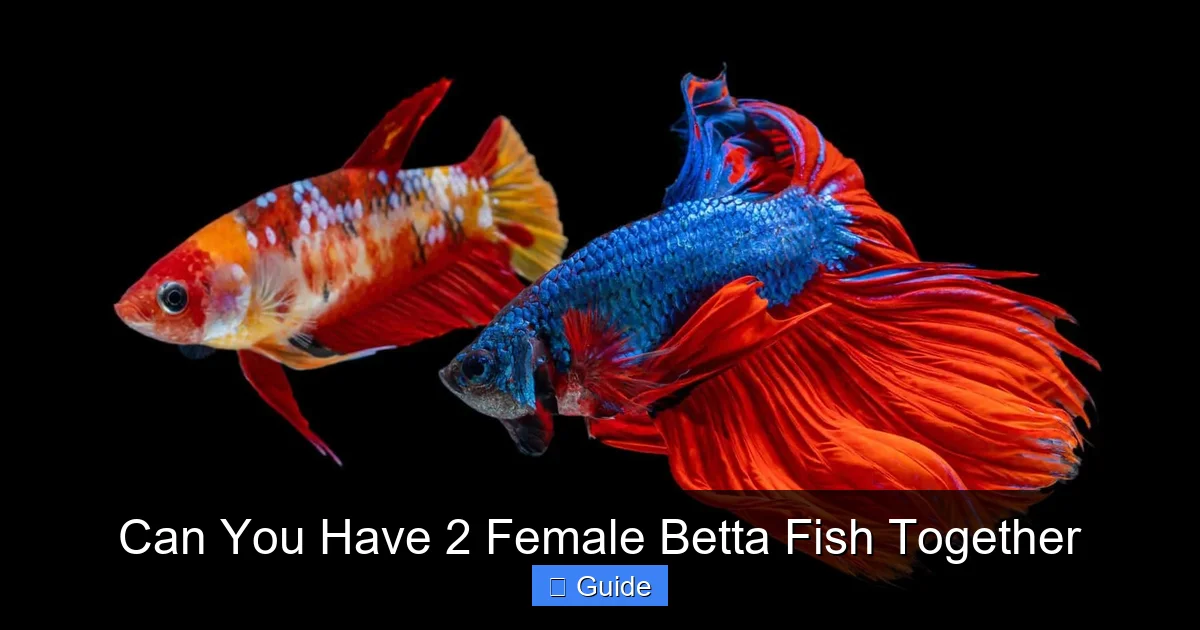
Visual guide about Can You Have 2 Female Betta Fish Together
Image source: petshun.com
The Myth of the “Peaceful” Female
A dangerous misconception is that female bettas are inherently peaceful compared to males. This is false. A female betta can be, and often is, every bit as aggressive as a male. The difference lies in group dynamics. A single male’s aggression is focused on any intruder in his space. A group of females can, under perfect conditions, distribute that aggressive energy among themselves. But pairing just two females is a recipe for disaster. With only two individuals, there is no mechanism for a stable hierarchy. It becomes a perpetual, high-tension duel with no subordinate role to fall into. One will relentlessly harass the other, leading to extreme stress, fin nipping, and likely death for the weaker fish. The number “two” is the most unstable and dangerous combination for female bettas.
Natural Habitat Insights
In their native rice paddies and slow-moving streams of Thailand, Cambodia, and Vietnam, bettas live in densely vegetated, shallow waters. The thick plant cover provides countless hiding spots and breaks in visual contact. They are not schooling fish; they are solitary territorialists who may have overlapping territories. This natural environment is the blueprint for a successful sorority tank. We must replicate the complexity and visual barriers of their wild home to give them the psychological space they need to coexist. A bare tank is a prison that guarantees conflict.
The Betta Sorority: Rules and Realities
If two females is a bad idea, what is the formula for a sorority? The community has developed guidelines based on collective experience, not scientific studies. These are not strict rules but rather hard-won lessons that dramatically increase your odds of success. Think of them as the minimum requirements; exceeding them will always yield better results.
Visual guide about Can You Have 2 Female Betta Fish Together
Image source: bettasource.com
The Magic Number: Why 5+ Females?
The most critical rule is the group size. The consensus among successful sorority keepers is a minimum of 5-6 females, introduced simultaneously. Why such a large number? It’s about aggression distribution. In a group of five, the dominant female’s attention is divided among four others. The aggression is “diluted.” Subordinate fish have multiple peers to interact with, not just the one bully. In a trio or quartet, one fish often becomes a permanent, singled-out target. With five or more, the social structure becomes more complex and stable. The hierarchy has more levels (alpha, beta, gamma, etc.), and the chasing and flaring is spread out in shorter bursts among different pairs. It mimics a more natural social dynamic, even if it’s not “friendly” by human standards.
Practical Example: Imagine a schoolyard. With two children, any conflict is direct and constant. With ten children, conflicts are fleeting, and social alliances can form. Your sorority tank is that schoolyard. You are providing a large enough “playground” (tank) and enough “children” (fish) to prevent one from being permanently ostracized.
Tank Size is Non-Negotiable
If group size is the first rule, tank size is the second, and it is equally important. The absolute minimum for a sorority is a 20-gallon long tank. “Long” is key—a 20-gallon “high” tank with a smaller footprint is less ideal. You need horizontal swimming space to create distinct territories. Why 20 gallons? It provides the water volume to dilute aggressive encounters (a chase that ends quickly doesn’t cause as much stress in clean, stable water) and, most importantly, allows for the extensive aquascaping required. A 10-gallon tank, even with five females, is a pressure cooker. There is no room for error. Stress hormones will skyrocket, immune systems will crash, and disease will follow. Larger is always better: a 29, 40, or 55-gallon tank provides an immense safety buffer and makes the setup much more forgiving.
The Inherent Risks: A Reality Check
No matter how perfectly you follow the rules, a sorority is not a guaranteed success. You are working against strong natural instincts. The risks are real and must be accepted before you even begin:
- Fin Nipping and Injury: Even in a stable sorority, a fish may get its fins nipped during a squabble. This can lead to torn, ragged fins, making the fish susceptible to fin rot.
- Chronic Stress: The constant low-level social tension is a stressor. Stressed fish have weakened immune systems and are prone to diseases like ich or velvet.
- Sudden Death: A hierarchy shift can happen at any time. If a new, more dominant fish is added, or if a previously dominant fish weakens, violent re-establishment can occur, leading to fatalities.
- The “Bully”: You may have one individual that simply will not stop harassing others, no matter the tank size or group size. This fish often needs to be removed and housed alone.
- Long-Term Viability: Some aquarists report that sororities can be stable for months or even years. Others find they inevitably break down after a few weeks. There is no guarantee of a 5-year lifespan for all members.
This is why a sorority is considered an advanced-level aquarium setup. It is not for beginners, and it is not for the faint of heart. You must be prepared to intervene, to have backup tanks, and to make difficult decisions about re-homing fish.
Tank Setup for Success: Building a Peaceful Foundation
Your tank is not just a container of water; it’s a carefully constructed environment designed to mitigate aggression. Every element serves the purpose of providing security and breaking visual contact. Skimping here is the single biggest cause of sorority failure.

Visual guide about Can You Have 2 Female Betta Fish Together
Image source: bettasource.com
Aquascaping for Peace: The Plant Fortress
The mantra is: dense, dense, dense. You want a tank that looks more like a jungle than a show tank. The goal is to ensure that no fish can see the entire length of the tank from any one spot. This prevents a dominant female from claiming the entire space and constantly patrolling it.
- Stem Plants: Plants like Rotala, Ludwigia, and Cabomba are excellent for creating thick, vertical walls of greenery. Plant them in groups to form dense thickets.
- Midground and Foreground Plants: Use anubias and java fern attached to driftwood or rocks to create mid-level hiding spots. Cryptocorynes provide broad leaves for fish to rest under. Dwarf Sagittaria or Micranthemum ‘Monte Carlo’ can form a lush carpet, blocking view at the bottom.
- Floating Plants: This is a game-changer. Frogbit, Red Root Floaters, or Salvinia create a beautiful canopy at the surface, diffusing light and providing a sense of security. Betta fish naturally linger near the surface (they are labyrinth breathers), and a floating plant cover mimics their wild habitat and reduces surface aggression.
Hardscape is equally important: Use Malaysian driftwood, lava rock, and ceramic caves (like those for axolotls or plecos) to create physical barriers. PVC pipes (clean, non-toxic) cut lengthwise can be excellent, cheap hiding tubes. Arrange these so they create “rooms” and corridors. The fish should have to swim around a corner to see what’s on the other side.
Filtration and Water Quality: The Unsung Hero
Aggression is exacerbated by poor water quality. A stressed fish is a more aggressive fish. A heavy bioload from 5+ bettas requires robust filtration, but you must also protect their delicate fins.
- Filter Choice: A sponge filter is often the best choice for a betta sorority. It provides excellent biological filtration, creates gentle water flow (bettas hate strong currents), and the sponge itself is a massive surface area for beneficial bacteria. The bubbles from air-driven sponge filters also help with oxygen exchange. If using a hang-on-back (HOB) or canister filter, always use a sponge pre-filter on the intake to prevent fin damage, and baffle the outflow with a spray bar or sponge to diffuse the current.
- Heater: Bettas are tropical fish. A stable temperature between 78-80°F (25.5-26.5°C) is ideal. Use a reliable, fully submersible heater with a separate thermometer for verification.
- Water Changes: Perform weekly water changes of 25-30%. In a densely stocked sorority, this is not optional. It removes waste products that cause stress and aggression. Use a gravel vacuum to clean the substrate, being careful not to disturb the aquascape too much.
Tank Dimensions and Lighting
As mentioned, a long tank (e.g., 30″ x 12″ footprint for a 20-gallon) is superior to a tall, narrow one. The horizontal space allows for more distinct territories. Lighting should be moderate. Intense lighting can make fish more irritable and will encourage algae growth in a planted tank. Use a timer to provide a consistent day/night cycle (8-10 hours of light).
Introducing and Monitoring Your Sorority: The Critical First Weeks
Setting up the perfect tank is only half the battle. The introduction process and the first month of monitoring are where most sororities live or die.
The Simultaneous Introduction Method
Never, ever add a new female to an established sorority. This is the fastest way to trigger catastrophic violence. The existing hierarchy is already set, and a newcomer is seen as an intruder to be eliminated. The only safe method is to introduce all females at the exact same time. This allows the hierarchy to form from a state of equal footing. All fish are “new” to the tank, and while aggression will flare, it’s part of the natural establishment process.
Acclimation: Acclimate each fish to the tank water temperature and parameters using the drip method. This is crucial to prevent shock, which would make a fish weak and an immediate target. Once acclimated, gently net each fish (do not pour store water in) and release them into different parts of the tank—one near a hiding spot on the left, one on the right, etc. This prevents them from all meeting in a single, crowded entrance point.
Recognizing Normal Hierarchy Establishment
For the first 24-72 hours, expect constant flaring, chasing, and locking jaws (tussling). This is normal. They are testing each other. Watch for:
- One or two fish consistently chasing others.
- Fish flaring their gills and fins at each other when they cross paths.
- Brief, non-injurious tussles that end with one fish retreating.
The key is that the chases are short. A fish is chased for a few seconds, finds a hiding spot, and the pursuer gives up. The chased fish then comes out to feed. If chases last for minutes on end, with the victim unable to find refuge, that is a red flag.
Red Flags: When to Intervene
You must be prepared to separate fish immediately if you see:
- Locked-Jaw Fights: Two fish locked together, rolling and tumbling, unable to disengage. This is serious combat.
- Constant, Relentless Chasing: One specific fish is chased from the moment it leaves a hiding spot until it finds another, all day long, with no respite.
- Fin Damage: Visible rips, tears, or missing chunks of fin on any fish, especially if it’s getting worse daily.
- Hiding 24/7: A fish that never comes out to eat, is pale, clamped, and stays in the very back corner of a cave. This is a fish being terrorized.
- Lying on the Bottom: Extreme lethargy, not swimming, is a sign of severe stress or injury.
Action: Have a separate, cycled “hospital” or “quarantine” tank ready at all times. At the first sign of a fish being singled out and injured, net it and move it to the hospital tank. You can then attempt to re-introduce it later (after a week or two) if the sorority seems stable, but often, a fish that has been bullied once will be a permanent target. It may need to live alone permanently. This is part of the responsibility of attempting a sorority.
Common Pitfalls and How to Avoid Them
Even with the best intentions, sororities fail. Here are the most common mistakes and how to sidestep them.
Pitfall 1: Starting with Too Few Fish or a Tank That’s Too Small
This is the #1 error. “I only have two females, can they live together?” No. “I have four females in a 10-gallon tank.” That’s a death sentence. The rules exist for a reason. You must commit to the minimum standards from day one. If you cannot afford or space a 20+ gallon tank and 5-6 females, do not attempt a sorority. The ethical choice is to house your bettas singly.
Pitfall 2: Inadequate Hiding Spots and Visual Barriers
It’s not enough to have “some” plants. You need a thick, multi-layered jungle. Test your tank’s visual barriers: can you, from a fish’s eye level, see from one end to the other? If yes, add more plants or hardscape. Every fish should be able to find at least 3-4 distinct hiding spots that are not in the same line of sight.
Pitfall 3: Poor Water Quality and Inconsistent Maintenance
With 5+ bettas, the bioload is significant. Ammonia and nitrite must be at 0 ppm, and nitrates should be kept below 20 ppm with regular water changes. A neglected water change in a heavily stocked tank can cause a spike in toxins, stressing all fish and making them more aggressive. Invest in a good liquid test kit (like API Freshwater Master Test Kit) and test weekly.
Pitfall 4: Adding Fish After the Sorority is Established
This cannot be stressed enough. Once a hierarchy is set (after about 2-3 weeks), the tank is “full.” Adding any new female is an act of aggression that will be met with violent defense by the entire group. The new fish will be attacked relentlessly and likely killed. If you lose a fish and want to “top up” the group, you must restart the entire process in a new, freshly set-up tank, introducing all new females at once.
Pitfall 5: Choosing the Wrong Tank Mates
While the focus is on the female bettas themselves, you might consider adding other peaceful community fish to a very large sorority tank (40+ gallons). This can sometimes help by providing a “distraction” and occupying different water levels. Good candidates are schoolers like neon tetras or harlequin rasboras (top/mid-level), or bottom-dwellers like corydoras catfish or kuhli loaches. Never add fish with long, flowing fins (like guppies, fancy goldfish) as bettas will see them as rival bettas and attack. Also avoid brightly colored, aggressive fish. Any addition must be done carefully, with a quarantine period, and you must be ready to remove the new fish if the bettas harass it.
Alternatives to a Sorority: Safer Paths to a Community Tank
Given the complexity and risk, what are the alternatives for someone who wants more than one betta or a vibrant community?
Option 1: The Single, Adored Betta in a Species-Only Tank
This is the gold standard. House one male or female betta in a properly planted, heated, filtered 5+ gallon tank. This fish will be the star of the show. You can add a few peaceful, fast-moving tank mates that won’t trigger aggression, like a small school of neon tetras (in a 15+ gallon tank) or some amano shrimp (who are excellent algae cleaners and usually ignored). This setup is beautiful, engaging, and carries minimal risk.
Option 2: The Divided Tank
If you absolutely must keep multiple bettas in one physical tank system, use a solid, watertight divider. A 40-gallon breeder tank can be split into two 20-gallon sections, each with its own heater, filter, and inhabitants. You can keep a male on one side and a female (or another male, if the divider is flawless and extends above the waterline) on the other. This allows them to see each other occasionally, which may trigger flaring (a form of enrichment for some bettas), but they cannot physically interact. This requires careful sealing to prevent leaks and ensure both sides have equal access to filtration and heating.
Option 3: The “One Male, Many Females” Myth
Some sources dangerously suggest keeping one male with multiple females. This is almost always a terrible idea. A male betta will see any female as a potential mate. If the female is not receptive (which she often won’t be in a confined space), he will harass her relentlessly to spawn. This leads to extreme stress, injury, and death for the females. The only exception is in a massive, professionally designed breeding tank with constant supervision, and even then, the pair is usually separated immediately after spawning. Do not attempt this in a community tank.
The Verdict: A Rewarding Challenge for the Dedicated
So, can you have 2 female betta fish together? The definitive answer is no. Can you have a group of 5 or more female bettas together in a 20+ gallon, meticulously planted tank? Yes, but with immense caveats. It is not a casual project. It is a dynamic, living experiment in ethology (animal behavior) that demands your constant attention, significant financial investment in equipment and space, and the emotional fortitude to deal with potential failures. The sight of a peaceful, thriving betta sorority, where each fish holds its own territory and moves with confidence, is one of the most rewarding achievements in the freshwater aquarium hobby. But it must be pursued with eyes wide open, respecting the animal’s innate nature above our own desire for a cute community tank. For most people, the happier, healthier, and infinitely safer path is to celebrate the betta as the magnificent solitary creature it is, providing it with a stunning, spacious single-species home. If you do choose the sorority path, arm yourself with knowledge, prepare for intervention, and prioritize the well-being of every fish above all else.
Frequently Asked Questions
What is the absolute minimum tank size for a female betta sorority?
The absolute minimum is a 20-gallon long tank (30″ x 12″ footprint). This provides enough horizontal space and water volume to dilute aggression and allow for the necessary aquascaping. Anything smaller, like a 10-gallon, is considered unethical and will almost certainly lead to severe stress and fighting.
How many female bettas should I keep together?
You must start with a group of at least 5-6 females introduced at the same time. This number allows for a more stable social hierarchy where aggression is distributed. Keeping fewer than 5, especially two or three, guarantees one fish will be relentlessly bullied.
Can I add other fish to a female betta sorority?
It is possible in a very large tank (40+ gallons) with a well-established sorority, but it’s risky. Only add peaceful, fast-moving fish that occupy different levels, like a school of neon tetras or a group of corydoras. Never add fish with long fins (guppies, fancy guppies) or bright colors that resemble bettas. Always have a backup plan to remove any fish that is harassed.
What are the clear signs that my sorority is failing?
Red flags include: one specific fish being chased relentlessly with no chance to rest, visible fin damage or torn fins on any fish, a fish hiding 24/7 and not eating, locked-jaw fights, and any fish lying lethargic on the bottom. At the first sign of these, the bullied or injured fish must be immediately removed to a separate hospital tank.
What should I do if my female bettas start fighting?
Have a cycled hospital tank ready at all times. At the first sign of serious, injurious fighting (locked jaws, constant chasing, fin damage), net the victim (or the primary aggressor if it’s clear one fish is the bully) and move it to the hospital tank. You may need to house that fish alone permanently. Do not wait to see if it “gets better,” as permanent injury or death can occur in hours.
Do female bettas in a sorority have shorter lifespans?
Not necessarily, if the sorority is stable and the tank is pristine. A well-cared-for betta can live 3-5 years. However, the chronic stress of a poor sorority setup (wrong tank size, constant bullying, bad water) will absolutely shorten their lifespan. The key is providing the correct environment to minimize stress, allowing them to live full, healthy lives.