How to Make Water for a Betta Fish
Making water for a betta fish involves more than just filling a tank — it requires proper treatment, temperature control, and water conditioning. This guide teaches you how to make water for a betta fish safely, so your finned friend thrives in a healthy, clean environment.
Key Takeaways
- Always treat tap water: Never use raw tap water. Always dechlorinate and condition it before adding it to your betta’s tank.
- Temperature matters: Betta fish need warm water between 76-82°F (24-28°C) to stay healthy and active.
- Test your water regularly: Check pH, ammonia, nitrite, and nitrate levels weekly to maintain ideal water parameters.
- Use the right conditioner: A quality water conditioner for betta fish removes chlorine, chloramine, and heavy metals safely.
- Avoid common mistakes: Skipping water changes, using untreated water, and sudden temperature swings are the top errors to avoid.
- Cycle your tank first: A properly cycled tank has beneficial bacteria that help break down toxins naturally.
- Partial water changes are best: Replace 25-50% of the water weekly rather than doing full changes that stress your betta.
📑 Table of Contents
- How to Make Water for a Betta Fish: The Complete Guide
- Why Water Quality Matters for Your Betta Fish
- How to Make Water for a Betta Fish: Step-by-Step
- Best Water Types Compared
- Common Mistakes When Making Water for Betta Fish
- How to Test and Maintain Water Quality Long-Term
- Quick Tips and Expert Advice for Betta Water Care
- Conclusion
How to Make Water for a Betta Fish: The Complete Guide
Setting up a home for your betta fish is exciting. But before you drop that beautiful finned friend into a new tank, you need to get one thing right first — the water. Learning how to make water for a betta fish is one of the most important skills every betta owner needs. It directly affects your fish’s health, color, energy, and lifespan.
Tap water straight from the faucet? That’s a no-go. It contains chlorine, chloramine, and sometimes heavy metals that can harm or even kill your betta. Making safe water for your betta involves treating, conditioning, and temperature-adjusting the water to match their natural habitat. This guide walks you through every step, from choosing the right water source to maintaining long-term water quality.
Whether you’re a brand-new betta owner or a seasoned hobbyist, this article has something for you. Let’s dive in and make sure your betta has the best home possible.
Why Water Quality Matters for Your Betta Fish
Bettas are tropical fish native to the warm, shallow waters of Southeast Asia. They are surprisingly hardy, but that doesn’t mean they can tolerate poor water. In fact, water quality is the number one factor that determines how long and how well your betta lives.
Here’s why water quality is so critical:
- Toxin buildup: Fish produce waste that turns into ammonia. Without proper water conditions, ammonia builds up and burns the fish’s gills.
- Sensitive skin and fins: Betta fish have delicate fins and thin skin. Harsh water chemicals can cause ripping, fraying, and infection.
- Stress and disease: Poor water leads to stress. A stressed betta is more likely to develop fin rot, ich, and other illnesses.
- Color vibrancy: Clean, well-conditioned water brings out the rich colors bettas are famous for. Dirty water can make them fade.
The good news? Once you understand the basics of betta fish water preparation, keeping your fish healthy becomes much easier. It’s not complicated — it just takes consistency and a little know-how.
How to Make Water for a Betta Fish: Step-by-Step
Now let’s get into the actual process. Making safe water for your betta involves several clear steps. Follow them in order for the best results.
Step 1: Choose Your Water Source
The first decision is what type of water to start with. Here are the most common options:
- Tap water: The most affordable and accessible choice. However, it must be treated before use because it contains chlorine and possibly chloramine.
- Filtered water: Some aquarists use home filtration systems. This removes some contaminants but may still need additional treatment.
- Bottled water: While clean, bottled water often lacks beneficial minerals and may have a different pH. It’s not the best long-term option.
- Spring water: Natural and mineral-rich, but the pH and hardness can vary wildly, making it risky for bettas.
For most people, tap water is the go-to source. It’s affordable and, when properly treated, perfectly safe for your betta. If you’re curious about other options, check out this guide on what water to use for a betta fish to explore all the choices in detail.
Step 2: Dechlorinate and Condition the Water
This is the most crucial step in the entire process. City water supplies add chlorine and chloramine to kill bacteria. These chemicals are safe for humans but dangerous for fish. You need to dechlorinate water for betta fish before it goes into the tank.
Here’s how to do it:
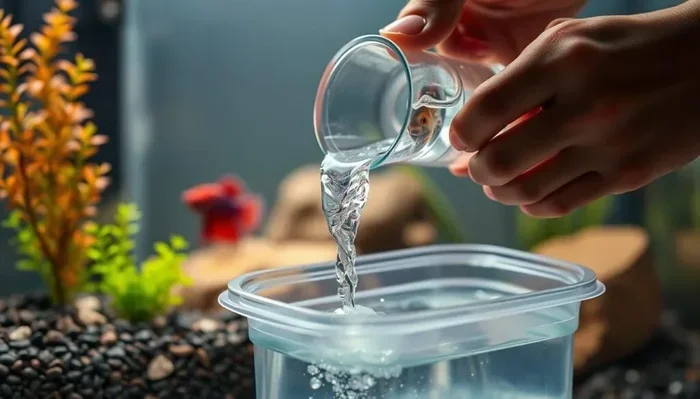
- Fill your bucket or container with the amount of water you need.
- Add a quality water conditioner for betta fish. Popular brands include Seachem Prime, API Water Conditioner, and Tetra AquaSafe.
- Stir the water gently to distribute the conditioner evenly.
- Wait 15-30 minutes for the conditioner to fully neutralize chlorine and chloramine.
Most conditioners work almost instantly. Some also neutralize heavy metals and ammonia. Always read the product label for dosage instructions. Using too little won’t fully protect your fish. Using too much is generally safe, but it’s best to follow directions.
If you want a deeper understanding of this process, our article on how to use tap water conditioner for betta fish covers everything you need to know about choosing and using the right products.
Step 3: Adjust the Water Temperature
Bettas are tropical fish. They need warm water to thrive. The ideal water temperature for betta fish ranges from 76°F to 82°F (24°C to 28°C). Room temperature water is usually too cold, especially in winter.
Here are a few ways to warm the water:
- Aquarium heater: The best and most reliable option. A small submersible heater with a thermostat keeps the temperature steady.
- Warm water additions: You can slowly add small amounts of pre-warmed water to raise the temperature gradually.
- Heat lamp or pad: These work for smaller setups but are less precise than a heater.
Never dump your betta into cold water. Sudden temperature changes cause shock and can be fatal. If you’re unsure about keeping the water warm enough, our guide on how to keep water warm for betta fish offers practical solutions for every budget.
Step 4: Check the pH and Water Hardness
Bettas prefer slightly acidic to neutral water. The ideal pH level is between 6.5 and 7.5. Water hardness should be moderate, around 5-20 dGH (degrees of General Hardness).
To test your water:
- Buy a liquid test kit (like the API Master Test Kit). Liquid kits are more accurate than strips.
- Test the pH, ammonia, nitrite, and nitrate levels.
- If the pH is too high, use a pH down solution. If it’s too low, use a pH up solution.
- Adjust slowly. Never make sudden changes.
Maintaining stable water parameters is more important than hitting the “perfect” number. Bettas can adapt to a range as long as the values don’t swing wildly.
Step 5: Add the Water to the Tank
Once your water is treated, warmed, and tested, it’s time to add it to the betta’s tank. Follow these tips for a smooth transition:
- Pour the water slowly to avoid disturbing the gravel or decorations.
- If your tank has a filter, turn it on after adding the water.
- Let the filter run for at least 15 minutes before introducing your betta. This helps distribute the conditioner and start the beneficial bacteria cycle.
- Float the betta’s bag in the tank for 15-20 minutes before releasing the fish. This equalizes the temperature gradually.
Best Water Types Compared
Not all water sources are created equal. Here’s a quick comparison to help you decide which is best for your betta:
| Water Type | Pros | Cons | Best For |
|---|---|---|---|
| Tap Water | Cheap, accessible, easy to treat | Contains chlorine, needs conditioner | Most aquarists |
| Filtered Water | Fewer contaminants | May still need treatment | Sensitive fish setups |
| Bottled/Spring Water | Clean, no chlorine | Unpredictable pH and minerals | Emergency use only |
| RO/Distilled Water | Pure, no contaminants | Lacks minerals, needs remineralization | Advanced hobbyists |
As you can see, tap water treated with a conditioner is the most practical choice for most betta owners. It hits the sweet spot of safety, cost, and availability.
Common Mistakes When Making Water for Betta Fish
Even experienced fish keepers make mistakes sometimes. Here are the most common errors to avoid when preparing water for your betta:
Using Untreated Tap Water
This is the biggest mistake new owners make. Tap water contains chlorine that strips the protective slime coat off your betta’s body. Always treat the water first. A simple water treatment process takes just minutes but saves your fish from serious harm.
Skipping Water Changes
Some people think once the tank is set up, the water stays good forever. That’s not true. Waste builds up over time. Regular water changes for betta fish — typically 25-50% weekly — keep toxins at bay. Learn more about the right frequency in our guide on how often to change water for betta fish.
Changing All the Water at Once
A full water change might seem like a good idea, but it actually stresses your betta and wipes out beneficial bacteria. Stick to partial changes. Replace a quarter to half the water each time. This keeps the environment stable while removing waste.
Ignoring Temperature
Cold water weakens a betta’s immune system. If your home is cool, invest in a heater. Consistent warmth keeps your fish active, eating well, and displaying bright colors. For more tips, read about how to change water for betta fish safely without causing temperature shock.
Overdosing Conditioner
While most conditioners are safe, using excessive amounts can cause issues. Follow the dosage instructions on the bottle. If your water is very hard or heavily chlorinated, you may need a slightly higher dose — but never double it without checking the product guidelines.
How to Test and Maintain Water Quality Long-Term
Making the water is only the first half. Maintaining quality over time is just as important. Here’s a simple routine to follow:
Weekly Testing
Use a liquid test kit to check four key parameters every week:
- Ammonia: Should be 0 ppm. Any amount is dangerous.
- Nitrite: Should be 0 ppm. Nitrite is toxic even in small quantities.
- Nitrate: Keep below 20 ppm. High nitrates cause algae growth and stress.
- pH: Aim for 6.5-7.5. Stability matters more than perfection.
Monthly Deep Clean
Once a month, do a more thorough maintenance session:
- Vacuum the gravel to remove trapped waste.
- Clean or replace filter media in tank water (never tap water — it kills bacteria).
- Trim any live plants if you have them.
- Do a 50% water change with freshly conditioned water.
Signs Your Water Needs Attention
Watch for these warning signs that something is off with your water:
- Your betta is lethargic or hiding more than usual.
- Colors appear faded or dull.
- Clamped fins (fins held close to the body).
- White spots or cotton-like growths on the body.
- Algae blooming excessively in the tank.
- Bubbles on the water surface that don’t pop quickly.
If you notice any of these, test your water immediately. Often, a partial water change and conditioner addition solve the problem quickly.
Quick Tips and Expert Advice for Betta Water Care
Here are some bonus tips from experienced betta keepers to help you get the best results:
- Pre-make water in advance: Fill buckets with treated water and store them for water changes. This saves time and ensures you always have safe water ready.
- Use a air pump: Gentle aeration helps distribute heat and oxygen evenly across the tank surface.
- Don’t overclean: A little algae is normal. Overcleaning removes beneficial bacteria that help break down waste.
- Match water to your betta’s needs: Wild-caught bettas may need slightly different parameters than captive-bred ones. Research your specific variety.
- Keep a maintenance log: Write down water change dates, test results, and anything unusual. This helps you spot patterns over time.
Remember, the water conditioning process isn’t a one-time thing. It’s an ongoing commitment. The time you invest in proper water care pays off with a healthy, vibrant betta that can live 3-5 years or even longer.
For a complete overview of betta care fundamentals, including water management, check out our comprehensive guide on how to care for a betta fish 101. It covers everything from tank setup to feeding schedules.
Conclusion
Now you know exactly how to make water for a betta fish the right way. From choosing the best water source and dechlorinating with a quality conditioner, to maintaining ideal temperature and testing water parameters regularly — you have all the tools you need. The key is consistency. Make safe water, keep it clean, and watch your betta flourish.
Your betta depends on you for everything. Every clean water change, every proper temperature check, and every test kit reading is an act of love. Follow the steps in this guide, avoid the common mistakes, and your betta will reward you with years of beautiful, active companionship. Start today, and give your fish the fresh, safe water they deserve.
Frequently Asked Questions
Can I use bottled water for my betta fish?
You can use bottled water in a pinch, but it’s not ideal long-term. Bottled water often has an unpredictable pH and lacks beneficial minerals that bettas need. If you must use it, test the parameters first and remineralize if necessary. Treated tap water is a better, more affordable option for most aquarists.
How long should I wait before putting my betta in new water?
After adding a water conditioner, wait at least 15-30 minutes before introducing your betta. This gives the conditioner time to fully neutralize chlorine and chloramine. If you’re using a new tank, make sure it has been cycled for at least 2-4 weeks to establish beneficial bacteria colonies.
What temperature should betta water be?
Betta fish thrive in water between 76°F and 82°F (24°C to 28°C). Room temperature water is usually too cold, especially during winter months. An aquarium heater with a thermostat is the best way to maintain a consistent, safe temperature for your tropical fish.
Do I need to use a water conditioner every time I do a water change?
Yes, absolutely. Every time you add new tap water to the tank, you must treat it with a conditioner. Even small amounts of chlorine can irritate your betta’s skin and fins. Make it a habit to always condition fresh water before it enters the aquarium.
Can I use a water conditioner that contains aloe vera?
Yes, aloe vera-based conditioners are safe and can provide extra protection for your betta’s slime coat. Many premium conditioners include aloe vera as an added ingredient to soothe and protect fish. Just follow the dosage instructions on the product label.
What is the best water conditioner for betta fish?
Some of the most popular and effective conditioners include Seachem Prime, API Water Conditioner, and Tetra AquaSafe. Seachem Prime is widely recommended because it neutralizes chlorine, chloramine, ammonia, and nitrite. Choose a conditioner that fits your budget and tank size, and always use it with every water change.
=== SETTINGS ===
[{“label”: “SEO Title”, “value”: “How to Make Water for a Betta Fish | Step-by-Step Safe Guide”}, {“label”: “Meta Title”, “value”: “How to Make Water for a Betta Fish: Safe Treatment Guide”}, {“label”: “URL Slug”, “value”: “how-to-make-water-for-a-betta-fish”}, {“label”: “Primary Keyword”, “value”: “how to make water for a betta fish”}, {“label”: “Target Word Count”, “value”: “2000-2500”}, {“label”: “Content Type”, “value”: “Informational/How-To”}, {“label”: “Readability Goal”, “value”: “Flesch-Kincaid 95+”}, {“label”: “Internal Links Used”, “value”: “5”}, {“label”: “Internal Link URLs”, “value”: “https://bettafishinfo.com/how-to-prepare-water-for-a-betta-fish/, https://bettafishinfo.com/how-to-use-tap-water-conditioner-for-betta-fish/, https://bettafishinfo.com/how-to-dechlorinate-water-for-betta-fish/, https://bettafishinfo.com/what-water-to-use-for-a-betta-fish/, https://bettafishinfo.com/how-to-keep-water-warm-for-betta-fish/”}]