How to Determine Betta Fish Gender

Determining your betta fish’s gender involves observing a combination of physical traits and behaviors, not just one single sign. While males typically have longer, flowing fins and are more aggressive, females are shorter-finned and may build bubble nests. The most definitive signs appear at breeding age, and juveniles can be notoriously tricky to sex. Patience and comparing multiple indicators is key to correctly identifying your betta.
Key Takeaways
- Combine Multiple Indicators: Never rely on a single trait like fin length; assess body shape, fin type, beard size, egg spots, and behavior together for the most accurate conclusion.
- Age is Critical: Juvenile bettas (under 3-4 months) often look identical; definitive sexual characteristics usually develop at sexual maturity.
- Behavior is a Major Clue: Male bettas are famously territorial and flare aggressively, while females are generally less confrontational but can still flare and may exhibit nesting behaviors.
- The “Egg Spot” is a Strong Female Indicator: A small, white dot (ovipositor) near the anal fin is a nearly foolproof sign of a female, though it may not be visible in all females or young fish.
- Breeding is the Ultimate Proof: Observing a betta build a bubble nest (male) or release eggs (female) during a spawning attempt provides absolute certainty of its gender.
- Exceptions Exist: Halfmoon plakat males, long-finned females, and “king” bettas can blur the lines; always be prepared for variations within the species.
- When in Doubt, Seek Expert Opinion: Consult experienced betta breeders, specialized forums, or veterinarians if you are unable to make a confident determination.
📑 Table of Contents
Introduction: The Great Betta Gender Mystery
So you’ve brought home a beautiful, solitary betta fish. You’ve named it, set up the perfect aquarium, and now you’re watching it glide gracefully through the water. But a question niggles in the back of your mind: is it a boy or a girl? For many new betta owners, this isn’t just curiosity—it can impact tank setup, potential tank mates, and even future breeding plans. Unlike many animals, bettas don’t have obvious, dramatic sexual dimorphism from birth. Determining betta fish gender is a skill that blends science and observation, a bit like putting together a puzzle where some pieces are subtle and others are hidden.
The popular image of a betta is a flamboyant male with fins like flowing silk, locked in a fierce battle of wills. While this is often true, female bettas can be just as stunning, especially in modern long-finned varieties, and they possess their own fascinating behaviors. Misidentifying a betta’s gender can lead to problems, like accidentally housing two males together (a fight to the death) or missing the signs of a gravid female ready to spawn. This comprehensive guide will walk you through every reliable method to determine your betta fish’s gender, from the obvious to the obscure. We’ll break down physical anatomy, decode behavioral tells, and explain why patience is your most important tool. By the end, you’ll be able to look at your fish with a confident, educated eye.
Section 1: The Physical Blueprint – Examining Body & Fin Structure
This is the first place most of us look. Physical characteristics are the most consistent indicators, but they require a trained eye and an understanding that nature loves exceptions. Let’s dissect the betta body, piece by piece.

Visual guide about How to Determine Betta Fish Gender
Image source: qwikbetta.com
Body Shape and Size: The Foundational Clue
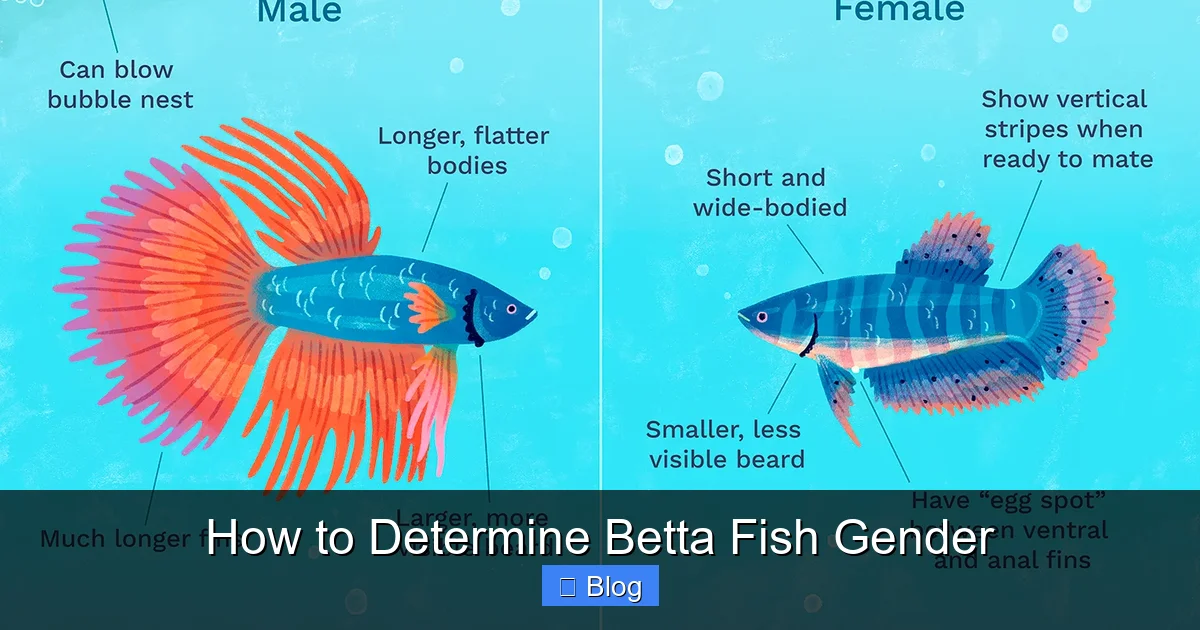
Hold a mental (or literal, with care) snapshot of your betta. Adult male bettas, especially those bred for shows, often have a more robust, elongated, and streamlined body. They are built for display and, in the wild, for short bursts of aggression. Females, in contrast, tend to have a slightly rounder, deeper body shape, particularly when viewed from above. This is most noticeable in the abdominal area. When a female is gravid (carrying eggs), this roundness becomes very pronounced, giving her a “pot-bellied” or egg-shaped appearance from the side.
Practical Tip: Compare your betta to a known male or female of similar variety and age. Side-by-side photos from reputable breeders are excellent references. The body shape difference is often subtle in non-gravid females but becomes a strong indicator when combined with other signs.
Fin Length and Form: The Classic (But Flawed) Indicator
This is the stereotype: long, flowing fins mean male; short, practical fins mean female. For traditional halfmoon males and their plakat (short-finned) female counterparts, this holds true. Male bettas have been selectively bred for centuries to have spectacular, elaborate fins—the crowntail, halfmoon, doubletail, and veil tail are all primarily male phenotypes. Females were traditionally bred with short, functional “plakat” fins to prevent damage during the frantic bubble-nest building and spawning embrace.
However, this is where it gets complicated. The modern betta hobby has seen a surge in long-finned females. Breeders now produce “female halfmoons” and “female rosetails” that rival the males in fin length and beauty. So, a betta with a huge, flowing tail could absolutely be a female. Conversely, a male plakat (which is common in fighting lines and some breeders) has short fins just like a female. Therefore, fin length alone is an unreliable and potentially dangerous method for sexing.
The “Beard” or Membrane: A Tell-Tale Sign
Located just below the gill cover and extending along the underside of the head, the opercular membrane (commonly called the “beard”) is a fantastic gender clue. In males, this membrane is almost always significantly larger, thicker, and more pronounced. When a male flares (puffs out his gills to appear larger), the beard becomes a massive, impressive fan that extends well past the gill covers. In females, the beard is much smaller, often just a faint flap of skin that may barely be visible when not flaring.
How to Check: Gently encourage your betta to flare. You can do this by holding a small mirror up to the glass (never put the mirror in the tank) or by carefully presenting another betta (in a separate container) for a few seconds. Observe the size and fullness of the membrane beneath the gills. A large, obvious beard strongly suggests a male. A minimal or non-existent beard points to female.
The Egg Spot (Ovipositor): The Gold Standard for Females
If you see this, you can be 99% sure you have a female. The egg spot, or ovipositor, is a small, white, raised bump or dot located on the underside of the betta, precisely at the base of the anal fin (the fin just in front of the tail). It’s the female’s egg-release organ. In mature females, it is usually clearly visible. Males never develop an egg spot.
Important Caveats: Not all females have a highly prominent egg spot. Some have a very small, faint one that can be hard to see. Furthermore, very young bettas (juveniles) of both sexes may not show this feature yet, as it develops with sexual maturity. So, its presence confirms female, but its absence does not confirm male.
Section 2: Behavioral Tells – Watching Your Betta in Action
Betta fish are named for their feisty behavior (Betta splendens means “splendid fighter”). Their personalities shine through in their actions, and many behaviors are strongly gender-linked. Watching how your fish interacts with its environment is a powerful tool for determining betta fish gender.

Visual guide about How to Determine Betta Fish Gender
Image source: i.pinimg.com
Flaring and Territoriality
Flaring—the dramatic puffing out of gills and fins to appear larger—is the quintessential betta behavior. While both sexes flare, there are differences in frequency and context. Males are almost perpetually aware of their territory. They will flare at their own reflection, at a passing movement outside the tank, at a new decoration, and certainly at any other fish they perceive as a rival. Their flares are often intense, sustained, and accompanied by aggressive posturing. Females also flare, but it is generally less frequent, less intense, and often more “startled” or defensive in nature rather than a proactive territorial display. A betta that constantly flares at everything in sight is far more likely to be male.
Bubble Nest Building: The Classic Male Trait
This is one of the strongest behavioral indicators. Male bettas are instinctive bubble nest builders. Even without a female present, a happy, healthy male will often create a cluster of tiny bubbles on the water’s surface, usually in a corner or under a leaf. The nest can be a small, neat pile or a massive, sprawling structure. This is part of their courtship ritual; the nest is where he intends to collect and protect the fertilized eggs. Females do not build bubble nests. They may occasionally blow a few bubbles out of curiosity or while feeding, but they do not construct a cohesive, intentional nest. If you see a dedicated bubble-nesting effort, you almost certainly have a male.
Lunging and “Flaring” at Tank Mates
If you have other fish in a community tank (which is risky with unknown-gender bettas), observation is key. A male betta will often posture, flare, and may dart at other fish, especially those with long, flowing fins that he perceives as rival males (like guppies or fancy goldfish). A female betta, while capable of aggression, is more likely to be passively territorial or simply ignore other peaceful species. That said, some females can be surprisingly assertive, so this is not a sole determinant but a piece of the behavioral puzzle.
Section 3: The Definitive Proof – Breeding Signs and the Spawning Embrace
There is no more certain way to determine betta fish gender than to witness the breeding process itself. The act of spawning reveals the biological roles with absolute clarity.
Visual guide about How to Determine Betta Fish Gender
Image source: i.pinimg.com
The Male’s Role: The Nest Builder and Guardian
When a sexually mature male is introduced to a receptive female (or even when he senses a female nearby via water chemistry), his breeding behaviors become unmistakable. He will actively seek out a suitable spot—usually the water’s surface under a leaf or tank lid—and begin meticulously constructing or repairing his bubble nest. He becomes hyper-vigilant, guarding the nest area fiercely. During courtship, he will perform a vibrant “dance” in front of the female, flaring his fins and gills to display his health and vigor. His primary biological goal is to attract a female to his nest and protect the future eggs.
The Female’s Role: The Egg-Bearer
A gravid (egg-bearing) female shows her own set of signs. Her body becomes noticeably rounder and fuller, especially in the belly region. The egg spot (ovipositor) becomes more prominent. When presented with a male and his nest, a receptive female will display vertical light-colored breeding bars on her body (like tiger stripes), a signal of readiness. During the actual spawning embrace, the male wraps his body around the female, she releases eggs, and he immediately fertilizes them and scoops them into his mouth to place into the bubble nest. The act of releasing eggs is exclusive to females. If you ever observe this, gender identification is complete.
Important Warning: Never Attempt Breeding to Determine Gender
While spawning is the ultimate proof, you should never intentionally try to breed two bettas simply to figure out their gender. Betta spawning is a complex, stressful process that can result in injury or death for the fish if not done under controlled, expert conditions. A failed spawn can lead to the male eating the eggs, the female attacking the male, or both becoming severely stressed and ill. Use other methods first. Only attempt breeding if you are fully prepared for the commitment and have done extensive research.
Section 4: Common Pitfalls and Misidentifications
Even with all this knowledge, it’s easy to make mistakes. Understanding these common errors will save you from costly and dangerous mix-ups.
Relying Solely on Fin Length
As mentioned, this is the #1 error. The rise of long-finned females means you cannot assume a fish with a huge, flowing tail is male. You also cannot assume a short-finned fish is female, as plakat males are common. Always use fin length as just one data point among many.
Misinterpreting a “Beard”
Some males, especially young ones or certain varieties like some Krumhorns, may have a less conspicuous beard. Conversely, a flaring female can puff out the gill area, making the membrane temporarily look larger. Observe the beard both at rest and during a flare. A resting male will often still show a visible flap of skin, while a female’s will be nearly invisible.
Ignoring Age and Maturity
This is crucial. Bettas under 3-4 months old are called “juveniles” or
Frequently Asked Questions
What is how to determine betta fish gender?
how to determine betta fish gender is an important topic with many practical applications.