How to Cycle a Fish Tank for Betta
Cycling a fish tank for a betta is the single most important step before adding your fish. It establishes a colony of beneficial bacteria that converts toxic fish waste into harmless compounds. This process, called the nitrogen cycle, typically takes 4-6 weeks and cannot be rushed. You must use a reliable water test kit to monitor ammonia, nitrite, and nitrate levels. Only once ammonia and nitrite read zero, and nitrate is present, is the tank truly safe for your betta. Skipping or shortening this process is the leading cause of “new tank syndrome” and betta fatalities.
Key Takeaways
- Cycling Builds a Biofilter: The process grows beneficial bacteria (Nitrosomonas & Nitrobacter) that consume toxic fish waste (ammonia & nitrite), converting it to much less harmful nitrate.
- It Takes 4-6 Weeks: A full cycle cannot be rushed. Rushing leads to toxic spikes that will stress or kill your betta. Patience is non-negotiable.
- You Must Test the Water: Guessing is a death sentence. A liquid water test kit (like API Master Test Kit) is essential to track ammonia, nitrite, and nitrate levels daily.
- Fishless Cycling is Recommended: Adding your betta as the source of ammonia is cruel and dangerous. Use pure ammonia or fish food to feed the bacteria safely.
- Live Plants Help, But Don’t Replace Cycling: Fast-growing plants can absorb some ammonia, but they do not establish the bacterial colonies needed for long-term stability.
- Temperature & Oxygen are Critical: Keep the water warm (78-80°F/25.5-26.5°C) and ensure strong surface agitation or an air stone to oxygenate the water for the bacteria.
- The Cycle is Complete at “Zero & Ten”: The tank is ready only when ammonia = 0 ppm, nitrite = 0 ppm, and nitrate is at a detectable level (e.g., 5-10 ppm or higher).
📑 Table of Contents
- Why Cycling a Fish Tank for Betta is Absolutely Non-Negotiable
- Understanding the Nitrogen Cycle: The Science Made Simple
- Step-by-Step: The Fishless Cycling Method (The Gold Standard)
- Cycling With Live Plants & Bottled Bacteria: A Faster, Natural Boost
- Water Testing & Parameter Tracking: Your Essential Toolkit
- Safely Introducing Your Betta: The Final Steps
- Common Mistakes & Troubleshooting: Why Your Cycle Might Be Stuck
Why Cycling a Fish Tank for Betta is Absolutely Non-Negotiable
You’ve just brought home a beautiful betta fish in its little cup. You’ve picked out the perfect, stylish tank, some gravel, a plant or two, and a cozy hideaway. The excitement is real! But before you even think about pouring that cup into its new home, you must hear this: if you do not cycle the tank first, you are very likely setting your betta up for a painful, stressful, and potentially fatal experience.
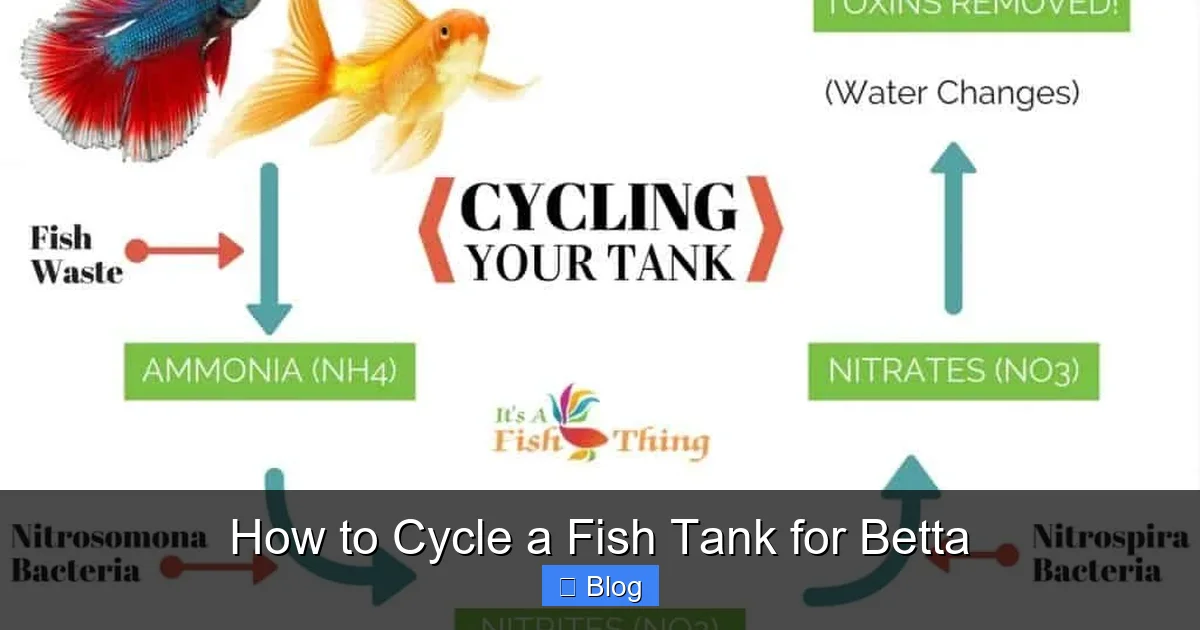
Cycling a fish tank is the process of establishing a stable population of beneficial bacteria in your aquarium’s filter and on surfaces. These bacteria are your tank’s invisible cleanup crew. A betta, like all fish, produces waste (ammonia) through its gills and excretions. Ammonia is a potent toxin that burns gills and poisons fish. In a cycled tank, one type of bacteria (Nitrosomonas) eats ammonia and converts it into nitrite. Another type (Nitrobacter) then eats the nitrite and converts it into nitrate. Nitrate is much less toxic and is removed through regular water changes. This two-step process is the nitrogen cycle. Without these bacteria, ammonia and nitrite build up rapidly, leading to “new tank syndrome,” a primary killer of new fish.
Many beginners, misled by the betta’s reputation as a “hardy” or “low-maintenance” fish, skip this step. This is the biggest mistake you can make. Bettas are actually quite sensitive to poor water quality. A properly cycled tank is the foundation of all successful betta keeping. It’s the difference between a fish that merely survives and one that thrives, displaying vibrant colors, active behavior, and healthy fins. This guide will walk you through every single step of how to cycle a fish tank for betta, the right way.
Understanding the Nitrogen Cycle: The Science Made Simple
Before you start the practical steps, it’s crucial to understand what’s happening on a microbial level. You don’t need a biology degree, just a clear picture. Think of your new tank as a sterile hospital room—it’s clean, but it has no immune system. The nitrogen cycle builds that immune system.
Visual guide about How to Cycle a Fish Tank for Betta
Image source: images.saymedia-content.com
The Two-Bacteria Team
There are two star players in this process:
- Nitrosomonas: This is the first responder. It colonizes your filter media, gravel, and decorations. Its sole job is to seek out and consume toxic ammonia (NH3/NH4+), converting it into nitrite (NO2-). Nitrite is also highly toxic.
- Nitrobacter: This is the second responder. It arrives a bit later, once nitrite levels start to rise. It consumes the nitrite and converts it into nitrate (NO3-). Nitrate is the final product. While not harmless in high concentrations, it is manageable with weekly water changes (typically keeping it below 20 ppm for bettas).
Visualizing the Cycle Stages
The cycling process follows a predictable, graph-like pattern you will see on your test kit charts:
- Day 1-7 (Ammonia Spike): You add an ammonia source. Nitrosomonas bacteria begin to multiply. Test shows high ammonia (1-4 ppm or more). Nitrite is still zero or very low.
- Day 10-21 (Nitrite Spike & Ammonia Drop): As Nitrosomonas work, ammonia levels start to fall. Nitrite levels rise sharply as the waste product. This is the most dangerous phase for any fish, as nitrite is extremely toxic (it causes “brown blood disease” by preventing oxygen transport).
- Day 21-35+ (Nitrate Rise & Nitrite Drop): Nitrobacter bacteria finally catch up and multiply. They start consuming the nitrite, causing nitrite levels to plummet. Nitrate levels begin a steady climb as the final waste product.
- Completion (The “Zero and Ten” Rule): The cycle is complete when your tests show: Ammonia = 0 ppm, Nitrite = 0 ppm, and Nitrate is present (e.g., 10-20 ppm or higher). This means both bacterial colonies are established and working in tandem.
Step-by-Step: The Fishless Cycling Method (The Gold Standard)
This is the safest, most humane, and most controlled method to cycle a fish tank for betta. You introduce an ammonia source without any fish present. This allows the bacteria to grow to a population that can handle the eventual bioload of your betta. It typically takes 4-6 weeks.
Visual guide about How to Cycle a Fish Tank for Betta
Image source: aquariumnexus.com
What You’ll Need
- Aquarium: Your empty, clean tank (never use soap!).
- Filter: A filter with good flow and surface area for bacteria (sponges, ceramic rings, bio-balls are ideal).
- Heater: Essential for bettas. Set to 78-80°F (25.5-26.5°C). Bacteria thrive at tropical temps.
- Water Conditioner: To dechlorinate tap water.
- Pure Ammonia Source: Unscented, clear, 100% pure ammonia (like Dr. Tim’s Ammonium Chloride or a plain hardware store brand with no additives). DO NOT use lemon-scented or colored ammonia.
- Liquid Water Test Kit: API Master Test Kit is the industry standard. Strips are less accurate.
- Air Stone & Air Pump (Optional but Helpful): Increases oxygen for bacteria.
The Process: A Daily/Weekly Routine
- Setup & Dechlorinate: Assemble your tank, add gravel/decor, fill with dechlorinated water. Install filter and heater. Turn everything on.
- Add Initial Ammonia Dose: Add your pure ammonia to the tank water. The goal is to reach 2-4 ppm ammonia. For Dr. Tim’s, it’s usually 1 drop per gallon. For hardware store ammonia, it’s often 1-2 drops per gallon, but test immediately after to hit your target. This initial dose “seeds” the tank.
- Test & Record: Test your water daily for the first week. Record ammonia, nitrite, and nitrate. You’ll see ammonia start to drop after a few days.
- Maintain Ammonia: Once ammonia drops below 1 ppm, add another dose to bring it back to 2-4 ppm. You are feeding the growing bacteria colony. Do this for 2-3 weeks. You are mimicking the steady waste a fish would produce.
- Watch the Spike: Around week 2-3, you’ll see nitrite appear and spike. This is normal. Continue adding ammonia to maintain 2-4 ppm. Nitrate will start to rise.
- The Final Test: Once you see nitrite drop back to zero (this may take a day or two after its peak), stop adding ammonia. For the next 24-48 hours, test the water. If ammonia and nitrite remain at zero, your cycle is complete! Nitrate will likely be high (40-80 ppm). Do a large water change (50-75%) to bring nitrate below 20 ppm before adding your betta.
Cycling With Live Plants & Bottled Bacteria: A Faster, Natural Boost
While fishless cycling with pure ammonia is the most reliable, many hobbyists use plants and commercial bacteria starters to help the process. These are supplements, not replacements, for the cycle.

Visual guide about How to Cycle a Fish Tank for Betta
Image source: petshun.com
How Fast-Growing Plants Help
Certain aquatic plants, like hornwort, water sprite, anacharis, and duckweed, are incredibly efficient at absorbing ammonia and nitrates directly through their leaves. Adding a handful of these to your tank during the fishless cycle can help lower initial ammonia spikes and consume some nitrate, making the water safer. However, plants do not house the bacteria (Nitrosomonas/Nitrobacter) that perform the conversion. They are a chemical filter, not a biological one. You still need the bacterial colonies to process the waste continuously. Therefore, plants assist but do not eliminate the need for a full bacterial cycle.
Using Bottled Bacteria Products
Products like FritzZyme TurboStart, Microbe-Lift Special Blend, or API Quick Start contain live cultures of nitrifying bacteria. They can significantly shorten the cycling time, sometimes to 1-2 weeks, especially when used correctly.
- How to Use Them: Add the entire bottle’s contents to your tank on day 1, right after dechlorinating the water. Then, add your first dose of ammonia. The bottled bacteria get to work immediately, colonizing surfaces faster than waiting for wild bacteria to find the tank.
- Important Caveat: These products contain living organisms. They must be stored properly (refrigerated, not frozen) and used before the expiration date. They also work best with a good oxygen supply and warm water. They are not a magic “cycle in 24 hours” solution; they accelerate a natural process.
The “Silent Cycle” with a Heavily Planted Tank
This is an advanced method. If you stock your tank with a very dense, diverse collection of fast- and slow-growing plants from the start, the plants can consume ammonia so efficiently that test kits may never show a significant spike. The bacteria still grow, but the ammonia is masked by the plants. This is riskier for a beginner because without test kits, you can’t be sure the bacterial colony is established. If you remove a plant or the plant growth slows, ammonia can suddenly appear. For a first-time betta keeper, we recommend sticking to the tested fishless method with ammonia and a test kit for certainty.
Water Testing & Parameter Tracking: Your Essential Toolkit
You cannot cycle a tank blind. The water test kit is your most important tool. It tells you exactly what’s happening and what to do next. Forget guesswork.
Choosing the Right Test Kit
Always choose a liquid reagent test kit (like the API Freshwater Master Test Kit). They are significantly more accurate than test strips, which can be inconsistent and expire quickly. The API kit tests for pH, ammonia, nitrite, and nitrate—the four critical parameters. It’s a one-time investment that will last for hundreds of tests and is cheaper per test than strips.
How to Test & Interpret Results
Follow the kit instructions precisely. Rinse test tubes with tank water, not tap water. Take your sample from the middle of the tank, not the surface. Add reagents in the correct order and count the exact number of drops. Shake for the specified time. Compare the color to the chart in good daylight.
- Ammonia (NH3/NH4+): Target during cycling: 2-4 ppm. Toxic at all levels for fish. Goal at cycle completion: 0 ppm.
- Nitrite (NO2-): Appears after ammonia starts dropping. Extremely toxic. Goal at cycle completion: 0 ppm.
- Nitrate (NO3-): Rises steadily as the final product. Less toxic. Goal: Below 20 ppm for bettas. During cycling, it can climb very high (80+ ppm).
- pH: Not directly part of the cycle, but important. A stable pH between 7.0-8.0 is ideal for bacterial activity. Don’t chase pH; stability is key.
Logging Your Progress
Create a simple spreadsheet or notebook. Columns for Date, Ammonia, Nitrite, Nitrate, pH, and Notes (e.g., “Added 3 drops ammonia,” “Nitrite spiking”). Plotting these values gives you a clear visual of the cycle’s progress and helps you predict when to add more ammonia. This log is invaluable for troubleshooting.
Safely Introducing Your Betta: The Final Steps
You’ve reached the milestone: Ammonia = 0, Nitrite = 0, Nitrate is present. Your tank has been cycling for at least 4 weeks. The bacteria are established. Now, it’s time for your betta.
The Pre-Introduction Water Change
Before bringing your betta home, perform a 50-75% water change. This dilutes the accumulated nitrate from the cycling process. Nitrate levels should be below 20 ppm, ideally under 10 ppm, for a sensitive betta. Use your test kit to confirm. This is also a good time to do any final plant trimming or decor adjustments.
Acclimating Your Betta
Do not just dump your betta from the cup! The water parameters (temperature, pH, hardness) in the bag/cup will differ from your cycled tank.
- Float the Bag: Place the sealed cup/bag in the aquarium. Let it float for 15-20 minutes to equalize temperature.
- Drip Acclimation (Recommended): Using airline tubing and a control valve (or a simple knot), start a very slow drip (1-2 drips per second) from your tank into the bag. After 30-45 minutes, the bag’s water volume will have doubled. This slowly adjusts your betta to your tank’s chemistry.
- Net & Transfer: Turn off the lights. Gently net your betta from the bag and transfer it to the tank. Do not pour bag water into your tank, as it may contain contaminants from the store.
The First Few Weeks: Monitoring
For the first week after adding your betta, observe it closely. Feed sparingly (a few pellets once a day) to avoid excess waste. Test the water every day for the first week. You should see a tiny, manageable spike in ammonia and nitrite as your betta’s waste feeds the existing bacterial colony. This is normal and should resolve within a few days as the bacteria population adjusts to the new load. If ammonia or nitrite climbs above 0.25 ppm, perform a 25% water change. This “mini-cycle” is common and usually minor in a properly cycled tank.
Common Mistakes & Troubleshooting: Why Your Cycle Might Be Stuck
Cycling doesn’t always go perfectly. Here are the most common issues and how to fix them.
“My ammonia won’t drop after the first spike.”
Cause: Not enough bacteria have grown yet. The initial colony is small. You may have under-dosed ammonia initially, or the tank is too cold (< 75°F).
Solution: Be patient. Continue adding ammonia to maintain 2-4 ppm. Ensure your heater is working and temperature is stable at 78-80°F. Increase surface agitation with an air stone to boost oxygen. Bacteria need oxygen to process ammonia.
“I have a nitrite spike, but ammonia is already at zero. Now what?”
Cause: This is the classic, correct middle stage of the cycle! The first bacteria (Nitrosomonas) have finished the ammonia, and now the second bacteria (Nitrobacter) are working on the nitrite. This phase can last longer than the ammonia phase.
Solution: Continue adding ammonia to keep feeding the Nitrosomonas, which in turn produces nitrite for the Nitrobacter. Do not stop adding ammonia yet. The cycle will progress when Nitrobacter catches up. Keep testing.
“My cycle is taking forever (over 6 weeks) and nothing is changing.”
Cause: Possible reasons: 1) You used chlorinated water that killed bacteria. 2) You over-cleaned the filter or used hot water/soap. 3) You have no filter or poor filter media for bacteria colonization. 4) The tank is too cold. 5) You have a very low bioload (tiny tank) and bacteria growth is slow.
Solution: Ensure all water is properly dechlorinated. Never rinse filter media in tap water—squeeze it in old tank water during water changes. Add a sponge filter or more porous bio-media. Check temperature. Consider adding a commercial bacteria booster (FritzZyme). If all else fails, you may need to “seed” the tank by adding a used filter sponge or a few handfuls of gravel from a healthy, established aquarium (from a trusted source with no diseases).
“I added my betta and now ammonia is spiking!”
Cause: Your cycle was not fully complete before adding the fish. The “Zero and Ten” rule was not met. The bacteria colony was too small to handle the betta’s waste immediately.
Solution: This is an emergency. Perform a 25-50% water change immediately. Use a water conditioner that detoxifies ammonia (like Seachem Prime) during the change. Continue daily 25% water changes until ammonia and nitrite read zero. This is why the fishless method is superior—it prevents this situation entirely.
Frequently Asked Questions
How long does it take to cycle a fish tank for a betta?
Typically, a full nitrogen cycle takes 4 to 6 weeks when using the fishless method with pure ammonia. Using bacterial starters and live plants can potentially shorten this to 2-3 weeks, but you must still verify completion with a water test kit. Never add your betta before the cycle is scientifically confirmed complete.
Can I use filter media from my old tank to cycle the new one instantly?
Yes, this is an excellent and fast method called “seeding.” Squeeze a dirty filter sponge or rinse bio-balls from a healthy, disease-free aquarium into your new tank’s filter or water. This transfers a large colony of beneficial bacteria, potentially cutting the cycle time in half. However, you must still test the water and may still see a mini-cycle as the bacteria adjust to the new bioload.
Is it okay to add my betta during the cycling process to “feed” the bacteria?
Absolutely not. This is the “traditional” cycle and is considered cruel and dangerous for the fish. Your betta will be exposed to rapidly rising, toxic levels of ammonia and nitrite, causing severe stress, burns, and likely death. Always use a fishless method with pure ammonia or fish food to build the bacteria colony first.
Do I need a water conditioner if I’m cycling with pure ammonia?
Yes, absolutely. Tap water contains chlorine and chloramines, which are lethal to both fish and the beneficial bacteria you are trying to grow. You must dechlorinate every drop of water you add to the tank during setup, water changes, and top-offs, or your cycle will fail.
Can live plants alone cycle my betta tank?
No. While fast-growing plants like hornwort or water sprite can absorb ammonia and nitrates, they do not establish the colonies of Nitrosomonas and Nitrobacter bacteria that are essential for long-term, stable biofiltration. A heavily planted tank can help manage waste, but it still requires a fully established bacterial colony to be safe for a betta. Always cycle with an ammonia source and test your water.
What should I do if ammonia or nitrite spikes after I thought the cycle was complete?
A spike after adding your betta indicates the bacterial colony was not large enough to handle the new bioload (a “mini-cycle”). Immediately perform a 25-50% water change with dechlorinated water. Use a product like Seachem Prime to detoxify ammonia and nitrite for 24-48 hours. Continue daily partial water changes and test frequently until levels return to zero. This is why thoroughly cycling to a high bacteria population before adding fish is critical.