How to Cure Betta Fish Ammonia Poisoning
Ammonia poisoning is a silent killer for betta fish, but it’s entirely treatable if caught early. The cure hinges on three immediate actions: performing large, frequent water changes to dilute toxins, using a water conditioner to detoxify ammonia, and testing water parameters with a reliable kit. Long-term, establishing a fully cycled tank is the only permanent defense. This guide provides the exact, actionable steps to rescue your betta and prevent future crises.
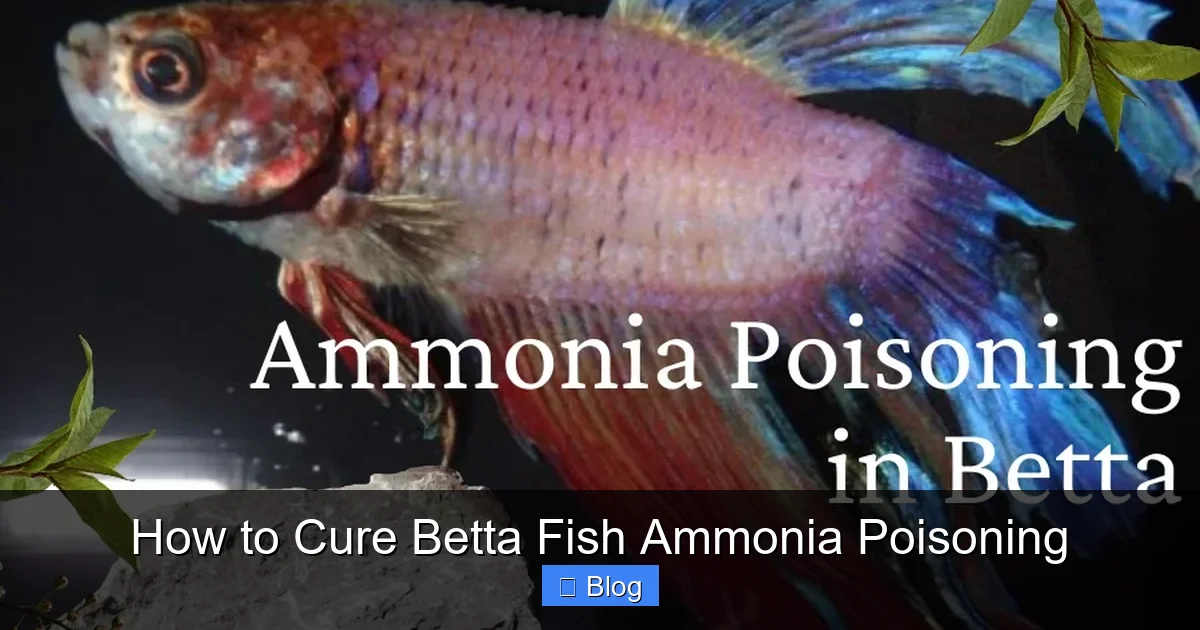
You walk over to say good morning to your beautiful betta fish, and your heart sinks. Instead of the vibrant, curious creature that usually darts to the front of the tank, he’s listless, hovering near the surface, gasping for air. His gills are a fiery, inflamed red. A cold dread washes over you. You know the signs. This isn’t just a sleepy fish; this is ammonia poisoning. Your mind races. Is it too late? What do you do right now? Take a deep breath. While ammonia poisoning is incredibly serious and deadly, it is also one of the most treatable water quality issues in fishkeeping, if you act swiftly and correctly. This guide will walk you through every single step, from the panic of the first moment to the long-term prevention that ensures it never happens again. We’re going to cure your betta.
Key Takeaways
- Ammonia is the #1 killer: Even tiny amounts (0.25 ppm) are lethal to bettas, causing severe gill and tissue damage.
- Act immediately: The first 24 hours are critical. Start with a 50% water change and a full dose of ammonia detoxifier.
- Water changes are the primary cure: Dilution is the solution. Perform 25-50% changes daily until ammonia reads 0 ppm.
- Test your water: You cannot treat what you do not measure. A liquid test kit is non-negotiable for any betta owner.
- Cycling is the permanent fix: A “cycle” means establishing beneficial bacteria that convert toxic ammonia to harmless nitrates.
- Prevent overstocking and overfeeding: These are the most common causes of ammonia spikes in small betta tanks.
- Monitor for secondary infections: Damaged tissue is prone to fungal or bacterial infections; be ready to treat these separately.
📑 Table of Contents
- Understanding the Enemy: What Exactly is Ammonia Poisoning?
- Immediate Emergency Response: The First 60 Minutes
- The Lifeline: Systematic Water Changes and Monitoring
- Treatment and Supportive Care: Healing the Damage
- The Nitrogen Cycle: Your Permanent Defense
- Prevention: The Non-Negotiable Daily Routine
- Conclusion: From Crisis to Confidence
Understanding the Enemy: What Exactly is Ammonia Poisoning?
Before we fight it, we must know it. Ammonia (NH3/NH4+) is a toxic chemical compound that is the primary waste product of fish excretion and the decomposition of organic matter like uneaten food and dead plant material. In a healthy, cycled aquarium, a special army of beneficial bacteria (Nitrosomonas) converts this deadly ammonia into nitrite, and then another bacteria (Nitrospira) converts nitrite into far less toxic nitrate. This process is the nitrogen cycle—the foundation of all aquatic life support.
Why Are Bettas So Vulnerable?
Betta splendens are uniquely susceptible to ammonia’s wrath for two main reasons. First, they are labyrinth fish, meaning they possess a specialized organ that allows them to breathe atmospheric air. This adaptation is a survival trait for stagnant, oxygen-poor waters in the wild, but it also means they are constantly gulping air from the water’s surface. If that surface water is saturated with ammonia, they are breathing poison directly into their highly sensitive labyrinth organ. Second, their long, flowing fins make them slower and more prone to stress, which weakens their immune system and accelerates the toxic effects.
The Two Faces of Ammonia: Toxic vs. Ionized
It’s crucial to understand that total ammonia (measured by your test kit) exists in two forms: toxic unionized ammonia (NH3) and less toxic ionized ammonium (NH4+). The percentage of each is determined by your tank’s pH and temperature. Higher pH and higher temperature dramatically increase the percentage of deadly NH3. For example, at a tropical betta temperature of 78°F (25.5°C) and a common pH of 7.5, about 10% of your total ammonia reading is the lethal NH3 form. A test reading of 0.50 ppm total ammonia could mean 0.05 ppm of truly toxic NH3—enough to burn a betta’s gills. This is why even “small” ammonia readings are an emergency.
Immediate Emergency Response: The First 60 Minutes
Do not hesitate. Do not “watch and wait.” The moment you suspect ammonia poisoning based on symptoms (gasping, clamped fins, redness, lethargy, lying on the bottom), you must begin treatment. The goal is to stop exposure and begin detoxification immediately.
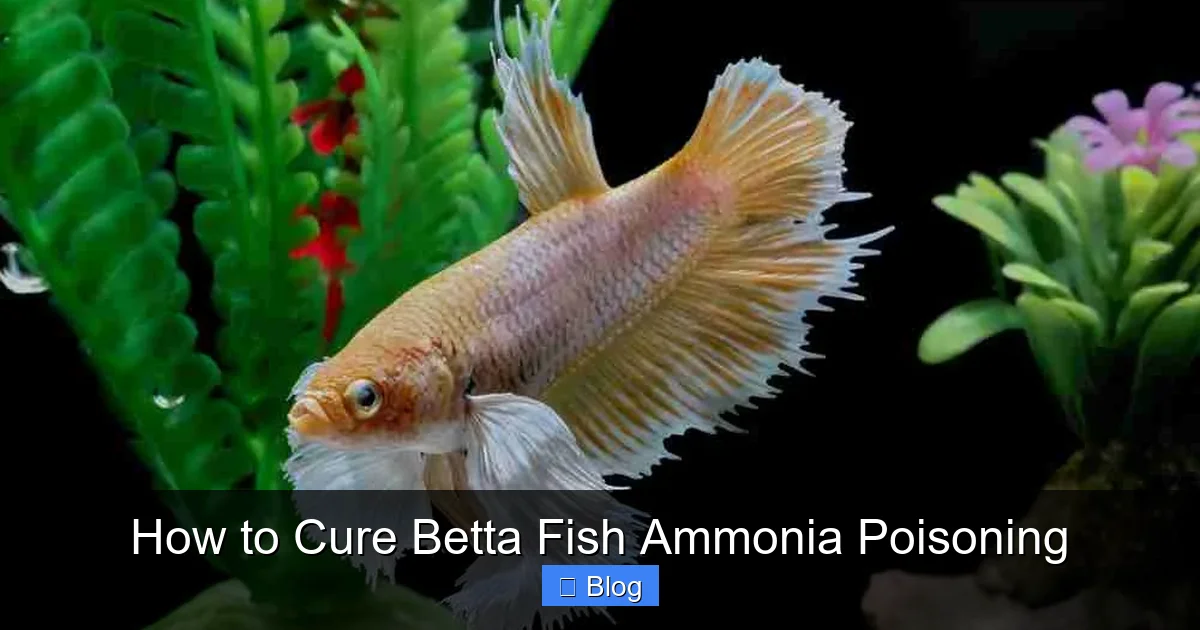
Visual guide about How to Cure Betta Fish Ammonia Poisoning
Image source: fishkeepingwisdom.com
Step 1: Confirm with a Test (But Don’t Wait for It)
If you have a liquid test kit (API Master Test Kit is the industry standard), test your water immediately for ammonia, nitrite, and nitrate. If ammonia reads anything above 0.25 ppm, it is an emergency. However, if you don’t have a kit, assume it’s ammonia and proceed with the treatment steps. Symptoms of ammonia and nitrite poisoning can be very similar, and the initial cure is largely the same: massive water changes.
Step 2: The First Critical Water Change
This is your single most powerful tool. Prepare a bucket of new, dechlorinated water that matches your tank’s temperature within 1-2 degrees. A drastic temperature change will shock your already stressed fish. Use a reliable water conditioner like Seachem Prime to detoxify both chlorine/chloramine and a significant amount of ammonia for 24-48 hours. This is vital. Remove 50% of the tank water with a gravel vacuum, sucking up any visible debris from the substrate. Slowly replace it with the prepared water. This instantly dilutes the ammonia concentration by half.
Step 3: Dose a Water Conditioner with Ammonia Detoxifier
Immediately after the water change, add a full dose of Seachem Prime (or a comparable product that specifically states it detoxifies ammonia) to the entire tank volume. Prime works by converting toxic ammonia (NH3) into a less toxic, temporarily bound form that your filter bacteria can more easily process. This buys you precious time. Do not use other conditioners that only remove chlorine/chloramine at this stage. For a betta in a 5-gallon tank, the standard dose is usually 1 ml, but always follow the product label. You can safely dose up to 5x the normal amount in an emergency.
Step 4: Remove All Stressors
Turn off any strong filtration current (you can use a sponge filter or baffle your hang-on-back filter with a sponge). Dim the lights. Remove any tank mates. Do not feed your betta for the next 24-48 hours. His digestive system is shut down from stress, and any food he doesn’t eat will decompose and create more ammonia. You are creating a calm, clean environment for his body to begin healing.
The Lifeline: Systematic Water Changes and Monitoring
The initial 50% change is just the start. Ammonia will continue to leach from your betta’s body, from waste in the substrate, and from any remaining organic debris. You must be relentless.
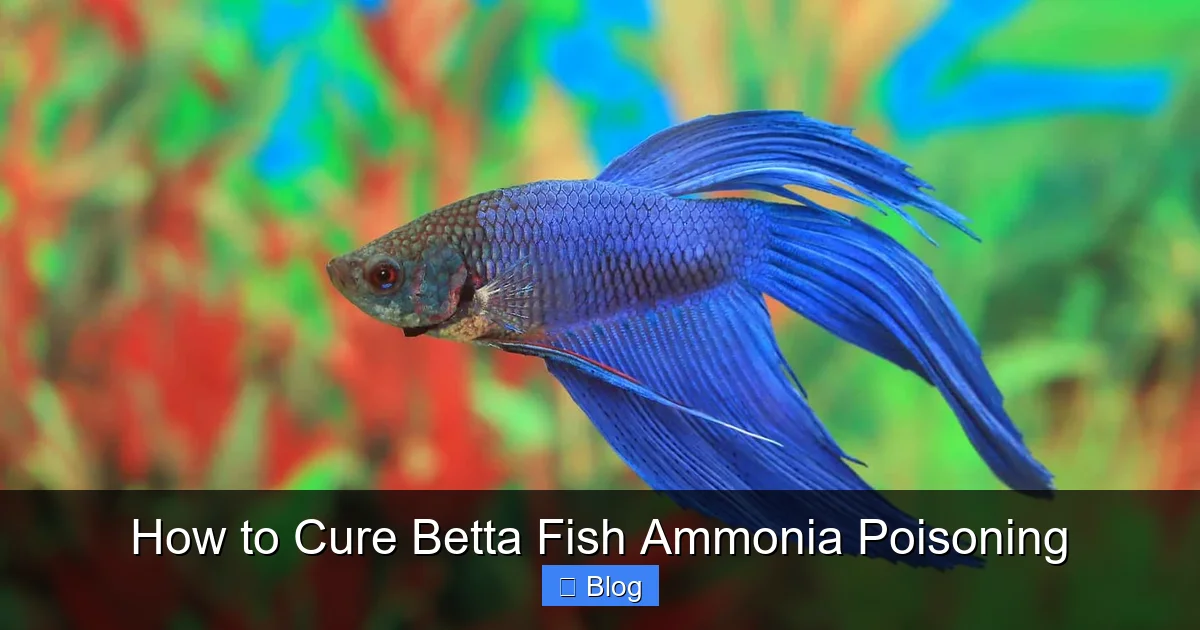
Visual guide about How to Cure Betta Fish Ammonia Poisoning
Image source: bettasource.com
Daily Dilution Protocol
For the next 3-5 days, you will perform 25-50% water changes every single day. The exact percentage depends on your test results. If your ammonia is still reading 1.0 ppm the next morning, do another 50% change. If it’s down to 0.25 ppm, a 25% change may suffice. The rule is: change enough water so that after the change and Prime dose, you are confident the ammonia level is lower than before. Always use temperature-matched, Prime-treated water. Consistency is more important than a single massive change.
How to Perform a Safe Water Change
1. Prepare water in advance in a clean bucket. Treat with Prime and let it sit for 15 minutes to ensure it’s fully dissolved and at room temperature.
2. Siphon the old water using a gravel vacuum. Push the vacuum deep into the substrate to remove trapped waste (this is a major ammonia source). Don’t just skim the top.
3. Slowly add new water. Pour it over a plate, a bowl, or your hand to prevent it from blasting and stressing your fish.
4. Test the water 30-60 minutes after the change to see your new baseline. This guides your next change.
Testing: Your New Best Friend
You must test your water at least once, and preferably twice, daily. The liquid API test kit is worth every penny. Test for ammonia, nitrite, and nitrate. Write down the results in a notebook. This log is your map. It tells you if your actions are working. You are aiming for a steady, consistent decline in ammonia until it hits 0 ppm. A spike after a change means you didn’t remove enough or there’s a massive internal source (like a dead fish or severe overfeeding residue).
Treatment and Supportive Care: Healing the Damage
While you are fighting the chemical poison, you must also support your betta’s physical recovery. Ammonia burns his gills, skin, and fins, leaving him vulnerable.
Visual guide about How to Cure Betta Fish Ammonia Poisoning
Image source: animalslog.com
Adding Salt: A Controversial but Useful Tool
Aquarium salt (not table salt or marine salt) can be a helpful supportive treatment. It reduces the osmotic stress on the fish, helps reduce swelling, and can aid in healing minor wounds. For a betta, a dose of 1 tablespoon per 5 gallons is safe. Dissolve it in a cup of tank water first, then add slowly. Do not use salt if you have any live plants, as many are sensitive. Salt does not remove ammonia; it only supports the fish during the water change process. Use it for the first 5-7 days of treatment.
Addressing Secondary Infections
Ammonia-damaged tissue is a breeding ground for opportunistic infections like fin rot (bacterial) or fungus. Keep a close eye on your betta’s fins. If you see ragged, white or black edges (fin rot) or cotton-like growths (fungus), you will need to treat with a targeted medication. Methylene blue dips (for fungus) or a broad-spectrum antibiotic like Kanamycin or Furan-2 (for bacterial) may be necessary. Always treat in a separate hospital tank if possible, following medication instructions precisely. Never mix medications unless directed.
Optimal Water Parameters for Recovery
Beyond ammonia, maintain pristine other parameters. Keep the temperature at a steady 78-80°F (25.5-26.5°C) to boost his immune system. Ensure pH is stable (6.5-7.5 is ideal for bettas). Ammonia poisoning often causes a pH crash due to the acidic ammonium form, so monitor it. Use a heater and thermometer. A stable, warm environment is critical for healing.
The Nitrogen Cycle: Your Permanent Defense
You have saved your betta. The ammonia is at 0 ppm. Now, you must ensure it never returns. The only way to do this is to establish a fully cycled aquarium.
What is a Cycle?
A cycled tank has a thriving population of beneficial bacteria that live on your filter media, substrate, and hard surfaces. These bacteria perform the two-step process: Ammonia (NH3/NH4+) -> Nitrite (NO2-) -> Nitrate (NO3-). Nitrate is then removed by weekly water changes. A cycle takes 4-6 weeks to establish from scratch. An “uncycled” tank has no bacteria, so fish waste converts directly to toxic ammonia with no buffer.
How to Cycle a Tank (Fishless Cycle Method)
For a new betta tank, do not put the fish in until the cycle is complete.
1. Set up the tank with filter, heater, and decor.
2. Add an ammonia source. Use pure ammonia (like from a hardware store, no surfactants) or a piece of shrimp/fish food. Dose to 2-4 ppm ammonia.
3. Test daily. When ammonia drops, add more to keep it at 2-4 ppm. Soon, nitrite will appear. Then, when ammonia and nitrite both read 0 ppm and you have a nitrate reading, your cycle is complete. Do a final large water change to reduce nitrate before adding your betta.
If you already have a betta in an uncycled tank (a “fish-in cycle”), you are doing daily water changes and using Prime. This is a stressful, dangerous process for the fish. It is better to move the betta to a small, filtered, heated hospital tank for daily changes while you fully cycle the main display tank separately.
Maintaining the Cycle
Never replace all your filter media at once. Rinse it in old tank water (not tap water, which kills bacteria) during monthly maintenance. Avoid over-cleaning the substrate. A healthy bacterial colony is your invisible guardian against ammonia.
Prevention: The Non-Negotiable Daily Routine
Curing a crisis is stressful. Preventing one is simple.
The Unbreakable Rules for Betta Owners
- Tank Size: A single betta needs a minimum of 5 gallons. Smaller volumes (like bowls) cycle impossibly and ammonia spikes are inevitable.
- Filtration: Every betta tank needs a gentle filter. Sponge filters are ideal. Filter media is where your bacteria live.
- Water Changes: Perform weekly 25-50% water changes in a cycled tank to remove nitrate and any lingering waste. This is not optional.
- Feeding: Feed no more than 2-3 pellets twice a day. Any uneaten food must be removed within 2 minutes. Overfeeding is the #1 cause of ammonia spikes.
- Stocking: Bettas are solitary. Do not house them with fish that produce more waste (like goldfish) or in tanks that are overstocked. A 5-gallon tank with a betta and a few shrimp or snails is often the limit.
- Test Weekly: Even in a cycled tank, test your water weekly for ammonia, nitrite, and nitrate. This is your early warning system.
Choosing the Right Equipment
Invest in a good adjustable heater and a reliable, gentle filter. Use a liquid water test kit—strip tests are notoriously inaccurate for ammonia. Have a dedicated gravel vacuum and buckets for aquarium use only. This basic toolkit is your arsenal for prevention.
Conclusion: From Crisis to Confidence
Ammonia poisoning is a terrifying experience, but it is a crisis with a clear roadmap to resolution. You now hold that map. Remember the core principles: Dilute with aggressive water changes, detoxify with Prime, and measure with a test kit. Support your betta’s body with clean, warm, salt-enhanced water while he heals. And above all, cycle your tank. The nitrogen cycle is not just a fishkeeping buzzword; it is the fundamental science of life in a glass box. By committing to the prevention routine of proper tank size, filtration, feeding, and weekly maintenance, you transform your betta’s home from a potential hazard into a true sanctuary. Your betta is a resilient, ancient warrior. Give him the clean water he needs to fight, and he will reward you with his spectacular colors and fascinating personality for years to come. You’ve got this.
Frequently Asked Questions
Can a betta fish recover from ammonia poisoning?
Yes, a betta can fully recover if the ammonia exposure is stopped immediately through aggressive water changes and water conditioning. Recovery speed depends on the severity and duration of exposure; mild cases may show improvement in 24-48 hours, while severe burns can take weeks.
How long does it take to cure ammonia poisoning?
The active treatment phase, with daily water changes to get ammonia to 0 ppm, typically takes 3-7 days. Full recovery of damaged gills and fins can take 2-4 weeks of pristine water conditions. The key is maintaining 0 ppm ammonia throughout the healing process.
What is the fastest way to lower ammonia in a betta tank?
The fastest method is a 50% water change with properly conditioned, temperature-matched water, immediately followed by a full dose of an ammonia detoxifier like Seachem Prime. Repeat 25-50% changes daily until tests read 0 ppm. There are no safe chemical “removers” that work faster than dilution.
How do I prevent ammonia poisoning in the future?
Prevention is absolute: keep your betta in a minimum 5-gallon cycled tank with a gentle filter, perform weekly 25% water changes, never overfeed (2-3 pellets max), and test your water weekly with a liquid kit. An established nitrogen cycle is the only permanent solution.
Is salt good for ammonia poisoning?
Aquarium salt can be a helpful supportive treatment during water changes. It reduces osmotic stress and can aid in healing minor wounds. Use 1 tbsp per 5 gallons for the first week of treatment. It does not remove ammonia but supports the fish’s body while you fix the water.
When should I consider euthanizing a betta with ammonia poisoning?
Euthanasia is a last resort if the fish is completely clamped, not breathing, lying on its side, and shows no response to gentle prodding after 24-48 hours of aggressive, correct treatment. If there is any sign of life—gasping, slight movement, or response—continue the treatment protocol. Consult an aquatic vet for severe, unresponsive cases.