How to Change Water in a Betta Fish Tank
Changing your betta’s water is the single most important task for its health and longevity. Unlike a full tank clean, a proper partial water change removes toxins, stabilizes water chemistry, and mimics a natural environment without stressing your fish. It’s a simple 5-step process: prepare treated water, remove old water, clean surfaces, add fresh water slowly, and restart filters. Doing this correctly 1-2 times per week is non-negotiable for preventing fin rot, bloating, and lethargy.
Congratulations on welcoming a beautiful betta fish into your home! Those flowing fins and vibrant colors are a joy to watch. But keeping that brilliance and your fish’s health thriving isn’t magic—it’s science, and it starts with one fundamental practice: the water change. If the phrase “how to change water in a betta fish tank” fills you with a little dread, you’re not alone. Many new betta owners worry about doing it wrong and harming their pet. The good news? It’s one of the simplest, most rewarding tasks you can master. Done correctly, a water change is like giving your betta a fresh, clean breath of air. It’s the cornerstone of preventative care, warding off the most common betta ailments like fin rot, swim bladder disease, and chronic lethargy. This guide will walk you through every single detail, from the “why” to the “how,” transforming you from a hesitant beginner into a confident tank caretaker. Let’s dive in and make this easy.
Key Takeaways
- Partial water changes (25-50%) are essential: Full tank cleans destroy beneficial bacteria and stress bettas; partial changes remove waste while preserving a stable ecosystem.
- Always treat tap water with a dechlorinator: Chlorine and chloramines in untreated tap water are fatal to bettas and will kill your tank’s good bacteria.
- Match temperature and pH precisely: A sudden shock from cold or chemically different water is a primary cause of betta stress and disease. Use a thermometer.
- Clean the glass and décor, but don’t over-scrub: Remove algae and gunk with a designated algae pad or soft brush, but never use soap or sterilize everything, as you need some biofilm.
- Siphon gravel to remove trapped debris: Solid waste sinks and decays under the substrate, producing ammonia. A gravel vacuum during changes is critical for long-term health.
- Add water slowly and carefully: Pour the new water over a bowl, your hand, or a filter output to diffuse the flow and prevent distressing your betta.
- Consistency is more important than perfection: A regular, simple routine done weekly is far better than an occasional, overly thorough deep clean.
📑 Table of Contents
- Why Water Changes Are Non-Negotiable for Betta Health
- How Often Should You Change Your Betta’s Water?
- The Essential Tools: Your Water Change Starter Kit
- The Step-by-Step: How to Change Water in a Betta Fish Tank
- Common Mistakes That Harm Your Betta (And How to Avoid Them)
- Advanced Tips for a Flawless Water Change Routine
- Conclusion: A Clean Tank Is a Happy Betta
Why Water Changes Are Non-Negotiable for Betta Health
Before we get our sleeves wet, understanding the “why” makes the “how” stick. Your betta’s tank is not just a bowl of water; it’s a miniature, complex ecosystem. Even in a filtered tank, waste products accumulate. Your betta eats, poops, and breathes, all within this closed system. The primary villain is ammonia, a byproduct of fish waste and decaying food. Even tiny amounts are toxic and burn your betta’s gills and skin. Beneficial bacteria (biofilm) in your filter and on surfaces convert ammonia to nitrite (also toxic) and then to nitrate, which is far less harmful but still needs to be physically removed. Nitrate is the reason we change water. Without water changes, nitrates build up, suppressing your betta’s immune system, leading to stress, loss of color, appetite loss, and susceptibility to infection. Water changes also remove other dissolved organics, replenish essential minerals, and stabilize pH. For a betta, whose labyrinth organ allows them to breathe air but whose gills are still sensitive to water quality, pristine water is everything.
The Myth of the “No-Change” Tank
You may have heard claims about “self-sustaining” nano tanks or bettas in jars that never need water changes. This is dangerous misinformation. While a heavily planted, mature, and *very* lightly stocked tank with powerful filtration can reduce change frequency, no aquatic system is truly zero-maintenance. A betta, even in a 5-gallon tank with plants, produces a significant bioload. Neglecting water changes leads to a slow, painful decline. Your goal is not to eliminate all bacteria (that would cause a deadly “new tank syndrome”), but to dilute and remove the waste products they process. Think of it like airing out a room—you’re not removing all the air, just refreshing it.
How Often Should You Change Your Betta’s Water?
This is the most common question, and the answer isn’t one-size-fits-all. It depends on your tank’s size, filtration, and stocking. Here’s a practical breakdown:

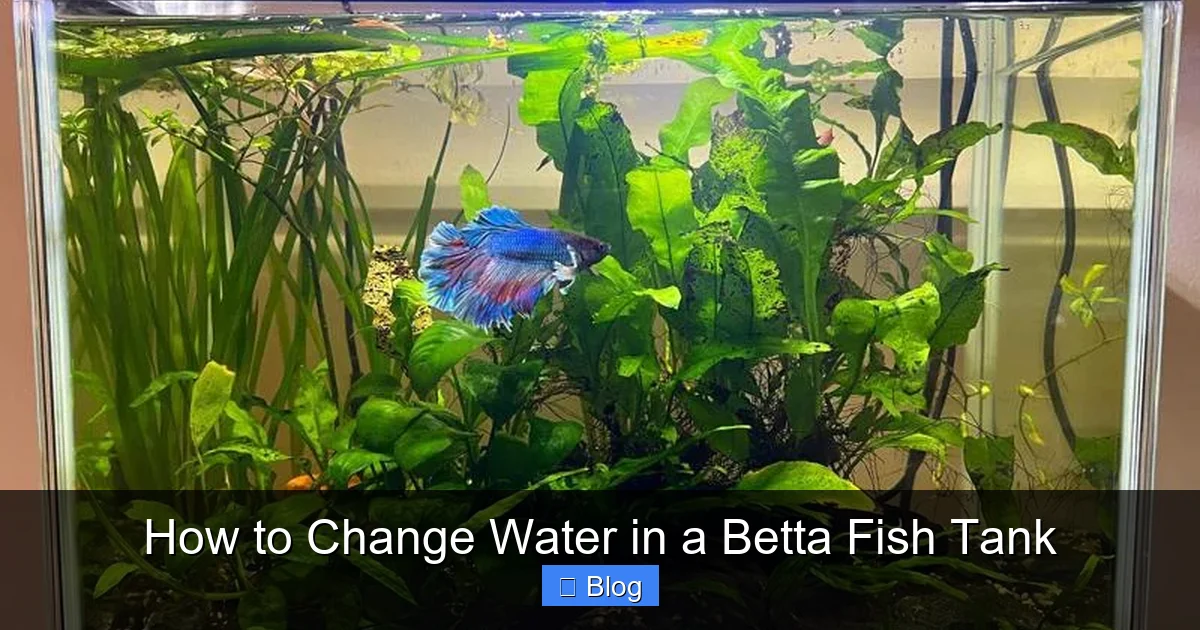
Visual guide about How to Change Water in a Betta Fish Tank
Image source: images.nexusapp.co
- For a filtered tank (minimum 5 gallons): The gold standard is a 25-30% partial water change once per week. This is the sweet spot for most bettas. It’s enough to keep nitrates low (aim for under 20 ppm) without causing significant chemical swings.
- For a unfiltered tank (like a 2.5-3 gallon “bowl” or vase—not recommended): You must change 50% of the water every 2-3 days. Without a filter to process waste, toxins build up rapidly in small volumes. This is labor-intensive and why a small, filtered tank is strongly advised.
- For a heavily planted tank (with fast-growing plants like hornwort, anacharis): Plants absorb nitrates as fertilizer. You may get away with a 30% change every 10-14 days, but you must still test your water weekly with a liquid test kit to confirm nitrates are staying low.
- The Test Kit Rule: The only way to know for sure is to use an aquarium water test kit (like the API Freshwater Master Test Kit). Test before your change. If nitrates are at 20-40 ppm, change 25%. If they’re at 50+ ppm, change 50% that week. This data-driven approach is the professional way to manage water quality.
A consistent weekly routine, even if you skip testing, is infinitely better than irregular, massive changes. Stability is key for your betta’s stress levels.
The Essential Tools: Your Water Change Starter Kit
Having the right tools makes the job 10x faster, cleaner, and less stressful for you and your fish. Gather these items before you start:
Visual guide about How to Change Water in a Betta Fish Tank
Image source: acaquarium.com
1. Gravel Vacuum/Siphon
This is your #1 tool. It’s a flexible tube with a wide end that you squeeze to start a siphon, allowing you to suck debris from the gravel while removing old water. Look for one with a hand pump or squeeze bulb for easy starting. Never use your mouth to start a siphon—ingesting tank water is a health risk.
2. Water Conditioner/Dechlorinator
Non-negotiable. Tap water contains chlorine and chloramines to make it safe for humans but deadly for fish. A conditioner like Seachem Prime, API Stress Coat+, or any reputable brand neutralizes these instantly and also binds to heavy metals. It also helps heal your betta’s slime coat. Have this ready before you even touch the tap.
3. Clean Buckets (Dedicated to the Aquarium)
Have at least two clean buckets. One for draining old water, one for holding fresh, treated water. Never use buckets that have held soap, chemicals, or laundry detergent. Even trace residues are fatal. Label them “FISH ONLY” to avoid mix-ups.
4. Thermometer
Your betta’s ideal temperature is 78-80°F (25.5-26.5°C). You must match the new water temperature to the tank water within 1-2 degrees. An inexpensive stick-on or floating thermometer is essential. Never guess.
5. Algae Pad or Soft Scrubber
A non-scratch algae pad (like those for glass tanks) or a dedicated soft sponge for cleaning the inside glass and décor. Never use the same sponge you use for your kitchen. Keep a separate one for the tank.
6. Optional but Helpful: A Small Cup or Bowl
Useful for temporarily holding your betta if you need to do a deep clean of the entire tank, or for pouring new water gently over to diffuse the flow.
The Step-by-Step: How to Change Water in a Betta Fish Tank
Now, the core process. We’ll assume a 25% change on a filtered 5-gallon tank. This is the most common scenario. Set aside 20-30 minutes. Work calmly and methodically to avoid stressing your fish.
Visual guide about How to Change Water in a Betta Fish Tank
Image source: images.nexusapp.co
Step 1: Prepare the New Water (The Most Important Step)
This step happens before you touch the tank. Fill your clean “fresh water” bucket with tap water. Now, immediately add the correct dosage of water conditioner according to the bottle instructions (usually 1 ml per 5-10 gallons). Let it sit for 5 minutes. This gives the conditioner time to neutralize chlorine/chloramines. While it sits, use your thermometer to check the temperature. Adjust with a little hot or cold tap water until it matches your tank’s temperature exactly. This temperature matching is critical. A difference of more than 2-3 degrees can cause thermal shock, leading to illness like Ich or dropsy.
Step 2: Unplug Equipment and Remove Old Water
Unplug your filter (and heater if it’s fully submerged) for safety. Assemble your gravel vacuum. Place the wide end into the gravel at the bottom of the tank, squeezing the bulb to start the siphon. Move the vacuum slowly through the gravel, allowing it to suck up trapped fish poop, uneaten food, and debris. The water will flow into your “dirty water” bucket. Keep going until you’ve removed 25% of the tank’s total volume. For a 5-gallon tank, that’s about 1.25 gallons. If your betta is curious and investigates the siphon, don’t panic; they’re usually just checking it out.
Step 3: Clean the Tank Interior (Without Overdoing It)
Now, with the water level lower, use your algae pad to gently scrub the inside glass. Start at the top (where algae often begins) and work down. Don’t press hard. For stubborn algae, you may need to let the pad soak for a minute. Next, use your hands or the vacuum to gently rinse any artificial plants or ornaments in the old tank water (not tap water!) to remove slime and algae. Never use soap. If you have live plants, you can gently rinse their roots in the old tank water. Do not remove or deep-clean your filter media. That’s where your beneficial bacteria live. Just give the filter intake a quick rinse in the bucket of old tank water if it’s clogged with debris.
Step 4: Add the Fresh, Treated Water
This is the moment of truth. Place a clean bowl, your hand, or a piece of decor over the spot where you’ll be pouring. Slowly and gently pour the new, temperature-matched, conditioned water over this barrier. This breaks the force of the water stream, preventing it from blasting your betta or stirring up the gravel too much. Pour until the water level is back to its normal height. Take your time here. A slow pour is a peaceful pour.
Step 5: Restart and Observe
Plug your filter and heater back in. Wipe up any spills. Now, just watch. Your betta might dart around initially, reacting to the new water flow. This is normal. Let it settle for 15-30 minutes. Check that the filter is running smoothly and the heater is on. Do not add any fish food for at least an hour, as your betta might be too stressed to eat and the food will just foul the clean water. Your water change is complete!
Common Mistakes That Harm Your Betta (And How to Avoid Them)
Even with the best intentions, it’s easy to make errors. Here are the most frequent pitfalls and their fixes:
Mistake 1: Using Untreated Tap Water
The #1 rookie error. Chlorine will burn your betta’s gills on contact. Always, always, always use a dechlorinator. No exceptions. Even if your city uses “chloramine,” which is harder to remove, a quality conditioner like Seachem Prime handles both.
Mistake 2: Temperature Shock
Pouring cold tap water into a warm tank is a recipe for disaster. Your betta’s immune system will crash. Always pre-mix and temperature-match. A small adjustable aquarium heater is a worthwhile investment to maintain a stable baseline temperature, making matching easier.
Mistake 3: Over-Cleaning the Filter
Washing your filter sponge or cartridge in tap water kills the beneficial bacteria colony. This can cause a “cycle crash,” where ammonia suddenly spikes. The rule: only rinse filter media in the old tank water you just siphoned out. Never use tap water. And never replace all your filter media at once. Replace only half at a time, every 4-6 weeks.
Mistake 4: Changing Too Much Water, Too Often
While it might seem logical to do a 100% change to be “extra clean,” this is severely stressful. It removes all beneficial bacteria, crashes the cycle, and causes major pH and temperature swings. Stick to 25-50% max. The goal is dilution, not sterilization.
Mistake 5: Pouring Water Directly Onto the Betta
The force of the stream can physically injure your betta and cause extreme panic. Always diffuse the flow with your hand, a bowl, or by pouring onto a filter output or rock. This is a simple act of kindness that makes a huge difference.
Mistake 6: Ignoring Gravel
Just skimming water off the top doesn’t remove the real problem: debris buried in the substrate. Use your gravel vacuum properly, plunging it into the gravel to lift out the muck. This is where nitrate production starts.
Advanced Tips for a Flawless Water Change Routine
Once you’ve mastered the basics, level up with these pro tips for an even healthier tank:
Schedule It Like an Appointment
Pick a specific day and time each week (e.g., Sunday mornings) and stick to it. Put it on your calendar. Consistency is the single biggest factor in long-term success. Your betta will even get used to the routine.
Use a Python or Similar No-Lift System
For larger tanks (10+ gallons), consider a Python Water Changer or similar product that attaches directly to your sink. It uses your home’s water pressure to siphon tank water out and pump fresh water in without you lifting a single heavy bucket. It’s a game-changer for ease and speed.
Test Your Water *Before* and *After*
For the first month, test your water parameters (ammonia, nitrite, nitrate, pH) both before and 24 hours after your water change. This teaches you exactly how effective your routine is and how your tank’s cycle handles the load. You’ll see nitrate drop and learn if your change volume is sufficient.
Consider a “Top-Off” Between Changes
In a filtered tank, water evaporates, leaving minerals behind and lowering the water level. Once or twice between weekly changes, simply add temperature-matched, conditioned water to bring the level back to the top. This helps maintain stable salinity/mineral content and keeps your filter from sucking in air.
Observe Your Betta’s Reaction
Your fish is your best feedback system. After a change, a healthy betta will be curious, maybe flare a little at its reflection, and resume normal activity (gentle swimming, exploring) within 30 minutes. If it’s hiding at the top gasping, or clamping its fins for hours, something went wrong—likely temperature, pH shock, or a change too large. Adjust accordingly.
Conclusion: A Clean Tank Is a Happy Betta
Changing your betta’s water isn’t a chore; it’s an act of care. It’s the most direct, powerful way you have to control its environment and ensure a long, vibrant life. Remember the core principles: use a dechlorinator, match the temperature, siphon the gravel, clean gently, and be consistent. A simple 25% weekly change, done with care, prevents 90% of common betta health problems. You’re not just replacing water; you’re renewing your betta’s home, removing invisible toxins, and giving it the clean, stable canvas it needs to show off those magnificent fins. Start this routine today, and watch your betta thrive. You’ve got this!
Frequently Asked Questions
Can I use bottled spring water instead of tap water for my betta tank?
No, bottled spring water is not recommended. It lacks essential minerals bettas need and can have variable pH and hardness, causing dangerous swings. Always use tap water treated with a proper dechlorinator. If your tap water is extremely poor, consider reverse osmosis (RO) water, but you must then remineralize it with specific additives, which is more advanced.
My betta flares at me when I do water changes—is that normal?
Yes, this is very normal! Your betta is reacting to the movement, the siphon (which it may see as a threat), and its own reflection in the glass. Flaring is a territorial display, not necessarily a sign of extreme distress. As long as it calms down within 20-30 minutes after the change and resumes normal activity, it’s fine. Moving slowly and avoiding sudden movements can help.
Do I need to remove my betta during a partial water change?
For a standard 25-30% partial change, no, you do not need to remove your betta. It’s actually less stressful to leave them in their familiar environment. Only net your betta if you are doing a full 100% water change or a deep clean of every single surface, which is rarely necessary and should be avoided.
How do I clean the decorations without killing the good bacteria?
During your water change, rinse decorations (plastic plants, rocks, castles) in the bucket of old tank water you just siphoned out. This gently removes algae and gunk while leaving the beneficial biofilm intact. Never use soap, bleach, or scrub them with a toothbrush under the tap. That would sterilize them and remove the bacteria you need.
What if I accidentally use tap water without dechlorinator?
If you realize the mistake immediately, add the correct dose of dechlorinator right away and gently stir. The conditioner will neutralize the chlorine/chloramines almost instantly. If your betta starts gasping at the surface, perform an immediate emergency 50% water change with properly conditioned water as a rescue measure. Monitor closely for the next 24 hours.
My tank has a lot of algae. Should I scrub it all off during the water change?
Yes, scrub the visible algae off the glass and decorations during your change. However, understand that algae is a symptom of an imbalance—usually too much light or excess nutrients (nitrates). Removing it is cosmetic and helpful, but to prevent its return, you must address the cause: reduce direct sunlight, ensure you’re not overfeeding, and keep up with your regular water changes to lower nitrates.