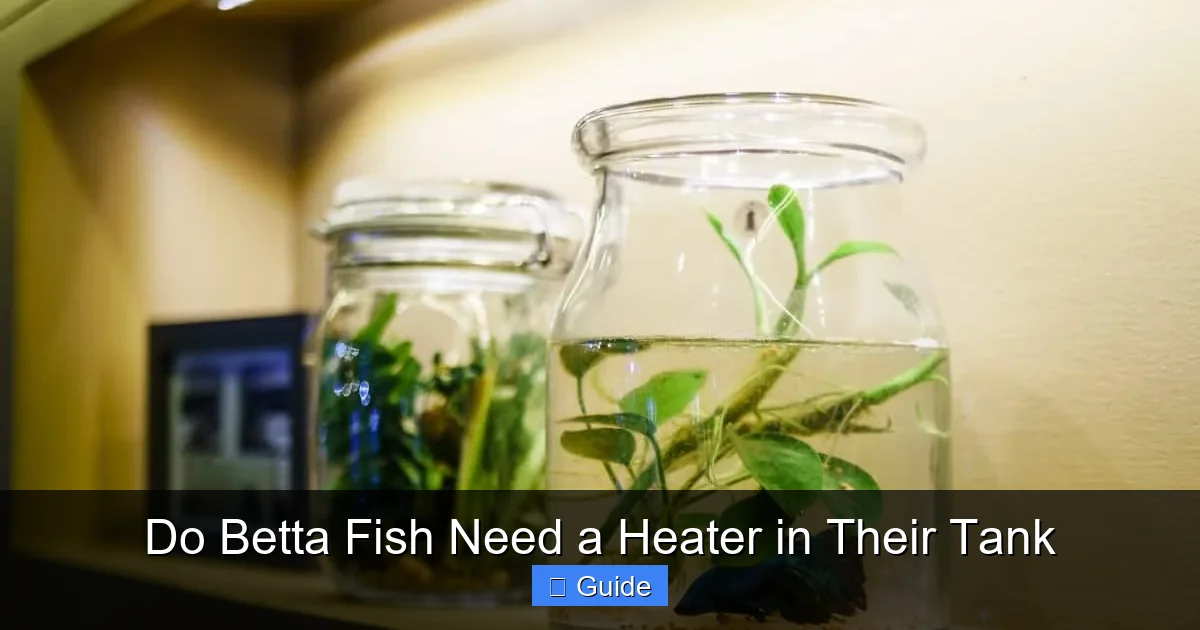
Do Betta Fish Need a Heater in Their Tank
Yes, betta fish absolutely require a heater in their tank. As tropical fish native to warm, shallow waters in Southeast Asia, they need a stable water temperature between 76-82°F (24-28°C) to thrive. Without a heater, cold water suppresses their immune system, slows metabolism, causes lethargy, and drastically shortens their lifespan. A properly sized, adjustable aquarium heater is essential equipment for any responsible betta keeper, ensuring your fish remains active, colorful, and healthy for its full 3-5 year lifespan.
Key Takeaways
- Bettas are tropical fish: They originate from the consistently warm climates of Thailand, Cambodia, and Vietnam, and their physiology is built for warm water.
- Temperature is critical for health: Cold water below 76°F (24°C) weakens their immune system, making them susceptible to diseases like fin rot and dropsy.
- Stability is as important as warmth: A heater provides a stable temperature, preventing dangerous fluctuations that cause stress, which is a primary killer of bettas.
- Activity and color are temperature-dependent: A properly heated betta will be active, curious, and display its full, brilliant finnage. A cold betta is lethargic and dull.
- Heater size matters: You must match the heater’s wattage to your tank’s volume. An oversized heater can cook your fish; an undersized one won’t maintain temperature.
- Safety features are mandatory: Always use a heater with an automatic shut-off and consider a heater guard to prevent burns if your betta leans against it.
- Room temperature is not enough: Unless you live in a home that is perpetually 78°F (25.5°C) with no drafts or temperature swings, a heater is necessary.
📑 Table of Contents
- The Tropical Truth: Betta Fish Are Not Coldwater Creatures
- What Happens to a Betta Without a Heater? A Gradual Decline
- Choosing the Right Heater: It’s Not One-Size-Fits-All
- Proper Heater Setup and Placement: Avoiding Common Pitfalls
- Addressing the “But I Live in a Warm Climate” Objection
- Heater Safety, Emergencies, and Long-Term Care
The Tropical Truth: Betta Fish Are Not Coldwater Creatures
Let’s clear up a very common and dangerous myth right away: betta fish do not live in tiny, dirty puddles in the wild. This persistent image—a betta surviving in a small, muddy hoof print—is a story of desperate survival, not of ideal habitat. It’s like saying humans can survive in a life raft at sea, therefore we don’t need houses. The reality is far more beautiful. In their natural habitats in the rice paddies, slow-moving streams, and floodplains of Southeast Asia, water temperatures are consistently warm, typically ranging from 75°F to 86°F (24°C to 30°C). These are shallow, sun-warmed waters. Your betta in a glass tank has the exact same biological needs as its wild counterpart. It is a tropical fish, period. Its entire metabolism, immune function, and digestive system are optimized for warm water. Keeping it in an unheated tank is like asking a human to live in a constant 50°F (10°C) environment—it’s not just uncomfortable; it’s a slow, stressful path to poor health and an early death.
The Science of a Cold Betta: Why Warmth isn’t a Luxury, It’s a Requirement
When water temperature drops, a betta’s body, which is ectothermic (cold-blooded), has no internal furnace to generate heat. Everything slows down. Its metabolism grinds to a near-halt. Digestion becomes inefficient, leading to constipation and swim bladder issues. Most critically, its immune system—its defense against the bacteria and fungi always present in an aquarium—becomes severely compromised. Think of your immune system when you have a fever; it’s actually working *better*. For a betta, cold is the opposite of a fever. It’s a state of immunosuppression. This is why a cold betta almost always develops a secondary infection. The infamous “dropsy” (a symptom of internal organ failure, often bacterial) or fin rot is rarely the primary cause; it’s the final, visible result of a system weakened by chronic cold stress. A heater isn’t a “nice-to-have” accessory for decoration; it’s a fundamental piece of life-support equipment.
What Happens to a Betta Without a Heater? A Gradual Decline
Many new owners mistake a cold betta’s lethargy for sleepiness or a calm personality. This is a tragic misunderstanding. The progression is subtle but devastating.
Visual guide about Do Betta Fish Need a Heater in Their Tank
Image source: fishtankmaster.com
Phase 1: The Silent Stressor (Days to Weeks)
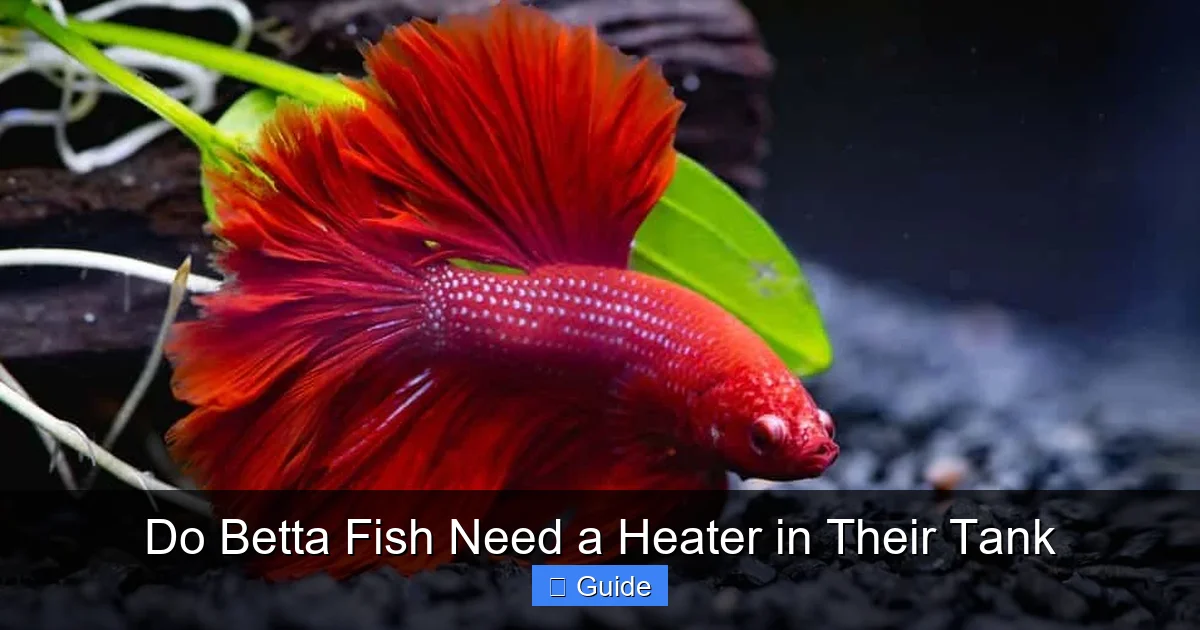
The water is, say, 72°F (22°C) in a room that dips at night. Your betta becomes less curious. It might rest more at the bottom, often propped on a plant or decoration. Its colors, especially the vibrant reds and blues, begin to appear muted, like a faded photograph. This is because blood flow to the skin and fins decreases to conserve core heat. You might notice it eats less, or its food sits uneaten, fouling the water. The betta isn’t “lazy”; it’s in a state of chronic stress, diverting all energy to basic survival.
Phase 2: Immune Collapse (Weeks to Months)
The suppressed immune system can no longer keep environmental pathogens in check. The first sign is often a small, white patch or fraying edge on a fin—the beginning of fin rot. It might look like a simple tear, but it won’t heal and will spread. Alternatively, the betta may develop a raised, pinecone-like scale pattern—dropsy, which is usually a fatal internal bacterial infection. At this stage, treatment is difficult because the fish’s body isn’t strong enough to fight, and medications themselves can be stressful. The window for easy recovery has closed.
Phase 3: The Final Outcome (Months)
Without intervention and warming, the betta’s condition worsens. It becomes extremely lethargic, often lying on its side at the bottom. It may lose its buoyancy control (swim bladder disorder from poor digestion) and float upside down or sink. Breathing becomes rapid and labored as its organs fail. The inevitable outcome is death, often prematurely at 1-2 years old instead of the potential 5+ years a well-kept betta can live. All of this, from the first hint of faded color to the end, is directly traceable to the lack of a stable, warm environment.
Choosing the Right Heater: It’s Not One-Size-Fits-All
Assuming you’re now convinced a heater is essential, let’s talk about choosing the right one. This is where many well-intentioned owners make mistakes that can be just as dangerous as having no heater at all.
Visual guide about Do Betta Fish Need a Heater in Their Tank
Image source: buildyouraquarium.com
Wattage: The Goldilocks Principle (Not Too Big, Not Too Small)
Aquarium heaters are rated by wattage. The general rule is 2.5 to 5 watts per gallon, depending on your room’s ambient temperature. For a standard 5-gallon betta tank (the absolute minimum recommended size), a 25-watt heater is perfect. Never use a 50-watt heater in a 5-gallon tank; it will overheat the water rapidly, potentially cooking your fish before the thermostat can react. Conversely, a 5-watt heater in a 5-gallon tank will struggle to maintain temperature if your room is cool, running constantly and failing to provide stable warmth. Always check the manufacturer’s guidelines for your specific tank volume. For a 10-gallon tank, a 50-watt heater is standard.
Types of Heaters and Why Submersible is King for Bettas
- Submersible Heaters: These are the standard and best choice for betta tanks. They sit fully underwater, usually near the water flow (like the filter outlet) for even heat distribution. They are adjustable, reliable, and come with safety features. Look for models from reputable brands like Aqueon, Fluval, or Eheim.
- Preset Heaters: These are non-adjustable and set to a single temperature (usually 78°F). They are less ideal because your room’s ambient temperature varies, and you have no control. A preset heater meant for a 10-gallon tank might keep a 5-gallon tank too warm.
- In-Filter/Inline Heaters: These are excellent for maintaining very even temperatures as they heat water as it passes through the filter. They are more common in larger, advanced setups but can be used in a 10-gallon with a canister filter.
- Hang-On-Tank (HOT) Heaters: These clip to the tank’s edge with the heating element in the water. They are generally less efficient and more prone to temperature fluctuations. Not recommended for precise betta care.
Non-Negotiable Safety Features
Your heater is an electrical device submerged in water. You must prioritize safety. Look for heaters that have:
- An automatic shut-off: This is the most critical feature. If the heater is removed from the water or the water level drops too low, it should turn off automatically to prevent a fire or explosion.
- A shatter-proof, shock-resistant design: Modern heaters use materials that won’t crack if accidentally bumped.
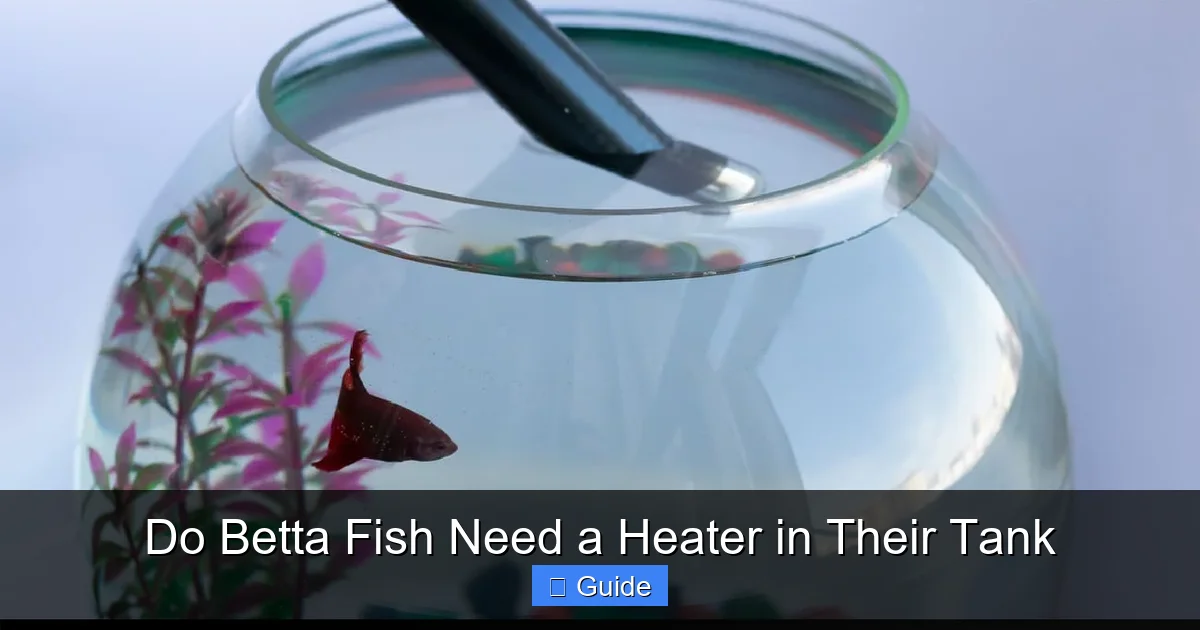
- A heater guard or cage: This is a plastic mesh that surrounds the heating element. Betta fish, with their long, flowing fins and curious nature, are notorious for leaning or even resting against hot heating elements, which can cause severe burns. A guard is a cheap, essential add-on that prevents this entirely.
Proper Heater Setup and Placement: Avoiding Common Pitfalls
Buying the right heater is only half the battle. Incorrect setup can render it useless or dangerous.
Visual guide about Do Betta Fish Need a Heater in Their Tank
Image source: thewittyfish.com
Placement for Even Heat Distribution
Heat rises. If you place your heater in a dead spot of water, you’ll get a layer of hot water at the top and cold water at the bottom where your betta lives. The goal is to create a gentle current that circulates warm water throughout the tank. The best practice is to place the heater near the outlet of your filter. As the filtered water flows out, it will sweep past the heater, carrying warmth immediately into the tank’s circulation. Position it horizontally, not vertically, for more even heating. Ensure there is plenty of space around it—never bury it in sand or decorations, as this blocks heat transfer and is a fire hazard.
The Essential Thermostat and Thermometer Duo
Every heater has a built-in thermostat, but these can be inaccurate. You must have an independent, reliable aquarium thermometer (a digital stick-on or glass floating type is best) to verify the actual temperature. Place it on the opposite side of the tank from the heater to get a true average reading. Check it daily for the first week. Set the heater’s dial to 78-80°F (25.5-26.5°C) and let the tank stabilize for 4-6 hours before adjusting based on your thermometer’s reading. Never trust the heater’s dial alone.
The “Heater Bump” and Acclimation
When you first install a heater or adjust its setting, the temperature will change. A rapid change of more than 1-2 degrees per hour is stressful. If your betta was in cold water, you must warm it slowly. The best method is to float its bag or cup in the heated tank for 15-20 minutes to equalize temperature, then slowly add small amounts of the warm tank water to its container over another 30-45 minutes before releasing it. This prevents thermal shock.
Addressing the “But I Live in a Warm Climate” Objection
This is the second most common myth. “My house is always warm, so I don’t need a heater.” This is a risky assumption. Ask yourself:
- Does your temperature stay constant? Most homes have thermostats that drop at night or when no one is home. A 5-degree swing from 78°F to 73°F overnight is a major stressor for a betta.
- Are there drafts? Air conditioning vents, windows, exterior walls—these create localized cold spots that can chill the tank water.
- What about seasonal changes? Even in warm climates, winter nights can be cool. An unheated tank will follow the room’s ambient temperature.
The only scenario where you might not need a heater is if your home is a perpetually stable, draft-free, and consistently 78-82°F year-round (which is rare and often uncomfortable for humans). For 99% of people, a heater with a thermostat is the only way to guarantee a stable tropical temperature. It’s an insurance policy for your fish’s health.
Heater Safety, Emergencies, and Long-Term Care
Once your heater is installed, your job isn’t done. Proper maintenance and emergency preparedness are part of responsible ownership.
Routine Checks and Maintenance
Once a month, do a full check: Ensure the heater is functioning (the light indicator comes on, you feel warmth radiating from the glass). Check your thermometer reading against a known calibrated thermometer if possible. Inspect the cord and plug for any damage or corrosion. Clean any algae or mineral deposits off the heater glass with a vinegar solution (unplugged and cooled!) to ensure efficient heat transfer. Never try to repair a heater yourself; if it’s faulty, replace it.
Power Outage Protocol
This is a genuine emergency for a tropical tank. In winter, a tank can lose its heat within hours. Have a plan: insulate your tank. Use a blanket, towel, or polystyrene sheets to wrap the sides and top (not the bottom) of the tank to slow heat loss. Do NOT cover the top completely if you have an air exchange requirement, but for a short outage, it’s fine. You can also use a small, battery-powered air pump to move water surface tension and prevent gas buildup, but it won’t add heat. The goal is to slow the temperature drop until power returns. For extended outages in cold climates, you may need to use chemical heat packs (hand warmers) sealed in plastic bags and floated in the water, but monitor temperature closely.
When Heaters Fail: Signs of Trouble
Watch for these red flags: The heater light is on constantly (meaning it’s working overtime to reach a temperature it can’t achieve—likely undersized or faulty). The tank temperature is consistently higher than the setting (thermostat failure). You see steam or excessive condensation on the tank walls (overheating). If you suspect heater failure, immediately unplug it, check your thermometer, and have a backup heater ready. Never leave a malfunctioning heater plugged in.
Frequently Asked Questions
Can a betta fish survive without a heater?
Survive, possibly, for a time, especially in a very warm room. But “survive” is not “thrive.” A betta kept in cold water will live a life of chronic stress, with a weakened immune system, faded colors, and low activity, and will likely succumb to disease at a young age. For a long, healthy, and vibrant life, a heater is absolutely required.
What is the ideal temperature for a betta fish?
The ideal, stable water temperature for a betta fish is between 76°F and 82°F (24°C to 28°C), with 78-80°F (25.5-26.5°C) being the perfect sweet spot. Consistency within this range is more important than hitting an exact number.
What size heater do I need for my betta tank?
For a standard 5-gallon betta tank, a 25-watt submersible heater is ideal. For a 10-gallon tank, use a 50-watt heater. Always follow the 2.5-5 watts per gallon guideline and choose a heater from a reputable brand with an automatic shut-off.
Can I use a heat mat or pad instead of an aquarium heater?
No. Heat mats are designed for reptile terrariums and are not safe or effective for aquariums. They are not submersible, cannot be thermostatically controlled for water temperature, and pose a serious risk of electric shock or cracking the glass tank bottom. Only use a proper, submersible aquarium heater.
How long does it take for a heater to warm up a betta tank?
It typically takes 4-8 hours for a properly sized heater to bring a room-temperature tank (around 72°F) up to the target 78-80°F and establish a stable temperature. Always add the heater to the tank before introducing your betta and allow it to stabilize completely.
My betta is near the heater all the time. Is it too hot?
Not necessarily. Bettas will often rest in warm spots. However, you must verify the actual water temperature with a separate thermometer placed away from the heater. If the thermometer reads within the 76-82°F range, it’s fine. To prevent burns, always use a heater with a plastic guard cage. If the water is too hot, your betta will also show signs of stress like rapid breathing and lethargy.