What Fish Is Compatible with a Betta
Many believe bettas must live alone, but with the right tank mates and setup, they can thrive in a community. Key factors include tank size, betta temperament, and choosing peaceful, non-flashy species. This guide covers top compatible fish, what to avoid, and step-by-step introduction methods to create a harmonious aquarium.
So you’ve got that stunning, flowing-finned betta splashing around in his solo 5-gallon tank. He’s the star of the show, and you love watching him. But maybe you’re looking at that empty space and thinking… could he have friends? The question “what fish is compatible with a betta?” is one of the most common in the aquarium hobby, and the answer is a hopeful but nuanced yes, sometimes. The myth that bettas must live alone is just that—a myth. With careful planning, the right tank environment, and a deep understanding of your individual betta’s personality, you can build a peaceful community tank where your betta is just one part of a vibrant ecosystem. This guide will walk you through every step, from decoding betta behavior to selecting the perfect tank mates and introducing them without disaster.
Key Takeaways
- Betta temperament varies: Each betta has a unique personality; some are peaceful, others highly aggressive. Always observe your specific betta before adding tank mates.
- Tank size is non-negotiable: A minimum of 10 gallons is essential for any community tank with a betta, with 20+ gallons being ideal for multiple mates.
- Choose peaceful, short-finned species: Avoid fish with bright colors or long, flowing fins that can trigger a betta’s aggression. Opt for calm, active schooling fish or bottom dwellers.
- Hiding spots are crucial: Provide plenty of plants, driftwood, and caves to break line-of-sight and give both the betta and its mates places to retreat.
- Quarantine and introduce slowly: Always quarantine new fish first. Use a divider or breeder box for initial introductions to prevent immediate injury.
- Invertebrates are great, but with caution: Shrimp and snails can be excellent companions, but be aware that a curious betta may eat smaller shrimp or snail fry.
- Monitor constantly: Be prepared to separate fish at the first sign of persistent chasing or fin-nipping, as stress can escalate quickly.
📑 Table of Contents
- Understanding the Betta: It’s Not Just a Pretty Face
- The Ideal Tank Environment: Setting the Stage for Peace
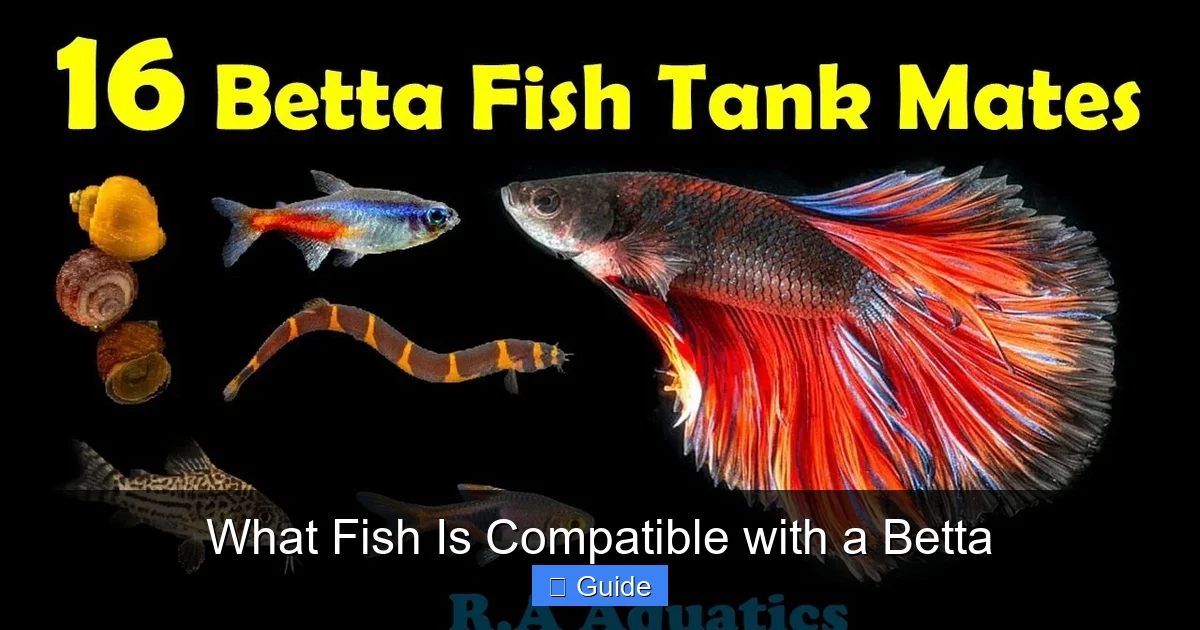
- Top Contenders: Fish That Are Often Compatible with Bettas
- High-Risk & Avoid: Fish That Are Generally Incompatible
- The Introduction Process: Slow and Steady Wins the Race
- Troubleshooting: When Things Go Wrong
- Conclusion: Patience, Observation, and Flexibility
Understanding the Betta: It’s Not Just a Pretty Face
Before we even think about other fish, we need to understand our betta. The Siamese fighting fish (Betta splendens) earned its name for a reason. In the wild, males are fiercely territorial and will fight to the death over mating rights or space. This instinct hasn’t been bred out of our pet bettas; it’s simply a core part of their biology. However, it’s not the whole story. Understanding the nuances of betta temperament is the first and most critical step in finding compatible tank mates.
The History of Aggression
Centuries of selective breeding for fighting have made male bettas particularly prone to viewing other brightly colored, long-finned fish as rivals. Their aggression is primarily territorial. A betta will patrol his space, flaring his gills and chasing away intruders. In a small, barren tank, this behavior is constant and stressful. In a large, complex environment, the betta may only defend a small portion of it, allowing other fish to inhabit different “neighborhoods.” This is why tank size and layout are so fundamentally linked to compatibility.
The Individual Personality Factor
Here’s the most important concept: not all bettas are created equal. Just like people, bettas have distinct personalities. Some are laid-back “zen masters” who barely notice other fish. Others are tiny, angry dictators who flare at their own reflection. Some are curious, some are shy. You cannot predict this with 100% accuracy, but you can make educated guesses. A betta with a history of biting at a filter intake or constantly flaring at you through the glass is a poor candidate for tank mates. A betta that is calm, curious, and doesn’t overreact to movements outside the tank is a much better prospect. You must observe your betta in his current environment for at least a week before considering any additions.
Reading Betta Body Language
To assess your betta, you need to become fluent in his language. Key signs of a calm betta: relaxed fins, slow, deliberate swimming, normal respiration. Signs of stress or aggression: flaring (spreading gills and fins), darting at the glass, frantic swimming, “biting” at objects, and pale, clamped fins. A betta who is merely curious might follow a new fish but not engage in a full-blown chase. Persistent, aggressive chasing that lasts more than a few minutes at a time is a major red flag. Your betta’s baseline behavior is your ultimate guide.
The Ideal Tank Environment: Setting the Stage for Peace
You could have the most peaceful betta in the world, but if you put him in a 5-gallon bare tank with a neon tetra, it will end in tears (or a eaten tetra). The environment is the single biggest factor you can control to promote harmony. Think of it as creating a city with districts, parks, and hiding places so no one feels their personal space is constantly invaded.
Visual guide about What Fish Is Compatible with a Betta
Image source: i0.wp.com
Tank Size: The Golden Rule
Let’s be absolutely clear: a 5-gallon tank is not big enough for a betta and tank mates. It’s a great size for a single betta with enrichment, but adding another fish dramatically increases bioload and, more importantly, reduces available territory. The absolute minimum for a community is a 10-gallon long (20x10x12). However, the gold standard is a 20-gallon long or larger. This extra horizontal space (length is more important than height) provides crucial swimming room for other fish and allows you to create distinct territories. In a larger tank, a betta’s “zone” is smaller relative to the whole, making cohabitation more feasible. Always err on the side of more space.
Creating Territory and Breaking Lines of Sight
An open-plan tank is a recipe for conflict. Your goal is to break the tank into visual sections. Use a dense forest of live or silk plants (avoid plastic plants with sharp edges). Floating plants like dwarf water lettuce or frogbit are fantastic, as they create a shaded upper layer that many fish love and block the betta’s view of the entire surface. Add driftwood, rock caves, and ceramic pots. These structures provide hiding spots for potential tank mates and give your betta places to claim as his own. A well-decorated tank reduces stress for all inhabitants by offering security and reducing constant visual confrontation.
Water Parameters: The Non-Negotiable Baseline
All tank mates must share the same fundamental water requirements as your betta. Bettas are tropical fish, preferring a temperature of 78-80°F (25.5-26.5°C). Any potential mate must thrive in this range. They also prefer a pH of 6.5-7.5 and soft to moderately hard water. Before even considering a species, research its ideal parameters. Do not compromise on temperature—a cold-water fish like a goldfish is a terrible match for a tropical betta. A high-quality heater and a reliable thermometer are essential for a community tank.
Filtration and Maintenance
More fish means more waste. You need a filter that can handle the bioload efficiently but doesn’t create a current so strong it exhausts your betta. Sponge filters are excellent for betta tanks as they provide gentle filtration and aeration. Canister filters with a spray bar set to diffuse flow or hang-on-back filters with a baffle are also good. Regardless of the filter, you must commit to more frequent water changes—typically 25-50% weekly in a community tank versus 25% in a single betta tank. Test water parameters regularly with a liquid test kit.
Top Contenders: Fish That Are Often Compatible with Bettas
Now for the fun part! Here are the species that have the highest success rate when paired with a peaceful betta in a properly sized and decorated tank. Remember, these are general guidelines. Your individual betta’s personality is the final judge.
Visual guide about What Fish Is Compatible with a Betta
Image source: i.ytimg.com
Peaceful Schooling Fish (The Best First Choice)
Small, active schooling fish that stay in the middle and upper levels of the tank are often the safest bet. They are fast, keep to themselves, and their shoaling behavior means they are less likely to be singled out. They must be kept in groups of at least 6, preferably 10+, to feel secure and spread out any potential aggression.
- Neon/Cardinal Tetras: The classic choice. Their shimmering blue/red stripes are beautiful, but crucially, they are fast, peaceful, and stay in a tight school. Cardinal tetras are slightly larger and more robust than neons. Important: Neons can be sensitive to poor water quality, so maintenance is key. In a 20+ gallon with a calm betta, a school of 8-10 is often successful.
- Ember Tetras: A fantastic, smaller alternative. At only 0.8 inches, they are a miniature schooling fish with a fiery orange color. Their small size means they are less likely to be seen as a threat, and their active, mid-water schooling is mesmerizing. A school of 10+ in a 15+ gallon tank can be a great match.
- Harlequin Rasboras: Another excellent, hardy option. They have a distinctive black triangle near their tail and a peaceful disposition. They are active swimmers that prefer the top half of the tank and do well in groups of 8+. Their orange and black coloration is attractive but not as “flashy” as a betta’s, reducing trigger potential.
- Celestial Pearl Danios (CPDs): These tiny, jewel-like fish are gaining popularity. They are active, hardy, and prefer cooler water? Wait, no—they actually do well in betta temperatures (72-78°F, so on the cooler side for a betta). They are shy and need a heavily planted tank. Their tiny size (1 inch) and preference for the bottom to mid-levels can make them good, non-threatening companions.
Bottom Dwellers & Clean-Up Crew
Fish that occupy the bottom of the tank are ideal because they inhabit a different “floor” than the betta, who typically patrols the mid to upper levels. This spatial separation is a huge advantage.
- Corydoras Catfish: The quintessential bottom dweller. These cute, armored catfish are peaceful, social, and must be kept in groups of at least 5 (6+ is better). They sift through sand or smooth gravel for food. Species like Pygmy Corys (for smaller tanks) or Bronze Corys (for larger) are excellent. Their dull coloration and bottom-feeding nature make them largely invisible to a betta.
- Kuhli Loaches: For a more unique look. These eel-like, orange-banded loaches are nocturnal and shy, spending the day burrowed in sand or hiding under decorations. They are completely peaceful and pose zero threat. A small group of 3-5 in a tank with a soft substrate is a wonderful addition. Their nocturnal habits mean they are rarely even seen by the betta.
- Otocinclus Catfish: The dedicated algae eater. These tiny (1.5-2 inch) suckermouth catfish are peaceful and stay in groups. They are excellent for controlling algae on leaves and glass. Warning: They can be sensitive to water quality and may starve if there’s not enough algae/biofilm. Only add to a well-established, algae-rich tank.
Invertebrate Companions
Shrimp and snails are not fish, but they are fantastic “tank mates” that often get along beautifully with bettas. They occupy a different ecological niche and are usually ignored, though this is not guaranteed.
- Amano Shrimp: The superstar of the shrimp world. They are large (2+ inches), hardy, and excellent algae eaters. Their size and active, non-shrimpy demeanor (they often leave the water briefly!) means they are rarely seen as food by a betta. A group of 3-5 is a great addition.
- Ghost/Glass Shrimp: These transparent shrimp are very cheap and often sold as “feeder shrimp.” They can be hit-or-miss. A curious betta may nip at them, and their transparency doesn’t always help. However, in a large, heavily planted tank with a calm betta, they can survive and reproduce. They are a good “test” before adding more expensive shrimp.
- Cherry Shrimp: Beautiful but risky. Their bright red color can actually trigger a betta’s aggression, as it resembles another betta. Some bettas will ignore them, others will hunt them relentlessly. Only attempt with a proven, very peaceful betta in a large, dense jungle of plants. Start with a small group and be prepared for losses.
- Nerite Snails: Perfect snail companions. They come in beautiful patterns (zebra, tiger, olive), do not reproduce in freshwater (so no snail explosion), and have a hard shell that protects them from curious bettas. They are excellent algae eaters. A few are always a safe bet.
- Mystery/Apple Snails: Larger, peaceful snails that also do not reproduce without a mate. Their size and hard shell make them very betta-resistant. They produce a lot of waste, so ensure your filtration can handle it. They are also known to sometimes climb out of the tank, so a secure lid is necessary.
High-Risk & Avoid: Fish That Are Generally Incompatible
Just as important as knowing who might work is knowing who absolutely will not. The following categories of fish are almost always a bad idea with a betta.

Visual guide about What Fish Is Compatible with a Betta
Image source: petshun.com
Fish with Long, Flowing Fins
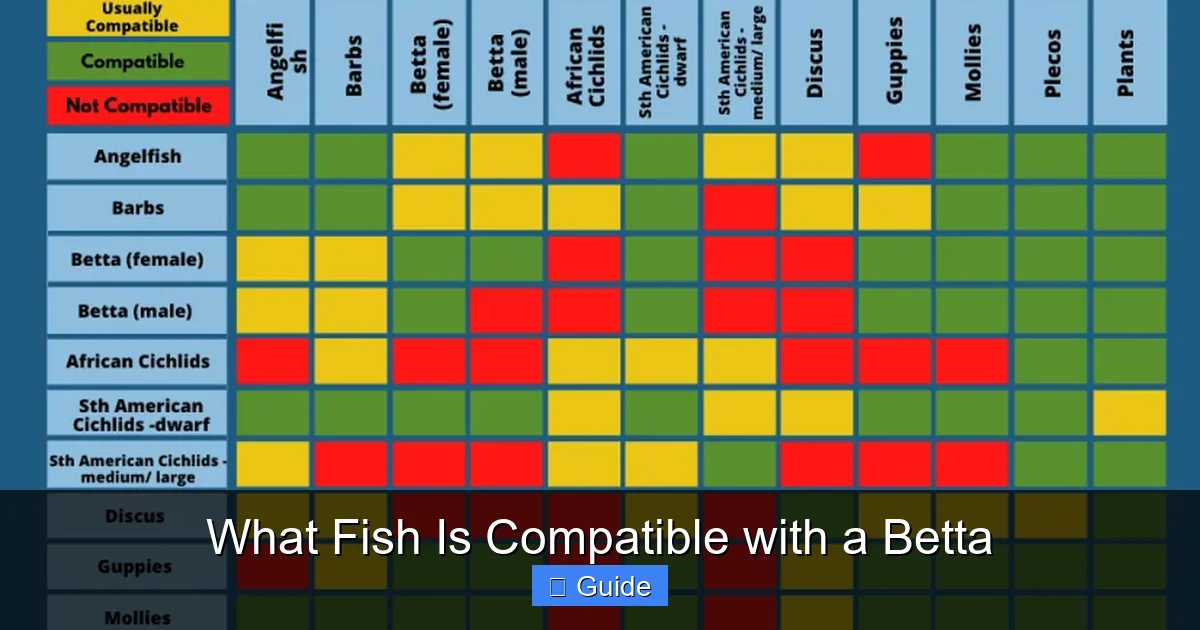
To a betta, a fish with a long, flowing tail is a direct rival. It mimics the look of another male betta and will almost certainly trigger an aggressive chase and possible fin-nipping. This includes: Fancy Guppies (males have huge, colorful tails), Double-Tailed or Half-Moon varieties of any fish (like some platies or mollies), and Siamese Algae Eaters (when young, they have a long dorsal fin that can be provocative). Even a peaceful fish with a large dorsal fin, like a male Endler’s Livebearer, can be risky.
Brightly Colored, Active Fish
The betta’s instinct is to attack anything that is brightly colored and moves energetically, as this mimics a rival male. This is why guppies (even females with some color), tetras with intense reds or blues (like some rummy-nose or bloodfin tetras), and male swordtails are poor choices. While some aquarists have success with neons or harlequins, the brighter the fish, the higher the risk. Stick to more subdued colors like the orange of ember tetras or the black/white of CPDs.
Fin-Nippers and Semi-Aggressive Fish
Some fish have a habit of nipping at the long, flowing fins of other fish. A betta’s fins are a irresistible target for these species, leading to a shredded, stressed betta. Tiger Barbs, Black Barbs, and other barb species are notorious fin-nippers and should never be housed with a betta. Some tetra species (like serpae tetras) can also be nippy. Male bettas with other male bettas is a guaranteed fight to the death. Even some cichlids (like convicts or Oscars) are far too aggressive and large.
Fish with Different Temperature Needs
This is a hard no. Bettas need warm water (78-80°F). Goldfish are cold-water fish (68-74°F). Keeping them together would stress both, weaken their immune systems, and shorten their lifespans. The same goes for many danios (zebra danios prefer 64-74°F) or white cloud mountain minnows. Temperature compatibility is a baseline requirement.
The Introduction Process: Slow and Steady Wins the Race
You’ve chosen your compatible species, your tank is a 20-gallon planted paradise, and you’ve quarantined your new fish for 4+ weeks. Now, the moment of truth. How you introduce the new fish to your betta is perhaps more important than the species you choose. Never just drop a new fish into the betta’s established territory. This is a declaration of war.
Step 1: The Quarantine Tank
This is non-negotiable. Any new fish must be quarantined in a separate, bare tank for at least 4 weeks. This serves two purposes: 1) It prevents you from introducing disease (like ich, velvet, or flukes) into your main display tank. 2) It allows you to observe the new fish for any signs of illness or aggression before it meets your betta. A simple 10-gallon tank with a sponge filter, heater, and a few hiding places is all you need.
Step 2: Rearrange the Main Tank First
On the day of introduction, first do a major rearrange of the main tank. Move plants, rocks, and driftwood to create new “territories” and break up established lines of sight. This resets the territorial map. Your betta will be busy exploring this “new” tank instead of immediately attacking a newcomer as an invader of his established home.
Step 3: The Divider Method (Highly Recommended)
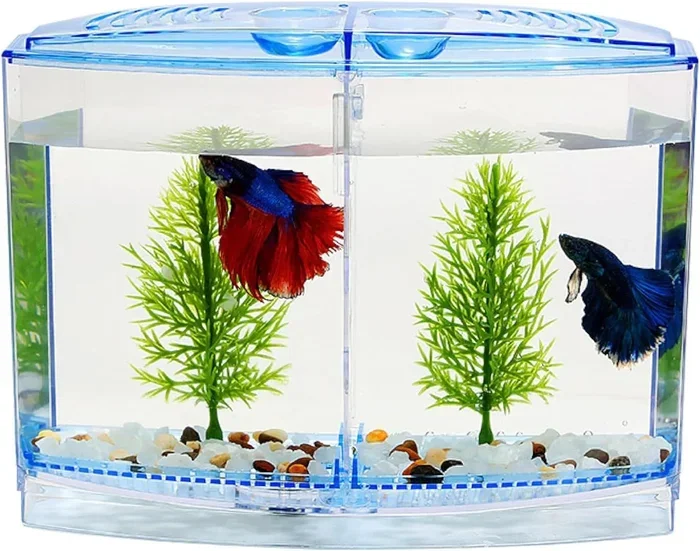
The safest method is to use a tank divider. Place the new fish in one section (with its own filter and heater if possible) and your betta in the other. They can see each other but cannot physically interact. This allows them to establish a visual presence without injury. Leave the divider in place for 48-72 hours. Watch their reactions. Some flaring at the divider is normal. If one fish is constantly, aggressively charging the divider, that’s a bad sign and they may never be able to coexist. If they mostly ignore each other, you can proceed.
Step 4: The Breaker Box / Cup Method
If you don’t have a divider, you can use a large breeder box or even a clean, tall glass placed inside the tank. Put the new fish in this container in the main tank for several days. This allows them to acclimate to the water parameters and temperature while being visible but protected. Again, observe interactions closely.
Step 5: The First Release
When you remove the divider or breeder box, do it at feeding time. Distract your betta with a nice meal of high-quality pellets or frozen bloodworms. Use a net to gently release the new fish on the opposite side of the tank from the betta. Do not drop them from the air. Have a net ready to immediately scoop the new fish back into a quarantine container if the betta launches an immediate, relentless attack. Be prepared to re-divide if necessary. The first 24-48 hours after full introduction are the most critical. Monitor constantly.
Troubleshooting: When Things Go Wrong
Even with the best planning, issues can arise. Here’s how to handle common problems.
“My betta is chasing the new fish constantly.”
This is the most common issue. First, determine the level of chasing. Is it a few flares and chases, then the betta gives up and goes about his business? That can be normal initial behavior and may subside in a day or two. Is it relentless, 24/7 pursuit that prevents the new fish from eating or resting? That is unacceptable stress. Solution: Re-introduce using the divider method for another week. Sometimes a longer visual acclimation period helps. If it doesn’t improve, you must separate them. The betta may simply not be a candidate for a community.
“The betta is nipping at the other fish’s fins.”
Fin-nipping is a severe form of aggression and stress. It often starts with a chase and escalates to actual bites. A fish with ragged, shredded fins is in pain and vulnerable to infection. Solution: Immediate separation. The betta has identified that fish as a target. Do not hope it will stop. Remove the victim fish to a hospital tank to recover. The betta likely cannot live with that specific species or possibly any other fish.
“The new fish is hiding and not eating.”
This is a sign the new fish is terrified. While some initial hiding is normal (24-48 hours), prolonged hiding and refusal to eat leads to a decline in health. Solution: Ensure there are ample hiding spots for the new fish specifically (caves, dense plants). Try feeding the new fish first in a separate container and then adding it to the tank, or use a feeding ring on the opposite side of the tank from the betta. If the situation doesn’t improve in a few days, consider moving the new fish to a different setup. Its stress level is too high.
“Aggression is escalating after a few days.”
Sometimes, a betta seems fine at first but then becomes more assertive. Solution: This is a clear sign the initial introduction was too fast. You must go back to the divider method. Give them a much longer period (1-2 weeks) to see each other without contact. Sometimes, this prolonged visual exposure leads to habituation. If aggression persists or worsens, separation is the only humane option.
“When is it time to give up?”
If after a week of proper, slow introduction (using a divider) there is still constant, aggressive chasing or any fin-nipping, it is time to accept that this particular betta is not suited for a community. This is not a failure; it’s responsible fishkeeping. Your betta’s well-being—and the well-being of the other fish—must come first. Have a backup plan: a separate tank for the betta or the other fish. Some bettas are simply too territorial, and that’s okay. They can be perfectly happy and healthy in a species-only, well-enriched tank.
Conclusion: Patience, Observation, and Flexibility
The journey to a successful betta community is not a simple checklist; it’s a process of careful observation and adaptation. There is no universal list of “betta-safe” fish because your betta is an individual. Start with the highest-probability candidates—peaceful schooling fish like ember tetras or harlequin rasboras, and hardy bottom dwellers like corydoras—in a 20-gallon or larger, heavily planted tank. Follow the slow introduction protocol religiously. Be prepared to be a detective, watching body language and behavior every single day.
Remember, a peaceful community tank is a reward for diligence. The sight of your betta lazily floating near the surface while a school of tiny tetras darts through the plants below, and a colony of shrimp cleans the leaves, is a beautiful and serene tableau. But achieving it requires respecting the betta’s innate instincts, providing an environment that minimizes conflict, and being willing to make changes for the health of all your aquatic pets. Your betta’s aggression isn’t a flaw to be fixed, but a trait to be managed with knowledge and care. With that approach, you can unlock a whole new world of aquarium keeping.
Frequently Asked Questions
Can a betta live with shrimp?
Yes, many bettas can live with shrimp, but it depends on the betta’s personality and the shrimp’s size. Larger shrimp like Amano or Ghost shrimp have the best chance. Small, colorful shrimp like Cherry shrimp are a bigger risk, as their bright color can trigger aggression and their size makes them potential food. Always introduce shrimp to a well-established, heavily planted tank with a calm betta.
How many tank mates can I put with my betta?
The number depends entirely on your tank size. In a 10-gallon tank, you might only be able to add a small school of 5-6 micro fish like ember tetras or a few snails. In a 20-gallon long, you could have a school of 8-10 small tetras plus a group of 5-6 corydoras. The golden rule is to never overstock. Use a reliable aquarium stock calculator and always under-stock, especially with a betta in the mix.
What is a betta sorority?
A betta sorority is a community tank housing only female bettas (typically 4-6). Female bettas are less aggressively territorial than males but can still establish hierarchies and fight. A sorority requires a very large, heavily planted tank (minimum 29 gallons) with abundant hiding spots to break lines of sight. It is an advanced setup not recommended for beginners, as aggression can still occur and result in severe injuries or death.
Can I put my betta with a goldfish?
Absolutely not. Goldfish are cold-water fish that thrive in temperatures around 68-72°F, while bettas are tropical fish needing 78-80°F. Keeping them together would compromise the health of both. Goldfish also produce a massive amount of waste, requiring powerful filtration and frequent water changes that are not suitable for a betta. They are completely incompatible in terms of temperature, water chemistry, and temperament.
My betta flares at me through the glass. Does that mean he’s too aggressive for tank mates?
Not necessarily. Flaring at your reflection or at you is often a sign of general territoriality or curiosity, not necessarily a predictor of how he’ll react to other fish. However, if he flares at everything—your finger, the filter intake, a toy outside the tank—and is constantly on high alert, it indicates a highly strung, aggressive personality that is a poor candidate for a community. Observe how he reacts to movement inside his tank (like a floating leaf).
What should I do if my betta starts fighting with his new tank mate?
Act immediately. Have a hospital tank or the original quarantine tank ready. Use a net to separate the fish at the first sign of relentless chasing or fin-nipping. Do not wait to see if it “works itself out.” Stress and injury can escalate within hours. Remove the victim fish to a separate, safe tank to recover. The betta has demonstrated he cannot live with that specific fish. You can try re-homing the other fish or, if you’re committed, attempt a very long divider reintroduction (1-2 weeks). If aggression persists, the betta must remain solitary.