Can 1 Male and 2 Female Betta Fish Live Together

Keeping one male betta with two females is a high-risk, advanced-level endeavor, not a beginner community tank setup. It requires a very large, expertly planted tank (minimum 40+ gallons), meticulous planning, and constant monitoring. Male bettas are inherently aggressive, and the presence of two females can trigger intense competition and spawning behaviors that often lead to injury or death. Success is possible but uncommon; separate tanks are almost always the safer, more humane choice for these beautiful but territorial fish.
Hey there, fellow fish enthusiast! Let’s dive into one of the most debated and tricky questions in the betta world: can 1 male and 2 female betta fish live together? If you’ve ever browsed online forums or watched those stunning, colorful community tanks on social media, you might have seen a male betta glowing amidst a group of females and thought, “I want that!” I get it. The idea of a little betta “harem” is visually captivating. But here’s the honest truth, straight from the front lines of fish-keeping experience: this setup is one of the most challenging and high-risk combinations you can attempt. It’s not a standard community tank; it’s a delicate behavioral experiment that requires a massive investment in space, equipment, and vigilance. In this complete guide, we’ll break down exactly why this trio is so problematic, what it would take to even try it, and why for almost everyone, separate tanks are the undisputed champion of betta welfare.
Key Takeaways
- High Risk, Not Recommended: A male betta with multiple females is fundamentally different and far more dangerous than a female-only sorority. The male’s aggression combined with female rivalry makes peaceful coexistence rare and unstable.
- Tank Size is Non-Negotiable: Success requires a massive, heavily planted tank of 40 gallons or more. This provides enough space for territories to form and for females to escape the male’s constant attention.
- Aggression Manifests in Two Ways: You must watch for both direct male aggression (chasing, biting) and female-on-female bullying, which intensifies when a male is present as they compete for his attention or establish a pecking order.
- The Introduction Process is Critical and Gradual: Never just add all fish at once. A multi-week process involving quarantine, divider methods, and careful observation is essential to assess compatibility before full cohabitation.
- Constant Vigilance is Required: Even in a seemingly peaceful tank, stress can build. You must be prepared to separate fish immediately at the first sign of torn fins, hiding, or lethargy, which means having multiple backup tanks ready.
- Separate Tanks are the Standard: For 99% of hobbyists, housing each betta separately is the kindest, safest, and most stress-free approach. It showcases their individual personalities without the constant threat of violence.
- Spawning Behavior is Not Peaceful: A male displaying a bubble nest and “dancing” for females is part of reproduction, not harmony. This behavior stresses females and often leads to fights if spawning is not successful or if the male becomes overly aggressive afterward.
📑 Table of Contents
- Understanding Betta Behavior: The Instincts You Can’t Ignore
- Why a “Trio” is Radically Different from a Female Sorority
- Tank Setup for a (Possible) Peaceful Trio: The Absolute Minimum Standards
- The Introduction Process: A Multi-Week, High-Stakes Protocol
- Monitoring, Troubleshooting, and Knowing When to Pull the Plug
- The Inevitable Truth: Why Separate Tanks Are Almost Always the Answer
- Conclusion: Passion vs. Practicality in Betta Keeping
Understanding Betta Behavior: The Instincts You Can’t Ignore
Before we even talk about tank size or plants, we have to talk about what makes a betta a betta. These fish aren’t just colorful decorations; they are living descendants of wild Betta splendens that evolved in the shallow, resource-scarce paddy fields of Southeast Asia. Their entire biology is wired for one thing: defending a tiny patch of territory against rivals. This is especially true for males, but females have their own complex social hierarchy.
The Male Betta’s Territorial Imperative
The male betta is the poster child for fish aggression, and for good reason. His long, flowing fins are a billboard advertising his fitness. In the wild, another male seeing that display is a direct challenge to his territory, his mating rights, and his very survival. His response is hardwired: flare his gills, extend his fins to look bigger, chase, bite, and if necessary, fight to the death. This isn’t “meanness”; it’s survival instinct. In a confined tank, any other fish—especially another betta—is automatically seen as an intruder. The presence of a female doesn’t soothe this instinct; it often intensifies it because she becomes a resource he must guard from all perceived threats, including the other females in the tank.
Female Betta Dynamics: More Than Just Peaceful
This is a common misconception. People think female bettas are “nice.” They are not. Female bettas are absolutely capable of aggression and establish a strict pecking order, known as a sorority. In a well-setup, large sorority tank with 5+ females, this hierarchy stabilizes. The alpha will chase subordinates, but there’s enough space for the others to find their own corners. However, introducing a male into this dynamic completely upends the balance. The females’ focus shifts from establishing order among themselves to competing for the male’s attention. This “competition” looks like heightened aggression, nipping, and relentless pursuit by the females, both of each other and sometimes even of the male. It creates a volatile, three-way tension that is incredibly difficult to manage.
Why a “Trio” is Radically Different from a Female Sorority
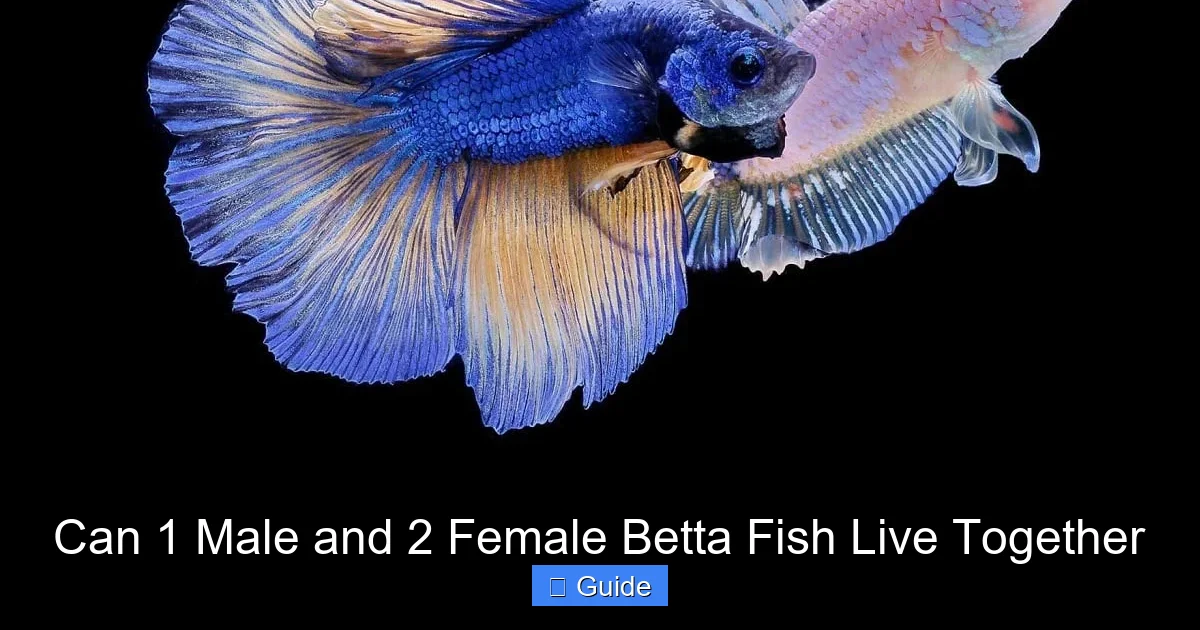
This is the core of the issue. A successful female sorority (typically 5+ females in a 40+ gallon tank) works because the aggression is distributed among many individuals. No single fish is the permanent, sole target of everyone’s ire. The can 1 male and 2 female betta fish live together scenario is a mathematical nightmare for harmony.
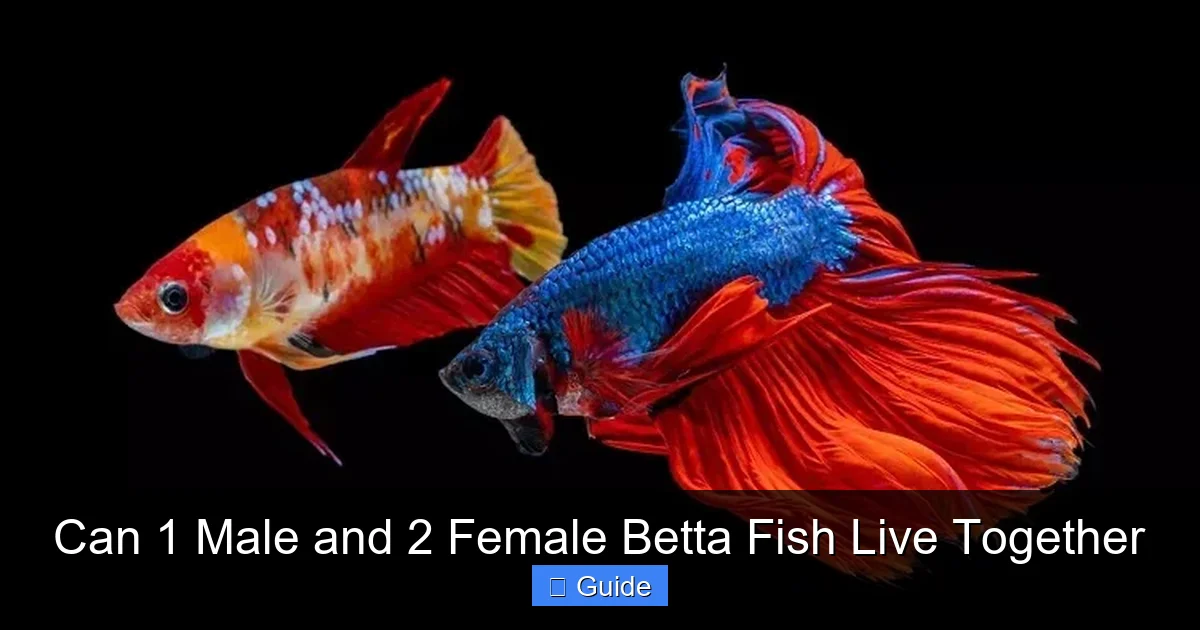
Visual guide about Can 1 Male and 2 Female Betta Fish Live Together
Image source: fishlab.com
- The Male’s Target Count: The male sees two intruders/females. His aggression isn’t split evenly; he will often focus on one primary target, but both are under constant threat.
- The Females’ Target Count: Each female sees the male (a source of stress/attention) and one rival female. This means each female is both a potential victim and an aggressor in a two-front war.
- The “Bystander Effect” is Absent: In a large sorority, a chased female can dart past several other fish to lose her pursuer. In a trio, there are only two other fish. The chase is a direct, endless loop with no escape route. The tank, no matter how large, feels small.
The dynamic inherently creates two scenarios: 1) the male bullies one or both females relentlessly, or 2) the females become so fixated on each other that they ignore the male but still injure one another. True, relaxed cohabitation where all three swim freely without fear is the exception, not the rule.
Tank Setup for a (Possible) Peaceful Trio: The Absolute Minimum Standards
If you are an experienced betta keeper, understand the risks, and want to attempt this as a serious project (not a casual idea), your tank must be a fortress of space and complexity. Anything less is a guarantee of disaster.
Visual guide about Can 1 Male and 2 Female Betta Fish Live Together
Image source: fishlab.com
Size and Dimensions: Bigger is the Only Option
Forget the 5-gallon desktop tank. The absolute, rock-bottom minimum for a male with two females is a 40-gallon breeder tank (48″ x 18″ x 16″). This is not a suggestion; it is the starting line. The length is critical—it provides horizontal swimming space to establish territories. A 40-gallon long gives each fish a potential 16-inch stretch of “theirs.” A tall, narrow 40-gallon is worse than a 20-gallon long because bettas are horizontal swimmers. Many successful trios are kept in 55+ gallons. The goal is to make the tank so large that the bettas can, for the most part, avoid each other.
The Art of Aquascaping: Creating a Maze, Not an Arena
An empty 40-gallon tank is a boxing ring. Your job is to turn it into a dense, confusing jungle. You need to break every single line of sight.
- Live Plants are Mandatory: Use fast-growing stem plants like Rotala, Ludwigia, or Cabomba to create thick, floating walls. Use mid-ground plants like Cryptocoryne and Anubias attached to driftwood to create clusters. The denser, the better.
- Hardscape is Your Best Friend: Large pieces of driftwood, slate rock, and ceramic pots (with holes plugged) are essential. Place them strategically to create “rooms” and “hallways.” A betta should not be able to see from one end of the tank to the other without a barrier in the way.
- Floating Plants are a Game-Changer: A thick layer of Duckweed, Salvinia, or Floating Crystalwort covers the surface, blocking the male’s view from above (a common aggression trigger) and providing a sense of security for the females. It also helps with nitrate absorption.
Think of it like designing an office for three people who absolutely cannot stand each other. You need cubicle walls, separate rooms, and blind corners.
Filtration, Heating, and Water Quality
A tank this size with heavy planting still needs robust, gentle filtration. A hang-on-back (HOB) filter with a spray bar to diffuse flow or a canister filter is ideal. Betta fins are delicate; strong currents are stressful. The filter must be able to cycle the entire water volume multiple times an hour to handle the bioload. A 50-100 watt heater (depending on room temperature) is needed to maintain a stable 78-80°F (25.5-26.5°C). Stability is key—temperature swings cause stress and lower immune response, making fish more susceptible to disease during stressful cohabitation. Regular water changes (25-30% weekly) are non-negotiable to keep parameters pristine.
The Introduction Process: A Multi-Week, High-Stakes Protocol
You do not, under any circumstances, just dump all three fish into the prepared tank together. The process is slow, methodical, and designed to let you read their behavior at each stage. Have separate quarantine or hospital tanks ready for immediate removal.
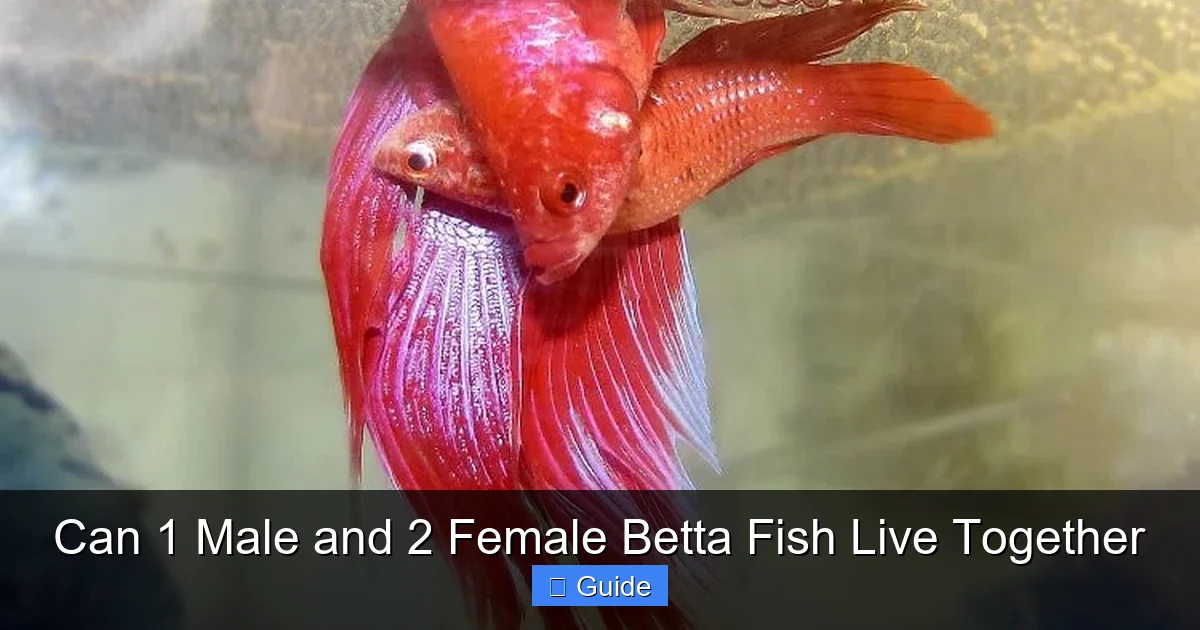
Visual guide about Can 1 Male and 2 Female Betta Fish Live Together
Image source: fishlab.com
Phase 1: Quarantine and Solo Observation
Each betta must be quarantined alone for at least 2-4 weeks in separate tanks. This ensures they are disease-free and lets you assess their baseline personality. Is the male a “flarer” who attacks his own reflection? Is one female particularly skittish or nippy? You need to know this beforehand. During this phase, you can also acclimate them to the future tank’s water parameters.
Phase 2: The Visual Introduction with a Divider
This is the most critical step. Use a permanent, opaque divider (like a plastic divider with suction cups or a sealed acrylic sheet) to split the large tank in half. Place the male on one side and one female on the other. Let them live like this for 1-2 weeks. They can see each other through the glass.
- Watch the Male: Does he flare constantly at her? Does he try to bite the divider? Constant, intense flaring is a bad sign.
- Watch the Female: Is she curious, or does she cower in the back? Does she flare back? A female who flares aggressively at a male is often a dominant, potentially problematic individual.
If after 7-10 days, the flaring has decreased to occasional curiosity (the male may still display a bit, which is natural), you can consider the next step. If aggression is extreme, the experiment is likely over.
Phase 3: Adding the Second Female & Full Cohabitation
Once the male seems relatively tolerant of the first female (again, “tolerant” means not constantly trying to kill her, not “friendly”), you can introduce the second female. But do not remove the divider yet! Instead, place the second female in a large, clear breeding box or a separate tank inside the main tank’s water column. Let all three see each other through the glass for another 3-5 days. Observe the interactions between the two females through the barrier. Are they flaring at each other? This is a major red flag for future female-female fighting.
If all visual observations show minimal flaring and curiosity rather than predatory chasing, you can finally attempt full cohabitation. Remove the divider and the breeding box simultaneously. Be ready with a net and a bucket of tank water to scoop out any fish that immediately start fighting. The first 24-48 hours are the most dangerous. Do not feed during this period to reduce waste and focus on observation.
Monitoring, Troubleshooting, and Knowing When to Pull the Plug
Assuming you’ve made it to the full tank stage, your work has just begun. This is a 24/7 commitment for the life of the fish.
The Signs of Success (Rare)
What does a “successful” trio look like? It’s not them schooling together. It’s a state of tense, ignored cohabitation. You might see:
- The male mostly ignoring the females, patrolling his own half of the tank.
- The females sticking to their own separate, plant-dense areas.
- Minimal chasing. A quick dart here and there is normal, but not relentless pursuit that lasts minutes.
- All fish eating readily, with full, not pinched, bellies.
- Bright, extended fins (not clamped tight to the body).
This is a fragile equilibrium that can shatter at any time, especially during water changes or if a new object is added to the tank.
The Red Flags: Immediate Action Required
The moment you see these, you must separate the aggressor or victim immediately:
- Torn, shredded, or missing fins: This is physical injury. It will not heal in the same tank.
- Hiding 24/7: A betta that is constantly tucked behind a filter or in the back corner, not coming out for food, is terrified and stressed.
- Lethargy and Clamped Fins: The fish is hovering at the bottom or top, fins held tightly against the body. This is severe stress or illness.
- Constant Chasing: If one fish is being chased non-stop, in circles, for more than a few minutes at a time, it’s bullying. The victim will exhaustion and death.
- Color Fading: Stress causes bettas to lose their vibrant colors, appearing pale or striped.
This is why you MUST have backup tanks or large containers ready. You cannot say, “I’ll watch and see if it gets better.” You must act within hours. A single bad fight can be fatal.
The Inevitable Truth: Why Separate Tanks Are Almost Always the Answer
Let’s be real. For the vast, overwhelming majority of betta keepers, the answer to can 1 male and 2 female betta fish live together is a resounding no. It is an advanced technique with a high probability of failure, leading to injured or dead fish. The stress alone, even without visible fighting, suppresses their immune systems and shortens their lifespans.
What is the superior alternative? Giving each betta its own beautiful, well-planted 5-10 gallon tank. This is not a compromise; it’s a win-win.
- Zero Stress from Aggression: Each fish can be its confident, curious self. You’ll see more natural behavior—building bubble nests, exploring, flaring at you (its keeper) instead of tankmates.
- Easier Maintenance: It’s simpler to maintain three stable, small bio-loads than one massive, complex system where one sick fish can quickly compromise the entire water quality.
- Better Health Monitoring: In a single tank, it’s hard to tell which fish is eating or which is producing waste. In separate tanks, you know exactly which fish is lethargic or has a lost appetite, allowing for quicker treatment.
- Individualized Care: You can adjust heater strength, flow, and plant types to suit each betta’s unique personality. A shy female might get a darker, more covered tank, while a bold male gets more open swimming space.
- Ethical Responsibility: As pet owners, our first duty is to prevent suffering. Intentionally creating a high-risk situation where injury is likely is contrary to that duty. The stunning visual of a trio is not worth the potential cost in fish pain and death.
If you want a community tank, look towards peaceful, tropical species that occupy different tank levels—like a school of neon tetras (in a properly sized, cycled, and planted tank) with a single, docile male betta. Even that requires careful research and a large tank. But the male+female+female trio is a category of its own, and it’s one most experts advise against.
Conclusion: Passion vs. Practicality in Betta Keeping
So, can 1 male and 2 female betta fish live together? The technical answer is yes, it has been done under ideal, expert-level conditions with enormous tanks and flawless execution. But the practical, ethical, and compassionate answer for the home aquarist is almost certainly no. The instinctual drives of these fish are too strong, the risk of catastrophic aggression too high, and the stress of constant tension too great to justify the attempt for a mere aesthetic. Our fascination with these fish should be rooted in respect for their natural behaviors, not a desire to force them into an unnatural and dangerous social structure. The most beautiful betta display is a single, healthy, vibrant fish flourishing in a clean, spacious, and stress-free environment that meets its species-specific needs. Sometimes, the most stunning community is the one where each member has a home of their own. Your desire to create something special is admirable—channel it into creating three perfect, individual kingdoms instead of one risky, volatile trio.
Frequently Asked Questions
Is a 20-gallon tank big enough for a male and two female bettas?
No, a 20-gallon tank is far too small for this combination. The absolute minimum is a 40-gallon breeder tank to provide enough horizontal space and visual barriers to potentially reduce aggression. In a 20-gallon, the fish will have no escape from each other, making severe fighting almost certain.
What is the biggest sign that my betta trio is failing?
The most urgent sign is physical injury, such as torn or shredded fins on any of the fish. Other critical signs include one fish being chased relentlessly without rest, a fish hiding constantly and not coming out for food, or all fish displaying chronic stress like clamped fins and faded color. These indicate the tank environment is harmful and immediate separation is necessary.
Can I use a tank divider permanently for a male and two females?
A permanent divider can be used to keep the male permanently separated from the females, but this defeats the purpose of them “living together.” If you use a divider, it’s typically a temporary tool during the introduction process. Keeping them behind glass permanently means they are not truly cohabiting and cannot interact.
If my male builds a bubble nest, does that mean the females are safe?
Absolutely not. A bubble nest is a sign of the male’s reproductive readiness, not peace. This behavior often increases his aggression as he becomes hyper-vigilant about guarding the nest area from all intruders, including the very females he is trying to spawn with. It is a high-stress period that frequently leads to fighting.
What should I do if the females start fighting with each other more than with the male?
Female-on-female aggression is a major reason why this trio setup fails. If you see one female relentlessly pursuing and nipping another, you must separate them immediately. This bullying can lead to injury, stress, and death for the victim. You would likely need to rehome one of the females to a separate tank, effectively ending the trio experiment.
Are there any fish that can be added to a male betta with two females to “distract” them?
No. Adding other fish is a terrible idea in this already volatile situation. The male betta will see any other fish as intruders and may attack them, while the added fish will not alleviate the core tension between the three bettas. It simply increases the bioload and adds more potential victims to a dangerous environment. The focus must be solely on the betta dynamics.