Can My Betta Fish See Me
Yes, your betta fish can absolutely see you! While their vision differs from humans, bettas have excellent color perception and can recognize shapes, movement, and even individual people. Understanding their unique sight—which is monocular with a blind spot directly above—helps you interact more effectively. By using consistent routines, deliberate movements, and enriching their environment, you can strengthen the visual bond and provide crucial mental stimulation for your intelligent, solitary fish.
Key Takeaways
- Bettas have functional vision: They see in color, detect movement efficiently, and use their eyes for hunting and navigating, though their focus is better at a distance.
- They can recognize you: Through repeated positive interactions (like feeding), bettas learn to associate your specific shape, movement, and presence with food and safety.
- Their sight has limitations: Bettas have a blind spot directly overhead and slightly nearsighted vision, so approach from the side and avoid sudden movements from above.
- Lighting is critical: Excessive glare or dim light strains their eyes. Use indirect, consistent lighting to make viewing comfortable and reduce stress.
- Interaction is enrichment: Voluntary visual engagement (like target training or following your finger) provides vital mental stimulation, combating boredom in their confined world.
- Tank placement matters: Position the tank in a low-traffic area with a clear line of sight to common spaces, but avoid placing it where reflections or outside predators (like cats) can cause chronic stress.
- Observation is a two-way street: While you watch your betta, it is constantly watching you, learning your patterns and using you as a key part of its environmental security.
[FEATURED_IMAGE_PLACEHOLDER]
📑 Table of Contents
- The Curious Gaze: Unlocking the World Through Your Betta’s Eyes
- The Biology of Betta Vision: How They See the World
- Do Bettas Recognize Their Owners? The Science of Association
- Optimizing Your Betta’s View: Environmental and Practical Factors
- Bonding Through Sight: Interactive Activities and Training
- Debunking Myths: What Bettas CAN’T See (And Common Misconceptions)
- Conclusion: Seeing and Being Seen—A Shared World
The Curious Gaze: Unlocking the World Through Your Betta’s Eyes
There’s a moment of silent connection that happens when you walk up to your betta fish’s tank. That brilliant, flowing creature pauses its endless, graceful patrol, fins fluttering, and seems to lock eyes with you. You might wonder, can my betta fish see me? Is that focused stare a mere coincidence, or is there genuine recognition behind those intelligent, forward-facing eyes? The answer is a fascinating and resounding yes, but the story of how your betta sees you—and its entire world—is far more intricate and wonderful than you might imagine. Understanding betta vision isn’t just an academic curiosity; it’s the key to providing better care, reducing stress, and building a deeper, more responsive bond with one of the most personable aquatic pets.
Many new betta owners operate under a few common myths: that fish have terrible memory, that they can’t see well out of water, or that their world is a blurry, colorless void. Science has thoroughly debunked these notions, especially for the astute and visually-oriented Siamese fighting fish. Bettas, or Betta splendens, are hunters by nature. In the shallow, murky rice paddies and slow-moving streams of Southeast Asia, their survival depended on spotting tiny insects, rivals, and potential mates. This evolutionary history has gifted them with a visual system finely tuned for their environment—an environment that now, in your living room, includes you as the most significant feature. Let’s dive deep into the optics of your betta’s world and discover exactly what it sees when it looks at you.
The Biology of Betta Vision: How They See the World
To comprehend what your betta perceives, we must first understand the hardware: its eyes. Structurally, a betta’s eye is similar to that of a human, but with critical adaptations for an aquatic life.
Visual guide about Can My Betta Fish See Me
Image source: bettasource.com
Monocular Vision and a Wide Field of View
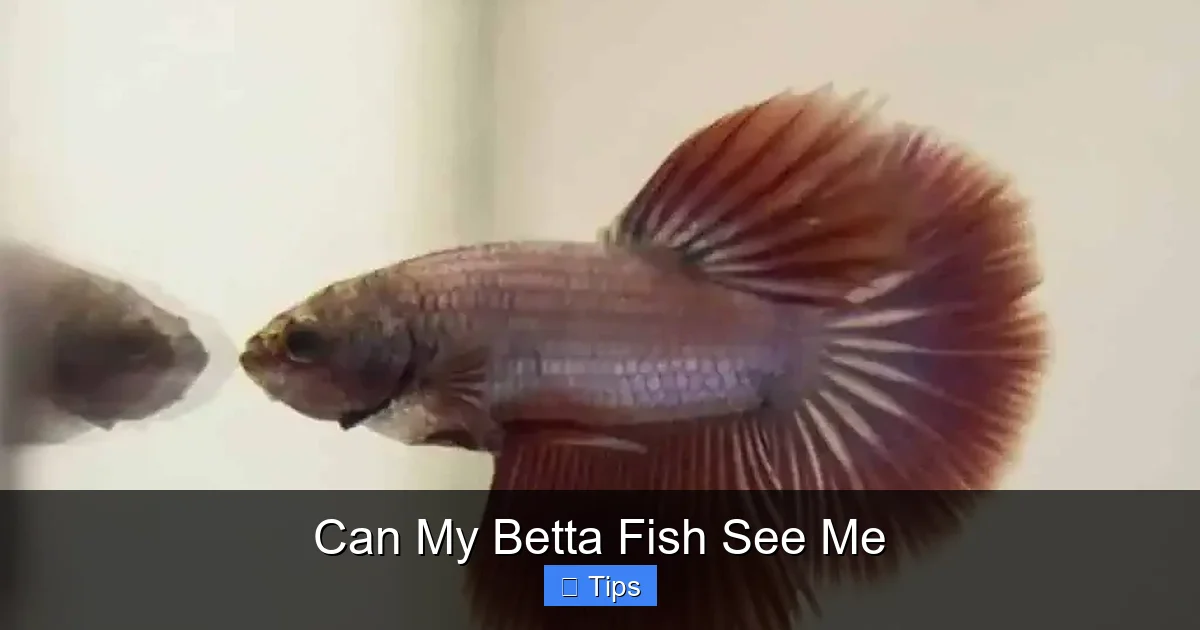
Unlike predators that rely on binocular (overlapping) vision for precise depth perception—like eagles or cats—bettas have eyes on the sides of their head. This grants them an incredibly wide field of view, estimated at nearly 340 degrees. This is a classic prey animal adaptation, allowing them to spot predators approaching from almost any direction without turning their head. However, this comes at a cost: they have very little true binocular vision (the area where both eyes’ fields overlap). This overlap is a small cone of vision directly in front of their snout. This is likely the area they use for precise targeting during a strike at food or when inspecting something very close, like your finger pressed against the glass. When your betta seems to be staring at you, it’s often using one eye at a time, swiveling its head to get a better look.
Color Perception: A World of Vivid Hues
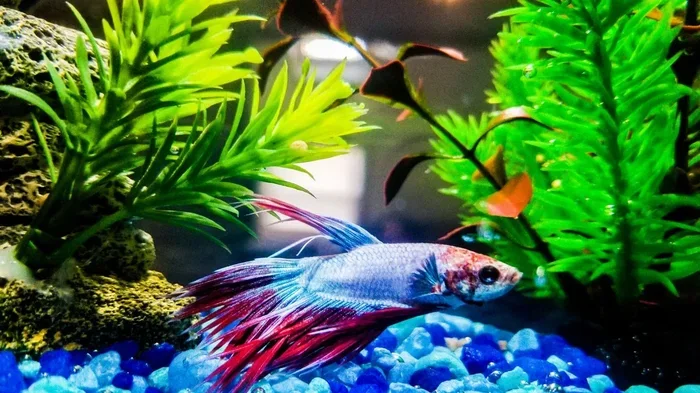
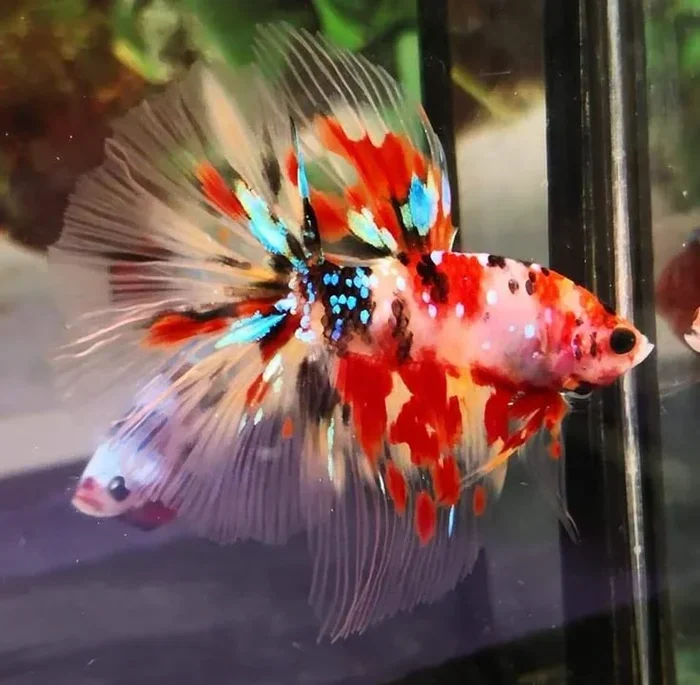
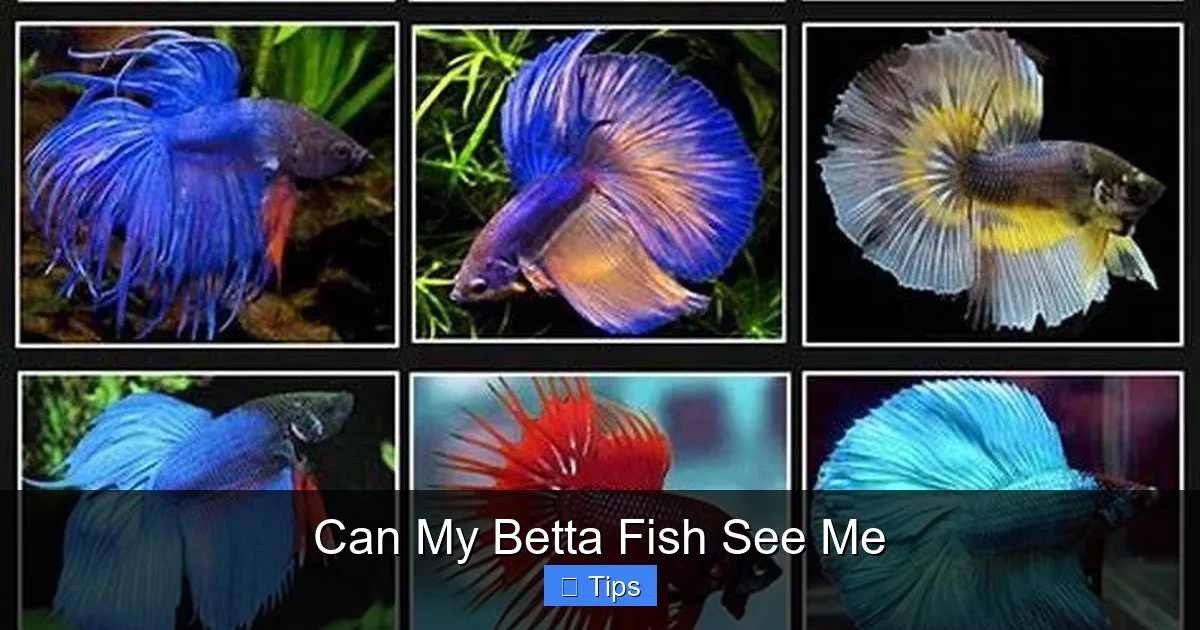
This is where bettas truly shine. They possess four distinct types of cone cells in their retinas (compared to three in humans), which suggests they may see a broader spectrum of colors, potentially including ultraviolet light. This rich color vision is not just for show; it’s essential for their social signaling. The dazzling reds, blues, and iridescent greens of a male betta’s fins are not just for our appreciation—they are vivid communication tools visible to other bettas in their natural habitat. So, when you wear a bright red shirt or your tank has a vibrant background, your betta isn’t just seeing a shape; it’s seeing color. They can likely distinguish between different colored objects, which is why using a specific colored feeding stick or cup can be an effective training tool.
Focus, Light, and the Nearsighted Betta
Research indicates that bettas are somewhat nearsighted. Their vision is clearest for objects at a moderate distance, perhaps a few inches to a foot away. Very distant objects may appear blurry, and extremely close objects (right against the glass) might be difficult to focus on clearly. This makes sense for a fish that interacts with its immediate surroundings—the leaves of a plant, a falling insect, the face of a rival on the other side of a leaf-litter pool. Their eyes are also adapted to the specific light conditions of their native habitat: dappled sunlight filtering through dense vegetation. They do not have eyelids, so they cannot squint against bright light. This makes proper tank lighting crucial. Harsh, direct overhead lighting creates glare on the water’s surface, which can be visually stressful and disorienting for your betta. Diffused, indirect lighting that mimics a forest canopy is ideal.
Do Bettas Recognize Their Owners? The Science of Association
Knowing that bettas can see you is one thing; knowing if they know you is another. Recognition implies memory and cognitive association. The good news for betta enthusiasts is that a growing body of anecdotal evidence and preliminary studies strongly supports that bettas can and do recognize individual humans.

Visual guide about Can My Betta Fish See Me
Image source: petshun.com
The Power of Routine and Positive Reinforcement
Bettas are creatures of habit with surprisingly good memories, estimated to last for several months. They learn through association. The most powerful association is food. If you are the person who consistently approaches the tank at the same time each day, with the same deliberate movements, to provide food, your betta will learn to connect your specific visual signature—your height, the shape of your face, the color of your clothing, the way you move—with a rewarding event. You will become a predictor of good things. This is why many betta owners report their fish swimming to the front of the tank, performing a “dance” (flaring and wiggling), or following their movement along the glass the moment they enter the room. It’s not just a response to any movement; it’s a learned response to your movement.
Differentiating Between People
Can they tell you apart from other family members? Absolutely. Multiple owners in a household often report that their betta reacts differently—more eagerly, more calmly—to the primary caregiver versus a visitor or another household member. This differentiation is based on a composite of visual cues: overall body shape, gait, and even the sound and pattern of footsteps (vibrations travel through water). A study on another intelligent fish species, the archerfish, showed they could distinguish between individual human faces. Given the betta’s renowned intelligence and complex social signaling, the capacity for individual human recognition is highly plausible. They are not making a “friendship” in a human sense, but they are forming a reliable, predictable association that reduces anxiety and increases anticipation.
Optimizing Your Betta’s View: Environmental and Practical Factors
Your betta’s ability to see you clearly and comfortably is directly influenced by how you set up and maintain its environment. A poorly designed tank can create a visually stressful or confusing world.
Visual guide about Can My Betta Fish See Me
Image source: diyseattle.com
Tank Placement: Location, Location, Location
Where you put the tank is the first decision affecting your betta’s visual experience. Avoid placing the tank:
- Directly in a high-traffic walkway: Constant, rapid movement of large objects (people walking by) outside the tank can be perceived as a constant threat, causing chronic stress.
- In front of a window: This creates two problems: intense, shifting sunlight that causes temperature and algae swings, and a dazzling array of moving shadows (birds, clouds, trees) that can overstimulate or frighten a fish with a limited ability to comprehend them.
- Where reflections are prominent: Bettas will often flare at their own reflection, mistaking it for a rival. This is stressful and exhausting. Angling the tank slightly or using a background on the sides can minimize mirror-like reflections.
- At cat height: A cat’s silhouette looming overhead is a primal predator signal for a betta. Their blind spot is directly above, so a cat appearing from that angle is particularly terrifying.
Ideally, place the tank against a wall in a calm room, at eye level for you, so you can comfortably sit and observe without being a looming presence.
The Importance of Clean, Clear Water and Proper Lighting
You cannot see through a foggy window, and neither can your betta. Cloudy water due to bacterial blooms, overfeeding, or improper filtration scatters light and blurs the visual field. A clean, well-filtered tank with stable parameters is a visually clear tank. Regarding lighting, opt for an aquarium LED light with adjustable intensity. A good rule is that you should be able to read a book comfortably in the room without the tank light on; the tank light should provide ample illumination for plant growth and viewing without creating a harsh spotlight effect. A dimmer switch is a fantastic investment for betta owners, allowing you to simulate dawn and dusk and reduce glare.
Tank Décor: Creating Visual Interest and Security
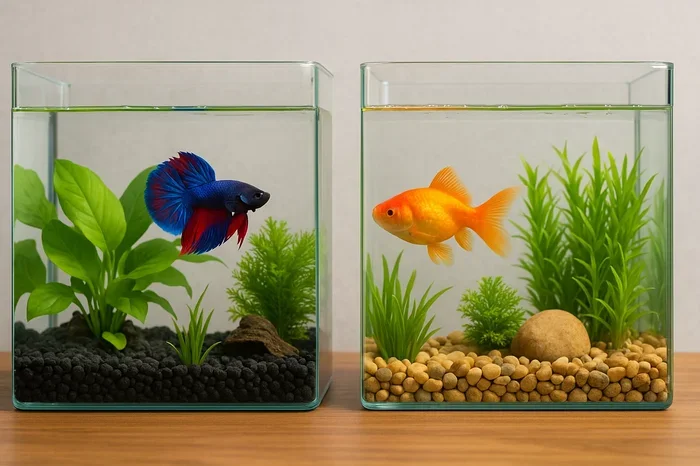
A bare tank is a boring, stressful tank. It offers no places to hide, no breaks in the line of sight, and can make your betta feel exposed. Use a variety of décor to create a complex, secure visual landscape:
- Plants (silk or live): Provide vertical breaks in sightlines and resting spots near the surface where bettas like to be.
- Caves and hollow logs: Offer complete visual security. A betta that knows it can retreat to a dark, enclosed space will be more confident and less stressed overall.
- Broad leaves: Betta splendens are labyrinth fish that often gulp air from the surface. A broad leaf (like a banana leaf or Indian almond leaf) near the top gives them a comfortable, shaded resting spot right at the air-water interface.
This décor isn’t just for hiding; it creates a stimulating environment where your betta can explore, investigate, and navigate—using its vision to map its territory.
Bonding Through Sight: Interactive Activities and Training
Once you understand how your betta sees, you can move from passive observation to active, enriching interaction. This mental stimulation is vital for the welfare of a fish often kept in solitary confinement.
The Simple Art of the “Follow”
This is the easiest form of interaction. With a clean finger or a blunt, non-toxic stick (like a bamboo skewer with the point sanded down), gently place your finger on the outside of the glass at one end of the tank. Move it slowly along the front pane. Many bettas, especially curious and active ones, will track the movement with their eyes and follow it from one side to the other. Reward this with a tiny food pellet when they reach the end. This teaches them that following your visual cue leads to a reward. Start with slow, predictable movements. As they learn, you can increase the complexity, making your finger trace a small square or circle.
Target Training: A Higher Level of Communication
This takes the “follow” a step further. You’ll need a small, distinct target—a colored sticker on a popsicle stick or a small suction cup with a bright dot. The goal is to teach your betta to touch the target with its nose for a reward.
- Introduce the target: Place it in the tank and immediately reward any investigation (swimming near, looking at it).
- Mark the behavior: The moment your betta touches the target with its mouth or body, use a distinct sound (like a clicker or a consistent verbal “yes!”) and give a food reward.
- Increase distance: Once they understand the target = reward, move it slightly further away and wait for them to make the choice to approach and touch it.
This builds a clear line of visual communication. You can eventually use the target to guide them to a specific spot in the tank for health checks or to enter a breeding trap. It’s a powerful testament to their cognitive ability and a fantastic way to engage their natural curiosity.
Consistency and Calm: Your Movement Matters
Your betta is highly attuned to your movement patterns. Sudden, jerky motions from above (remember the blind spot?) will startle it. When you approach the tank, do so calmly and from the side. Speak in a soft, consistent tone. Over time, your betta will learn the “script” of your arrival: the sound of your footsteps, the sight of your shape, the gentle movement of your hand reaching for the food container. This predictability is a form of security. Conversely, if you constantly tap on the glass (which creates stressful vibrations and visual shockwaves), hover with a large shadow, or make erratic movements, you will be perceived as a threat, not a companion. Your goal is to become a predictable, positive fixture in its visual world.
Debunking Myths: What Bettas CAN’T See (And Common Misconceptions)
With all we’ve covered about what bettas *can* see, it’s equally important to clarify what they cannot, to correct harmful practices.
Myth: “My betta is bored, so I should put a mirror in its tank.”
Reality: This is one of the worst things you can do for a solitary male betta. When a betta sees its reflection, it perceives a rival in its territory. It will flare (spread its gills and fins dramatically), chase, and attack the glass for hours. This is extreme, chronic stress. While it may look “active,” the fish is in a state of high alert, which suppresses its immune system and can lead to injury from ramming the glass. It is not “play” or “entertainment”; it is a traumatic psychological experience. Use a background on one or two sides of the tank to eliminate reflections instead.
Myth: “Bettas have terrible eyesight, so tank mates don’t matter visually.”
Reality: Bettas have good enough eyesight to be highly territorial and visually aggressive. Placing a tank with a bright, active fish like a guppy or a fish with long, flowing fins (like a fancy guppy or endler) directly in the betta’s line of sight is a recipe for constant stress and aggression. The betta will see this “invader” 24/7 and may never settle. If you attempt a community tank, the tank must be large, heavily planted to break lines of sight, and the betta’s initial reaction to the new fish’s introduction must be carefully monitored. Visual isolation from other fish is often the safest bet.
Myth: “They can’t see me if I’m very still.”
Reality: Bettas are exceptionally good at detecting movement, a key trait of predators. They will notice subtle shifts in your posture or the blink of an eye. However, if you are completely still and outside their primary field of view, they may not immediately register you. This is why a slowly moving finger from the side is less startling than a sudden hand reaching in from above. Their vision is optimized for detecting the slight movements of prey against a complex background.
Conclusion: Seeing and Being Seen—A Shared World
So, can your betta fish see you? More than that, it knows you. It has mapped the contours of your face, the rhythm of your steps, and the promise that your arrival brings. Your betta’s world is not a dim, blurry aquarium; it is a vibrant, detailed landscape where you are a central, towering, and hopefully benevolent, feature. By respecting the biology of its vision—by providing clear water, appropriate lighting, a richly decorated environment, and calm, consistent interactions—you do more than just keep a pet alive. You actively participate in constructing a secure and stimulating reality for a creature whose entire existence is mediated through what it sees.
The next time you approach the tank, pause for a second. See yourself from your betta’s perspective: a large, slow-moving, colorful being who brings food and occasionally disrupts the water. Then, move slowly from the side. Offer a greeting with a gentle finger movement. Watch as it considers you, perhaps swims closer, and acknowledges your presence in its own quiet way. That shared moment of recognition, built on the foundation of understanding betta vision, is the essence of the bond. You are not just an owner; you are a familiar landmark in its world, and that is a profound and beautiful thing.
Frequently Asked Questions
Can betta fish see in the dark?
No, bettas cannot see in true darkness. They have no tapetum lucidum (the reflective layer in cat eyes) for night vision. In very low light, they rely on their sensitive lateral line system to detect vibrations and water movement. A very dim night light is fine, but they will essentially be resting and navigating by feel in total darkness.
Why does my betta flare at me when I walk by?
>Flaring is a display of aggression, fear, or territorial defense. Your betta likely sees your sudden, large movement as a threat. It’s flaring to appear bigger and warn the “intruder” (you) to stay away. To prevent this, approach the tank slowly and from the side, and avoid rapid hand movements near the glass.
Do bettas have a blind spot?
Yes, due to the placement of their eyes on the sides of their head, bettas have a significant blind spot directly above their head and slightly behind. This is why a predator (like a bird or a hand reaching from above) is so effective at startling them. Always approach your betta from the front or side, never from directly overhead.
Can my betta see me through the tank glass?
Yes, absolutely. The glass is transparent, so your betta sees your shape, movement, and color clearly through it. Refraction (bending of light) can slightly distort the image at certain angles, but it does not prevent clear visual recognition. Your betta is seeing you, just as you see it.
Should I get my betta a mirror toy to reduce boredom?
No, a mirror is strongly discouraged. It will cause your betta to see its reflection as a permanent rival in its territory, leading to hours of stressful flaring, chasing, and potential injury. This is not enrichment; it is psychological torment. Use other forms of enrichment like target training, live foods, or rearranging plants instead.
How can I tell if my betta is visually stressed?
Signs of visual stress include constant, frantic darting at the glass (often at reflections), persistent flaring at any movement outside the tank, pale or faded colors, lethargy, hiding constantly, and loss of appetite. These symptoms often point to poor water quality, inappropriate lighting/glare, a tank placement with too much outside activity, or reflections causing territorial aggression. Address the environmental factors first.