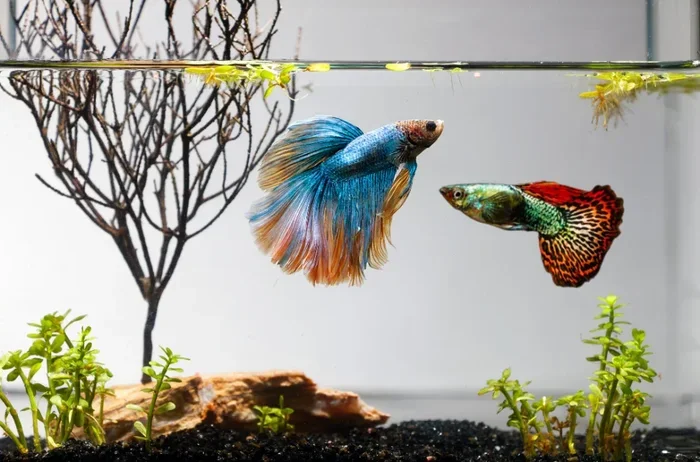
Do Betta Fish Get Along with Other Betta Fish

Do betta fish get along with other betta fish? The short answer is usually no. Male bettas are highly territorial and will often fight aggressively when housed together. However, female bettas can sometimes live in groups called sororities with the right setup. Understanding betta fish behavior, proper tank requirements, and tank mate compatibility is essential before you try keeping multiple bettas in one aquarium.
So you love bettas and want to keep more than one. Maybe you wonder if do betta fish get along with other betta fish. Or perhaps you saw two bettas in a store tank and thought it would look cool to recreate that at home.
Here is the truth. Most of the time, bettas do not get along with other bettas. These beautiful fish are also called fighting fish for a very good reason. Their natural instinct is to defend territory, and when another betta enters their space, things can turn violent fast.
But before you give up on the idea entirely, there is some nuance. Female bettas behave very differently from males. And with the right aquarium setup, some combinations can work. This guide covers everything you need to know about betta compatibility, aggression triggers, and how to keep multiple bettas safely if you choose to try.
Key Takeaways
- Male bettas almost never get along: Two male bettas will fight to the death in most cases and should never share a tank.
- Female bettas can form sororities: A group of 4-6 female bettas may coexist with enough space and hiding spots.
- Tank size matters enormously: A minimum of 20 gallons is recommended for any multi-betta setup to reduce territorial conflict.
- Proper tank setup reduces aggression: Plants, caves, and visual barriers help break up sightlines and lower stress.
- Watch for warning signs: Flaring, chasing, and fin damage are clear indicators that your bettas are not getting along.
- Consider alternatives: Many other peaceful fish species make better tank mates for bettas than another betta.
📑 Table of Contents
- Why Betta Fish Fight Each Other
- Male vs. Female Betta Fish Compatibility
- Can You Keep Multiple Bettas in One Tank?
- Signs That Your Bettas Are Not Getting Along
- Better Alternatives: What Fish Do Bettas Get Along With?
- Common Mistakes People Make With Multiple Bettas
- Expert Tips for a Peaceful Multi-Betta Setup
- Conclusion
Why Betta Fish Fight Each Other
To understand whether bettas can live together, you need to understand why they fight in the first place. Betta fish are territorial fish by nature. In the wild, they claim small areas of rice paddies, streams, and shallow ponds. When another male enters their territory, they see it as a threat.
The Role of Testosterone and Instinct
Male bettas produce high levels of hormones that drive aggressive behavior. This is not just mood. It is biology. Their brains are wired to protect their space, their food, and their potential mates. When two males are placed in the same tank, each one sees the other as a rival that must be eliminated.
What Happens During a Betta Fight
Betta fights can be intense. The fish flare their gills, spread their fins, and bite at each other. Fins get torn. Scales get bruised. In severe cases, one fish will kill the other. Even if neither fish dies, the losing fish can suffer from chronic stress, which leads to disease and a shortened lifespan.
Betta fish aggression is not something you can train out of them. It is hardwired into their DNA. No amount of decoration or tank size completely removes this instinct.
Male vs. Female Betta Fish Compatibility
Not all bettas are the same when it comes to getting along. Gender makes a huge difference. Let us break this down clearly.
Male Betta Fish Together
Can two male bettas live together? The honest answer is no. Almost never. Male bettas will fight relentlessly. Some hobbyists try to keep males in very large tanks with heavy planting and visual barriers. But this is risky and not recommended for beginners.
Even in a 55-gallon tank with lots of decorations, two males may still find each other and fight. The stress is not worth the risk. Male betta fish should always be housed separately.
Female Betta Fish Together
Female bettas are generally less aggressive than males. This means they can sometimes live together in what hobbyists call a sorority tank. A sorority is a group of female bettas kept in one aquarium.
But here is the catch. A sorority is not guaranteed to work. Some female groups get along fine. Others fight just as badly as males. Success depends on several factors:
- Tank size: At least 20 gallons for a group of females.
- Number of fish: 4 to 6 females is the sweet spot. Fewer fish can lead to one fish being bullied.
- Hiding spots: Plenty of plants, caves, and decorations to break up lines of sight.
- Introducing all females at once: Adding new females later can trigger territorial behavior.
Even with perfect setup, you should monitor your female bettas daily. Remove any fish that shows signs of severe bullying or injury.
Male and Female Betta Together
Some people wonder if a male and female betta can live together. The answer is complicated. Breeding pairs may coexist temporarily during spawning. But outside of breeding, a male and female often fight too. The male may view the female as an intruder, especially if she is colorful and attracts his attention.
This is not a setup for beginners. If you attempt it, you need a large tank with heavy planting and a plan to separate the fish if things go wrong.
Can You Keep Multiple Bettas in One Tank?
The short answer is: it depends. Let us look at the conditions that make multi-betta setups more likely to succeed.
Tank Size Requirements
Space is the single most important factor. A tiny bowl or a 5-gallon tank will never work for multiple bettas. These fish need room to establish their own territories without constant conflict.
For a sorority of female bettas, aim for at least 20 gallons. For any setup involving males, you should go even larger. A 40-gallon or bigger tank gives fish more room to avoid each other and reduces the chance of fights.
Planting and Decoration
Aquarium plants serve a dual purpose. They look beautiful and they break up sightlines. When bettas cannot see each other clearly, they are less likely to flare and attack.
Use a mix of tall background plants, mid-ground plants, and floating plants. Add caves, driftwood, and rocks to create distinct territories. Each betta should have a spot it can claim as its own without being constantly harassed.
Water Parameters and Filtration
Clean water reduces stress. Bettas are sensitive to poor water quality, and stressed fish are more aggressive. Keep the temperature between 78 and 80 degrees Fahrenheit. Maintain a pH between 6.5 and 7.5. Use a gentle filter to avoid strong currents, since bettas prefer calm water.
Perform regular water changes. A 25% weekly change is a good baseline. Test your water parameters frequently to catch problems early.
Signs That Your Bettas Are Not Getting Along
Even with the best setup, things can go wrong. You need to know the warning signs early so you can act fast.
Behavioral Warning Signs
Watch for these behaviors that indicate your bettas are stressed or aggressive toward each other:
- Constant flaring: One or both fish flare their gills and fins repeatedly.
- Chasing: One fish relentlessly pursues the other around the tank.
- Refusing to eat: A stressed betta may stop eating or eat very little.
- Hiding constantly: A bullied fish will hide more than normal and may look pale.
- Fin damage: Torn or ragged fins are a clear sign of biting and fighting.
Physical Warning Signs
Check your fish regularly for physical signs of stress or injury:
- White spots: These may indicate ich, which often follows stress.
- Clamped fins: Fins held close to the body signal discomfort or illness.
- Loss of color: A dull or faded appearance can mean your fish is under extreme stress.
- Rapid breathing: Gasping at the surface or rapid gill movement suggests poor water quality or extreme stress.
If you notice any of these signs, separate the fish immediately. A betta fish getting stressed can lead to serious health problems and even death. Have a quarantine tank ready at all times.
Better Alternatives: What Fish Do Bettas Get Along With?
If you want a community tank with your betta, there are many better options than adding another betta. Plenty of peaceful fish species make excellent tank mates for bettas.
Top Tank Mates for Betta Fish
Consider these peaceful species that generally coexist well with bettas:
- Neon tetras: Small, colorful, and peaceful. They stay in the upper and middle parts of the tank.
- Cory catfish: Bottom dwellers that do their own thing and rarely bother bettas.
- Yoyo loaches: Active and fun to watch. They occupy the middle and lower levels.
- African dwarf frogs: Small and non-threatening. They stay out of the betta’s way.
- Snails: Nerite snails and mystery snails are great additions. They clean algae and never bother fish.
For a deeper dive into what fish does betta fish get along with, check out our detailed guides on betta compatibility with specific species. Understanding your options helps you build a harmonious community tank without the risk of deadly fights.
Common Mistakes People Make With Multiple Bettas
Many hobbyists make the same mistakes when trying to keep multiple bettas together. Avoid these pitfalls to give your fish the best chance at a peaceful life.
Mistake 1: Using a Tank That Is Too Small
A tiny tank leaves no room for territories. Every inch of space becomes contested ground. Always go bigger than you think you need.
Mistake 2: Adding Too Many Fish at Once
Overloading the tank causes stress and aggression. Add fish gradually and watch how they interact before adding more.
Mistake 3: Ignoring Warning Signs
Some hobbyists wait too long before intervening. By the time one fish is badly injured, it may be too late. Act quickly if you see fighting.
Mistake 4: Skipping the Quarantine Tank
Always have a separate tank ready. If a fish gets injured or shows signs of extreme stress, you need a safe place to move it immediately.
Expert Tips for a Peaceful Multi-Betta Setup
If you are determined to try keeping multiple bettas, follow these expert tips to maximize your chances of success.
- Start with a large tank. A 30-gallon tank or bigger gives everyone room to breathe and claim space.
- Overplant the aquarium. Use live plants like java fern, anubias, and amazon sword. They create natural barriers and improve water quality.
- Add visual barriers. Decorations, rocks, and driftwood break up sightlines and reduce constant triggering of aggression.
- Feed separately. Use a feeding ring or target feed each fish to prevent food competition.
- Monitor closely for the first two weeks. This is the most critical period. Watch for any signs of bullying or fighting.
- Have a backup plan. Be ready to rehome or separate a fish if the situation does not work out. Never let fish fight to the death.
Remember, do betta fish get along with other betta fish is not a simple yes or no question. Every fish has its own personality. Some bettas are more docile than others. But the safest approach is always to house male bettas separately and only attempt a female sorority if you have the experience and the right setup.
If you are new to betta keeping, start with one fish in a properly cycled 5-gallon tank or larger. Once you understand betta fish behavior and feel confident in your maintenance routine, you can explore more complex setups. There is no rush. The goal is healthy, happy fish.
For more information on betta social dynamics, read our article on whether betta fish get along with each other and learn about the factors that influence betta fish compatibility in shared aquariums.
Also, if you are curious about other species that might work alongside your betta, explore our guide on what fish betta fish get along with for a comprehensive look at community tank options.
Finally, understanding the signs of stress in your betta is crucial. Visit our article on do betta fish get stressed to learn how to keep your fish calm and healthy in any setup.
Conclusion
The answer to do betta fish get along with other betta fish is mostly no, especially for males. Male bettas are territorial fighters by nature and should be kept alone. Female bettas can sometimes form groups called sororities, but this requires a large tank, plenty of plants, and constant monitoring.
Before you add another betta to your tank, consider the risks carefully. The well-being of your fish should always come first. If you want a community tank, there are many peaceful species that make far better companions for your betta than another betta would.
Take the time to research, plan your setup, and watch your fish closely. A little preparation goes a long way toward keeping your bettas healthy and your aquarium peaceful.
Frequently Asked Questions
Can two male betta fish live in the same tank?
No. Two male bettas will almost always fight, and the fights can be fatal. Male bettas are extremely territorial and should never share a tank. Even large tanks with heavy decoration do not guarantee safety.
How many female bettas can you keep together?
A group of 4 to 6 female bettas works best in a sorority setup. You need at least a 20-gallon tank with plenty of plants and hiding spots. Fewer than 4 females can lead to one fish being singled out and bullied.
What happens if two betta fish fight?
Betta fights involve flaring, chasing, and biting. Fins get torn, and fish can sustain serious injuries. The losing fish often suffers from extreme stress, which weakens its immune system and can lead to disease or death.
Can a male and female betta live together permanently?
Not usually. Male and female bettas may coexist briefly during breeding, but outside of that, they often fight. This setup is not recommended for beginners and requires a large tank with constant monitoring.
What is the best tank size for a betta sorority?
A minimum of 20 gallons is recommended for a female betta sorority. Larger tanks of 30 gallons or more give the fish more room to establish territories and reduce aggression significantly.
Are there any bettas that get along better with other bettas?
Some individual bettas are naturally less aggressive than others. However, you cannot predict personality based on appearance alone. Even the most docile male betta can turn aggressive when housed with another male. Always proceed with caution and have a backup plan.