Do Betta Fish Have Genders
Yes, betta fish do have genders. Male and female bettas look different, behave differently, and play unique roles in breeding. Understanding betta fish gender helps you provide better care and avoid unwanted aggression in your tank.
Do betta fish have genders? This is one of the most common questions new fish keepers ask. The short answer is yes. Like most animals, betta fish come in male and female forms. But telling them apart is not always straightforward, especially for beginners.
If you have ever stared at your betta and wondered whether it is a boy or a girl, you are not alone. Many aquarists struggle with betta fish gender identification. The good news is that once you know what to look for, it becomes much easier. Males and females differ in body shape, fin length, color, and behavior.
Knowing the gender of your betta fish matters for several reasons. It affects how you set up your tank, who you can house with your fish, and whether you can breed them. This guide covers everything you need to know about betta fish sexes. We will walk through appearance differences, behavioral clues, and practical tips for telling males from females with confidence.
Key Takeaways
- Betta fish have distinct genders: Males and females differ in appearance, behavior, and body shape.
- Visual clues are your best tool: Fin length, body size, and color intensity help you identify gender.
- Behavior tells a story: Males build bubble nests and display aggression, while females show vertical stripes when ready to breed.
- Gender matters for tank setup: Keeping males separate is essential to prevent fighting and stress.
- Breeding requires both sexes: Understanding betta fish sexes is key if you plan to breed them successfully.
- Misidentification is common: Many beginners confuse young or similar-looking bettas, so patience and observation are important.
📑 Table of Contents
Understanding Betta Fish Genders
Betta fish, also known as Siamese fighting fish, belong to the species Betta splendens. They have two distinct genders: male and female. Each gender has unique physical traits and behavioral patterns that serve different purposes in their natural habitat and in captivity.
In the wild, betta fish live in the warm, shallow waters of Southeast Asia. Males are more colorful and have longer fins because they use these traits to attract mates and defend territory. Females are typically duller and smaller, built for efficiency and survival. Understanding these natural differences helps you care for your fish better.
Why Gender Identification Matters
Knowing the gender of your betta fish is not just a fun fact. It has real practical implications for fish care. Here is why it matters:
- Tank compatibility: Male bettas are highly territorial. Keeping two males together almost always leads to fighting. Females can sometimes live together in groups called sororities, but only under the right conditions.
- Breeding preparation: If you want to breed bettas, you need both a male and a female. You cannot breed a fish with itself.
- Health monitoring: Female bettas are more prone to certain conditions like egg-binding. Males are more prone to fin rot due to their long fins. Knowing the gender helps you watch for the right health issues.
- Tank design: Males need hiding spots and calm environments. Females in groups need more open space and multiple hiding places.
Getting the gender right from the start saves you stress, money, and heartbreak. A wrong pairing can lead to injury or death. So let us dive into the details of how to tell male and female bettas apart.
How to Tell Male and Female Betta Fish Apart
Identifying the gender of a betta fish comes down to a few key observations. You will want to look at body shape, fin length, color, and behavior. Let us break each one down.
Body Shape and Size
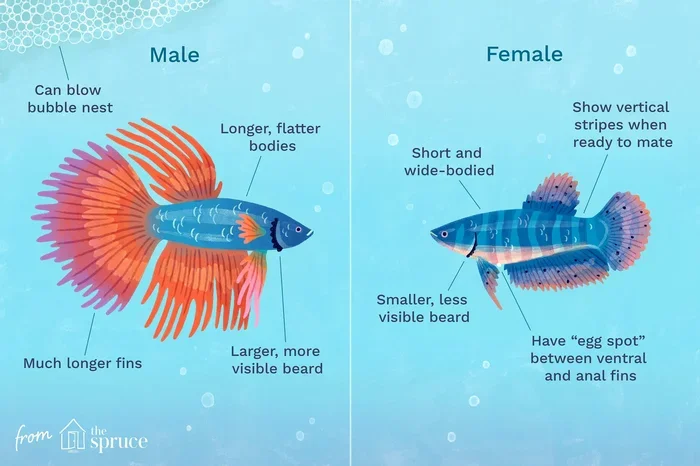
One of the easiest ways to determine betta fish gender is by looking at the body. Male bettas tend to have a more elongated, streamlined body shape. They appear slightly taller and more slender when viewed from the side.
Female bettas have a rounder, wider body, especially around the belly area. This is because females carry eggs inside their bodies. When a female is ready to breed, her belly becomes noticeably plumper and more rounded. You might also notice a small white spot called an ovipositor near the ventral area. This is where eggs will exit.
In terms of overall size, females are often slightly bigger than males. But the difference is subtle. Do not rely on size alone. Combine this clue with other signs for a more accurate identification.
Fin Length and Shape
Fins are the most obvious difference between male and female bettas. Male bettas have dramatically long, flowing fins. Their dorsal fin, tail fin, and anal fin extend far beyond the body. This is one of the traits breeders have selectively enhanced over generations.
Female bettas have much shorter fins. Their fins are still elegant but sit closer to the body. The tail fin is rounded and compact rather than long and dramatic. If you see a betta with long, flowing fins, it is almost certainly a male.
Color Intensity
Males tend to display more vibrant and intense colors. Their reds are deeper, their blues are brighter, and their fins often have more iridescent shimmer. This is part of their natural mating display.
Females are generally more muted in color. They may still be colorful, but the hues are softer and less saturated. Some female bettas do develop bright colors, especially when ready to breed, but they still appear less vivid than males overall.
Behavioral Differences
Behavior is another strong indicator of betta fish sexes. Males are naturally more aggressive and territorial. They flare their gills, spread their fins, and will often attack their own reflection. This behavior is a dominance display and is much more common in males.
Females are generally calmer and less reactive. However, when a female is ready to breed, she may display vertical breeding stripes on her body. These are lighter colored lines that run vertically along the belly. Males do not show these stripes.
Male bettas also build bubble nests at the water surface. These are clusters of tiny bubbles that the male blows using saliva and air. A bubble nest is a strong sign that you have a male betta. Females do not build bubble nests.
| Trait | Male Betta | Female Betta |
|---|---|---|
| Body Shape | Elongated and slender | Round and wider, especially belly |
| Fin Length | Long, flowing fins | Short, compact fins |
| Color | Vibrant and intense | Muted and softer |
| Behavior | Aggressive, territorial, builds bubble nests | Calmer, shows vertical stripes when breeding |
| Size | Slightly smaller | Slightly larger |
| Ovipositor | Absent | Present (small white spot near belly) |
The Role of Gender in Betta Fish Behavior
Gender drives much of what betta fish do. Their behaviors are deeply tied to their roles as males or females. Understanding this connection helps you interpret what your fish is telling you.
Male Betta Behavior
Male bettas are built for competition. In the wild, they defend territories and compete for mates. This is why they are called Siamese fighting fish. Their aggression is not random; it is purposeful and tied to survival and reproduction.
When a male sees another male, he will flare his gills, spread his fins, and adopt a threatening posture. If the other fish does not back down, a fight may occur. In captivity, this means males should always be kept alone. Do betta fish have to be kept alone? Yes, especially males. Housing two males together is one of the most common beginner mistakes.
Males also perform elaborate displays to attract females. They flare, circle, and show off their fins. If your male betta seems extra dramatic, he might be trying to impress a nearby female or just feeling territorial.
Female Betta Behavior
Female bettas are less aggressive but still have their own social dynamics. In the wild, females tend to form loose groups. They establish a pecking order through mild displays and chasing.
In captivity, you can keep a group of female bettas together, known as a sorority. This works best with four or more females and a tank of at least 20 gallons. Each female needs enough space and hiding spots to reduce stress. However, even in a sorority, some squabbling is normal. Watch for signs of bullying and be ready to separate fish if needed.
When a female is ready to mate, she becomes more receptive. She displays vertical stripes, curves her body, and signals to the male that she is prepared for betta fish mating. The male then wraps around her to fertilize the eggs as she releases them.
Gender and Betta Fish Breeding
Breeding bettas is a fascinating process that requires understanding both genders. You cannot breed bettas without knowing which is male and which is female. Let us walk through the basics.
How Breeding Works
Betta fish reproduce through a process called bubble nest breeding. The male builds a bubble nest at the water surface. He then courts the female through displays of flaring and fin spreading. Once the female is ready, she releases eggs, and the male fertilizes them externally.
The male collects the eggs in his mouth and places them in the bubble nest. He then guards the nest fiercely until the eggs hatch. This process takes about 24 to 48 hours for the eggs to hatch, and another few days for the fry to become free-swimming.
Do Betta Fish Have to Mate?
Yes, betta fish reproduce through mating. Unlike some fish species that can self-fertilize or reproduce asexually, bettas require both a male and a female. Do betta fish have to mate? Absolutely. Without mating, a female betta will not produce fertilized eggs, and no offspring will result.
If you do not plan to breed your fish, keeping males and females separate is the safest approach. Unplanned breeding can lead to overcrowded tanks and stressed fish. It also requires significant preparation and knowledge to raise the fry successfully.
What Happens After Breeding?
After breeding, the male takes full responsibility for the nest. He will chase the female away to protect the eggs. If you do not remove the female after mating, the male may harm her. Once the fry hatch, the male continues guarding them until they are independent.
Raising betta fry is a commitment. The young fish need tiny food like infusoria or baby brine shrimp. They also need clean water and stable conditions. If you are new to breeding, start by reading up on do betta fish have live babies or eggs to understand the full process.
Common Mistakes When Identifying Betta Fish Gender
Even experienced fish keepers sometimes make mistakes. Here are the most common errors people make when trying to identify betta fish gender.
Relying on Color Alone
Color is a helpful clue, but it is not foolproof. Some female bettas can be quite colorful, especially certain breeds. Conversely, some males may appear dull if they are sick or stressed. Always use multiple clues together to determine gender.
Assuming All Long-Finned Fish Are Male
While males typically have longer fins, young males may not yet have developed their full fin length. A juvenile betta under three months old might have short fins regardless of gender. Wait until the fish is mature before making a final identification.
Ignoring Behavior
Many people focus only on physical traits and ignore behavior. Watching how your fish acts can confirm or challenge your visual assessment. A fish building a bubble nest is almost certainly male, no matter how short its fins appear.
Quick Tips for Identifying Betta Fish Gender
Here are some fast, practical tips to help you identify the gender of your betta fish with confidence:
- Look at the fins first. Long, flowing fins usually mean male. Short, compact fins usually mean female.
- Check the body shape. A rounder belly often indicates a female, especially if she looks plump.
- Watch for an ovipositor. A small white spot near the vent is a clear female indicator.
- Observe behavior. Bubble nest building equals male. Vertical stripes equal female ready to breed.
- Compare with others. If you have access to another betta of known gender, comparing side by side makes identification much easier.
- Be patient. Young bettas may not show clear gender differences until they are 3 to 6 months old.
Remember that every fish is an individual. Some traits may be more pronounced in some fish than others. Use your best judgment and combine multiple clues for the most accurate result.
Conclusion
Do betta fish have genders? Yes, they absolutely do. Male and female bettas are distinct in appearance, behavior, and biological function. Understanding these differences empowers you as a fish keeper to provide better care, set up appropriate tanks, and even breed your fish successfully if you choose to.
The key to identifying betta fish gender lies in observation. Look at body shape, fin length, color intensity, and behavior patterns. No single clue is 100% reliable on its own, but together they paint a clear picture. Whether you are a beginner or an experienced aquarist, knowing whether your betta is male or female changes how you care for it.
Take your time, watch your fish closely, and enjoy learning about these incredible creatures. Betta fish are fascinating pets, and understanding their genders is just one step toward becoming a better fish keeper. Keep exploring, keep observing, and most importantly, keep enjoying your time with your betta.
Frequently Asked Questions
Can two male betta fish live together?
No, two male bettas should never be housed together. They are extremely territorial and will fight, often resulting in serious injury or death. Each male needs his own separate tank to stay safe and healthy.
How many female bettas can you keep together?
A group of four to six female bettas can live together in a sorority setup. You need a tank of at least 20 gallons with plenty of hiding spots and open swimming space. Monitor them closely for signs of aggression.
Can you breed a male and female betta in the same tank?
Breeding should be done in a separate breeding tank, not the main display tank. After mating, the male must be removed from the female to prevent aggression. The male guards the eggs and fry in the bubble nest until they become free-swimming.
At what age can you tell a betta fish’s gender?
You can usually start to identify gender differences around 3 to 4 months of age. By this time, males will begin developing longer fins and more vibrant colors. Females will show a rounder body shape and may display an ovipositor.
Do female bettas build bubble nests?
No, bubble nest building is a male behavior. If you see a bubble nest at the water surface, it is almost certainly a male betta. Females do not build bubble nests and play a different role in the breeding process.
Is it easier to care for male or female bettas?
Both genders require similar care in terms of water quality, temperature, and diet. However, males need to be kept alone, which means more individual tanks. Females can sometimes be kept in groups, but they need larger tanks and careful monitoring. Neither gender is significantly harder to care for.