Can My Betta Fish Live Without a Filter
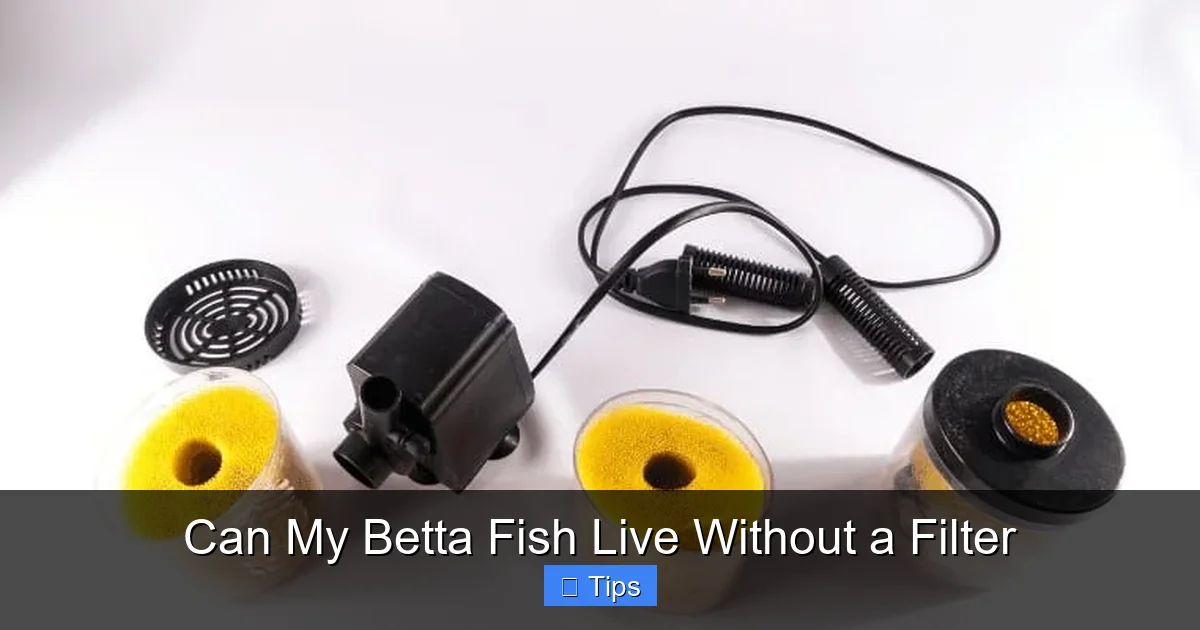
Yes, a betta fish can technically live without a filter, but it requires diligent, frequent water maintenance to prevent toxic ammonia and nitrite buildup. Their natural habitat in shallow, stagnant rice paddies is often misunderstood; a small, unfiltered bowl is a death sentence due to rapid water pollution. Success hinges on a properly sized tank, live plants for natural filtration, and a strict schedule of partial water changes. For most owners, a gentle, adjustable filter provides a safer, more manageable environment.
Key Takeaways
- Natural Habitat ≠ Small Bowl: Betta fish originate from large, shallow rice paddies with abundant vegetation, not tiny, isolated puddles. A small, unfiltered bowl cannot replicate this stable ecosystem.
- The Nitrogen Cycle is Non-Negotiable: Even without a filter, toxic ammonia from fish waste must be converted. In a filterless tank, this burden falls entirely on frequent water changes and live plants.
- Tank Size is Critical: A minimum of 5 gallons is strongly recommended for a filterless betta setup. Smaller volumes poison themselves with waste infinitely faster.
- Live Plants are Essential Allies: Floating and root plants (like Anacharis, Java Fern) absorb ammonia/nitrates, oxygenate water, and reduce stress by mimicking the betta’s natural cover.
- Maintenance Must Be Relentless: Without a filter’s biological capacity, you must perform 25-50% water changes 2-3 times per week, testing water parameters regularly.
- A Gentle Filter is Often Safer: A low-flow sponge filter provides crucial biological filtration with minimal current, making tank upkeep easier and water quality more stable for beginners.
- Observe Your Fish Daily: Signs of poor water quality—gasping, lethargy, faded colors, torn fins—are urgent warnings that your maintenance routine is insufficient.
📑 Table of Contents
- The Great Betta Filter Debate: Separating Myth from Reality
- The Unignorable Science: The Nitrogen Cycle and Your Betta
- How a Betta CAN Live Filter-Free: The Rigorous Requirements
- The High-Risk Reality: Common Pitfalls and Dangers
- The Filter Solution: Why It’s the Safer, Kinder Choice
- The Verdict: Making the Right Choice for You and Your Betta
The Great Betta Filter Debate: Separating Myth from Reality
If you’re a new betta fish owner or considering becoming one, you’ve likely heard conflicting advice. On one hand, you see stunning, vibrant bettas in tiny, unfiltered containers at the pet store. On the other, every reputable aquarium guide insists that all fish need filtration. This creates a whirlwind of confusion: Can my betta fish live without a filter? The honest, nuanced answer is: yes, but with significant caveats and responsibilities. It’s not about whether they can, but whether you can provide the equivalent of a filter’s work through manual labor and a perfect setup. This article will dive deep into the biology, the risks, the precise requirements for a filterless betta tank, and why for many, a simple filter is the kinder, easier choice.
Where the Myth Began: The “Labyrinth Fish” Misconception
The primary reason people believe bettas don’t need filters is their classification as a “labyrinth fish.” This means they possess a specialized breathing organ, the labyrinth, which allows them to gulp air from the surface. This adaptation lets them survive in oxygen-poor, stagnant water—like drying rice paddies in Thailand. This survival trait has been tragically misinterpreted as a preference for dirty, small bowls. The key distinction is surviving versus thriving. A betta can endure poor conditions for a time, but its health, color, and lifespan will severely diminish. The labyrinth is a last-resort survival tool, not a license for neglect.
The Unignorable Science: The Nitrogen Cycle and Your Betta
To understand why a filter is so highly recommended, you must grasp the nitrogen cycle—the biological process that makes an aquarium habitable. It’s not optional; it’s the foundation of all fishkeeping.
Visual guide about Can My Betta Fish Live Without a Filter
Image source: m.media-amazon.com
Stage 1: The Toxic Buildup of Ammonia
The moment your betta eats, excretes, or a plant decays, ammonia (NH3/NH4+) is released into the water. Ammonia is extremely toxic, burning gills and skin. In a filtered tank, beneficial bacteria colonize the filter media and consume ammonia, converting it.
Stage 2: The Still-Dangerous Nitrite
The bacteria convert ammonia into nitrite (NO2-), which is also highly toxic, causing a condition called “brown blood disease” that prevents oxygen transport in the fish’s bloodstream.
Stage 3: The Relatively Safe Nitrate
A second type of bacteria then converts nitrite into nitrate (NO3-). Nitrate is far less toxic but will still stress and poison fish at high levels (above 20-40 ppm). It is removed only by water changes or absorbed by aquatic plants.
In a filterless betta tank, where do these beneficial bacteria live? They colonize every surface: the gravel, the glass, the decorations, and especially the leaves and roots of live plants. However, the surface area in a small, bare tank is minimal. The cycle is fragile, slow, and easily overwhelmed by a single betta’s waste. A filter provides a massive, optimized surface area (bio-media like ceramic rings or sponge) for bacteria to thrive, creating a stable, robust biological filter that processes toxins far more efficiently.
How a Betta CAN Live Filter-Free: The Rigorous Requirements
If you are committed to the filterless route, you must build a system that compensates for the missing mechanical and biological filtration. This is not a “set and forget” setup.

Visual guide about Can My Betta Fish Live Without a Filter
Image source: pondsinfo.com
1. The Absolute Minimum: Tank Size and Shape
The single biggest mistake is using a “betta bowl.” These are ecological traps. The absolute minimum tank size for a filterless betta is 5 gallons (19 liters). A larger volume (10+ gallons) is exponentially better. Why? Toxins dilute in more water, and water parameters change more slowly, giving you a larger window to correct issues. A long, wide tank is preferable to a tall, narrow one, as it provides more surface area for oxygen exchange—critical since you’re relying on atmospheric oxygen from the labyrinth and surface gasping.
2. The Living Filter: Dense, Appropriate Live Plants
Live plants are your primary tool for biological filtration and water quality management. They directly absorb ammonia and nitrates as nutrients.
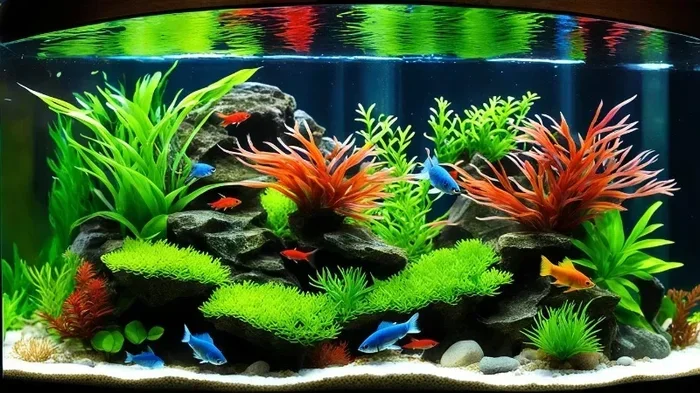
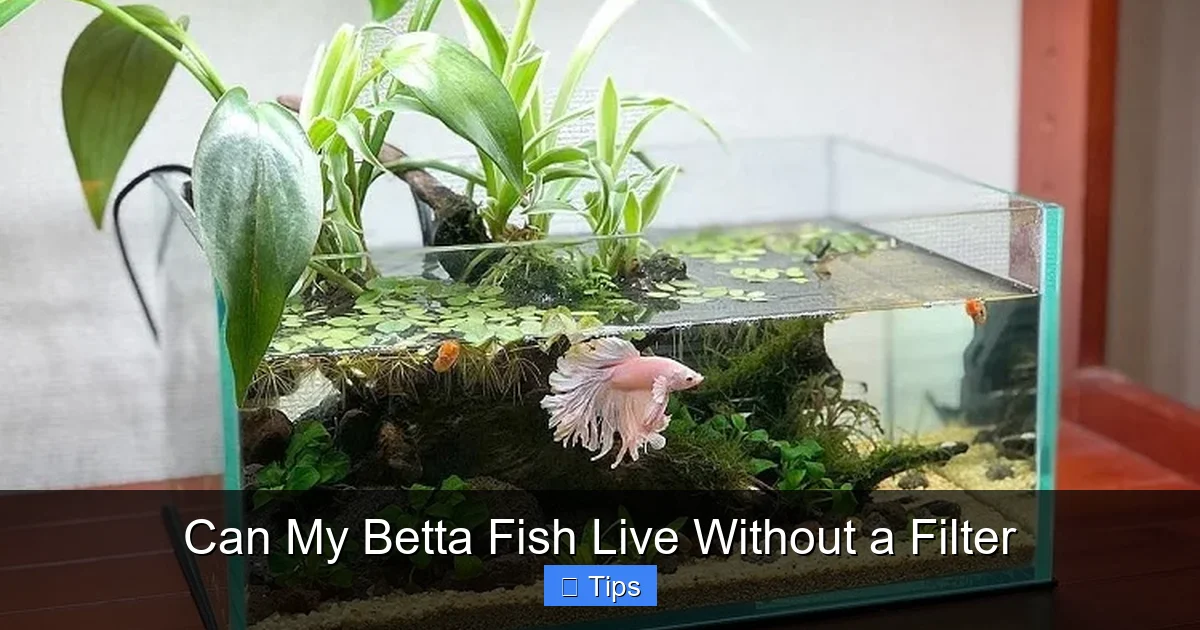
- Floating Plants: These are superstars. Amazon Frogbit, Water Lettuce, or Hornwort have roots that dangle into the water column, providing massive surface area for beneficial bacteria and absorbing toxins directly. They also shade the tank, reducing algae and mimicking the betta’s dimly lit natural habitat.
- Stem and Root Plants: Anacharis (Elodea), Java Fern, and Java Moss are hardy, low-light champions. Anchor Java Fern to driftwood or rocks (do not bury its rhizome). Mosses form dense carpets. These plants oxygenate the water and uptake nitrates.
- Avoid: Plastic plants provide no filtration benefit and can damage delicate betta fins. Slow-growing, high-light plants are less effective at nutrient uptake for beginners.
3. The Ritual: An Uncompromising Water Change Schedule
This is your replacement for the filter’s physical and chemical media. You must manually remove the waste that a filter would trap and process.
- Frequency: For a properly planted 5-gallon tank with one betta, plan for 25-50% water changes 2-3 times per week. Smaller tanks or less plant coverage require more frequent changes.
- Method: Use a gravel vacuum (siphon) to clean the substrate. This removes uneaten food, feces, and debris trapped in the gravel before they decay into ammonia. Do not remove all the gravel; just stir and vacuum the top layer.
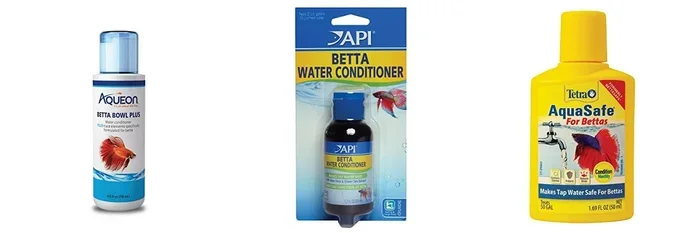
- Water Conditioning: Always treat new tap water with a complete water conditioner that neutralizes chlorine, chloramines, and heavy metals. Do not use bottled spring water, as it lacks essential minerals.
4. The Tools: Testing and Monitoring
You cannot manage what you do not measure. A liquid water test kit (like API Freshwater Master Test Kit) is a non-negotiable investment for a filterless tank.
- Test Parameters: Ammonia and Nitrite must always be 0 ppm. Nitrate should be kept below 20 ppm. pH is less critical but should be stable.
- Testing Schedule: Test your water at least once a week, or more frequently if you see any signs of stress. After a water change, wait a few hours and test again to ensure parameters are stable.
The High-Risk Reality: Common Pitfalls and Dangers
The filterless path is fraught with easy, deadly mistakes. Understanding these risks is crucial.
Visual guide about Can My Betta Fish Live Without a Filter
Image source: bettafishfacts.net
Overfeeding: The Silent Killer
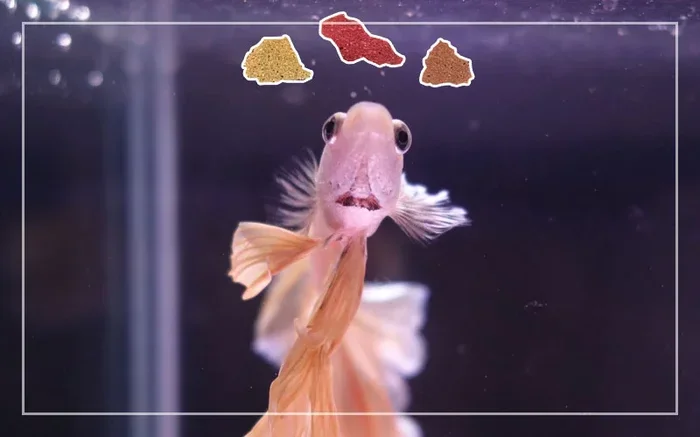
Betta stomachs are smaller than their eyeballs. Overfeeding is the #1 cause of water quality crashes in small tanks. Excess food immediately decays, spiking ammonia. Feed only 2-3 high-quality pellets (or a few frozen daphnia/bloodworms) once per day. If food remains after 2-3 minutes, you’ve fed too much. Use a feeding ring to contain floating food.
Inadequate Plant Load
A single Anubias on a rock is not a “heavily planted” tank. The goal is for plants to be so dense you can barely see the substrate. They must be actively growing. If plants are yellowing, melting, or not growing, they are not filtering. You may need to add more or improve lighting (a simple LED clip-on light is sufficient for low-light plants).
Ignoring the “Silent” Cycle
When you first set up a filterless tank, you are starting from zero beneficial bacteria. This “new tank syndrome” means ammonia will spike for 2-6 weeks as bacteria slowly establish. During this period, you must perform daily or every-other-day 25% water changes to keep ammonia/nitrite from harming your betta. Do not add the betta until the cycle is complete (0 ammonia, 0 nitrite, some nitrate). You can cycle the tank with just plants and water changes for a month before adding the fish.
The Filter Solution: Why It’s the Safer, Kinder Choice
Given the intense labor and constant vigilance required for a truly stable filterless tank, why do so many experts recommend a filter for bettas? Because it automates the most critical and failure-prone aspects of aquarium husbandry.
Choosing the Right Filter for a Betta
Not all filters are created equal. Bettas hate strong currents that force them to swim constantly (they are naturally lazy). You need gentle flow.
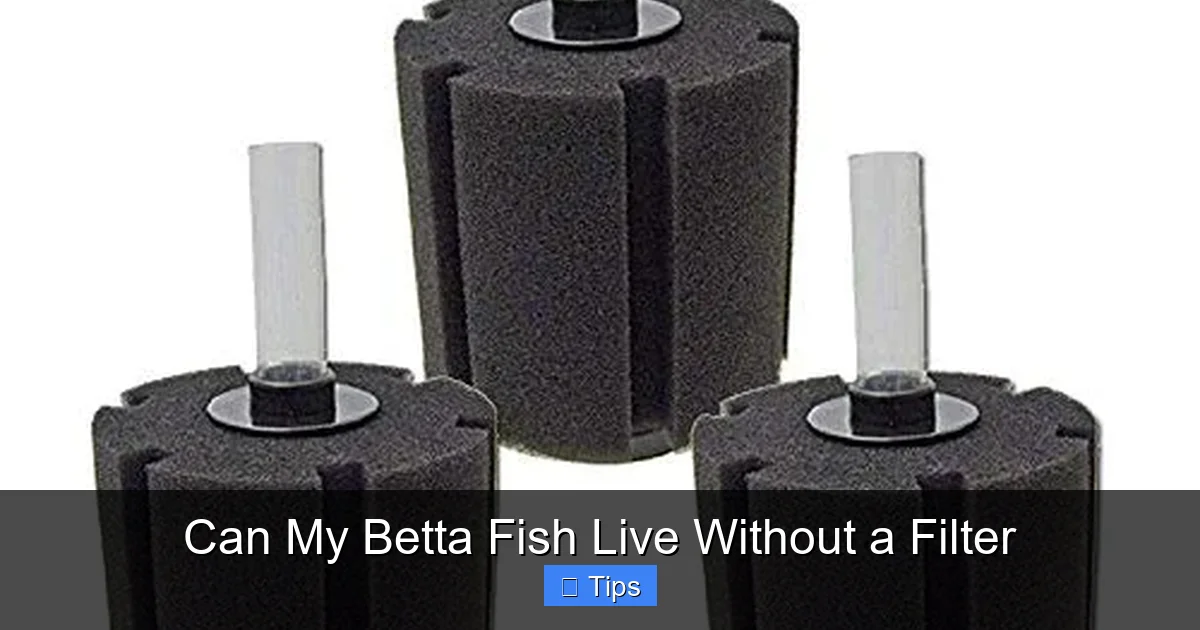
- Sponge Filter: The gold standard for bettas. It uses an air pump to push water through a porous sponge, providing excellent biological filtration and gentle surface agitation for gas exchange. It’s virtually impossible to suck in a betta’s fins. Perfect for 5+ gallon tanks.
- Hang-On-Back (HOB) or Internal Power Filter: Choose models with adjustable flow settings. Turn it down to the lowest setting. Add a pre-filter sponge over the intake to protect fins and increase bio-surface area. Direct the outflow towards the tank wall or use a spray bar to diffuse the current.
- Avoid: Canister filters are overkill. Strong internal power filters without adjustment capability. Any filter that creates a visible current pushing the betta around.
What a Filter Gives You (That You Can’t Easily Replicate)
A filter provides a stable, self-sustaining biological ecosystem. It houses millions of beneficial bacteria on dedicated media, processing ammonia and nitrite 24/7. This creates a buffer against mistakes—a missed water change or a bit of overfeeding is far less likely to cause a deadly spike. It also provides mechanical filtration, trapping solid waste before it decays. The result is consistently clearer water, more stable parameters, and a dramatically lower daily workload for you. For a 5-gallon tank with a sponge filter, you may only need a 25% water change once a week, primarily to remove nitrates and refresh minerals.
The Verdict: Making the Right Choice for You and Your Betta
So, can your betta live without a filter? The technical answer is yes, provided you meet a strict checklist: a minimum 5-gallon (preferably 10+) long tank, densely planted with fast-growing live plants, a disciplined schedule of 2-3 substantial water changes per week, and weekly water testing. This setup mimics a natural, planted ecosystem and can be incredibly beautiful and rewarding for a dedicated aquarist.
However, for the vast majority of people—especially beginners, busy owners, or those who want a stable, low-maintenance pet—adding a gentle sponge filter is the most responsible, compassionate choice. It provides a safety net, ensures superior water quality with less work, and gives your betta the best chance at a long (3-5+ years), healthy, vibrant life. The goal is not just for your betta to survive, but to thrive with flowing fins, bright colors, and curious personality. A filter is the single most effective tool to achieve that.
Final Recommendation: Start with a 5-10 gallon tank, a cheap sponge filter ($10-15 + air pump), and a handful of easy live plants (Java Fern, Anacharis, Moss). This combination gives you 90% of the benefit of a complex ecosystem with 10% of the daily headache. Your future betta will thank you with its health and beauty.
Frequently Asked Questions
Can I put a betta in a small, unfiltered bowl?
No. A small bowl (under 2 gallons) will rapidly accumulate toxic ammonia from the betta’s waste, leading to burns, disease, and a shortened lifespan. It is a cruel and unsustainable setup.
How often should I change the water in a filterless betta tank?
In a minimum 5-gallon, heavily planted tank, you must perform 25-50% water changes 2-3 times per week, using a gravel vacuum to clean the substrate. Smaller or less planted tanks require more frequent changes.
Do I still need to cycle the tank if I don’t use a filter?
Absolutely. The nitrogen cycle must still establish on the surfaces of your plants, gravel, and decorations. Cycle the tank for 4-6 weeks with plants and frequent water changes before adding your betta, testing until ammonia and nitrite are 0.
What are the best live plants for a betta without a filter?
Prioritize fast-growing, hardy, low-light plants: Floating plants like Amazon Frogbit or Water Lettuce are top choices. Also use Anacharis (Elodea), Java Fern, and Java Moss. These provide the most surface area for beneficial bacteria and nutrient absorption.
How can I tell if my betta is suffering from poor water quality without a filter?
Look for signs: gasping for air at the surface (beyond normal labyrinth breathing), lethargy, clamped or torn fins, faded or dull colors, loss of appetite, and frequent rubbing against objects (indicating irritation). Test water immediately if you see any of these.
Is a sponge filter really necessary for a betta?
While not strictly “necessary” if you meet all other demanding requirements, a sponge filter is highly recommended. It provides critical, stable biological filtration with a gentle flow, making water quality maintenance far easier and safer for your betta. It is the best way to ensure long-term health with minimal stress on the fish and owner.