Can Bettas Live in Fish Bowls

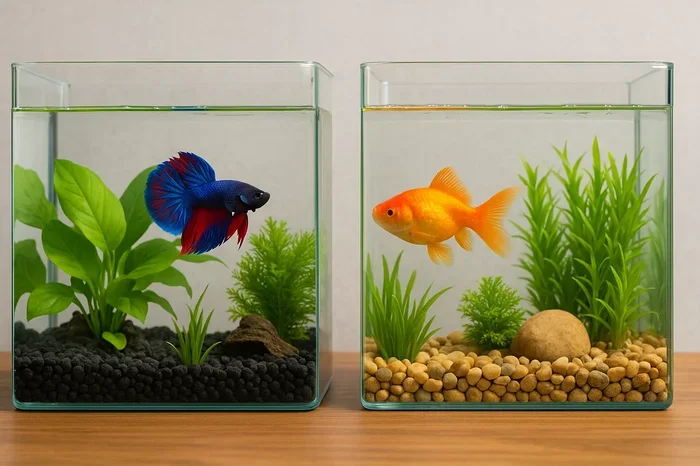
Can bettas live in fish bowls? While bettas can technically survive in small bowls, they absolutely shouldn’t live long-term in them. Fish bowls lack the space, heating, and filtration that bettas need to truly thrive. A proper tank setup of at least 5 gallons with a heater and filter will keep your betta healthier, more active, and living significantly longer.
Key Takeaways
- Bettas need at least 5 gallons: Fish bowls are too small to provide adequate swimming space and stable water conditions for bettas.
- Heating is essential: Bettas are tropical fish requiring water temperatures between 76-82°F, which bowls cannot maintain.
- Filtration matters: Without a filter, toxic ammonia builds up quickly in the small water volume of a fish bowl.
- Bettas are not beginner “starter fish”: They require the same level of care as any other tropical aquarium fish.
- Bowl life shortens lifespan: Bettas in bowls often live only 1-2 years, while properly kept bettas can live 3-5 years or more.
- Labyrinth organ isn’t enough: While bettas can breathe surface air, this doesn’t mean they thrive in stagnant, small water.
- Upgrading saves money long-term: Investing in a proper tank setup reduces vet bills and fish replacement costs over time.
📑 Table of Contents
- The Truth About Bettas and Fish Bowls
- Understanding the Betta Fish: More Than Just a Bowl Fish
- Why Fish Bowls Are Problematic for Bettas
- What Bettas Actually Need to Thrive
- The Myth of the “Easy” Bowl Pet
- Setting Up the Perfect Betta Home
- Common Health Problems Caused by Bowl Living
- Making the Switch: From Bowl to Tank
- Conclusion
The Truth About Bettas and Fish Bowls
Walk into any pet store, and you will probably see betta fish sold in tiny cups or small bowls. This has led to a widespread belief that bettas are perfectly happy living in compact containers. But here is the reality: just because a betta can survive in a fish bowl does not mean it should. The idea that bettas naturally thrive in small, stagnant puddles is one of the most persistent myths in the aquarium hobby.
So, can bettas live in fish bowls? The short answer is yes, they can survive for a period of time. However, survival and thriving are two very different things. A betta kept in a fish bowl is living in a compromised environment that subjects the fish to stress, poor water quality, and a significantly shortened lifespan. Understanding why bowls fall short is the first step toward giving your betta the quality of life it deserves.
In this comprehensive guide, we will break down everything you need to know about betta fish care, why fish bowls are problematic, and what setup actually works best for these beautiful, intelligent creatures. Whether you are a new betta owner or someone considering bringing one home, this information will help you make the right choices.
Understanding the Betta Fish: More Than Just a Bowl Fish
Where Bettas Actually Come From
Betta fish, scientifically known as Betta splendens, originate from the warm, shallow waters of Southeast Asia. Countries like Thailand, Cambodia, and Vietnam are home to wild bettas. Their natural habitats include rice paddies, marshes, and slow-moving streams. These environments may seem small to us, but they are actually part of vast, interconnected water systems that provide far more space and stable conditions than any fish bowl ever could.
It is true that bettas live in shallow water in the wild compared to deep-ocean fish. However, shallow does not mean small or stagnant. Rice paddies cover enormous areas, and the water is constantly refreshed by rainfall and natural water flow. This is a critical distinction that often gets lost when people assume bowls are acceptable.
The Labyrinth Organ: Why Bettas Can Breathe Air
One of the most fascinating features of betta fish is their labyrinth organ. This specialized structure allows them to breathe atmospheric air directly from the surface of the water. In the wild, this adaptation helps bettas survive in waters with lower oxygen levels, such as warm, slow-moving streams where other fish might struggle.
This is the primary reason people argue that bettas can live in bowls. The logic seems sound: if a betta can breathe air from above, it does not need a filter or a large volume of water. But this reasoning misses a crucial point. Breathing air is a survival mechanism, not a preference. A betta breathing from the surface more than usual is often a sign that something is wrong with the water quality, not that the fish is comfortable.
Think of it this way: humans can hold their breath underwater for a short time, but that does not mean we should live in a swimming pool. Similarly, a betta’s labyrinth organ is an emergency backup, not a substitute for clean, well-oxygenated water.
Why Fish Bowls Are Problematic for Bettas
Insufficient Space
The most obvious issue with fish bowls is their size. Most bowls hold anywhere from 1 to 3 gallons of water. While a betta might seem small, these fish are active swimmers that need room to explore, exercise, and establish territory. A betta in a bowl is like a person locked in a closet — technically alive, but far from healthy.
Bettas in the wild roam across wide areas searching for food, defending territory, and interacting with their environment. In a bowl, they have barely enough room to turn around comfortably. This lack of space leads to muscle atrophy, boredom, and increased stress levels. A minimum of 5 gallons is widely recommended by experienced betta keepers and aquatic veterinarians, with 10 gallons being even better.
Temperature Instability
Bettas are tropical fish. They require consistent water temperatures between 76°F and 82°F to maintain their immune system, digestion, and overall health. Fish bowls are notorious for temperature fluctuations because their small water volume heats up and cools down rapidly with changes in room temperature.
On a cold night, the water in a bowl can drop several degrees within hours. During the day near a window, it can spike just as quickly. These swings are incredibly stressful for bettas and weaken their immune system over time, making them susceptible to diseases like ich, fin rot, and velvet. A proper aquarium with a reliable heater maintains a stable temperature that a bowl simply cannot match.
No Filtration Means Toxic Water
Without a filter, fish waste, uneaten food, and decaying plant matter quickly break down into ammonia, which is highly toxic to fish. In a larger tank, beneficial bacteria help process these toxins through the nitrogen cycle. In a small bowl, there is not enough surface area for these colonies to establish, and the small volume of water means toxins concentrate at dangerous levels almost immediately.
Many betta owners without filters try to compensate with frequent water changes. While water changes are important, doing them too frequently in a small bowl actually causes additional stress because the fish must constantly adjust to slightly different water parameters. A gentle filter in a larger tank provides consistent, clean water without the disruption of constant manual intervention.
If you are still considering a bowl setup, you might want to read more about whether betta fish can live in a bowl without a filter to understand the full scope of the challenges involved.
Poor Water Circulation
Stagnant water is a breeding ground for bacteria and algae. In a bowl without a filter or air pump, water circulation is virtually nonexistent. This creates dead spots where debris settles and oxygen levels drop. Bettas may gulp air from the surface to compensate, but this does not address the underlying problem of deteriorating water quality throughout the bowl.
What Bettas Actually Need to Thrive
The Right Tank Size
If you want your betta to truly thrive rather than merely survive, a minimum 5-gallon tank is essential. This might sound like a lot for a small fish, but consider this: bettas are territorial and active. They need horizontal swimming space more than vertical depth, which is why long tanks are often preferred over tall ones.
A 5-gallon tank provides enough water volume to dilute waste products, maintain stable temperatures, and give your betta room to express natural behaviors. It also opens up the possibility of adding compatible tank mates. If you are interested in learning about what fish can live with bettas in a tank, a larger setup makes community possibilities much more realistic.
A Reliable Heater
Investing in a quality adjustable heater is non-negotiable for betta care. Preset heaters often run too hot or too cold, and they give you no control. Look for a heater with a thermostat that allows you to set the exact temperature. For a 5-gallon tank, a 25-50 watt heater is typically sufficient, but this depends on your room temperature.
Always use a thermometer to verify the water temperature, even if your heater has a built-in gauge. Stick-on digital thermometers are affordable and accurate. Keeping the temperature steady at around 78°F is ideal for most bettas.
A Gentle Filter
Bettas come from slow-moving waters, so they do not appreciate strong currents. A filter with an adjustable flow or a sponge filter is perfect for a betta tank. Sponge filters are especially popular because they provide excellent biological filtration while creating minimal water movement. They are also inexpensive and easy to maintain.
The filter serves two critical purposes. First, it circulates water to prevent stagnation and promote oxygen exchange. Second, it houses beneficial bacteria that convert toxic ammonia into less harmful nitrates through the nitrogen cycle. This biological filtration is the backbone of a healthy aquarium.
Enrichment and Hiding Spots
Bettas are surprisingly intelligent and curious fish. They benefit enormously from environmental enrichment. Live or silk plants, caves, driftwood, and floating logs all provide places to explore and rest. Bettas are known to rest on plant leaves near the surface, and having these structures available reduces stress and encourages natural behaviors.
Avoid plastic plants with sharp edges, as bettas have delicate fins that can tear easily. Silk plants are a safer alternative if live plants are not an option. Floating plants like Indian almond leaves or hornwort are particularly appreciated by bettas and also help improve water quality.
The Myth of the “Easy” Bowl Pet
Why the Bowl Myth Persists
The idea that bettas are easy, low-maintenance pets that belong in bowls has been perpetuated by the pet industry for decades. Displaying bettas in small cups at stores is a marketing strategy, not a reflection of their actual needs. This practice has done a tremendous disservice to the species, leading to millions of bettas living short, unhealthy lives.
It is also worth noting that bettas were once used for gambling fights in Thailand, which contributed to their reputation as “disposable” fish. This cultural history has unfortunately carried over into modern pet ownership attitudes. Today, we know better, and responsible betta care means rejecting these outdated notions.
The Real Cost of Bowl Keeping
Many people choose bowls because they seem cheaper and easier. But when you factor in the cost of frequent water conditioners, medications for stress-related illnesses, and the shortened lifespan requiring replacement fish, a bowl setup is actually more expensive in the long run. A proper 5-gallon tank kit with a heater and filter is a one-time investment that pays for itself many times over.
Beyond financial costs, there is an ethical consideration. As pet owners, we have a responsibility to provide the best possible care for our animals. Choosing convenience over a fish’s wellbeing is a decision that affects a living creature’s quality of life every single day.
Setting Up the Perfect Betta Home
Step-by-Step Tank Setup
Setting up a proper betta tank is straightforward and rewarding. Here is a basic checklist to get you started:
- Choose a 5-gallon (or larger) tank with a lid — bettas are jumpers and can escape open containers.
- Add a substrate — smooth gravel or sand works best to avoid damaging your betta’s delicate fins.
- Install a heater — set it to 78°F and place it near the filter output for even heat distribution.
- Add a gentle filter — a sponge filter or hang-on-back filter with adjustable flow is ideal.
- Include decorations — silk or live plants, caves, and hiding spots make your betta feel secure.
- Fill with conditioned water — use a water conditioner to remove chlorine and chloramines from tap water. Learn more about whether betta fish can live in tap water to understand proper water treatment.
- Cycle the tank — before adding your betta, run the tank for 2-4 weeks to establish beneficial bacteria.
The Nitrogen Cycle: Why It Matters
The nitrogen cycle is the process by which beneficial bacteria break down toxic ammonia (from fish waste) into nitrite and then into relatively harmless nitrate. Without this cycle established in your tank, your betta is essentially swimming in poison. Fish-in cycling is possible but stressful for the fish. Fishless cycling is the recommended approach and can be done using pure ammonia or fish food as an ammonia source.
Testing your water regularly with a liquid test kit (not strip tests, which are less accurate) helps you monitor the cycle’s progress and catch problems early. Ammonia and nitrite should always be at zero in a fully cycled tank, while nitrates should be kept below 20 ppm through regular water changes.
Maintenance Routine
Once your tank is established, maintenance is simple. Perform weekly water changes of about 20-25% using a gravel vacuum to remove debris from the substrate. Always treat new water with conditioner before adding it to the tank. Rinse filter media in old tank water (never tap water) once a month to preserve beneficial bacteria.
This routine takes about 30 minutes per week and keeps your betta’s environment clean and stable. Compare this to the daily water changes and constant worry that come with bowl keeping, and the tank setup is clearly the easier and more effective option.
Common Health Problems Caused by Bowl Living
Stress-Related Illnesses
Chronic stress is the number one killer of bettas kept in bowls. Stress weakens the immune system, leaving fish vulnerable to infections that a healthy betta would normally fight off. Common stress-related conditions include fin rot, where the fins progressively deteriorate, and ich, a parasitic infection that appears as white spots on the body.
A stressed betta may also exhibit loss of appetite, lethargy, clamped fins (fins held close to the body), and faded coloration. These are all signs that the fish is not in an suitable environment. Moving a stressed betta to a proper tank often resolves these issues without medication.
Ammonia Poisoning
In an unfiltered bowl, ammonia builds up to dangerous levels within days. Ammonia burns a betta’s gills and fins, causing visible redness, inflammation, and tissue damage. Chronic low-level ammonia exposure is even more insidious because it causes gradual organ damage that may not be apparent until it is too late.
Symptoms of ammonia poisoning include gasping at the surface, red or inflamed gills, lethargy, and loss of appetite. If you notice these signs, immediately perform a 50% water change with conditioned water and address the underlying filtration issue.
Making the Switch: From Bowl to Tank
If your betta is currently living in a fish bowl, do not panic. Transitioning to a better setup is absolutely possible and will dramatically improve your fish’s quality of life. Start by acquiring a proper tank, heater, and filter. Cycle the tank fully before moving your betta over, which typically takes 2-4 weeks.
When transferring your betta, acclimate it slowly to the new water by floating the container in the tank and gradually mixing tank water into the betta’s current water over 20-30 minutes. This prevents shock from sudden changes in temperature or water chemistry.
Many betta owners report dramatic improvements after switching from a bowl to a tank. Fish that were once lethargic and dull become active, colorful, and interactive. It is one of the most rewarding changes you can make as a pet owner.
If you are considering adding tank mates to your new setup, check out this guide on whether betta fish can live in fish bowls and the related resources on community tank options to ensure a harmonious environment for all your aquatic pets.
Conclusion
So, can bettas live in fish bowls? Technically, they can survive for a while, but they will not thrive. The evidence is clear: bettas need heated, filtered, spacious environments to reach their full potential. A fish bowl is a compromise that costs your betta years of its life and subjects it to unnecessary stress and illness.
The good news is that proper betta care is not complicated or expensive. A 5-gallon tank with a heater and filter is all you need to give your betta a happy, healthy home. These fish are truly remarkable creatures with unique personalities, vibrant colors, and surprising intelligence. They deserve better than a bowl, and once you see your betta thriving in a proper setup, you will never look back.
Making the switch from bowl to tank is the single best decision you can make for your betta’s health and longevity. Your fish will thank you with years of beauty, activity, and companionship.
Frequently Asked Questions
Can a betta fish live in a fish bowl temporarily?
Yes, a betta can survive in a fish bowl for a short period during tank maintenance or setup, but it should never be considered a permanent living arrangement. Extended bowl living causes stress and health problems.
What is the smallest tank size for a betta fish?
The minimum recommended tank size for a single betta is 5 gallons. While some sources claim 2.5 gallons is acceptable, 5 gallons provides much more stable water conditions and adequate swimming space for a healthy, active fish.
Do bettas need a heater in their tank?
Absolutely. Bettas are tropical fish that require consistent water temperatures between 76°F and 82°F. Without a heater, temperature fluctuations will stress your betta and weaken its immune system over time.
Can bettas live without a filter?
While bettas can technically survive without a filter due to their labyrinth organ, they should not be kept in unfiltered setups. A filter maintains water quality by housing beneficial bacteria that break down toxic ammonia, creating a healthier environment.
How long do betta fish live in bowls versus tanks?
Bettas kept in bowls typically live only 1-2 years due to stress and poor water conditions. In a proper heated and filtered tank of 5 gallons or more, bettas commonly live 3-5 years, with some reaching 7 years or longer.
Is it cruel to keep a betta in a bowl?
While unintentional, keeping a betta in a bowl subjects the fish to chronic stress, poor water quality, and a significantly shortened lifespan. Providing a proper tank setup is the responsible and humane choice for betta ownership.