Can Betta Fish Live in Fish Bowls
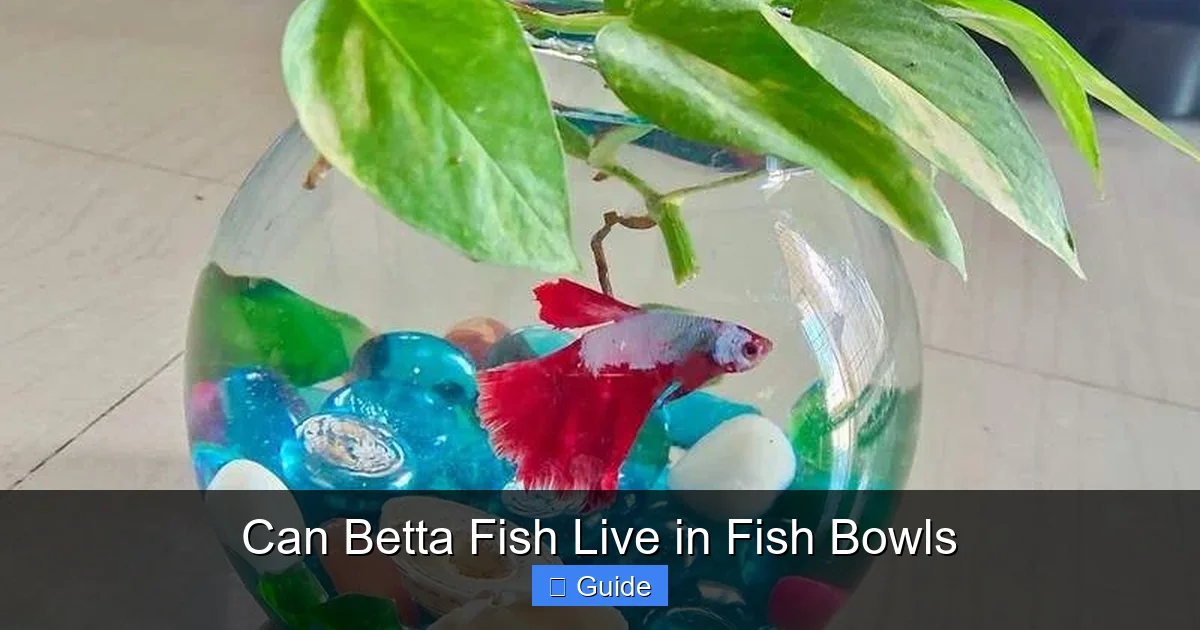
No, betta fish should not live in fish bowls. The iconic, tiny bowl is a dangerous myth that causes stress, poor water quality, and a shortened lifespan. Betta fish are intelligent, tropical fish that require a filtered, heated aquarium of at least 5 gallons to thrive. Providing a proper tank with enrichment, stable water parameters, and consistent care is not a luxury—it’s a fundamental requirement for their welfare. This guide explains why bowls fail and exactly how to set up a vibrant, healthy home for your betta.
Key Takeaways
- Fish Bowls Are Inherently Harmful: Small, unfiltered bowls cannot maintain water quality or temperature, leading to toxic ammonia buildup, stress, and disease for betta fish.
- Minimum 5-Gallon Tank is Essential: A filtered, heated aquarium of 5 gallons (19 liters) or more is the absolute baseline for a single betta to provide stable water conditions and swimming space.
- Heating and Filtration Are Non-Negotiable: Bettas are tropical fish requiring a constant water temperature of 78-80°F (25-27°C) and a gentle filter to cycle the tank and remove waste.
- Enrichment is Critical for Mental Health: Bettas are curious and smart. They need plants (live or silk), hiding spots, and gentle stimulation to prevent boredom and depression.
- The “Low-Maintenance” Myth is Dangerous: Bettas are not “beginner” or “disposable” pets. Their specific needs require consistent, informed care, not neglect in a decorative bowl.
- Proper Care Dramatically Extends Lifespan: A betta in a proper setup can live 5+ years, while one in a bowl often survives only 1-2 years, if that.
- You Are Responsible for Its Entire World: The water in the tank is your betta’s air, food, and home. Maintaining that environment is your primary duty as an owner.
📑 Table of Contents
- The Myth of the “Self-Contained” Bowl
- Understanding Betta Fish Biology: More Than a Pretty Face
- Why a Proper Tank is Non-Negotiable: The Science of Stability
- Setting Up the Ideal Betta Habitat: A Step-by-Step Guide
- Maintenance and Long-Term Care: The Commitment
- Debunking Common Bowl Myths: The Final Word
- Conclusion: A Commitment to a Life, Not a Decoration
The Myth of the “Self-Contained” Bowl
Walk into any old-fashioned pet store or glance at a vintage poster, and you’ll see it: a single, brilliant red betta fish, floating gracefully in a tiny, rounded glass bowl. This image is so ubiquitous that it has shaped public perception for decades, cementing the idea that these fish are perfectly content in solitary, miniature vessels. It’s a picturesque, convenient myth. But it is a myth that comes at a terrible cost to the fish. The fish bowl, as a habitat, is fundamentally flawed. It is not a home; it is a slow-acting trap. To understand why, we must first dismantle the core falsehoods: that the bowl is “self-cleaning” or “low-maintenance,” and that the betta is a simple, hardy creature that doesn’t need much.
The reality is starkly different. A betta fish, also known as a Siamese fighting fish, is a complex, intelligent, and tropical animal. Its natural habitat is the shallow, warm, vegetated rice paddies and slow-moving streams of Southeast Asia. While these waters are often shallow, they are vast in volume, teeming with life, and part of a dynamic, balanced ecosystem. A glass bowl, even a large one, is a sterile, unchanging puddle in comparison. It lacks the biological processes necessary to support life. Waste products like ammonia from the fish’s gills and feces accumulate rapidly in a small water volume. Without a filter to host beneficial bacteria that process this waste, the water becomes a toxic soup. Furthermore, the small surface area of a bowl severely limits gas exchange, meaning oxygen levels can plummet. The betta you see gasping at the surface isn’t saying hello; it’s struggling to breathe. This combination of toxic water and low oxygen creates a chronic state of stress, weakening the fish’s immune system and making it susceptible to a host of illnesses like fin rot, velvet disease, and dropsy.
Understanding Betta Fish Biology: More Than a Pretty Face
To properly advocate against the bowl, we need to appreciate what makes a betta unique. This isn’t just about aesthetics; it’s about their specific physiological and behavioral needs that a bowl utterly fails to meet.
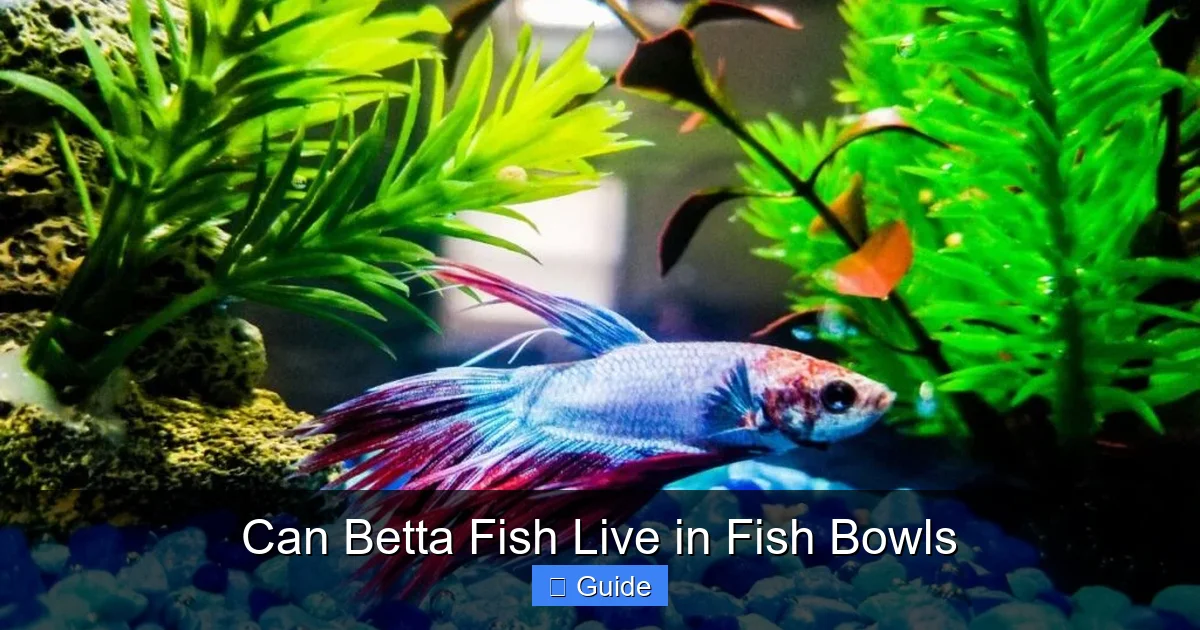
Visual guide about Can Betta Fish Live in Fish Bowls
Image source: housedpet.com
The Labyrinth Organ: A Special Breath
Betta fish possess a fascinating adaptation called a labyrinth organ. This is a specialized structure that allows them to gulp air from the surface and extract oxygen from it. This is why you often see them darting to the top. It’s a survival trait for warm, oxygen-poor waters. However, this adaptation is often misinterpreted as a sign that they prefer poor water quality. This is false. The labyrinth organ is a backup system, not a primary one. They still absorb oxygen through their gills from the water. Relying solely on atmospheric air is stressful and inefficient. A well-oxygenated tank with good water movement (from a filter) reduces the need for constant surface gulping and is far healthier. A stagnant bowl forces constant, frantic gulping as oxygen levels in the water plummet.
Intelligence and Personality
Betta fish are remarkably intelligent. They recognize their caregivers, can be trained to follow a target or jump through hoops, and exhibit distinct personalities—some curious and bold, others shy and reserved. They are also curious and require mental stimulation. In the wild, they navigate complex underwater landscapes of plants, roots, and debris. A bare bowl is a sensory deprivation tank. Without plants to explore, caves to hide in, or objects to investigate, a betta becomes listless, bored, and may develop repetitive behaviors like glass surfing (constantly swimming up and down the tank walls) or fin-nipping. Providing a enriched environment is crucial for their psychological well-being.
Territorial Nature
Males are famously territorial and will flare (spread their gills and fins dramatically) at their own reflection or other fish. This is a natural behavior, but in a tiny bowl, there is no escape from their reflection. This can lead to chronic stress as they constantly perceive an intruder in their territory. A larger tank with visual barriers (plants, decor) breaks up line-of-sight, giving the fish a sense of security and control over its environment.
Why a Proper Tank is Non-Negotiable: The Science of Stability
The transition from “can they survive?” to “will they thrive?” hinges on one word: stability. A fish bowl is the antithesis of a stable aquatic environment. A proper aquarium setup is designed to create and maintain stability in three critical areas: water chemistry, temperature, and space.
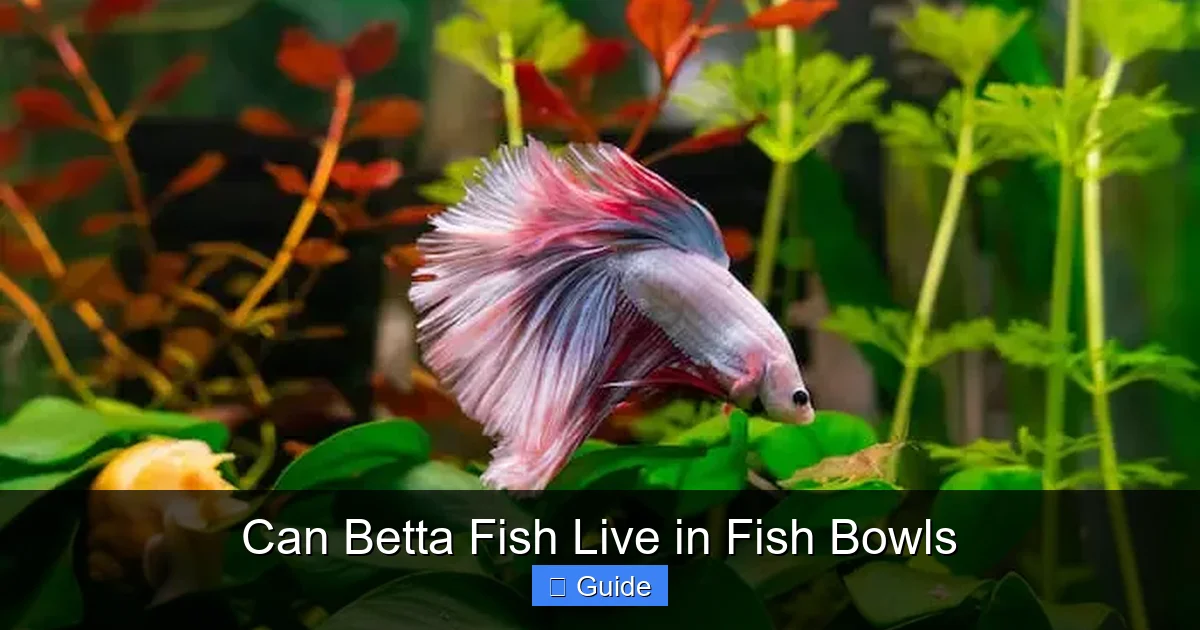
Visual guide about Can Betta Fish Live in Fish Bowls
Image source: forfishlovers.com
The Nitrogen Cycle: Your Tank’s Invisible Lifeline
This is the most important concept in fishkeeping. The nitrogen cycle is a biological process where beneficial bacteria convert toxic fish waste (ammonia) into less harmful nitrite, and then into much less toxic nitrate. This cycle takes 4-6 weeks to establish fully in a new tank and requires a surface for bacteria to grow—filter media, gravel, and decorations. A tiny bowl has an infinitesimally small surface area for this bacteria to colonize. Any waste produced immediately spikes ammonia levels, poisoning the fish. A filter in a larger tank provides massive surface area (in its media) for these bacteria to thrive, creating a stable ecosystem that processes waste continuously. Without a cycled filter, you are forced to perform daily, stressful water changes just to keep ammonia at bay, which is unsustainable and still doesn’t provide the biological balance a fish needs.
Temperature Consistency
Bettas are tropical fish, native to waters that are consistently warm (78-80°F or 25-27°C). A small bowl has very little thermal mass. It heats up and cools down with the room temperature in a matter of hours. A draft from a window or direct sunlight from a window can cause lethal temperature swings. An aquarium heater, used in a tank with adequate volume (5+ gallons), provides stable, consistent heat. The water volume acts as a buffer, resisting rapid temperature changes. A stable temperature is vital for a betta’s metabolism, immune function, and overall vitality.
The Dilution Factor
This is simple math. Waste products are diluted in a larger volume of water. In a 1-gallon bowl, a single betta’s daily waste is a significant pollutant. In a 5-gallon tank, that same amount of waste is diluted five times over. In a 10-gallon tank, ten times over. This dilution gives the filter’s bacteria more time to process the toxins and creates a much safer, more forgiving environment. It also means water changes are less frequent and less drastic, reducing stress on the fish.
Setting Up the Ideal Betta Habitat: A Step-by-Step Guide
Now that we’ve established the “why,” let’s build the “how.” Creating a thriving betta home is straightforward and rewarding. Forget the bowl; think of a planted paradise.
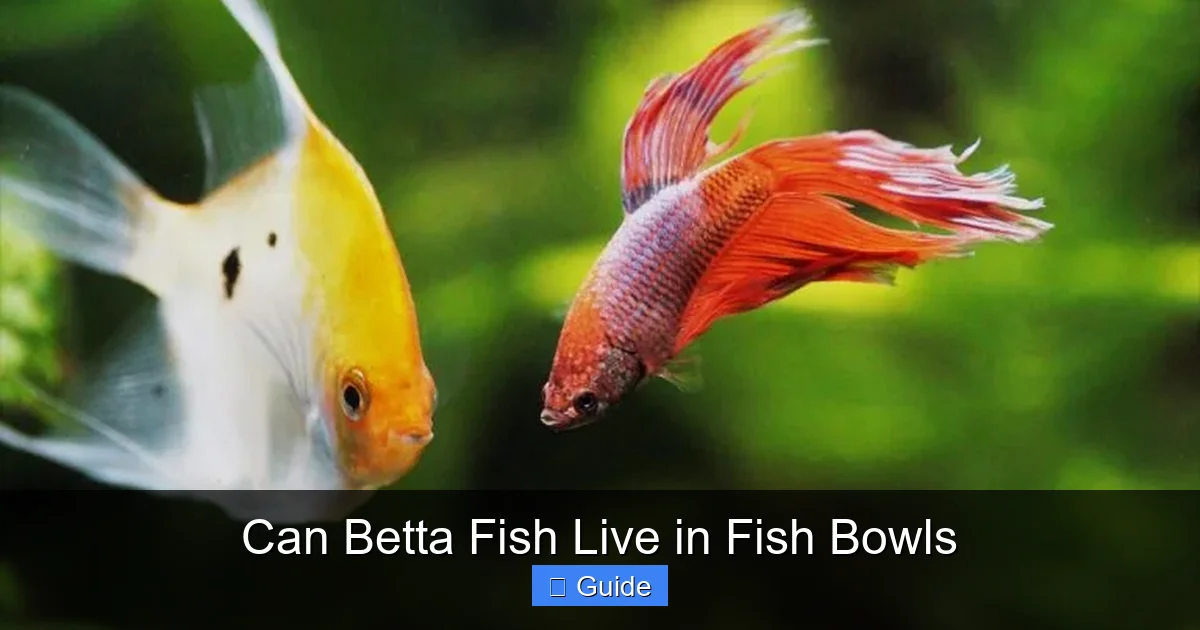
Visual guide about Can Betta Fish Live in Fish Bowls
Image source: fishkeepingadvice.com
Tank Size and Shape: Go Big and Go Long
The absolute minimum is a 5-gallon (19-liter) tank. This is widely accepted by serious betta keepers and veterinarians as the smallest volume that can provide stable conditions. However, bigger is always better. A 10-gallon tank is even more stable, provides more swimming space, and allows for a small, peaceful community (like a few neon tetras or harlequin rasboras, with careful research). Shape matters: Choose a tank with a larger surface area (long or wide) over a tall, narrow one. Bettas are surface-oriented and need good oxygen exchange at the water’s top. A long, shallow tank provides more surface area for gas exchange than a tall, skinny one of the same volume.
Filtration: Gentle but Effective
Bettas have delicate fins that can be damaged by strong currents. You need a filter that cleans the water without creating a torrent. Here are your best options:
- Sponge Filter: The gold standard for bettas. It uses an air pump to push water through a porous sponge, providing excellent biological filtration and very gentle flow. It’s also a great place for bettas to rest and build bubble nests.
- Adjustable Hang-On-Back (HOB) Filter: Many HOB filters have flow control. Set it to the lowest setting and direct the outflow against the tank wall or use a spray bar to diffuse the current.
- Internal Power Filter: Look for models with adjustable flow and a protective cover over the intake to prevent fin damage.
- Undergravel Filter (UGF): Controversial. Can work in a pinch but is generally less efficient and harder to clean than modern options.
Never use a filter with an intake that can suck a betta’s fins. Always use a sponge pre-filter on intakes if needed.
Heating: The Non-Negotiable Thermostat
You must have an aquarium heater. For a 5-gallon tank, a 25-watt adjustable submersible heater is perfect. Always use a separate, reliable aquarium thermometer (digital or glass) to verify the temperature. Never trust the heater’s dial alone. Set it to 78-80°F (25-27°C) and monitor. In very warm climates, you may need an aquarium fan to prevent overheating in summer.
Substrate, Plants, and Hiding Spots: Creating a Paradise
This is where you get creative and address the betta’s need for enrichment.
- Substrate: Sand or fine gravel is ideal. It’s gentle on their fins and allows you to plant live plants easily. Avoid sharp, jagged gravel.
- Plants: This is crucial. Bettas love to rest on broad leaves near the surface (like Amazon swords, Anubias, or Java fern attached to driftwood) and dart through mid-level plants. Live plants are fantastic for water quality and provide natural complexity. If you’re not ready for live plants, use high-quality silk plants—never plastic, which can tear fins.
- Hiding Spots: Provide at least one cave or overhang (using ceramic pots, coconut shells, or commercial decor) where the betta can retreat and feel secure.
- Other Decor: A smooth piece of driftwood or a few smooth river rocks add texture and interest. Ensure all decor is aquarium-safe (no paints or metals that can leach).
Aim for a layout with open swimming space in the center, plants along the sides and back, and a resting spot near the surface.
Maintenance and Long-Term Care: The Commitment
Setting up the tank is the first step. The ongoing maintenance is what truly determines your betta’s health and longevity. This is the part the bowl myth completely ignores.
The Water Change Routine
Even with a filter, you must perform regular partial water changes to remove nitrate (the end product of the nitrogen cycle) and replenish minerals. For a properly cycled 5-gallon tank with one betta:
- Change 25-30% of the water once a week.
- Use a gravel vacuum to siphon debris from the substrate during the change.
- Always treat tap water with a complete water conditioner that removes chlorine, chloramines, and heavy metals. Do not use bottled water or spring water, as they lack essential minerals.
- Match the temperature of the new water to the tank water (within 1-2 degrees) to avoid thermal shock.
Never, ever remove the fish during a water change. This is extremely stressful. Clean the glass with an algae pad (not soap!) and prune any dying plant leaves.
Feeding: Quality Over Quantity
Bettas are carnivores. Their diet should be high in protein. Feed a high-quality pellet or frozen food (like daphnia, brine shrimp, or bloodworms) once or twice a day, only what they can eat in 2-3 minutes. Overfeeding is a primary cause of water pollution and constipation/ Swim Bladder issues. A betta’s stomach is roughly the size of its eye. Skip a day of feeding once a week to give its digestive system a rest. This mimics natural feast-or-famine cycles.
Observation: Your Daily Check-Up
Spend 5 minutes each day observing your betta. Is it active? Are its fins full and undamaged? Is it eating? Are its colors bright? Is it hiding excessively? Changes in behavior are often the first sign of illness. Early detection is key to successful treatment.
Debunking Common Bowl Myths: The Final Word
Let’s directly address the justifications people use for keeping bettas in bowls.
“But they live in shallow puddles in the wild!”
This is a misinterpretation. They live in vast, interconnected rice paddy systems and slow streams. These are huge, vegetated, warm ecosystems with abundant biological filtration from plants and microbes. A glass bowl is a static, sterile, isolated cup. It is not equivalent.
“They’re so hardy, they can survive anything.”
This is a tragic myth born from their ability to survive in terrible conditions. “Hardy” does not mean “thriving.” A betta can survive for months or even a year in a toxic bowl, living a life of chronic stress and pain. That is not a sign of hardiness; it’s a testament to their will to live under duress. True hardiness comes from providing the right environment where their natural defenses can function optimally.
“A bowl is easier/cheaper than a tank.”
Is it? Consider the cost of a 5-gallon tank kit (often on sale), which includes a filter, heater, and hood. Compare that to a decorative bowl and a bag of gravel. Now consider the veterinary bills for a betta suffering from advanced fin rot or dropsy due to poor water. The “cheap” bowl leads to a dead fish quickly, requiring a new purchase. The proper tank, with minimal maintenance, supports a healthy, vibrant pet for 5+ years. The tank is cheaper in the long run and infinitely more humane.
“I had a betta in a bowl for years!”
This is the survivor bias. For every betta that somehow clung to life in a bowl, dozens more died prematurely and silently. You were likely providing daily water changes (which is essentially performing the filter’s job manually) and got lucky. But you were not providing a stable, cycled environment. You were managing a constant crisis. Your betta’s life was likely shorter and more stressful than it needed to be.
Conclusion: A Commitment to a Life, Not a Decoration
The image of the betta in the bowl is a relic of an outdated and uninformed era of pet keeping. We now know better. We understand the complexity of aquatic life, the importance of the nitrogen cycle, and the sentient nature of these beautiful, personality-filled fish. Choosing to keep a betta is choosing to be a steward for a living being. It is a commitment to providing not just survival, but a life of vitality, stimulation, and health. That commitment begins with rejecting the bowl. It begins with setting up a filtered, heated, enriched aquarium of appropriate size. It continues with consistent, informed care. In return, you will be rewarded with a fish that is not just a pretty face in a glass, but a interactive, colorful companion that recognizes you, displays fascinating behaviors, and lives a full, healthy life. The choice is clear. Ditch the bowl. Embrace the tank. Your betta’s life depends on it.
Frequently Asked Questions
Can a betta fish live happily in a fish bowl?
No, a betta cannot live happily or healthily in a fish bowl. Bowls are too small to maintain stable water quality, lack filtration and heating, and cause chronic stress. A betta may survive for a short time, but it will not thrive and will have a severely shortened, poor-quality lifespan.
What is the absolute smallest tank I can use for a betta?
The widely accepted absolute minimum is a 5-gallon (19-liter) tank. This volume allows for stable water parameters, space for a filter and heater, and enough room for the betta to swim and explore. Anything smaller, like a 1-gallon “bowl,” is considered inhumane by aquatic veterinary and welfare standards.
Do betta fish really need a heater?
Yes, absolutely. Bettas are tropical fish native to warm waters. They require a constant, stable water temperature between 78-80°F (25-27°C). Without a heater, they become lethargic, their immune system weakens, and they are prone to deadly diseases like dropsy, especially in cooler room temperatures.
Can I use a filter if it creates a strong current?
No. Bettas have long, flowing fins that are easily damaged and tattered by strong water flow. A strong current also causes them constant stress as they struggle to swim. You must use a filter with an adjustable flow set to the lowest setting, or use a filter designed for gentle flow like a sponge filter.
Are live plants necessary for a betta tank?
While not strictly “necessary” for survival, live plants are highly beneficial and strongly recommended. They help absorb nitrates, improve water quality, reduce algae, and—most importantly—provide crucial enrichment, hiding places, and resting spots. If you cannot use live plants, you must provide ample silk plants to fulfill this need.
How often should I clean my betta’s tank?
For a properly cycled 5-gallon tank with one betta, perform a 25-30% water change once a week. During this change, vacuum the substrate to remove waste. Do not clean the filter media in tap water, as this kills the beneficial bacteria—just rinse it gently in old tank water. A full, deep clean (removing all fish and decorations) is rarely needed and disrupts the biological cycle.