What’s the Most Expensive Betta Fish
The title of “most expensive betta fish” is not held by one single fish forever, but by a category of exceptionally rare, genetically complex specimens. These high-value bettas, often from elite Thai breeders, can command prices from $500 to over $1,500 due to perfect symmetry, rare color patterns like Koi or Marble, and massive, 180-degree fins. Their value is tied to genetics, breeder reputation, and the intense, months-long cultivation process. For collectors, owning one is about possessing a living piece of aquatic art, not just a pet.
Key Takeaways
- Record-Breaking Price: The highest confirmed public sale for a single betta fish is $1,500+, with private sales likely exceeding this for “holy grail” specimens.
- Value is in the Genes: Price is driven by rare genetic combinations for color (Koi, Marble), large symmetrical fins (Halfmoon, Rose Tail), and flawless body shape.
- Thai Breeders are the Source: The world’s most expensive bettas originate from a handful of legendary breeders in Thailand, the global epicenter of betta sophistication.
- It’s an Investment in Art: For collectors, these fish are viewed as movable, living art pieces, with value akin to rare collectibles or fine paintings.
- Beware of Fakes and Scams: The high-value market has imitators. True luxury bettas come with verifiable lineage, health guarantees, and direct breeder relationships.
- Extreme Care is Non-Negotiable: A $1,000 betta requires a meticulously maintained aquarium, premium nutrition, and a stress-free environment to thrive and display its full beauty.
📑 Table of Contents
- The Million-Dollar Question: What’s the Most Expensive Betta Fish?
- The Record Holders: Glimpses into the $1,500+ Tier
- What Truly Drives the Price? The Five Pillars of Value
- Inside the Thai Breeding Studios: Where Magic Happens
- Buying Your Own “Expensive” Betta: A Practical Guide
- The Ethical Dimension: Beyond the Price Tag
- Conclusion: The True Cost of Beauty
The Million-Dollar Question: What’s the Most Expensive Betta Fish?
Step into the dazzling, sometimes bewildering world of betta fish for sale online. You’ll see prices ranging from $3 at a big-box store to listings that make your jaw drop: “$800 Betta Halfmoon Koi!” “Rare Marble Dragon—$1,200!” It prompts the inevitable question: what’s the most expensive betta fish you can actually buy, and what on earth makes a single fish worth more than a used car? The answer is a fascinating journey into genetics, artistry, national pride, and a global collector’s market operating right under our noses.
First, let’s clarify: there is no permanent, single “winner” like a racehorse with a championship title. The title of “most expensive betta fish” is a shifting honor, held temporarily by a specific, breathtaking specimen that emerges from the breeding tanks of Thailand’s elite. These are not your average pet store fish. They are the culmination of decades of selective breeding, a living manifestation of a breeder’s vision and skill. Their value isn’t just in their colors; it’s in their story, their bloodline, and their potential to produce even more extraordinary offspring. To understand the price tag, we must first understand what we’re looking at.
The Record Holders: Glimpses into the $1,500+ Tier
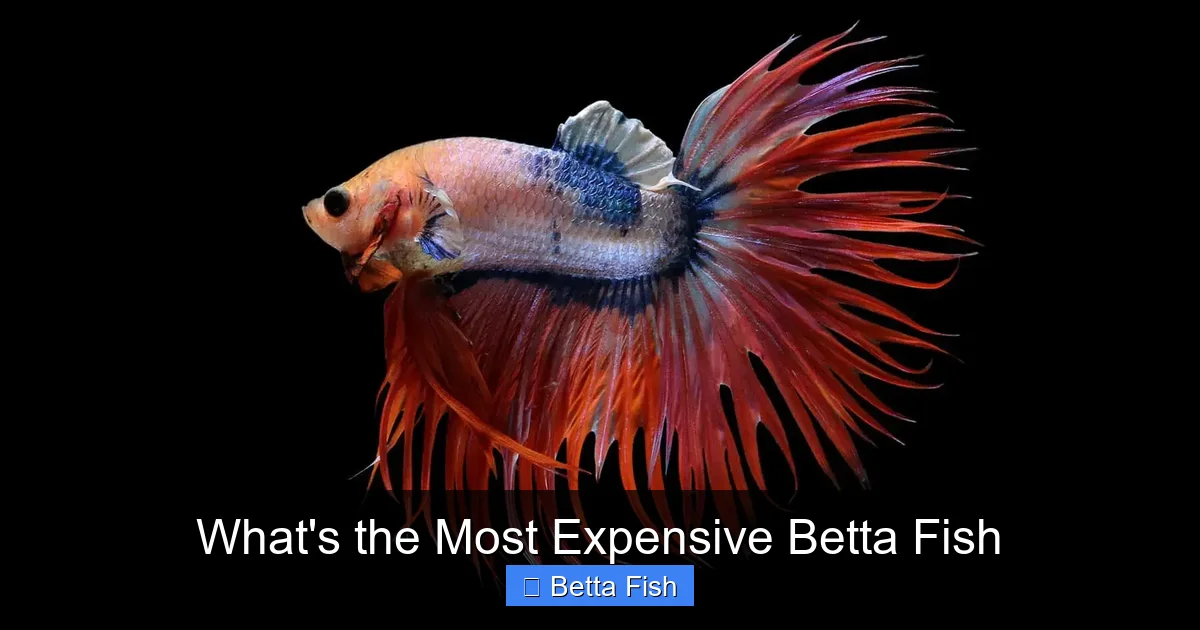
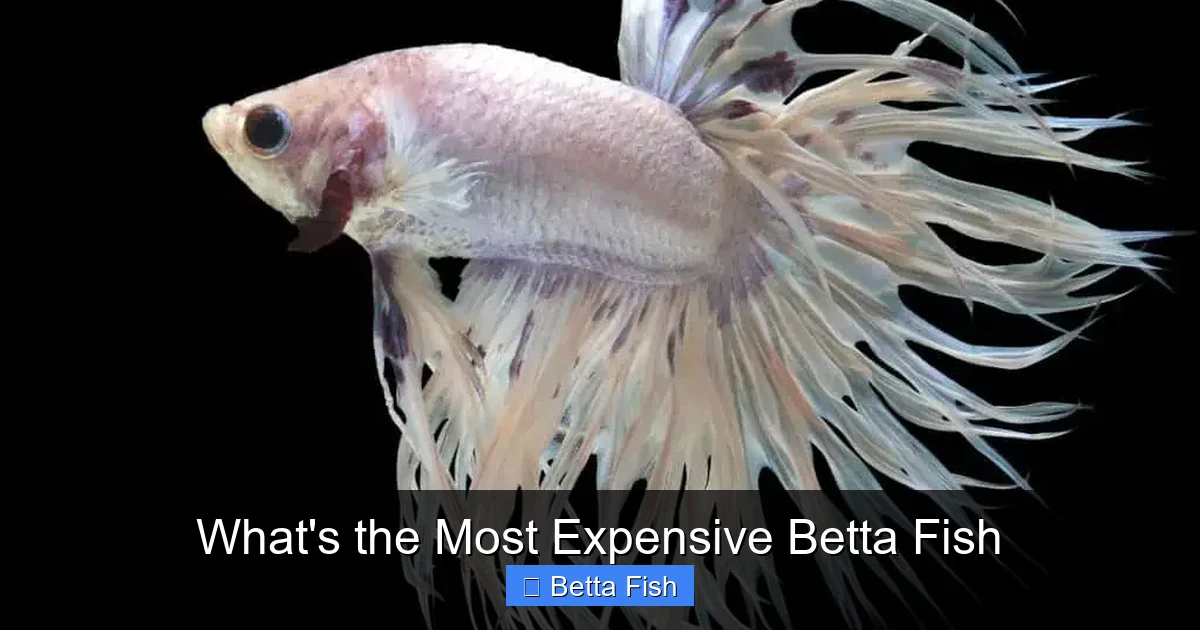
While exact, verified private sale prices are often confidential, the public-facing ceiling for the most expensive betta fish consistently hovers around the $1,500 to $2,000 mark for a single, show-quality specimen. Auctions at major betta shows in Thailand and online platforms like Facebook groups for elite collectors have seen these figures. A key milestone was the public sale of a “Koi” patterned Halfmoon with perfect, vibrant segmentation and a massive, 180-degree spread for $1,500. This fish wasn’t just colorful; it had the coveted “candy cane” or “pineapple” pattern where distinct, unblended color blocks (red, blue, yellow, white) were perfectly distributed across its body and fins.
Visual guide about What’s the Most Expensive Betta Fish
Image source: bettasource.com
The “Koi” Phenomenon: Living Art
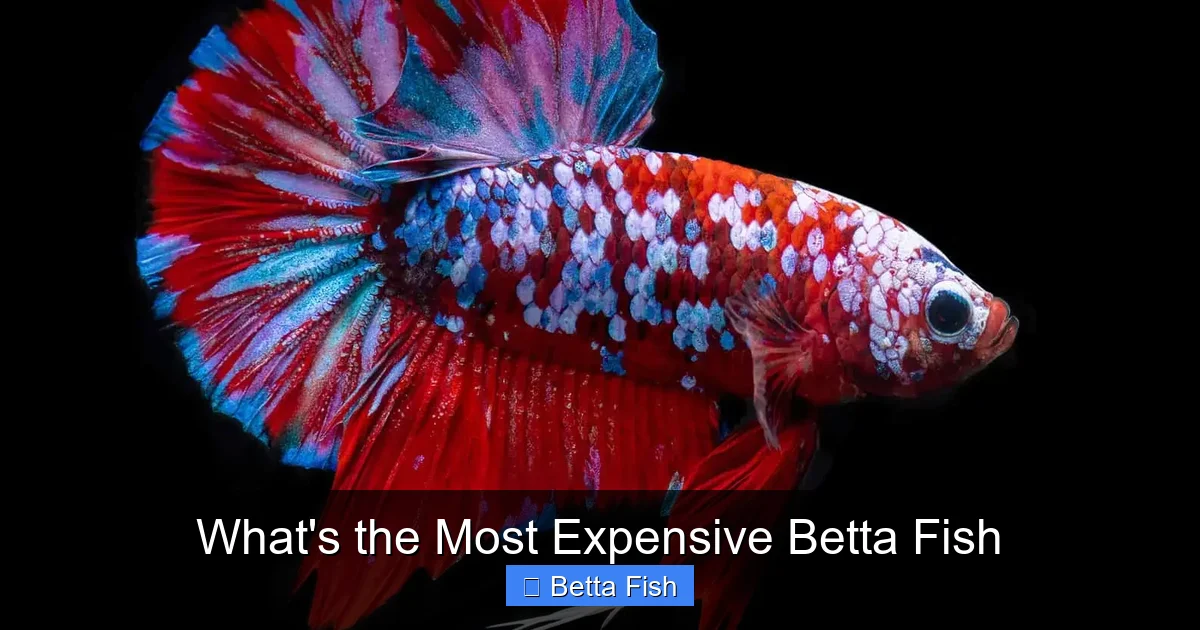
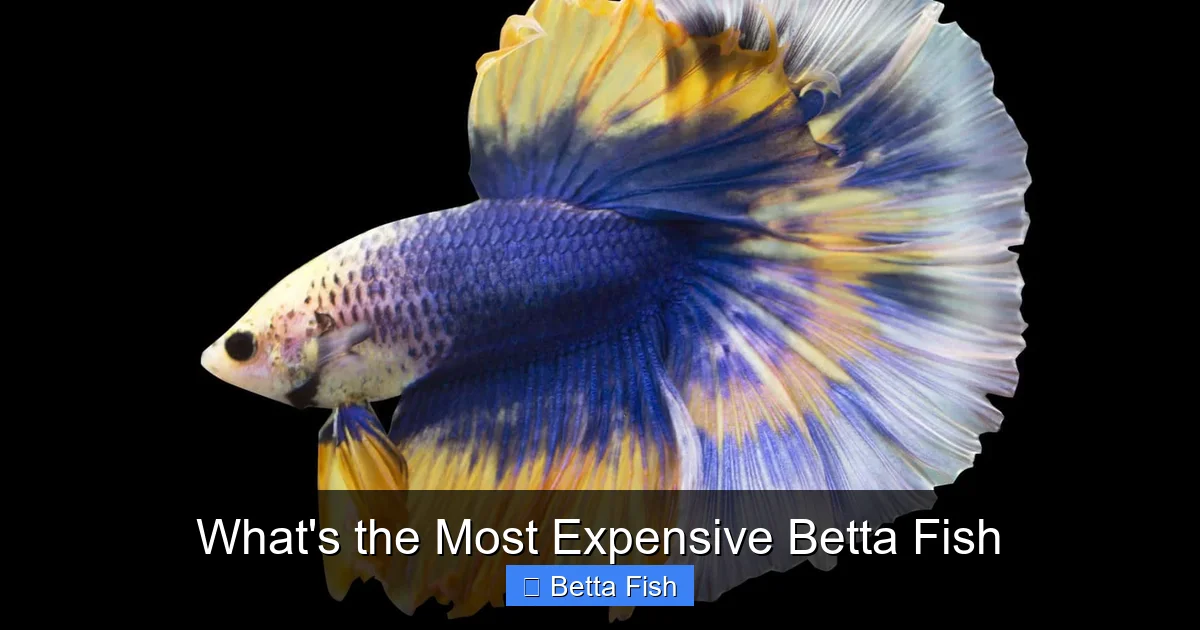
The Koi betta is arguably the king of high-value categories. Named for its resemblance to the prized Japanese Koi carp, these fish exhibit a marble-like pattern with sharp, clean divisions between colors. The most expensive are “True Koi” or “Koi Halfmoon,” where the pattern is stable and doesn’t fade or change drastically with age (a common trait in regular marbles). A perfect Koi with a symmetrical body, a full, circular Halfmoon tail, and vibrant, non-muddy colors is the holy grail. Breeders spend years perfecting lines that produce this stable, brilliant patterning. A fish with a rare color combination in this pattern—like electric blue and red with a white lace fin—can instantly catapult into the four-figure range.
Beyond Koi: Rose Tails and Dumbo Ears
While Koi commands the spotlight, other varieties also fetch astronomical prices. The “Rose Tail” Halfmoon, with its extra, overlapping rays creating a rose-like fullness in the tail, is incredibly difficult to breed perfectly. A massive, symmetrical Rose Tail with good color can easily hit $800-$1,200. Similarly, “Dumbo” or “Big Ear” bettas, with enormous, ornate pectoral fins resembling an elephant’s ears, are highly sought after when combined with good color and a Halfmoon tail. A pristine Dumbo Halfmoon in a rare solid color like metallic copper or a complex multicolor can rival Koi prices.
What Truly Drives the Price? The Five Pillars of Value
Looking at a most expensive betta fish, you might just see a pretty fish. A seasoned breeder sees a complex equation of value. Five core factors converge to create a luxury specimen.
Visual guide about What’s the Most Expensive Betta Fish
Image source: bettasource.com
1. Symmetry and Proportion
This is the foundation of all high-value bettas. From above, the fish’s body should be a perfect oval or circle when the fins are flared. The dorsal fin should be a smooth, unbroken arch. The tail (caudal fin) must be a full, even semicircle (180 degrees for a Halfmoon) with no dips, tears, or unevenness. The pectoral fins should be large, symmetrical, and carried high. Any asymmetry—one side of the tail longer than the other, a dorsal fin with a flat spot—drastically reduces value. This perfection is incredibly rare because it requires flawless genetics and impeccable husbandry during the crucial fin-development phase.
2. Color Intensity, Type, and Distribution
Color is where artistry meets genetics. “Solid” colors like bright red or royal blue are beautiful but more common. The big money is in complex patterns and iridescence.
- Iridescence (Steel, Blue, Turquoise): Caused by guanine crystals in the skin, the most prized iridescence is a bright, shiny “steel blue” that looks metallic under light. Dull, grayish blues are less valuable.
- Multicolor/Marble: The key here is contrast and clarity. Muddy, blended colors are cheap. Sharp, clean divisions between three or more vibrant colors (e.g., red, yellow, blue) are expensive. The “Koi” pattern is the pinnacle of this.
- Fantail/Butterfly Patterns: Specific, symmetrical patterns on the tail itself, like a butterfly or a “crown” of color, add significant premium.
3. Fin Type, Size, and Condition
The Halfmoon (HM) tail is the standard for high value. But within that, there are tiers. A standard HM is valuable. A “Super Delta” or “Over Halfmoon” with more than 180-degree spread is more so. The “Rose Tail” (RT) and “Feather Tail” are the apex, requiring immense skill to breed without compromising fin health. Finnage must be intact, with no splits, tears, or missing rays. The rays (the supporting bones in the fins) should be long, strong, and numerous, giving the fin a substantial, cloth-like appearance rather than a wispy one.
4. Size and Body Type
Bigger is generally better, but within reason. A large, robust male (often 2.5-3 inches from nose to tail base) with a deep, torpedo-shaped body is preferred over a small, skinny one. The body should be muscular and streamlined, not bloated or thin. This indicates excellent health and genetics for growth.
5. The “X-Factor”: Breeder Reputation and Provenance
This is the intangible that can double a price. A betta from a legendary Thai breeder like Piyawat Kongpetch (Pk), Kritsana Tangsrisuk (KGT), or the late Charkron Sung (CS) carries immense weight. Their bloodlines are decades in the making, and a fish with a verified pedigree from one of these masters is a collector’s item. The story matters: “This fish is from the direct son of a champion from the 2018 Bangkok show.” Provenance, in the form of photos/videos from the breeder’s tank, is everything.
Inside the Thai Breeding Studios: Where Magic Happens
To grasp the most expensive betta fish market, you must travel to central Thailand. Cities like Pathum Thani and Samut Prakan are home to unassuming houses and warehouses that are, in reality, world-class aquatic genetics laboratories. These aren’t hobbyist tanks; they are rows upon rows of meticulously maintained, individual glass containers (often called “bettaboxes”) where each male lives in isolation.
Visual guide about What’s the Most Expensive Betta Fish
Image source: bettasource.com
The Cultivation Process: A Test of Patience
A potential champion isn’t discovered; it’s cultivated over 6-8 months. Breeders select fry (baby bettas) with promise at just a few weeks old, based on early fin development and body shape. These chosen ones are moved to larger, pristine solo tanks. Their diet is a secret weapon—a mix of high-protein pellets, frozen foods like bloodworms and brine shrimp, and sometimes proprietary additives to enhance color and fin growth. Water changes are frequent and meticulous. The goal is to provide the perfect, stress-free environment for the fish’s genetics to express themselves fully. A single breeder might raise hundreds of males, with only a handful, maybe one or two, reaching “champion” status.
Judging and Competition: The Thai Standard
The ultimate test is the Thai show circuit, governed by the International Betta Congress (IBC) standards. Judges, themselves master breeders, evaluate fish on a strict 100-point scale: 45 for Finnage (size, symmetry, condition), 35 for Color (intensity, distribution, contrast), and 20 for Body (shape, size, posture). A fish scoring 95+ is exceptional. The winners of these shows become the new benchmarks, and their offspring command the highest prices. This competitive, merit-based system is what fuels the relentless pursuit of perfection and justifies the sky-high prices.
Buying Your Own “Expensive” Betta: A Practical Guide
So you’re captivated and want a piece of this world. How do you navigate it without getting scammed or heartbroken? Whether you’re aiming for a $200 show-quality fish or just want to understand the market, here’s how to proceed.
Finding Reputable Sellers: Skip the Marketplaces
Forget general marketplaces for true high-end bettas. Your sources must be:
- Direct from Thai Breeders: Many top breeders sell directly via Facebook or dedicated websites. This is the best way to get a true, documented fish, but it involves international shipping ($50-$100+) and complex paperwork (CITES permits for wild-type genes, health certificates).
- Established US/European Importers: These are businesses that specialize in importing from Thailand. They handle all logistics, quarantine, and acclimation. They have reputations to uphold and will provide full documentation. Prices will be higher than direct from Thailand due to their overhead, but it’s a safer, easier route. Look for importers who are active in the betta community, show their fish, and have years of experience.
- Top-Tier Local Breeders: Some exceptional breeders in the US and Europe have imported foundational stock from Thailand and now produce their own high-quality lines. While they may not have the absolute newest Thai bloodlines, their fish are often superb and come with local support.
The Red Flags: How to Spot a Scam
The high-value market attracts fraud. Be wary of:
- Photos That Are Too Perfect: Stock photos from breeders’ websites are fine. But if a seller uses a single, stunning photo for multiple “different” fish, run. Ask for a current, unique video of the exact fish in its tank.
- Vague or Non-Existent Pedigree: “From a famous Thai breeder” is meaningless without the breeder’s name, the sire (father) and dam (mother) names, and ideally, photos of the parents. A true seller will proudly provide this.
- Prices That Don’t Match the Description: A $300 “champion-quality Koi Halfmoon” is almost certainly a lie. Know the market. Research recent auction results from reputable sources.
- No Health Guarantee: Any seller of a high-priced fish should offer a guaranteed arrival health policy (usually 48-72 hours) and be willing to discuss common health issues like velvet or dropsy prevention.
Preparing the Proper Home: Not a Cubicle
Spending a fortune on a fish to put it in a 1-gallon bowl is the cardinal sin. A luxury betta requires a luxury home.
- Tank Size: Minimum 5 gallons, but 10+ is ideal. This provides stable water parameters and swimming space.
- Filtration & Heating: A gentle sponge filter is perfect (no strong current). A reliable, adjustable heater to maintain 78-80°F (25.5-26.5°C) is non-negotiable.
- Substrate & Décor: Soft sand or smooth gravel. Provide plants (live or silk) and caves for security. Sharp edges can tear those valuable fins.
- Water Care: Weekly 25-50% water changes with a proper dechlorinator. Test water parameters (Ammonia, Nitrite, Nitrate, pH) regularly. Stability is key.
The Ethical Dimension: Beyond the Price Tag
The conversation about the most expensive betta fish must include ethics. The extreme focus on fin length and color can sometimes come at a cost to the fish’s health. Rose Tails and Feather Tails, for example, are prone to fin rot and tearing due to their delicate, overlapping structure. Some extreme color patterns are linked to genetic disorders like “diamond eye” (progressive blindness).
Ethical breeders prioritize health and hardiness alongside beauty. They outcross (breed to unrelated lines) to maintain genetic diversity and vigor. They cull (humanely euthanize) fish with severe deformities or chronic health issues that would cause suffering, a controversial but standard practice in serious breeding to improve the overall stock. As a buyer, supporting breeders who are transparent about their practices and prioritize fish welfare is crucial. Ask about their culling policy and health history of their lines.
Furthermore, consider if the extreme price is justified. Is it for a fish with a proven show record and breeding potential, or is it purely speculative hype? The most sustainable market values fish for their genetic contributions to the species’ improvement, not just as static trophies.
Conclusion: The True Cost of Beauty
The search for the most expensive betta fish reveals a microcosm of passion, science, and commerce. It’s a world where a single fish can embody the dreams of a breeder, the pride of a nation, and the desire of a collector. The staggering prices are not for a pet in the conventional sense; they are for a genetic masterpiece, a piece of living art with a documented history and potential legacy.
For the vast majority of us, owning a $1,500 betta will remain a dream. But the principles that create such a fish—symmetry, vibrant health, genetic soundness—are the same principles that guide us in selecting any wonderful betta. Whether your budget is $10 or $1,000, the goal is the same: to provide a stress-free, clean, and enriching home for a stunning creature. Understanding the rarefied air of the top end of the market doesn’t diminish the joy of a moderately priced, perfectly healthy Halfmoon in a well-kept 10-gallon tank. It simply adds a layer of appreciation for the incredible depth and diversity of the species we love. The most expensive betta is a testament to what’s possible. The most *cherished* betta, however, is the one thriving in your care.
Frequently Asked Questions
What is the absolute highest price ever paid for a single betta fish?
The publicly verified record hovers around $1,500 for a show-quality Koi Halfmoon from a top Thai breeder. Private sales among elite collectors for a “perfect” specimen with an unbeatable pedigree are rumored to exceed $2,000, but these are not publicly documented.
Where can I buy a truly high-value betta fish?
You must buy directly from world-class Thai breeders (via their Facebook pages or websites) or through reputable, experienced US/European importers who specialize in Thai show bettas. Avoid general pet stores and generic online marketplaces for this tier of fish.
What specific traits make a betta worth over $1,000?
A combination of perfect 180-degree Halfmoon or Rose Tail fins with no flaws, a stable and high-contrast Koi or multicolor pattern, large robust body size, exceptional breeder provenance (from a legendary Thai name), and verifiable show champion lineage.
Is a $1,000 betta fish just a gimmick, or is there real value?
For serious collectors and breeders, there is real value. The cost reflects decades of genetic work, months of meticulous individual cultivation, international shipping/logistics, and the intangible prestige of a documented bloodline from a master breeder. It’s analogous to buying a purebred show dog or a rare orchid.
How can I avoid being scammed when looking for an expensive betta?
Demand current, unique video (not just photos) of the exact fish in its tank. Require full pedigree information: breeder’s name, sire and dam names, and ideally photos of the parents. Research the breeder’s reputation in community forums. Be deeply skeptical of prices that seem too good to be true for the described quality.
If I spend a lot on a betta, does it need special care?
Absolutely. A high-value betta with large, delicate fins (like a Rose Tail) is more susceptible to fin rot and infection. It requires pristine, stable water conditions (weekly 50% changes in a filtered, heated tank of 5+ gallons), a high-quality varied diet, and a stress-free environment with no sharp décor or tank mates that could nip its fins. Its value is tied to its health and appearance, so proactive care is an investment.