Can a Betta Fish Live Without a Filter

Yes, a betta fish can live without a filter, but it requires careful maintenance and frequent water changes. Bettas are hardy freshwater fish that can survive in low-tech setups, but an unfiltered tank demands more attention from you as the owner. Understanding water quality and tank cycling is essential for your betta’s long-term health.
Key Takeaways
- Betta fish can survive without a filter: Their natural habitat in rice paddies and slow-moving waters doesn’t always require mechanical filtration.
- Frequent water changes are non-negotiable: Without a filter, waste builds up fast, so weekly partial water changes are critical.
- Tank size matters more without a filter: Larger tanks dilute toxins better and give your betta a healthier environment.
- Live plants can substitute some filtration: Plants absorb ammonia and help maintain water quality naturally.
- An unfiltered setup is higher maintenance: You’ll need to monitor water parameters closely and stay consistent.
- Betta fish lifespan improves with clean water: Even without a filter, keeping the tank clean can help your betta live 3-5 years.
📑 Table of Contents
Can a Betta Fish Live Without a Filter?
If you’re a betta fish owner or thinking about becoming one, you’ve probably wondered whether your fish really needs a filter. The short answer is yes — a betta fish can live without a filter. But that doesn’t mean it’s the ideal setup. Filters do a lot of heavy lifting when it comes to keeping water clean and safe. Without one, the job falls entirely on you.
Betta fish are surprisingly resilient. They evolved in warm, shallow, slow-moving waters in Southeast Asia. These environments don’t always have strong currents or fancy filtration systems. That’s why bettas can tolerate unfiltered tank conditions better than many other freshwater fish. But tolerance isn’t the same as thriving. A betta in a clean, well-maintained unfiltered tank will be happier and healthier than one in a neglected filtered tank.
In this guide, we’ll cover everything you need to know about keeping a betta fish without a filter. You’ll learn the risks, the rewards, and exactly how to maintain water quality so your fish stays healthy. Whether you’re keeping your betta in a small bowl or a larger tank, this article has you covered.
Why Some Betta Owners Skip the Filter
There are several reasons why people choose not to use a filter for their betta. Let’s break down the most common ones.
Simplicity. Filters add complexity. They need to be cleaned, replaced, and sometimes adjusted. For beginners, a simple betta setup feels less overwhelming. A bowl or small tank without a filter is easy to set up and get running right away.
Cost savings. Good filters aren’t cheap. Add in replacement media and the electricity cost, and you’re spending extra every month. Skipping the filter saves money upfront. This appeals to people on a budget or those who just want a minimal setup.
Aesthetic preference. Some owners love the clean, minimalist look of an unfiltered tank. Filters can clutter the view and create unnecessary flow. Bettas prefer calm water anyway, so a filterless setup can actually mimic their natural habitat better.
Small tank setups. In very small tanks under 5 gallons, some filters create too much current. Bettas aren’t strong swimmers, and a powerful filter can stress them out. For these cases, owners sometimes prefer to go filter-free and handle maintenance manually.
You can also check out our guide on can betta fish live in a tank without a filter for more detailed insights on unfiltered setups.
How Filters Work and Why They Matter
To understand whether your betta truly needs a filter, it helps to know what a filter actually does. Filters handle three types of waste removal in a fish tank.
Mechanical filtration traps debris like food particles, fish waste, and plant matter. This keeps the water physically clean and prevents buildup.
Biological filtration is the most important part. Beneficial bacteria colonize the filter media and break down toxic ammonia and nitrite into less harmful nitrate. This process is called the nitrogen cycle or tank cycling. Without biological filtration, these toxins accumulate quickly and can harm or kill your fish.
Chemical filtration uses activated carbon or other media to remove dissolved organic compounds, medications, and odors. This is optional and not essential for betta tanks.
In a filtered tank, the nitrogen cycle runs continuously. The filter provides a home for beneficial bacteria that work around the clock. Without a filter, you need to replicate this process through water changes and careful maintenance. That’s where the real challenge begins.
The Nitrogen Cycle in an Unfiltered Tank
Every fish tank produces ammonia through fish waste and uneaten food. In a filtered tank, beneficial bacteria convert ammonia to nitrite and then to nitrate. In an unfiltered tank, there’s no dedicated surface for these bacteria to colonize.
That means ammonia levels can spike quickly, especially in small tanks. Ammonia burns fish gills and damages their organs. Even low levels of ammonia stress your betta and weaken its immune system. Without a filter, you become the cleanup crew — and you need to be consistent.
One way to help is by adding live plants to your tank. Plants absorb ammonia and use it as fertilizer. They also produce oxygen through photosynthesis, which benefits your betta. If you’re considering plants, you might want to read our article on can you put a live water plant with betta fish for the best plant options.
The Risks of Keeping a Betta Without a Filter
Let’s be honest — there are real risks involved with an unfiltered betta tank. Understanding these risks helps you take the right precautions.
Toxin buildup. Without biological filtration, ammonia and nitrite accumulate faster. Even small amounts of these chemicals are dangerous for bettas. Regular testing and water changes are the only way to manage this.
Oxygen depletion. Filters help oxygenate the water by creating surface movement. In an unfiltered tank, gas exchange happens naturally but more slowly. This is especially problematic in warm water, which holds less dissolved oxygen. Bettas breathe atmospheric air through their labyrinth organ, so they can survive low-oxygen water temporarily. But long-term low oxygen levels cause stress and health problems.
Algae blooms. Without a filter to remove excess nutrients, algae can explode in your tank. Green water, string algae, and biofilm build up on glass and decorations. This doesn’t just look bad — it can throw off your tank’s chemistry.
Shorter lifespan. A betta in a well-maintained filtered tank can live 5 years or more. In an unfiltered tank that isn’t cleaned regularly, lifespan drops significantly. Stress from poor water quality makes bettas more susceptible to diseases like fin rot, ich, and fungal infections.
If you’re considering keeping your betta with other species in a shared tank without a filter, be extra cautious. Check out can betta fish live in a tank with other fish to understand the compatibility risks.
How to Keep a Betta Healthy Without a Filter
If you’ve decided to go filter-free, don’t worry. You can absolutely keep your betta healthy with the right approach. It just takes more hands-on work.
Choose the Right Tank Size
Tank size is your best friend when you don’t have a filter. A larger tank dilutes toxins and gives you more buffer against water quality swings. A 5-gallon tank is the minimum recommended size for a single betta without a filter. A 10-gallon tank is even better.
Avoid keeping your betta in a bowl or vase under 1 gallon. These tiny volumes fluctuate in temperature and chemistry rapidly. If you’re using a small container, check out our guide on can betta fish live in just a bowl for tips on making it work.
Perform Regular Water Changes
This is the single most important task for an unfiltered betta tank. Here’s a simple schedule:
- 5-gallon tank: Change 50% of the water twice a week
- 10-gallon tank: Change 30% of the water twice a week
- 3-gallon tank: Change 50% of the water three times a week
Always use a water conditioner to remove chlorine and chloramine from tap water. Bettas are sensitive to these chemicals, and untreated water can be deadly. If you’re unsure about water treatment, read our article on can betta fish live without water conditioner.
Don’t Overfeed Your Betta
Overfeeding is one of the biggest mistakes unfiltered tank owners make. Excess food decays quickly and spikes ammonia levels. Feed your betta 2-3 pellets twice a day, and skip one feeding day per week. This gives the digestive system a break and reduces waste production.
Add Live Plants
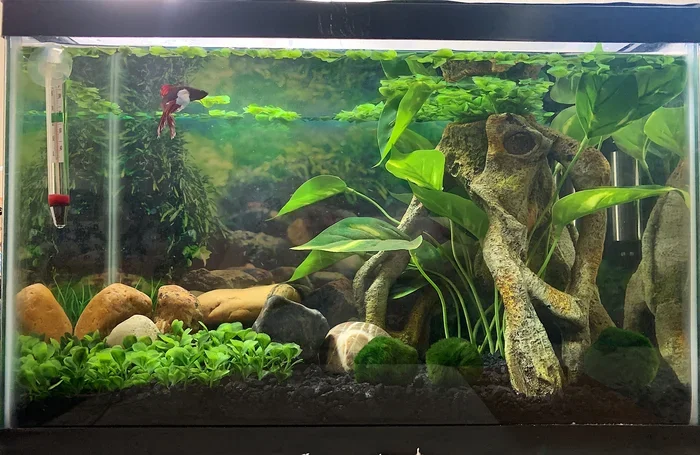
Live plants are a natural filter substitute. They absorb ammonia, nitrite, and nitrate while producing oxygen. Some great low-maintenance options for betta tanks include:
- Java moss
- Anubias
- Java fern
- Amazon sword
- Water wisteria
Plants also provide hiding spots and resting areas for your betta, which reduces stress. A planted unfiltered tank can be a beautiful and healthy environment for your fish.
Monitor Water Parameters Regularly
Without a filter, you need to be proactive about testing your water. Invest in a simple liquid test kit that measures ammonia, nitrite, nitrate, and pH. Test the water at least once a week, or more often if you notice any changes in your betta’s behavior.
Ideal parameters for a betta tank are:
- Ammonia: 0 ppm
- Nitrite: 0 ppm
- Nitrate: Below 20 ppm
- pH: 6.5-7.5
- Temperature: 78-80°F
If you want a deeper dive into water quality and how long your betta can go without food during maintenance periods, check out can betta fish survive a week without food for helpful context.
Bettas in Bowls vs. Tanks Without Filters
Many people picture bettas living in small bowls without any filtration. While bettas can survive in bowls, the experience is far from ideal. Bowls have very limited water volume, which means toxins concentrate fast. They also lack space for beneficial bacteria colonies to establish.
A small tank with a lid is always better than an open bowl. Tanks hold more stable water chemistry and give you room for plants and decorations that improve quality of life. If you’re set on a bowl or small container, you’ll need to change the water almost daily — at least 50% every day or every other day.
For more on keeping bettas in bowls, see our article on can betta fish live in a bowl without filter.
When You Should Add a Filter After All
There’s no shame in switching to a filtered setup. In fact, it’s one of the best things you can do for your betta. Consider adding a filter if:
- You notice your betta acting lethargic or losing color
- Water tests show rising ammonia or nitrite levels
- You want to keep your betta in a community tank
- You’re busy and can’t maintain a strict water change schedule
- Your tank is over 5 gallons and hard to manage without filtration
If you’re unsure which filter to choose, look for sponge filters or hang-on-back filters with adjustable flow. Bettas don’t like strong currents, so a gentle filter is key. Our guide on can you use a filter with betta fish covers filter selection in detail.
Common Mistakes to Avoid
Even well-meaning betta owners make mistakes with unfiltered tanks. Here are the most common ones to watch out for.
- Skipping water changes. This is the number one killer in unfiltered tanks. Without a filter, there’s no backup plan. If you don’t change the water, toxins will build up fast.
- Overstocking the tank. Never add more fish to an unfiltered betta tank. One betta per tank is the rule. Additional fish produce more waste than you can manage without filtration.
- Using the wrong water conditioner. Not all conditioners remove ammonia. Make sure yours neutralizes chlorine, chloramine, and heavy metals.
- Ignoring temperature fluctuations. Bettas need stable warm water. Room temperature changes can stress them and weaken their immune system.
- Overcleaning the tank. Scrubbing every surface removes beneficial bacteria. Only clean glass and decorations lightly, and never replace all the water at once.
Final Thoughts
So, can a betta fish live without a filter? Absolutely. But living and thriving are two different things. An unfiltered betta tank can work beautifully if you commit to regular maintenance, proper feeding, and consistent water testing. The key is staying proactive and never letting waste accumulate.
If you have the time and dedication, a filterless setup can be a rewarding way to keep your betta. But if your schedule is busy or you want a more hands-off approach, adding a simple sponge filter can make a world of difference. Your betta will thank you with vibrant colors, active behavior, and a longer, healthier life.
Remember, every betta deserves clean, safe water — whether it comes from a filter or from your own careful hands. Start with the basics, stay consistent, and enjoy the journey of being a great betta fish owner.
Frequently Asked Questions
Can a betta fish survive long-term without a filter?
Yes, a betta fish can survive long-term without a filter as long as you perform regular water changes and maintain clean water. The key is consistency. Weekly partial water changes and avoiding overfeeding will keep toxin levels low and your betta healthy for years.
How often should I change water in an unfiltered betta tank?
For a 5-gallon tank, change 50% of the water twice a week. For smaller tanks under 3 gallons, you may need to change 50% three times a week. Always use conditioned water at the same temperature as the tank to avoid shocking your betta.
Do betta fish need oxygenation if there’s no filter?
Betta fish have a special labyrinth organ that lets them breathe air from the surface. However, they still benefit from surface agitation and dissolved oxygen. Adding live plants and keeping the water temperature stable helps maintain healthy oxygen levels without a filter.
Can I use a sponge filter instead of a regular filter for my betta?
Yes, a sponge filter is an excellent alternative. It provides gentle biological and mechanical filtration without creating strong currents that stress bettas. Sponge filters are affordable, easy to clean, and work well in small betta tanks.
What happens if ammonia builds up in an unfiltered betta tank?
Ammonia buildup is extremely dangerous for bettas. It burns their gills, damages organs, and causes stress that leads to diseases. Signs include gasping at the surface, red or inflamed gills, lethargy, and loss of appetite. Immediate water changes are necessary to save your fish.
Are live plants enough to replace a filter in a betta tank?
Live plants help significantly by absorbing ammonia and producing oxygen, but they can’t fully replace a filter in larger tanks. For a 5-gallon or smaller planted tank with one betta, plants combined with frequent water changes can work well. For bigger tanks, a filter is still recommended.