What Does It Mean When a Betta Fish Flares

Betta fish flaring—where they puff out their gills and spread their fins—is a primary form of communication. It typically signals strong emotions like aggression, territorial defense, fear, or courtship. While a natural behavior, frequent or chronic flaring indicates stress or an unsuitable environment. Understanding the context is key to determining if your betta is healthy or needs intervention.
Key Takeaways
- Flaring is communication: It’s a betta’s main way to express intense feelings, from “this is my space” to “I’m scared” or “hello, potential mate.”
- Context is everything: The trigger (a rival, a reflection, a tank mate, a human hand) determines whether flaring is normal or problematic.
- Chronic flaring equals chronic stress: If your betta is flaring daily without a clear, temporary cause, it’s a red flag for its welfare.
- It’s a physical workout: Flaring is energetically costly and can weaken a betta’s immune system if sustained over time.
- You can manage it: By optimizing the tank environment, removing stressors, and understanding triggers, you can significantly reduce unwanted flaring.
- Not all flaring looks the same: Pay attention to accompanying body language—rigid posture vs. relaxed swimming—to better interpret the message.
📑 Table of Contents
The Dramatic Display: What Exactly Is Flaring?
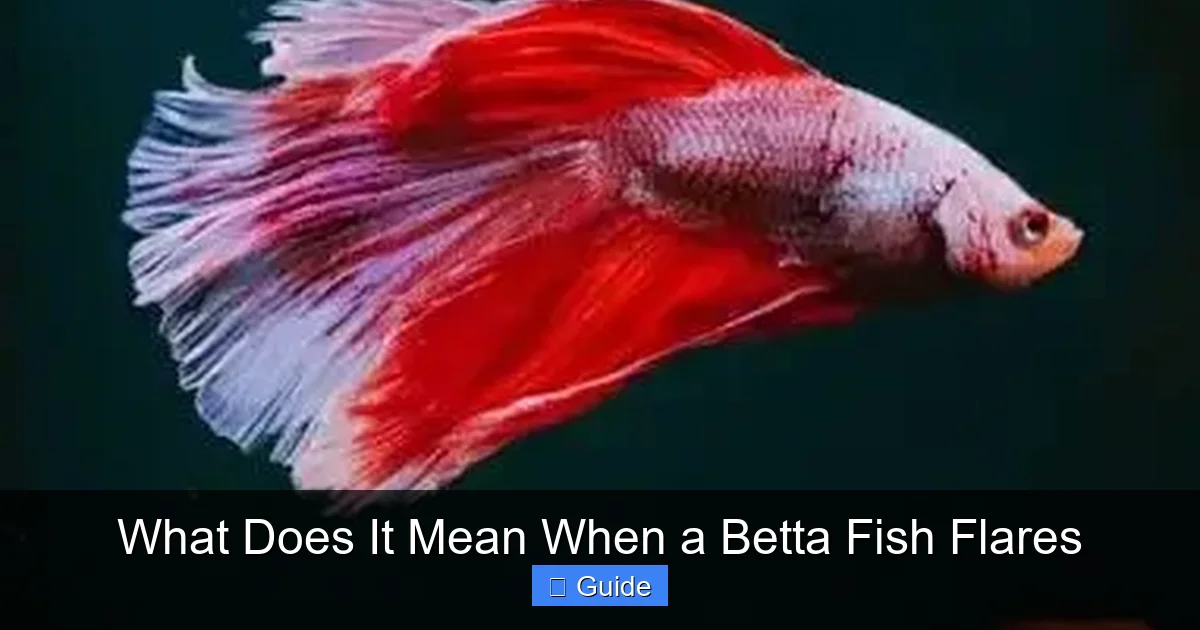
If you’ve ever owned or even just glanced at a betta fish, you’ve likely witnessed it. One moment, your fish is gliding gracefully through the water. The next, it stops, puffs out its opercula (the bony covering over the gills), and unfurls its fins to their absolute maximum, often accompanied by a rigid, forward-pointing posture. This is flaring, sometimes called “puffing.” It’s one of the most visually striking behaviors in the aquarium hobby, and it’s the betta’s equivalent of a human raising their voice, puffing out their chest, or standing their ground. It is, fundamentally, an intimidation display.
To understand what it means when a betta fish flares, we must first recognize that this is not a random act. It is a deliberate, high-arousal state. The fish is consciously communicating a powerful message to whatever it perceives as the stimulus. This stimulus could be another fish (real or perceived), a sudden change in its world, or even you. The key to interpreting the flare lies in becoming a detective, observing the entire scene: what caused it, where it happens, how long it lasts, and what the betta does afterward.
The Biology Behind the Puff
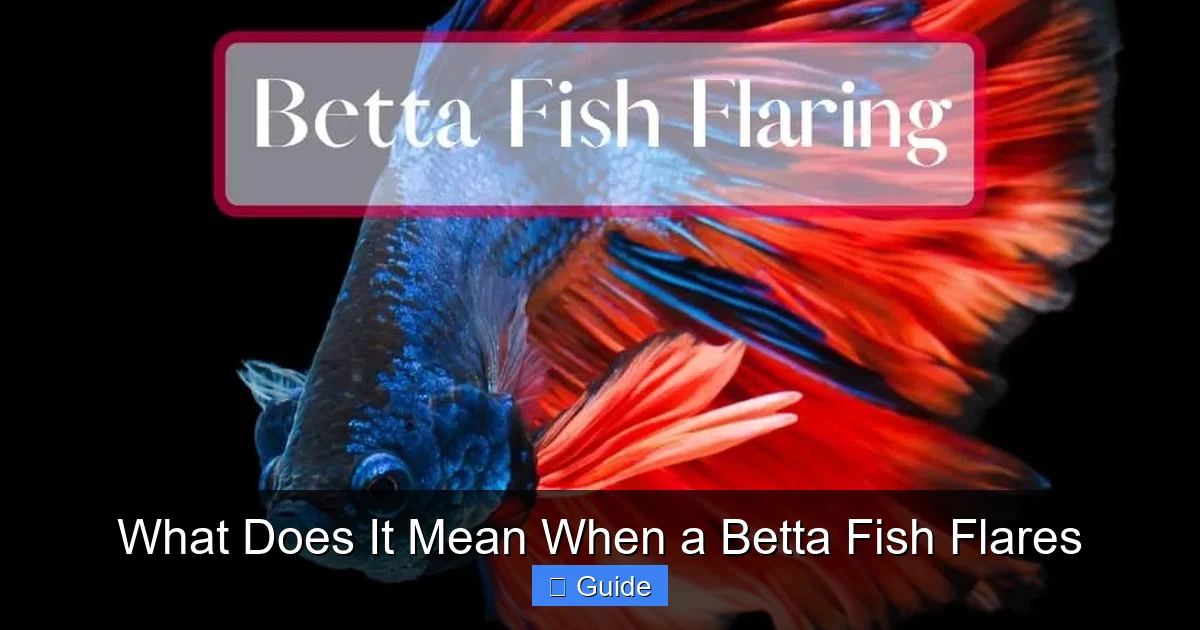
The flaring display is a complex physical feat. The betta uses specialized muscles to force water over its gills, causing the delicate gill filaments to expand outward, creating that dramatic, fan-like effect. Simultaneously, it engages muscles along its dorsal, caudal, and anal fins to make them stand fully erect and extended. This does two things: it makes the fish appear significantly larger and more formidable to a rival, and it often reveals the most vibrant, intense colors in its patterning. In the wild, this visual bluff is a crucial survival tool, often preventing a physical fight that could cause injury. In the confines of an aquarium, however, the inability to flee or establish true, spacious territories can turn this natural communication into a source of constant distress.
The “Why”: Decoding the Triggers of Flaring
So, what does it mean when a betta fish flares? The answer is never singular. The same dramatic display can stem from several different emotional states, each with its own implications for your fish’s well-being. Let’s break down the primary reasons your betta might be putting on a show.
Visual guide about What Does It Mean When a Betta Fish Flares
Image source: i.pinimg.com
1. Territorial Aggression & The “Rival”
This is the most common association with flaring, and for good reason. Bettas, especially males, are famously territorial. In their natural rice paddy habitats, they claim a small patch of dense vegetation. In your tank, that patch is everything. A flare directed at another fish—usually another male betta but sometimes a fish with long, flowing fins like a guppy or a fish with similar coloration—is a clear “this is mine, stay away” warning. The betta is attempting to assert dominance and drive the intruder from its perceived domain. If you have a community tank and see your betta flaring at a specific neighbor daily, it’s a sign that tank is too small, lacks sufficient visual barriers (plants, rocks, wood), or that the tank mate choice is incompatible.
2. The Mirror Trap: Flaring at Its Own Reflection
This is a classic and often amusing scenario for owners. Your betta sees its reflection in the glass and interprets it as a rival betta invading its territory. It will often flare persistently at a specific spot on the tank wall. While it might look impressive, this is a major welfare issue. The betta is in a constant state of high alert, trying to confront an opponent that never retreats. It cannot “win,” leading to chronic stress. This type of flaring is almost always negative and should be actively prevented. You’ll know it’s reflection-based if the flaring happens at the same spot, often at the same time of day when the room lighting creates a clear mirror effect.
3. Fear and Startle Response
Not all flaring is about aggression. A sudden, sharp flare—often accompanied by a darting motion—can be a pure fear response. A quick hand slam on the tank glass, a sudden shadow, a vacuum cleaner turning on nearby, or a fast-moving object outside the tank can startle a betta. In that split second of panic, the flare is a defensive “I’m big and scary, don’t eat me!” reaction. This is usually brief. If your betta flares every time you approach the tank, it has likely been conditioned to fear you, possibly from previous rough handling or a stressful tank environment.
4. Courtship and Mating Rituals
Yes, flaring is part of romance too! When a male betta is introduced to a receptive female (a “sorority” of females is not recommended for community tanks with males), he will perform an elaborate dance that includes flaring. He’s showing off his health, vigor, and magnificent fins to impress her. In this context, the flare is not aggressive but demonstrative. The female may respond with submissive behavior or, if interested, a receptive posture. This is a natural, positive behavior but should only occur in controlled breeding scenarios, not as a casual display in a community tank where the female has no escape.
5. General Excitement or Anticipation
Some bettas, particularly those with more outgoing personalities, may give a small, brief flare when they see you, anticipating food. It’s a “Hey, you! Food time!” signal. This is usually a low-intensity flare, not the full, rigid, extended display of aggression or fear. The fish’s body language will be less tense, and it will likely swim to the surface eagerly shortly after. This is generally harmless and a sign of a fish that has a positive association with its caregiver.
Health and Welfare: When Flaring Becomes a Problem
Understanding the trigger is the first step. The second is assessing the impact. Flaring is a stress response. It releases stress hormones like cortisol. While a short, occasional flare over a real rival (like in a carefully managed sorority tank) is part of normal social dynamics, chronic flaring is a serious welfare concern.

Visual guide about What Does It Mean When a Betta Fish Flares
Image source: i.pinimg.com
The High Cost of Being “On Guard”
Think about how you feel when you’re constantly on edge, waiting for a threat that never goes away. You’re exhausted, irritable, and your immune system takes a hit. The same is true for your betta. A betta that is flaring multiple times a day, every day, is living in a state of sustained stress. This suppresses its immune system, making it far more susceptible to diseases like fin rot, ich, and velvet. It can lead to loss of appetite, lethargy, faded colors, and a shortened lifespan. The energy expended on constant flaring is energy not used for growth, healing, or general vitality.
Signs Your Flaring Betta Is Stressed
Look for these accompanying symptoms:
- Faded or clamped fins: The vibrant colors dull, and fins are held close to the body.
- Loss of appetite: Ignoring food or spitting it out.
- Hiding: Spending excessive time under decorations or in corners.
- Lethargy: Resting on the bottom or plants, lack of exploratory swimming.
- Rapid breathing or gasping: A sign of poor water quality, which often exacerbates stress from flaring.
- Physical damage: Torn or frayed fins from repeatedly flaring against tank decor or the glass in a frenzy.
If you see these alongside frequent flaring, you have a stressed betta that needs immediate environmental intervention.
Your Action Plan: How to Respond to Flaring
So, you’ve identified the flaring. Now what? Your response depends entirely on the cause you’ve diagnosed. The goal is always to remove the stressor and create an environment where your betta feels secure enough that flaring is a rare, brief event, not a daily routine.
Visual guide about What Does It Mean When a Betta Fish Flares
Image source: fishtanko.com
If It’s a Reflection: Break the Mirror
This is the simplest fix. Cover the sides and back of the tank with a solid background (plain colored paper or aquarium background vinyl). During the day, you can use a temporary solution like applying soap (a tiny dot) to the outside of the glass where the reflection is clearest—the soap breaks up the surface tension and reflection. Ensure tank lighting isn’t too bright compared to the room, as a darker room and bright tank creates a perfect mirror. Using a dimmer for your tank light can also help.
If It’s a Tank Mate: Reevaluate the Community
Bettas are best kept alone. If you have a community tank and flaring is constant, you likely have an incompatible setup. The betta may see long-finned or brightly colored fish as rivals. The tank is almost certainly too small. The minimum for a betta with any tank mates is 20 gallons, with an *abundance* of visual barriers. If flaring persists despite plants and dividers, the kindest choice is to rehome the betta to a solo tank or find a new home for the offending tank mate. A stressed betta is a sick betta.
If It’s You or Your Hand: Rebuild Trust
Stop tapping the glass. Move slowly. Use a gentle, consistent feeding routine with a pair of tweezers or a feeding ring to associate your presence with positive things (food). Spend time sitting quietly by the tank so your betta learns your large form is not a threat. Never chase your betta with your hand or a net. Patience is key here.
General Environmental Enrichment
A bored, cramped betta is a stressed betta. Upgrade the tank size (5 gallons is the absolute bare minimum, 10+ is ideal). Provide a dense forest of live or silk plants (avoid plastic that can tear fins) for hiding and breaking lines of sight. Add caves, logs, and other decor. Ensure pristine water quality with weekly 25-50% water changes using a dechlorinator. Stable, warm water (78-80°F / 25.5-26.5°C) with a gentle filter (a sponge filter is perfect) is non-negotiable. A stressed betta in a pristine, spacious, planted tank is a rare sight.
Common Misconceptions and Red Flags
Let’s clear up some confusion about betta flaring.
“My betta flares at me, so it must hate me.”
Not necessarily. As mentioned, it could be excitement for food. It could also be a fear response from past negative experiences. It does not mean the fish is “angry” at you in a human sense. It means it has an association—positive or negative—with your presence. You can change this association with calm, positive interactions.
“Flaring means my betta is healthy and ready to fight.”
This is an old, harmful myth from the fighting fish days. While a betta in top condition might have more impressive flares, the act of flaring itself is stressful. A truly healthy, unstressed betta is one that is relaxed, curious, and flares only in genuinely novel or threatening situations—not constantly. Constant flaring is the opposite of a sign of robust health.
When Flaring is a Symptom of Serious Illness
Sometimes, a flare can be a sign of physical irritation. If your betta flares at nothing, and you also see it rubbing against decorations (flashing), it could be suffering from external parasites like flukes or ich. The flare might be an attempt to dislodge the irritants from its gills. In this case, you’ll see other symptoms like white spots (ich), torn fins, or mucus. This requires quarantine and medication. Always observe the full picture.
Conclusion: Becoming a Betta Behavior Interpreter
What does it mean when a betta fish flares? It means your fish is talking to you, using the only language it has. It’s a signal that says, “Something in my world is wrong.” Your job as a caregiver is to listen. By observing the context, frequency, and accompanying body language, you can decode whether your betta is expressing a momentary territorial claim, a fear of its own reflection, or a cry for help from a chronically stressful environment. The flamboyant flare is not just a spectacle; it’s a vital diagnostic tool. Responding not with annoyance, but with thoughtful investigation and environmental improvement, is the key to transforming that dramatic display from a sign of distress into an occasional, fascinating glimpse into the complex world of your magnificent betta. A relaxed betta that flares only on rare, specific occasions is a betta that is thriving. That should be the ultimate goal for every owner.
Frequently Asked Questions
Is flaring always a bad sign for my betta fish?
No, not always. A brief, occasional flare at a specific, temporary stimulus (like a new decoration or a passing shadow) is normal communication. The problem arises when flaring is frequent, prolonged, or directed at a constant, inescapable stimulus like its own reflection, as this indicates chronic stress.
How can I stop my betta from flaring at its reflection?
The most effective method is to eliminate the reflection. Cover the tank’s side and back panels with an opaque background. You can also reduce the tank’s lighting relative to the room’s brightness or apply a tiny dab of soap to the outside glass where the reflection is clearest to break it up.
Can female betta fish flare?
Yes, absolutely. While males are more famous for it due to their larger fins and historical use in fighting, females also flare to establish hierarchy in a sorority tank, during courtship, or when feeling threatened or territorial.
My betta flares every time I walk by. Is it aggressive?
Likely not aggressive, but probably conditioned to be excited or fearful. If it flares and then darts to the top expecting food, it’s positive excitement. If it flares and hides, it’s a fear response. Move more slowly, stop tapping the glass, and use food (fed with tweezers) to create a positive association with your presence.
Is flaring a sign that my betta wants a tank mate?
No. Flaring is a sign of perceived threat or competition. If a betta is constantly flaring at another fish in its tank, it means it feels threatened and stressed by that fish’s presence. Bettas are generally solitary and do not “desire” tank mates; they tolerate them only if the environment is spacious and heavily planted to minimize visual contact.
Can flaring cause physical harm to my betta?
Yes, indirectly. The act itself is energetically draining and stressful, suppressing the immune system. If a betta flares intensely and repeatedly against hard tank walls, decorations, or filter intakes, it can cause physical damage like torn fins, injured gills, or scale loss, leading to secondary infections like fin rot.