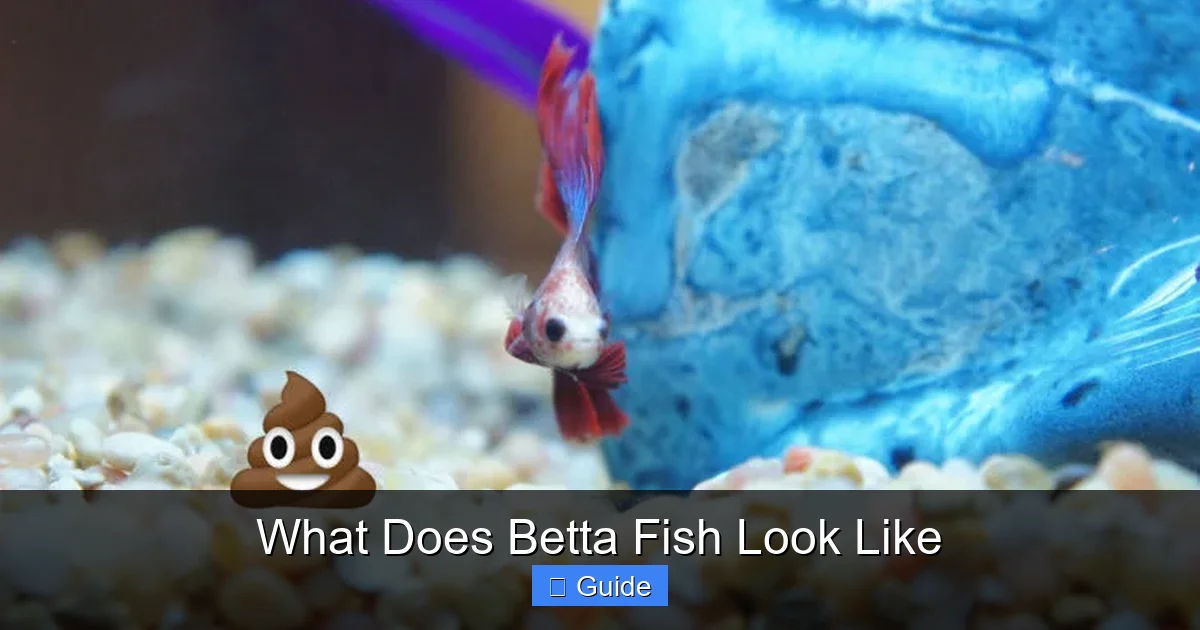
What Does Betta Fish Look Like
Betta fish are renowned for their spectacular visual diversity. Captive breeding has transformed them from modest, wild fish into living jewels with fins that flow like silk and colors that span the entire spectrum. Understanding their key physical traits—from fin types and body shapes to sexual dimorphism—is essential for appreciating their beauty and providing proper care. This guide breaks down exactly what a betta fish looks like, both in the wild and in your aquarium.
Have you ever found yourself mesmerized, floating in front of a pet store tank, wondering what does a betta fish look like up close? You’re not alone. The betta fish, or Betta splendens, is arguably the most visually striking freshwater fish available to hobbyists. They are living art, small-scale aquatic drama, and a testament to what selective breeding can achieve. But beneath the shimmering commercial varieties lies a fascinating story of form, function, and fin. This guide will take you on a detailed visual tour, from their wild ancestors to the kaleidoscopic pets in our homes, so you truly understand every scale, fin ray, and flash of color.
We’ll move beyond the simple label of “pretty fish.” You’ll learn to identify fin types like a connoisseur, decode color patterns, distinguish a male from a female with confidence, and—most importantly—recognize the signs of a healthy specimen versus a fish in distress. Whether you’re a curious beginner, a potential owner, or an enthusiast looking to deepen your knowledge, this is your complete blueprint to the betta fish’s appearance.
Key Takeaways
- Wild vs. Captive: Wild bettas are typically green, brown, or grey with short fins, while captive-bred varieties exhibit extreme fin length and vibrant colors due to selective breeding.
- Fin Variety is Key: The most dramatic feature is the fin. Common types include Veil Tail, Halfmoon, Plakat (short-finned), and Crowntail, each with distinct shapes and flow.
- A Rainbow of Colors: Bettas come in virtually every color and pattern—solid, marble, butterfly, koi, and metallic—created by layers of pigment cells and genetic manipulation.
- Size Matters: They are small fish, typically 2.5-3 inches long from snout to tail fin tip, with a streamlined, torpedo-shaped body built for quick bursts of movement.
- Sexual Dimorphism: Males are the showstoppers with long, colorful fins. Females are smaller, have shorter fins, and often display a small ovipositor (egg tube) behind the ventral fin.
- Health Indicators: A healthy betta has intact, unclamped fins, bright and clear eyes, no visible sores or fuzzy patches, and active, curious behavior.
- More Than Just Looks: Their famed “flaring” (gills and operculum spreading) is a natural display of aggression, stress, or courtship, making their gill covers a key visual feature to observe.
📑 Table of Contents
- The Great Transformation: From Wild Fish to Living Jewel
- The Fin-tastic Spectrum: Understanding Betta Fin Types
- A Painter’s Palette: Decoding Betta Colors and Patterns
- Form and Function: Body Structure and Size
- The Tell-Tale Signs: Male vs. Female Betta Fish
- Choosing Your Masterpiece: What to Look For in a Healthy Betta
- Conclusion: A Living Work of Art
The Great Transformation: From Wild Fish to Living Jewel
To understand what a betta fish looks like, you must first appreciate the drastic journey it has taken. The betta you see today is a product of over a century of intense selective breeding, primarily in Thailand (formerly Siam, hence “Siamese fighting fish”).
The Wild Ancestor: A Camouflaged Survivalist
In the shallow, stagnant rice paddies and slow-moving streams of Southeast Asia, the wild Betta splendens is a master of disguise. Its primary coloration is a muted palette of olive green, brown, or dull grey, often with subtle iridescent scales that catch the light. This is not flashy; it’s functional camouflage against predators and prey. The fins are relatively short and practical—a shorter, rounded caudal fin and less elaborate dorsal and anal fins. The body is sleek and torpedo-shaped for efficient, jerky propulsion. Wild bettas are built for survival, not for show. Their famous aggression is reserved for territory and mating, not constant fin-flaring display.
Practical Tip: If you ever see a betta labeled as “wild-type” in the hobby, it will closely resemble this description—shorter fins, subdued colors, and a more active, skittish demeanor compared to its flamboyant cousins.
The Captive-Bred Spectacle: A Canvas of Color and Cloth
Through generations of breeding for aggression (to fuel the historic fighting sport) and, later, for sheer beauty, humans have unlocked a stunning array of forms. The genetic focus shifted from survival to aesthetics, prioritizing:
- Fin Length and Form: Selecting for mutations that cause fins to grow long, flowing, and in specific shapes.
- Color Intensity and Pattern: Breeding for deeper reds, brighter blues, and complex multi-color patterns by manipulating layers of pigment cells (iridophores, melanophores, xanthophores).
The result is the dizzying variety at your local fish store. What was once a functional fighter is now a velvet-suited knight, a flowing ballerina, or a shimmering neon sign depending on the variety. This transformation is the single most important concept in understanding what a betta fish can look like.
The Fin-tastic Spectrum: Understanding Betta Fin Types
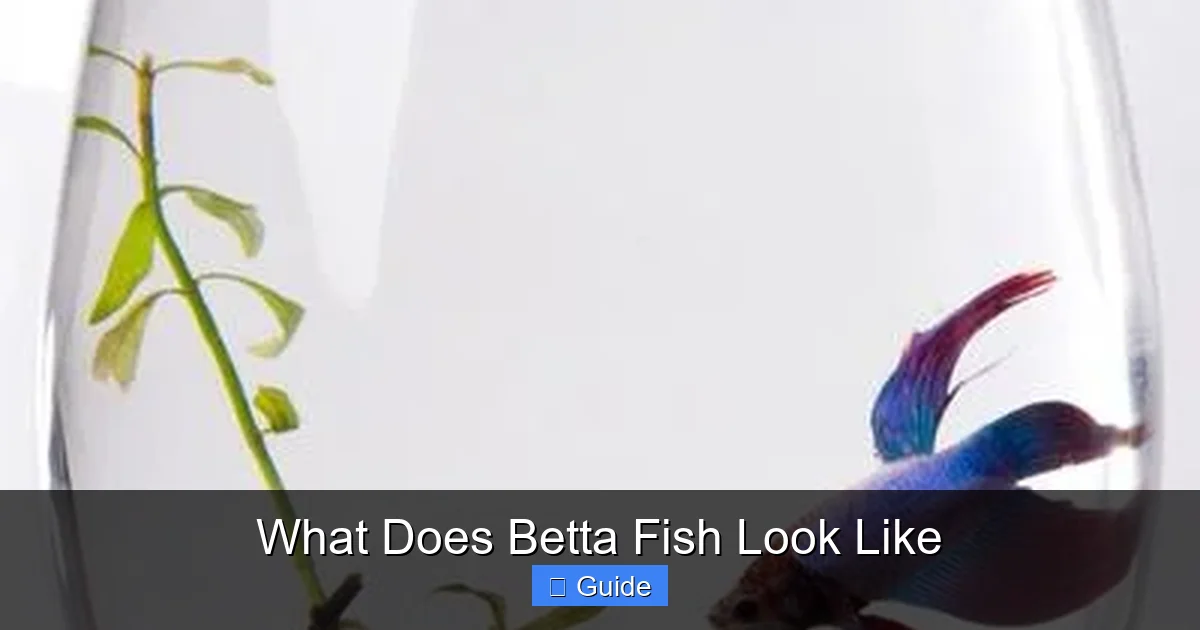
If the body is the canvas, the fins are the masterpiece. The fin type is the first thing most people notice, and it defines the betta’s silhouette and movement. Here are the primary fin types you’ll encounter, from common to rare.
Visual guide about What Does Betta Fish Look Like
Image source: infishtank.com
The Classics: Veil Tail and Halfmoon
The Veil Tail (VT) is the most common type found in large chain stores. It’s characterized by long, flowing fins that droop elegantly down from the body like a veil, especially the caudal (tail) fin. The edges are typically straight or slightly curved. While beautiful, it lacks the 180-degree spread of more refined types.
The Halfmoon (HM) is the gold standard for show bettas and the holy grail for many enthusiasts. When fully flared, the male’s caudal fin forms a perfect, smooth semi-circle (180 degrees or more) that resembles a capital “D” or a half-moon. The dorsal and anal fins are long and flow seamlessly into the caudal. Achieving this perfect symmetry and spread is a result of meticulous breeding.
The Short and Sporty: Plakat
Plakat (PK) bettas, meaning “fighting fish” in Thai, have short, rounded, and stiff fins that resemble the wild-type ancestor. They are athletic, powerful swimmers with a more robust body. Their appeal lies in their bold colors, large bodies, and energetic personalities. They are less prone to fin damage and often more active. Female bettas are almost always Plakat-type, though short-finned males are increasingly popular for their hardiness and vibrant colors without the high-maintenance long fins.
The Fancy and Fragile: Crowntail, Double Tail, and Rosetail
Crowntail (CT) bettas have caudal fins with extended rays that protrude beyond the fin membrane, giving a spiky, comb-like appearance reminiscent of a crown. The effect is dramatic and regal, but the webbing between rays can be fragile.
Double Tail (DT) is a genetic mutation where the caudal fin is split into two distinct lobes, often with a deeper body to support the extra finnage. They are stunning but can have swimming difficulties and spinal issues if bred poorly.
Rosetail (RT) is a variation of the Halfmoon where the caudal fin has extra branching on the rays, creating a rose-like, ruffled appearance. It’s incredibly elaborate but can be very delicate.
Owner Insight: The longer and more elaborate the fins, the more challenging the care. Long, flowing fins are prone to tearing on tank decor, are harder for the fish to swim with (especially in strong currents), and can be targets for nipping from tank mates. A Plakat is often the hardiest choice for a beginner or a community tank.
A Painter’s Palette: Decoding Betta Colors and Patterns
Betta color is a complex interplay of genetics and pigment cells. You’re not just seeing one color; you’re seeing layers. The main pigment layers are:
Visual guide about What Does Betta Fish Look Like
Image source: bettafish.org
- Iridophores (Blue/Green/Metallic): Create shimmering, metallic, or blue/green hues through light refraction. These are often layered over other colors.
- Xanthophores (Yellow/Orange): Produce warm yellows and oranges.
- Melanophores (Black/Brown): Provide dark pigments.
Solid Colors and Iridescence
The most straightforward are solid colors: a true, even red, blue, or yellow. However, even “solid” bettas often have iridescence. Steel Blue and Royal Blue bettas are classic examples where the blue is not a pigment but an iridescent sheen over a dark (often black) base layer. This is why blue bettas can sometimes appear purple or green under different lighting—the iridophores are refracting light.
The World of Patterns
This is where things get truly artistic. Breeders seek specific patterns:
- Marble: A marbled, blotchy pattern where colors seem to shift and spread over time. This is often caused by a transposon, or “jumping gene,” that can cause the color pattern to change throughout the fish’s life.
- Butterfly: A symmetrical pattern where one color covers the body and another (often a contrasting color like white or red) appears on the fins in a “V” shape, like butterfly wings.
- Koi: Resembles a koi carp, with large, irregular patches of orange, red, and white on a dark body. True koi patterning is complex and highly sought after.
- Multicolor/Mustard Gas: A mix of three or more colors in a seemingly random, vibrant splash. “Mustard Gas” is a specific pattern where a blue/green body has yellow/red fins.
- Dragon: Characterized by thick, scale-like markings, often in metallic colors (copper, gold, silver) that resemble dragon scales, typically on a red or orange base.
Pro Tip: Lighting dramatically affects how a betta’s color appears. A betta that looks dull under standard aquarium lighting might come alive under a dedicated RGB aquarium light or even natural daylight. Always observe a fish under good light before purchasing.
Form and Function: Body Structure and Size
Beyond fins and color, the betta’s body tells a story of its own.

Visual guide about What Does Betta Fish Look Like
Image source: sklep.germapol.pl
The Ideal Silhouette
A well-proportioned betta has a streamlined, torpedo-shaped body that tapers smoothly from the head to the caudal peduncle (the base of the tail). The body should be robust and not overly thin or emaciated. The head is pointed, and the mouth is small and upturned (a specialized labyrinth organ breathes atmospheric air from the surface). The eyes should be clear, symmetrical, and proportional—protruding or “pop-eye” is a sign of disease.
Size Expectations
Contrary to popular myth, bettas are not “tiny” fish. While they are small, a healthy adult typically reaches 2.5 to 3 inches (6-7.5 cm) in total length, from the tip of the snout to the very end of the tail fin when fully extended. Their body alone (the standard fish measurement) is usually about 1.5-2 inches. This size is important for tank selection; they need adequate horizontal swimming space. A common misconception is that they “stay small” and can live in a tiny vase or bowl—this is false and cruel. They are active swimmers who utilize space.
The Tell-Tale Signs: Male vs. Female Betta Fish
Sexing bettas is crucial if you’re choosing a fish or considering breeding. The differences are pronounced, especially in adults.
The Flamboyant Male
The male betta is the poster child of the species. His defining features are:
- Fins: Exceptionally long and flowing. The caudal, dorsal, and anal fins are dramatically extended.
- Body: Often more robust and elongated, especially in Halfmoon types.
- Coloration: Generally brighter, more vibrant, and more varied than females.
- Breeding Bars: When ready to spawn, vertical light-colored bars may appear on the body.
- Flaring: Males flare (spread gills and fins) more frequently and dramatically, especially at their reflection or a rival.
The Subtle Female
Female bettas are often overlooked but have their own understated beauty. Key identifiers:
- Fins: Shorter, more practical. The caudal fin is shorter and less flowing, often resembling a Plakat male’s tail. The dorsal fin is also shorter.
- Body: Slightly shorter and rounder, especially when gravid (carrying eggs).
- Ovipositor: The most reliable visual cue. A small, white, tube-like protrusion (the egg-laying tube) is visible just behind the ventral fin (the fin on the belly). This is present in mature females.
- Breeding Bars: Females also develop vertical bars when receptive to a male.
- Flaring: Females can and do flare, but it’s usually less intense and frequent than males.
Important Note: Young bettas (under 3-4 months) can be very difficult to sex. Fin length and body shape may not be distinct. The ovipositor is the most reliable indicator in juveniles, but it can be subtle. Always buy from a reputable source that guarantees sex if it matters to you.
Choosing Your Masterpiece: What to Look For in a Healthy Betta
Knowing what a betta should look like is only half the battle. You must also recognize what a healthy one looks like versus a fish that is stressed, sick, or genetically compromised.
The Hallmarks of Health
When you approach a tank, a healthy betta will often be alert, possibly flaring at you or its reflection, and swimming with purpose. A close inspection should reveal:
- Fins: Full, intact, and not clamped tightly to the body (a sign of stress or illness). No tears, holes, or blackened edges (fin rot). No fuzzy white growths (fungus).
- Body: Smooth, without sores, lumps, raised scales, or visible parasites (like tiny white spots—ich). No bulging eyes (dropsy) or protruding scales.
- Eyes: Clear, bright, and not cloudy or popped out.
- Gills: When flaring, the gill covers (operculum) should open symmetrically. No red, inflamed, or fuzzy-looking gills.
- Behavior: Active, curious, and responsive. Not lying listlessly at the bottom, gasping at the surface (unless the water is very warm and oxygen-poor, which they sometimes do), or constantly hiding.
Red Flags and Pet Store Pitfalls
Unfortunately, many bettas in large chain stores suffer from poor conditions. Watch for:
- Clamped Fins: Fins held tightly against the body is the #1 sign of stress or illness.
- Faded or Dull Color: A healthy betta’s color should be vivid. Dullness can indicate stress, illness, or poor genetics.
- Damaged Fins: Torn, shredded, or missing fin rays are common from fin-nipping tankmates, poor water quality, or factory farming practices.
- Lethargy: Inability or unwillingness to move.
- Swim Bladder Issues: Difficulty swimming upright, floating upside down, or sinking—often a sign of constipation or poor diet, but can be genetic in some fancy varieties.
My strongest advice: If possible, avoid buying a betta from a cup or tiny, dirty container. Seek out a local aquarium specialist (LFS) where you can see the fish in a filtered, heated setup. If you must buy from a chain store, inspect the cup carefully. Choose the most active, vibrant fish with perfect fins. Don’t support the sale of clearly suffering fish, as it perpetuates the cycle.
Conclusion: A Living Work of Art
So, what does a betta fish look like? The answer is: it can look like almost anything. It can be a velvet-winged Halfmoon in a deep, royal blue, flaring its gills like a crimson crown. It can be a spiky Crowntail with a fiery orange and white butterfly pattern. It can be a short, stocky Plakat in a solid, metallic green, zipping around the tank with endless energy. It can even be a subtle, brown female with a hint of iridescent blue along her fins, holding a secret beauty for those who look closely.
The betta’s appearance is a direct result of a unique partnership between nature and nurture—the wild fish’s basic blueprint, refined and exploded by human hands into an astounding spectrum of forms. This visual diversity is their primary allure, but it comes with responsibility. That flowing fin is prone to damage. That vibrant color depends on good water and diet. That aggressive flare is a natural behavior that must be respected.
By learning to see the betta in its full complexity—understanding its fin types, color genetics, sexual differences, and health indicators—you move from being just a spectator to an informed admirer and, potentially, a compassionate caretaker. You learn to appreciate not just the spectacle, but the living, breathing creature behind the spectacle. The next time you gaze into a betta’s world, you’ll see more than a pretty fish. You’ll see a masterpiece of evolution and breeding, a small but potent symbol of life’s incredible capacity for beauty.
Frequently Asked Questions
Can betta fish change color?
Yes, bettas can change color throughout their lives. This is most common in “marble” bettas due to a “jumping gene” that causes pigment cells to shift. Stress, poor water quality, or aging can also cause color changes, sometimes permanently. A healthy, well-cared-for betta will often become more vibrant over time.
Why do betta fish fins get torn or shredded?
>Torn fins, often called “fin rot” when infected, are usually caused by poor water quality (ammonia/nitrite spikes), physical damage from sharp tank decor or rough filter outputs, or fin-nipping by aggressive tank mates. Long-finned varieties are especially vulnerable. Maintaining pristine water and a smooth tank environment is key to prevention.
How big do betta fish get?
>A healthy adult betta fish typically reaches 2.5 to 3 inches (6-7.5 cm) in total length from snout to tail fin tip. Their body length (excluding fins) is usually about 1.5-2 inches. This small size, combined with their labyrinth organ allowing them to breathe air, unfortunately leads to the misconception that they can live in tiny containers, which is false and harmful.
What is the average lifespan of a betta fish?
>With proper care—including a heated, filtered tank of at least 5 gallons, a high-quality diet, and regular water maintenance—a betta fish can live 3 to 5 years, and sometimes even longer. Bettas kept in poor conditions (small bowls, no heater, dirty water) often only live 1-2 years.
Can betta fish live with other fish?
>Male bettas are notoriously territorial and should almost always be kept alone. Females can sometimes be kept in carefully planned “sorority” tanks (5+ females in a heavily planted 20+ gallon tank). They may tolerate certain peaceful, fast-moving, non-colorful tank mates like neon tetras or corydoras catfish in a species-only tank, but there is always a risk of aggression. Never house two males together.
Do wild betta fish look like the ones in stores?
>Not really. Wild Betta splendens are typically small, with short, practical fins and muted green, brown, or grey coloration for camouflage. The spectacular colors, flowing fins, and diverse patterns seen in pet stores are the result of over 100 years of intensive selective breeding. A wild betta would look plain and unassuming next to a modern Halfmoon.