Can Snails Kill Betta Fish
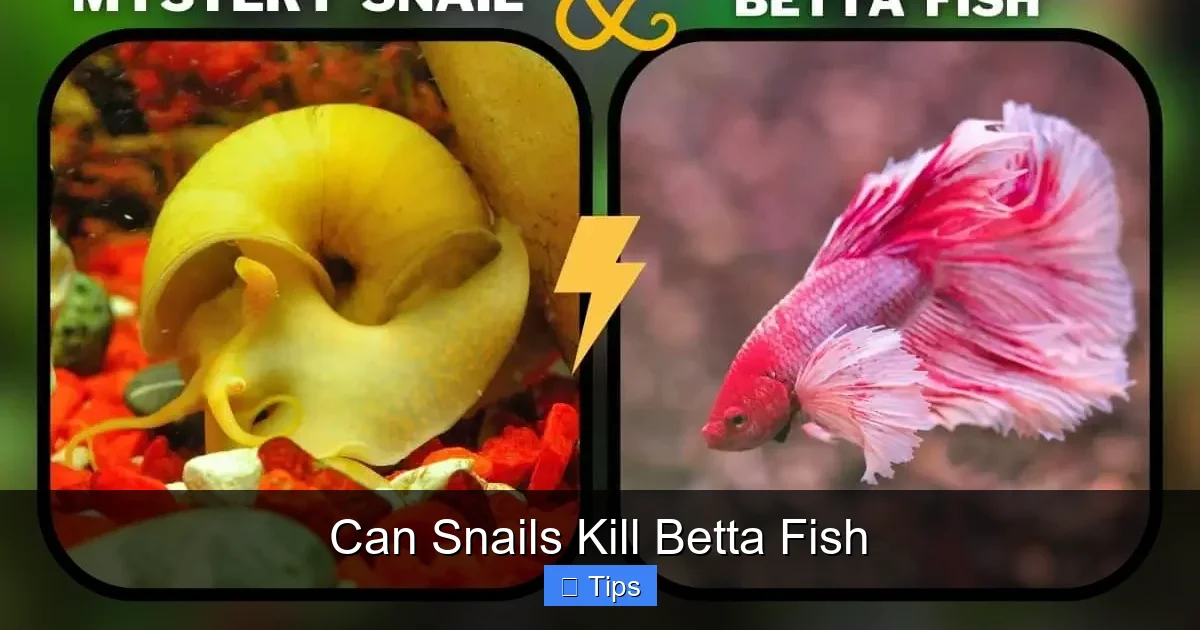
The short answer is no, snails are not a direct physical threat to a healthy betta fish. A betta will not be killed by a snail bite or attack. However, the presence of snails can create dangerous indirect conditions in your aquarium that can severely harm or even kill your betta. The primary risks stem from poor water quality caused by snail waste and overpopulation, and the potential for disease transmission from infected snails. Choosing the right snail species and maintaining impeccable tank hygiene are absolutely critical to ensuring your betta’s safety and well-being.
So, you’ve got a beautiful, flowing betta fish with its iconic fins, and you’re thinking about adding a little cleanup crew to the tank. Snails are a popular choice—they’re interesting to watch and seem to munch on algae. But a nagging question pops up: can snails kill betta fish? It’s a valid concern, especially for new betta owners who want to do everything right. Let’s dive deep into this topic, separating myth from reality, and give you the definitive guide to keeping both your betta and any snail companions safe and thriving.
The image of a snail being a tiny, slow-moving assassin is more cartoon than fact. In reality, the relationship between a betta and a snail is less about direct combat and more about the invisible, chemical world of the aquarium. Your betta’s greatest enemy isn’t a snail’s tooth—it’s the ammonia in its own water. Understanding this dynamic is the key to unlocking a successful, peaceful community tank.
Key Takeaways
- Direct Harm is Extremely Rare: Snails do not have the mouthparts or predatory instinct to kill a betta fish. Nips from a curious betta on a snail’s operculum are possible but not lethal.
- Water Quality is the #1 Killer: The waste (ammonia) from a large snail population can cause toxic spikes, leading to stress, disease, and death in bettas, who are highly sensitive to poor water.
- Overpopulation Creates Crisis: Snails reproduce quickly. An unchecked snail bloom can drastically increase the tank’s bioload, deplete oxygen, and consume vital resources meant for your betta.
- Disease Vector Risk: Snails can carry parasites or pathogens (like flukes) that may infect a betta, especially if the snail is already sick or stressed from poor conditions.
- Not All Snails Are Equal: Some species, like Nerite snails, are far safer due to their inability to breed in freshwater and their more peaceful grazing habits. Others, like Apple Snails, pose a higher bioload risk.
- Betta Temperament Matters: An aggressive, fin-nipping betta may harass a snail relentlessly, stressing both animals. A calm betta is more likely to ignore tank mates.
- Proactive Management is Essential: Safe cohabitation requires choosing the right snail, controlling its population, and maintaining pristine water parameters through regular testing and water changes.
📑 Table of Contents
- Understanding the Betta Fish: A Solitary King with Sensitive Gills
- The Real Risks: How Snails Can Indirectly Harm Your Betta
- Choosing the Right Snail: Species That Play Nice
- Creating a Safe Environment: The Tank Setup & Maintenance Protocol
- Managing Snail Populations: Prevention and Intervention
- Signs of Stress and When to Take Action
- Conclusion: Peaceful Coexistence is Possible with Responsibility
Understanding the Betta Fish: A Solitary King with Sensitive Gills
Before we talk snails, we need to understand our betta. Betta splendens, the Siamese fighting fish, has a reputation. It’s a territorial, often aggressive fish, especially towards other males or fish with long, flowing fins that look like rivals. This aggression is a real factor in tank mate selection. But beyond their fiery personality, bettas have a critical biological vulnerability: they are labyrinth fish. They breathe atmospheric air from the surface, but they are also incredibly sensitive to water quality, particularly ammonia, nitrite, and nitrate. Their gills and organs can be damaged by even low levels of these toxins. This sensitivity is the cornerstone of the snail-betta safety discussion.
The Betta’s Temperament: A Variable Factor
It’s crucial to remember that every betta has its own personality. Some are docile peacocks, content to float and flare only at their own reflection. Others are tiny, feisty dragons that will chase anything that moves. When introducing a snail, you must observe your specific betta. A calm betta might completely ignore a slowly moving snail. A territorial one might spend hours bumping it, trying to bite its tentacles or operculum (the little trapdoor shell). While this harassment is stressful for the snail and can lead to it hiding and not eating, it is not the primary way snails could kill a betta. The danger comes from what the snail’s presence does to the tank environment, not from the snail itself.
The Real Risks: How Snails Can Indirectly Harm Your Betta
This is the most important section. Snails are not assassins; they are bio-load contributors. Every living thing in your tank produces waste. A snail’s waste is ammonia, just like a fish’s. The problem arises from quantity, population control, and tank size. Let’s break down the three main indirect threats.
Visual guide about Can Snails Kill Betta Fish
Image source: fishtanko.com
1. The Ammonia Avalanche: Water Quality Collapse
This is the number one, most lethal risk. A single small snail produces a minuscule amount of waste. But snails reproduce—often secretly and rapidly. What starts as one curious ramshorn snail can become dozens in a matter of weeks if there is uneaten food or algae to support them. Each of those snails is adding ammonia to the water. In a small, poorly filtered betta tank (like a 2.5-gallon bowl), this can overwhelm your biological filter. Ammonia spikes are acutely toxic, burning a betta’s gills, causing labored breathing, lethargy, and rapid death. Even if ammonia doesn’t spike, the increased nitrate load from the decomposing snail waste and their own feces can lead to chronic poor water conditions, weakening your betta’s immune system and making it susceptible to diseases like dropsy or fin rot. Example: A 5-gallon tank with a single betta and a thriving colony of 30+ small pond snails has a much higher bioload than the filter was likely designed for, leading to constant nitrate levels near 40-50 ppm—a stressful level for a betta.
2. Resource Competition: Food and Oxygen
Snails are scavengers. They will eat leftover betta pellets, algae wafers, and decaying plant matter. In a well-maintained tank with no excess food, this isn’t a big deal. But in a scenario where you’re already managing a snail population, you might be tempted to overfeed to keep them alive, which in turn fouls the water faster. More critically, a very large biomass of snails (think a full-grown Apple Snail or a massive colony) will consume oxygen from the water, especially at night when plants and fish are not photosynthesizing. Bettas, coming from warm, often low-oxygen waters, are somewhat adapted, but a significant oxygen depletion in a small, warm tank can stress your betta, causing it to gasp at the surface and become lethargic.
3. The Disease Vector: Unseen Invaders
This is a more subtle but serious risk. Snails, especially wild-caught or those from non-sterile sources, can be intermediate hosts for parasites. The most common concern is trematode flukes. These parasites can infect snails and then be released into the water as cercariae, which can penetrate fish gills or skin. While many healthy bettas can resist a low-level infection, a stressed betta (from poor water) can succumb. Furthermore, a snail that is already sick—showing shell erosion, lethargy, or a withered foot—is a sign of poor health that often correlates with pathogens that could affect other tank inhabitants. Quarantining new snails for 30 days before adding them to your betta tank is a non-negotiable best practice to mitigate this risk.
Choosing the Right Snail: Species That Play Nice
Not all snails are created equal in the context of a betta tank. Some are unequivocally better choices due to their biology, size, and reproductive habits.
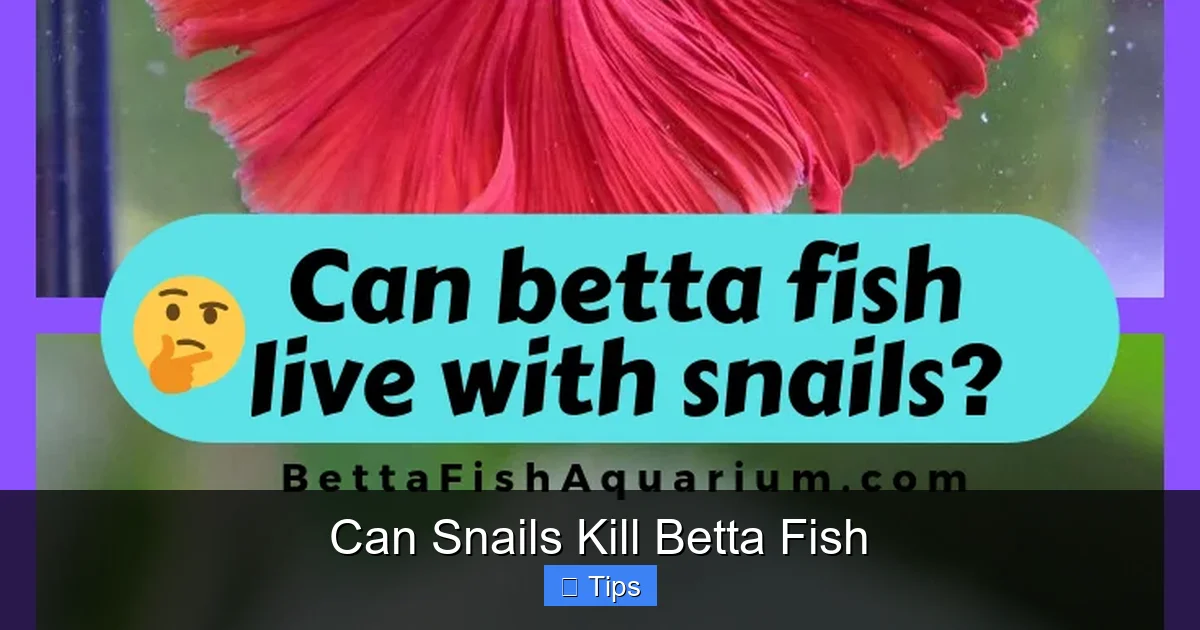
Visual guide about Can Snails Kill Betta Fish
Image source: i.pinimg.com
The Gold Standard: Nerite Snails
If you want a snail with near-zero risk of overpopulation, the Nerite snail is your champion. These snails come in beautiful varieties—Zebra, Tiger, Olive, Horned—and have one critical advantage: they cannot reproduce in freshwater. Their larvae require brackish (slightly salty) water to develop. This means you will never have a nerite snail population explosion. They are also dedicated algae grazers, often cleaning glass and hardscape without harming live plants. They are small to medium-sized, have a sturdy shell, and are generally ignored by bettas. Their main drawback is that they may starve if there is no algae, so you may need to supplement with algae wafers.
The Common & Controversial Choice: Ramshorn and Pond Snails
These are the snails that often hitchhike in on live plants. They are hardy, small, and reproduce quickly through live birth. A single female can start a colony. They are excellent cleaners of detritus and algae but are the #1 cause of “snail explosions” in betta tanks. While individually harmless, a large population becomes a bioload problem. They are also very vulnerable to a curious or aggressive betta that might dislodge them from the glass, leaving them stranded and vulnerable. If you have these snails, you must be vigilant about population control—manually removing them, reducing food, or even introducing a natural predator (with caution, see below).
The Large & High-Maintenance Option: Apple Snails (Pomacea)
These are the big, charismatic snails often sold as “Blue Mystery” or “Golden Apple” snails. They are beautiful, active, and can grow to the size of a golf ball. However, they come with significant caveats. First, their bioload is massive for their size—they produce a lot of waste. A single Apple Snail in a 5-gallon betta tank is a heavy load. Second, they are notorious for eating live plants, especially soft-leafed ones like Java fern or Anubias. Third, they can breed in freshwater, and their egg masses (bright pink clusters above the waterline) are unmistakable. They are generally too large and active for a betta to bother, but their environmental impact is high. They are best suited for larger, heavily filtered community tanks (20+ gallons), not a standard betta setup.
Avoid These: Predatory or Problematic Snails
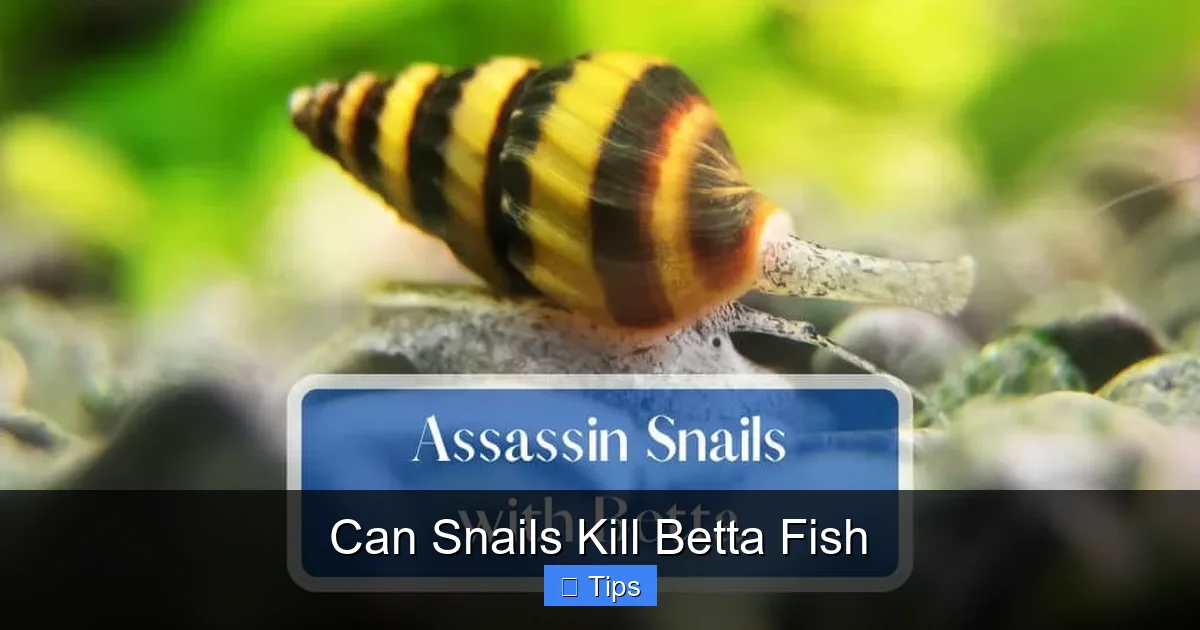
Some snails are simply bad ideas. Assassin Snails are predatory and will hunt and eat other snails—and possibly small, sick fish. They are not a “cleanup crew.” Rabbit Snails are large, plant-safe, but also have a high bioload and reproduce slowly, so the population isn’t the issue, but their waste output is. The key takeaway: for a typical betta tank (5-10 gallons), Nerite snails are the safest, most manageable choice.
Creating a Safe Environment: The Tank Setup & Maintenance Protocol
Assuming you’ve chosen a suitable snail species (let’s say a Nerite for a 10-gallon betta tank), your work is just beginning. The tank environment itself must be engineered for safety.
Visual guide about Can Snails Kill Betta Fish
Image source: bettacarefishguide.com
Tank Size is Non-Negotiable
The single biggest mistake is putting a betta and snails in a tiny “betta bowl.” A minimum of 5 gallons is strongly recommended for a betta alone. Add a snail or two, and 10 gallons is a much more responsible, stable environment. More water volume dilutes toxins, provides more stable parameters, and gives everyone space. In a 10-gallon tank with a gentle filter, a couple of Nerite snails will have a negligible impact on water quality compared to the same snails in a 2.5-gallon tank.
Filtration: The Unsung Hero
You need a filter that can handle the combined bioload. A sponge filter is excellent for bettas (no suction risk) and provides surface area for beneficial bacteria, but it may not be enough for a larger snail load in a small tank. A small hang-on-back (HOB) or internal filter with adjustable flow is ideal. The goal is to have a cycled tank with a robust bacterial colony that can process the ammonia from both the betta and the snails. Test your water regularly with a liquid test kit (API Master Test Kit is the gold standard). Ammonia and nitrite must always be at 0 ppm. Nitrate should be kept below 20 ppm with weekly water changes.
Feeding: The Art of the Minimalist Approach
Overfeeding is the #1 cause of aquarium problems. A betta only needs a few pellets (the size of its eye) once or twice a day. Any uneaten food sinks and decays, feeding the snail population explosion and polluting the water. If you have snails, you might feel compelled to feed them separately. This is a slippery slope. Only offer a tiny algae wafer or a piece of blanched zucchini once a week, and only if you see the snails actively grazing on surfaces. If the tank is clean and algae-free, your Nerites may need supplemental food, but do so sparingly. Remove any uneaten food within an hour.
Managing Snail Populations: Prevention and Intervention
Even with the best intentions, you might end up with a snail overpopulation problem from hitchhikers. Here’s how to manage it without harming your betta.
Manual Removal: The First Line of Defense
The simplest method is to regularly pluck snails off the glass and plants during your water change. Use a pair of long tweezers or just your fingers. For ramshorn and pond snails, you can also use a lettuce leaf or a piece of cucumber as a “trap.” Place the veggie in the tank overnight, and in the morning, it will be covered in snails. Pull it out and dispose of the snails. This is a humane, effective control method.
The “Snail-Eating” Fish Dilemma
You might hear about using loaches (like Yo-Yo loaches) or puffers to control snails. This is almost always a terrible idea for a betta tank. These fish have specific dietary and social needs, often grow large, and can be aggressive themselves. Introducing them to a betta tank is a recipe for disaster, stress, and likely injury or death to one or both species. Do not use a fish as a snail control method in a small, dedicated betta aquarium.
Chemical Treatments: A Last Resort
There are snail-killing medications (copper-based). Never, ever use these in a tank with a betta. Betta fish are extremely sensitive to copper, which is toxic to their gills and nervous system. These treatments are for empty, snail-infested tanks being reset. In a community tank, they are not a safe option.
Signs of Stress and When to Take Action
Your betta is the best indicator of tank health. Learn to read its behavior. Signs of stress or poor water quality that could be linked to a snail problem include:
- Lethargy: Hiding at the bottom, not flaring or exploring.
- Labored Breathing: Gasping at the surface frequently, gills moving rapidly.
- Loss of Appetite: Ignoring food.
- Faded Colors or Clamped Fins: The betta looks dull and holds its fins close to its body.
- Visible Fungus or Sores: A sign of a compromised immune system, often from chronic ammonia/nitrate exposure.
If you see these signs, immediately test your water. If ammonia or nitrite is present, perform an emergency 50% water change with dechlorinated water at the same temperature. Review your feeding and maintenance schedule. If you have a massive snail population, consider a temporary removal of some snails to reduce the bioload while you get the water parameters back to 0/0/<20 (ammonia/nitrite/nitrate).
Conclusion: Peaceful Coexistence is Possible with Responsibility
So, can snails kill betta fish? The definitive answer is: not directly, but absolutely through environmental negligence. A snail is not a loaded gun pointed at your betta. It’s more like a slow-burning fuse. If you ignore the increased waste load, fail to control reproduction, and let water quality slip, that fuse will eventually lead to a catastrophic failure that can kill your betta. Conversely, if you are a responsible aquarist who chooses an appropriate species (like a Nerite snail), provides adequate tank space (5-10+ gallons), maintains excellent filtration, performs regular water changes, and monitors both snail and betta behavior, then a snail can be a wonderful, fascinating addition to your betta’s world. The key lies in your hands—through diligent tank management, you can create a stable, clean ecosystem where your betta remains the vibrant, kingly centerpiece and your snail is a peaceful, shelled subject.
Frequently Asked Questions
Can a betta fish actually bite and kill a snail?
Yes, a curious or aggressive betta may nip at a snail’s foot or tentacles. However, a snail’s hard shell protects its vital organs. A betta cannot “eat” or “kill” a healthy snail through biting. The snail might retreat into its shell and be stressed, but it will not die from the betta’s nips. The danger is the betta injuring itself on the snail’s operculum or the stress on the snail, not the betta being killed by the snail.
What is the single safest snail for a betta tank?
The Nerite snail is universally considered the safest choice. Its inability to breed in freshwater completely eliminates the risk of a population explosion. They are small, peaceful, dedicated algae grazers, and have a low bioload relative to their size. This makes their impact on water quality predictable and manageable in a properly sized betta tank.
How can I tell if my snails are reproducing too much?
You’ll first notice tiny, translucent or white specks on the glass, plants, or decor. These are baby snails. In a few weeks, they’ll grow and become more visible. If you are counting dozens of snails of various sizes, you have an overpopulation problem. The tank glass will be covered in them, and you may see chains of eggs (for species that lay them, like Apple Snails). Immediate action with manual removal is required.
My betta tank has a sudden explosion of tiny snails. What do I do?
First, stop overfeeding completely. Ensure you are only giving your betta what it eats in 2-3 minutes. Second, start manual removal daily using tweezers or a vegetable trap (lettuce/cucumber overnight). Third, consider a 30-50% water change to reduce nitrate levels. Finally, for the long term, you may need to quarantine your betta temporarily, fully clean the tank (without killing the cycle), and reintroduce only your betta, treating the tank as a snail-free zone. Then, be extremely cautious about adding any new plants or decorations without a thorough quarantine and dip.
Are there any warning signs in snails that indicate they are sick and could harm my betta?
A sick snail is more a sign of poor tank conditions than a direct threat. Look for: an empty, floating shell (the snail has died); a foot that is withered, discolored, or not extending; excessive mucus production; shell erosion or pitting; or the snail being completely inactive for days (some estivation is normal if water parameters drop). A snail dying and decaying in the tank will cause a major ammonia spike, which is acutely dangerous to your betta. Remove any deceased snails immediately.
Should I get a snail to clean algae in my betta tank?
It’s a nice idea, but it’s the wrong approach. Snails are not efficient algae control. They prefer soft, slimy algae and diatoms, not the tough green brush algae that often plagues betta tanks. Relying on a snail to solve an algae problem means you are ignoring the real causes: too much light, too many nutrients (from overfeeding), or an unbalanced tank. Fix the lighting and feeding regimen first. If you want a cleanup crew for algae, a few Nerite snails can help, but they are a supplement to good tank management, not a replacement for it.