Can Snails Kill Betta Fish
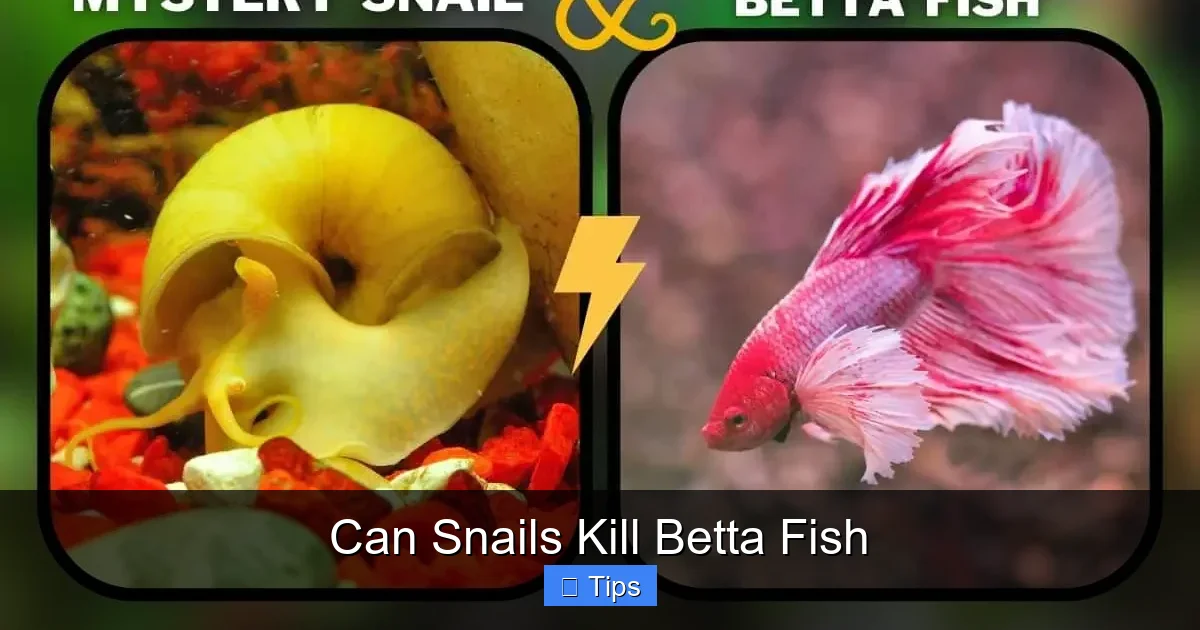
Snails are generally safe and beneficial tank mates for betta fish and cannot directly kill a healthy betta. However, indirect risks like severe water quality deterioration from snail overpopulation or the introduction of diseases can fatally stress a betta. Choosing the right snail species and maintaining proper tank conditions are absolutely critical for a harmonious and safe aquarium environment.
So, you’ve got a beautiful, flashy betta fish with its flowing fins and personality to spare. You’re thinking about adding a little more life to the tank—maybe a slow-moving, fascinating snail. But then a worrying thought creeps in: can snails kill betta fish? It’s a common concern for aquarists, especially given the betta’s reputation as a feisty, sometimes aggressive fish. The short, reassuring answer is no, a snail cannot directly kill a healthy betta fish. They don’t have teeth to bite, claws to claw, or the speed to chase down and consume a fish. However, the world of aquarium keeping is rarely that simple. The relationship between bettas and snails is a perfect example of how indirect dangers and poor management can create serious problems. This article will dive deep into the nuanced truth, separating myth from reality, and giving you a complete guide to creating a peaceful, thriving community tank for your betta and its snail companions.
Key Takeaways
- Direct killing is virtually impossible: Snails lack the physical traits (teeth, speed, aggression) to injure or consume a betta fish.
- The real threat is indirect: The primary danger comes from snails causing poor water quality (ammonia/nitrite spikes) if their population explodes.
- Species selection is everything: Some snails, like certain apple snails, can grow very large and may be mistaken for food, causing a betta to choke.
- Disease transmission is a risk: Snails can carry parasites or pathogens that may harm a betta, especially if new snails are not quarantined.
- Betta temperament varies: A particularly aggressive betta might relentlessly harass a snail, causing it stress and potentially leading to the snail’s death, not the betta’s.
- They are usually beneficial: Most snails are excellent cleanup crew members, eating algae and leftover food, which helps maintain water quality for the betta.
- Tank size and management are non-negotiable: A properly sized, cycled, and maintained tank eliminates almost all risks associated with keeping snails with bettas.
📑 Table of Contents
- Understanding the Betta Fish Temperament: The “Siamese Fighting Fish” Reality
- Snail Species and Their Behaviors: Not All Snails Are Created Equal
- Direct Physical Threats: Why a Snail Can’t “Kill” Your Betta
- Indirect Dangers: The Silent Killers in Your Aquarium
- Safe Snail Species for Betta Tanks: Your Best Bets
- Best Practices for Betta and Snail Coexistence: The Action Plan
Understanding the Betta Fish Temperament: The “Siamese Fighting Fish” Reality
Before we even talk about snails, we must understand the betta. Its common name, the Siamese Fighting Fish, tells you everything you need to know about its historical background. Bred for centuries for aggression, modern bettas still carry that fiery spirit. In a confined space like a small bowl, that aggression has nowhere to go but inward, leading to stress, boredom, and fin-nipping. But what does this mean for a snail?
Aggression vs. Predation: A Critical Distinction
This is the most important concept. A betta’s aggression is primarily directed at other fish that look like it—other male bettas with long, flowing fins. It’s a territorial and dominance behavior. A snail is not a fish. It doesn’t have fins that flare in a challenge. It doesn’t swim in a way that triggers a betta’s territorial instinct. To a betta, a snail is more like a moving piece of gravel or a weird piece of plant. The betta might investigate it, perhaps even give it a gentle nudge with its nose out of curiosity. In rare cases, a bored or exceptionally aggressive betta might peck at a snail’s antennae, which can stress the snail. But this is harassment, not predation. The betta is not trying to eat the snail as a meal; it’s reacting to a strange object in its space. The injury here would be to the snail, not the fish.
The Fin-Nipping Myth
Some owners worry that a snail’s hard shell could scrape or damage a betta’s delicate fins if the snail brushes against them. This is highly unlikely. Snail shells are smooth, and their movement is too slow and deliberate to cause a laceration. The real risk of fin damage in a betta tank comes from sharp décor, rough filter intakes, or, most commonly, from the betta itself due to stress or boredom—not from a peaceful snail.
Snail Species and Their Behaviors: Not All Snails Are Created Equal
The type of snail you choose is the single biggest factor in determining whether it will be a peaceful citizen or a potential problem. Snails vary wildly in size, breeding rate, and diet. Let’s break down the common types you’ll encounter.
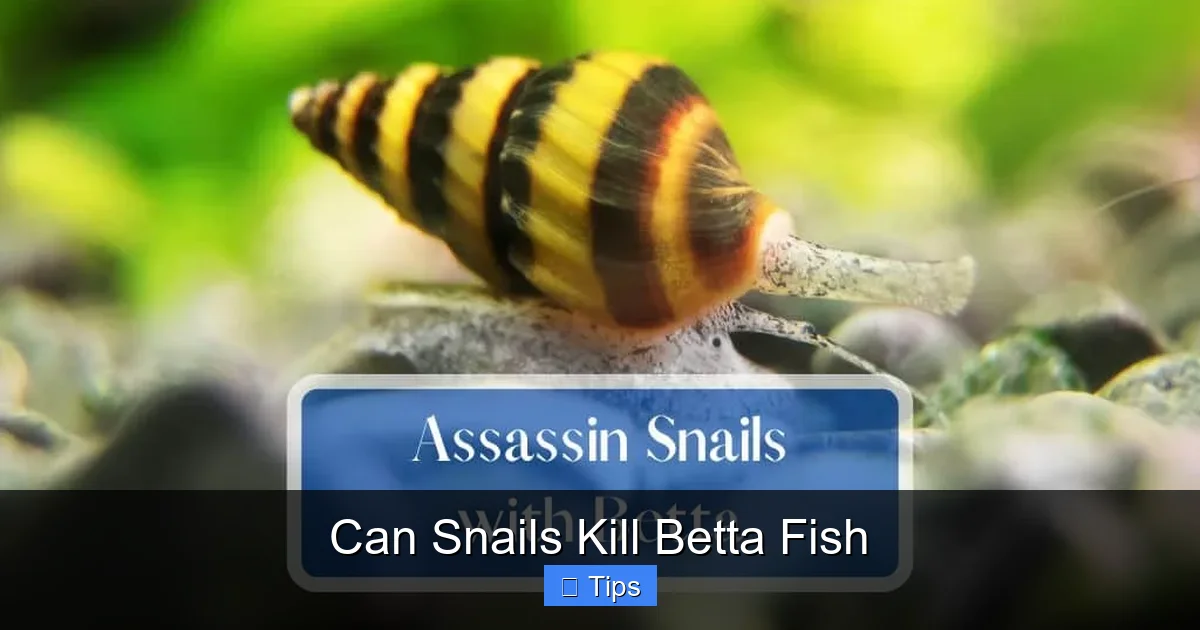
Visual guide about Can Snails Kill Betta Fish
Image source: fishtanko.com
The “Clean-Up Crew” Champions: Nerite and Ramshorn Snails
These are the superstar tank mates for bettas. Nerite snails (like the Zebra Nerite or Tiger Nerite) are famous for their voracious appetite for algae. They come in beautiful, patterned shells and, crucially, they cannot reproduce in freshwater. They require brackish (slightly salty) water to lay eggs that hatch, so you will never have a population explosion. This makes them the perfect, low-maintenance choice. Ramshorn snails are smaller, often translucent or brown, and they reproduce in freshwater but at a much slower, more manageable rate than some other species. They are excellent scavengers.
The Mystery Snail: A Popular but Prolific Choice
Mystery Snails (also called Apple Snails, though true Apple Snails are a different, often invasive genus) are hugely popular. They are large, active, and come in gorgeous colors like blue, gold, and ivory. They are peaceful, spend time climbing glass walls, and are great eaters of decaying matter. The caution here is their breeding. If you have a male and female, they will lay eggs above the waterline, and you can quickly go from two snails to dozens. In a small betta tank (under 10 gallons), this population boom can become problematic very fast, leading us to our next section on indirect dangers.
The Dangerous Invaders: True Apple Snails and Pond Snails
This is where the real risk lies. True Apple Snails (genus Pomacea) are often sold as “giant” or “colossal” snails. They can grow to the size of a golf ball or larger. A large, active snail might be mistaken by a betta as a rival or a large piece of food. A betta might try to attack it, and while it won’t kill the snail, the snail’s sudden, fast retraction into its shell or its attempt to flee could startle the betta, potentially causing the betta to injure itself on tank décor. More importantly, these snails are incredibly prolific breeders and voracious plant eaters. They can destroy live plants and cloud the water with waste. Pond snails and bladder snails are tiny, reproduce explosively (they are hermaphrodites—any two can breed), and can turn a tank into a snail-infested nightmare within months, severely impacting water quality.
Direct Physical Threats: Why a Snail Can’t “Kill” Your Betta
Let’s be absolutely clear on the mechanics. A snail’s anatomy is not built for predation. It has a radula (a tongue-like organ with tiny teeth) for scraping algae off surfaces, not for tearing flesh. Its primary defense is its shell, which it retracts into. It has no claws, stingers, or venom. A betta fish, on the other hand, has a mouth designed for eating small insects and larvae from the water’s surface. It could, in theory, try to nip at a small snail’s soft body parts (like the foot or tentacles) if it was extremely hungry and the snail was very tiny (like a baby pond snail). This might injure or kill that tiny snail, but the inverse—the snail killing the betta—is biologically impossible through direct physical attack.
Visual guide about Can Snails Kill Betta Fish
Image source: i.pinimg.com
The Choking Hazard: A Very Specific Risk
There is one narrow, exceptional scenario where a snail could pose a direct physical threat to a betta. If you have a very large snail (like a full-grown Mystery or Apple Snail) and a very small, curious betta (like a young fry or a very tiny species), the betta might attempt to investigate the snail’s opening or foot by putting its mouth on it. In a bizarre twist, if the betta then tried to swallow part of the snail and the snail’s shell piece was large enough, it could theoretically cause the betta to choke. This is extraordinarily rare and would only involve a significant size mismatch. For a standard adult betta and a standard adult snail of appropriate size, this is not a concern.
Indirect Dangers: The Silent Killers in Your Aquarium
This is the heart of the matter. Snails can absolutely contribute to conditions that kill a betta fish, but they do not do the killing themselves. They are accomplices to poor water management. Bettas are labyrinth fish, meaning they breathe air from the surface, but they are still highly sensitive to poor water quality. Ammonia and nitrite are lethal toxins. Snails are prolific waste producers. A small snail produces a tiny amount of waste, but a population of 50 snails in a 5-gallon tank? That’s a biological load equivalent to adding several large fish.
Visual guide about Can Snails Kill Betta Fish
Image source: bettacarefishguide.com
The Population Explosion Problem
This is the number one way snails become dangerous. You start with two cute Mystery Snails. They breed. You now have ten. Those ten breed. Within a few months, you have 30-50 snails, all eating, pooping, and consuming oxygen. The biological filter in your tank, which was sized for a betta and maybe a few shrimp, is now overwhelmed. Ammonia begins to rise. The betta, living at the surface, is the first to suffocate from the poor water conditions. Its gills burn from ammonia, it becomes lethargic, loses its appetite, and succumbs to disease or poisoning. The owner sees a dead betta and a tank full of snails and mistakenly blames the snails for “killing” the fish. The truth is, the owner’s failure to manage the snail population and subsequent water parameters killed the betta.
Disease and Parasite Transmission
Snails can be intermediate hosts for various parasites, such as trematodes (flukes). If you purchase a snail from a store where it was in a contaminated tank, it might carry parasite cysts on its shell or in its body. When introduced to your betta’s tank, these parasites could potentially infect your betta. This is why quarantine is essential. Any new invertebrate should be observed in a separate hospital tank for 2-4 weeks before joining the main display. Also, snails from outdoor ponds or natural sources should never be added, as they are almost guaranteed to carry pathogens.
Safe Snail Species for Betta Tanks: Your Best Bets
Armed with knowledge, you can confidently choose a snail that will be a beneficial, low-risk addition. Here are the top recommendations for a betta tank.
- Nerite Snails (Zebra, Tiger, Horned): The gold standard. They won’t breed in your freshwater tank, are amazing algae eaters, and have calm dispositions. They are perfect for a 5-gallon+ betta tank.
- Mystery Snails (Pomacea diffusa): A great choice if you have a larger tank (10+ gallons) and are prepared to manage breeding. Keep only one to be absolutely safe from breeding, or be ready to remove egg clutches. They are interactive and colorful.
- Ramshorn Snails: Small, peaceful, and their breeding is slow enough to be controllable. They are excellent for smaller setups but still require monitoring.
- Japanese Trapdoor Snails: Viviparous (give birth to live young), so population growth is slower and more predictable. They are hardy and good scavengers.
What to Absolutely Avoid
Steer clear of True Apple Snails (Pomacea canaliculata, etc.) due to their size, plant-destructive habits, and prolific breeding. Avoid any snails labeled as “pond snails,” “bladder snails,” or “tropical snails” unless you are certain of the species, as these are often the invasive, fast-breeding types. Never collect snails from outdoor ponds or lakes.
Best Practices for Betta and Snail Coexistence: The Action Plan
Success isn’t just about picking the right snail; it’s about creating the right environment. Follow these non-negotiable steps.
Tank Size and Setup: The Foundation
Never, ever keep a betta in a bowl. A minimum of 5 gallons is necessary for a single betta, and if you add snails (especially larger or multiple ones), you should aim for 10 gallons or more. A larger volume dilutes toxins and provides more space, reducing any potential stress. Ensure the tank is fully cycled—meaning it has an established population of beneficial bacteria that convert toxic ammonia to less harmful nitrate—before adding any livestock. This cycle should be complete for at least a few weeks.
The Quarantine Protocol: Don’t Skip It
Treat every new snail as a potential disease vector. Set up a simple 1-2 gallon hospital tank or a large, clean container with a heater and a sponge filter. Observe the snail for two weeks for any signs of illness (shell damage, inactivity, unusual mucus) and watch for any parasites on its shell. During this time, you can also treat it with a mild antiparasitic dip if you’re feeling cautious (research methods like hydrogen peroxide dips carefully). This 30-day investment can save your entire display tank.
Feeding and Maintenance: The Daily Grind
Snails do not need to be fed directly if you have a planted tank with algae. However, in a typical betta tank, there may not be enough natural algae. Supplement with high-quality algae wafers, blanched zucchini or spinach, or a sinking pellet designed for shrimp/snails. Never overfeed. Any uneaten food will decay and foul the water. Your maintenance routine must be diligent. Perform weekly water changes of 25-30% using a gravel vacuum to remove snail waste and uneaten food. Test water parameters (ammonia, nitrite, nitrate, pH) weekly with a liquid test kit. If you see a snail population getting out of hand, you must manually remove snails or egg clutches.
Observing the Dynamic
After introducing the snail, watch the interaction for the first few hours. Is your betta flaring at it? Chasing it? If the chasing is relentless and stressful-looking (the snail is constantly hiding and not moving), you may need to remove the snail. A peaceful dynamic looks like the betta ignoring the snail or briefly investigating it before swimming away, while the snail goes about its business. Remember, a stressed snail is a dying snail, and a dead snail will decompose and pollute the water, creating the very indirect danger we warned about.
Frequently Asked Questions
Can a snail’s shell crack and harm my betta?
No. A snail’s shell is a solid, internal structure made of calcium carbonate. It does not shatter or produce sharp shards. The only risk is if a betta tries to eat a very large snail and a piece of shell breaks off inside its mouth, which is an extreme and unlikely scenario.
Do snails eat betta fish poop?
Snails are scavengers and may nibble on decomposing organic matter, including feces, but they do not specifically seek it out as a food source. Relying on snails to clean your tank is a mistake; regular gravel vacuuming during water changes is essential for waste removal.
Will snails eat my live plants?
Most common pet snails (Nerites, Mystery, Ramshorn) are primarily algae and detritus eaters. They may nibble on dying or decaying plant matter but will not devour healthy, live plants. However, True Apple Snails are notorious plant destroyers and should be avoided in planted tanks.
Can snails carry diseases that infect bettas?
Yes, snails can be carriers for parasites and bacteria. This is why quarantining all new snails for at least 30 days before adding them to your main tank is a critical best practice to prevent introducing pathogens to your betta.
My betta keeps attacking the snail. What should I do?
If the harassment is constant and the snail shows signs of stress (hiding constantly, not extending its foot), you must remove the snail. A stressed snail will likely die, and its decaying body will harm water quality. Return it to the store or rehome it. Not all bettas are compatible with invertebrates.
How many snails can I keep with my betta?
There is no magic number. The rule is to base it on your tank’s bioload, not a snail count. In a 5-gallon tank, one small Nerite or one Mystery snail is the absolute maximum. In a 10+ gallon tank, you could keep 2-3 small snails or one larger one, provided you are diligent with water changes and monitoring for breeding. Always understock rather than risk overpopulation.