No, two male betta fish should almost never be housed together in the same tank. Their instinctual aggression, inherited from wild fighting breeds, makes cohabitation extremely dangerous, often leading to severe injury or death. While a very large, expertly planted “tank division” or “species-only” setup with an immense volume (75+ gallons) and perfect territory lines is a theoretical possibility, it is high-risk and not recommended for beginners. The only truly safe way for multiple bettas to share water is in a divided tank with a solid, unbreakable partition, or by keeping a single male with compatible, non-aggressive tank mates in a properly sized community aquarium.
Key Takeaways
- Innate Aggression: Male betta fish (Siamese fighting fish) have been selectively bred for centuries for aggression. Co-habitation triggers a fatal fight in nearly all cases.
- Tank Size is Not Enough: Even a very large tank (e.g., 30+ gallons) does not override their genetic drive to fight. Space can delay but rarely prevents conflict.
- “Sororities” are for Females Only: Groups of female betta fish (sororities) can sometimes work in large, heavily planted tanks due to a different social hierarchy. This does not apply to males.
- Divided Tanks are the Only Safe Option: For multiple bettas in one aquarium, a solid, sealed divider that prevents visual and physical contact is mandatory. Water flow and parameters must be balanced on both sides.
- Focus on Compatible Tank Mates: The safest and most enriching environment for a male betta is a species-only tank or a community with peaceful, fast-moving fish that occupy different tank levels (e.g., neon tetras, corydoras catfish, harlequin rasboras).
- Watch for Flaring: Flaring (gills expanding) is a sign of extreme stress and aggression. If you see this between two males, immediate separation is required.
- Individual Temperament Varies: While some rare, exceptionally docile males exist, you cannot predict this. Assuming a betta will be peaceful is a gamble with its life and the life of its tankmate.
[FEATURED_IMAGE_PLACEHOLDER]
📑 Table of Contents
- The Betta’s Reputation: Beauty with a Bite
- Understanding the “Fighting Fish” Instinct
- The “Tank Size” Myth: Why Bigger Isn’t Always Better
- The Exception That Proves the Rule: Divided Tanks
- The Safe and Enriching Alternative: Community Tanks
- Tank Setup for a Single, Happy Betta
- What About Females? The Betta Sorority
- Conclusion: Respect the Instinct
The Betta’s Reputation: Beauty with a Bite
You’ve seen them, haven’t you? The flowing, iridescent fins of the male betta fish, gliding like living silk through a small vase or a beautifully planted nano tank. They are arguably the most popular freshwater fish in the world, captivating new and experienced aquarists alike with their dramatic colors and personalities. But that very personality comes with a legend, a warning whispered in fish stores and online forums: “Bettas are fighting fish.” This naturally leads to the burning question for anyone considering more than one: Can two male betta fish be in the same tank?
Let’s be unequivocally clear from the start: the short, practical, and safe answer for 99.9% of hobbyists is a firm no. Housing two male bettas together, a practice often called “tank mates” in a misguided way, is a recipe for disaster. Their common name, Siamese fighting fish, isn’t just a catchy title; it’s a direct reflection of their genetics and centuries of selective breeding for aggression in their native Thailand. To understand why this is such a bad idea, we need to dive into the betta’s biology, its territorial nature, and what a truly successful betta habitat looks like.
Understanding the “Fighting Fish” Instinct
A History of Competition
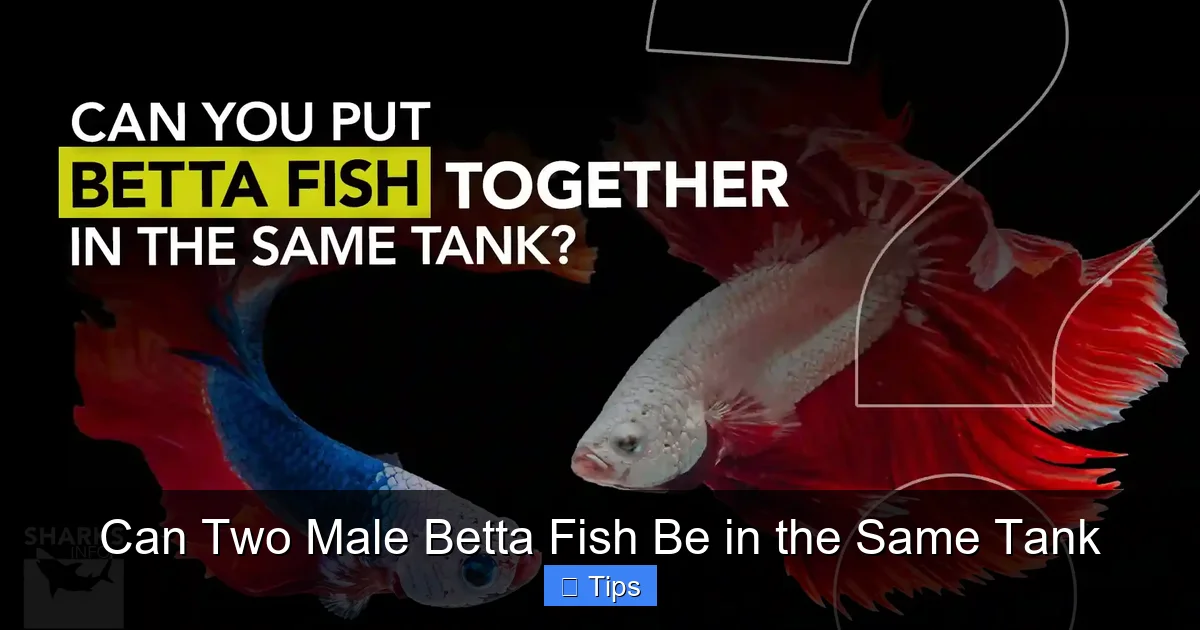
The betta’s (Betta splendens) aggressive reputation is not a myth. In the wild, male bettas maintain and defend small territories among the dense vegetation of rice paddies and shallow streams. When two males encounter each other, a ritualized display of flaring gills, extending fins, and chasing ensues. This is a test of will. If one backs down, the confrontation ends. However, in the cramped, artificial confines of an aquarium with no escape route, this ritual almost always escalates into a full-blown, violent fight. They will bite fins, tear scales, and inflict wounds that quickly lead to fatal infections like fin rot.
Visual guide about Can Two Male Betta Fish Be in the Same Tank
Image source: sharksinfo.com
This behavior was deliberately amplified by breeders who staged fights (historically for sport, much like cockfighting) and selected only the most aggressive, persistent males to breed. While modern ornamental bettas are bred for color and finnage, that underlying aggression remains deeply encoded in their DNA. It’s not a matter of “training” or “socialization”; it’s a fundamental, instinctual drive.
The Trigger: Visual Contact
The primary trigger for this aggression is visual contact. A male betta is hardwired to see another male betta as an intruder in his territory that must be eliminated. This is why you’ll often see a betta flare at its own reflection in the glass—it perceives the reflection as a rival. Now imagine that rival is a real, breathing, competing fish sharing the same water. The stress alone is immense, even if a physical fight hasn’t started. Chronic stress suppresses the immune system, making the fish susceptible to disease, and leads to a poor quality of life.
The “Tank Size” Myth: Why Bigger Isn’t Always Better
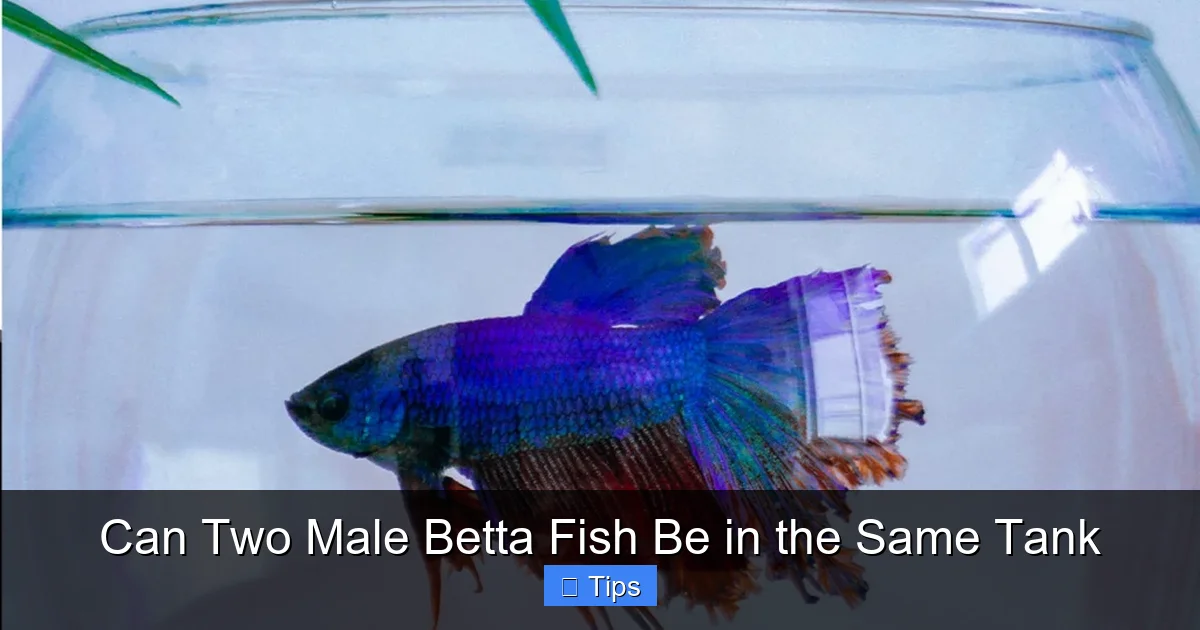
A common argument you’ll hear is, “Well, if you give them a huge tank, like a 50-gallon, they’ll have enough space to avoid each other.” This is a dangerous misconception. While a larger tank provides more horizontal and vertical space to potentially establish separate territories, it does not change the betta’s fundamental psychology.
Visual guide about Can Two Male Betta Fish Be in the Same Tank
Image source: sharksinfo.com
In a large tank, a betta will still patrol its perceived territory. It will encounter the other male. The encounter will trigger the same aggressive response. The fight might be delayed as each fish explores and stakes a claim, but the inevitable clash is almost certain. A large tank simply gives them more room to chase, which can lead to even more exhaustion and injury before one submits or is killed. There is no scientifically verified case of two unrelated adult male bettas living peacefully together in an open, undivided body of water long-term. The risks of catastrophic injury and immense stress are far too high.
The Exception That Proves the Rule: Divided Tanks
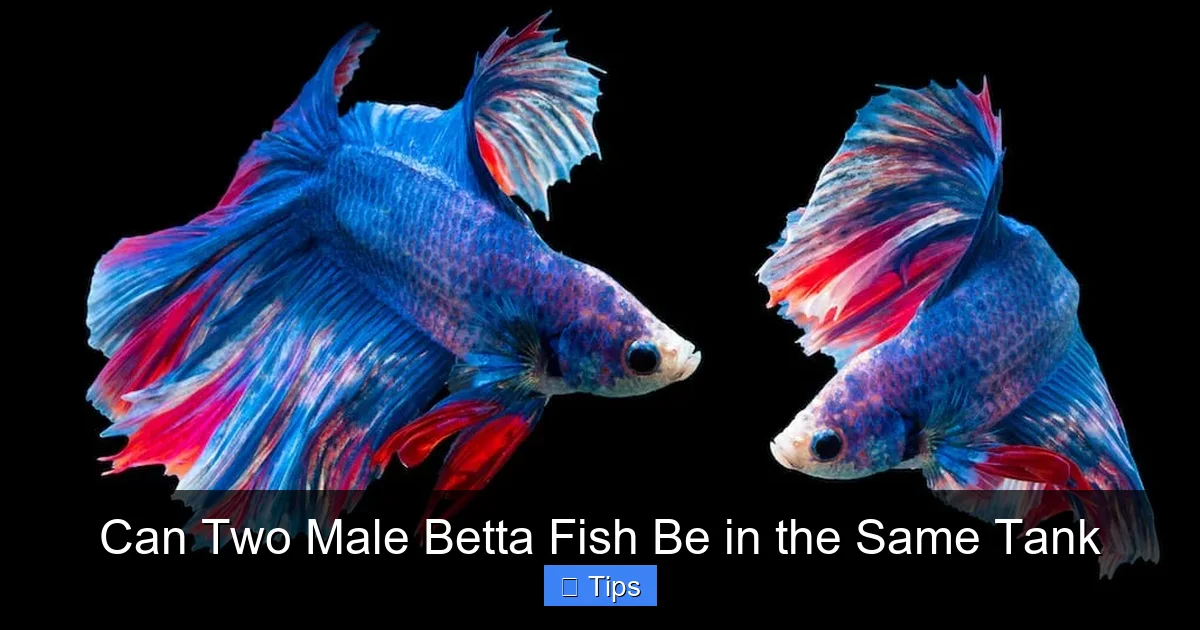
If you absolutely must have more than one male betta in the same room, there is one and only one safe method: a permanently divided tank.
Visual guide about Can Two Male Betta Fish Be in the Same Tank
Image source: pickedbyfish.com
How a Divided Tank Works
A divided tank uses a solid, unbreakable barrier—typically thick acrylic or sealed glass—that is fully submerged and sealed to the tank walls and bottom. This barrier must prevent any visual contact and absolutely any physical contact. Even a tiny gap at the top or bottom can allow fighting or the exchange of harmful bacteria. The divider creates two separate, sealed compartments within one tank frame.
Critical Setup Requirements
- Tank Size: The overall tank must be substantial. A minimum of 29 gallons (110L) is recommended, with 40+ gallons (150L+) being ideal. This provides each betta with a true 15-20 gallon territory, which is crucial for water quality and space.
- Water Flow and Filtration: The filter must be powerful enough for the entire tank’s volume but configured so water flow is equal on both sides. Often, a strong canister filter with intakes and outputs on both sides of the divider is used. Water circulation must be balanced to prevent one side from becoming stagnant.
- Heating: A single, adequately sized heater (e.g., 100W for a 40-gallon tank) placed in a central sump or carefully positioned can heat both sides evenly. Thermometers on each side are mandatory to ensure equal temperature.
- Hiding Spots and Line of Sight: Each side must be heavily planted (live or silk plants) and decorated with caves, driftwood, and other structures to break up the line of sight *to the divider itself*. The goal is to minimize the betta’s ability to even see the divider consistently, reducing stress.
Even with this perfect setup, you are managing risk, not creating a community. Each fish lives in its own isolated world. You must be prepared to separate them immediately if one begins to flare persistently at the divider. This is an advanced setup for experienced aquarists, not a beginner project.
The Safe and Enriching Alternative: Community Tanks
The far better, more rewarding, and safer path for a male betta is to provide it with a species-only tank or a carefully selected community tank. A single male betta in a 10+ gallon tank is a happy, interactive pet. But if you want a busier aquarium, you can introduce other fish—if you follow strict rules.
Choosing the Right Tank Mates
The key is selecting fish that are:
- Non-Terrestrial: They do not occupy the top water column where the betta lives and patrols.
- Peaceful and Fast: They are not aggressive and are fast enough to evade a curious or mildly aggressive betta.
- Not Fin-Nippers: They will not mistake the betta’s long, flowing fins for food.
- Schooling or Shoaling: Fish that prefer to be in groups are less likely to single out the betta.
Excellent Candidates:
- Mid-Level Schoolers: Harlequin rasboras, lambchop rasboras, neon tetras (in a school of 8+), ember tetras.
- Bottom-Dwellers: Corydoras catfish (a school of 5+), kuhli loaches, bristlenose plecos (small, peaceful varieties).
- Dwarf Rasboras: Chili rasboras, strawberry rasboras (in a well-planted tank).
Absolute Avoid: Guppies (fin-nipping), angelfish (aggressive), other gouramis (related and territorial), long-finned fish (like fancy goldfish or some fancy guppies—will be targeted), and any fish with a reputation for aggression.
Introduction and Monitoring
Always add the betta last to a established community tank. This allows the other fish to establish their own territories and schools first, making the betta the “newcomer” and often reducing its defensive aggression. Use a tank divider or breeder box to allow them to see each other through glass for 24-48 hours before full release. Watch for constant flaring, chasing, or fin-nipping for the first week. Be prepared to remove the betta if it shows excessive aggression or is being harassed.
Tank Setup for a Single, Happy Betta
Since we’ve established that two males together is a non-starter, let’s focus on creating the perfect home for one. A well-set-up tank reduces stress, which is the root of all health problems.
Size and Shape Matter
Contrary to popular belief, a betta does not belong in a tiny vase or bowl. A minimum of 5 gallons (19L) is the absolute baseline, but 10 gallons (38L) or more is strongly recommended. This provides stable water parameters, more swimming space, and room for plants and decorations. A long, horizontal tank is better than a tall, narrow one, as bettas are surface breathers and will appreciate easy access to the top.
Heating and Filtration
Bettas are tropical fish requiring a consistent temperature of 78-80°F (25.5-26.5°C). A reliable, adjustable heater is non-negotiable. For filtration, a gentle sponge filter is ideal as it provides biological filtration without creating a strong current that would tire the betta. If using a hang-on-back or canister filter, baffle the outflow with a sponge or direct it towards the tank wall to reduce flow.
Decor: Security is Key
Bettas need places to hide and rest. A lone betta in an empty tank is a stressed betta. Use a variety of decorations:
- Live or Silk Plants: These are essential. Floating plants like duckweed or frogbit are loved. Tall plants like java fern or anubias provide resting spots near the surface.
- Caves and Tubes: Provide secure, dark hiding places.
- Smooth Ornaments: Ensure all decorations have no sharp edges that can tear delicate fins.
The goal is to create a complex, planted environment that breaks lines of sight, making the tank feel larger and safer.
What About Females? The Betta Sorority
This is a critical distinction. While male bettas are almost always solitary, female betta fish can sometimes be kept in groups, known as a sorority. This is due to a different, less rigid social hierarchy in the wild. However, a sorority is not a casual endeavor.
Rules for a Successful Sorority
- Tank Size: Minimum 20 gallons (75L), with 29+ gallons (110L+) strongly preferred.
- Group Size: Start with a minimum of 5-6 females. This disperses aggression. Never keep just two or three.
- Heavy Planting: The tank must be heavily, densely planted with live plants (like hornwort, wisteria, java moss) to provide countless hiding spots and visual barriers. This is the single most important factor.
- Introduce All at Once: All females should be added to the tank simultaneously to prevent established hierarchies from bullying newcomers.
- Constant Monitoring: Even with perfect conditions, squabbles happen. Have a separate hospital tank ready to isolate any persistently bullied or injured fish immediately.
Even with all this, sororities carry risk and require experienced observation. They are not for beginners. And remember, this rule applies only to females. You cannot apply sorority logic to males.
Conclusion: Respect the Instinct
The question, “Can two male betta fish be in the same tank?” is ultimately about respecting the animal’s nature. We are drawn to their beauty, but we must also acknowledge the fierce, territorial spirit that has been part of their identity for centuries. The desire to see them coexist is understandable, but it is a desire that conflicts directly with their biology. The risks—of violent fighting, chronic stress, injury, and death—are simply too great to justify the attempt for the sake of an interesting tankscape.
The most responsible and rewarding choice is to celebrate the individual. Provide one male betta with the beautiful, spacious, plant-filled sanctuary it deserves. Watch its unique personality unfold as it builds its bubble nest, flares at you playfully through the glass, and patrols its kingdom with regal confidence. If you crave a more dynamic community, choose its tank mates with extreme care, following the guidelines for peaceful, fast-moving species. By understanding and working with their instincts rather than against them, you ensure a long, healthy, and vibrant life for your betta. That is the true mark of a dedicated and knowledgeable aquarist.
Frequently Asked Questions
Can two male betta fish ever live together peacefully?
No. There is no reliably safe way for two adult male bettas to share an open aquarium. Their instinct to fight is too strong. The only exception is a permanently divided tank with a solid, sealed barrier that prevents all visual and physical contact.
What about putting a male and female betta together?
This should only be done for controlled breeding under strict supervision, and even then, it is risky. The male will often become aggressive toward the female, especially if she is not ready to spawn. It is not a permanent cohabitation strategy and should only be attempted by experts with a plan for immediate separation.
My betta flares at his reflection. Is that a sign he wants a friend?
No. Flaring at a reflection is a sign of territorial aggression and stress. Your betta perceives his reflection as an intruder. This behavior indicates he is stressed by the “rival” and should not be housed with another betta. Covering the tank sides or adding more plants to break up the reflection can help reduce this stress.
I saw a video online of two bettas in a big tank together. Why does that work?
Most such videos are short clips that don’t show the long-term outcome. Often, the fish are juveniles who haven’t developed full aggression yet, or the video ends before a fight begins. In some rare cases, exceptionally docile individuals might coexist for a time, but this is the absolute exception and cannot be predicted or relied upon. The risk of sudden, fatal violence is always present.
What is the smallest tank I can use for a divided betta setup?
>A divided setup is an advanced project. The smallest recommended overall tank is a 29-gallon (110L) to give each betta a meaningful territory of at least 15 gallons. Using a smaller tank (like a standard 10-gallon) with a divider creates two extremely cramped, stressful environments and is not advised.
Can I keep my male betta with other “aggressive” fish like dwarf gouramis?
No. Other gouramis (like dwarfs or honey gouramis) are closely related and have similar territorial behaviors. Mixing them with a male betta is a high-risk situation that very often leads to conflict. It’s best to avoid any fish with a reputation for territorial aggression.